Boss Picks
As Governor, I’ll Bring Back Prosperity to Osun State – Hon. Femi Kehinde
Published
8 years agoon
By
Eric
By Eric Elezuo
By September 2018, a new governor will emerge in Osun State to replace Ogbeni Rauf Aregbesola of the All Progressives Congress (APC), who will be completing his eight years mandate then. Consequently, the Osun political circle is saturated in the bid to find a suitable of more suitable replacement with a great number of aspirants expressing their interest.
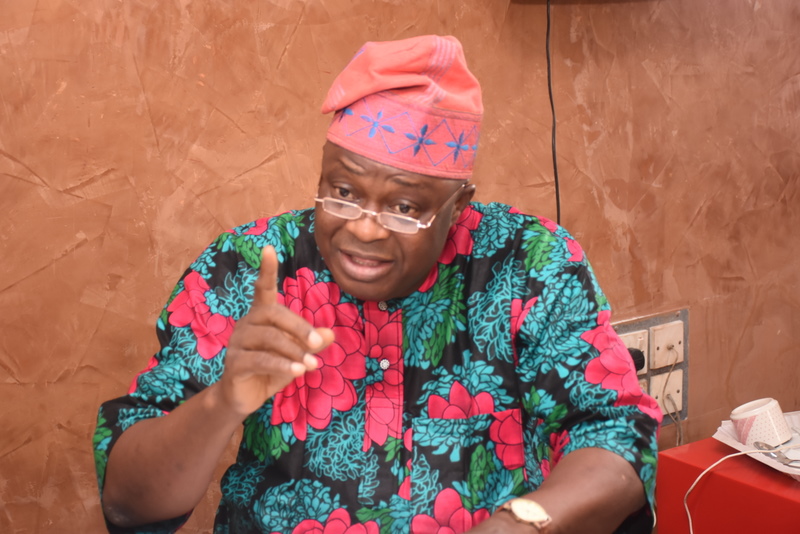
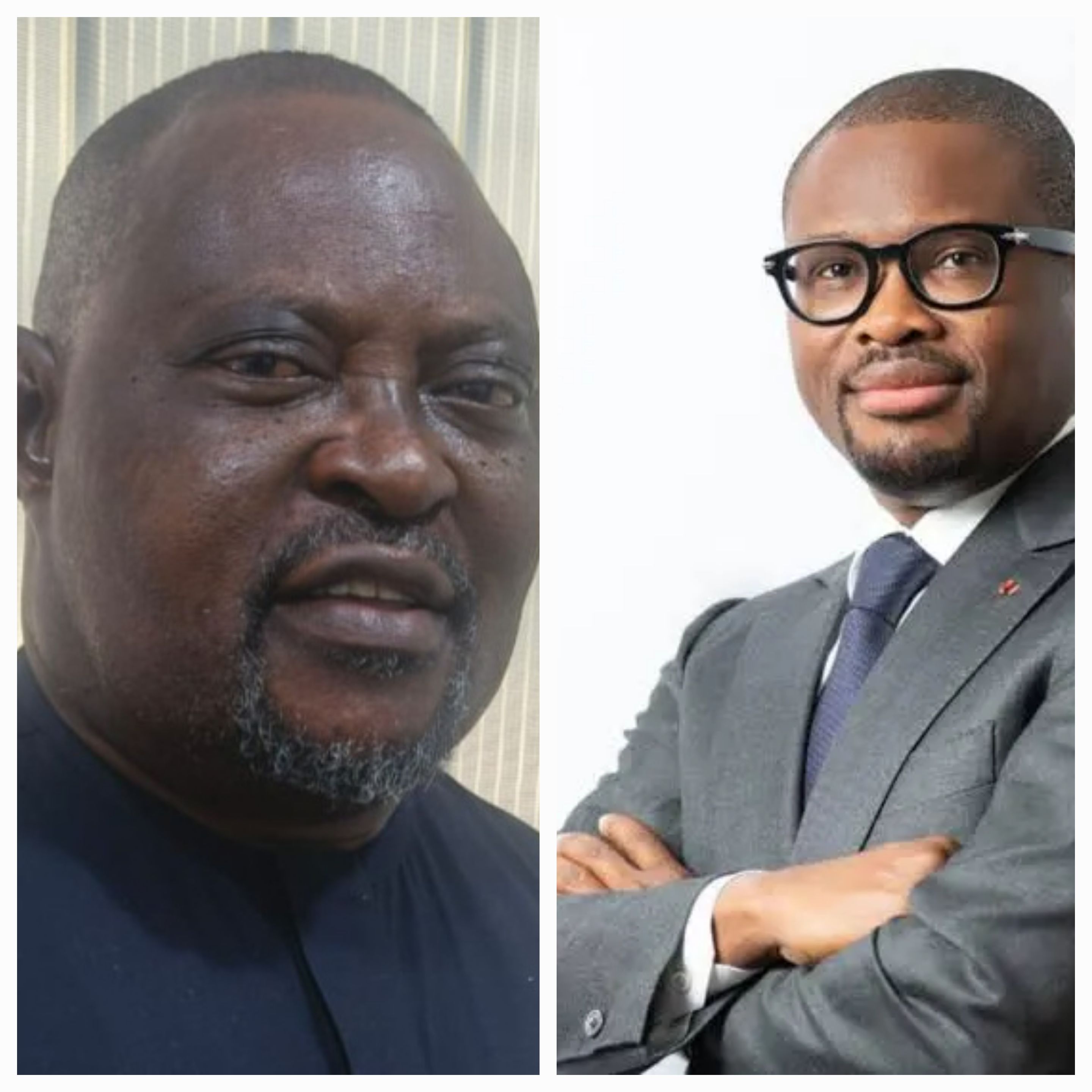
Among the many contenders is Barrister (Hon) Femi Kehinde, a remarkable former House of Representatives member, whose sound political and economic analysis of Osun State gives him an immediate edge to be governor.
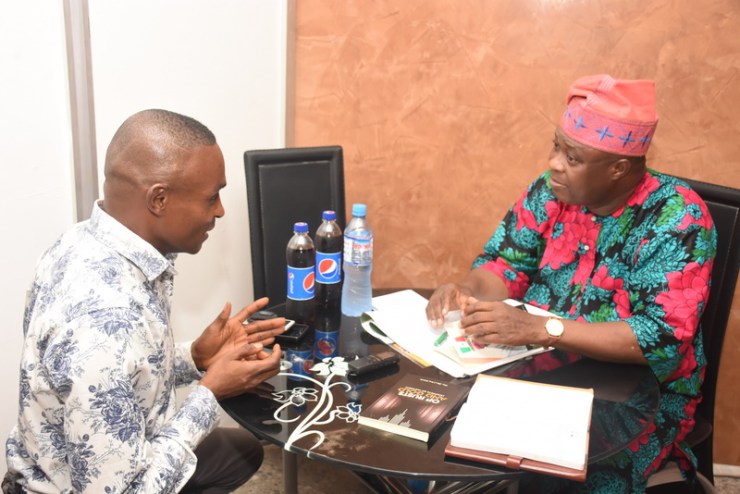
Meeting him at his Ikeja, Lagos, office, Barr Kehinde expresses the humility that is tantamount to taking anyone to any great heights. Devoid of airs or attendant arrogance, he cuts the picture of a steward who is ready to serve, not out of pretension but from the genuineness of heart. And when he opens his mouth to talk about the needs of Osun State, and strategies to meeting the needs, one would readily cast his vote for him. He is a fountain of knowledge, and a great reservoir of wisdom.
Barr Kehinde is running for the gubernatorial position of Osun State under the guiding star of the Action for Democracy; a party he says is stronger than ever. In this interview, he made governance look simpler than ABC, meticulously stating the panacea for poverty, and the roadmap to prosperity. Enjoy:
Can we meet you sir?
I am Honourable Barrister Femi Kehinde. And as the name implies, I am a legal practitioner. I have been in law practice for over 35 years. I am a native of Ile-Ogbo in Aiyedire Local Government in Iwo division of Osun state. I was born on November 3, 1959 to the family of Samuel Adebisi Kehinde and Chief Mrs. Elizabeth Wulematu Aduke Kehinde from Gbogan, who was until her passage, the Iyalode of Gbogan Land.

I started my early education in Ibadan being the son of a ‘nomadic’ police officer, and I relocated to Gbogan; where I finished my primary education at the Saint Paul’s Primary School, Gbogan in 1972. I attended Olugbo Community High school, Ipetumodu; also in Osun State between 1973 & 1977. I came out with a division 1 certificate. Thereafter, I had a brief stint at the Ibadan Polytechnic for A-level education and subsequently was admitted to the University of Ife, now Obafemi Awolowo University in 1978. I was in the Department of History for two years, between 1978 & 1980, before I relocated to the Faculty of Law where I qualified as a lawyer in 1983.
What prompted your relocation from History to Law?
Well, my father was a police man and when I was young, I had accompanied him on one or two occasions to court sessions. During my secondary school days, apart from being the best student in school; I was also very good in History, Literature, and in art subjects. My colleagues in school call me Justice; predicting my future career. When I got admission, fortunately, we were the first set of Nigerians that would sit for JAMB exam in 1978. Hitherto, what we had was concessional examination; you sit for as many exams as possible in the few universities we have then, which were not up to 10. So, when I was in History in Ife, I was elected a member of the Student Representative Council (SRC). From the SRC, some members would be appointed to the judicial council; I was fortunate to be among those that would be in the judicial council, even as a student of History. I now saw the students of Law bamboozling us with big grammar. And I said to myself, I can perform better; and I started the process transferring from History to Law.
Can we say passion prompted you?
Yes, it was passion to be a lawyer, and be like Obafemi Awolowo. As of that time, I had read the biography of Obafemi Awolowo. I saw his foray into politics, to law profession, and into journalism; and I said I want to be like Obafemi Awolowo. As a matter of fact, when I qualified as a lawyer, I did my law practice in the law firm of Obafemi Awolowo in 1984, because I looked up to him as an idol, and I see him as an iconic figure, I saw his life as worthy of emulation. Ever since, I’ve had my career in law profession. I would summarise and say History is my passion, Law is my profession, and Politics is my vocation.
31 years after Obafemi Awolowo died; did you see yourself living this status?
I believe that Awolowo’s life is exemplary; be it in conduct or in discipline; his life was patterned on self-discipline; that is how we describe his life. He is strictly principled and highly resourceful, brilliant, and if you look at his life at the age of 8, he wrote in front of his father’s house “To laugh at infirmity or deformity is nullity; that’s was the language coming from a toddler, and I believe that from that age, you begin to capture your life.

Let me give you an example of Harold Wilson; one of the best British Prime Ministers. At the age of 10, Harold Wilson went with his father to number 10 Downing Street, which is the official residence of the Prime Minister of Britain. He asked his father for a photo shot. He had a shot with his father at the age of 10 and prophetically told him that he would end-up in that house as a Prime Minister of Great Britain, and he accomplished that dream. So I saw in Awo somebody of the status of Harold Wilson. Now, it may be possible for people of our generation to match that feat, we would look at his life as a life worthy of emulation, but the attainment may not be too easy, because of the way we live today and because of the level of moral decay in the society that we are in.
This level of moral decay, can we attribute it to one of the reasons you wish to be the governor of Osun State?
Yes! When we were in the primary school there were some written write-ups that were compulsory for daily recitation. Examples are ‘Ise logun ise’, which was a poem by J.F. Odunjo, and some few others. Those were our moral pathfinders. When you want to leave your house in the morning, your parents will remind you ‘ranti omo eni ti iwo nse’ (remember the son of who you are) as if you don’t know the lineage of your parents. Those were what made us the men that we are today. You could not imagine wearing an apparel or cloth that were not bought for you by your parents, today, ladies buy handset in school for their parents. So you can see a complete departure from Nigeria of yesterday to Nigeria of today. I have written about the life of so many Nigerians; I wrote the history of Samuel Oladoke Akintola. I wrote the life; travails and challenges of Obafemi Awolowo. I’ve written about Oba Olatoro Olagbegi, that was a monarch in Iwo two times. I wrote about Oba Adetoyese Adeoye Timi of Ede land. I wrote about so many Nigerians, including the late Justice J. I. C. Taylor. I wrote about the Ibadan strong man of Politics in the 50s that is Adekofi Adegbala, and so many other Nigerians. In the course of these researches, I also took a lot from their lives and I believe with this knowledge if I get that opportunity by the grace of God to be governor of Osun state, I can right all the wrongs I have seen.
One, Awolowo as Premier did not live a flamboyant lifestyle. He did not live in government quarters; he lived in Okebola in Oke-Ado. He did not ride in an official car; he rode throughout in his own car, without dispatch riders. He did not stay in office above the official working hours, and he worked with the young and the traditional institution. In his cabinet, there were five traditional rulers that were non-portfolio ministers. His government was life in abundance; provided free education 1954; free health services; rural intervention; food and employment. Any government that provides these is certainly providing a life of comfort for the society. He has farm settlements, and those there encourage the youths to go into agriculture. There were plantations like palm oil, cocoa, rubber, cashew, etc. There was growth and development. We had oil palm factory in Okitipupa in Ogun State. Agriculture brought industrialization; these are the formula we are going to use. I am going to, by the grace of God, bring prosperity back to Osun state. We have the largest gold deposit in the entire south western part of Nigeria. But the mine is under illegal miners. We want to take very serious advantage of this opportunity by partnering with the Federal Government. We would pay fees and royalties to government, we would encourage investors to bring in equipment and we would have understanding with them in partnership. The mine deposit in Ilesha according to geological survey, IS worth about $2 billion, and the mining depth, unlike in South-Africa or Ghana, is just about 100 meters. In South-Africa, you will dig as much as 400-500 meters; in Ghana, you will go as 200-300 meters, but our mine is surfaced; you will not travel beyond 100 meters to hit the real gold. Because what they prospect now with local equipment like digger, shoves and others cannot get them the real gold, what they get are just flakes. So, we are going to leverage on this advantage. We are going to massively encourage agriculture as a business. In Osun today, Erimo part in the Ijesha area are beautiful lands for rice production. Farmers have been taken out of these farms because of disturbance from birds. We are going to synergise and partner with farmers by providing modern seedlings, fertilizer, and utilities that will drive away such nuisances from the farm land. If birds could not disturb rice production in Kebbi state, why in Osun state. We are going to have rice mills. The partnership between Lagos and Kebbi states has brought prosperity to Kebbi State. They have just bought rice mill of about N8 billion naira; no single rice mill in Osun state. We are going to massively invest in cassava, yam and coco-yam. You know cassava alone has 14 ingredients, among of which is Ethanol and Nigeria still import Ethanol. Also, we are going to encourage the tourism potential of Osun state. The Osun festival has been given a UNESCO standard and approval but have we leverage on that opportunity? On my visit to the palace of Otaoja of Oshogbo, I told him we are going to enhance tourism in the state, and ensure the river provides opportunity for boat regatta. And I am going to work on the Erimo tourist site, which is a gory sight now. I want to draw exemplary leadership from the committee of nations that are doing well.
“We would reduce wastage in government and bring the state back to God. In the entire landscape, Osun is the only state that gives holiday to traditional worshippers. We are going to massively engage our youths in gainful employment”
How do we do this? We would reduce wastage in government and bring the state back to God. In the entire landscape, Osun is the only state that gives holiday to traditional worshippers. We are going to massively engage our youths in gainful employment. The world is moving away from white collar job, we want out youths to believe in themselves, and the opportunities that are derivable in entrepreneurship. These, by God’s grace we are going to do. We are going to leverage on what we have to put smiles on people’s face.
Looking at Osun state, what do you think is lagging or lacking that would make one want to take over the leadership?
Government is continuity. I keep saying that I am not interested in the past but I am interested in the future. And whatever that is not right on the table, we are certainly going to put them right. If we begin to talk about what we see in Osun state today, for example, teachers are been owed 36 months; in the hospital there are no equipment and so many other things. We want to engage the society to bring a better day, a better future, and put smiles on faces of our people. There are about 2837 cosmopolitan communities in Osun state, the advantage of this is that there could be opportunity in co-operation; co-operative farming, co-operative society and several others. Also, it means because of that advantage you can earn a living, and we can only do this by encouraging our youths and providing them with necessary implements. If Malaysia could come to the western region to pick palm seedling, and they are now the largest exporter of palm oil in the world, then you will believe something is wrong. In Rwanda today, despite the tragedy of the civil war, they have the best airline in Africa. Parents are now withdrawing their wards from private to public schools. I had all my education in Osun state. In Osun today, there are communities that you can only access through Ilorin; you have to travel to Kwara state before they can get to these communities in the state. I don’t want to be bothered; I want to face the main thing. No government is a complete failure but what they have done that is not good, we would leverage on it and correct them.
Luckily, I am not running on their party platform because the world has moved beyond that. It is no longer the party but the person. Alliance for Democracy (AD) is the party that took me to National Assembly in 1999.
Why choose to run under an unpopular party?
I am a founding member of the AD just like Asiwaju or anybody; we all joined the party and got opportunity from that party to go to higher places. AD did not die nor was it deregistered. Some people left AD to move elsewhere like AC that metamorphoses into ACN and APC. And you will not see progressive tendency if you want to follow the idea and ideals of Obafemi Awolowo. AD exists as a party; some of our leaders did not leave the party and they are still there. It is not the size-strength of a party that wins the election. There was no Labour Party in 2007 when Mimiko picked that ticket and against all odds and permutation, he became the Governor of Ondo State. The last election in Anambra state, it was not APC or PDP that won; it was APGA. In France, Macron won the election even as an independent candidate because he left the popular party and delivered a message of new beginning; and he is today the President of France. Nobody ever gave Donald Trump a chance in the last US election. So, all powers belong to God but it is dynamism, and centre play of forces; and those forces are usually physical or spiritual. But, I am so passionate about my belief in God.
How do you want to match the likes of Aregbesola and Omisore’s candidates in terms of money?
I believe there would be interplay of forces and dynamics that would make money irrelevant. Today, with the dynamism of our youths, money is becoming irrelevant in electoral contest. I was with the Igbo community in Osun state to canvass, and they told me money has failed. When someone gives you N1000 for vote which is equivalent to 64 kobo per day, and would not give you give no good governance or drugs in our hospital. There are quite a lot of things to do.

Do you take into cognizance that you can’t do it alone; without people?
It is just one man that changed the fortune of Rwanda. It is one man – Obafemi Awolowo with good lieutenants that did all the magic including bringing the first of things like television in Africa, first stadium in Africa, first secretariat and many others. It is only one person.
How do you intend to go about bad influence in your governance?
In collective governance, there must be a shadow on everybody. Even Awolowo refused to approve one of his ministers’ bills in UK just to dissuade other ministers from coming for approval of unnecessary money. This and many others made him decisive. Also, the western region was the first to have an embassy in London, which we called Agent General; and our first agent general is Okorodudu followed by Toye Coker. Those were the beautiful days, and I want to emulate those days because they are possibilities. The Nigerian Constitution made compulsory only one minister for the executive, which is the attorney general, therefore you can decide to do away with some ministers. To cut the cost, if a minister is not doing well, one can remove him. And I am also an apostle of parliamentary democracy, because the present presidential system that we run cannot successful bring prosperity to the economy. It certainly cannot, it is expensive unlike the parliamentary where the legislature and executive are almost fused. You cannot be a minister unless you are member of the parliament. What I am saying is that the number of ministers we have would not have tasted such opportunity, because you must come from a constituency through election, and that is why we are not getting it right. We need to erect a system that would reduce cost of running for election and I believe the modern evolution should look at it. We should have a home grown constitution; tested and authentic. We need to redefine Nigeria; we need to redefine the concept of good governance; we need to make governance less attractive as it was in the days of our fore fathers.
“I was distinguished by my level of performance in having an effective parliament. I was highly formidable in the law making process, and I think I have landmarks. I was not a docile legislator, not a sitting legislator, I was an active legislator”
What were the things that make up your score cards in the four years you spent in the House of Representatives?
In the four years, my duty mainly was representation; followed by legislation. The duty of providing fertilizers and bore-holes and others are executive functions. In the four years, I was distinguished by my level of performance in having an effective parliament. I was highly formidable in the law making process, and I think I have landmarks. I was not a docile legislator, not a sitting legislator, I was an active legislator.
Was there any particular developmental project you undertook in your constituency?
In my constituency, we had opportunities of rural electrification; and I want to say I electrified some communities in my constituency; Oburo, Asa, Iwo Oke, Ajagba and some other communities; those are all in the Iwo local government – also in Ayedire Local Government, Oke-Osun. Aside from that, I provided opportunities for foreign investment and scholarships from my little resources. And doing this, I did not contemplate a future of becoming a governor. I was doing it as a call to service and duty. I am happy today that I have a reference point and that is just being a legislator. You can imagine what one will do if I have the executive power.

By next year you will be 60; how do you see yourself running against young candidates?
I am the young candidate. I am still in my 50s; if I become governor in September, I would still be in my 50s and I believe that I am the best mid-gap between the young and the old; because I understand the language and travails of the old. And if I become governor by God’s grace, I am going to establish old people’s home, and before now I have even identified spots, unused building, public and private building that are abandoned. I want to take care of the aged because they become the most vulnerable in their old age, and unfortunately, the government is not even paying their pension not to talk of gratuity. Therefore, I have the opportunity of just living the life of the old and preparing to enter the age of 60. I still have mental faculty, I am a lawyer, writer, author, and publisher.
Photo credit: Ken Ehimen
Related
You may like
Boss Picks
Ghana’s Inna Mariam Patty Called to the Bar of England & Wales with Distinction
Published
1 week agoon
November 27, 2025By
Eric
Distinguished Ghanaian entrepreneur and philanthropist, Inna Mariam Patty, was officially called to the Bar of England and Wales at Lincoln’s Inn on November 25, 2025, graduating with Distinction from the University of Law.
In an extraordinary show of support, guests travelled from Ghana, Dubai, Uganda, South Africa, the United States of America and across the United Kingdom to celebrate this landmark achievement at both the Call ceremony and the private dinner celebration held afterwards.

Among the high-profile attendees were Miss Patty’s parents, Ambassador Youssif Patty and Mrs. Jameelah Patty, and her siblings, as well as: H.E. Mrs. Zita Benson, Ghana’s High Commissioner to the UK, and Mr. Bobby Benson.
Others were Mr. Kwabena Osei-Danquah, Chief of Staff, Commonwealth Secretariat, London, Ms. Eileen Baguma, HR & Corporate Affairs Director, EACOP Uganda; Ms. Pihillipa Pepera, CEO of Pippas Health Centre, Accra; Mrs. Vangie Mari Patty, Regional Engineering Manager, Puma Energy; General Manager, EIB Network; and Founder & President, Women in Sustainability Africa.

The dignitaries joined family, friends, and colleagues who travelled internationally to honour Miss Patty’s distinguished academic achievement and her transition into the legal profession.
Speaking after the ceremony, Patty remarked: “This milestone is a continuation of my purpose—to use law as a tool for empowerment, justice, and social impact, especially for women and vulnerable communities.”

Patty is widely celebrated for her leadership as CEO of Exclusive Events Ghana Ltd and Chairwoman of the Miss Ghana Foundation, through which she has driven initiatives in education, healthcare, and community development. She also serves as a Board Member of FOCOS Orthopaedic Hospital.
Her exceptional career has earned her recognitions including:
Overall African Woman Achiever (CSR Consultant), African Women Awards 2023
Top 50 Young CEOs in Ghana (Avance Media, 2023)
International Arch of Europe Award (2017)
Patty’s call to the Bar marks a powerful blend of entrepreneurial excellence, philanthropy, and legal advocacy—positioning her as a rising legal voice and social impact leader for Ghana and beyond.
ABOUT INNA MARIAM PATTY

Inna Mariam Patty is a Ghanaian business executive, lawyer, and philanthropist. She is CEO of Exclusive Events Ghana Limited, Chairwoman of the Miss Ghana Foundation, and a Board Member of FOCOS Orthopaedic Hospital. Patty holds an MSc in Accounting and Finance from the London School of Economics, as well as a GDL and BPC with Distinction from the University of Law.
Related
Boss Picks
TEDx Ikoyi: Say Yes Now! Why Readiness is a Myth by Bella Disu
Published
2 weeks agoon
November 18, 2025By
Eric
I was 38 when I finally met my whole self. Bella Disu — the change maker, the creative, the lifelong learner, the woman unafraid to keep evolving.
It’s interesting though, I didn’t meet her in a moment of perfect readiness. I met her after I got tired of constantly walking within the same walls. Today, I’d like to share the story of how I stopped waiting, what it taught me about why we hesitate, and what happens when we finally say yes. 

A while ago, I decided to try something new. Not in business, but in my years-long fitness journey. At one point, I weighed 110 kilos. At another, 64. By my mid-30s, I had found a rhythm: 160 grams of protein a day, strength training four times a week, 10,000 steps daily. Slight work, right? I had three walking pads — one in my bedroom, one in my study, one in the office. Don’t ask. I’ve never been one for small measures.
But it worked. Of course it did. Until one day, I realized this is my life — walking in place and staring at the same walls. So, I thought maybe it’s time to move differently. Maybe I should learn tennis.


Yet, as soon as the thought came into my mind, I hesitated. I asked myself, “Should I do it? Should I wait? Wasn’t it too technical, too hard, too late?” After all, who starts tennis at 38?
Despite not feeling quite ready, I found a coach, showed up on the court, and soon I was playing tennis three, sometimes four times a week. And then, to my horror, I discovered that tennis doesn’t even give you that many steps. All those side-to-side moves don’t count. But by then, it wasn’t about steps anymore. I was hooked. And now I am often amazed at the physical and mental growth that has since happened all because of one small decision. I’d asked myself, “Should I do it? Should I wait?” And something in me answered, “Say yes now.”
But I’ve thought about why I hesitated in the first place. And it’s that for years I thought I had to wait for the right moment, for more qualifications, for a different version of myself. Psychologists call it destination addiction — the belief that happiness lives at the next milestone. So, a certain weight, title, or degree.


And I know I’m not alone. How many of you have asked yourselves: “Should I do it? Should I wait? What if I fail?” We all know that familiar voice that whispers, “Not yet.” So, if the antidote is that simple — say yes now — why don’t we all do it?
We don’t because hesitation is a conundrum. It wears the mask of readiness. And I used to mistake readiness for a finish line. Then in 2014, I met a coach I had invited to facilitate an HR session. And after the session, he said, “So tell me about Bella.”
I froze. I really did. I could talk about my work, my father’s mentorship, even my wedding — which is probably my biggest claim to fame at the time. But about me, I… I really didn’t have much to say. So, I was thankful when he offered me a complimentary session and said, “Let’s talk to Bella from 10 years ago. What would you tell her? And 10 years ahead — who is she?”

To be honest, that future Bella was hazy. But his questions drew out interests and passions I once buried. So he then said, “What’s stopping you from going after them? You can be many things at once.”
So I said a mental yes to his words — and it opened doors to pursuing diverse interests: a first master’s, later an MBA, writing and publishing my first children’s book, impacting lives through the Bella Disu Foundation, and gaining the courage to walk into rooms that once intimidated me.
You see, each step reinforced something critical: readiness is not a destination — it’s a posture. And we become ready by doing.
Today, I’m no longer a woman hesitating in life or business. And that transformation has seeped into organizations I lead. I’ve led through discomfort many times. I’ve restructured a board and redesigned corporate strategies. And I’ve dealt with the late nights, the doubts, and that familiar restlessness that keeps leaders awake thinking, “We have to make this change.”
Yet conviction, grounded in facts, gives me a sense of urgency. And that to me is leadership — seeing what could be and moving towards it. Viewing urgency as a journey toward clarity and not chaos.

And this is particularly important because organizations wrestle with hesitation just like individuals do. Some companies choose to wait for perfect timing — and lose their moment. Others say yes now — and change industries.
I’m sure you all are familiar with these three companies that sat at the same intersection in the 1990s. Remember Kodak?
Kodak saw digital images coming and froze. Blockbuster saw Netflix and laughed. Why? Organizational loss aversion. The fear of letting go of a successful past to pursue an uncertain future.

In contrast, Apple saw the same digital future and accelerated it. The difference? Two companies chose to protect their past and failed. One chose to create its future and thrived.
And that story isn’t foreign. It’s happened right here at home, too. Just think of how we went from seeing the glory days of a popular quick-service restaurant that defined our childhoods to the success and triumph of newer ones like Chicken Republic and Kilimanjaro.

We’ve also seen the rise and agility of fintechs pushing banks to challenge their long-held ways of doing business — and in doing so, unlocking entirely new markets and customer segments.
The companies that say yes now prove that courage and speed matter more than size and comfort. Therefore, the companies that thrive, the leaders who excel, the people who grow — they all share one thing: they’ve come to recognize the mask of hesitation and take it off.
When hesitation says “not yet,” they know that doing creates readiness. And when comfort offers its gentle cage, they choose the discomfort that leads to growth.
Indeed, when I look back at every important shift in my life, it began with a small yes — often inconvenient, sometimes uncomfortable, occasionally irrational.

Saying yes to tennis at 38. Saying yes to learning again. Saying yes to growth when it would have been easier to just stay still.
But here’s what I didn’t expect: saying yes never ends with you. My teams learn to challenge comfort because I did. The women I mentor raise their hands because they saw me raise mine. And my daughter Paris picked up a racket because I picked up courage.
Every yes we give ourselves becomes a light that tells someone else it is safe to begin.
So, right now in this room, someone is sitting on an idea — starting a new business, changing roles, writing that first page, booking that class. Maybe you’re waiting for perfect timing, asking yourself, “Should I do it? Should I wait?”

You already have your answer. The traffic light — it’s already green. So move. Say yes. But most of all… say yes now.
Thank you.
Related
Boss Picks
Dele Momodu Foundation: Top Scholars Proffer Solutions to FG/Trump Brouhaha (The Full Details)
Published
3 weeks agoon
November 14, 2025By
Eric
By Eric Elezuo
A lot of discourse has been generated in both private and public spaces concerning the redesignation of Nigeria of a ‘Country of Particular Concern’ (CPC), followed by the barefaced threat by the President of the United States of America, Donald Trump, to invade the country with gun blazing to rescue the Christian populace.
The development has created a massive divide between the Christian population, who insists that Christians are being massacred in their thousands with genocidal intentions, and their Muslim counterparts, who downplayed the allegation, claiming that Muslims are also being killed.
While the discourse has taken many dimensions, many have pointed accusing fingers at the government of the day as well as preceding ones, especially the immediate past, saying the lukewarm and lackadaisical attitude with which the government has been approaching and is approaching the menace of killings in the country has been everything but commendable. More so, its level of diplomacy has been recorded as abysmally low. Some said it is non-existant.
Consequently, the Dele Momodu Foundation in association with the Dele Momodu Leadership Centre in Ibadan, has held a brainstorming session to forge an acceptable path for the government of Nigeria to kowtow towards finding a lasting solution to the menace, without compromising the unity of its diverse ethnic and religious entity as well as its absolute sovereignty.
In that vein, prominent citizens, notably grounded in international law and diplomacy as well as religious politics and activism assembled via the web to give polished, unbiased and non-sentimental analysis to the brouhaha, and take a position that will extricate Nigeria from the current doldrum occasion by indecision and wrong decision.
The dignitaries present were former Nigeria’s Minister of External (Foreign) Affairs, Prof Bolaji Akinyemi; a former Permanent Secretary of the Ministry of Foreign Affairs Dr. Joe Keshi, Professor Wale Adebanwi of the University of Pennsylvania, formerly of the Obafemi Awolowo University and Rights Activist and Politician, Senator Shehu Sani.
The event was anchored by A-list journalist, Dr. Reuben Abati, a former Presidential aide and presently Ariae News Anchor, and had other prominent Nigerian citizens in attendant.
Below is a step by step analysis of the discourse as it transpired in Thursday, November 13, 2025, at the Dele Momodu Leadership Centre, Ibadan, Oyo State.
OPENING REMARKS BY DR REUBEN ABATI
We are right here in the premises of a visionary institution founded by a man of immense passion for Nigeria and Africa — my brother, my mentor, my colleague, Chief Dele Momodu.
This Centre, through forums like this, has steadily established a cherished tradition of bringing together the brightest minds to dissect and offer solutions to the most pressing issues facing our nation. It is a testament to Chief Dele Momodu’s commitment to nation-building and his belief in the power of robust intellectual engagement. Today, we continue with that tradition.
The topic before us is both urgent and critical: How to resolve the American–Nigerian rift — the relationship between Nigeria and the United States. This has become one of the most consequential issues on the African continent at the moment. It is a relationship forged by history, shared democratic aspirations, and significant Diaspora ties. But it is also one that, in recent times, has been marked by friction and strategic dissonance.
To discuss this complex subject, we have assembled a panel of esteemed experts with deep knowledge and experience in diplomacy, academia and civil society. They will help us untangle the knots of this phase and chart a path forward.
But before I go further to speak about the historical context of the relationship between Nigeria and the United States, I would like to invite our convener — the visionary behind the Dele Momodu Leadership Centre in Ibadan — to first welcome all of us.
Over to you, Chief Dele Momodu.
CHIEF DELE MOMODU’S WELCOME ADDRESS
Thank you very much, Dr. Reuben Abati, and congratulations once again on your 60th birthday. You are truly a pride of Africa.
Good evening to all our distinguished speakers. I warmly welcome you via Zoom. I am reaching you live from the beautiful city of Ibadan.
The Dele Momodu Leadership Centre was opened in May this year to celebrate my 65th birthday. It is a product of the Dele Momodu Foundation, and I am very pleased to disclose that the man who inspired it is online with us from the University of Pennsylvania right now — Professor Wale Adebanwi, whom I like to call my boss, because he once invited me to the University of Oxford during his stint as a visiting scholar.
Good afternoon from Nigeria, Prof, and thank you so much for inspiring the establishment of this Leadership Centre in Ibadan.
I also believe — I don’t know where he ia reaching us from — that Ambassador Joe Keshi is with us. He is a man I respect deeply. He once served, and in charge of our Consulate in Atlanta, Georgia, in the United States of America. Good afternoon, sir, if you can hear me, and I’m sure you can.
Then we have my distinguished brother and comrade, Comrade Shehu Sani, also live with us. Thank you for accepting to speak.
We are all patriotic Nigerians. We decided that we should not leave these matters to the government alone. We must always support our nation. In days of tribulation, we should run to the experts. As they say, there is nothing new under the sun. So that is why we have gathered here today — to be able to present solutions to the Federal Government of Nigeria.
This is non-partisan. This is not a political gathering. It is a gathering of eggheads — some of the brightest minds. We are also expecting Professor Bolaji Akinyemi to join us. I spoke to him extensively yesterday, and he is a foremost expert when it comes to foreign relations, so I am hoping he will join us very soon.
We had expected that Baba, the former Secretary-General of the Commonwealth, Chief Emeka Anyaoku, would be able to join us, but Baba is currently recovering in England. I spoke with him yesterday. He is with us in spirit, and he was very excited to know that we were taking this discussion to the world today.
I also spoke to the former Chief of Staff to President Buhari, Professor Ibrahim Gambari. We spoke yesterday, and he is also with us in prayers.
We have some resident scholars here. This place is patterned after Bellagio in Lake Como, Italy. I discovered that facility while Professor Wale Adebanwi was resident there, and that was when I decided that if we do not have the resources of the Rockefeller Foundation, we can at least start something meaningful here in Ibadan. So, in this building where you are watching us from, we have some resident young scholars who have come in for inspiration and for research purposes. After the meeting, those who have time will be able to go around the facility with us.
Thank you very much. And so that we do not take too much of your time, Dr. Abati, the session can begin, sir.
THE SESSION BEGINS WITH DR. REUBEN ABATI AS MODERATOR
Okay. Thank you very much, Chief Dele Momodu. I think all of us should congratulate Chief Dele Momodu on this achievement — the leadership that he continues to provide, and for using this Leadership Centre to address key national issues.
I will skip some of the notes I have here about US–Nigeria relations. We all know that Nigeria and the US have had ties for a very long time, but there are tension points in the relationship. We need to move beyond the headlines to gain a deeper understanding of the root causes and the opportunities for de-escalation. And most importantly, we must ask: What concrete steps can both nations take to rebuild a relationship that is too important to fail?
The allegation by President Trump is that there is genocide — religious genocide in Nigeria — specifically the persecution of Christians. There have been many perspectives on this.
Of course, the Genocide Convention of 1948 frowns upon the targeting of any group of persons within a society — whether on the basis of religion, ethnicity, race or belief. Nigeria’s defence has been that even our laws prohibit religious persecution.
Section 10 of the 1999 Constitution states clearly that there shall be no state religion.
Section 38 allows freedom of religious thought.
Section 39 guarantees freedom of expression.
Section 42 prohibits discrimination.
These are the principles that the Minister of Foreign Affairs has articulated, including in his recent conversation with Piers Morgan. But there are people in Nigeria who argue that there is a difference between constitutional principles and the reality on the ground.
But we have the experts here. I do not want to bore you with my own views. As Chief Dele Momodu said, we are expecting Professor Bolaji Akinyemi, a renowned scholar of international relations, former Minister of Foreign Affairs, and respected commentator.
We also have Ambassador Joe Keshi, a seasoned career diplomat with extensive experience. He can offer on-the-ground insights into the mechanics of diplomacy, the channels of communication, and what it takes to manage complex bilateral negotiations from within the system. As Chief Momodu mentioned, he served as Consul-General in Atlanta.
Then we have Professor Wale Adebanwi, a distinguished scholar with expertise in politics, ethnicity, and societal issues. He can provide a socio-political lens and also speak to how domestic politics in both nations influence foreign policy and public perception.
And of course, we have Comrade Senator Shehu Sani, a very prominent civil rights activist, who will offer the people’s perspective — what legislative oversight should be, the human rights concerns, and how such tensions impact civil society and the average Nigerian.
With that brief introduction, I would like to open the conversation. I’ll begin with Ambassador Joe Keshi.
Ambassador Keshi, if you can hear me… Hello, Ambassador Keshi?
Comrade Sani interjects: I would like to speak. I have a flight…
Dr. Abati:
Hello? Yes — oh, you have a flight to catch. Okay. It also looks like Ambassador Keshi’s mic is muted.
Ambassador Keshi:
I’m ready to speak, but I don’t know who has a flight. So I can yield the floor to the gentleman who has a flight.
Dr. Abati:
Okay. Is it Comrade Senator Shehu Sani?
Senator Sani, welcome. I would like to ask you, from your vantage point as a civil society activist and now a political leader:
What do you think could be the tangible impact of this diplomatic friction between Nigeria and the US on everyday Nigerians — in terms of security cooperation, economic opportunities, and other implications?
SENATOR SHEHU SANI SPEAKS:
Thank you very much for having me.
First, it’s important that we separate the US administration from the people of the United States, because one administration can have a particular policy and another can have a completely different one. That should be noted.
Secondly, what we are specifically talking about here is the allegation of genocide against Christians by Muslims in Nigeria. We must put all these things clearly on the table.
Genocide, by principle, is usually committed by a majority against a minority. Now, ask 10 Christians in Nigeria — at least 8 out of 10 will never agree that Christians are the minority in Nigeria. So if Christians insist they are not the minority, why, on the issue of genocide, should we suddenly accept that Muslims are the majority persecuting them? That’s the first point.
Secondly, Nigeria has 36 states plus the FCT. Where is this alleged genocide taking place? Remove the entire southern region — there is no Muslim persecution of Christians there, because there is no southern state with a Muslim majority dominating a Christian minority.
So we focus on the northern states — and even within the north, the specific states where allegations of genocide arise are Benue and Plateau.
Who are the dominant religious groups in Benue and Plateau? The governors, deputy governors, speakers of the houses of assembly, and political establishments — 80% to 95% of them are Christians.
So if in Benue and Plateau, Christians occupy 95% of positions of authority, how is a Muslim committing genocide against Christians in such states?
Now, another thing. I have seen that many people are supporting Trump. I divide them into three groups:
- Those who genuinely believe that US intervention will end terrorism.
- Those who support Trump because of religious sentiment.
- Those who believe foreign intervention is the only solution.
But whatever you do, if you ignore history — if you ignore the experience of other countries — you will be operating on an island.
There is no country in the world that went into another country to solve its internal security problems, especially terrorism, and succeeded.
France has been in Burkina Faso, Chad, Niger, Senegal, and other francophone countries for over three decades. What came out of it? Nothing.
Russia replaced France in some countries with the Wagner Group and their army. Have they been able to end terrorism? No.
America is in Libya — terrorism continues.
America is in Syria — terrorism continues.
America is in Iraq — terrorism continues.
With all their intervention, military might, and technology, they have not solved the problems where they have been stationed for over 20 years. How then will they be able to solve it here?
Another point: even if you secure Nigeria, and Cameroon, Niger, Chad, Burkina Faso, and Mali remain unsecure, Nigeria will remain unsecure. Terrorism is not isolated.
And this idea that the killings are Muslims killing Christians — if that were the case, someone like me, with the name Shehu, should be able to move freely into Zamfara or Kaduna because bandits would spare me. That is not true.
Bandits and terrorists in northern Nigeria do not discriminate. They kill anyone — Muslims, Christians — they kidnap anyone, burn down churches and mosques, kill pastors and imams.
If someone like me could reach out to a former President in 2011 and move him to Borno to facilitate dialogue with Boko Haram, it shows there are people internally who care about this country. But we also cannot shy away from the fact that our governments have failed.
This is a country that restored peace in Sierra Leone, Liberia, Gambia, Darfur, Somalia, Sudan, and Congo for 65 years — yet cannot protect itself.
When billions and trillions are budgeted for defense, yet bandits on fragile motorcycles carrying AK-47s become invisible to an army that is well-funded and equipped — it is an irony of a nation.
Just this year, mosques were burned down in Katsina and Zamfara. We live in an internet age — whatever anyone says can be verified with a simple search.
My own position:
Let us solve this security problem as a national problem.
Let no one think America will come here, sacrifice its resources and soldiers, to protect any faith. They don’t do that. They have never succeeded anywhere.
That is my submission.
DR. REUBEN ABATI:
Yes, Comrade, I understand — since you have a flight to catch. But there are one or two things you said that need interrogation.
You said Benue and Plateau are predominantly Christian — 80% Christian. Are you trying to suggest that Christians are killing Christians?
Because former Governor Samuel Ortom of Benue is on record saying Christians are being persecuted in the state. The current governor of Plateau, Caleb Mutfwang, has said similar things — that the main problem in that axis (and even extending to Southern Kaduna) is that jihadists are trying to Islamize the north, or by extension “drop the Qur’an in the Atlantic Ocean.” We’ve seen similar effects in the Northwest.
That’s the first argument.
The second: you talked about France’s influence in Francophone countries. Now, the Nigerian government, in response to President Trump, has said it welcomes international cooperation — because terrorism, insurgency, and banditry are international criminal issues.
You say America does not go anywhere unless it is looking for something. So what could America possibly be looking for in Nigeria at this time?
Some have argued geopolitics, our closeness to China, our refusal to support Israel, and our insistence on a two-state solution.
But one non-controversial point you made is that terrorists do not discriminate — which aligns with the Minister’s position internationally.
However, the two major problematic claims are:
- That this is about jihadism, and
- That America must be looking for something.
So what exactly could America be looking for?
SENATOR SHEHU SANI RESPONDS
Okay, first of all, President Trump asks for $500 billion dollars to protect Ukraine. President Trump demand for resources from Democratic Republic of Congo to be able to protect DRC and restore peace and order in the country. President Trump is asking the Arab countries to pay for their protection for the American troops that are there. That is not going to be a free service for anybody.
Now, when I talk about Benue and Plateau, what I’m saying is that the bandits and the terrorists that are killing Christians in Benue and Plateau, they are the same people killing Muslims in Zamfara, in Kaduna, and in Sokoto. And I am a Muslim and I can tell you that I prefer to go and live in Benue and Plateau than to go and live in Zamfara State. So this is what I’m telling you.
Secondly, when I said you say persecution – persecution, it is the way it is portrayed is that it’s as if the terrorists and bandits have the consent of Muslims to kill Christians. They don’t have my consent. When I was in the Senate, each time I stood up to speak about the killings of my people, it’s the northern senators that come out — a lot of them — to attack me, that I’m trying to defame and spoil the image of President Buhari.
But it’s a fact that Nigerian governments and security agencies and defence forces have failed to protect Muslims in Zamfara and Christians in Benue and Plateau states. That’s the fact of it. If you change the wordings and the phrases, it can change a whole meaning. There is a fundamental difference between saying terrorists operating in Benue and Plateau are the same terrorists operating in Kaduna and Zamfara state.
If you talk of persecution of Christians in northern Nigeria, it’s as if the Shakis, the Magar, the Kachalas — all the bandit and terror leaders — as if they are acting on behalf of millions of Muslims whom they are also killing. It’s not the case. And secondly, I’m saying it: anybody who thinks America is a savior that can come and solve our Nigerian problem, he’s just wasting his time. He’s wasting his time.
And if you live by the tweet and the True Social media posting of Trump, you are likely going to be disappointed all your life. He said he’s going to invade Greenland; he has not done it. He say he’s going to invade Mexico for drug; he has not done it. He say he’s going to invade Colombia; he has not done it. He say he’s going to invade Venezuela; he has not done it.
Now he accused South Africa of genocide of white — black people against black — which is just a false narrative. Now, Nigeria is in the queue of these things, which he said.
So for us — and the other time he said he’s going to take over Gaza, about something trillion dollars — he later changed his thought and he’s no more going to do it. So please, I want us to know as a country that the solution to our problems is within ourselves as a nation. If there is anybody we are going to hold accountable for what should be done, it’s our own government. And when our government fails, we change them with a new government, with somebody who can solve our problem.
America has never solved any problem by invasion. Nigeria is not going to be… okay. You can ignore… Like somebody now will sit there and tell you, “Hello, Nigeria is a colonial contraction, is a British…” but are you going to accept it? So that is my own view on that.
DR REUBEN ABATI SPEAKS
Okay, thank you very much. Well, let me go very quickly now. I hope you still stay with us for some more time because we’re just beginning to warm up. I’ll go back to Ambassador Joe Keshi.
Ambassador Keshi, there’s an interesting article in the Financial Times where the author — I think it’s Maxon — was saying that Nigeria’s inept diplomacy is to blame for Trump’s military threats. Inept diplomacy.
Now based on your experience, what will be the first and most critical step both governments need to take to de-escalate? What confidence-building measures should Nigeria adopt? And do you agree that our diplomacy at this moment is inept?
AMBASSADOR JOE KESHI RESPONDS
Well, thank you very much, Reuben.
First, let me offer an apology on behalf of my system because I did not hear the senator fully well to understand the points he was trying to make. But somewhere along the line — I think towards the end — I kind of agreed with him about the fact that we should hold our governments, successive governments, responsible for where we are today. And I think this… when you remove all the conspiracy theories, which I’ve heard and which I think he repeated some, I also want to say I’ve always said this even when I was in service, for many reasons, to remind Nigerians that obviously we are not… you know, the Nigerian diplomatic service for years likes to use this word that we are “strategic partners” to the United States.
And I’ve always contested that because when you look at the strategic partners to the United States, you compare what the United States does or give to those strategic partners — we don’t even get a quarter, not to talk of half, of how the United States treats those quote-unquote strategic partners.
But you see, Reuben, one thing we need to… and what he said in closing about how government has treated this issue, I think goes to the heart of the article you are referring to. Look, this issue has been on the table as far as I can remember, since 2021. As Permanent Secretary in the Ministry of Foreign Affairs, I think I can boast — single-handedly, and the records are there — that I single-handedly dealt with the issue without it appearing in any newspaper or creating the kind of problems we have today.
And I would also say that there was a difference between 2009 when I dealt with the issue and what has happened this time around. But the point that needs to be made is that the issue has been on the table and we took our eyes off the table even when this was happening. When the pastors from the middle belt were going to the senate, I’m not sure that the Nigerian diplomatic structure was available to respond, to counter, or to provide an alternative information to those who took the decision.
The second thing that happened — between 2009 and now — when I dealt with the issue, I dealt with the “Inter-something-something Religious Commission.” They have the responsibility of recommending to the Secretary of State to declare Nigeria a country of concern, and then that goes to the president for his final approval. And we were at that stage when the information got to us at headquarters, and I went to Washington and I met the group.
For you to understand — as I’ve always said — for you to understand the importance attached to this issue, one of the members of that group, I think lives somewhere in California. You know the distance between California and Washington. But he flew into Washington just to listen to what I had to say.
How Government Officials Frustrated Fact-finding Team
And at the end of the day, it boils down that yes, the same thing — Christians were being killed, government was not doing anything. And then they came to Nigeria to verify, to find out the truth from government officials. All the government officials that they had appointment to meet, Reuben, you will not believe it — they did not meet them.
They went, I think, to Defence, and they told them, “Oh, the Villa has just called the Minister of Defence or the Chief of Defence; he is not available today.” They went to the IG again that had an appointment to see them; he was not prepared to see them. They went to the religious group chaired by the Sultan of Sokoto.
Look, they just made a mess of these people who came to verify whether the information from the Christian group was true or not. And so it was out of that anger they recommended for this issue to be treated — I mean, for Nigeria to be declared a country of concern.
And at the end of the day, I tried to rationalize this by presenting whatever case I could make. But I now made a plea with them that, “Listen, if I can get all of you an appointment to meet the people again, would you come back to Nigeria?” And they had a consultation and agreed that they will come back to Nigeria.
I came back to Nigeria. I made sure they saw everybody they wanted to see. They came back expressing happiness that they now have a very clear understanding — a very clear understanding — of the issues involved in the Nigerian security situation. And they went back to Washington and withdrew the recommendation they were set to make to the Secretary of State for onward transmission to the president.
Now contrast that to what has happened this time around. The group that has been driving this narrative and contacting people in the US this time around took a different route — and which is the most effective route when you understand how the United States works — to go through a powerful senator. And my suspicion is that that powerful senator also has a very strong Nigerian… or maybe people from… you know, when you look at how Nigerians are scattered in the Texas area. If you go to Houston for example, there’s a huge Nigerian population.
I can’t remember — Shel, Shelley Brown or Shel something — she won the election consistently with the support of the mission. I do not see how Cruz will just wake up one night and decide to push this issue on behalf of the Christian community. So we must remember that.
And with that, they probably got other Christian lobbying groups in the United States and they took up this issue to the senate, which eventually came back to Donald Trump.
In the whole process — in the whole process — apparently there was no response. When the Christian groups were going to the House, they were going to the Senate to make their presentation — not once, not twice — there was no effective response from the Nigerian government side.
And probably this is why the article you referred to was describing our diplomacy as inept. Because look, the truth we must tell ourselves sometimes is that in the last probably 10 years, quite frankly, I will tell you — because I’m involved and I still reach out to the ministry — things have gone very bad with the Nigerian diplomatic service; not to talk of Nigerian diplomacy itself, completely.
But even the ministers today do complain — the capacity is not there. Nobody wants to do any serious work. All they want to do is: they come back, they go; they want to go to posting again immediately.
In fact, some… you know, was it a Perm Sec I was talking to in the Villa? And they’re just there roaming about doing nothing. So the competence has declined more than anybody can believe. And this is not the fault of the officers when you come to think of it — it is the fact that the politicians themselves today cannot be exonerated from what they’ve been doing in the last more than 15 years in this country.
They go to the… they go with a list and insist, whether you are qualified or not qualified, that these are the people they want you to employ to the civil service. And by the way, the lack of capacity or the decline in capacity is not only in the Ministry of Foreign Affairs — it’s in the whole federal institution. Because over the last couple of years, members of the National Assembly in particular have been forcing people on the public service, into the Customs, into Immigration, into virtually every institution.
Nigerian Embassy Staff in South Africa, Who Cannot Speak English
I tell you this: I was in South Africa the other day. I visited our mission, and I was being told that somebody who has spent 18 years in Immigration cannot write or speak English — but is serving in a mission abroad. So you can begin to understand the kind of situation.
But the other side of the story is that this problem has been going on for more than 15 years. It is difficult for me to understand how the Nigerian security apparatus or forces could not… and that also goes to the way we do things or think about things in this country.
The Military’s Inefficiency and Compromise
Remember when the Boko Haram started in this country many years ago? The first complaint of the Nigerian military was that, “Look, they are not fighting conventional warfare. They are fighting some ragtag guerrillas and things like that.” And my question to the military when I went to one program on Defence: “Who for goodness’ sake did you fight in Liberia? What experience did you gain about fighting these same people?” And every officer that fought in Liberia alone ended up becoming a general in the Nigerian army.
So you ask yourself this question: why has the Nigerian military not been able to address these security issues? Why has the government taken its eyes off the ball, realizing that the security situation is not only affecting human lives but also affecting our economy, and that something needed to be done to take care of the problem as quickly as possible?
Tinubu’s Inability to Appoint Ambassadors 2 Years into Administration
For two years of the Tinubu administration, we’ve been shouting: we need ambassadors. They need to be out there representing Nigeria, dealing with some of these issues. Nobody listened. But immediately Trump threat came, we just started hearing — Reuben, I think you were one of those who announced it to us the other day — that you got information: breaking news, the government is going to now appoint ambassadors after two years without ambassadors.
So when you look at the way we have handled this thing over the last couple of years, quite frankly, we have ourselves to blame for not doing a good job.
Number one, for not ending this crisis the way we have ended it years ago; for not, you know, strengthening our diplomatic structure to be able to deal with any fallout externally; and when the crisis hit Nigeria, for not even providing a very good argument to counter what was coming out from Washington.
DR REUBEN ABATI SPEAKS:
Okay. Ambassador Keshi, I mean, you are a subject professional. Have you agreed that there’s been a show of gross ineptitude, incompetence? The golden years of the foreign affairs ministry are long gone. You don’t think that the people are competent, you don’t think that the response by the government is good enough.
But the other day, I was speaking on TV saying that we need adults in the room, that government needs to consult persons, who have been along this lane. I mean, maybe there’s wisdom that they can bring. What, in your own thinking, is that community of the village— that wisdom of the community— that the Nigerian government can pursue right now, regardless of the fact that Senator Sani was saying that, oh, it’s not even certain whether Trump will carry out his threat, but we have a country to protect. What do you suggest?
AMBASSADOR JOE KESHI CONTINUES:
Yes. Look, what you are trying… in terms of national… I think everybody will help the country to be victorious in confidence. Nigeria does not have friends in Washington.
DR REUBEN ABATI SPEAKS:
Let me go very quickly to Professor Adebanwi.
Uh, Prof., how are you?
Adebanwi: Very good, thank you.
Abati: Good to see you.
Adebanwi: Good to see you. Yeah, my brother.
Abati: Well, Professor, we— you know one of the things they teach in foreign policy process is that foreign policy is often an extension of domestic policy. Now, how do you think the internal political calculations in Abuja and Washington have contributed to this tension— bilateral tension?
And by that, I go back to the conspiracy theories. There are some people who are saying, well, Trump’s objective is really the regime change in Nigeria, and that Trump or America, you know, will seem to have access to some intelligence about how the Nigerian situation is being managed. And that, look, is the opposition— someone has even expressed the view that it is opposition politicians who are going to, you know, demarket Nigeria internationally for their own personal selfish purposes.
But there’s also something about domestic politics. Is it that we have mismanaged this place so badly that we don’t even have friends in Washington, to quote Ambassador Keshi? Your take?
PROFESSOR WALE ADEBANWI RESPONDS:
Thank you very much, Dr. Abati
So, I will come to your specific question, but I think it’s important, following on what Ambassador Keshi said, to provide a larger context for how we got here.
The fundamental challenge is the objective reality of our security problem, and this has been going on for long. There have been different kinds of dimensions of this objective crisis that we’ve had to face in the last almost two decades. So that’s the first challenge. So, there is a problem, as you articulated in different ways when you started out. This didn’t just happen; there was a critical problem that needed to be addressed that, you know, was not addressed for a long time.
The second issue is the management of the immediate crisis, which is the response that we received from the United States: the president, the senator who first spoke, and then the reaction of the president, and some of the issues that had been raised earlier about the mobilization within the domestic environment in the United States. And of course, this was also in response to some of the challenges in our own domestic environment in Nigeria. Some of the earlier speakers had mentioned people from some of those communities who have visited the United States and met with, you know, senators and other communities within the United States. So we have that challenge— the management of that crisis— apart from the fundamental security challenge.
The third is the management of our foreign relations, and Ambassador spoke directly to this. So we have a challenge there. And of course, in relation to all of these three would be the domestic politics in the United States in relation to our own domestic politics, and the way in which this has led to the stance of President Trump.
So, first, to now respond to the question you raised: I remember when Professor Gambari was celebrating his 80th birthday last year. I wrote a piece in celebration of his life and service, and suggested to the president: please appoint— Nigeria has incredible human resources— name Professor Ibrahim Gambari and some others… as presidential aides, you know, a council of presidential advisers on foreign affairs, or a presidential advisory council on foreign affairs. These three people have the capacity to help the president resolve most of the crisis that we have in terms of our foreign relations.
So that was, you know, a suggestion last year. And I’ve tried to feed this into the system again when this crisis happened. These three people can provide the basis— the conditions— for responding to this, and also intervene. As we are speaking, Professor Gambari is in, you know, different corners of the world in the last two or three weeks. I’ve been in touch with him; he’s been moving around all sorts of places. So these are people who have leverage, who have stature, you know, across… So that would be a way to first respond— respond to this immediate crisis— and then the long-term challenge that we have in terms of the national foreign affairs.
Now to focus on the question you asked, and that is related again to the next thing that needs to happen, which Ambassador raised: we don’t have any representation anywhere. No one is speaking for Nigeria anywhere in the world. People have made all sorts of representations, you know, to the president— some of which I’m aware of— to say, please appoint ambassadors, even if only in the first instance in the G7 countries, you know, to the UN, maybe to AU in Ethiopia, and maybe to South Africa, so that these people can coordinate efforts.
I have spoken to people here in the Nigerian diplomatic community in the United States, in the Nigerian community in the US, you know, diplomatic circles, who have expressed frustration about the fact that whatever they do to even support Nigeria— you need an ambassador to carry this forward, to do the critical work that can consolidate whatever Nigerian friends and different groups that are very supportive of Nigeria’s interests in the United States.
In fact, it was so bad that a former US ambassador was so frustrated that when an opposition figure from Nigeria visited Washington last year, he had to beg this opposition— one of the key opposition— to say, “Please, can you tell the president: those of us who are supporting Nigeria here need an ambassador to help us consolidate what we are doing to support Nigeria?” And some people laughed in that gathering to say, how can you be sending a major opposition figure to deliver a message to the president— but such was the frustration of this former US ambassador to Nigeria, who is still doing a lot in his own capacity to support Nigeria.
Now to respond directly to your question: yes, indeed, there are all sorts of forces. And this— for any elementary student of foreign policy— domestic conditions are critical in determining foreign policy, and are critical in terms of the relationship that the country builds with other countries. So there are communities in Plateau and Benue, southern Kaduna, and other places in the Middle Belt— some of which you mentioned in your response to Comrade, to Senator Sani— who are frustrated about their experiences. And you cannot deny them of the right of understanding their own crisis in the context of their own environment, without even thinking about the universal in terms of the general security crisis in Nigeria.
So there’s that community. And of course, they’re able to link up with the Christian Right in the United States, who have their own understanding of international challenges regarding religion, especially when it comes to Christianity. And of course, as Ambassador Keshi mentioned, they’re able to then get the support of the senator— particularly the dynamics that he explained about Texas is very true: there’s a huge Nigerian community that has some leverage, and they’re able to articulate some of these views.
So what needs to be done at all of these levels: the first is immediate challenge. You can get highly placed, highly experienced, well-connected people in Nigeria who have done this before, who can do it again. And Ambassador gave fantastic examples— to immediately respond to this crisis by engaging with the American government.
There have been all sorts of things that we’ve been hearing in the last few weeks, which actually do not point to any kind of seriousness in terms of addressing these challenges. So you need people whom the president can immediately invite— some of these people— to advise him on what needs to be done as regards the immediate crisis.
And then, at the larger level, at the long-term level of intervention, is to immediately appoint ambassadors at least to some critical missions abroad— the G7, Washington, and a few other places. But unfortunately, the fact that this has not even happened in the last two weeks— I know there have been a few media reports about the likelihood of this announcement— but it’s clear that nothing has been done up to this moment. Otherwise, we would have seen some movement within the National Assembly to confirm some of these candidates.
So, there are all these different points that led us to where we are. And there are things that need to be done first at the level of immediate response, and then, of course, at the level of long-term response— the appointment of ambassadors— and of course, the other thing is the point that Ambassador Keshi raised, which is also a long-term challenge: to improve the quality of our representation, both in terms of the foreign ministry itself and, of course, our representation abroad.
DR. REUBEN ABATI SPEAKS: Ambassadorial Appointments As Job for the Boys
Okay, Professor, thank you very much. I get your point. You want highly placed, highly experienced persons to help engage with the American government, and you’ve given specific examples of persons—pointing to the rich human resources we have, not just in diplomacy but in every field.
You also say we need representation abroad. It’s been about two years since the ambassadors were recalled. Now, there are two issues regarding this appointment of ambassadors.
First, the government came up with a list. That list has been on the table since about the first quarter of this year. If you check that list now, who knows—maybe some of the people who were approved or recommended by the Senate have even died; maybe some have retired.
So what kind of persons would you like to see there? Ambassadorial appointments are often seen by Nigerian administrations as “jobs for the boys.” They promised that by this week—well, the week is gone now—maybe next week they’ll bring out a list.
Who and what kind of human beings would you like to see on that list? You mentioned the G7 countries. There are also many other very important postings.
The second point has to do with funding. Many of our embassies are not properly funded at all. The usual complaint is that ambassadors lack funding to run their missions.
Now the Nigerian government just got approval from the Senate for a budget deficit of about ₦1.15 trillion—that’s roughly $1 billion. There is no guarantee that those resources will go into funding diplomacy, when we are not even funding agriculture or education properly.
So there is also an economic side to diplomacy—not just theory, but practical details. What do you say to all of this?
PROF. WALE ADEBANWI RESPONDS:
Thank you. There is a difference between lack of funding and embassies not being funded. Nigeria does not lack the capacity to fund its embassies. Where you are placed, Dr. Abati, there are a lot of resources circulating in Nigeria and beyond. So it’s not that we don’t have the resources; the challenge is political will.
I must confess: in the last one year—through some of the networks that we have—this question has been raised repeatedly by very well-placed people: Why have we not appointed ambassadors in the last two years? No one has been able to provide any reason beyond “We will do it soon.”
QUALITY OF AMBASSADORS NIGERIA NEEDS
Now, the quality of the people to be appointed is another matter entirely. When someone hinted at some of the names on the list—before the list started circulating—I remember one of Nigeria’s very eminent foreign policy experts, also a former head of one of our security services. When I spoke to him, he said:
“If these are the people on the list, maybe it’s even better for us not to have ambassadors.”
Such is the concern about the quality of people who may end up on this list.
Let us admit that in critical ambassadorial postings abroad, there will always be a level of politics involved. But there are certain missions where one expects genuine concern about the quality of those representing us.
Under the Buhari administration—as Ambassador Keshi said—we had this problem too. It’s not new. There was a time we had an ambassador in one of our most critical missions—an elderly man who could hardly pay attention to himself, let alone to the mission. But because the president needed to reward him for one thing or another, he was sent. It was almost a disaster.
So it’s not enough to fill ambassadorial seats—we must also appoint the right people, especially to the most critical missions: DC, New York, London, Paris, Brussels, and a few others. These are places where you need people who command respect, people who have leverage, who can reach the President—not just the Foreign Minister—when critical issues arise.
So yes, we should be concerned about the appointment of ambassadors, and even more concerned about the quality of individuals who will be appointed. That will determine whether they can deliver on the challenges Nigeria faces now.
Dr. Reuben Abati:
Thank you very much indeed.
Ambassador Joe Keshi:
Hello Reuben.
Dr. Abati:
Yes, Ambassador. Your line went off earlier. I can hear you now.
Ambassador Keshi: Let’s Even Make the Americans an offer
Yes, thank you. Before my former boss comes on, I want to add something.
I took it upon myself to engage a member of government. And I said, “Look, one of the best ways to deal with this matter is to ask: What can we offer the United States?”
As of today, all the overtures made by the United States, we have virtually rejected. So I asked: “Can we find an overture of our own—something acceptable—that we can present to the United States?”
I pointed out that the United States today needs help in resolving the Gaza issue. Is there a role we can play there? I believe there is. There are many things we can do to help out—even in the Gaza situation.
Could we think carefully and reach out to the United States? When you make such overtures, the pressure on you may reduce, because the US has also been pressuring Nigeria to accept, number one, Venezuelan criminals; number two, professionals from Gaza.
And I said: “You cannot be saying ‘no, no, no’ to someone who needs help. But can we offer something?”
This is how to strengthen our diplomatic engagement with the US. If we begin to think along these lines, we may make some headway.
And again, to emphasize: it is time to end the insecurity, particularly in the northern part of the country. That is my last contribution. Thank you.
DR. REUBEN ABATI SPEAKS:
Okay. Thank you very much, Ambassador. I’m sure you’ll still stay with us.
This quid pro quo—Nigeria has made it clear that we cannot be a dumping ground like South Sudan, Eswatini, Ghana, Venezuela, and other countries that have agreed to third-country deportation of unwanted immigration elements from the US.
On Gaza and Israel, we have said our position is a two-state solution—except, of course, we plan a more comprehensive reform of some of our foreign policy positions.
Well, I introduced him earlier—Professor Bolaji Akinyemi —he has now joined us. Professor Bola runs a foreign policy platform called Through My Eyes. Now that he’s with us, I’d like him to, through his eyes, identify one or two core issues at the heart of this current face-off.
We’ve heard conspiracy theories, all sorts of theories. What exactly does America want?
Ambassador Keshi says we could offer them something.
Do we even have anything to offer the US—without them taking a pound of flesh, like in The Merchant of Venice?
PROFESSOR BOLAJI AKINYEMI RESPONDS: Zero Tolerance to Conspiracy Theories
Yes, I can hear you now. Thank you.
You know, I must thank you. While you were away on your 60th anniversary, I was also on Arise News.
Now, I am not buying into these conspiracy theories—which we love to use as distractions when we are avoiding the core issues we should be facing.
Our problem with the United States—now—we must face squarely.
Yes, We Need to Make the Americans an Offer
I agree with Joe Keshi that in diplomacy, you make offers to take confrontation off the table. I find nothing wrong with that.
If the United States needs an international peacekeeping force in Gaza—we are not looking for a clean slate anywhere in the world, definitely not in Gaza—but if the United States needs an international peacekeeping force and Nigeria can offer a battalion, I find nothing wrong with offering that. Because, in a way, Trump also needs some form of positive acknowledgment of his contributions in the world.
Number two, we cannot deny that.
We cannot deny the fact that the Christians, Nigerian Christians, have access to American Pentecostal Christians. And while we were leaping diplomatically, they’ve managed to get through to those people and present their case to them about what’s happening.
Their own mandate, or their own core mandate, is with the Christians in Nigeria and what’s happening to them. And I don’t know how many times a loser of that—
Dr. Abati: Hello sir, You were talking about constituency in the United States—the Pentecostal community—and the interface with the Nigerian Christian community.
Prof. Bola Akinyemi: Exactly.
But the Nigerian government was asleep. I have listened to what… I mean to what we said with… about the lack of our own presence in different parts of the world. But let me just concentrate on the United States.
If you don’t have an ambassador there who is going to argue your case for you, who is going to present your own version of what’s happening in your country, don’t let us get into… because I’m joining you late, so I don’t know whether there are people who raised issues about sovereignty.
When you are dealing with a Trump in the world—where everybody is trying to have peace and everybody is trying to make sure they get out of his way—you don’t start talking about your sovereignty unless you have a military establishment that can face down the American military establishment. And you and I know that we… so it’s a question of finding a way to tackle Trump.
Solutions: Make Offers, Admit Internal Security Crisis, Appoint Ambassadors
You remember, on your programme, Arise, I said this when Trump was reelected. Because you asked me: what advice will I give to Tinubu? I didn’t know that this was coming on at that time. I said whatever it is President Tinubu does, he should not confront Trump. And now this happened …
So really, what I would say is:
Number one: to agree with Joe Keshi, make offers that Trump will appreciate.
Number two: we ourselves, internally, should admit we have problems—especially within our own security establishment.
There are people who have said that they alerted our military establishment days before an attack on their community, and that there was an army establishment that was just down the road, and that they never reacted until their community had been dealt with. It was only then that the military turned on. What does that indicate to you?
So, to me, the President should tackle our own security establishment. Clean out the… no, the people who continue to undermine the ability of our security forces to deal with the issue at hand.
I have heard it said—and I will just end up here—I have heard this said: “Oh, come on, the Nigerian army that was able to take on ECOWAS and was successful there, why will we be needing help from abroad?” But the fact was—
Dr Abati: Hello sir?
Professor Bola Akinyemi: He says, “I want to help you clean out the terrorist establishment that started from Boko Haram in the northeast, and then became bandits in the northwest, and then whatever name you want to give them in the Middle Belt, and they are now in Kwara. And you are telling me that you are tackling the situation… is it when they get to Lagos—by which time I will run away to my village—but…”
Dr Abati: the people of Lagos will be very happy. They say there are too many non-Lagosians in Lagos.
Prof Bolaji Akinyemi: When I got to college in 1955, I’ve been in Lagos since then. So in a way, I’ve drank a lot of Lagos water. But you are in a… going to pass through you to get to Lagos. Is it at that time that we will then accept that we have a problem?
Please, don’t let us talk about: “They are looking for…” Well, I’m not saying that they may not be looking for our gold, our diamond, our lithium, and this and that. That’s really what the Americans are aiming for. But the question is: do we have a problem that we are faced with, and that the most powerful and unpredictable man in the world has now decided that he’s going to face?
The answer is yes.
And what we should be trying to do is to find a way in which we can reassure him that, yes, we agree we need help. Give him, as Joe said, a quête au corps. We know you also need recognition about having peacekeeping troops in Gaza. We will give a battalion of Nigerian troops, and they will be the best troops performing there.
Thank you.
Dr Abati: Thank you, sir.
Well, I hope Comrade Senator Sani is still with us. Comrade, comrade, if you can hear me… Hello, Comrade Sani. Hello.
Is Comrade Sani still with us? Okay… okay. He may have left. He was saying earlier on that he needed to catch a flight.
But there is another issue that I wanted to throw up—maybe Professor Adebanwi will help us revisit that—which is: we’re talking about cooperation. We’re saying we need help. Prof just reiterated that now—that we shouldn’t be ashamed to get help—even if it means some trading… talked about trading in some of these situations.
Now, Prof: Chad was the first West African country to close its borders against us, out of fear that if there is any crisis in Nigeria, the bandits will cross the border and come to Chad.
How friendly is Chad? And then, of course, we have the African Union Commission supporting us. If Chad quickly closed its borders against us, what is all this… you know… where does that leave us with regard to regional cooperation?
After all, we have a commission on small and light arms proliferation. We are part of security agreements and bodies with our immediate neighbors. But our neighbors are quiet. Even Chad has shut its borders against us. How do we deal with that dilemma? Because it’s part of the problem.
PROFESSOR BOLAJI AKINYEMI RESPONDS:
Shutting of Chad Borders, Embarrassment to Nigeria
Thank you. I think it’s just another indication of what has happened to Nigeria in the last decade and a half. We’ve really lost our stature within the region, within the continent, and globally. I mean, it’s almost unthinkable that Chad—these are countries that Nigeria regularly supports, that we provided a lot of support for over the years. So the fact that Chad is shutting doors against us… Actually, it should be an embarrassment for Nigeria.
So I think it goes back to some of the issues that have been raised by Professor Adebanwi and Ambassador Keshi about what we need to do to restore our stature.
Under our leadership, we see what has happened to ECOWAS. I can imagine that some of these countries that have broken off ECOWAS must be having a laugh now, that Nigeria itself is facing this kind of crisis.
So I think the larger structural issues that have been raised are the things that we need to address.
Society Bigwigs Are Colluding with Insecurity
First, of course, is to address the question of our security challenges. And I think we’ve got to be honest about this. It’s clear—and there have been all sorts of conflicting information about why it has been almost impossible to address this question recently. And this has been circulating in the last two weeks again, after the threat from President Trump… about one female politician from the north who said they approached the President about what needs to be done about the crisis in the north, and that she was told that nothing could be done because this will constitute a personal danger if something is done about the crisis in the north.
Which, of course, again points to some of the allegations in the past about the involvement—at the highest level—of people within and outside the military with the challenges that we are facing.
So the question is:
Do we have the capacity to face the security challenges?
What needs to be done?
And how can we get assistance from elsewhere, particularly the United States?
I don’t know how far this is true, but this is also something that’s been circulating. This happened in the past, I think under President Jonathan, and this had come up in recent times—about when the United States was ready to support us, and then they found out that elements within our security and military establishment seemed to be colluding with the terrorist… Boko Haram terrorists. And these are grave revelations.
There has never been a time that these issues have been addressed.
Do we have problems—not only within our security service—but even with seeking foreign assistance?
So I think we need to address this.
And we have—Nigeria has, I think you mentioned this earlier—the Nigerian military has intervened in different parts of the world and gained accolades. Even the Nigerian Police have intervened abroad and done very well. So we have the capacity to do something about it. But we need to address the fundamental challenges to be able to address this question of security challenges.
Of course related to that is again the question we raised earlier: we have the people who have the expertise, who have the knowledge, who have the experience to advise the President on the security challenges and in relation to our foreign policy challenges. What needs to be done is for the President today to call on these people—to show a willingness to address this fundamental crisis—by bringing people who have the experience, who have the knowledge, and who have the commitment to help resolve some of these questions.
He can raise a panel or council immediately about the security challenges and the foreign policy challenges, and we can begin to see a change within a few months if he’s able to seek this kind of support from the people who have the capacity to address the current challenges.
Dr Abati: Okay. Thank you, Prof.
Well, shortly I’m going to open up this conversation because I see that we have quite a lot of persons with us, so that this will be a two-way process—persons who want to ask questions, persons who would like to make observations, whatever issue we may have overlooked.
But I want to go back very quickly to Professor AAkinyemi
Prof, before you joined us, Professor Adebanwi was talking about the President having a council of advisors on international relations that will include your good self, Ambassador Anyaoku, formerly of the Commonwealth, and also Professor Gambari.
I wanted to interject to say: actually, we used to have a body like that—a Council of Advisors of Eminent Retired Diplomats. But what happened? Somebody came and became President of Nigeria, and they just disbanded that body. Because under President Jonathan, that body used to come regularly to advise on foreign policy issues.
I thought… does that still exist?
PROFESSOR BOLAJI AKINYEMI SPEAKS
No, it doesn’t exist. You are quite right. We had it when President Jonathan was in office. And it was being led by Anyaoku at that time. We had Professor Shuto as a member, ambassadors… yes, Ambassador… and then I think it was when President Buhari came into office that… well, I won’t say he disbanded them—they couldn’t have been appointed forever—but they stopped functioning. And since then, they have not been brought back.
Set Eminent Retired Diplomats Forum Pending Appointments of Ambassadors
And I mean, another body has not been constituted.
And maybe this is the time to do so. Because, in a way, you will be sending a signal to Trump that this is part of what you are trying to do in Nigeria—to address the issue that you have. Because, you see, you can constitute that body within 48 hours. Because you don’t need to go through agreement, you don’t need to go through Senate approval, and this and that.
Whereas with the ambassadors that you say you are going to appoint, first of all, you have to send their names to where you want to accredit them. Their own security people must go through those names and then give you… if they approve: agreement. Or, if they don’t approve, tell you that they don’t approve. But once they approve, then you send the names to your Senate, who then have to have their own debate before they send the list back to the President.
This is going to take time. Time is one thing we don’t need. It’s a pity that for over one year this issue had not been dealt with. I mean, I happen to know… no, don’t let me talk about what I happen to know.
On your station, Arise, this issue of appointment of ambassadors and non-appointment had come up several times. So people would have been listening to that program, and yet… in fact, what offends me is not being told the reason why we had not appointed those ambassadors. I’m not buying into this “lack of money.” When the President cancelled subsidies, the revenue available to the federal government went up, and the volume that then went to the states went up. Couldn’t the Foreign Affairs Ministry be declared an important area that needs to be funded?
I mean, you know, people are… I mean, new planes are being bought, and there are several sections of our country where a lot of money has been pumped into. What I don’t know is what the problem is between the Presidency and foreign policy.
We don’t have the time now. And so again, you’ve come up with a solution that we can implement: set up that body — you don’t need more than eight or nine people — and start sending them out as special envoys to the United States, to Britain, and to other countries where we have problems and where we need assistance.
Verbal Foreign Support Does Not Translate to on the Ground Troops
Please, don’t think that the verbal support from the EU and China and the African Union will metamorphose into troops on the ground to defend you if Trump decides to go that way. Just look at what is happening in Ukraine. A lot of verbal support — what good has that done Ukraine? So let’s not deceive ourselves that the verbal support we are getting will do us much good.
Dr Abati: Well, thank you very much, Prof. We’ve spent about one hour and thirty-seven minutes listening to our guests and panelists. I think at this point we should throw the conversation open.
I already see some messages on the screen. Dozy Mmuobosi, the founder of Tingo Africa, says the Nigerian government can strengthen and manage its relationship with the United States by establishing or engaging a powerful, well-structured lobby group in Washington DC. This group will serve as Nigeria’s strategic advocate, promoting the country’s political, economic, and security interests while ensuring Nigeria’s voice is heard in key US policy circles.
Indeed, during the Jonathan administration, we used to have such groups — about three or four of them — who represented Nigeria in Washington diplomatic circles and in the media, trying to help tell the Nigerian story.
Another comment:
“The USA coming will be remarkably welcome because Nigeria has demonstrated weaker prowess in securing the people. The killings must stop.”
Well, I agree. Section 14 subsection 2 of the Nigerian Constitution says the primary responsibility of government is to ensure the security and welfare of the people — whether they are Nigerians or non-Nigerians. Everybody who lives within this environment must feel safe. The killings must stop.
So, we throw the lines open now. Please indicate by raising your hand.
Prof. Bolaji Akinyemi (interjecting)
The Need for President Tinubu to Despatch Anyaoku, Gambari and Keshi to Washington
Can I quickly raise a question? Why is it that the President cannot meet Professor Gambari and Chief Anyaoku early next week and send the three of them — including someone like Ambassador Keshi — to Washington DC by next week as an immediate response? I’m wondering why that is impossible.
I know people have mentioned some of these names to him directly, and they said he assured them he would contact these people. I have mentioned today that I have not been contacted. As an immediate response, as a show of seriousness about the current challenges — why is this not possible?
Dr. Ruben Abati: Well, this is part of the point we’ve been making about competence, about being proactive, about acting quickly and not seeing everything from the perspective that these will be “opposition people” trying to bring down the administration.
But I hope there will be a full summary of this conversation, which the Dele Momodu Leadership Center will feed into the larger public square as part of the wisdom of the community.
CHIEF DELE MOMODU RESPONDS
Dr., may I respond?
Yes — Baba is slightly indisposed in England at the moment, so he might not be available for such a trip. I spoke to him yesterday.
DR. REUBEN ABATI
Okay. Thank you. Can we have persons with other observations please indicate by raising your hand?
I see Chief… yes, Chief is here with us. Please feel free to raise your hand and make your contributions. We have quite a full house here. Alfred, Andy Ugbah… we are all in this together. This is about our country and the future of our country.
Okay, I see a hand up: Baraka’s iPhone.
Please, engineers at the backend, allow Mr. Baraka.
Prof. (side note)
I have to leave in 15 minutes for class, so let’s take contributions quickly.
Baraka Sani
Good afternoon. Dr. Baraka Sani — founder of Worldwide Initiative for Community Development and Global Healthcare.
Hello, Mr. Reuben. You’re also my boss. We worked together — former SSA to the President on Agriculture.
My observation is that with world happenings today, Nigeria cannot be complacent — we cannot sit down without a permanent lobby group in world affairs. Aside from the ambassadors, who are normally appointed based on political leaning, we have seasoned ambassadors like Professor Bolaji Akinyemi and Chief Emeka Anyaoku. When they retire, they shouldn’t be seen as “tired.” Diplomacy continues until we die. World politics depends heavily on diplomacy.
They should be formed into a think tank to identify clear and present dangers approaching Nigeria, and be proactive. Going to lobby the US now will cost us a lot of money, and with the sides already taking positions, the stakes are very high.
Let me give an example:
With the Dangote Refinery now functioning in Nigeria, we should know challenges are going to emerge, and address them early. We shouldn’t wait for complications before running helter-skelter.
Secondly, on terrorism: Everybody will say we are not serious in Nigeria because once there is an allegation, there is no trial, no investigation. Even when there is an investigation, it is swept under the carpet.
We need transparency. And again, there are strategic countries of interest we should always have eyes on them — sending the right people and penetrating those countries diplomatically to protect Nigeria’s long-term interest.
Thank you.
Dr. Ruben Abati
Thank you very much, Baraka. From the voice, I recognized you. Yes, that’s Baraka. Good to hear from you. Happy birthday and congratulations for such a beautiful outing.
Dr. Ruben Abati (continuing)
I see another comment here from Mr. Maji. He says:
“I have a contrary opinion. I want to suggest Pastor Poju Oyemade and Michael Boulos, the in-law to the President of the United States, as special envoys for this particular mission to Trump.”
Well, we can have as many people as possible.
Abati: Any other intervention, please kindly raise your hand.
Well, I have Adeola here saying, “Very well said, Baraka.” I also have another message saying, “Thank you, Baraka, for this.”
Okay—Mr. W would like to say something. Please go ahead.
Hello? Mr. W has the floor please. Your name, your location, and please keep it short.
Hello? I see Mr. D. I see Renie Adiagu.
We have quite a number of people online.
Hello?
SUMMARY AND ARTICULATION OF RAISED POINTS
Okay, maybe by way of summary I should begin to articulate some of the points that have been made.
There was a view expressed that the solution can only come from within. There was also an admission that we have indeed fallen short in terms of the foreign affairs process of Nigeria, and that—even with the shortcomings—there is still a lot that we can do. We need help, and we should not hesitate to get help either from our regional neighbouring partners or from the United States itself.
The point was made that there is nothing wrong in diplomacy with giving something in order to get something. And so, the question becomes: What can we offer the United States? Because except we develop a superior, coherent strategy, under Trump—who obviously will want positive acknowledgement of his contributions to the world—we will remain reactive.
A point was made that we need to appoint representatives, envoys, in the various strategic embassies that Nigeria has all over the world. And that the issue is not about funding; it is about political will. This has to be done immediately—not as “jobs for the boys,” but with emphasis on competence and professionalism. Nigeria has the human resources to do this.
It was also suggested that there are highly placed, highly experienced persons who can engage with the American government. Quite a number of names were mentioned—Professor Akinyemi, Professor Gambari, Ambassador Joe Keshi, who was part of this conversation with us. Some other persons have recommended that Pastor Toju should be part of it. Mr. Michael Bulos should also be part of it.
And then, in terms of analysis, we have heard the view expressed that it is not only Christians who are being persecuted; Muslims also suffer. Terrorists and bandits do not discriminate—Christians, Muslims, and “enemies” alike are involved in this crisis. But the more important point is the need to reform the foreign policy process in a result-oriented manner, and for the president to act swiftly.
I get a sense that with all the recommendations going to the president, we are still not moving fast enough. At the end of the day, the sovereignty of Nigeria is important; our relations with the world are important. And even if Ambassador Keshi does not like the word “strategy,” he also admits that the relationship with the United States is important.
I see Vice Chancellor of a University, and he says:
“The current diplomatic dust which Nigeria has found itself in is emblematic of the crisis management of the Nigerian state. Unless there is major in-house cleaning about the untamed and enabling corruption and failed leadership, Nigeria will continue not to be respected and will continue to be treated as an inconsequential nation. After all, it is an axiom in foreign policy that your foreign outreach is a reflection of your domestic reality.”
I think we put this question earlier to Prof—that domestic policy drives foreign policy.
There is also a comment here from Sheyi, saying:
“Good suggestions made. You have highly placed and experienced persons who can be envoys toward a more diplomatic resolve and change of narrative.”
Those are some of the interventions.
We have been here for about two hours now. I think we should begin to close shop. I hope you all agree that we have had a very stimulating discussion.
Professor Akinyemi says he has a class to teach and has to leave.
Thank you very much, Professor Adebanwi, for joining us. Thank you, Professor. Thank you, Senator. Thank you, Comrade.
Thank you very much also to Chief Dele Momodu, the founder and chairman of the Dele Momodu Leadership Centre. We have been having this exercise with you via Zoom from the Dele Momodu Leadership Centre in Ibadan.
Back to you, Chief Dele Momodu.
CHIEF DELE MOMODU GIVES VOTE OF THANKS
Thank you, Dr. Reuben Abati. You are forever brilliant. And thank you for thanking all the participants on behalf of the Dele Momodu Leadership Centre.
I am happy because this is a test run of what our activities will be. We are live simultaneously on YouTube, on Zoom, on Twitter—X now—on Facebook, and on Instagram. We are taking full advantage of technology.
If this calibre of personalities were to be assembled physically in a room in Abuja or somewhere else, we may need a budget of millions of naira. So what you have done today is to help Nigeria and assist our government in knowing what to do.
Often, people blame the advisers to the president for not advising him well. Now, free of charge, we have advised the government—particularly the president and commander-in-chief.
We hope to have more of these sessions in the coming weeks, months, and years by the grace of God.
ABOUT THE LOCATION OF THE CENTRE
For those who can still stay behind, we will show you a bit of our facilities at the Dele Momodu Leadership Centre in Ibadan. We share a border with the Forestry Research Institute of Nigeria—FRIN—so we are in a very serene environment in Ibadan.
It’s called the Alalubosa GRA. It is a gated estate. If you can show us some of the in-house scholars—we’ve invited a couple of young people. We have some corps members with us here.
What we are trying to do is return to the good old days when academic work was very, very conducive. Today, it is difficult for the average lecturer or professor to go on sabbatical.
I remember my brother, Professor, used to criss-cross the world. In fact, the first time I travelled to England was when he was a teacher at the University of Surrey in Guildford in 1985.
So we decided that we should be able to provide such a conducive environment here in Ibadan, where we can invite scholars from any part of the world. If you are doing your research, we provide accommodation. We have four bedrooms at the moment. We can host you for up to a week or up to a month while you conduct your research.
During COVID, for example, if this place had been ready, we could have accommodated some scientists to come and see whether we could develop our own vaccines. Many of the people who helped develop vaccines abroad were Nigerians. So how come our own scientists at home do not have such opportunities? It is just a matter of giving them an enabling environment.
And I am very excited that today, we have successfully hosted a session on a topical issue such as the face-off between America and Nigeria. I hope the conversation continues.
We will let you know whenever we can put something else together. You can also make suggestions to us. If anyone watching is interested in the Dele Momodu Foundation–owned Leadership Centre, please feel free to contact us.
Can you zoom in on the resident scholars?
Please, let’s get the cameras ready.
[Tour of the Facility – Dele Momodu Narrating]
So, this is the first building. It is residential.
Let’s close that door.
This is another private room, so when the scholars come, they have their privacy. They can do all their research. We have some of my books there.
Next—
Time to get to yourself.
For you to have… you have to speak to me because these are very rare collections of magazines from Newswatch in the ’80s. You can see The African Guardian, African Concord, Tell magazine.
Some of these items are about 40 years old, or even older. We spent resources preserving them permanently. My dream was to be a teacher—probably marry a teacher and live happily thereafter. But I couldn’t get an appointment at the time, so that is what led me to journalism.
This is my secretary’s office.
You can see the books—we have books spanning about 50 years.
Dr. Abati
I’m still here. I can see you, sir.
CHIEF DELE MOMODU (TOUR OF THE COMPLEX CONTINUES)
Okay, fantastic. I’ll be taking you into the residential section now and then we can close the session.
This is my own wing—I have only one bedroom in the entire complex. This is my private space, so that I can also join the scholars from time to time.
I have a balcony here. You can show the environment—very serene.
Come in, please.
We have books in every corner of this building. Knowledge is power, and that is what we are promoting here.
This is my small private kitchenette for food and snacks.
Let us go to the residential area. Visiting scholars will find this interesting.
This bridge connects my wing to theirs.
When a scholar comes, this is where they will stay. We encourage individuals, not couples—so that they can concentrate.
Another room for another scholar. Come in.
Each room has been provided for by God’s grace. Please pray for us. The government cannot do everything for us; we must do things for ourselves.
Let’s go to the rooftop quickly.
Here, scholars can relax, think, dance—whatever.
This is the rooftop.
From here, you can see the Forestry Research Institute.
Yes—that is the Forestry Reserve.
I think at this point, let me say thank you so much and goodbye until we meet again.
Thank you so much, Dr. Abati.
I don’t know who else is in the house…
Dr. Reuben Abati: (Closing Remarks and Appreciation)
Thank you very much to everyone who has been part of this.
I think the big takeaway here is about vision, about impact, about the importance of knowledge. We have all been part of this occasion today—having the opportunity to be part of an event at the Dele Momodu Leadership Center in Ibadan.
As Chief Dele himself pointed out, government cannot do everything. Hubert Humphrey, former Vice President of the United States, once said:
“An individual can make a difference.”
Every individual can indeed make a difference.
The moral of this experience is that each one of us can make a difference—through philanthropy, through contribution to knowledge, or through scholarship—as Chief Dele Momodu has shown.
Once again, I want to thank all of you. The big takeaway will be how you are inspired by the example of Chief Dele Momodu—providing opportunities for mentoring, leadership, and for younger persons to grow, follow in his footsteps, and become useful members of our community.
Thank you all.
And thank you, Chief Dele Momodu, for giving me the opportunity to anchor this event today, where we have discussed the way forward for Nigeria in the face of the threat from the United States led by President Donald Trump.
Thank you all.
God bless you, and have a safe trip to your various destinations.
Related


Era of Nationwide Fuel Queues Has Come to An End, Says Dangote
The Oracle: When a Nation Undermines Citizens’ Rights (Pt. 4)
Friday Sermon: Pride and the Pitfalls of Arrogance
Atiku Abubakar Remains Only Person Tinubu Govt is Afraid Of – Dele Momodu (Full Interview)
Olubukola Adubi: Entrepreneurial Amazon of Immeasurable Value
Appeal Court Affirms Ruling Barring VIO from Impounding Vehicles, Fining Motorists
Tinubu Nominates Ibas, Dambazau, Enang, Ohakim As Ambassadors
67 Healthy Garlands for His Excellency, Dr. John Mahama, the President of Ghana
Alex Otti Pays Solidarity Visit to Nnamdi Kanu in Sokoto Prison
Kidnapped Kwara Monarch, Six Others Escape from Bandits’ Custody Amid Vigilante Onslaught
Selassie Ibrahim: Astute Screen Goddess on a Mission
After Weeks of Incarceration, Cameroon Opposition Leader Dies in Detention
Globacom-Sponsored African Voices Changemakers Features BBN Host, Ebuka Obi-Uchendu
Just In: Defence Minister Abubakar Badaru, Resigns, Tinubu Accepts
Trending
-
Featured6 days ago67 Healthy Garlands for His Excellency, Dr. John Mahama, the President of Ghana
-
Featured5 days agoAlex Otti Pays Solidarity Visit to Nnamdi Kanu in Sokoto Prison
-
News5 days agoKidnapped Kwara Monarch, Six Others Escape from Bandits’ Custody Amid Vigilante Onslaught
-
Boss Of The Week6 days agoSelassie Ibrahim: Astute Screen Goddess on a Mission
-
Featured5 days agoAfter Weeks of Incarceration, Cameroon Opposition Leader Dies in Detention
-
Entertainment5 days agoGlobacom-Sponsored African Voices Changemakers Features BBN Host, Ebuka Obi-Uchendu
-
News4 days agoJust In: Defence Minister Abubakar Badaru, Resigns, Tinubu Accepts
-
USA4 days agoUS Lawmakers Meet Today over Reported Christian Genocide