Connect with us

Headline

Gang Up Against Oyegun: Is History Repeating Itself?

Published

on

By Eric Elezuo

In what look like a repeat of the sequence that saw the defeat of the ruling Peoples Democratic Party (PDP) in 2015, the All Progressives Congress (APC) is fast heading for destruction as a gang up initiated to remove the incumbent chairman, Chief John Odigie-Oyegun, is fast gaining momentum, TheBoss can reveal.

The notion to either retain or remove Oyegun has created a deep gulf in the ruling party leading to sectionalisation of the different forces for and against the embattled chairman.

In a resolution reached on February 27, 2018 at the meeting of stakeholders of the party, leaders as well as governors on the ticket of the party had cast a vote of confidence on the chairman and his group, urging them to accept tenure elongation of up to one year as against a possible convention of the party later scheduled for May 14 when the present crop of party leaders on all fronts was supposed to relinquish power.

Oyegun’s endorsement also received the blessings of committee of APC local government chairmen and wait for this… President Muhammadu Buhari himself.

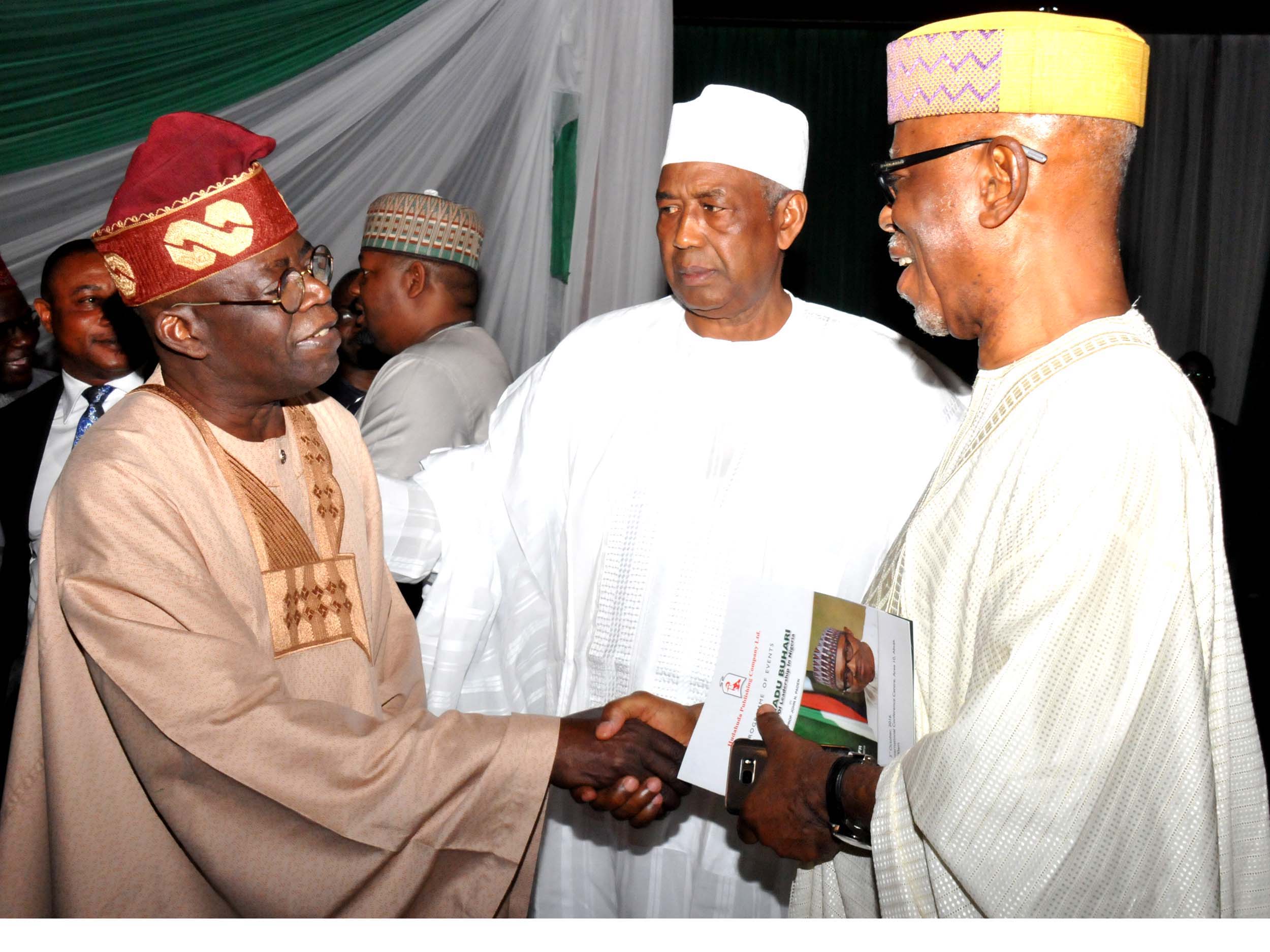
Those were the days when the going was rosy for the now disturbed chairman. He was practically riding high and enjoying the support of the party at the highest level, all to the detriment of a national leader of the party, Asiwaju Bola Ahmed Tinubu. Tinubu has not played down his reservation for the person of Oyegun and the position he occupied since their battle for the soul of Ondo State, which Oyegun won.

Both party bigwigs had argued over the choice of the candidate for the APC during the Ondo State Governorship election. Tinubu’s choice of Segun Abraham was set aside by Oyegun as Rotimi Akeredolu was presented, and he eventually won the election. He demystified Tinubu’s invincibility in South West politics, and that temporarily put paid to his commandeering status of a political stalwart.

However, in a twist of fortune, President Buhari, in his address at the APC’s National Working Committee (NWC) on March 28, 2018, reclined his support for the tenure elongation of Oyegun and his co-travellers. He cited his turnaround decision on advice given to him by the Attorney-General of the Federation.

“But Oyegun’s problems were far from over as Electoral committee of the party hastily released a timetable that perfectly took care of the impending election, stating that a change of leadership was obvious. Oyegun’s fate was sealed. The gang up went a step further to put forward a formidable candidate in the person of the former Governor of Edo State, Comrade Adams Oshiomhole”

The president’s turn-around, in the real sense, was seen as a capitulation to Bola Tinubu, a former Lagos State governor and prominent party leader, who has been pushing hard to ease Oyegun out of office. Observers say that he was able to get the President’s attention to do his bidding because of his ambition to seek a second term in office which it is believed Tinubu can conveniently bring about.

The President’s declaration pitched him against Oyegun and in favour of Tinubu. It was not long before all those who sang Oyegun’s praises just a month before turned around and screamed ‘crucify him’; it was a case of whosoever the president be for, no partyman can be against him.

Much as the Oyegun-camp fought spiritedly, obtaining a resolution that was reportedly adopted unanimously by members of the All Progressives Congress National Executive Committee (APC-NEC), giving the current National Working Committee (NWC) an approval to continue overseeing the affairs of the party for another one year in the absence of a valid convention, the status quo has refused to change.

Though the resolution could see Oyegun remain the chairman of the party until after the 2019 elections, it was seen as faulty by those who want him out of office.

“If for reasons of inability to fulfill constitutional and or legal conditions requisite for the conduct of a valid elective congress or convention, then the party may as a last resort leverage on the NEC resolution of February 27, 2018 which in our view is lawful in the circumstances,” one of the resolutions stated.

But Oyegun’s problems were far from over as Electoral committee of the party hastily released a timetable that perfectly took care of the impending election, stating that a change of leadership was obvious. Oyegun’s fate was sealed. The gang up went a step further to put forward a formidable candidate in the person of the former Governor of Edo State, Comrade Adams Oshiomhole.

Oshiomhole’s choice received the blessings of South-South Leaders of the APC including the only governor of the party from the region, Chief Godwin Obaseki in whose domain the meeting to endorse the former labour leader, was held.

National Vice Chairman of APC in South-South Zone, Ntufam Eta, said majority of South-South Zonal executive committee members present at the meeting agreed to deliver Oshiomhole ahead of APC national Convention.

“The Edo State chapter, led by its Chairman, informed us that the decision was unanimously accepted by the Edo APC Caucus. During the deliberation, the delegation from Rivers State kicked against Oshiomhole’s candidacy, but the voice vote of the zonal executive committee defeated their position, while that of Adams Oshiomhole prevailed and stood as the position of the zonal executive committee of the Party.

“We have done our part. It is now left for the membership of the National Convention to do theirs and we pray that they follow our lead. This is our honest prayer”, he said.

Oyegun was absent at the deliberations though it was said that an invitation was extended to him.

The gang up took a new dimension earlier with a bloc that wants the embattled national chairman of the party out of the office taking their case to the Economic and Financial Crimes Commission (EFCC).

Coming under a group which tagged itself, the “Buhari/APC Anti-Corruption Support Group”, Oyegun’s opponents had stormed the EFCC with a petition accusing the national chairman of corruption.

It was revealed that the protest at the EFCC secretariat was part of a well-coordinated plot to discredit the party chairman against his wish to remain the chairman ahead of the 2019 general elections.

The petition taken to the EFCC, it was further revealed was a follow up to a recent protest memo addressed to the national chairman of the party by its six zonal chairmen.

Bearing placards with the inscriptions such as “EFCC Must Probe Oyegun Now!” “Audit APC’s Account Now’’, and “Oyegun is Killing the Anti-Corruption Policy of Buhari,” members of the group, led by Ishola Adeshina, asked the anti-graft agency to probe the accounts of the ruling party, alleging that Oyegun had been  running the accounts of the party without a recourse to majority of national officers of the party.

In his reaction, the National Publicity Secretary of the party, Bolaji Abdullahi said that the NWC was “not miffed” as he noted that it was within the right of the petitioners to demand for accountability on the finances of the party. He, however, submitted that they were wrong to have engaged in street protests in Abuja.

He said: “I haven’t seen the petition. But if they are asking for a probe of the national working committee, I don’t have any objection. But there is a laid down procedure in the party for demanding for accountability, not street shows.

In the memo, they accused Chief Oyegun of usurping their functions and of alleged financial misdeeds.

In the petition dated January 17, 2018, and signed by Chief Pius Akinyelure (South-west), Comrade Mustapha Salihu (North-east), Alhaji Zakari Idde (North Central), Inuwa Abdulkadir (North-west), Hon. Emma Eneukwu (South-east) and Ntufam Hilliard Eta (South-south), the zonal chairmen alleged that the income and expenditure of the party had never been brought to the consideration and approval of the NWC.  The chairmen further argued that ‘’issues about the finances of the party, have been shrouded in secrecy, saying “Article 14b (iii) of the party’s constitution on finances has been grossly abused since the inception of this body. The state of the financial affairs of the party is shrouded in secrecy and lacking in transparency such that it makes it virtually impossible for members of the National Working Committee to authoritatively defend the various expenditure and incomes.”

If the APC succeeds in removing their chairman before or in June, when a national convention is supposedly billed to take place, they would’ve toed the line of the PDP which fought tooth and nail to remove its chairman, Alhaji Bamanga Tukur in 2014, just months before the party was defeated in the 2015 general elections.

It would be recalled that the clamour for the removal of Tukur led the forming of the newPDP and the subsequent defection of five governors and a host lawmakers from the party. These eventually led to the defeat of the party at the national level.

“The gang up took a new dimension earlier with a bloc that wants the embattled national chairman of the party out of the office taking their case to the Economic and Financial Crimes Commission (EFCC)”

However, the endorsement of Oyegun by some leaders of the party from North-East, North-West and North-Central, recently could create a poser in the equilibrium as the convention draws closer in June.

The leaders, who also called on Tinubu and other APC leaders in the South-West to back Oyegun’s candidacy praised Oyegun for unifying the ruling party, fostering collaboration and encouraging engagements that neither diminishes others moral worth.

The stage is set for a major political intrigue!
Continue Reading
Click to comment

Leave a Reply

Your email address will not be published. Required fields are marked *

Headline

Who’s Afraid of New Electoral Act?

Published

on

By

By Eric Elezuo

The furore generated with the passing of the Electoral Bill 2026 by the Nigerian Senate, is yet to die down as various groups, sections and institutions, have continued to lend their voices in condemnation of the tactical removal of the proposed real-time electronic transmission of results.

The Civil Society Organisations and Action Aid have declared a protest to kickoff on Monday, February 9, 2026, titled Occupy NASS Protest, until the Senate find reason to listen to Nigerians, and do what is right, and that aligned with the aspirations of Nigerians, according Samson Itodo, the Executive Director of YIAGA Africa.

In the same vein, the African Democratic Congress has pledged to begin a protest in Abuja on Monday over the removal of real-time clause in the new electoral bill.

The Senate, on Wednesday, passed the Electoral Bill 2026 following hours of debate, but ended up rejecting a proposal to mandate real-time electronic transmission of election results while however, approving significant reforms to election timelines, penalties for electoral offences and voting technology.

The Boss learnt that at the centre of the controversy was Section 60, which governs the transmission of polling unit results, where the Senators voted down a recommendation by the Senate Committee on Electoral Matters that would have compelled presiding officers to upload results to the INEC Result Viewing (IReV) portal in real time. The rejection has drawn the irk of majority of Nigerians, who have have wondered if anyone is actually afraid of the new electoral law? If yes, who? And what could be the reason behind such fears as the need to regulate a hitchfree and smooth and fair electoral process have remained the goal and aspirations of politically savvy Nigerian.

But the lawmakers, contrary to the yearnings of most Nigerians, have retained the approach in the 2022 Electoral Act, which allows electronic transmission after votes are counted and publicly announced at the polling unit. In other words, giving approval to transfer of results instead of transmit in real-time of results.

In their defence however, Senators opposing the real-time upload argued that inconsistent network coverage and logistical challenges could trigger legal disputes and undermine electoral credibility.

The rejected proposal was contained in the new Clause 60(5) of the draft bill, which aimed to mandate presiding officers to electronically transmit polling unit results in real time after completing and signing Form EC8A.

The clause was designed to strengthen transparency and reduce electoral malpractice through technology-driven result management.

The motion to reject the electronic transmission clause was swiftly seconded by the Deputy President of the Senate, Barau Jibrin.

Similarly, the Senate also rejected a proposed amendment under Clause 47 that would have allowed voters to present electronically-generated voter identification, including a downloadable voter card with a unique Quick Response (QR) code, as a valid means of accreditation.

In his defensive remarks, the Chairman of the Senate Committee on Media and Public Affairs, Adeyemi Adaramodu, described the debate as a process subjected to an invisible world of semantics.

“Electronic transmission remains part of the law,” he said, “and results will continue to be available to the public both electronically and through physical forms, ensuring verifiable records for disputes,” Adaramodu said.

In his own defence, President of the Senate, Godswill Akpabio, though admitted that the Senate deliberately deleted the provision for “real-time” transmission of election results from the Electoral Bill, 2026, noted however, that the Senate took the decision because it believed that “technology must save and not endanger democracy.”

Speaking at the launch of a book, “The Burden of Legislators in Nigeria”, authored by Senator Effiong Bob, in Abuja, Akpabio likened the issues raised in the book to the challenges faced by lawmakers in the course of their duties, including the controversy and alleged “abuses” directed at the Senate following the passage of the electoral bill.

The Senate President argued that the entire country could be thrown into chaos if, for instance, network or power failure affected the uploading of results.

He insisted that Form EC8A and other official election records should remain the most reliable means of declaring results.

“All we said was to remove the word ‘real-time’ to allow INEC decide the mode of transmission. If you make it mandatory and there is a system failure, there will be a serious problem,” Akpabio told the gathering, further confirming that the bill, as passed, excluded real-time electronic transmission of results.

Continuing, he said, “Real-time means that if there are nine states where there is no network, does it mean elections will not take place there?

“Or in any part of the country where there is a grid breakdown, does it mean there will be no election?”

The Senate President sounded a note of warning to Nigerians amid outrage, saying the legislature would not be “intimidated” into passing a faulty law simply to please opposition political parties, civil society groups and non-governmental organisations (NGOs).

He criticised NGOs for insisting that because they organised retreats for lawmakers, where ideas were exchanged on the electoral bill, the Senate must adopt their positions, even if such positions did not align with the interests of all segments of the country.

“Why are people setting up panels on television stations and abusing senators? I leave them to God.

“We will not be intimidated but will do what is right for Nigeria, not what one NGO says. A retreat is not law-making.

“Why do you think that the paper you agreed to in Lagos must be what we must approve?” he asked.

Akpabio frowned at the public attacks on the Senate, saying they were uncalled for, and stressing that any provision rejected by the Senate could be reinstated by the Conference Committee of the Senate and the House of Representatives. He said there was therefore no need to hastily criticise senators.

“We have not even completed it until we look at the votes and proceedings. When we bring out the votes and proceedings, any senator has the right to rise and amend it.

“We can amend anything before we approve the votes and proceedings. Why abuse the Senate when what we have is incomplete?

“I can’t talk until they tell me to drop the gavel. In this case, we are yet to complete the process,” he said.

Besides Akpabio’s defences, many groups and individuals have risen stoutly against the removal of the real-time electronic transmission clause, describing the act as irresponsible and detrimental to the feeling of Nigerians.

In his reaction, the National Chairman of the main opposition party, African Democratic Congress (ADC) Senator David Mark, who himself, was a Senate President, and was also present at the book launch, cautioned Akpabio against speaking for the Independent National Electoral Commission (INEC).

“What the ADC is saying is: pass the law and let INEC decide whether it can implement real-time electronic transmission or not. Don’t speak for INEC.

“The position of the ADC is clear: pass the bill and let INEC decide what it will do with it,” Mark harped.

Reacting also, a former governor of Anambra State and presidential candidate of the Labour Party in the 2023 presidential election, Mr. Peter Obi, delivered knocks to the Senate for the rejection, noting that the Senate decision to stick to the 2022 Electoral Act, which concedes the discretion to apply electronic transmission of results to the Independent National Electoral Commission ( INEC), is an assault on democracy.

In a lengthy post in X titled, “We Continue to Confirm our ‘Now Disgraced Status’ as a Nation?” the now ADC chieftain expressed concern that while other nations have embraced the practise of electronic transmission of results, “the supposed giant of Africa, shamelessly lags behind, dragging the continent backwards.”

He wrote: “Let us all pause and pray for the souls of over 150 innocent lives lost in Kwara yesterday. This tragedy is precisely why I delayed commenting on the outrageous and shameful news surrounding our electoral system.

“The Senate’s blatant rejection of mandatory electronic transmission of election results is an unforgivable act of electoral manipulation ahead of 2027.

“This failure to pass a clear safeguard is nothing short of a deliberate assault on Nigeria’s democracy. By rejecting these essential transparency measures, they are eroding the very foundation of credible elections. “One must ask: Does the government exist to ensure order and justice, or to institutionalise chaos? Is its purpose to serve the people, or to fulfil the sinister ambitions of a select few?

“The turmoil, disputes, and manipulations that plagued past elections, especially the 2023 general election, stemmed directly from the refusal to fully implement electronic transmission.

“Nigerians were fed excuses of a fabricated “glitch” that never existed. While numerous African nations adopt electronic transmission to bolster democracy, Nigeria, the supposed giant of Africa, shamelessly lags behind, dragging the continent backwards.

“We are wasting time hosting conferences and drafting papers on Nigeria’s problems while we, the leaders and elite, are the real issue. Our deliberate resistance to reform is pulling the country backwards, dragging us toward a primitive state of governance.

“By rejecting mandatory electronic transmission—a critical safeguard for electoral integrity—we are entrenching disorder aimed at perpetuating confusion according to the whims of a small clique. Have we not reached a point where we must think seriously about the future of our country and our children? Should leadership not focus on building a credible, orderly, and livable nation for the next generation, rather than one permanently ensnared in chaos?

“When the former Prime Minister of the UK, aware of our history, labelled us “fantastically corrupt,” we reacted defensively. When President Donald Trump declared us a “now disgraced nation,” we were incensed. Yet, with every act of resistance against transparency and reform, we continue to affirm their claims. Those responsible will later point fingers at others for harming the country while they quietly suffocate its potential.

“Let there be no illusion, the criminality witnessed in 2023 will not be tolerated in 2027. Nigerians everywhere must start getting ready to rise up, resist, and reject the backward trajectory, legitimately and decisively reclaim our country from the clutches of deliberate malevolence.

“The International community must take heed of this groundwork for continued future electoral manipulation, endangering our democracy and development.”

Another respondent, Akin Osuntokun, who was the Labour Party campaign DG in 2023, noted that the removal is an affront to democracy.

“It (Rejection of e-transmission of election results) does not portend good omen, it does not portend good for the growth of democracy in Nigeria.

“The growth of democracy is rooted in accountability and the integrity of elections.

“So anything that makes elections less accountable makes the election less credible. Automatically, it is a drag and an obstruction of the growth of democracy in Nigeria.

“It does not serve the purpose of democratic consolidation, so far as the elections that are conducted on that basis will not meet the bar or threshold of credible election,” Osuntokun said while fielding questions from NAN.

Also, opposition senators have stepped out as a group, insisting that the Senate passed the Act with provision of real-time in it, stressing that anything other than that, is not a document from the Senate.

In the midst of the public outrage, Akpabio has insisted that senate did not remove or reject electronic transmission, clarifying that it cannot guarantee the transmission of results in real time hence the omission of the status of ‘real-time’.

While presiding over the debate session, Akpabio also dismissed claims that electronic transmission had been removed, emphasising that “Retaining that provision means electronic transmission remains part of our law.”

WHAT THE SENATORS CONSIDERED APPROPRIATE FOR THE ELECTORAL BILL

But beyond the brouhaha of real-time electronic transmission, other major amendments to Nigeria’s electoral calendar were approved by the Senate.

The election notice period was reduced from 360 days to 180 days, the deadline for submission of party candidate lists was shortened from 120 to 90 days, and the nomination period was cut from 180 to 90 days.

To deter electoral malpractice, the fine for unlawful possession of voters’ cards was increased from N500,000 to N5 million, though the Senate rejected a proposal for a 10-year ban on vote-buyers, opting for stiffer financial penalties instead. The smart card reader was officially removed from the electoral framework and replaced with the Bimodal Voter Accreditation System (BVAS).

Under the retained provisions, presiding officers are required to count votes at the polling unit, record results on prescribed forms, announce them publicly and transmit them electronically to the appropriate collation centre.

The e-transmission of results, if approved, would have required INEC presiding officers to upload results from each polling unit to the IReV portal in real time, immediately after completing Form EC&A, which must be signed and stamped by the presiding officer and countersigned by party agents.
Instead, the senators chose to retain the present Electoral Act provision, which mandates that “the presiding officer shall transfer the results, including the total number of accredited voters and the results of the ballot, in a manner as prescribed by the Commission.”

Lawmakers voted to retain the existing 2022 provisions requiring voters to present their Permanent Voter’s Card (PVC) for accreditation at polling units.

The Senate further upheld the provision mandating the use of the Bimodal Voter Accreditation System (BVAS) or any other technological device prescribed by INEC for voter verification and authentication, rather than allowing alternative digital identification methods as proposed in the new bill.

With these decisions, the Senate reaffirmed the use of PVC and BVAS-based accreditation while rejecting efforts to expand digital voter identification and make electronic transmission of results compulsory.

Meanwhile, while Nigerians are planning to occupy NASS beginning from Monday, the Senate has called an emergency plenary for which the agenda is hitherto unknown, but related to votes and proceedings. It is interesting time in the Nigerian political circle now.

The bone of contention has remained ‘real-time’, and Nigerians continue to ask, ‘who is afraid of new electoral act’?

Continue Reading

Headline

Senate Passes Electoral Bill 2026, Rejects Real-time Electronic Transmission of Results

Published

on

By

The Senate, yesterday, passed the Electoral Bill 2026 following hours of robust debate. But it rejected a proposal to mandate real-time electronic transmission of election results while approving significant reforms to election timelines, penalties for electoral offences and voting technology.

At the centre of the controversy was Section 60, which governs the transmission of polling unit results. Senators voted down a recommendation by the Senate Committee on Electoral Matters that would have compelled presiding officers to upload results to the INEC Result Viewing (IReV) portal in real time.

Instead, lawmakers retained the approach in the 2022 Electoral Act, which allows electronic transmission after votes are counted and publicly announced at the polling unit.

Relatedly, the Independent National Electoral Commission (INEC), which concluded work on the timetable and schedule of activities for the 2027 general election, is unable to release it due to ongoing amendments to the Electoral Act by the National Assembly.

It also identified the inclusion of deceased persons on the voters’ register, prompting plans for a nationwide verification exercise.

On its part, the African Democratic Congress (ADC) raised the alarm over the National Assembly’s delay in passing the Electoral Act amendments, warning that the situation could expose political parties to technical and legal pitfalls ahead of the 2027 general elections.

Under the retained provisions, presiding officers are required to: count votes at the polling unit, record results on prescribed forms, announce them publicly and transmit them electronically to the appropriate collation centre.

Copies must also be provided to polling agents and security personnel where available. Violators face fines of up to N500,000 or a minimum of six months’ imprisonment.

Senators opposing the real-time upload argued that inconsistent network coverage and logistical challenges could trigger legal disputes and undermine electoral credibility.

Chairman of the Senate Committee on Media and Public Affairs, Adeyemi Adaramodu, described the debate as largely semantic.

“Electronic transmission remains part of the law,” he said, “and results will continue to be available to the public both electronically and through physical forms, ensuring verifiable records for disputes.”

Beyond the transmission debate, the Senate approved far-reaching amendments to Nigeria’s electoral calendar. The election notice period was reduced from 360 days to 180 days, the deadline for submission of party candidate lists was shortened from 120 to 90 days, and the nomination period was cut from 180 to 90 days.

To deter electoral malpractice, the fine for unlawful possession of voters’ cards was increased from N500,000 to N5 million, though the Senate rejected a proposal for a 10-year ban on vote-buyers, opting for stiffer financial penalties instead. The smart card reader was officially removed from the electoral framework and replaced with the Bimodal Voter Accreditation System (BVAS).

Presiding over the session, Senate President Godswill Akpabio dismissed claims that electronic transmission had been removed, emphasising: “Retaining that provision means electronic transmission remains part of our law.”

INEC Chairman, Prof Joash Amupitan, noted the delay yesterday in Abuja at INEC’s first quarterly consultative meeting with Civil Society Organisations (CSOs).

The e-transmission of results, if approved, would have required INEC presiding officers to upload results from each polling unit to the IReV portal in real time, immediately after completing Form EC&A, which must be signed and stamped by the presiding officer and countersigned by party agents.
Instead, the senators chose to retain the present Electoral Act provision, which mandates that “the presiding officer shall transfer the results, including the total number of accredited voters and the results of the ballot, in a manner as prescribed by the Commission.”

The rejected proposal was contained in the new Clause 60(5) of the draft bill, which aimed to mandate presiding officers to electronically transmit polling unit results in real time after completing and signing Form EC8A.

The clause was designed to strengthen transparency and reduce electoral malpractice through technology-driven result management.

The motion to reject the electronic transmission clause was swiftly seconded by the Deputy President of the Senate, Barau Jibrin.

Similarly, the Senate also rejected a proposed amendment under Clause 47 that would have allowed voters to present electronically-generated voter identification, including a downloadable voter card with a unique Quick Response (QR) code, as a valid means of accreditation.

Lawmakers voted to retain the existing 2022 provisions requiring voters to present their Permanent Voter’s Card (PVC) for accreditation at polling units.

The Senate further upheld the provision mandating the use of the Bimodal Voter Accreditation System (BVAS) or any other technological device prescribed by INEC for voter verification and authentication, rather than allowing alternative digital identification methods as proposed in the new bill.

With these decisions, the Senate reaffirmed the use of PVC and BVAS-based accreditation while rejecting efforts to expand digital voter identification and make electronic transmission of results compulsory.

The Guardian

Continue Reading

Headline

Wike Remains Undisputed Rivers APC, PDP Leader, Tinubu Rules

Published

on

By

President Bola Tinubu has, again, intervened to halt the escalating feud between Rivers State Governor, Siminalayi Fubara, and his predecessor and estranged godfather, Nyesom Wike.

The peace deal came after months of failed settlements that had pushed the state to the brink of governorship impeachment, legislative paralysis, and prolonged instability.

The president had previously intervened in the rift between Fubara and Wike in December 2023, when he brokered a fragile peace, which broke down soon after, leading the declaration of a six-month emergency rule in the state on March 18, 2025 by Tinubu and suspension of the governor.

However, in the fresh push to defuse one of the country’s most combustible political disagreements in recent times, Tinubu ordered an immediate suspension of any impeachment moves against Fubara, but with very strict conditions.

Multiple highly placed sources familiar with the issue told THISDAY that Tinubu, who acted just before departing for an official trip to Türkiye on January 26, laid down the political terms aimed at restoring peace between the two key political actors in Rivers State, a state seen as critical to the president’s re-election in 2027.

Tinubu’s intervention came with a blunt message to Fubara: Wike remains the undisputed political leader of the party, whether APC or Peoples Democratic Party (PDP) in Rivers State, and he must be respected in that regard.

THISDAY was told that the president, visibly displeased by the depth of the rift, despite his efforts in the past, warned that continued hostilities would undermine governance in the state and lead to instability, a situation Tinubu said he was not ready to condone.

Tinubu was said to have clearly told Wike to back off any impeachment plots against Fubara and allow governance in the state.

Fubara and his predecessor, Wike, have had a cat and mouse relationship just within months of the governor’s swearing into office in May 2023. What is now out in the open is that Wike, who personally engineered Fubara’semergence as his successor, has sought to control the levers of power from Abuja, while the governor has resisted what many see as the FCT minister’s chokehold on him.

The relationship began to fracture within months of Fubara’s inauguration, as the governor quietly sought to assert his independence, with political actors in the state immediately taking sides. Notably, in the ongoing fight, almost all the state lawmakers align with Wike.

Subsequently, attempts to impeach Fubara emerged from the pro-Wike group in the House of Assembly. Although the governor has tried to wriggle out of the situation several times, the shadows of impeachment continue to haunt him every time there is a disagreement with the minister.

Several efforts have been made to resolve the crisis, all of which failed to produce lasting peace. The failure of one of the peace meetings eventually led to the declaration of a state of emergency in the oil-rich state, which lasted six months.

While Wike’s camp continues to accuse Fubara of betrayal and political ingratitude, the governor’s allies argue that Rivers State cannot be run from outside the state by a former governor now serving as the FCT minister.

Still on the latest attempt to seek an end to the prolonged imbroglio, one insider recounted the president’s thinking, drawing a parallel with Lagos State, where Sanwo-Olu is the leader of the party.

Tinubu was said to have stated, “Is Babajide Sanwo-Olu my leader in Lagos, or was Babatunde Fashola my leader when he was governor?”, according to a source.

The president was equally said to have stated that Fubara should respect elders, saying Wike is an elder statesman in Rivers politics and should be regarded as such. Tinubu, one of the sources added, made it clear that political seniority could not be wished away because of personal disagreements.

As part of the peace deal, the president directed Wike and his camp to immediately halt all impeachment-related actions against Fubara, citing his overriding concern about stability in Rivers State.

In return, Fubara was instructed to make significant concessions. Chief among them was the formal recognition of Wike as the “political leader” in Rivers State, with final authority on party matters.

Sources said Tinubu stressed that all internal party disputes in the state must ultimately defer to Wike.

However, the complexity of Wike’s case is that he is not a card-carrying member of APC in Rivers State. Officially, he remains a member of the struggling opposition PDP, although he is a top minister under the ruling APC government – A position he has used to weaken his party, the PDP.

Besides, the understanding covered the upcoming state House of Assembly bye-elections in Rivers State. Tinubu directed that candidates loyal to Wike should be recognised by the APC leadership for the two vacant assembly seats. “It was explicitly stated that Wike has two candidates for the by-elections and that those candidates are to be recognised by the APC party structure,” one source said.

Already, Independent National Electoral Commission (INEC) has fixed February 21, 2026 for the contentious by-elections into Ahoada East II and Khana II State Constituencies of the state.

THISDAY learnt that while the Ahoada-East II seat became vacant following the resignation of its former occupant, Edison Ehie, who was appointed Chief of Staff (CoS) to Governor Fubara, the Khana II seat was vacant since the death of its lawmaker, Dinebari Loolo, in September 2023.

Notably, the sensitive issue of Fubara’s second term ambition also came up for deliberation, the source said, but was deliberately side-lined, with the president alleged to have said such discussions were too early for now. One source said Tinubu described any talk about the 2027 governorship in the state as still premature.

ThisDay/Arise News

Continue Reading

Trending