Opinion
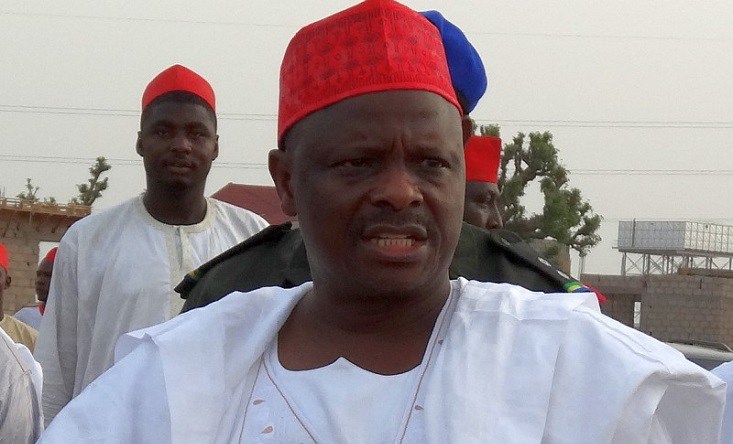
The Candidate of Necessity: Why Gawuna Could Be Kwankwaso’s Trump Card in 2027
Published
1 hour agoon
By
Eric
By Dr. Sani Sa’idu Baba
There is a particular kind of political fury that comes not from anger alone, but from patience, the slow deliberate accumulation of grievances until the moment is ripe for a devastating counterstrike. In Kano politics today, that moment may be fast approaching, and at its centre stand two men whose destinies appear to be converging toward one explosive objective: defeating the All Progressives Congress (APC) in 2027.
We could recall that, Nasir Yusuf Gawuna delivered over 800,000 votes for the APC in 2023 and was rewarded with chairman Governing Council of Bayero University Kano, while others who either allegedly worked against the party or contributed nothing received ministerial and other juicy appointments. His entitlements as former deputy governor reportedly remain unpaid. His godfather Abdullahi Umar Ganduje moved on. The party that he bled for quietly discarded him.
Yet, beneath this unfolding drama lies a deeper historical irony that could now reshape Kano’s political future. Gawuna was not always outside the orbit of Rabiu Musa Kwankwaso. He was once a loyal Kwankwasiyya follower and served as a commissioner under Kwankwaso between 2011 and 2015 before realigning with Ganduje, first as commissioner and later as deputy governor. This history complicates the popular argument that Kwankwaso never forgives political defectors. On the contrary, emerging realities suggest that Kwankwaso may not only forgive Gawuna, but could elevate him, transforming a former defector into a “candidate of necessity.”
Meanwhile, Senator Kwankwaso, one of Nigeria’s most disciplined political generals, is carrying his own wound. His former godson Abba Kabir Yusuf, who rode to power largely on Kwankwasiyya’s machinery, has since drifted into open alignment with the APC, the movement’s historic adversary. For Kwankwaso, a man who thinks in decades, this perceived betrayal demands a response proportional to its scale and that response may well be delivered through Gawuna.
In purely electoral terms, the arithmetic is staggering. Gawuna’s 800,000-plus personal votes drawn from youth groups, Islamic clerics, and the Kano business community, layered on top of Kwankwasiyya’s legendary grassroots infrastructure, would produce a combination that analysts describe as simply unbeatable. What once looked like an unlikely reunion is increasingly being interpreted as a strategic convergence, one driven less by sentiment and more by necessity.
This is precisely why President Bola Ahmed Tinubu is reportedly alarmed enough to dispatch a Zamfara senator and a senior presidential adviser to reach Gawuna, while the APC dangles an automatic senatorial ticket as a sweetener. Kano is too critical to federal political calculations to lose without a fight.
Yet, the most telling detail in this entire drama is that Gawuna’s phone has reportedly been on “Do Not Disturb.” The man who was invisible to his party when appointments were being shared is now the most important call in northern Nigerian politics and he is on vacation in North Africa, unbothered.
That silence is not accidental. It is the posture of a man who finally has leverage and knows exactly how to use it.
Whether he ultimately answers Abuja’s calls or walks fully into Kwankwaso’s camp, one thing is already certain: the APC’s greatest threat in Kano 2027 may be the man they themselves abandoned.
Dr. Baba writes from Kano, and can be reached via drssbaba@yahoo.com
Related
You may like
Opinion
Characterisation of Biomass Feedstocks Relaxation Properties Using Visco Elastic Models
Published
7 minutes agoon
March 28, 2026By
Eric
By Dr. Aminu Owonikoko, PhD
Overview
This thesis investigates a deceptively simple but industrially important question: what happens to biomass materials when they are compressed and then allowed to relax? Biomass — such as woodchips, wheat straw, leafy residues, cotton seeds, and wood pellets — is a major renewable resource used for energy production and sustainable manufacturing. However, its physical behaviour during handling, storage, and processing is poorly understood. Unlike uniform materials such as sand or grain, biomass is irregular, springy, and unpredictable. This unpredictability leads to blockages, equipment failures, and inefficient energy use in biomass processing plants.
The research provides a scientific foundation for predicting how biomass behaves under pressure by combining controlled experiments with Visco elastic modelling. The work introduces a new method for extracting key model parameters, enabling more accurate and transparent predictions of biomass relaxation behaviour.
Why Biomass Behaviour Matters
Biomass supply chains involve several mechanical steps: compaction, transport, storage, and feeding into processing equipment. During these steps, biomass is often compressed. Once the pressure is removed, the material “relaxes” — it expands, shifts, and redistributes internal stresses. This relaxation affects:
• how much biomass can be stored
• how reliably it flows through hoppers and conveyors
• how much energy is required to process it
• the likelihood of blockages or equipment downtime
Understanding this behaviour is essential for designing efficient, reliable, and cost effective biomass systems.
Research Aim
The central aim of the thesis is to characterise the stress relaxation behaviour of five biomass feedstocks and to develop robust Visco elastic models that can predict this behaviour under different loading conditions.
Experimental Approach
Five biomass materials were selected due to their relevance in renewable energy and agricultural supply chains:
• Fuzzy cotton seeds
• Leafy biomass
• Wheat straw
• Woodchips
• Wood pellets
Each material was compressed using a Shimadzu MTS testing machine. After reaching a target stress level, the load was held constant while the material’s stress decay was recorded over time (typically 60, 120, and 180 seconds). These measurements captured both fast relaxation (immediate stress drop) and slow relaxation (longer term settling).
The experimental data revealed that each biomass type behaves differently, reflecting differences in structure, moisture content, particle shape, and internal bonding.
Modelling Approach
To interpret the experimental results, the thesis applies Visco elastic models — mathematical tools traditionally used to describe materials that behave partly like solids and partly like fluids. Two models were central:
1. Zener Model
– Captures both elastic and viscous behaviour
– Useful for materials with a clear fast relaxation component
2. Two Maxwell Elements Model
– Represents two relaxation processes simultaneously
– Ideal for materials with both fast and slow relaxation phases
A key contribution of the thesis is the development of a numerical and graphical method for estimating model parameters (such as relaxation time constants) without relying heavily on curve fitting software like MATLAB or OriginPro. This method improves transparency, reduces error, and makes the modelling approach more accessible to engineers.
Key Findings
1. Biomass Has Distinct Relaxation “Signatures”
Each biomass type exhibits a unique pattern of stress decay. For example:
• Wood pellets relax quickly and predictably.
• Leafy biomass relaxes slowly and irregularly.
• Wheat straw shows intermediate behaviour.
These signatures can be used to classify materials and predict their handling performance.
2. Fast and Slow Relaxation Are Mechanically Meaningful
The two Maxwell elements model successfully separates fast and slow relaxation processes. This distinction helps engineers understand how biomass responds immediately after compression versus how it settles over time.
3. New Parameter Extraction Method Improves Accuracy
The thesis introduces a novel approach for estimating relaxation time constants and stress components. This reduces dependence on automated curve fitting tools and provides more reliable model predictions.
4. Models Predict Real Behaviour Well
When applied to experimental data, both the Zener and two Maxwell models accurately reproduce the relaxation curves. This confirms that Visco elastic modelling is a powerful tool for biomass characterisation.
Practical Implications
The findings have direct relevance for industries that handle biomass:
• Improved equipment design: Better predictions of relaxation behaviour reduce blockages and mechanical failures.
• Optimised storage: Understanding how biomass settles helps determine safe and efficient storage densities.
• Reduced energy use: More predictable flow reduces the energy required for conveying and processing.
• Enhanced process reliability: Plants can operate more consistently with fewer interruptions.
Conclusion
This thesis provides a comprehensive experimental and theoretical framework for understanding biomass relaxation behaviour. By combining detailed measurements with improved Visco elastic modelling, it offers new insights into how biomass responds under pressure — insights that are essential for scaling up renewable energy and sustainable manufacturing.
The work advances both scientific understanding and practical engineering, contributing to the development of cleaner, more efficient biomass systems.
Related
Opinion
Open Letter to British Prime Minister, Sir Keir Starmer by Gold Emmanuel
Published
5 days agoon
March 23, 2026By
Eric
I. THE LETTER
To: The Rt Hon Sir Keir Starmer KCB KC MP
10 Downing Street
London
Sir Keir,
I hope this letter finds you in jubilant spirit. My name is Gold Emmanuel, and although we have never met, your recent conduct has made this correspondence unavoidable. I will cut straight to the chase without further ado.
History will likely remember you as the first British Prime Minister in the modern era to master the art of flogging a dead horse. During President Tinubu’s March 2026 state visit, the first by a West African leader in thirty‑seven years, you revived a brand of colonial‑era mercantilism that even your predecessors had the sense to leave in the archives. From the moment the Nigerian delegation was ushered from Heathrow with choreographed warmth, to the meticulously staged Windsor banquet with its polished silver, curated smiles and diplomatic theatre, you created the illusion of mutual respect. Yet beneath the chandeliers and velvet tablecloths, you were quietly engineering a £746 million export finance deal designed not to uplift Nigeria, but to resuscitate Britain’s faltering industrial strategy.
The “dead horse” here is the illusion of a partnership of equals. A clinical examination of the Lagos and Tin Can Island port refurbishment contract exposes the gaping loopholes your government has exploited:
– The British Steel Loophole: By ring‑fencing £236 million of the credit for British firms, including a record £70 million lifeline for Scunthorpe‑based British Steel, you ensured that the “loan” never actually leaves the UK. You are flogging the dead horse of Nigeria’s already “red” coffers to resurrect British manufacturing, forcing Nigeria to pay interest on a domestic subsidy disguised as “international development.”
– The Sovereign Risk Vacuum: Instead of genuine private‑sector investment, your administration deployed a Buyer Credit Facility via Citibank, guaranteed by UK Export Finance (UKEF). This ensures the UK is made whole by the Nigerian taxpayer regardless of project success, an extractive model that makes even the most rigid conditionalities of the 1980s appear benevolent.
– The Port‑for‑People Trade: In a move that marks a moral nadir, you tied infrastructure credit to an expedited migration pact. By compelling Nigeria to recognise “UK Letters” for swift deportations, you effectively traded 120,000 tonnes of steel billets for the right to return vulnerable people to a conflict zone.
This migration pact is not merely “sleeky”; it is a calculated circumvention of the 1951 Refugee Convention. By institutionalising “UK Letters,” identification documents issued solely by your Home Office, you have bypassed Article 33, which prohibits refoulement: The forcible return of individuals to territories where they face threats to life or freedom. Your “Expedited Return Protocols” further violate the Convention’s requirement for individualised, non‑discriminatory assessment. You have created a legal loophole that enables mass removals before claims can be judicially reviewed, in direct defiance of the UNHCR’s global mandate.
To understand the true cost of your “success,” one must look beyond the silver service of Windsor to the scorched earth of Kwara State. In February 2026, the Woro and Nuku massacres, the deadliest jihadist attacks outside the North East in a decade, left more than 200 dead and 38 kidnapped. While you discussed “port efficiencies,” Nigerian children were being abducted by the JAS terror group. Your migration pact ignores UNHCR guidance, which expressly forbids the forced return of civilians to regions where they face a real risk of serious harm. You demand “order at the border” while Nigeria faces its deadliest insurgency in years.
The predatory nature of your policy is now unmistakable. You have designed a system to take their money, to make them permanent debtors, and then to deport their citizens into a void of nothingness. You have ensured that the Nigerian treasury is bled dry to support Scunthorpe’s furnaces, while the human beings who sought refuge in Britain are discarded back into the very “virtual vice” of terror, where 1,258 people were slaughtered in the first six weeks of 2026 that they sacrificed everything to escape.
Compared with your predecessors, the cynicism of your approach is staggering. Even under the rhetoric of Empire, there was at least a pretence of building institutions. Under your leadership, the relationship has been reduced to a transaction i.e. Nigeria takes the debt, the UK takes the steel orders and the Nigerian diaspora takes the fall. You have managed to be more extractive than the Conservatives and more indifferent to human rights than the pragmatists of the 1990s.
The “sleeky lender” has indeed found its “clumsy borrower,” but the reverse burden lies at your doorstep. It is not for the Nigerian villager to prove they are in danger; it is for your government to explain how a £70 million steel contract justifies the refoulement of human beings into a war zone. You are not building a bridge between nations; you are constructing a one‑way track for British capital, paved with the discarded dignity of the Nigerian people.
And so, Sir Keir, let us dispense with the pretence. A banquet does not make a partnership. A warm reception does not make a fair deal. And no amount of silverware can disguise a policy architecture built on extraction, dispossession and political convenience. You have chosen the short‑term profit of a loan shark over the long‑term integrity expected of a global leader. History will record it accordingly.
I attach a petition for your perusal before its public release.
II. THE PETITION
PETITION TO THE PARLIAMENT OF THE UNITED KINGDOM
Subject: Urgent Inquiry into the Ethical and Legal Viability of the UK–Nigeria Export Finance and Migration Partnership
WE, THE UNDERSIGNED, concerned observers and citizens, petition the Government to immediately suspend the migration provisions attached to the £746 million UKEF port refurbishment deal with Nigeria.
PETITION GROUNDS
– Violation of International Law: The use of “UK Letters” to bypass sovereign passport verification directly contravenes Article 33 of the 1951 Refugee Convention and undermines the principle of non‑refoulement.
– Unfair Contractual Terms: The “British Steel” ring‑fencing clause constitutes an unethical use of export finance, forcing a developing nation to assume high‑interest debt to subsidise UK domestic industry.
– Security Risk Misalignment: Enforcing deportations while Nigeria remains in a state of high‑intensity insurgency, evidenced by the 2026 Woro and Nuku massacres, is a breach of the UK’s duty of care and human rights obligations.
– Detrimental Financial Implication: The commission and interest structures represent predatory lending. The “sleeky lender” (UK) bears zero project risk while the “clumsy borrower” (Nigeria) mortgages its primary maritime assets, on terms your own Government condemns in loan‑sharking legislation.
ACTION REQUESTED
We call for a full Parliamentary Select Committee inquiry into the “Port‑for‑People” trade‑off and the immediate cessation of forced removals to Nigeria until a full, independent security assessment is completed.
III. PRESS‑READY PUBLIC STATEMENT
For media, civil society and public circulation.
FOR IMMEDIATE RELEASE
UK–Nigeria Deal Condemned as “Port‑for‑People Trade‑Off” in Explosive Open Letter to Prime Minister
Gold Emmanuel has issued a blistering open letter to Prime Minister Sir Keir Starmer, accusing his government of reviving colonial‑era mercantilism under the guise of a £746 million export finance deal with Nigeria. The letter alleges that:
– Britain ring‑fenced £236 million for UK firms, including £70 million for British Steel
– The deal forces Nigeria to assume debt for what is effectively a UK domestic subsidy
– The migration pact attached to the deal violates the 1951 Refugee Convention
– Deportations are being accelerated despite escalating jihadist violence in Nigeria
A petition has been submitted to Parliament calling for:
– Suspension of all deportations to Nigeria
– A Select Committee inquiry
– A full review of the UK’s use of “UK Letters” for forced removals
“This is not partnership,” Emmanuel writes. “It is extraction dressed as diplomacy.”
IV. PARLIAMENTARY BRIEFING NOTE
For MPs, Lords, Select Committees.
BRIEFING: UK–Nigeria Export Finance & Migration Partnership
Key Issues:
– Legal: Potential breach of Article 33 of the Refugee Convention
– Financial: UKEF structure shifts all risk to Nigeria
– Industrial: £236m ring‑fenced for UK suppliers
– Security: Deportations to active conflict zones
– Ethical: Migration conditionality tied to infrastructure credit
Recommendation: Immediate Select Committee inquiry and suspension of removals pending security assessment.
V. INTERNATIONAL HUMAN RIGHTS SUBMISSION VERSION
For UNHCR, OHCHR, Amnesty, HRW.
SUBMISSION: UK–Nigeria Migration Protocol and Risk of Refoulement
The UK’s use of “UK Letters” for expedited removals to Nigeria constitutes:
– A circumvention of Article 33 (non‑refoulement)
– A violation of the requirement for individualised risk assessment
– A breach of UNHCR guidance on returns to conflict zones
The situation in Kwara State and the Middle Belt demonstrates a real risk of serious harm, making forced returns unlawful under international human rights standards.
Requested Action:
Urgent review and public statement from relevant bodies.
Copied
Related
Opinion
Why Investing in People Outperforms Every Resource on Earth
Published
7 days agoon
March 21, 2026By
Eric
By Tolulope A. Adegoke, PhD
“The truest measure of a nation’s riches lies not in the depths of its mines or the breadth of its fields, but in the minds, hearts, and hands of its people—created in divine image, called to steward creation, and destined to multiply possibilities through faithful cultivation and wise leadership.” – Tolulope A. Adegoke, PhD
In an era defined by finite natural resources, rapid technological change, and global interdependence, a profound truth resonates across philosophy, faith, economics, and management: the greatest wealth is not buried beneath the earth in minerals, oil, or soil, but stands upon it in the form of human beings. This perspective challenges the traditional fixation on extractive riches and redirects attention to the living, creative, and relational capacity of people. Far from a poetic sentiment, it represents a divinely ordained reality, empirically validated across nations, and strategically indispensable for unlocking possibilities at every level of human endeavor—among individuals and communities (peoples), within corporations, and across entire nations.
This comprehensive examination draws upon timeless biblical revelation, rigorous empirical data from global institutions such as the World Bank and the Institute for Economics and Peace, and established principles from strategic management theory to demonstrate that humans constitute the ultimate resource. As stewards created in the image of God, people possess inherent dignity, creativity, and dominion that no mineral deposit or fossil fuel can replicate. Investing in human potential—through education, health, skills, and ethical empowerment—yields exponential returns that transcend material extraction and deliver sustainable prosperity, innovation, and resilience.
Biblical Foundations: Humans as God’s Image-Bearers and Vicegerents
The scriptural narrative establishes human beings as the pinnacle of creation and the greatest earthly asset long before modern economics articulated the concept. In Genesis 1:26–28, God declares, “Let us make man in our image, after our likeness. And let them have dominion over the fish of the sea and over the birds of the heavens and over the livestock and over all the earth and over every creeping thing that creeps on the earth.” This declaration is not incidental; it links the imago Dei—the image of God—with the mandate of dominion. Humans are entrusted with responsible stewardship over creation precisely because they reflect divine attributes: rationality, creativity, relationality, moral agency, and purposeful productivity.
This truth is echoed in Psalm 8:4–6, where the psalmist marvels, “What is man that you are mindful of him, and the son of man that you care for him? Yet you have made him a little lower than the heavenly beings and crowned him with glory and honor. You have given him dominion over the works of your hands.” Humanity’s crowning with glory underscores intrinsic worth that far surpasses any natural resource. Unlike oil reserves that deplete or mineral veins that exhaust, human potential compounds through generations when nurtured.
The New Testament reinforces this dignity. Jesus’ teachings, such as the Parable of the Talents in Matthew 25:14–30, portray God as entrusting resources to servants for multiplication through faithful stewardship—symbolizing the investment in human capacity rather than hoarding material wealth. The apostle Paul further affirms in Colossians 3:10 that believers are renewed “in knowledge after the image of its creator,” emphasizing ongoing development of the mind and spirit. These passages collectively reveal that God ordained humans—not the ground beneath them—as the primary vehicle for realizing creation’s possibilities. Dominion is exercised not through exploitation but through creative cultivation, innovation, and relational justice, making every person a living repository of divine potential.
Empirical Evidence: Human Capital as the Driver of Productivity and National Prosperity
Contemporary data unequivocally validate this ancient insight. The World Bank’s Human Capital Index Plus (HCI+) 2026 report provides compelling global evidence that human development accounts for up to two-thirds of cross-country income differences. The index measures the expected productivity of a child born today based on health, education, and employment outcomes extending to age 65. Striking disparities emerge: GDP per hour worked in the world’s ten most productive countries exceeds that of the ten least productive nations by more than thirty times. These gaps stem not primarily from natural resource endowments but from deficits in nutrition, learning, and workforce skills.
The report reveals sobering realities: 86 out of 129 low- and middle-income countries experienced stagnation or regression in key human capital components between 2010 and 2025. Deficits in these areas are projected to cost children born today approximately half of their potential future earnings. Conversely, countries that prioritize human investment outperform expectations relative to their GDP per capita. High relative performers include Vietnam, India, Malaysia, Jamaica, Kenya, and the Kyrgyz Republic—nations that have leveraged education, health, and skills to drive growth despite modest natural resources.
This pattern refutes the “resource curse” documented in seminal studies, such as Jeffrey Sachs and Andrew Warner’s 1997 analysis, which found that economies heavily dependent on natural resource exports in 1970 grew more slowly over subsequent decades. In contrast, resource-scarce yet human-rich nations have achieved remarkable transformations. South Korea’s economic miracle from 1960 to 1979 was propelled by massive investments in education and productivity rather than physical capital alone. Human capital and total factor productivity explained growth per worker comparably to physical investments, enabling the country to rise from post-war poverty to global industrial leadership without significant mineral wealth.
Singapore offers an equally compelling case. With virtually no natural resources, it achieved a 2023 Human Development Index of 0.946 (ranking among the world’s highest) through deliberate policies in education, healthcare, and skills development. Its transformation from a trading port to a knowledge-based economy illustrates how human ingenuity creates value where raw materials cannot. Japan and Israel similarly demonstrate resilience: Japan rebuilt after World War II through human capital intensity, while Israel—often called the “Start-Up Nation”—thrives on innovation ecosystems fueled by educated citizens despite arid land and limited conventional resources.
Longitudinal cross-country analyses, including Robert Barro’s 1991 study on economic growth, consistently show that higher human capital (measured by schooling and health) correlates with elevated investment rates, lower fertility (enabling demographic dividends), and sustained GDP growth. These empirical patterns confirm that humans are not merely consumers of resources but creators who multiply value exponentially.
Professional Management and Strategic Evidence: Humans as the VRIO Source of Competitive Advantage
Strategic management theory elevates this empirical reality into actionable frameworks. Gary Becker’s pioneering Human Capital (1964, expanded 1975 and 1993) treated education, training, and health as investments analogous to physical capital. Becker demonstrated that such investments yield measurable returns in earnings, productivity, and national growth—explaining the “residual” in economic models that physical capital and labor alone could not account for. Organizations and societies that systematically enhance human capabilities realize compounding advantages.
Peter Drucker, the father of modern management, famously observed in the late 20th century that “the most valuable assets of a 20th-century company were its production equipment. The most valuable asset of a 21st-century institution… will be its knowledge workers and their productivity.” Drucker foresaw the shift to a knowledge economy where human intellect, creativity, and adaptability become the decisive factors. In today’s context of artificial intelligence and digital transformation, this insight has only intensified: technology amplifies human potential but cannot replace the judgment, innovation, and relational intelligence that define knowledge work.
The Resource-Based View (RBV) of the firm, formalized by Jay Barney in his 1991 seminal paper “Firm Resources and Sustained Competitive Advantage,” provides the strategic capstone. According to RBV, resources deliver sustained advantage when they are Valuable, Rare, Inimitable, and Organized (VRIO). Human capital frequently satisfies all four criteria: it is valuable for generating economic rents; rare in its unique combinations of skills and experience; difficult to imitate due to path-dependent development and tacit knowledge; and organizable through culture, leadership, and systems. Empirical assessments of RBV confirm that firms prioritizing talent development outperform peers reliant on tangible assets. Companies such as Microsoft under Satya Nadella or Google (Alphabet) have achieved market dominance not through superior physical infrastructure but through relentless investment in attracting, developing, and retaining exceptional human talent.
Indispensable Roles: Delivering Possibilities Across Peoples, Corporations, and Nations
At the level of peoples (individuals and communities), humans as the greatest resource translate divine image-bearing into personal agency and collective uplift. Education and health investments empower individuals to exercise dominion creatively—innovating solutions, building families, and fostering communities. Empirical returns are clear: each additional year of schooling can increase individual earnings by 8–10 percent globally, while healthy populations contribute to demographic dividends that accelerate societal progress.
In corporations, strategic human capital management drives innovation, adaptability, and stakeholder value. Talent-centric organizations cultivate cultures of continuous learning, psychological safety, and ethical purpose. They outperform asset-heavy competitors by leveraging knowledge workers to navigate disruption, as evidenced in Deloitte’s 2026 Global Human Capital Trends, which highlight that competitive advantage increasingly depends on human-edge scaling amid AI proliferation. Corporations that treat employees as investments rather than costs achieve higher engagement, retention, and long-term profitability.
For nations, human resource development constitutes the foundation of sovereignty, resilience, and inclusive growth. Policies that prioritize universal health, quality education, and lifelong skills—aligned with the World Bank’s HCI+ recommendations—reduce inequality, mitigate shocks (from pandemics to climate events), and position countries for participation in the global knowledge economy. Nations ignoring this reality risk stagnation, while those embracing it, as Singapore and South Korea have, convert human potential into geopolitical influence and shared prosperity.
Relevance to All-Round Leadership and Global/National Security: Empirical Foundations and Strategic Imperatives
The recognition of humans as the greatest wealth extends profoundly into the realm of all-round leadership and security, where human capital emerges as the indispensable foundation for holistic governance, resilience, and sustainable peace. All-round leadership—integrating self-mastery, visionary foresight, relational wisdom, strategic execution, team alignment, and ethical integrity—cannot flourish in isolation from a well-nurtured populace. Biblical leadership models, such as Nehemiah’s reconstruction of Jerusalem’s walls (Nehemiah 4–6), illustrate this synergy: wise, prayerful, and inclusive leadership combined with empowered citizens to restore both physical and spiritual security. Proverbs 29:18 reinforces the principle: “Where there is no vision, the people perish,” underscoring that visionary leaders depend on developed human potential to translate ideals into enduring stability.
Empirically, the Institute for Economics and Peace’s Global Peace Index 2025 and its Positive Peace framework provide robust international-standard evidence. Positive Peace comprises eight interconnected pillars that build resilience and prevent conflict, one of which is explicitly “High Levels of Human Capital.” This pillar—centered on education, skills, and health—shows one of the strongest positive correlations with overall peacefulness, well-functioning government, low corruption, and equitable resource distribution. Countries ranking high on the Human Capital Index consistently occupy the top positions in the Global Peace Index: Iceland, New Zealand, and the Nordic nations demonstrate how sustained investment in people generates not only economic vitality but also societal cohesion and institutional trust that underpin national security.
In contrast, nations trapped in the resource curse—rich in minerals yet deficient in human capital—exhibit heightened insecurity, including internal conflict, governance fragility, and vulnerability to external shocks. The IEP data reveal that improvements in human capital are among the most powerful predictors of sustained Positive Peace, enabling societies to absorb geopolitical, cyber, or environmental disruptions without descending into violence. The World Economic Forum’s Global Risks Report 2026 and Global Cybersecurity Outlook 2026 further corroborate this: human talent gaps exacerbate cyber vulnerabilities, supply-chain fragility, and leadership deficits in crisis response. Organizations and nations with robust human capital pipelines, by contrast, exhibit superior resilience through adaptive leadership and collective intelligence.
Strategically, all-round leadership thrives when human resources are cultivated as the primary asset. Harvard Business Impact’s 2025 Global Leadership Development Study highlights that organizations prioritizing human capital development produce leaders who excel in navigating volatility, fostering innovation, and upholding ethical standards—precisely the qualities required for 21st-century security challenges. At the national level, this translates into comprehensive security: not merely military defense but human security encompassing economic stability, food sovereignty, cyber defense, and social harmony. Singapore’s transformation and Israel’s innovation-driven defense ecosystem exemplify how human-centered strategies convert potential vulnerability into strategic strength. Investing in people thus becomes both a divine mandate and a pragmatic security imperative, creating resilient leaders and societies capable of stewarding peace amid uncertainty.
Conclusion: A Divine and Strategic Imperative for Investment
The greatest wealth is indeed not in the ground but on the ground—embodied in every human life created in God’s image. Biblical revelation affirms this dignity and dominion; empirical data from the World Bank’s HCI+ 2026, the Institute for Economics and Peace’s Global Peace Index 2025, and decades of econometric research demonstrate its productivity, leadership, and security dividends; and strategic frameworks from Becker, Drucker, and Barney prove its competitive necessity. Across individuals, corporations, nations, leadership, and security architectures, humans deliver possibilities that no extractive industry can match: innovation that solves intractable problems, relationships that build trust and cohesion, visionary governance that prevents conflict, and stewardship that sustains creation for future generations.
The call to action is both spiritual and pragmatic: invest sacrificially in people through education, healthcare, ethical leadership development, inclusive opportunity, and Positive Peace-building initiatives. In doing so, societies honor their Creator, unlock exponential value, fulfill the dominion mandate responsibly, and fortify all-round leadership and security in an interdependent world. In a world tempted by short-term extraction, the timeless truth endures—true riches walk upon the ground, bearing the image of God and the potential to transform everything they touch. Nations, organizations, and communities that recognize and cultivate this reality will not merely survive but flourish, leaving legacies of abundance, wise leadership, and enduring peace for generations yet to come.
Dr. Tolulope A. Adegoke, AMBP-UN is a globally recognized scholar-practitioner and thought leader at the nexus of security, governance, and strategic leadership. His mission is dedicated to advancing ethical governance, strategic human capital development, and resilient nation-building, and global peace. He can be reached via: tolulopeadegoke01@gmail.com, globalstageimpacts@gmail.com
Related


Characterisation of Biomass Feedstocks Relaxation Properties Using Visco Elastic Models
The Candidate of Necessity: Why Gawuna Could Be Kwankwaso’s Trump Card in 2027
The Oracle: The New Digital Colonialism: Navigating AI Policy Under Foreign Tech Dominance (Pt. 4)
WAEC Releases Results of CB-WASSCE 2026-First Series for Private Candidates
APC Convention: FG Blocks Roads, Orders Workers to Operate from Home
Friday Sermon: Accountability on the Day of Judgment
Tech and Humanity: AI Will Not Replace Us – But It Will Reveal Us
Trump Announces 5-Day Ceasefire on Strikes Against Iran, Opts for Talks
AFCON 2025: CAS Overturns CAF Verdict
The Travails of Nasir El-Rufai
Open Letter to British Prime Minister, Sir Keir Starmer by Gold Emmanuel
Dangote Warns of Dire Consequences for Nigeria If Iran War Continues
IGP Disu Redeploys Top Police Officers in Major Shake-up
FG Helpless over Power Outages, Minister Adelabu Admits, Apologises to Nigerians
Trending
-
World5 days agoTrump Announces 5-Day Ceasefire on Strikes Against Iran, Opts for Talks
-
Sports3 days agoAFCON 2025: CAS Overturns CAF Verdict
-
Headline6 days agoThe Travails of Nasir El-Rufai
-
Opinion5 days agoOpen Letter to British Prime Minister, Sir Keir Starmer by Gold Emmanuel
-
Headline4 days agoDangote Warns of Dire Consequences for Nigeria If Iran War Continues
-
News3 days agoIGP Disu Redeploys Top Police Officers in Major Shake-up
-
News3 days agoFG Helpless over Power Outages, Minister Adelabu Admits, Apologises to Nigerians
-
News2 days agoADC Unveils Approved Timetable for Congresses, Convention