Connect with us

Featured

Dasuki Was Right! Reps Minority Caucus Exposes ‘Alterations’ in Gazetted Tax Laws

Published

on

The House of Representatives Minority Caucus Ad-hoc Committee on Tax Laws, on Friday, said it had confirmed that illegal alterations were made to some tax reform laws passed by the National Assembly and assented to by the President, raising concerns about legislative integrity and constitutional breaches.

The committee made the disclosure in its interim report on allegations of discrepancies between the laws passed by parliament and versions later published in the official gazette.

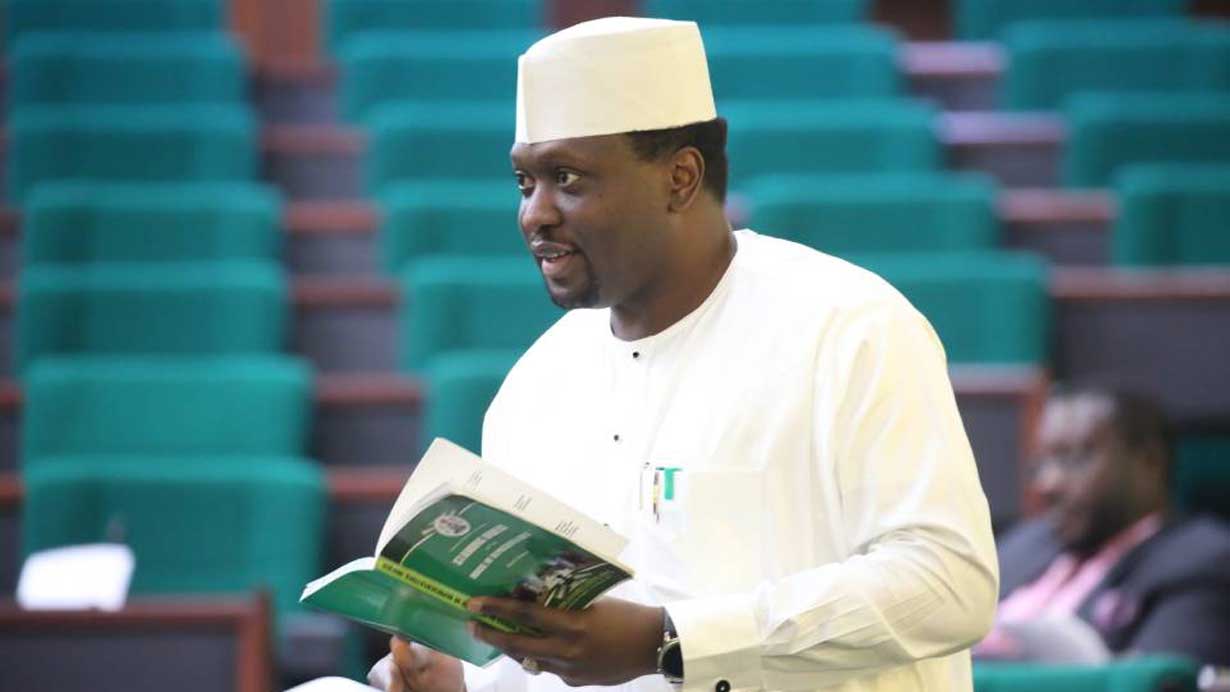
The controversy began after a member of the House, Abdulsamad Dasuki, raised the alarm during plenary over the circulation of an “authorised” tax law version that differed from what lawmakers passed.

Following public outrage, the minority caucus issued a statement on December 28, 2025, vowing to “unconditionally protect the independence of the Legislature and our democracy.”

The caucus warned that foisting fake laws on Nigerians amounts to an attack on the constitutional role of the National Assembly.

Fact-finding committee

To investigate the allegations, the caucus, led by Kingsley Chinda, on January 2, 2026, constituted a seven-man ad-hoc committee, chaired by Afam Ogene and six others.

They are Aliyu Garu (Bauchi), Stanley Adedeji (Oyo), Ibe Osonwa (Abia), Marie Ebikake (Bayelsa), Shehu Fagge (Kano), and Gaza Jonathan (Nasarawa).

The mandate was to establish the facts surrounding the alleged manipulation of the tax laws.

In the statement signed by Ogene, the committee said that on January 3, 2026, the House, through its spokesman, Akintunde Rotimi, announced that the Speaker, Abbas Tajudeen, directed the public release of the four tax reform Acts duly signed into law by the President.

The Speaker also ordered an internal verification and immediate release of Certified True Copies (CTCs) to eliminate doubts and preserve the sanctity of the legislature.

The Acts released were Nigeria Tax Act, 2025; Nigeria Tax Administration Act, 2025; National Revenue Service (Establishment) Act, 2025, and Joint Revenue Board (Establishment) Act, 2025.

According to the House, the Clerk to the National Assembly was instructed to align the Acts with the Federal Government Printing Press to ensure accuracy and uniformity.

Findings

The committee said that by comparing the Certified True Copies of the Acts released officially by the House of Representatives as directed by the Speaker, with the already gazetted version already in circulation before the alarm was raised by the House, it could can confirm “that there were some alterations as alleged by Dasuki on the floor of the House of Representatives, especially in the Nigeria Tax Administration Act, 2025”.

“There were three different versions of the documents in circulation, particularly the Nigeria Tax Administration Act, 2025. The order to the Clerk of the National Assembly, to take steps to ‘aligning the Acts – duly passed, assented to, and certified – with the Federal Government Printing Press to ensure accuracy, conformity, and uniformity,’ is a clear indication that there were some procedural anomalies in the previously gazetted version that illegally encroached on the core mandate of the National Assembly, as the only organ of government constitutionally empowered to make laws for the good of the people, as prescribed.

“This is a grave concern that would be deeply looked into,” it added.

Contentious portions

The committee, in its preliminary findings, confirmed that

alterations were made especially in the Nigeria Tax Administration Act, 2025.

“The Nigeria Tax Administration Act (NTAA), 2025, has a number of discrepancies from the version passed by the National Assembly and the version earlier published in the official gazette. These discrepancies are obvious, going by the released Certified True Copies (CTCs) by the House referenced earlier,” it stated.

Citing section 29(1) and 41 (8 and 9) on reporting thresholds, introducing new subsections, and prescribing a mandatory 20 per cent deposit for appeals, respectively, the committee said, “While the NASS Certified version provided for a tax compliance reporting threshold of ₦50 million for individuals and ₦100 million for companies, the gazetted version lowered the reporting thresholds for individuals to (₦25 million from ₦50 million) and (₦100 million from ₦250 million) for companies.

“This is a clear case of the Executive undermining legislative powers by illegally altering an already passed law to drag more taxpayers into the net.

“The gazetted version introduced new subsections 41(8) and 41(9), which required taxpayers to deposit 20 per cent of the disputed tax amount as a condition for appealing Tax Appeal Tribunal (TAT) decisions to the High Court. These sections were not in the authentic version passed by NASS.”

On Section 64, dealing with enforcement and power of arrest, it said that the gazetted law illegally increased the powers of the tax authority to include the power to arrest individuals suspected of tax violations through law enforcement agencies, and allowed for the sale of seized assets without a court order.

Citing Section 3(1) (b), which focuses on the definition of federal taxes, the panel said that while the NASS certified version defines Federal taxes to include income tax, petroleum income tax, stamp duties, and VAT, the gazetted version removed petroleum income tax and VAT from the definition of taxes under the federal government’s administration.

“We consider this an affront to the exclusive powers of the National Assembly to make laws,” it said.

“Section 39(3): Currency of Tax Computation. The illegally altered gazetted Act mandated that tax computations for petroleum operations be made in US dollars. But in the actual version passed by the National Assembly, it prescribed tax calculations in the currency of the transaction,” it added.

On Section 30(1) (d), & 30(3) — National Assembly Oversight Provisions — of the Nigerian Revenue Service (Establishment) Act, it disclosed that it observed, “with grave concern,” that while the authentic version passed by NASS provided that NASS can summon, demand reports or enforce accountability in line with its constitutional role of oversight, the altered gazetted version “curiously deleted” this provision requiring quarterly and annual reporting to parliament regarding the Nigeria Revenue Services, in total disregard and disrespect of the institution of the National Assembly and the doctrine of checks and balances, an important bedrock of democracy.

The committee, therefore, stated that the current evidence was sufficient to warrant a deeper investigation.

“Given the anomalies, illegalities, and impunity observed, which clearly undermine the National Assembly’s constitutional powers and democracy, the Committee finds the current evidence sufficient to warrant a deeper investigation.

“This will ensure accountability for the affront against the legislature. To achieve this, the Committee respectfully requests an extension to conduct a more thorough examination of the matter,” it added.

In June, 2025, President Bola Tinubu assented to the four tax reform bills recently passed by the National Assembly.

According to the presidency, the new tax laws will significantly transform tax administration in the country, leading to increased revenue generation, improved business environment, and a boost in domestic and foreign investments.

Continue Reading
Click to comment

Leave a Reply

Your email address will not be published. Required fields are marked *

Featured

Alleged Forgery: AGF Takes Over Ozekhome’s Case from ICPC

Published

on

By

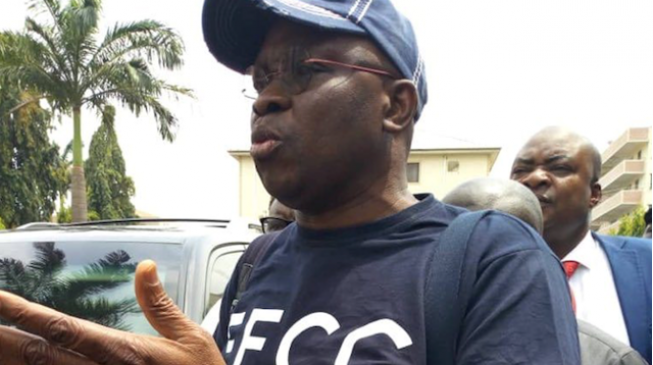
The Attorney General of the Federation (AGF) and Minister of Justice, Lateef Fagbemi (SAN), has taken over the criminal case brought against a senior lawyer, Mike Ozekhome (SAN), by the Independent Corrupt Practices and other related offences Commission (ICPC).

The development, however, stalled Ozekhome’s planned arraignment before a High Court of the Federal Capital Territory (FCT) on the three-count charge filed against him by the ICPC and in which he is accused of, among others, forgery.

At the day’s proceedings, the Director of Public Prosecution of the Federation, Rotimi Oyedepo (SAN), said he was representing the AGF and informed the court of the AGF’s decision to take over the case from the ICPC.

Oyedepo said the AGF was acting under his powers as provided in Section 174 of the Constitution.

Counsel for the ICPC, Osuebeni Akpomisingha, did not object to the takeover of the case by the AGF.

Similarly, a former Attorney General of the Federation, Kanu Agabi (SAN), who led a team of lawyers, comprising 15 SANs for the defence, also did not object to the takeover of the case by Fagbemi.

Upon an application for adjournment by Oyedepo, which was not opposed by Agabi, Justice Peter Kekemeke adjourned till February 24 for arraignment.

The Federal High Court Abuja had fixed January 26 to rule on the final forfeiture of a London property linked to a former Minister of the Federal Capital Territory (FCT), the late Jeremiah Useni.

The decision followed the failure of any individual or representative of Useni’s estate to appear within the 14-day statutory window to show cause why the property should not be forfeited to the Federal Government.

The proceedings arose from an ex parte application filed in late 2025 by the Code of Conduct Bureau (CCB), which sought an interim forfeiture and preservation order over the disputed property, alleging it was acquired with proceeds of unlawful activity.

On November 28, Justice Binta Nyako granted the interim forfeiture order, directing the CCB to advertise the order in a national newspaper within 14 days to invite “any person or body” with an interest in the property to come forward and prove legitimate acquisition.

The property is located on 79 Randall Avenue, London NW2 7SX; named in the property dispute are Ozekhome (SAN), and Useni, a retired Lieutenant-General.

The matter was filed at the First Tier Tribunal (Property Chamber) Land Registration, UK, under case number ref/2023/0155, with Tali Shani as the applicant and Ozekhome as the respondent.

The property had been claimed by one “Ms Tali Shani” on one hand and Ozekhome on the other.

The SAN said he received the house as a gift from “Mr Tali Shani” in 2021, while lawyers for “Ms Shani” insisted she was the rightful owner.

A witness known as “Mr Tali Shani” had testified in favour of Ozekhome, claiming that he had “powers of attorney” over the property and had transferred the property to the respondent (Ozekhome).

Mr Tali Shani asserted ownership of the property from 1993 and claimed he later appointed Useni as his property manager, describing Useni as an “elder friend and business partner”.

On the other hand, several documents, including an obituary announcement, NIN card, ECOWAS passport, phone number, etc were tendered by witnesses of Ms. Tali Shani to claim ownership of the property.

However, the tribunal found all the documents tendered for Ms. Tali Shani to be fake.

The tribunal subsequently dismissed all claims, ruling that neither “Mr” nor “Ms” Tali Shani existed.

Continue Reading

Featured

Tinubu Promises End to ASUU Strikes in Nigeria As UNILAG Holds 56th Convocation Ceremony

Published

on

By

President Bola Tinubu has reassured Nigerians that there will be no more industrial action by the Academic Staff Union of Universities (ASUU) or any other workers’ unions in the nation’s public tertiary institutions.

He stated that his administration is fully committed to this goal and will ensure it becomes a permanent feature of Nigeria’s education landscape.

Tinubu gave the assurance in Lagos while addressing the gathering at the recently concluded 56th Convocation ceremony of the University of Lagos (UNILAG) in Akoka.

A total of 16,506 students for the 2024/2025 academic session, spanning diploma, undergraduate, and postgraduate programs, were graduated at the event.

Speaking further through the Minister of Education, Dr. Tunji Alausa, the president highlighted some of the reforms and interventions his administration has introduced to drive meaningful development in tertiary education. These include the Nigerian Education Loans Fund (NELFUND) for students, the Institutional Staff Support Fund for tertiary school workers, and several other initiatives.

On ASUU, he said: “Since the inception of my administration, we have witnessed two uninterrupted academic sessions across our tertiary institutions, and this is no accident. It is the result of firm political will, sustained dialogue, and responsible leadership.

“For example, acting under my direct mandate, we have been able to sign a new agreement with ASUU that decisively resolves a crisis that has persisted for years and undermined confidence in our university system.

“This landmark achievement marks a turning point in the history of our tertiary education, guaranteeing industrial harmony and a predictable academic calendar. It will restore the dignity of learning and clearly end the era of perennial strikes in our universities.

“My administration will continue to pursue far-reaching reforms across the education sector for a technology-driven future, including curriculum restructuring, quality assurance, promotion of skill-based learning and literacy, and fostering data-competence-based, innovation-led problem-solving.”

Tinubu underscored the importance of universities producing well-rounded graduates who will not only be job-ready but also become job creators and innovators.

Speaking earlier, the Pro-Chancellor and Chairman of the Governing Council of the university, Chief Wole Olanipekun, commended President Tinubu for addressing some of the challenges that have long plagued Nigeria’s public education system, including at the university level.

He, however, expressed strong concern over the rampant abuse of cyberspace in Nigeria, urging the Federal Government and relevant stakeholders to take measures to change this narrative.

He said, “The idea that someone can wake up, insult or abuse another person over the phone, record it, and share it on cyberspace with impunity can only happen in a lawless country.

“Cyberbullying or assault is a serious and punishable offense in countries like the United States and the United Kingdom. Nothing should stop Nigeria from enacting laws and enforcing them to discourage this practice.

“We cannot continue to live without laws guiding our conduct and behavior, both as citizens and as a government.”

Olanipekun congratulated the graduating students, urging them to contribute meaningfully to society.

On her part, the Vice-Chancellor of UNILAG, Prof. Folasade Ogunsola, commended members of the university Senate, staff, and other stakeholders for their commitment to advancing the university.

She congratulated the graduating students and their sponsors on their achievement, noting that all the graduates had been thoroughly trained. She urged them to turn challenges into opportunities to make a positive impact in their chosen fields and society at large.

The highlight of the ceremony was the presentation of academic and honorary awards to deserving individuals.

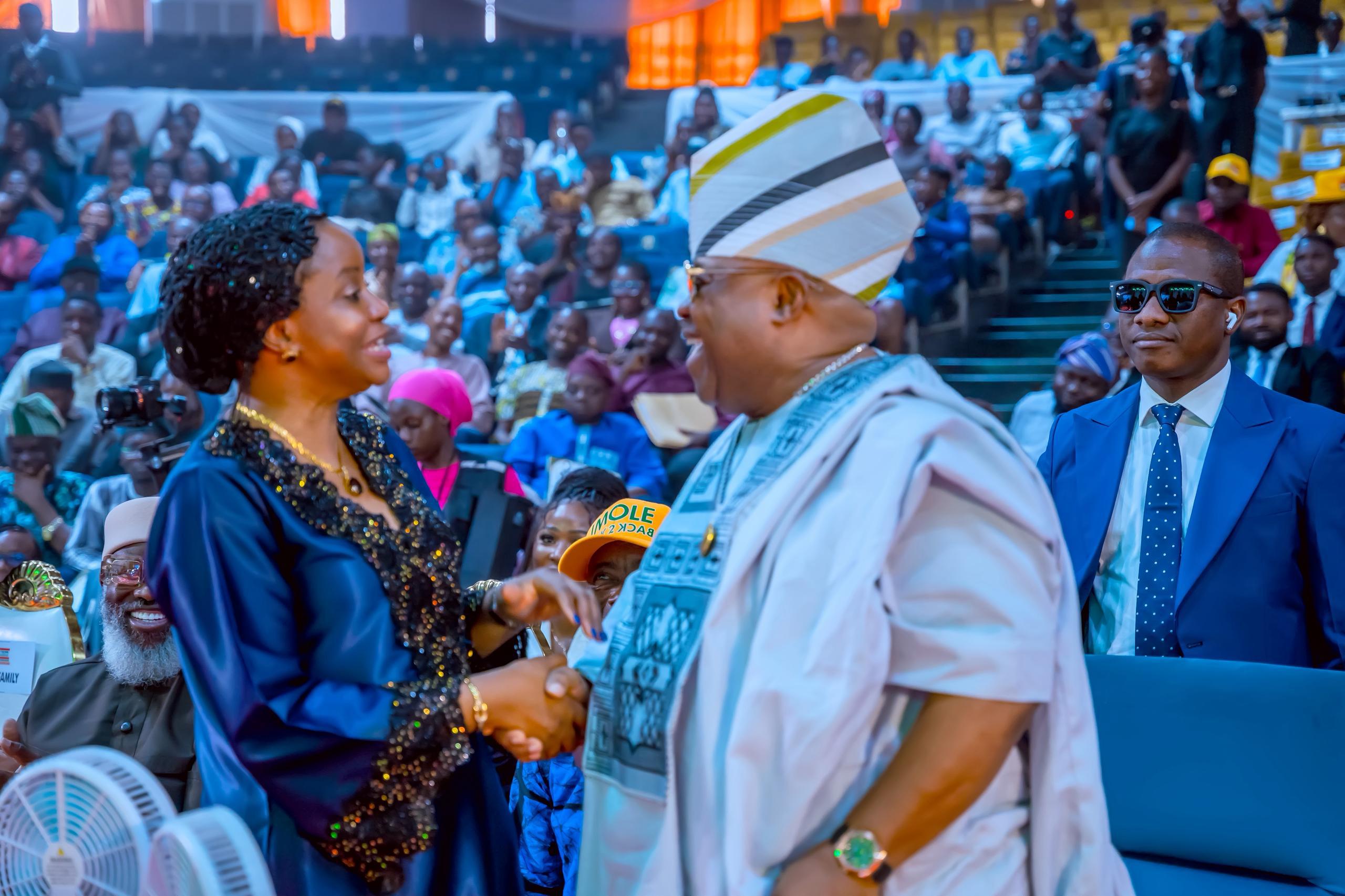
Notable honorees included Distinguished Professors James Olowokudejo and Duro Oni, both retired from UNILAG, who were awarded Emeritus Professorships. Prof. Akinsanya Osibogun, a renowned scholar of medicine, was elevated to Distinguished Professorship.

Other recipients included Professor Ayoka Mopelola Olusakin, former Director of Academic Planning at UNILAG, and Dr. (Mrs.) Taiwo Ipaye, former Registrar, both of whom received the Gold Medal award for their exceptional contributions to UNILAG and humanity.

Mr. Jubril Adewale Tinubu, founder and CEO of Oando Plc, and Mr. Kanu Agabi, former Minister of Justice, were conferred with honorary doctoral degrees.

Additionally, top-performing graduates were recognized, including Chukwuzubelu Benedict Umeozo, who graduated with a perfect 5.0 Cumulative Grade Point Average (CGPA) as the overall best at the undergraduate level; Haruna Abubakar, who emerged as the overall best in the doctoral degree class; and Oyeyemi Adebamowo from the University’s Business School.

Continue Reading

Featured

2027: Minister Musawa Warns Against Substituting Shettima

Published

on

By

The Minister of Culture, Tourism, and Creative Economy, Hannatu Musawa, has cautioned the ruling All Progressives Congress (APC) against altering the current leadership structure, which has a Northern Muslim representation on the presidential ticket.

She further warned that any attempt to alter the current configuration could be a recipe for electoral disaster in the 2027 general election.

Speaking on the Mic On Show with Seun Okinbaloye, Musawa addressed the swirling rumors that the ruling party might pivot away from the Muslim-Muslim ticket that successfully brought President Bola Tinubu to power in 2023. She argued that keeping Vice President Kashim Shettima—or at the very least, a Northern Muslim—is not just a matter of tradition, but a strategic necessity.

Musawa highlighted that the ethnic and religious composition of the ticket is a deciding factor for millions of voters in the region. According to her, the political identity of the North is non-negotiable when it comes to the national stage.

“If there is no Hausa, Fulani or Kanuri Muslim on that ticket, it creates a hurdle. That is the reality of the way people think,” Musawa said.

She elaborated on the sophisticated nature of the Northern electorate, noting that for many, voting is a primary source of civic agency.

The “Core North” Powerhouse, according to her, are Katsina, Kano, Kaduna, Kebbi, Jigawa, Zamfara and Sokoto states.

Regarding these key states, she remarked: “The core North… understands politics at a very deep level. Politics there is a way of life. People wait every four years to line up and vote because that is where they feel they have influence.”

The minister dismissed the idea that the APC could simply swap out its current vice-presidential slot for a non-Northern Muslim without facing a massive backlash at the polls. She labeled those pushing for such a change as out of touch with the grassroots reality of the region.

“I think if we toy with changing the construct of what we have now, it is a problem. People who suggest otherwise may not fully understand how politics works in the North,” she warned.

Turning her attention to the brewing alliances within the opposition, Musawa remained unimpressed. She characterized the current efforts to unseat the Tinubu-Shettima administration as disorganized and ego-driven.

“You have an opposition that is overcrowded. Every single member is vying for the same spot, and that alone creates a recipe for political failure,” Musawa stated.

Despite the activity from rival camps, her confidence in the APC’s staying power remains unshaken.

On the threat level, she said: “We are not taking anybody lightly. But as the opposition is emerging now, I do not see how they can unseat President Tinubu and Vice President Shettima.”

On democratic health, Musawa insisted that “It is good for democracy to have opposition. Nobody wants a one-party state. But we are confident in our political direction.”

Ultimately, Musawa’s stance suggests that while the APC welcomes a challenge, they have no intention of fixing what they believe isn’t broken—especially when it comes to the delicate balance of Northern representation.

Continue Reading

Trending