Connect with us

National

Tinubu Gives Self Pass Mark, Says Nigeria on the Rise Under His Leadership

Published

on

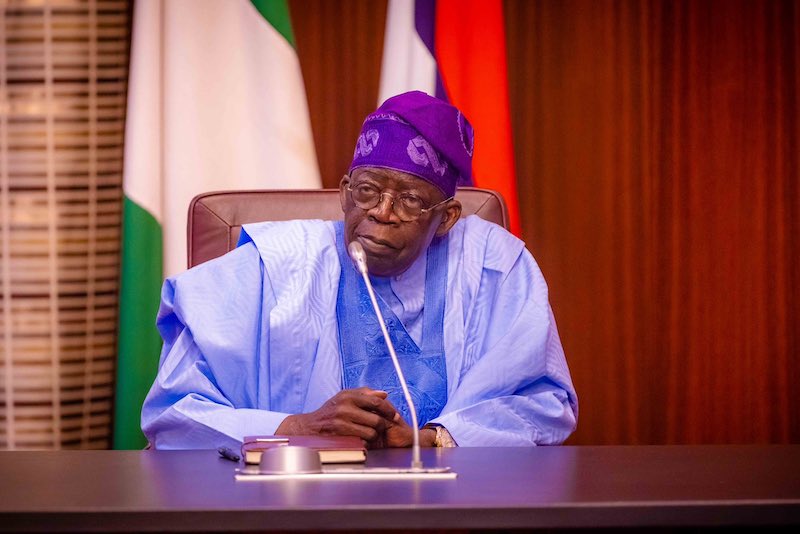
President Bola Tinubu has said that Nigeria is on the rise again under his leadership, while reiterating that leadership is about “thinking and doing” — blending visionary ideas with practical actions to drive stability, unity, and growth.

Tinubu said this on Thursday at Kahala Hotel and Resort, Yokohama, Japan, during an interactive meeting with select members of the Nigerian community on the sidelines of the ongoing Tokyo International Conference on African Development (TICAD9).

The meeting, which brought together professionals and entrepreneurs across various fields, allowed the President to share his administration’s achievements and assure them of his commitment to drive economic growth.

The President who expressed delight at meeting called on Nigerians in the Diaspora to contribute their expertise and resources to consolidating national development and building a stronger and more prosperous country.

He also expressed his delight at meeting those he described as a vibrant representation of Nigeria’s diversity, assuring the Diaspora community that his government is determined to make the country conducive for all citizens.

He noted significant improvements in passport issuance, making the process seamless for residents and the Diaspora. He reaffirmed his administration’s priority to create an environment where every Nigerian can feel the positive impact of change.

“I am happy to listen to you. I’m happy to report that many of our people are returning home. Yes, for economic reasons, some people might decide to stay away; it’s a fundamental right of the individual, but for the economic growth and opportunity available in Nigeria, don’t stay away. Your contribution is very much needed. If you stay away, who will build it?” the President asked.

President Tinubu stressed that national development cannot be left to the government alone; it requires a shared sense of responsibility between citizens at home and those abroad.

He urged the Diaspora community to remain ambassadors of the country by projecting Nigeria positively in their engagements abroad.

“If we don’t join hands and work together, then we’ve lost the hope of being the leaders we are supposed to be,” he cautioned.

He reminded his audience that the strength of citizenship is not only in holding a Nigerian passport but in character and commitment to the nation’s progress.

According to him, negative portrayals of Nigeria do little to advance the cause of development and discourage the investment and partnerships the country needs.

Regarding the economy, Tinubu assured that his administration has stabilised key fundamentals and is driving reforms to unlock immense opportunities for investment and job creation.

He said the government has also reversed the trend of medical tourism by upgrading healthcare infrastructure and expanding access to quality services at home.

The President invited the Minister of State for Industry, Senator John Enoh, and the executive vice chairman of NASENI, Khalil Suleiman Halilu, to speak on the government’s programmes and achievements. Wale Tinubu, the President’s nephew, provided insight into how the government’s reforms have impacted the economy positively by making businesses more competitive, attracting investment, and expanding the stock market.

Some of the Nigerians in Japan expressed their satisfaction with the pace of the government’s reforms, affirming their support. They also pledged to explore avenues for greater involvement in Nigeria’s economic and social transformation.

Mr. Emeka Ebogota, President of the Nigerian Union in Japan, thanked President Tinubu for finding time to meet with them.

He affirmed his members’ support for the administration’s efforts to reposition Nigeria.

Other notable attendees included John Ologbotsere, a Japanese national award winner for electrotechnical standardisation; Mr. Kingsley Kabuyashi, entrepreneur and investor; and businesspeople, doctors, and students.

Also present were the Minister of Foreign Affairs, Ambassador Yusuf Tuggar; Charge d’Affaires, Mrs. Florence Akinyemi Adeseke; Minister of Solid Minerals, Dele Alake; Minister of Regional Development, Abubakar Momoh; Minister of Science and Technology, Uche Nnaji; Minister of Budget, Atiku Bagudu; Minister of State for Finance, Doris Uzoka-Anite; the Director-General of the National Intelligence Agency, Ambassador Mohammed; senior government officials, and top private sector leaders.

Continue Reading
Click to comment

Leave a Reply

Your email address will not be published. Required fields are marked *

National

Police Council Confirms Tunji Disu As Substantive IGP

Published

on

By

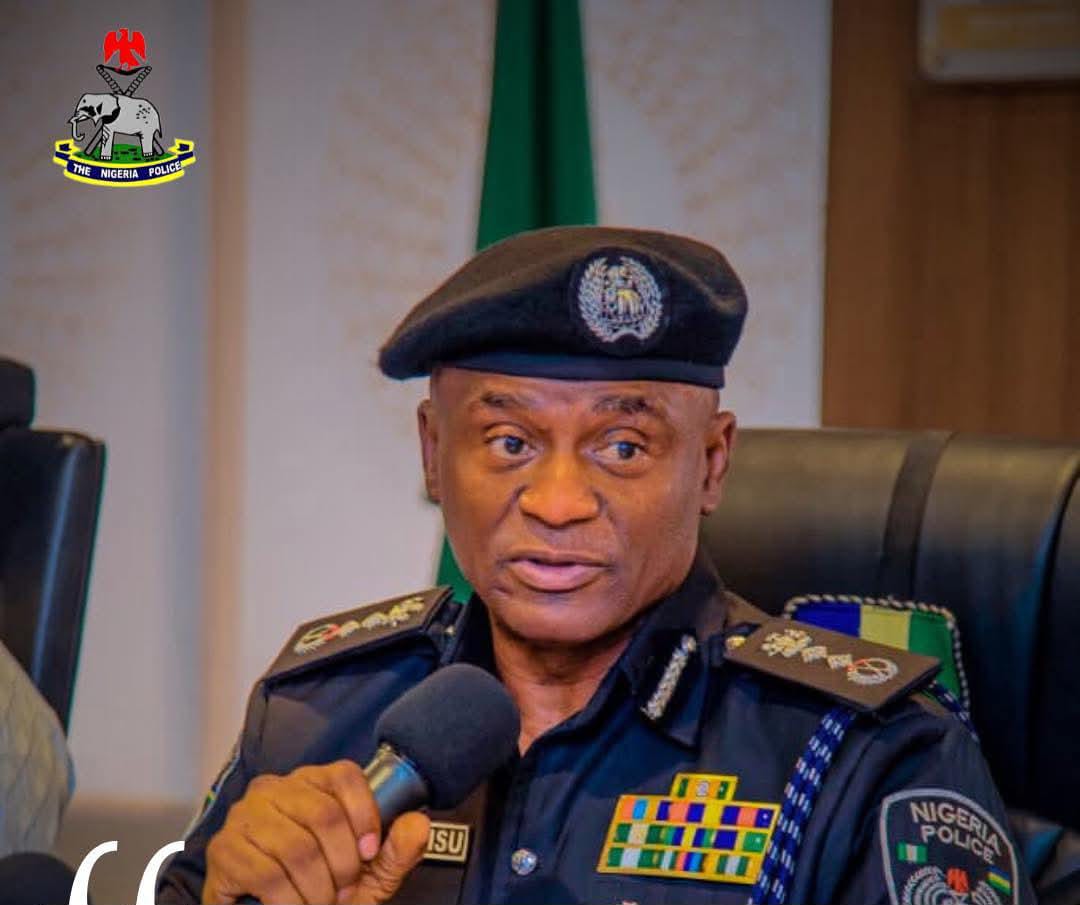
The National Police Council has confirmed Olatunji Disu as the substantive Inspector-General of Police.

His name is now to be sent to the Senate for screening.

President Bola Tinubu appointed Disu as the acting IGP on February 25, 2026, following the resignation of former IGP Kayode Egbetokun.

Tinubu, in a statement by the presidential spokesman, Bayo Onanuga, had said he would convene a meeting of the Nigeria Police Council to formally consider Disu’s appointment as substantive IGP, after which his name would be transmitted to the Senate for confirmation,” he said.

The former AIG assumed office as the acting Inspector-General of Police (IGP) last Wednesday.

Disu, 59, took over the reins as Nigeria’s new police chief at a brief ceremony at the Louis Edet House in Abuja, shortly after President Bola Tinubu decorated him as the acting IGP.

Until his appointment, Disu served as Assistant Inspector-General in charge of the Force Criminal Investigation Department (FCID) Annex, Alagbon, Lagos.

He was promoted to the rank of Assistant Inspector-General of Police last year.

Continue Reading

National

JAMB Warns Against AI-Driven UTME Fraud, Vows Sanctions for Candidates, Parents

Published

on

By

The Joint Admissions and Matriculation Board (JAMB) has announced tough measures against candidates and parents found culpable in examination malpractice, warning that the era of leniency is over.

Speaking in Abuja on Saturday, the Registrar, Professor Ishaq Oloyede, said the Board was alarmed by recent discoveries of organised fraud networks targeting the Unified Tertiary Matriculation Examination (UTME). He described the trend as a serious assault on merit and fairness within Nigeria’s education system.

Oloyede explained that JAMB had over the years committed substantial financial and technological resources to preserving the credibility of its examinations, stressing that these measures were designed to protect millions of diligent candidates who rely solely on hard work.

Investigations, he disclosed, uncovered criminal groups deploying artificial intelligence tools to impersonate JAMB officials and extort unsuspecting candidates. More troubling, according to him, was the active participation of some candidates and their parents, who knowingly paid for illicit assistance.

“The students and their parents are willing collaborators and cannot be regarded as innocent,” the Registrar said.

He revealed that over 100 candidates were linked to the scheme, with 83 confirmed to have made payments across 25 states, indicating that the malpractice is neither regional nor isolated.
He said the Board had forwarded recommendations to the Minister of Education, including the cancellation of affected registrations.

Oloyede also refuted claims circulating in some quarters that JAMB had increased its registration fees, describing the allegation as false and urging the public to report any centre charging above the approved rate.

As part of immediate corrective steps, several Computer-Based Test centres have been sanctioned, with some suspended from further participation in the examination process.

Dismissing suggestions that the Board should negotiate with offenders, the Registrar maintained that criminal conduct must be addressed through lawful channels.
“Why should we now be negotiating with criminals?” he asked, noting that suspects who left the country after previous examinations would be referred to security agencies for due process.

He emphasised that paying for examination fraud constitutes a criminal offence, warning that ignorance would no longer be accepted as a defence. Membership in online groups offering illegal assistance, he added, could also attract penalties.

Addressing parents directly, Oloyede cautioned that financing malpractice undermines a child’s moral foundation and future prospects. Encouraging shortcuts, he noted, sends a dangerous message that dishonesty is an acceptable path to success.

The Registrar further confirmed that some school proprietors were among those arrested in connection with the fraud.

On JAMB’s capacity to confront increasingly sophisticated schemes, Oloyede expressed confidence in the Board’s upgraded technical systems and its collaboration with national security agencies. He stated that enhanced monitoring mechanisms now enable the detection of prohibited electronic devices during examinations.

He also expressed concern over the involvement of underage candidates in malpractice, attributing the trend partly to parental pressure and complicity.

While reiterating that JAMB’s core mandate is the administration of examinations, Oloyede appealed to the media to support efforts aimed at discouraging malpractice and promoting integrity within the education sector.

Continue Reading

National

Federal Government Issues Travel, Safety Warning for Nigerians in Iran, Gulf States

Published

on

By

The Federal Government has advised Nigerians living in the Middle East, particularly in the Islamic Republic of Iran and surrounding Gulf nations, to take extra security precautions following rising military tensions in the region.

In a statement released on Saturday by the Ministry of Foreign Affairs, the government said it is closely watching developments involving military operations reportedly carried out by Israel and the United States against targets in Iran, as well as subsequent retaliatory actions affecting parts of the Gulf.

Authorities urged Nigerian citizens in the affected areas to remain alert and avoid locations considered strategic or sensitive, such as military bases and government installations, which could become flashpoints for further conflict.

The advisory recommended limiting non-essential movement and avoiding public gatherings or demonstrations until the security environment improves.

Nigerians were also advised to comply with instructions from local security agencies, noting that cooperation with authorities is vital for personal safety.

Diplomatic missions, including the Nigerian Embassy in Tehran and consular offices across neighbouring Gulf countries such as Qatar, Bahrain, Kuwait, the United Arab Emirates, and Saudi Arabia, have been placed on high alert to assist citizens and facilitate communication where necessary.

The government reiterated that the safety of Nigerians abroad remains a priority and pledged to continue monitoring the situation while providing updates as developments unfold.

It also appealed to parties involved in the conflict to de-escalate hostilities and return to negotiations in the interest of global peace and stability.

The advisory comes after reports of airstrikes targeting sites in Iranian cities, with explosions and plumes of smoke observed in the capital.

The military actions were described by U.S. officials as efforts to neutralise security threats, while Israeli authorities characterised them as preventive measures.

Donald Trump stated that the United States aimed to eliminate what he described as imminent dangers and vowed to destroy missile infrastructure linked to Iran’s defence capabilities. Israeli officials similarly framed the operations as defensive.

International reactions to the escalation have been cautious. African Union expressed concern over the potential impact on regional and global stability, urging restraint from all sides.

The European Union also weighed in, with European Council President António Costa noting that developments in Iran were troubling and that European leaders remained in contact with regional partners.

The Federal government concluded its statement by calling for peaceful resolution of the crisis and emphasising the importance of diplomacy in addressing security challenges.

Continue Reading

Trending