
Opinion
Rejoinder to Simon Kolawole’s Misrepresentation of The Patriots’ Position on the 1999 Constitution

Published
7 months agoon
By
Eric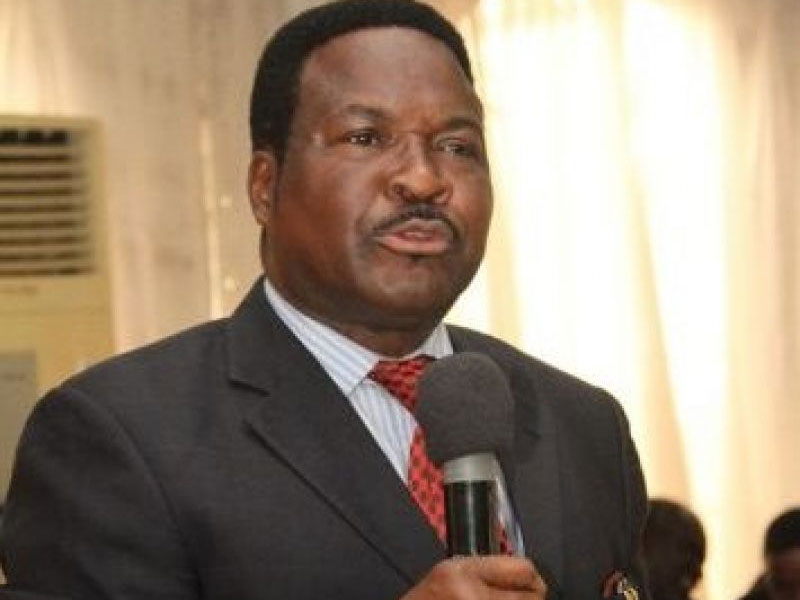

By Prof. Mike Ozekhome, SAN, CON, OFR, Ph.D.
INTRODUCTION
On Sunday, July 27, 2025, respected columnist,Simon Kolawole, published an opinion piece in ThisDay titled,“Back to the 1999 Constitution – Again?” In the said piece, Kolawole sought to downplay or outrightly discredit the persistent and growing calls for the restructuring of Nigeria’s constitutional framework. He targeted, in particular, the longstanding position advanced by patriotic intellectuals and elder statesmen under the collective known as The Patriots, portraying them as revisionists of Nigeria’s constitutional history. But Kolawole’s interpretation not only misrepresents the actual arguments being advanced by The Patriots, it also rests on selective history, unverified assumptions, and a concerning disregard for legal scholarship and political truth. He claimed, among other things, that The Patriots had falsely asserted that the 1999 Constitution was authored by the military and that their stance was either uninformed or deliberately misleading. (See Simon Kolawole, “Let’s Tell Ourselves the Truth about the Constitution,” ThisDay, July 28, 2024.)
PURPOSE OF THIS INTERVENTION
This rejoinder seeks to correct these misrepresentations and restate – clearly and accurately-the long-held position of The Patriots on the 1999 Constitution. It will also address broader issues surrounding the unsuitability of Nigeria’s overcentralized federal structure in a pluralistic society, and highlight areas of the Constitution, particularly the Exclusive Legislative List, that require urgent reform if Nigeria is to remain a just, united, and functional federation.
CLARIFYING THE PATRIOTS’ POSITION ON THE 1999 CONSTITUTION
Simon Kolawole alleges that The Patriots have repeatedly claimed that the 1999 Constitution was “written by the military” and that such a claim is false because “it was drafted by a committee of legal experts and approved by the Provisional Ruling Council.” He suggests that this position lacks intellectual rigor and should be dismissed by well-meaning Nigerians.
However, this is a complete mischaracterization of the Patriots’ position. The Patriots have never claimed that soldiers sat down with pens and drafted the Constitution in a vacuum. No.What they have consistently stated is that the 1999 Constitution is a product of military imposition, lacking the democratic legitimacy that should accompany any foundational legal document in a pluralistic society such as Nigeria.
In a public statement by Professor Ben Nwabueze, SAN – renowned constitutional law scholar and founding member (later Chairman) of The Patriots-it was clearly argued that:
“The 1999 Constitution was imposed by a military regime without a referendum, without public debate, and without the participation of the Nigerian people. It cannot therefore be considered a people’s Constitution.”
Similarly, in a 2001 press briefing, Chief FRA Williams, SAN, another founding member and pioneer chairman of The Patriots, described the 1999 Constitution as:
“A document that merely adapted the 1979 Constitution and was handed down to us by a departing military junta.”
The use of the term “military Constitution” by The Patriots refers therefore not to its literal authorship by soldiers, but to the flawed process of imposition and the absence of participatory legitimacy through a people’s referendum. It is this absence of democratic authorship and validation that underpins The Patriots’ sustained call for a truly autochthonous Constitution-one emerging from the will and deliberation of the Nigerian people.
To suggest otherwise, as Kolawole did, is to either misunderstand the semantics of constitutional discourse or to deliberately distort the message.I prefer to believe that the former is the case. The consequence of such distortion is dangerous: it undermines the gravity and urgency of constitutional reforms by reducing it to a mere semantic disagreement rather than the existential democratic concern that it actually is.
CRITIQUE OF NIGERIA’S OVERCENTRALIZATION
The evolution of Nigeria’s federal structure is marked by a troubling contradiction: although it is constitutionally designated a federation, the actual distribution of power closely resembles that of a unitary state. This paradox can be traced back to the 1966 military coup and the subsequent unification of the country under a single military command structure. The military, inherently centralist in its command hierarchy, dismantled the regional autonomy that had defined Nigeria’s First Republic (1960–1966). (See Olumide Akanbi, “The Evolution of Nigeria’s Federalism and the Military Factor,” Journal of African Federalism, Vol. 3, No. 2, 2018, p. 45.). What some Northern soldiers considered to be the original sin of General J.T.U. Aguiyi-Ironsi, (the then Head of State who seized power during the chaos and crises that ensued during the 15th January, 1966 military coup),was his promulgation of Decree No. 34 pf 1967 which abrogated the federal stricture in favour of a unitary one.
Before the 1966 military intervention, Nigeria’s federalism allowed each of the three (later four) regions (with the creation of the Midwest Region on 10th August, 1963, from Western Region by popular referendum of the people) to exercise substantial control over local affairs. These regions had their own Constitutions, public services, and developmental priorities. However, from General Yakubu Gowon’s Decree No. 8 of 1967, which effectively abolished regional governments in favor of 12 militarily-administered states, to the eventual promulgation of the 1999 Constitution by General Abdulsalami Abubakar’s regime, Nigeria has grown increasingly centralized. Thus, there has never been any conscious effort by successive governments – colonial, civil or military, since Nigeria’s Lugardian almagamation on January 1, 1914 – to have a buy-in of the people through a referendum. None from the 1922 Clifford Constitution;1946 Richards Constitution; 1951 Macpherson Constitution; 1954 Lyttleton Constitution; 1960 Independent Constitution; 1963 Republican Constitution; 1979 Constitution; 1989 Constitution; and up to the 1999 Constitution.
This over centralization of powers at the centre poses severe governance challenges in a country as ethnically,culturally, religiously and linguistically diverse as Nigeria. With about 374 ethnic groups (Prof Onigu Otite), at least 500 spoken languages and strong regional identities, a one-size-fits-all approach to governance is both ineffective and inflammatory. As Rotimi Suberu notes, “centralized federalism in Nigeria breeds disaffection, weakens accountability, and fuels centrifugal tensions.” (Rotimi Suberu, Federalism and Ethnic Conflict in Nigeria, United States Institute of Peace Press, 2001, p. 112.)
For example, the same educational policy enforced in Zamfara State may be culturally, religiously or economically inappropriate in Bayelsa State. Federal government’s directives on land use, resource control or school curriculum rarely accommodates local realities. Similarly, national security priorities are often applied uniformly without sensitivity to regional insecurity dynamics such as the age-long farmer-herder clashes in the Middle Belt, or self-determination agitations in the South East.
Another critical example is the administration of religion. While the federal Constitution of 1999 claims secularism (section 10), certain states enforce Sharia law, while others either remain secular, practise traditional religion,or remain Christian-dominated. Yet, national laws, judicial and other public structures fail to reflect these peculiar realities, often resulting in policy flip-flops and conflict or discrimination claims. This dissonance between forced constitutional uniformity and lived practical plurality experiences is an enduring source of national instability.
Nigeria’s flawed federalism also impedes development. Federating states are heavily dependent on federally-allocated funds (under section 162 of the 1999 Constitution). This disincentivizes local innovation or internally generated revenue (IGR) strategies. Because federal allocation is distributed by formula rather than performance or resource ownership, states have limited autonomy to plan large-scale infrastructure, education, or healthcare interventions independent of Abuja. This also breeds discrimination and resentment. Oil-rich Bayelsa State, for example, shares from the Federation Account less than may non-oil producing communities notwithstanding the attendant oil and gas–related environmental degradation and prevalent poverty.
OVERHAULING THE EXCLUSIVE LEGISLATIVE LIST
The Exclusive Legislative List in the 1999 Constitution (as amended) contains 68 whole items which only the federal government has power to legislate upon. (See Part I, Second Schedule, Constitution of the 1999 Constitution.This list is excessive and counter-productive in a federal system we pretend to operate in our pluralistic society. It takes away vital areas of governance from the reach of states and local governements, despite their proximity to the people. Among the most problematic items are police and security, prisons, railways, mineral resources, electricity generation and transmission, labour and trade unions, education (particularly tertiary), taxation of certain commodities, matrimonial matters, licensing, etc.
This dominant central control over crucial sectors greatly undermines Nigeria’s federal claim and limits each state’s ability to respond to its unique developmental needs.
Take policing, for example. In the United States and India (both federal democracies with complex diversities), subnational units maintain their own police forces with full jurisdictional authority. Yet in Nigeria, only the federal government is constitutionally empowered to create or control the police force under sections 214 and 215 of the 1999 Constitution. The implication is that state governors, though constitutionally described as “chief security officers” of their states, can not control security within their borders. (See Yusuf Olaolu Ali, SAN, Federalism and the Nigerian Constitution: A Legal Perspective, Spectrum Law Review, 2016, p. 78.)
This unitarinsm has proven disastrous. States facing terrorist insurgency, mass kidnapping and ethnic violence are unable to develop local policing models or equip forces that understand the terrain and speak local languages or respond to such vices as they occur. The result is a reactive and overstretched federal police, further alienating citizens from security providers.
Similarly, prison administration is fully centralized; yet most of the crimes prosecuted in Nigeria occur under state criminal laws,not federal laws. This mismatch causes logistical and financial burdens on the federal system while delaying justice. A state-based correctional system, aligned with state judicial authority, would be more efficient and localized to deal with local offences.
In the education sector, control over accreditation, curriculum and policy located at the federal level stifles local creativity and ignores peculiar local needs. States such as Lagos and Rivers which have made giant strides in digital learning and school reforms are constantly required to comply with federal laws that may not reflect their educational needs,local priorities or resources.
Another major area of great concern is resource control and mining. Under the 1999 Constitution, all mineral resources are owned by the federal government, with states entitled only to derivation funds. This has perpetuated sustained injustice leading to the conflict in the Niger Delta.It has created a retrogrssive culture of dependence where resource-rich states remain poor due to limited control over their God-given assets while non-oil producing states live fat on such poor states.An unjust and obnoxious system of sharing the cake without contributing to its baking has thus emerged.
Globally, federations assign such matters to local authorities. In Canada, provinces control natural resources and generate revenue from them. In India, states co-legislate on police, education and public health under a Concurrent List. In the U.S., the Tenth Amendment reserves unenumerated powers to the states. Nigeria’s failure to adopt similar devolution of powers has painfully hindered innovation, democratic accountability and balanced development.
What is therefore needed is a restructuring of the Exclusive Legislative List, pruning it to only essential national matters such as defence, foreign affairs, banking and currency, while moving most socio-economic functions to the Concurrent or Residual Lists. This would not only align with global federalist principles but also reflect Nigeria’s diverse socio-political realities. Only a brand new Constitution emanating from the people’s will after a Constituent Assembly and referendum can bring about such a revolutionary outcome,not piecemeal amendment of the present 1999 Constitution.
ROLE OF THE NATIONAL ASSEMBLY IN CONSTITUTION-MAKING:
THE LEGISLATURE AS ENABLER, NOT ORIGINATOR
It is axiomatic that under constitutional democracy, sovereignty resides in the people. The legislature, while clothed with enormous powers of lawmaking, is not the primary source or originator of the people’s will. Rather, it is a conduit-a servant and enabler-of that will. Nigeria’s National Assembly, as presently constituted, draws its powers from the 1999 Constitution which is itself a product of military fiat, not of popular affirmation of the people. This reality raises a fundamental legal-philosophical contradiction: can a creature of a flawed document presume to re-birth it? Can a child reconfigure its own paternity? The National Assembly, being a product of a schedule attached to Decree No. 24 of 1999, cannot, ab initio, claim any right to author a new grundnorm that overrides its own existential basis. All it can do is to amend, amend and amend the flawed Constitution under section 9 thereof. The reason is that being the tail (representative agent), it cannot wag the dog (the people that own the will).
The National Assembly’s attempts at constitutional amendment-however noble-have therefore largely been elitist and parliamentary, not popular or plebiscitary. Several constitutional alteration bills have been passed (up to 5 already); yet none has bridged the democratic gap of a sovereign national consensus. None has dared to make Chapter 2 justiciable (the Fundamental Objectives and Directive Principle of State Policy). They would never! The people thus watch from the sidelines as professional politicians hold sway over what should be their social contract. That is akin to medical doctors prescribing medication to patients they have not examined. The people’s voice is conspicuously absent in the very document that governs their lives. The legislative arm must therefore reposition itself-not as the progenitor of a new Constitution, but as the facilitator of a new constitutional order birthed by the people themselves through a referendum.
[See Mike Ozekhome, “The Illegality and Illegitimacy of the 1999 Constitution,” ThisDay, April 22, 2024].
CONSTITUTIONAL REFORM VS. CONSTITUTIONAL REWRITING
There exists a grave conceptual and legal dissonance in conflating constitutional reform with constitutional rewriting. Reform is cosmetic; rewriting is foundational. The former merely plasters the gaping cracks of a collapsing edifice. The latter reconstructs its very foundation. Nigeria’s current approach has been that of tentative and timid reforms. Reforms through amendments involve mere tinkering with clauses, altering sections, inserting or deleting subsections-all within the same defective legal framework. This is akin to merely repainting a termite-ridden house while ignoring the need to first fumigate and wholly rebuild; or merely cutting off the branches of a tree threatening the foundations of a house, rather than uprooting it completely.
Rewriting on the other hand is a revolutionary act-peaceful, yet radical. It is negotiated. It requires a complete break from the past; a tabula rasa; a fresh convening of the people; and a new social contract that reflects the genuine aspirations of today’s Nigerians;not those of 1998 military oligarch. Countries like South Africa, Kenya and some others have walked this noble path through convocation of Constituent Assemblies participation in national referenda. Why not Nigeria?
To continue operating the 1999 Constitution is to perpetuate a fraud-a self-deceit that we live under democracy when in fact we are governed by relics of khaki rule. The National Assembly must embrace its transitional role and work with civil society, the judiciary, the executive and all Nigerian stakeholders to midwife-not manufacture-a new constitutional dawn.
[See Jibrin Ibrahim, “Why Nigeria Needs a New Constitution, Not Another Amendment,” Premium Times, March 4, 2021].
NEW REFERENDUM-BASED CONSTITUTIONS: GLOBAL TESTAMENT TO POPULAR SOVEREIGNTY OF THE PEOPLE
The world is replete with nations that emerged from constitutional darkness into the light of participatory democracy and popular governance. Some examples will suffice here to advance this point. Kenya, in 2010, rose from the ashes of electoral violence to birth a new people-oriented Constitution through a referendum. The Kenyan model was not merely legal-it was moral. It sought to heal, not just to rule. South Africa’s 1996 Constitution is another golden standard: a document forged through exhaustive public consultations, grassroots submissions, and national soul-searching, culminating in a powerful symbol of unity post-apartheid.
Ghana’s 1992 Constitution also passed through a national referendum, marking the country’s rebirth after years of military interregnum. In 2022, Chile attempted a similar feat by proposing a new Constitution through a popularly elected Constituent Assembly. Although that version was rejected in a referendum, the process itself showcased the democratic principle: the people must be heard, not herded; their will must prevail, not discarded.
In Iran, a new Islamic Republic Constitution was birthed in 1979 after a 99.5% referendum of the Iranian people. A people’s referendum in Bangladesh in 1991reintroduced a parliamentary system of government, abolished the office of the Vice President and provided that the President must be elected by the Parliament. Morocco held a referendum on 1st July, 2011, for constitutional reforms in response to wide-spread protests. Egypt subjected its new Constitution to a referendum in 2012. The Eritrean people in 1994 carried out a referendum which gave the people a “sense of ownership of the Constitution”. Tunisia, following a revolution and months of protests, set up a Constituent Assembly that drafted a new Constitution on 26th January, 2014, after a people’s referendum. Iraq, on October 15, 2005, carried out a referendum to adopt her new Constitution.
The United States of America (after whom Nigeria’s Constitution is modelled) held a constitutional convention in Philadelphia, Pennsylvania, between May 25 and September 17, 1787, to birth a new Constitution and have a “more perfect union”. Of the 55 Delegates that attended the Convention presided over by George Washington (who later became the first American President), 39 delegates signed a new Constitution after a people’s referendum. Broad outlines of a new Constitution were proposed, debated and agreed upon by these delegates that represented the autonomous confederates. It was this initiative that brought about America’s federal system of government; Executive Presidency; Republicanism; Separation of Powers (a doctrine earlier popularized in 1748 by Baron de Montesquieu, a great French philosopher); and judicial review. It witnesses inclusive inputs by great Federalists such as George Washington, Alexander Hamilton, James Madison, John Jay, John Adams and John Marshal. Since 1789 when the Constitution birthed ( 236 whole years ago),has just 7,591 words with only 27 amendments. The reason it has withstood its stability and acceptability is because it emanated directly from the will of the people and so enjoys their legitimacy and respectability.Why not Nigeria,I ask? (See Mike Ozekhome: Constitutional Autochthony and a Referendum for a New People’s Constitution: A Comparison with the 1999 Constitution; February, 2025, Mikeozekhomeschambers.com).
What unites the above examples is one common thread-referendum. This is the power of the people expressed directly; not elected, selected or appointed through legislative surrogates. The people must see their fingerprint on the agreed charter that governs them. That is the essence of legitimacy through a yes-or-no referendum on the people’s grundnorm. Referendum makes a Constitution autochthonous, homegrown,people-owned.
[See Yash Ghai, “Kenya’s Constitution: An Instrument for Change,” Open Society Foundations, August 2011]
[See Christina Murray and Heinz Klug, “Constitution-Making in South Africa: A Model for the World?” Review of Constitutional Studies, 1997].
LESSONS FOR NIGERIA FROM THESE COUNTRIES
Nigeria must jettison the illusion that piecemeal amendments can yield a legitimate, people’s Constitution. We must learn from America, our African and Latin American siblings that the legitimacy of a Constitution lies not in its legal grammar but in its popular genesis. A new Nigerian Constitution must be drafted by a Constituent Assembly comprising of Representatives of the people elected on a non political or partisan basis-civil society, labour, youth, men and women’s groups, professionals, students, traditional institutions, faith-based organizations, persons living with disabilities and other stakeholders. It must then be subjected to a national referendum where every citizen, from the creeks of Yenagoa to the plains of Sokoto, from the savannah to the mangrove swamps, etc, casts a vote.
This process is not just a legal imperative-it is a national therapy. A referendum-based Constitution would erase the ghost of military rule and birth a fresh beginning and identity for Nigeria. It would convert cynical citizens into patriotic stakeholders. It would replace imposed obedience with inspired allegiance.
The time has come. Let the eagle soar again-not on colonial graves; not on military Decrees and diktats; but on the wings of popular consent of the people.
[See Clement Nwankwo, “Towards a People’s Constitution for Nigeria,” Cleen Foundation Policy Paper, 2021].
THE PATRIOTS’ PATRIOTIC BLUEPRINT FOR A PEOPLE’S CONSTITUTION
A Constitution must not only be written-it must be born. And like all legitimate births, it must pass through the womb of collective consent. The Patriots, a formidable assembly of distinguished elder statesmen and women, jurists, constitutional scholars, professionals, traditional and religious leaders and public intellectuals, have for years championed the cause of a People’s Constitution, not by revolution but by resolution; not with bayonets but with ballots; not by Decrees but through dialogue and democratic deliberation.
Their thesis is clear: no nation can build peace on the foundation of falsehood or silence, and no union can last where one part feels conscripted rather than convened. In the interest of national salvation-not sentiments-they propose a blueprint for constitutional rebirth anchored on Nigeria’s plurality.
PRACTICAL STEPS FOR NIGERIA’S CONSTITUTION-MAKING PROCESS
Step 1: Enactment of Enabling Legislation:
• Executive Bill Pathway: The President submits an Executive Bill to the National Assembly, requesting promulgation of a law to enable INEC conduct elections into a Constituent Assembly on a non-partisan basis.This will comprise of 110 members made up of three representatives from each Senatorial zone of the 36 states of Nigeria and the FCT,Abuja (one per senatorial district). Such candidates are to campaign and run on their personal merit based on their own manifestos, not on political party platforms. This approach follows global best practice, as seen in Uganda (1989) and South Africa (1996).
• Constitution Drafting Committee (CDC):
Step 2: The elected Constituent Assembly sits publicly for the sole
purpose of drafting a new people’s Constitution. In this historic task, the Constituent Assembly shall consult widely across all segments of the society. They shall also draw inputs from:
• The 1960 Independence and 1963 Republican Constitution;
• The 2014 National Conference Report (over 600 consensus-based recommendations);
•Relevant provisions of the 1999 Constitution;
• Relevant reports from Senate and House Committees on their Constitutional Review exercise;
• Nationwide submissions from ethnic nationalities, civil society, the military, Police, media, business,private sector,persons living with disabilities, academia,students leadership, labour, diaspora, traditional and religious leaders, elder statesmen and women, market men and women, and more.
Deliberations at the Constituent Assembly must be open to the public, transparent, and all-inclusive; modeled after the 1996 South African process which received over two million citizen submissions.
Step 3: Public Engagement and Harmonization
Once the initial draft is produced:
• The document must be translated into major local languages and subjected to town hall meetings, digital consultations, and public critique across the six geopolitical zones and the diaspora.
• The drafters shall revise and harmonize the draft based on inputs received.
This step ensures that the Constitution reflects lived realities, promotes civic ownership, and withstands democratic scrutiny.
Step 4: National Referendum
The harmonized final draft is subjected to a national referendum—a democratic mechanism for the people to either accept or reject the new Constitution.
The Constituent Assembly may in its wisdom adopt one of two suggested formats:
• Single Yes/No Vote on the entire draft Constitution (as done in Kenya in 2010 and Bangladesh in 1991).
• Clause-by-Clause Referendum, where citizens vote section-by-section, enabling granular endorsement or rejection. This format mirrors the 1963 Midwestern Referendum of 10th August, 1963.
A minimum voter turnout threshold shall be set to ensure democratic validity.
Step 5: Presidential Proclamation and Entry into Force
Once the referendum is concluded and the draft is approved,it is submitted to the President for assent.
• The President of the Federal Republic of Nigeria, acting under section 5 of the Constitution and in line with the powers vested in nim as head of the Executive, shall sign and proclaim the new Constitution into law, thus bringing about its enforcement.
It is only then that Nigeria can truly affirm the genuine foundational democratic statement: “We the people of Nigeria… do hereby give to ourselves this Constitution.”
This process is not about undermining state institutions—it is about restoring them to legitimacy. It blends legality (via executive and legislative action) with legitimacy (via citizen participation and referendum). It affirms that sovereignty indeed resides with the people, not a political class; not a elitist group.
This roadmap ensures that Nigeria’s next Constitution is not a product of Decree, convenience, or elite consensus, but of collective national will, built through openness, participation, and inclusion.
CONCLUSION
A CALL TO NATIONAL ACTION
Nigeria stands today, not merely at a constitutional crossroads, but at a moral precipice. The air is thick with constitutional fatigue, the soil weary of authoritarian roots masked by democratic branches, and the soul of the nation suffocate under the weight of imposed structures (foreign and military) that neither resemble nor respect its people’s will.
It is no longer a question of whether the 1999 Constitution is flawed. That is settled. It is a graveyard of imposed ideas, a mausoleum of military fiat dressed in borrowed democratic robes. What is now urgent, pressing and constitutionally obligatory is what we, the Nigerian people must do to salvage her soul.
We must not tinker any longer with palliative amendments. The process of constitutional reform cannot merely be an elite sport, played behind closed doors in committee rooms in Abuja, choreographed by a political class more interested in electoral advantage than nation-building. No. It must begin and end with the people.
The people, in their villages and towns, their religious centres and schools, their market places and offices-they are the sovereigns. Not military Decrees of yesteryears. Not the colonially inherited scaffolds of exclusion. Not the self-serving silence of our complicit elites.
As argued above, the role of the National Assembly under sections 4 and 9 of the 1999 Constitution is not to wear the toga of originators. It is not their prerogative to determine in isolation the next chapter of our nationhood. Rather, they must become enablers, facilitators of a people-driven process rooted in popular sovereignty.
The Patriots, in their timeless wisdom, hug this national moment. Their peaceful blueprint for constitutional renewal, laid out with clarity and democratic precision, calls for a step-by-step people’s conference, one divorced from state capture, one driven by inclusivity, and culminating in a national referendum.
This process is not a romantic idealism. It is national necessity. It is legal realism. It is historical debt owed to a citizenry long ignored and dedpised.
Furthermore, at a time where the sword increasingly overshadows the scale, when guns echo louder than reason, the law must reassert itself-not in violence, not in Decrees, but in institutional dialogue. We are not a banana republic. We are a sovereign Republic founded on law and justice.And it is time we returned to that foundation with humility and courage.
Now therefore, dear Nigerians-activists and artisans, farmers,professors and pensioners, youth and students, academia,diaspora, market men and women,military and police, and elderstatesmen and women,religious and traditional leaders- we call upon you. Let this be the hour of national reawakening and rebirth. Let this be the season when democracy is not just recited but rewritten. Let it not be said that in our moment of reckoning, we chose silence over courage, cynicism over hope, and apathy over action.
Let the President, National Assembly initiate enabling Executive Bill; Let the NASS pass it into law. Let the process commence towards a truly people-led constitutional process. Let the Constituent Assembly deliberate and agree on a draft new Constitution.Let the NASS in its new law mandate INEC to organsise a people’s referendum . Let civil society and other stake holders mobilize town halls, public debates grassroots dialogues to aid the Constituent Assembly. Let the courts be courageous in defending the people’s right to re-found their nation. Let the press amplify, not suppress. Let the young rise and the old lead by example and with conscience.
Let it be said of this generation: They inherited a broken Constitution. They rebuilt it and gave us a new one.
Let Nigeria rise anew, not on the crumbling scaffolds of imposed legality, but on the sacred shoulders of popular legitimacy. This is the lens I recommend to Kolawole and others to appreciate the Patriots’ pateiotic position. God bless Nigeria.
Related
You may like
Opinion
Open Letter to British Prime Minister, Sir Keir Starmer by Gold Emmanuel
Published
2 days agoon
March 23, 2026By
Eric
I. THE LETTER
To: The Rt Hon Sir Keir Starmer KCB KC MP
10 Downing Street
London
Sir Keir,
I hope this letter finds you in jubilant spirit. My name is Gold Emmanuel, and although we have never met, your recent conduct has made this correspondence unavoidable. I will cut straight to the chase without further ado.
History will likely remember you as the first British Prime Minister in the modern era to master the art of flogging a dead horse. During President Tinubu’s March 2026 state visit, the first by a West African leader in thirty‑seven years, you revived a brand of colonial‑era mercantilism that even your predecessors had the sense to leave in the archives. From the moment the Nigerian delegation was ushered from Heathrow with choreographed warmth, to the meticulously staged Windsor banquet with its polished silver, curated smiles and diplomatic theatre, you created the illusion of mutual respect. Yet beneath the chandeliers and velvet tablecloths, you were quietly engineering a £746 million export finance deal designed not to uplift Nigeria, but to resuscitate Britain’s faltering industrial strategy.
The “dead horse” here is the illusion of a partnership of equals. A clinical examination of the Lagos and Tin Can Island port refurbishment contract exposes the gaping loopholes your government has exploited:
– The British Steel Loophole: By ring‑fencing £236 million of the credit for British firms, including a record £70 million lifeline for Scunthorpe‑based British Steel, you ensured that the “loan” never actually leaves the UK. You are flogging the dead horse of Nigeria’s already “red” coffers to resurrect British manufacturing, forcing Nigeria to pay interest on a domestic subsidy disguised as “international development.”
– The Sovereign Risk Vacuum: Instead of genuine private‑sector investment, your administration deployed a Buyer Credit Facility via Citibank, guaranteed by UK Export Finance (UKEF). This ensures the UK is made whole by the Nigerian taxpayer regardless of project success, an extractive model that makes even the most rigid conditionalities of the 1980s appear benevolent.
– The Port‑for‑People Trade: In a move that marks a moral nadir, you tied infrastructure credit to an expedited migration pact. By compelling Nigeria to recognise “UK Letters” for swift deportations, you effectively traded 120,000 tonnes of steel billets for the right to return vulnerable people to a conflict zone.
This migration pact is not merely “sleeky”; it is a calculated circumvention of the 1951 Refugee Convention. By institutionalising “UK Letters,” identification documents issued solely by your Home Office, you have bypassed Article 33, which prohibits refoulement: The forcible return of individuals to territories where they face threats to life or freedom. Your “Expedited Return Protocols” further violate the Convention’s requirement for individualised, non‑discriminatory assessment. You have created a legal loophole that enables mass removals before claims can be judicially reviewed, in direct defiance of the UNHCR’s global mandate.
To understand the true cost of your “success,” one must look beyond the silver service of Windsor to the scorched earth of Kwara State. In February 2026, the Woro and Nuku massacres, the deadliest jihadist attacks outside the North East in a decade, left more than 200 dead and 38 kidnapped. While you discussed “port efficiencies,” Nigerian children were being abducted by the JAS terror group. Your migration pact ignores UNHCR guidance, which expressly forbids the forced return of civilians to regions where they face a real risk of serious harm. You demand “order at the border” while Nigeria faces its deadliest insurgency in years.
The predatory nature of your policy is now unmistakable. You have designed a system to take their money, to make them permanent debtors, and then to deport their citizens into a void of nothingness. You have ensured that the Nigerian treasury is bled dry to support Scunthorpe’s furnaces, while the human beings who sought refuge in Britain are discarded back into the very “virtual vice” of terror, where 1,258 people were slaughtered in the first six weeks of 2026 that they sacrificed everything to escape.
Compared with your predecessors, the cynicism of your approach is staggering. Even under the rhetoric of Empire, there was at least a pretence of building institutions. Under your leadership, the relationship has been reduced to a transaction i.e. Nigeria takes the debt, the UK takes the steel orders and the Nigerian diaspora takes the fall. You have managed to be more extractive than the Conservatives and more indifferent to human rights than the pragmatists of the 1990s.
The “sleeky lender” has indeed found its “clumsy borrower,” but the reverse burden lies at your doorstep. It is not for the Nigerian villager to prove they are in danger; it is for your government to explain how a £70 million steel contract justifies the refoulement of human beings into a war zone. You are not building a bridge between nations; you are constructing a one‑way track for British capital, paved with the discarded dignity of the Nigerian people.
And so, Sir Keir, let us dispense with the pretence. A banquet does not make a partnership. A warm reception does not make a fair deal. And no amount of silverware can disguise a policy architecture built on extraction, dispossession and political convenience. You have chosen the short‑term profit of a loan shark over the long‑term integrity expected of a global leader. History will record it accordingly.
I attach a petition for your perusal before its public release.
II. THE PETITION
PETITION TO THE PARLIAMENT OF THE UNITED KINGDOM
Subject: Urgent Inquiry into the Ethical and Legal Viability of the UK–Nigeria Export Finance and Migration Partnership
WE, THE UNDERSIGNED, concerned observers and citizens, petition the Government to immediately suspend the migration provisions attached to the £746 million UKEF port refurbishment deal with Nigeria.
PETITION GROUNDS
– Violation of International Law: The use of “UK Letters” to bypass sovereign passport verification directly contravenes Article 33 of the 1951 Refugee Convention and undermines the principle of non‑refoulement.
– Unfair Contractual Terms: The “British Steel” ring‑fencing clause constitutes an unethical use of export finance, forcing a developing nation to assume high‑interest debt to subsidise UK domestic industry.
– Security Risk Misalignment: Enforcing deportations while Nigeria remains in a state of high‑intensity insurgency, evidenced by the 2026 Woro and Nuku massacres, is a breach of the UK’s duty of care and human rights obligations.
– Detrimental Financial Implication: The commission and interest structures represent predatory lending. The “sleeky lender” (UK) bears zero project risk while the “clumsy borrower” (Nigeria) mortgages its primary maritime assets, on terms your own Government condemns in loan‑sharking legislation.
ACTION REQUESTED
We call for a full Parliamentary Select Committee inquiry into the “Port‑for‑People” trade‑off and the immediate cessation of forced removals to Nigeria until a full, independent security assessment is completed.
III. PRESS‑READY PUBLIC STATEMENT
For media, civil society and public circulation.
FOR IMMEDIATE RELEASE
UK–Nigeria Deal Condemned as “Port‑for‑People Trade‑Off” in Explosive Open Letter to Prime Minister
Gold Emmanuel has issued a blistering open letter to Prime Minister Sir Keir Starmer, accusing his government of reviving colonial‑era mercantilism under the guise of a £746 million export finance deal with Nigeria. The letter alleges that:
– Britain ring‑fenced £236 million for UK firms, including £70 million for British Steel
– The deal forces Nigeria to assume debt for what is effectively a UK domestic subsidy
– The migration pact attached to the deal violates the 1951 Refugee Convention
– Deportations are being accelerated despite escalating jihadist violence in Nigeria
A petition has been submitted to Parliament calling for:
– Suspension of all deportations to Nigeria
– A Select Committee inquiry
– A full review of the UK’s use of “UK Letters” for forced removals
“This is not partnership,” Emmanuel writes. “It is extraction dressed as diplomacy.”
IV. PARLIAMENTARY BRIEFING NOTE
For MPs, Lords, Select Committees.
BRIEFING: UK–Nigeria Export Finance & Migration Partnership
Key Issues:
– Legal: Potential breach of Article 33 of the Refugee Convention
– Financial: UKEF structure shifts all risk to Nigeria
– Industrial: £236m ring‑fenced for UK suppliers
– Security: Deportations to active conflict zones
– Ethical: Migration conditionality tied to infrastructure credit
Recommendation: Immediate Select Committee inquiry and suspension of removals pending security assessment.
V. INTERNATIONAL HUMAN RIGHTS SUBMISSION VERSION
For UNHCR, OHCHR, Amnesty, HRW.
SUBMISSION: UK–Nigeria Migration Protocol and Risk of Refoulement
The UK’s use of “UK Letters” for expedited removals to Nigeria constitutes:
– A circumvention of Article 33 (non‑refoulement)
– A violation of the requirement for individualised risk assessment
– A breach of UNHCR guidance on returns to conflict zones
The situation in Kwara State and the Middle Belt demonstrates a real risk of serious harm, making forced returns unlawful under international human rights standards.
Requested Action:
Urgent review and public statement from relevant bodies.
Copied
Related
Opinion
Why Investing in People Outperforms Every Resource on Earth
Published
4 days agoon
March 21, 2026By
Eric
By Tolulope A. Adegoke, PhD
“The truest measure of a nation’s riches lies not in the depths of its mines or the breadth of its fields, but in the minds, hearts, and hands of its people—created in divine image, called to steward creation, and destined to multiply possibilities through faithful cultivation and wise leadership.” – Tolulope A. Adegoke, PhD
In an era defined by finite natural resources, rapid technological change, and global interdependence, a profound truth resonates across philosophy, faith, economics, and management: the greatest wealth is not buried beneath the earth in minerals, oil, or soil, but stands upon it in the form of human beings. This perspective challenges the traditional fixation on extractive riches and redirects attention to the living, creative, and relational capacity of people. Far from a poetic sentiment, it represents a divinely ordained reality, empirically validated across nations, and strategically indispensable for unlocking possibilities at every level of human endeavor—among individuals and communities (peoples), within corporations, and across entire nations.
This comprehensive examination draws upon timeless biblical revelation, rigorous empirical data from global institutions such as the World Bank and the Institute for Economics and Peace, and established principles from strategic management theory to demonstrate that humans constitute the ultimate resource. As stewards created in the image of God, people possess inherent dignity, creativity, and dominion that no mineral deposit or fossil fuel can replicate. Investing in human potential—through education, health, skills, and ethical empowerment—yields exponential returns that transcend material extraction and deliver sustainable prosperity, innovation, and resilience.
Biblical Foundations: Humans as God’s Image-Bearers and Vicegerents
The scriptural narrative establishes human beings as the pinnacle of creation and the greatest earthly asset long before modern economics articulated the concept. In Genesis 1:26–28, God declares, “Let us make man in our image, after our likeness. And let them have dominion over the fish of the sea and over the birds of the heavens and over the livestock and over all the earth and over every creeping thing that creeps on the earth.” This declaration is not incidental; it links the imago Dei—the image of God—with the mandate of dominion. Humans are entrusted with responsible stewardship over creation precisely because they reflect divine attributes: rationality, creativity, relationality, moral agency, and purposeful productivity.
This truth is echoed in Psalm 8:4–6, where the psalmist marvels, “What is man that you are mindful of him, and the son of man that you care for him? Yet you have made him a little lower than the heavenly beings and crowned him with glory and honor. You have given him dominion over the works of your hands.” Humanity’s crowning with glory underscores intrinsic worth that far surpasses any natural resource. Unlike oil reserves that deplete or mineral veins that exhaust, human potential compounds through generations when nurtured.
The New Testament reinforces this dignity. Jesus’ teachings, such as the Parable of the Talents in Matthew 25:14–30, portray God as entrusting resources to servants for multiplication through faithful stewardship—symbolizing the investment in human capacity rather than hoarding material wealth. The apostle Paul further affirms in Colossians 3:10 that believers are renewed “in knowledge after the image of its creator,” emphasizing ongoing development of the mind and spirit. These passages collectively reveal that God ordained humans—not the ground beneath them—as the primary vehicle for realizing creation’s possibilities. Dominion is exercised not through exploitation but through creative cultivation, innovation, and relational justice, making every person a living repository of divine potential.
Empirical Evidence: Human Capital as the Driver of Productivity and National Prosperity
Contemporary data unequivocally validate this ancient insight. The World Bank’s Human Capital Index Plus (HCI+) 2026 report provides compelling global evidence that human development accounts for up to two-thirds of cross-country income differences. The index measures the expected productivity of a child born today based on health, education, and employment outcomes extending to age 65. Striking disparities emerge: GDP per hour worked in the world’s ten most productive countries exceeds that of the ten least productive nations by more than thirty times. These gaps stem not primarily from natural resource endowments but from deficits in nutrition, learning, and workforce skills.
The report reveals sobering realities: 86 out of 129 low- and middle-income countries experienced stagnation or regression in key human capital components between 2010 and 2025. Deficits in these areas are projected to cost children born today approximately half of their potential future earnings. Conversely, countries that prioritize human investment outperform expectations relative to their GDP per capita. High relative performers include Vietnam, India, Malaysia, Jamaica, Kenya, and the Kyrgyz Republic—nations that have leveraged education, health, and skills to drive growth despite modest natural resources.
This pattern refutes the “resource curse” documented in seminal studies, such as Jeffrey Sachs and Andrew Warner’s 1997 analysis, which found that economies heavily dependent on natural resource exports in 1970 grew more slowly over subsequent decades. In contrast, resource-scarce yet human-rich nations have achieved remarkable transformations. South Korea’s economic miracle from 1960 to 1979 was propelled by massive investments in education and productivity rather than physical capital alone. Human capital and total factor productivity explained growth per worker comparably to physical investments, enabling the country to rise from post-war poverty to global industrial leadership without significant mineral wealth.
Singapore offers an equally compelling case. With virtually no natural resources, it achieved a 2023 Human Development Index of 0.946 (ranking among the world’s highest) through deliberate policies in education, healthcare, and skills development. Its transformation from a trading port to a knowledge-based economy illustrates how human ingenuity creates value where raw materials cannot. Japan and Israel similarly demonstrate resilience: Japan rebuilt after World War II through human capital intensity, while Israel—often called the “Start-Up Nation”—thrives on innovation ecosystems fueled by educated citizens despite arid land and limited conventional resources.
Longitudinal cross-country analyses, including Robert Barro’s 1991 study on economic growth, consistently show that higher human capital (measured by schooling and health) correlates with elevated investment rates, lower fertility (enabling demographic dividends), and sustained GDP growth. These empirical patterns confirm that humans are not merely consumers of resources but creators who multiply value exponentially.
Professional Management and Strategic Evidence: Humans as the VRIO Source of Competitive Advantage
Strategic management theory elevates this empirical reality into actionable frameworks. Gary Becker’s pioneering Human Capital (1964, expanded 1975 and 1993) treated education, training, and health as investments analogous to physical capital. Becker demonstrated that such investments yield measurable returns in earnings, productivity, and national growth—explaining the “residual” in economic models that physical capital and labor alone could not account for. Organizations and societies that systematically enhance human capabilities realize compounding advantages.
Peter Drucker, the father of modern management, famously observed in the late 20th century that “the most valuable assets of a 20th-century company were its production equipment. The most valuable asset of a 21st-century institution… will be its knowledge workers and their productivity.” Drucker foresaw the shift to a knowledge economy where human intellect, creativity, and adaptability become the decisive factors. In today’s context of artificial intelligence and digital transformation, this insight has only intensified: technology amplifies human potential but cannot replace the judgment, innovation, and relational intelligence that define knowledge work.
The Resource-Based View (RBV) of the firm, formalized by Jay Barney in his 1991 seminal paper “Firm Resources and Sustained Competitive Advantage,” provides the strategic capstone. According to RBV, resources deliver sustained advantage when they are Valuable, Rare, Inimitable, and Organized (VRIO). Human capital frequently satisfies all four criteria: it is valuable for generating economic rents; rare in its unique combinations of skills and experience; difficult to imitate due to path-dependent development and tacit knowledge; and organizable through culture, leadership, and systems. Empirical assessments of RBV confirm that firms prioritizing talent development outperform peers reliant on tangible assets. Companies such as Microsoft under Satya Nadella or Google (Alphabet) have achieved market dominance not through superior physical infrastructure but through relentless investment in attracting, developing, and retaining exceptional human talent.
Indispensable Roles: Delivering Possibilities Across Peoples, Corporations, and Nations
At the level of peoples (individuals and communities), humans as the greatest resource translate divine image-bearing into personal agency and collective uplift. Education and health investments empower individuals to exercise dominion creatively—innovating solutions, building families, and fostering communities. Empirical returns are clear: each additional year of schooling can increase individual earnings by 8–10 percent globally, while healthy populations contribute to demographic dividends that accelerate societal progress.
In corporations, strategic human capital management drives innovation, adaptability, and stakeholder value. Talent-centric organizations cultivate cultures of continuous learning, psychological safety, and ethical purpose. They outperform asset-heavy competitors by leveraging knowledge workers to navigate disruption, as evidenced in Deloitte’s 2026 Global Human Capital Trends, which highlight that competitive advantage increasingly depends on human-edge scaling amid AI proliferation. Corporations that treat employees as investments rather than costs achieve higher engagement, retention, and long-term profitability.
For nations, human resource development constitutes the foundation of sovereignty, resilience, and inclusive growth. Policies that prioritize universal health, quality education, and lifelong skills—aligned with the World Bank’s HCI+ recommendations—reduce inequality, mitigate shocks (from pandemics to climate events), and position countries for participation in the global knowledge economy. Nations ignoring this reality risk stagnation, while those embracing it, as Singapore and South Korea have, convert human potential into geopolitical influence and shared prosperity.
Relevance to All-Round Leadership and Global/National Security: Empirical Foundations and Strategic Imperatives
The recognition of humans as the greatest wealth extends profoundly into the realm of all-round leadership and security, where human capital emerges as the indispensable foundation for holistic governance, resilience, and sustainable peace. All-round leadership—integrating self-mastery, visionary foresight, relational wisdom, strategic execution, team alignment, and ethical integrity—cannot flourish in isolation from a well-nurtured populace. Biblical leadership models, such as Nehemiah’s reconstruction of Jerusalem’s walls (Nehemiah 4–6), illustrate this synergy: wise, prayerful, and inclusive leadership combined with empowered citizens to restore both physical and spiritual security. Proverbs 29:18 reinforces the principle: “Where there is no vision, the people perish,” underscoring that visionary leaders depend on developed human potential to translate ideals into enduring stability.
Empirically, the Institute for Economics and Peace’s Global Peace Index 2025 and its Positive Peace framework provide robust international-standard evidence. Positive Peace comprises eight interconnected pillars that build resilience and prevent conflict, one of which is explicitly “High Levels of Human Capital.” This pillar—centered on education, skills, and health—shows one of the strongest positive correlations with overall peacefulness, well-functioning government, low corruption, and equitable resource distribution. Countries ranking high on the Human Capital Index consistently occupy the top positions in the Global Peace Index: Iceland, New Zealand, and the Nordic nations demonstrate how sustained investment in people generates not only economic vitality but also societal cohesion and institutional trust that underpin national security.
In contrast, nations trapped in the resource curse—rich in minerals yet deficient in human capital—exhibit heightened insecurity, including internal conflict, governance fragility, and vulnerability to external shocks. The IEP data reveal that improvements in human capital are among the most powerful predictors of sustained Positive Peace, enabling societies to absorb geopolitical, cyber, or environmental disruptions without descending into violence. The World Economic Forum’s Global Risks Report 2026 and Global Cybersecurity Outlook 2026 further corroborate this: human talent gaps exacerbate cyber vulnerabilities, supply-chain fragility, and leadership deficits in crisis response. Organizations and nations with robust human capital pipelines, by contrast, exhibit superior resilience through adaptive leadership and collective intelligence.
Strategically, all-round leadership thrives when human resources are cultivated as the primary asset. Harvard Business Impact’s 2025 Global Leadership Development Study highlights that organizations prioritizing human capital development produce leaders who excel in navigating volatility, fostering innovation, and upholding ethical standards—precisely the qualities required for 21st-century security challenges. At the national level, this translates into comprehensive security: not merely military defense but human security encompassing economic stability, food sovereignty, cyber defense, and social harmony. Singapore’s transformation and Israel’s innovation-driven defense ecosystem exemplify how human-centered strategies convert potential vulnerability into strategic strength. Investing in people thus becomes both a divine mandate and a pragmatic security imperative, creating resilient leaders and societies capable of stewarding peace amid uncertainty.
Conclusion: A Divine and Strategic Imperative for Investment
The greatest wealth is indeed not in the ground but on the ground—embodied in every human life created in God’s image. Biblical revelation affirms this dignity and dominion; empirical data from the World Bank’s HCI+ 2026, the Institute for Economics and Peace’s Global Peace Index 2025, and decades of econometric research demonstrate its productivity, leadership, and security dividends; and strategic frameworks from Becker, Drucker, and Barney prove its competitive necessity. Across individuals, corporations, nations, leadership, and security architectures, humans deliver possibilities that no extractive industry can match: innovation that solves intractable problems, relationships that build trust and cohesion, visionary governance that prevents conflict, and stewardship that sustains creation for future generations.
The call to action is both spiritual and pragmatic: invest sacrificially in people through education, healthcare, ethical leadership development, inclusive opportunity, and Positive Peace-building initiatives. In doing so, societies honor their Creator, unlock exponential value, fulfill the dominion mandate responsibly, and fortify all-round leadership and security in an interdependent world. In a world tempted by short-term extraction, the timeless truth endures—true riches walk upon the ground, bearing the image of God and the potential to transform everything they touch. Nations, organizations, and communities that recognize and cultivate this reality will not merely survive but flourish, leaving legacies of abundance, wise leadership, and enduring peace for generations yet to come.
Dr. Tolulope A. Adegoke, AMBP-UN is a globally recognized scholar-practitioner and thought leader at the nexus of security, governance, and strategic leadership. His mission is dedicated to advancing ethical governance, strategic human capital development, and resilient nation-building, and global peace. He can be reached via: tolulopeadegoke01@gmail.com, globalstageimpacts@gmail.com
Related
Opinion
My Dear Brother, Dele Momodu by Segun Adeyemi
Published
4 days agoon
March 21, 2026By
Eric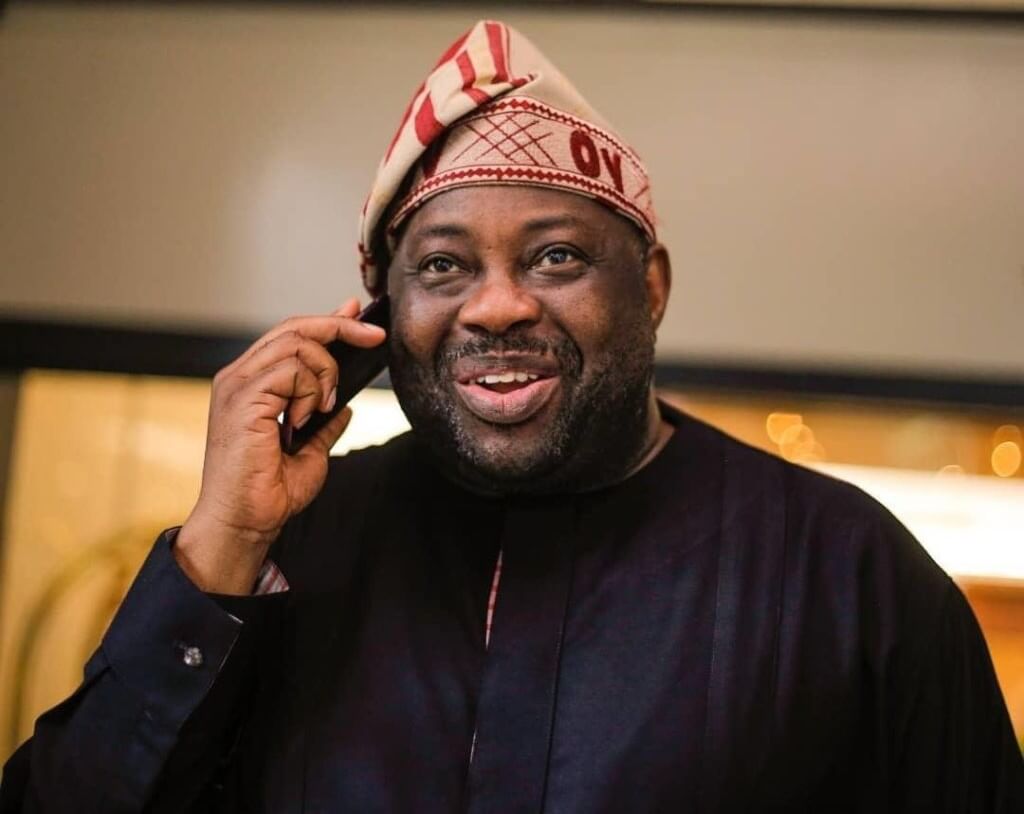
Permit me to go straight to the heart of this message.
I can no longer pretend that I have not been following the deeply troubling and increasingly vile exchanges involving you and others in recent times.
What has now become a public brawl is unfolding on social media, an arena without boundaries, without gatekeepers and, it would seem, without red lines.
Social media is a most unforgiving theatre. Whatever is said there acquires a troubling permanence.
Long after we are gone, generations yet unborn need only type a name, and every word, spoken or hurled, rises again, fresh and unrelenting.
Should that not give us pause?
Should it not compel restraint in what we say, and even in what we choose to dignify with a response?
Of all those caught in this fray, you are the one I know, and have known for a very long time.
Our friendship dates back to 1977, a year before we gained admission into UNIFE. We worked together then as clerical officers in the University Library under Mr. Dipeolu (I hope I got that right. If I didn’t, I can be forgiven. It’s almost half a century ago).
That was long before fame found you. You were grounded, witty, perceptive and street-smart, yet deeply studious. Innovative. Brilliant. We competed, not in vanity, but in intellect, over the books we had read, the ideas we had encountered.
And we read, voraciously. How could we not, with the rare privilege of unfettered access to a university’s intellectual treasury?
We also had fun, maximum fun. We drank palm wine. We drank beer. We partied. We chased babes.
I remember accompanying you, many times, to visit your dear mother, of blessed memory, at her shop near the palace. She feted us each time. Ever so kind. Ever so motherly.
I recall meeting your brother, Dr. Ajayi, newly returned then, whose sports car was the talk of the town.
I reach back into these memories not out of nostalgia alone, but to establish my bona fides to write you this note, to remind you that I knew you before the noise, before the crowd and before the many voices that now speak at you and about you.
You have always earned your place through hard work, discipline and intellect. Many don’t know this, sadly. They only see the fun-loving Publisher of a popular society magazine.
I am not concerned here with who is right or wrong, nor with what ignited this present _Ija’gboro_, this no-holds-barred street fight where everything becomes a weapon, including shared history and past goodwill.
My concern is you, my friend, my colleague, my brother.
For the sake of all you hold dear; for the memory of your mother, whose dignity and values you carry; and for the sake of God, I urge you: find an off-ramp from this vicious freeway. Step away from this corrosive spiral now.
You are not the sum of the insults hurled at you. You are not the distortion others attempt to project. No.
You will recall that in those Ife days, you held British Philosopher Bertrand Russell in high regard. Russell once observed:
_”The whole problem with the world is that fools and fanatics are always so certain of themselves, and wiser people so full of doubts.”_
Wisdom, my brother, often lies in restraint, in knowing when to disengage from the theatre of noise.
And perhaps you also read the works of another Philosopher, German Friedrich Nietzsche, whose haunting warning feels especially apt at a time like this:
_”He who fights with monsters should be careful lest he thereby become a monster. And if you gaze long into an abyss, the abyss also gazes into you.”_
There is yet another truth, often echoed across ages: when one descends into the arena with a beast, the spectators, in time, cease to know the difference. I didn’t say this to insult your opponents in this shameful arena. They are not my concern here.
I say this with all the affection and sincerity of a brother: rise above this moment. Withdraw your dignity from the marketplace of insults. Let silence, where necessary, speak louder than rebuttal.
May God guide your thoughts, guard your words and steady your steps at this time.
Yours ever so sincerely,
Segun ADEYEMI, a veteran journalist
Related




MoneyMaster Enhances Banking App, Gifts Customers Data, Airtime

Iran Has Given Up on Nuclear Weapons, Trump Claims

IGP Disu Redeploys Top Police Officers in Major Shake-up

FG Helpless over Power Outages, Minister Adelabu Admits, Apologises to Nigerians

Obi Condemns Arrest of Sheikh Ahmad Shortly after Meeting in Kaduna

Dangote Warns of Dire Consequences for Nigeria If Iran War Continues

N868m Fraud: Court Jails Ex-AGF Nwabuoku 72 Years

AFCON 2025: George Weah Urges CAS to Overrule CAF’s Verdict

My Dear Brother, Dele Momodu by Segun Adeyemi

The Oracle: The New Digital Colonialism: Navigating AI Policy Uunder Foreign Tech Dominance (Pt. 3)

Why Investing in People Outperforms Every Resource on Earth

AI and Neurodiversity: The Future Must Work for Everyone

Trump Announces 5-Day Ceasefire on Strikes Against Iran, Opts for Talks

TEF Entrepreneurship: Tony Elumelu Foundation Sets March 22 to Announce 2026 Cohort
Trending
-
 Sports4 days ago
AFCON 2025: George Weah Urges CAS to Overrule CAF’s Verdict
-
 Opinion4 days ago
My Dear Brother, Dele Momodu by Segun Adeyemi
-
 The Oracle5 days ago
The Oracle: The New Digital Colonialism: Navigating AI Policy Uunder Foreign Tech Dominance (Pt. 3)
-
 Opinion4 days ago
Why Investing in People Outperforms Every Resource on Earth
-
 Tech and Humanity5 days ago
AI and Neurodiversity: The Future Must Work for Everyone
-
 World2 days ago
Trump Announces 5-Day Ceasefire on Strikes Against Iran, Opts for Talks
-
 Featured5 days ago
TEF Entrepreneurship: Tony Elumelu Foundation Sets March 22 to Announce 2026 Cohort
-

 Adding Value4 days ago
Adding Value: The Six Pillars of Success Pt. 2 by Henry Ukazu