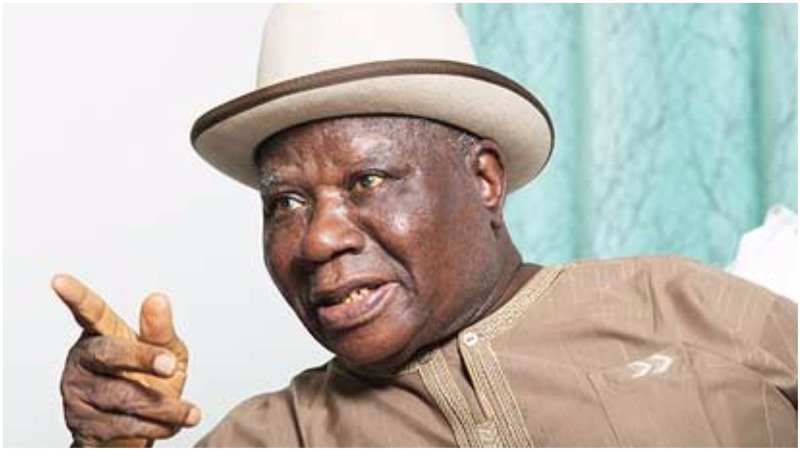
The death of vocal critic, and human rights advocate, Edwin Kiagbodo Clark, hit Nigerians with a different tune. It was just days after another nonagenarian, Ayo Adebanjo, bid farewell to the world.
An elder statesman of repute, Edwin Clark’s voice had resounded with wisdom, sense and meaning over the years, putting governments, both in his native Delta, adopted Rivers and at the national level among others on their toes. He was a man given to prompt and classic analysis of social and economic events, and was never wanting when it comes to calling a spade a spade.
The leader of the Pan Niger Delta Forum (PANDEF), and former Federal Commissioner for Information died on February 17, 2025 at the age of 97, according to a statement by a representative of the family, Prof. C. C. Clark.
The statement read, “The Clark-Fuludu Bekederemo family of Kiagbodo Town, Delta State, wishes to announce the passing of Chief (Dr.) Sen. Edwin Kiagbodo Clark OFR, CON on Monday, 17th February 2025.“The family appreciates your prayers at this time. Other details will be announced later by the family.”
Beyond politics, Clark had been a leading voice for regional and national unity. He was also known for mediating peace among warring communities and politicians in the Niger Delta region, prominent among which and more recent was his ability to set up a committee to reconcile Governor Siminalayi Fubara of Rivers State and his predecessor, Nyesom Wike.
WHO WAS EDWIN CLARK?
According to Wikipedia description, Edwin Clark was born May 25, 1927, and died three months shy of his 98th birthday when he peacefully succumbed to death on February 17, 2025. He was a biological brother of the popular poet, John Pepper Clark.
He was was an Ijaw leader and politician from Delta State who worked with the administrations of the military governor Samuel Ogbemudia and head of state, General Yakubu Gowon between 1966 and 1975.
In 1966, he was a member of an advisory committee to the military governor of the Mid-Western Region province, David Ejoor and was appointed Federal Commissioner of Information in 1975.
Clark was known as an unofficial adviser to President Goodluck Jonathan, and as a philanthropist, founded the Edwin Clark Foundation and later established a university in his hometown.EDWIN CLARKS EARLY DAYS AND CAREER
Clark was born in Kiagbodo, in the Ijaw area of what is now Delta State. He attended primary and secondary schools at Effurun, Okrika and Afugbene before completing further studies at the Government Teacher Training College, which later became Delta State University, Abraka. Thereafter, Clark worked briefly as a schoolteacher before travelling to the United Kingdom to earn a law degree.
Clark’s involvement in the political process began during the pre-independence period when he was elected as Councillor for Bomadi in 1953. Clark later joined National Council of Nigeria and the Cameroons (NCNC). While a student at Holborn College, he was active in the West African Students’ Union.After the military coup of January 1966, Clark was among a group of delegates from the Mid-West who opposed any ideas of confederation that were raised at an ad-hoc constitutional conference set up by Gowon in 1966. The delegation’s mandate was Nigerian unity and when proposals of a loose federation were tabled, the region’s delegates asked for adjournment.Clark was later appointed Midwestern Commissioner of Education and later, Finance from 1966 to 1975. As commissioner for education, he was active in the establishment of a Mid-west College of Technology that became the foundation of the University of Benin.
During the second republic, he was a member of the national executive committee of the National Party of Nigeria (NPN) and was the treasurer of the party in Bendel State (now, in part, Delta State and previously the Mid-Western Region province). In 1983, he was an elected senator for three months at the twilight of the Shagari administration.
Beginning in 1996, Clark was a self-described leader of the Ijaw nation. He supported the Ijaw ethnic group in Delta State during an ethnic crisis in Warri and led Ijaw leadership delegations to meet political leaders.
Clark was the founder of Edwin Clark University which was established in 2015.
In 2016, Clark founded the Pan Niger Delta Forum (PANDEF) along with other leaders. The organization’s stated objective is “to dialogue with stakeholders and lobby for increased attention and implementation of restructuring, development and security policies by the Government of Nigeria.”
Mourning his death, former President Olusegun Obasanjo in a statement by his Special Assistant on Media, Kehinde Akinyemi, described him as a “great brother, friend, a frontline lawyer and seasoned economist”.
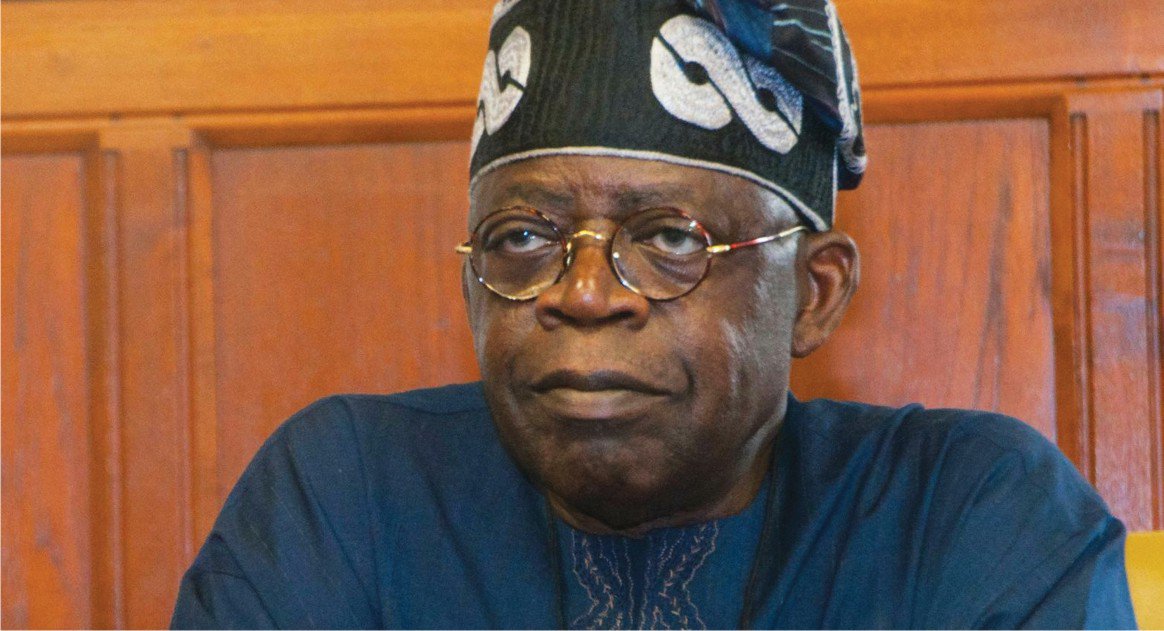
Nigeria’s President Bola Tinubu has however, led in the rendering of tributes on the death of the elder statesman.
In a statement by his Special Adviser on Information and Strategy, Bayo Onanuga, Tinubu mourned the transition to the great beyond of Edwin Clark, noting that Clark was a courageous leader, who stood for what he believed in, and was never afraid to stand alone in the face of injustice.
“Chief Clark spoke for the Niger Delta. He spoke for the nation. His views and interventions on national issues were distinct and patriotic.
“As an astute politician, Clark’s political opponents never doubted his words’ weight, confidence, and conviction when he spoke.
“History will remember him as a man who fought gallantly for the rights of the people of the Niger Delta, unity in diversity, and true federalism.
“I know many generations will remain proud of how his efforts contributed to national prosperity and stability,” Tinubu said.
According to Chairman of the Southern Governors Forum, Dapo Abiodun, the nation lost arguably the most engaging voice seeking redress of decades of exploitation and marginalisation of the Niger Delta peoples.
“The exit of Pa Edwin Kiagbodo Clark at 97 marks a watershed in Nigerian history. As a man who lived through the struggles and triumphs of the colonial, Independence, and post-independence eras with all the twists and turns, Chief Clark was simply a personification of Nigerian history.
“He served with distinction for about seven decades and was one of the most accomplished voices of courage and progressivism that Nigeria has ever witnessed.”
Also expressing his condolences, the Chairman of the Northern States Governors’ Forum, Muhammadu Yahaya, noted that Clark was an upright and relentless advocate for fairness, and whose contributions to governance, democracy, and national discourse earned him admiration and respect.
“Chief Edwin Clark was an advocate for the rights of the downtrodden and a steadfast voice for the Niger Delta and Nigeria as a whole. His commitment to justice and good governance distinguished him as a statesman of great repute. His demise is a profound loss, not just to the South-South but to the entire country,” the statement partly read.
Rivers State Governor, Siminalayi Fubara, through his Chief Press Secretary, Nelson Chukwudi, said Clark lived as a beacon of hope and conscience to leaders in government.
“He has left indelible footprints as a nationalist for the inspiring roles he played in the Middle-Belt Leaders Forum and as leader of Pan-Niger Delta Forum,” Fubara said.
Governor of Enugu State, Peter Mbah, lauded Clark as an unpretentious federalist, who gave his all in service to God, country, and humanity at large.
Other notable individuals, who have put in one good word or another in praise of the fallen statesman are Senate President, Godswill Akpabio, Speaker of the House of Representatives, Tajudeen Abbas, Governor of Delta State, Sheriff Oborevwori among others.
May the soul of the freedom fighter rest in perfect peace!