Connect with us

Headline

How Far Will Tinubu Go Against Opposition?

Published

on

By Eric Elezuo

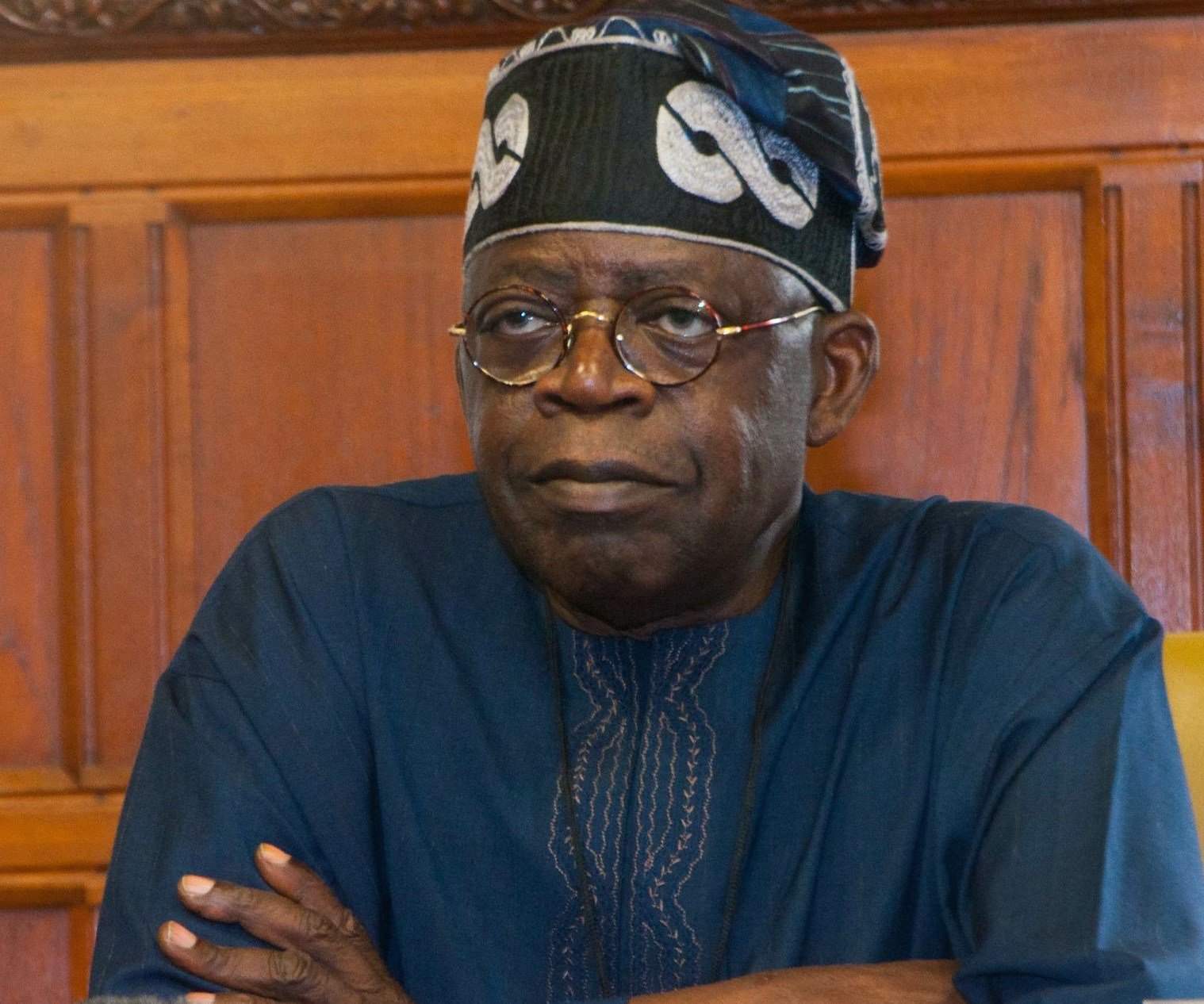
The spate of crises in opposition party camps have become worrisome, even more worrisome than the unimpressive economic situation of the country. Consequently, a lot of accusing fingers have been pointed at the ruling All Progressives Congress (APC) and its leader, President Bola Tinubu.

The Boss gathered that since the inception of the Tinubu-led administration, no political party in the country has known peace; they have all been immersed and enmeshed in one national, state or area council challenge or another, prompting mass defection to the ruling APC to solidify its political capacity.

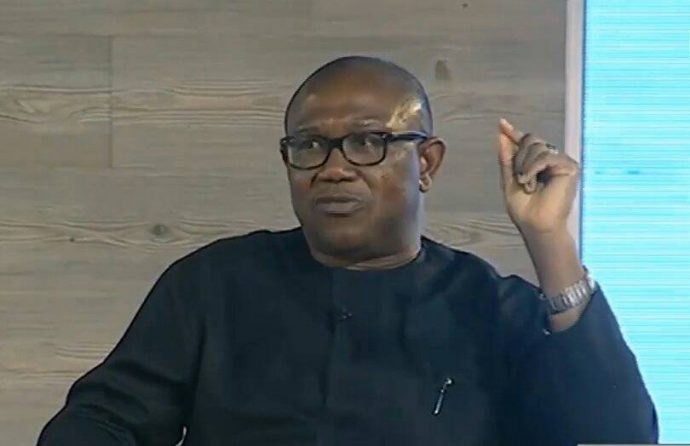
From the supposed main opposition, the Peoples Democratic Party (PDP) to the surprised third force, Peter Obi’s Labour Party (LP), and down to Rabiu Kwankwaso’s New Nigeria Peoples Party (NNPP), an unfettered shenanigan has been the order of the day. Even the Social Democratic Party (SDP), reputed as the oldest surviving political party in Nigeria, is not spared of the raving malady of crises.

All fingers are pointed at President Tinubu as the architect of the problems, with accusations of his intentions to establish a one party state, and secure his return to power in 2027 without stress. This has prompted unanswered questions as to how far Tinubu is willing to go against the opposition parties.

In the PDP, and to a large extent, the LP, moles are said to hold prominent positions, and takes decisions that seem to align with the policies of the ruling party. In the PDP, a long drawn battle has continued to be waged as feuding factions fight for the soul of the party.

On one hand is the Minister of the Federal Capital Territory, Nyesom Wike, though a card-carrying member of the PDP, but hobnobs in the most intimate fashion with the APC. The Minister is said to favour the stay in office of the PDP acting National Chairman, Aliyu Demagun and the National Secretary, Samuel Anyanwu against the wishes of the party. The situation has created tension and faction in the party.

“If Wike is sponsoring the likes of Damagun and Anyanwu, and Tinubu is sponsoring Wike, then we don’t a soothsayer to tell us who is dealing with the PDP. It’s all about 2027, and somebody or some people do not want any opposition or challenge to their ambition,” an insider confided in The Boss.

Only recently, a former Vice President and presidential candidate of the PDP in the 2023 general elections, Atiku Abubakar, accused Tinubu of weaponizing state institutions to target political opponents rather than addressing corruption in his administration. He also alleged that the president was inducing opposition leaders with N50 million to constitute political nuisance to their parties, thereby destabilizing its smooth operations.

Atiku made the claim in a statement shared on social media over the weekend, citing the recent arrest of Professor Usman Yusuf, a prominent social critic, and Omoyele Sowore, as evidence of a politically motivated clampdown on people of diverse views.

“Two days ago, the nation was jolted by the arrest of Professor Usman Yusuf, a fierce and unyielding social critic,” Atiku wrote, suggesting that the charges against Yusuf, though originating from the previous administration, were being used selectively to suppress opposition voices.

The former vice president criticized the Tinubu administration for what he described as a double standard in its approach to fighting corruption. According to Atiku, while the government shields individuals within its fold who are under investigation for corruption, it exploits pending cases to intimidate and silence critics.

“It is absurd that while the administration shelters those under investigation, it continues to exploit state institutions to stifle dissent, all under the false pretence of combating corruption,” he stated.

Atiku further alleged that President Tinubu’s actions are aimed at consolidating political power rather than addressing the nation’s pressing issues, accusing him of manipulating the justice system to his advantage.

“Even to the most inattentive, it has become glaringly clear that Tinubu is not waging a war on corruption — he is waging a war on the opposition, manipulating the system for his own political advantage,” Atiku asserted.

The arrest of Professor Yusuf has sparked widespread reactions from his sympathizers, with many questioning the timing and motive behind the detention.

Yusuf, known for his outspoken criticism of the Tinubu administration, has become a prominent voice in Nigeria’s political discourse.

In another development, the former Vice President, who is also the Waziri Adamawa, decried what he describes as systematic dismantling of the opposition by Tinubu administration.

In a post on his X handle, Atiku said that the recent arrest and “baseless prosecution” of Omoyele Sowore and Usman Yusuf is the latest in the harassment of opposition figures.

“When I made the clarion call that Tinubu and the APC were devoting their energies to the systematic harassment, intimidation, and dismantling of the opposition, all in service of their grand design for a one-party autocracy, I became the target of vicious attacks.

“The arrest and baseless prosecution of @YeleSowore is the latest chapter in this unrelenting campaign. Now, they have seen fit to add Professor Usman Yusuf — an outspoken critic of this administration — into their grim roster. At the pace they are going, it seems they may soon find themselves contending with the incarceration of every one of us.”

Sowore, who is the convener of the #Revolutionnow movement, had honoured the invitation of the police on Monday, January 27, 2025, when he was questioned at the Force Criminal Investigation Department.

He was subsequently granted administrative bail but rejected the conditions of bail and remained in custody.

The police later filed a 16-count charge of cybercrime against him.

On Thursday, the court granted Sowore bail to the tune of ₦10 million and one surety in like sum.

The surety must be a responsible individual with landed property valued in like sum.

The surety is expected to deposit the original documents of landed property and a passport photograph to the registrar of the court.

While ruling on the bail application, the trial judge, Justice Musa Liman, ordered Sowore to deposit his international passport with the registrar of the court.

The judge, however, gave him 24 hours to perfect the bail conditions or be remanded by the police until the bail is perfected.

He was to be arraigned on Friday, but the arraignment was, however, moved to Monday (today) to allow for amendment of the charges, according to a statement by the EFCC spokesperson Dele Oyewale.

Though defence counsel, Isah Dokto Haruna, who held brief for the lead defence counsel, O. I. Habeeb, SAN, made an application for bail, it was turned down  by the court on account of the defendant’s deferred arraignment.

Justice Nwecheonwu adjourned the matter till February 3, 2025, for arraignment and ruled that the defendant be remanded in the custody of the Commission.

On the political party front, all is well with all the opposition political parties.

Stakeholders, observers and a large section of the general public are toeing the Atiku line that Tinubu has a hand in the disunity that has continued to ravage the parties, especially the PDP, which is touted as the party with the capacity to give him a run for his money come 2027.

Far back in 2023, just six months into the Tinubu administration, it became obvious that there is an unholy trend geared towards instigating crisis in parties, and harvest its members. The trend was not taking place via ballot papers or boxes or electoral propriety, but inordinate manipulations, using the instrumentality of the courts, judiciary, coercion and outright intimidation.

Fast forward to the present, the political positions are making dramatic switches to the APC via court rulings inordinate defections and more, giving a cross sections of Nigerian the effontery to believe there is a hidden agenda to welcome a new Nigeria where political positions both elected and appointed are ‘allocated’ to Tinubu’s APC. Only a few days ago, the senator representing Delta South, Ned Nwoko, joined a long list of decampees, who had found solace in the APC amid administrative deficiency, which reduced Nigerians to advocates of hardship, hunger and depravity.

A few instances were visible in 2023 to raise eyebrows as regards the direction and shape Nigeria political landscape was taking. They included the sack of all elected Plateau State PDP elected lawmakers, and replaced with defeated APC candidates, failed attempt to sack Zamfara and Kano states givernors, the victory of Imo and Kogi APC governorship candidates, and followed in 2024 by the victory of Edo APC governorship candidate, Monday Okpebholo. In all instances, public opinion had feared obvious manipulations of the electoral and judicial processes.

Presently, almost all the elected federal lawmakers under the banner of the Labour Party have defected to the APC. The party shame-facely boasts of two national leaders; Julius Abure and Nenadi Esther Usman, creating dissension that that have continually polarized the party.

Everyone, with the interest of the political future of Nigeria, has continued to ask when Tinubu will let go of his grip on the fragile throats of opposition parties.

Meanwhile, the Tinubu camp has denied ever interfering in the politics of the opposition, carpeting yhe former vice president, Obi and host of other accusers.

Tinubu’s administration will be two years in four months, and with his grip on political decisions across board, it is believed that by the time the next electioneering kicks off, a whole lot of political figurehead would have decamped to join the APC.

Time is no longer telling; the reality on ground foretells doom for the political future ofbthe country.

But all in all, time will still tell; 2027 is just around the corner, and Nigerians are watching and waiting to see how the opposition parties will make recovery to free themselves from the Tinubu-grip.

Continue Reading
Click to comment

Leave a Reply

Your email address will not be published. Required fields are marked *

Headline

Court Validates PDP 2025 Convention in Ibadan, Affirms Turaki-led NWC

Published

on

By

The Oyo State High Court sitting in Ibadan has affirmed the validity of the 2025 Elective Convention of the Peoples’ Democratic Party (PDP), which produced Dr. Kabiru Turaki as the substantive National Chairman of the party.

Delivering judgment on Friday, Justice Ladiran Akintola upheld the convention in its entirety, ruling that it was conducted in full compliance with the relevant constitutional and statutory provisions governing party elections in Nigeria.

The decision marked a significant legal victory for the party’s leadership and brought clarity to the dispute surrounding the convention’s legitimacy.

The ruling followed an amended originating summons filed by Misibau Adetunmbi (SAN) on behalf of the claimant, Folahan Malomo Adelabi, in Suit No. I/1336/2025.

In a comprehensive judgment, the court granted all 13 reliefs sought by the claimant, effectively endorsing the processes and outcomes of the Ibadan convention.

Justice Akintola held that the convention, organised by the recognised leadership of the party, satisfied all laid-down legal requirements as stipulated in the 1999 Constitution of the Federal Republic of Nigeria, the Electoral Act 2022 (as amended), and the relevant provisions of the Electoral Act 2026.

The court found no breach of due process or statutory non-compliance in the conduct of the exercise.

In the same proceedings, the court dismissed the Motion on Notice seeking a stay of proceedings and suspension of the ruling, filed by Sunday Ibrahim (SAN) on behalf of Austin Nwachukwu and two others. The applications were described as lacking merit.

Earlier in the proceedings, the court had also rejected a bid by Ibrahim to have his clients joined in the suit.

Justice Akintola ruled at the time that the joinder application was unsubstantiated and consequently dismissed it.

Continue Reading

Headline

Opposition Parties Reject 2026 Electoral Act, Demand Fresh Amendment

Published

on

By

Opposition political parties have rejected the 2026 Electoral Act recently passed by the National Assembly, which President Bola Tinubu swiftly signed into law.

The parties called on the National Assembly to immediately begin a fresh amendment process to remove what they described as “all obnoxious provisions” in the law.

Their position was made known at a press briefing themed “Urgent Call to Save Nigeria’s Democracy,” held at the Transcorp Hilton Hotel in Abuja on Thursday.

In a communiqué read by the Chairman of the New Nigeria Peoples Party (NNPP) Ahmed Ajuji, the opposition leaders stated:

“We demand that the National Assembly immediately commence a fresh amendment to the Electoral Act 2026, to remove all obnoxious provisions and ensure that the Act reflects only the will and aspiration of Nigerians for free, fair, transparent and credible electoral process in our country. Nothing short of this will be acceptable to Nigerians.”

Some of the opposition leaders present in at the event include former Senate President David Mark; former Governor of Osun State, Rauf Aregbesola; former Vice President Atiku Abubakar; former Governor of Rivers State, Chibuike Rotimi Amaechi; and former Governor of Anambra State, Peter Obi, all from the African Democratic Congress (ADC).

The National Chairman of the New Nigeria Peoples Party (NNPP), Ahmed Ajuji, and other prominent members of the NNPP, notably Buba Galadima, were also in attendance.

The coalition said the amended law, signed by Bola Tinubu, contains “anti-democratic” clauses, which they argue may weaken electoral transparency and public confidence in the voting system.

At the centre of the opposition’s concerns is the amendment to Section 60(3), which allows presiding officers to rely on manual transmission of election results where there is communication failure.

According to the coalition, the provision weakens the mandatory electronic transmission of results and could create loopholes for manipulation.

They argued that Nigeria’s electoral technology infrastructure is sufficient to support nationwide electronic transmission, citing previous assurances by officials of the Independent National Electoral Commission (INEC).

The parties also rejected the amendment to Section 84, which restricts political parties to direct primaries and consensus methods for candidate selection.

They described the change as an unconstitutional intrusion into the internal affairs of parties, insisting that indirect primaries remain a legitimate democratic option.

The opposition cited alleged irregularities in the recent Federal Capital Territory local government elections as evidence of what they described as a broader pattern of electoral compromise.

They characterised the polls as a “complete fraud” and said the outcome has deepened their lack of confidence in the ability of the electoral system to deliver credible elections in 2027.

The coalition also condemned reported attacks on leaders of the African Democratic Congress in Edo State, describing the incidents as a serious threat to democratic participation and political tolerance.

They warned that increasing violence against opposition figures could destabilise the political environment if not urgently addressed.

In their joint statement, the opposition parties pledged to pursue “every constitutional means” to challenge the Electoral Act 2026 and safeguard voters’ rights.

“We will not be intimidated,” the leaders said, urging civil society organisations and citizens to support efforts aimed at protecting Nigeria’s democratic system.

On February 18, 2026, President Bola Tinubu signed the Electoral Act (Amendment) 2026 into law following its passage by the National Assembly. The Act introduced several reforms, including statutory recognition of the Bimodal Voter Accreditation System and revised election timelines.

However, opposition figures such as Atiku Abubakar and Peter Obi have also called for further amendments, particularly over the manual transmission fallback clause, which critics say leaves room for manipulation.

The president said the law will strengthen democracy and prevent voter disenfranchisement.

Tinubu defended manual collation of results, questioned Nigeria’s readiness for full real-time electronic transmission, and warned against technical glitches and hacking.

The Electoral Act sparked intense debate in the National Assembly over how election results should be transmitted ahead of the 2027 general elections.

Civil society groups under the “Occupy NASS” campaign demanded real-time transmission to curb manipulation.

In the Senate, lawmakers clashed during consideration of Clause 60, which allows manual transmission of results if electronic transmission fails.

Senator Enyinnaya Abaribe (ADC, Abia South) demanded a formal vote to remove the proviso permitting manual transmission, arguing against weakening real-time electronic reporting.

The move led to a heated exchange on the floor, with Senate President Godswill Akpabio initially suggesting the demand had been withdrawn.

After procedural disputes and a brief confrontation among senators, a division was conducted. Fifteen opposition senators voted against retaining the manual transmission proviso, while 55 supported it, allowing the clause to stand.

Earlier proceedings had briefly stalled during clause-by-clause review, prompting consultations and a closed-door session.

In the House of Representatives, a similar disagreement came up over a motion to rescind an earlier decision that mandated compulsory real-time electronic transmission of results to IReV.

Although the “nays” were louder during a voice vote, Speaker Tajudeen Abbas ruled in favour of rescinding the decision, triggering protests and an executive session.

Continue Reading

Headline

AFP: How Tinubu’s Govt Paid Boko Haram ‘Huge’ Ransom, Released Two Terrorists for Kidnapped Saint Mary’s Pupils

Published

on

By

The Nigerian government paid Boko Haram militants a “huge” ransom of millions of dollars to free up to 230 children and staff the jihadists abducted from a Catholic school in November, an AFP investigation revealed Monday.

Two Boko Haram commanders were also freed as part of the deal, which goes against the country’s own law banning payments to kidnappers. The money was delivered by helicopter to Boko Haram’s Gwoza stronghold in northeastern Borno state on the border with Cameroon, intelligence sources told AFP.

The decision to pay the militants is likely to irritate US President Donald Trump, who ordered air strikes on jihadists in northern Nigeria on Christmas Day and has been sent military trainers to help support Nigerian forces.

Nigerian government officials deny any ransom was paid to the armed gang that snatched close to 300 schoolchildren and staff from St. Mary’s boarding school in Papiri in central Niger state on November 21. At least 50 later managed to escape their captors.

Boko Haram has not been previously linked to the kidnapping, but sources told AFP one of its most feared commanders was behind the mass abduction: the notorious jihadist known as Sadiku.

He infamously held up a train from the capital in 2022 and netted hefty ransoms for the release of government officials and other well-off passengers.

Boko Haram, which has waged a bloody insurgency since 2009, is strongest in northeast Nigeria.

But a cell in central Niger state operates under Sadiku’s leadership. The St. Mary’s pupils and staff were freed after two weeks of negotiations led by Nuhu Ribadu, Nigeria’s National Security Adviser, with the government insisting no ransom was paid. Nigeria’s State Security Service flatly denied paying any money, saying “government agents don’t pay ransoms”.

However, four intelligence sources familiar with the talks told AFP the government paid a “huge” ransom to get the pupils back. One source put it at 40 million naira per head – around $7 million in total.

Another put the figure lower at two billion naira overall. The money was delivered by chopper to Ali Ngulde, a Boko Haram commander in the northeast, three sources told AFP.

Due to the lack of communications cover in the remote area, Ngulde had to cross into Cameroon to confirm delivery of the ransom before the first group of 100 children were released.

Nigeria has long been plagued by mass abductions, with criminals and jihadist groups sometimes working together to extort millions from hostages’ families, and authorities seemingly powerless to stop them.

Source: Africanews

Continue Reading

Trending