Opinion
Voice of Emancipation: Sleepwalking into Anarchy
Published
2 years agoon
By
Eric
By Kayode Emola
It is nearly a year since Nigerians excitedly went to the polls to elect a new president, each candidate promising heaven and earth despite all knowing the precarious situation of the country’s economy. Asiwaju Bola Tinubu became the eventual winner and immediately began enacting drastic decrees, starting with the removal of the petroleum subsidy on day one of his presidency.
This subsidy removal, however good the prospect is for the government and the country may proof to be the last straw that will break Nigeria’s back. Every commodity and even functions of government have come to rely on petroleum products since the 1970’s, with successive governments facing a boom or bust situation.
However, no president has been able to deal with the situation of the petroleum subsidy as this affects everyone in the country. It doesn’t matter whether you are rich or poor, old or young, strong or vulnerable in Nigeria, you will in one form or another need this petroleum product for your daily tasks to function properly in the society. This is the reason the issue of subsidy removal has been very controversial in Nigeria.
One would have expected that once the subsidy was removed, Nigeria will bounce back from its deficit, but alas, the situation is getting worse by the day with no one capable of proffering any tangible solutions to Nigerians. This is now causing anxiety in all corners of the country with prices of commodity going through the roof leaving the ordinary man with little hope for the future.
What the subsidy removal has done is inflict severe pain and hardship on millions of Nigerians due to high inflation and forced millions more into poverty. Yet my people are looking for a messiah to come and rescue the country that is already destined to fail.
Recently, the Central Bank (CBN) Governor announced that they will have to dip their hands in people’s domiciliary account to try and stabilise the currency which has been on a freefall since the inauguration of this present government. This to me shows a desperate country and government officials that has run out of ideas on how to transform the economy.
The truth is that Nigeria has one of the lowest productivity levels in the world and any form of subsidy that the people enjoy is still not enough to help them get by with around 50 percent (around 88 million people) of the population living below the poverty line. There is therefore bound to be trouble if subsidy removal is not implemented carefully and thoughtfully.
It is now evident that no matter what policy any government bring to Nigeria, it is bound to fail due to the extreme poverty the people are facing. Coupled with that, the high debt to revenue ratio has not left headroom to provide infrastructure that can bootstrapped the economy therefore making matters worse both for the government and the people.
One would have expected that in the face of these many challenges, the current government will give Nigerians the opportunity to decide their future rather than plodding onwards as if all is well. It is only a fool that will not know that all is not well with Nigeria and pretending as though it can come out of its current predicament is a wishful thinking.
The only thing keeping Nigeria is our cowardice and until we break that fear in us many of our people will continue to suffer or perhaps die in silence. It is very clear that there is no segment of the country that is happy to keep the status quo called one Nigeria apart from the elite who are benefiting from the rot in the system.
If it is only the politicians and their cronies that are benefiting from the largesse of Nigeria, then it is better to go after these people and ask them why they are hellbent on destroying the lives of millions of people they swore to represent.
It is high time we reminded the politicians that it is they need to shut down politics in Nigeria so that a viable solution such as peaceful dissolution can be arranged, if not with the hunger and frustration in the land, it is only a matter of time before the whole country engulf in flames bringing with it chaos and anarchy.
I hope and pray that our people can rise to the occasion of demanding their freedom from this oppressive system of government that Nigeria is practicing that only takes care of the rich and leave most of the people in penury. If we don’t rise now to save ourselves and our children, we may become trapped in this circle of doom that has nothing to offer us.
Related
You may like
Opinion
The 1999 Constitution: The Blueprint for Chaos
Published
4 days agoon
July 13, 2026By
Eric
By Boma Lilian Braide Esq
There is a popular saying, repeated on the streets and across Nigerian social media, that perfectly captures our collective condition with uncomfortable precision. It says; “if you look at Nigeria and claim to understand how it works, you must be the one who has lost your mind”. It is perhaps the only phrase that adequately explains the disorienting reality of citizenship in this country, where survival itself often feels like a daily miracle.
Every morning, millions of Nigerians perform that miracle without applause. They navigate flooded roads that lead to shuttered factories, pay taxes to a government that cannot guarantee electricity, and hire private security to protect their families from roaming bandits. On the surface, we direct our frustration at the sitting President, at corrupt governors, or the different local government chairmen. We voice our anger across social media, demanding that those at the top change course. But we are, in large part, aiming at the wrong target.
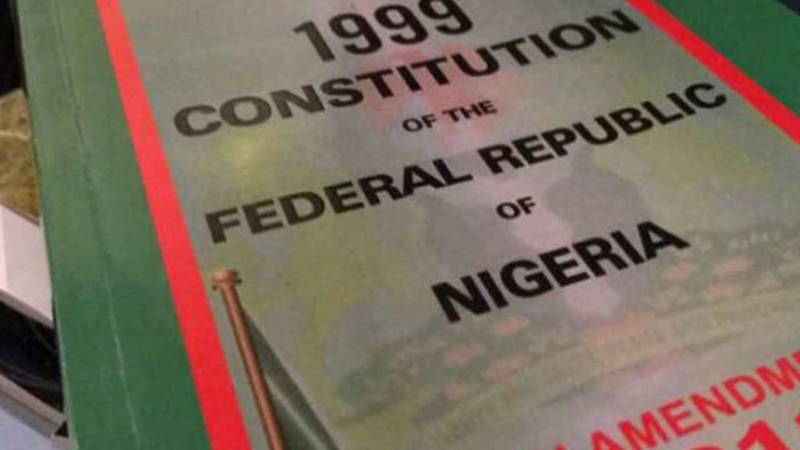
The true villain in the Nigerian story is not a living person. It is a lifeless, heavy, fundamentally dishonest stack of paper bound together in Abuja. It is called the 1999 Constitution of the Federal Republic of Nigeria. This text is a democratic covenant in name only. It opens with a bold, theatrical declaration: “We the people of the Federal Republic of Nigeria… do hereby make, enact and give to ourselves the following Constitution.”
Who, precisely, are “the people”? Which Nigerian ancestor sat in the room where this text was drafted? The uncomfortable truth is that no citizen was present to debate its clauses, and none voted for its adoption. It was handed down like a conqueror’s edict. General Abdulsalami Abubakar and a small circle of military officers issued it as Decree No. 24 of 1999, mere days before transferring power to a civilian government. For nearly three decades, we have attempted to practise democracy using a blueprint designed for absolute military rule. The consequences of that historical error are visible across our collapsing national architecture, which functions less like a federal republic and more like a unitary state wearing federal clothing.
To understand why the country keeps faltering, we must stop treating our crises as mere failures of individual leadership and start recognising them as structural design flaws written directly into our supreme law. The 1999 Constitution is not simply outdated; it is an active engine of underdevelopment, insecurity and political paralysis.
Consider the foundational architecture of our federation. True federalism requires that constituent units generate their own resources, manage local security and remit an agreed share of their earnings to sustain shared national functions such as foreign policy and defence. The Nigerian constitution inverts this logic entirely. It strips states of economic initiative and reduces them to administrative dependents.
Section 162 establishes the Federation Account, a central pool into which all national revenue is deposited, then shared monthly among the 36 states and Abuja according to a fixed formula. This arrangement has systematically discouraged productivity across the country, turning governors into monthly supplicants in Abuja rather than builders of local economies. A state governor has little structural incentive to revitalise agriculture, attract industrial investment or expand employment, because political survival depends far more on the price of Brent crude oil in London than on the output of farmers in Benue or traders in Aba. The constitution effectively penalises resourceful states and rewards passivity, trapping the entire country in a cycle of dependency.
The most dangerous consequence of this military engineered document is the near total failure of our internal security architecture. Nigeria is currently under strain from every direction, as criminal networks, kidnappers and terrorist groups make routine travel between cities a genuine risk. Young Nigerians reasonably ask why their state governments cannot protect them, particularly given that governors routinely describe themselves as the Chief Security Officers of their states. That title, however, is largely symbolic.
Under Section 214, the constitution explicitly forbids the creation of any police force beyond the single, centrally controlled Nigeria Police Force, placing every officer under the command of an Inspector General based in Abuja. A governor in Zamfara or Oyo cannot deploy police to halt an unfolding attack in a local community without clearance from an office hundreds of kilometres away. The document names governors as Chief Security Officers while denying them the legal authority to command a single officer. This is not an oversight; it is a deliberate design choice intended to concentrate control among a small number of central actors. While the National Assembly delays meaningful reform, local communities are left exposed, forcing many states to rely on legally precarious vigilante groups simply to survive.
Thank God, the State Police Bill has now been passed by the National Assembly on June 11th, 2026 as the 6th Alteration Bill, 2026. But it is not yet fully law. We hope it will be approved by 2/3 of the State Houses of Assembly and receive the President’s signature in no time.
Until then, with the National Assembly’s delay in completing the process, local communities remain exposed. Many states are forced to rely on legally precarious vigilante groups just to survive.
Beyond security, this same centralising instinct has paralysed our judicial and local governance systems, undermining any real prospect of accountability. The National Judicial Council in Abuja holds near total control over the appointment and discipline of judges at both federal and state level. This bureaucratic bottleneck means that a straightforward commercial dispute between two traders in Calabar can take a decade to resolve, clogging a judicial pipeline that eventually reaches an overwhelmed Supreme Court. At the grassroots level, the picture is equally troubling. For decades, the constitutionally mandated State Joint Local Government Account allowed governors to divert funds intended for local councils, leaving rural communities without adequate healthcare, functioning schools or passable roads. Even recent Supreme Court interventions aimed at securing financial autonomy for local government have run up against the contradictory wording of the 1999 text, which continues to offer governors legal room to manoeuvre. The constitution does not facilitate justice or good governance; it manufactures structural gridlock that protects a ruling class while burdening ordinary citizens.
At present, the National Assembly is engaged in its familiar and costly ritual, the constitutional review process. Lawmakers hold public hearings, form committees and debate hundreds of minor amendment bills. This should not be mistaken for genuine reform. A cycle of piecemeal alteration cannot rescue a nation whose foundation is fundamentally unsound, in the same way that repainting a building does not repair a compromised structure beneath it.
Between 2007 and 2023, Nigeria conducted five separate rounds of constitutional amendment, consuming billions of naira in public funds. The return on that expenditure was largely cosmetic. Lawmakers readily support amendments that protect their own tenure, adjust election tribunal timelines or revise age requirements for office. Yet whenever structural, genuinely consequential proposals reach the floor, such as the devolution of policing powers, true fiscal federalism or a reduced exclusive legislative list, they are swiftly rejected by a conservative legislative majority unwilling to relinquish central privileges. The current review process is already losing momentum as attention shifts toward the 2027 electoral cycle. It is unrealistic to expect the political class to voluntarily surrender the very centralisation that sustains its comfort.
We must accept the difficult truth that the 1999 Constitution cannot be rescued through minor patches or periodic updates. A system whose core architecture is compromised cannot be repaired by adjusting its surface features. Nigeria does not need another modest amendment bill; it needs a genuine, comprehensive structural overhaul, undertaken without apology or hesitation.
This means substantially reducing the federal government’s authority by cutting the Exclusive Legislative List from more than sixty items to a lean core of perhaps ten, covering essential functions such as foreign affairs, national defence and monetary policy. Responsibilities including policing, resource control, electricity, rail transport, agriculture and education should be devolved to the states or regional blocs. States must be allowed to become genuine economic centres, retaining the majority of the wealth they generate and remitting a negotiated share to sustain the centre. Most importantly, any new constitutional framework must be subjected to a direct, transparent national referendum. The diverse nationalities that make up this country deserve the democratic right to negotiate the terms of their union and to vote on the supreme law that governs them. Sovereignty belongs to the people, not to a small circle of politicians in Abuja.
This is a serious and urgent call to action for every Nigerian citizen, professional body, civil society organisation and member of the diaspora. We must move beyond our preoccupation with the personalities of individual leaders and direct our collective attention to the structure of the state itself. We can no longer afford to watch passively while a fraudulent, military imposed document continues to constrain our economic future and expose our communities to preventable harm.
Constitutional restructuring must become a central condition for political engagement going forward. We must engage our representatives directly, challenge the elite consensus that protects the status quo, and demand a genuinely people driven constitution capable of unlocking the considerable potential this nation continues to hold in reserve.
The present course is unsustainable, and the cost of continued tolerance is national decline. We must summon the resolve to dismantle this blueprint for chaos, or accept that it will, in time, dismantle the country itself.
Related
Opinion
A Week of Inspiration at the Dele Momodu Leadership Centre: A Scholar’s Reflection
Published
5 days agoon
July 12, 2026By
Eric
By Sola Ojewusi
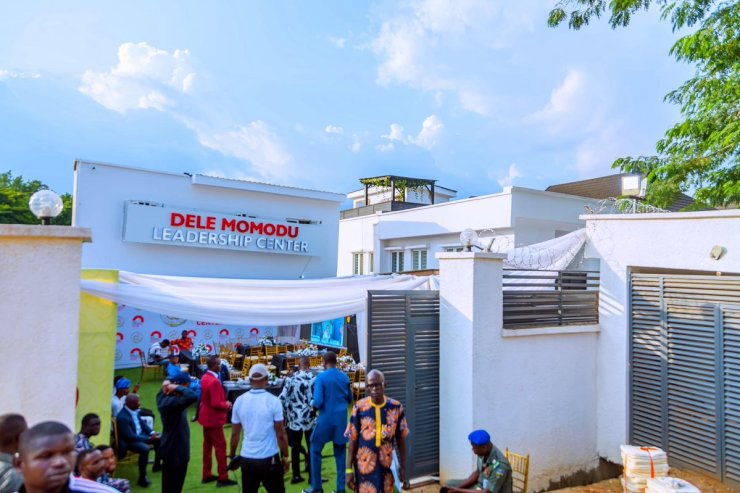
There are places one visits, and there are places that leave an enduring imprint on the mind. My one-week residency at the Dele Momodu Leadership Centre (DMLC), Ibadan, belongs firmly to the latter category. It was far more than a period of academic retreat; it was an enriching intellectual experience that reaffirmed my belief that scholarship flourishes best in an environment deliberately designed to nurture reflection, creativity, and excellence.
Nestled beneath the lush green hills of Alalubosa GRA in the ancient city of Ibadan—a city that proudly occupies a distinguished place in Nigeria’s educational history as the home of the nation’s first university—the Dele Momodu Leadership Centre stands as a remarkable investment in knowledge, leadership, and national development. The serenity of its location immediately sets it apart. Away from the incessant noise, congestion, and pressures of metropolitan life, the Centre offers a peaceful sanctuary where ideas are born, manuscripts are completed, and research receives the uninterrupted attention it deserves.
Before arriving, I had heard much about the Centre. Like many first-time visitors, I briefly wondered whether the winding access road, portions of which are currently under construction, would diminish the experience. Those concerns disappeared almost instantly upon entering the premises. The calm surroundings, beautiful landscaping, spotless facilities, and welcoming atmosphere quickly replaced every reservation with admiration.
The Dele Momodu Leadership Centre has successfully created what many scholars only dream of—a truly scholar-friendly environment. Every aspect of the Centre appears thoughtfully planned to encourage productivity. The quiet ambience allows for hours of uninterrupted reading, writing, and reflection. There are no unnecessary distractions, only the soothing silence that every serious researcher craves.
Equally impressive is the warmth and professionalism of the Centre’s staff. From the moment of arrival until departure, every interaction was characterised by courtesy, efficiency, and genuine hospitality. Their readiness to assist residents contributes significantly to the overall experience and creates an atmosphere in which scholars feel valued and appreciated.
The accommodation deserves special mention. Comparable to that of a first-class hotel, it combines elegance with comfort. Spacious rooms, reliable amenities, impeccable cleanliness, and carefully maintained facilities ensure that residents focus entirely on their scholarly pursuits rather than everyday inconveniences. The experience demonstrates that academic retreats need not sacrifice comfort in the pursuit of excellence.
For researchers who enjoy preparing their own meals, the Centre provides an exceptionally modern and fully equipped kitchen. This thoughtful provision gives residents the freedom to maintain familiar dietary routines while enjoying the comforts of home. Such attention to detail reflects a genuine understanding of the practical needs of long-hour researchers and writers.
Yet the Centre appreciates that scholarship is not sustained by work alone. After hours immersed in books, documents, and manuscripts, residents have several opportunities to relax and recharge. A refreshing swim in the well-maintained swimming pool provides welcome relief after an intensive day of research. From the lobby, one can gaze across the rolling green hills surrounding Alalubosa, drawing fresh inspiration from nature’s quiet beauty. Gentle walks around the beautifully paved premises offer another opportunity to clear the mind before returning to one’s writing with renewed energy.
Throughout my stay, I came to appreciate the vision behind the Centre. It represents more than an impressive physical structure; it is a practical demonstration of Chief Dele Momodu’s enduring commitment to intellectual development, leadership, journalism, and national progress. For decades, Aare Dele Momodu has projected Nigeria’s rich cultural heritage to global audiences, championed democratic ideals, amplified the voices of ordinary citizens, and consistently promoted excellence through journalism and public engagement. The establishment of the Dele Momodu Leadership Centre is yet another significant contribution to that remarkable legacy.
In creating a haven where scholars, writers, journalists, researchers, and intellectuals can think deeply, write freely, and engage meaningfully with ideas, he has added another commendable feather to an already distinguished cap. It is an investment not merely in infrastructure but in human capital, knowledge production, and the future of intellectual discourse in Nigeria.
One particularly remarkable aspect of the residency is the financial support extended to participants. Beyond providing outstanding accommodation and facilities, residents also receive a stipend during their stay. It is a generous gesture that reflects the Centre’s philosophy of encouraging scholarship rather than burdening it. In simple terms, scholars are given the rare privilege of concentrating fully on their research while enjoying world-class hospitality in an environment specifically designed for academic excellence.
As someone who has experienced the programme firsthand, I can confidently recommend it without reservation. Whether you are a university lecturer, postgraduate student, researcher, journalist, author, policy analyst, or creative writer searching for a peaceful environment in which to complete an important project, the Dele Momodu Leadership Centre offers an experience that is both intellectually rewarding and personally refreshing.
Applications for residency can be obtained free of charge through the Centre’s official social media platforms. Based on my own experience, the application process is straightforward, and responses are prompt.
A week at the Dele Momodu Leadership Centre is not merely a retreat from everyday life; it is an investment in scholarship, creativity, and personal renewal. It offers the rare opportunity to think without interruption, write without distraction, and grow without pressure.
My sincere appreciation goes to Aare Dele Momodu for this visionary initiative. The Dele Momodu Leadership Centre stands as a shining example of how private leadership can make a lasting contribution to education, research, journalism, and national development.
Nigeria needs more initiatives of this nature. Until then, scholars fortunate enough to spend time at the Dele Momodu Leadership Centre will continue to testify that it is one of the country’s most rewarding academic residency experiences.
Sola Ojewusi, Journalist, Author was recently at the DMLC as a PhD Research Scholar from the University of Lagos.
Related
Opinion
The Stewards of Liberty: How True Leadership Bears the Weight of Freedom
Published
6 days agoon
July 11, 2026By
Eric
By Tolulope A. Adegoke
Freedom is humanity’s greatest triumph. But every liberation comes with a hidden bill, and true leadership is defined by how we choose to pay it.
INTRODUCTION: THE UNSEEN PRICE OF OUR GREATEST VICTORY
Freedom is the anthem of our age. From the ballot box to the boardroom to the bedroom, we celebrate the expansion of choice and autonomy. We march for it, vote for it, and sacrifice for it. We have enshrined it in constitutions, encoded it in market regulations, and elevated it as the ultimate human aspiration. Yet, as we applaud each new victory of liberation, we have failed to open the liberty ledger—the silent accounting of what we owe in return. There is a debt we pay, not in currency, but in psychological exhaustion, corporate integrity, and national cohesion. And that debt is now coming due with alarming urgency.
This is not a call to abandon freedom. It is a call to mature beyond the adolescent fantasy that liberation is a one-time event. The truth, as history and contemporary experience demonstrate, is far more sobering. Freedom is not a finish line; it is a perpetual negotiation. Every act of emancipation—whether a nation throwing off colonial rule, a corporation breaking free from regulatory oversight, or an individual shedding the constraints of tradition—sets in motion a cascade of hidden liabilities. These liabilities, if left unacknowledged, metastasize into crises that undermine the very freedom they were meant to secure. True leadership, therefore, must be redefined. It is not measured by the freedom we acquire, but by the weight we bear to preserve it for those who follow.
PART I: THE PARADOX OF PERSONAL FREEDOM – LIBERATION WITHOUT ANCHORS
For the individual, never have we possessed more freedom. We can choose our careers, our relationships, our spiritual paths, and our identities with a latitude that would have been unimaginable to previous generations. Digital platforms connect us to global communities, and economic mobility offers opportunities once reserved for the privileged few. Yet, the data tells a profoundly unsettling story. The World Health Organization reports a 25% surge in anxiety and depressive disorders over the past decade, with young adults bearing the heaviest burden. Suicide rates have climbed in nearly every region of the developed world.
What is driving this contradiction? The answer lies in the erosion of external scaffolding. For millennia, human beings derived their sense of stability, identity, and purpose from traditional structures: family, faith, community, and inherited social roles. These structures provided pre-packaged life scripts. They answered fundamental questions—”Who am I?” “What is my purpose?” “Where do I belong?”—without requiring each individual to reinvent the wheel from scratch.
Liberation dismantled these scripts. In doing so, it granted unprecedented autonomy, but it also transferred the entire burden of existential meaning-making onto the individual. This is what existential philosophers like Jean-Paul Sartre and Viktor Frankl called the “burden of choice.” When we are free to become anything, we are also forced to become something—and that act of creation is terrifying.
The result is decision fatigue, chronic anxiety, and a gnawing sense of inadequacy. Social media amplifies this crisis by presenting a relentless parade of curated perfection, encouraging perpetual comparison and self-doubt. Ironically, freedom from prejudice and tradition has birthed new forms of self-imposed tyranny: the pressure to be perfectly curated, professionally agile, and perpetually happy. We have produced a generation that is free from external chains but enslaved to internal dissonance. This is the hidden cost of personal liberation—and it is a crisis that demands a leadership response.
True leadership in the personal sphere begins with the recognition that autonomy without emotional intelligence is a ship without a rudder. We must institutionalize emotional literacy, teach decision-theory in schools, and destigmatize therapy as a routine practice of self-maintenance. We must also revive what sociologists call “third spaces”—public libraries, community gardens, intergenerational mentorship hubs, and cultural centers—that offer belonging without coercion. These spaces serve as psychological moorings, anchoring us against the storm of radical autonomy. Mental health first aid must become as routine as physical health screenings. This is not a soft indulgence; it is a strategic investment in human capital and social stability.
PART II: THE CORPORATE LEDGER – WHEN MARKET FREEDOM BECOMES MARKET LICENSE
For corporations, freedom has historically been synonymous with market liberalization, deregulation, and shareholder primacy. The victory of corporate liberation—from the Gramm-Leach-Bliley Act of 1999 to the global proliferation of private equity—has catalyzed extraordinary innovation. We have witnessed technological revolutions, global supply chains, and wealth creation on an unprecedented scale. Yet, the hidden cost manifests as strategic myopia and systemic ethical erosion.
When oversight is removed, corporate entities frequently conflate freedom with license. The results are not abstract theoretical concerns; they are catastrophic realities. Consider the BP Deepwater Horizon disaster, which was not merely an engineering failure but a failure of leadership culture—a culture that prioritized speed and cost-cutting over safety and environmental stewardship. Consider the gig-economy revolution, which has created remarkable flexibility but also a precarious underclass of workers without benefits, job security, or collective bargaining power. Consider the 2008 subprime crisis, which was not a natural disaster but a direct consequence of financial deregulation and the reckless pursuit of short-term profits.
Beyond these operational failures lies a deeper, more insidious cost: reputational fragility. A corporation freed from government anchors must now answer to a hyper-critical public, volatile social media campaigns, and activist shareholders—all within a relentless 24-hour news cycle. The very freedom to pivot strategies, downsize workforces, or relocate headquarters has cultivated a transactional culture devoid of loyalty. Short-term quarterly earnings systematically undermine long-term sustainable value. Leadership has become synonymous with quarterly performance, and stewardship has been replaced by speculative arbitrage.
The Edelman Trust Barometer consistently confirms this crisis. Over 60% of global citizens now distrust business leaders, viewing corporate freedom not as a gift but as a euphemism for unbridled greed. This erosion of trust is not a public relations problem; it is a leadership pathology. When trust collapses, everything collapses: employee engagement, consumer loyalty, investor confidence, and regulatory goodwill. The freedom to operate, it turns out, is contingent upon the social license to operate.
True leadership in the corporate sphere requires a fundamental shift from shareholder primacy to stakeholder stewardship. Corporations must legally restructure their charters to include explicit fiduciary duties not only to shareholders, but also to employees, communities, and the biosphere. This is not philanthropy; it is risk management. Companies that embed Environmental, Social, and Governance (ESG) metrics into executive compensation structures reduce long-term volatility and enhance brand resilience.
Furthermore, every major strategic decision—mergers, downsizing, new market expansions—must undergo a mandatory “hidden cost impact assessment” that quantifies psychological, social, and ecological externalities. This converts abstract moral costs into concrete, mitigable financial line items. Finally, corporations must co-create governance councils with civil society representatives and local government entities. By treating operational freedom as a perishable privilege that must be continuously earned, corporate leaders can transform hidden costs into competitive advantages, securing premium talent, investor confidence, and long-term market stability. This is the new fiduciary duty of modern leadership.
PART III: THE GEOPOLITICAL LEDGER – SOVEREIGNTY AS A DOUBLE-EDGED SWORD
For sovereign states, the ultimate victory is complete sovereignty—the freedom to chart foreign policy, manage national resources, and enforce legal frameworks without external interference. The dissolution of empires, the collapse of communist blocs, and the democratization of authoritarian regimes represent some of the most profound achievements of modern history. Yet, this victory incurs a crushing hidden cost: the absolute and unilateral responsibility for national security, economic stability, and social cohesion.
Historical evidence is instructive and sobering. Post-colonial transitions across Africa and Asia frequently produced not prosperity but civil war, ethnic conflict, and economic disintegration. Post-communist transformations in Eastern Europe witnessed the dissolution of social safety nets, the rise of oligarchic capitalism, and a generation of disillusionment. Even mature democracies, such as the United States and the United Kingdom, have experienced the “weight of victory” in the form of polarized legislatures, deteriorating public infrastructure, and fiscal insolvency. When a nation is liberated from imperial or authoritarian control, it inherits a broken bureaucracy, a fragmented civil society, and a hollowed industrial base. The liberation may be political, but the reconstruction is existential.
The most profound cost is the maintenance of legitimacy. Unlike dictatorial regimes that rule by coercion, free nations must govern through consent—a process that is inherently messy, resource-intensive, and slow. Electoral processes, judicial appeals, public consultations, and independent media consume enormous fiscal and emotional capital. Furthermore, the freedom to select alliances, trade partners, and defense strategies creates perpetual geopolitical anxiety. The nation that was once a pawn is now a player—yet every strategic move carries the risk of diplomatic isolation, economic sanctions, or military confrontation.
The ultimate tragedy is the dissolution of collective purpose. Freedom from a common enemy often fractures national unity. The United States, following the Cold War, experienced a crisis of national purpose that persists to this day. The Soviet Union’s dissolution left many post-Soviet republics in economic chaos and identity vacuums. The Arab Spring, which was celebrated globally as a democratic awakening, descended into devastating civil wars in Libya, Syria, and Yemen. Freedom, without a unifying narrative, becomes a centrifugal force that tears nations apart. Leadership, in this context, must provide not only liberty but meaning.
True leadership in the national sphere requires strategic statecraft and adaptive governance. Nations must institutionalize four interconnected pillars. First, constitutional resilience mechanisms: constitutions should incorporate “circuit breakers” for political polarization—including mandatory national dialogues, citizen assemblies, and independent fiscal councils—that intervene during periods of acute crisis. Second, national unity covenants: rather than relying on external threats for consolidation, nations must forge cross-partisan “prosperity pacts” centered on measurable, bipartisan objectives such as energy independence, universal digital access, and healthcare equity. Third, regional integration with safeguards: the singular burden of sovereignty can be shared through supranational frameworks like the European Union, ASEAN, or the African Union, but integration must be predicated upon subsidiarity—ensuring that local identities and national legislative autonomy are preserved. Fourth, national resilience funds: every liberated nation should establish a sovereign wealth fund that sequesters a fixed percentage of resource revenues specifically for systemic shocks—pandemics, climate catastrophes, cyber-attacks, and demographic collapse. These pillars transform the weight of sovereignty from a crushing burden into a sustainable framework for enduring prosperity.
PART IV: ONE LEDGER, THREE COLUMNS – THE INTERCONNECTED CRISIS
It is critical to recognize that the hidden costs for peoples, corporates, and nations are not discrete or isolated. They are dynamically interlocking. When a corporation exploits its market freedom to maximize quarterly profits, it destabilizes national labor markets, exacerbates income inequality, and intensifies individual psychological distress. When a nation asserts its sovereignty through aggressive foreign policies, it disrupts global supply chains, destabilizes corporate logistics, and propagates civilian anxiety. Conversely, when an individual exercises freedom irresponsibly—through excessive consumption or financial imprudence—it fuels corporate extraction and depletes national fiscal reserves.
This systemic entanglement means that fragmented, sector-specific solutions are inherently insufficient. A holistic resolution requires a tripartite compact—a legally and ethically binding agreement among the state, the market, and the citizenry. This compact must enshrine the foundational principle that freedom is a form of stewardship, not a conditional entitlement. Leadership, at every level, must recognize that liberty is a trust—a trust that requires careful management, transparent accounting, and unwavering commitment to the common good.
PART V: THE LIBERTY LOAD INDEX – A GLOBAL MEASURE FOR LEADERSHIP ACCOUNTABILITY
Imagine a global benchmark—a Liberty Load Index—that assesses how well a nation or corporation balances freedom with resilience. This index would measure three critical variables: psychological burden (mental health prevalence, suicide rates, and life satisfaction scores); corporate accountability (ESG compliance, ethical breach records, and workforce satisfaction); and national stability (fiscal health, political polarization, and infrastructure quality).
Nations and corporations that achieve a healthy “sweet spot”—where freedom is responsibly balanced with resilience—would receive preferential access to international development financing, improved sovereign credit ratings, and expedited trade agreements. Conversely, entities exhibiting “freedom fatigue”—high liberty indices but low resilience scores—would be mandated to participate in internationally supported stewardship reconstruction programs. This is not socialism; it is prudent global risk management. It is also the hallmark of mature leadership on the world stage.
CONCLUSION: THE VICTORY OF MATURITY
The hidden cost of freedom is, at its core, the price of collective maturity. Children demand liberty without understanding its consequences; adults accept it as a package deal with obligations. For centuries, humanity has fought to liberate itself from external tyrants, monopolies, and empires. Yet, the next frontier of struggle is not against external oppressors. It is against the internal atrophy, fragmentation, and fatigue that inevitably follow liberation.
By objectively recognizing, quantitatively measuring, and systematically addressing the psychological, strategic, and geopolitical weights that accompany victory, global leaders can transform these hidden costs from silent ravagers into visible architects of sustainable progress. The solution is not to abandon freedom—such a regression would be existential folly. The solution is to carry the weight with dignity and institutional intelligence, to construct systemic support structures that distribute the burden equitably, and to instill in every citizen, executive, and statesman a profound truth: that true leadership is not merely the right to choose—it is the wisdom to choose well, with foresight, responsibility, and collective solidarity.
In doing so, humanity converts a hidden cost into a hidden strength. We transform a heavy burden into a proud badge of enduring stewardship. And we ensure that the victory of delivering freedom to peoples, corporates, and nations is not a fleeting historical euphoria, but a permanent, prosperous, and peaceful inheritance for all generations yet to come.
Dr. Tolulope A. Adegoke, AMBP-UN is a globally recognized scholar-practitioner and thought leader at the nexus of security, governance, and strategic leadership. His mission is dedicated to advancing ethical governance, strategic human capital development, resilient nation building, and global peace. He can be reached via: tolulopeadegoke01@gmail.com, globalstageimpacts@gmail.com
Related


Friday Sermon: The Sociology of Aging: Olusegun Osoba at 87
Mary Habila’s Death: Tinubu Has Failed Comprehensively, Disgracefully – Atiku
Nigeria Doing Well Under My Watch – Tinubu
Argentina Stun England with Two Late Goals to Reach 2026 World Cup Final
Court Orders Final Forfeiture of 48 Assets Linked to Ex-AGF Malami
Gunmen Attack Kogi School, Abduct Principal, NECO Staff, Students Writing Exams
Islamic Teacher Faces Life Jail for Alleged Rape of 4 Siblings
England End Norway’s World Cup Dream, Berth in Semi-finals
A Week of Inspiration at the Dele Momodu Leadership Centre: A Scholar’s Reflection
Meet Gen Chinedu Nnebeife, the Brain Behind OyoRescue
The 1999 Constitution: The Blueprint for Chaos
Argentina Stun England with Two Late Goals to Reach 2026 World Cup Final
Atiku Condemns FG’s Hike in WAEC, NECO Fees As Cruel, Warns of Swell in Number of Out-of-school Children
Oyo 44: ‘RESCUED’ OR ‘RELEASED’ – How Intelligence Network Weakened Terrorism Cells
Trending
-
Sports6 days agoEngland End Norway’s World Cup Dream, Berth in Semi-finals
-
Opinion5 days agoA Week of Inspiration at the Dele Momodu Leadership Centre: A Scholar’s Reflection
-
Boss Of The Week5 days agoMeet Gen Chinedu Nnebeife, the Brain Behind OyoRescue
-
Opinion4 days agoThe 1999 Constitution: The Blueprint for Chaos
-
Sports2 days agoArgentina Stun England with Two Late Goals to Reach 2026 World Cup Final
-
Headline5 days agoAtiku Condemns FG’s Hike in WAEC, NECO Fees As Cruel, Warns of Swell in Number of Out-of-school Children
-
Headline5 days agoOyo 44: ‘RESCUED’ OR ‘RELEASED’ – How Intelligence Network Weakened Terrorism Cells
-
Sports3 days agoSpain Beat France 2-0 to Reach 2026 World Cup Final