Connect with us

Islam

Friday Sermon: The Mysteries of Life: Miracles in Our Bodies

Published

on

By Babatunde Jose

O man! what has deluded you in respect of your Noble Lord?

He Who created you and formed you and proportioned you and assembled you in whatever way He willed. (Surat al-Infitar: 6-8)

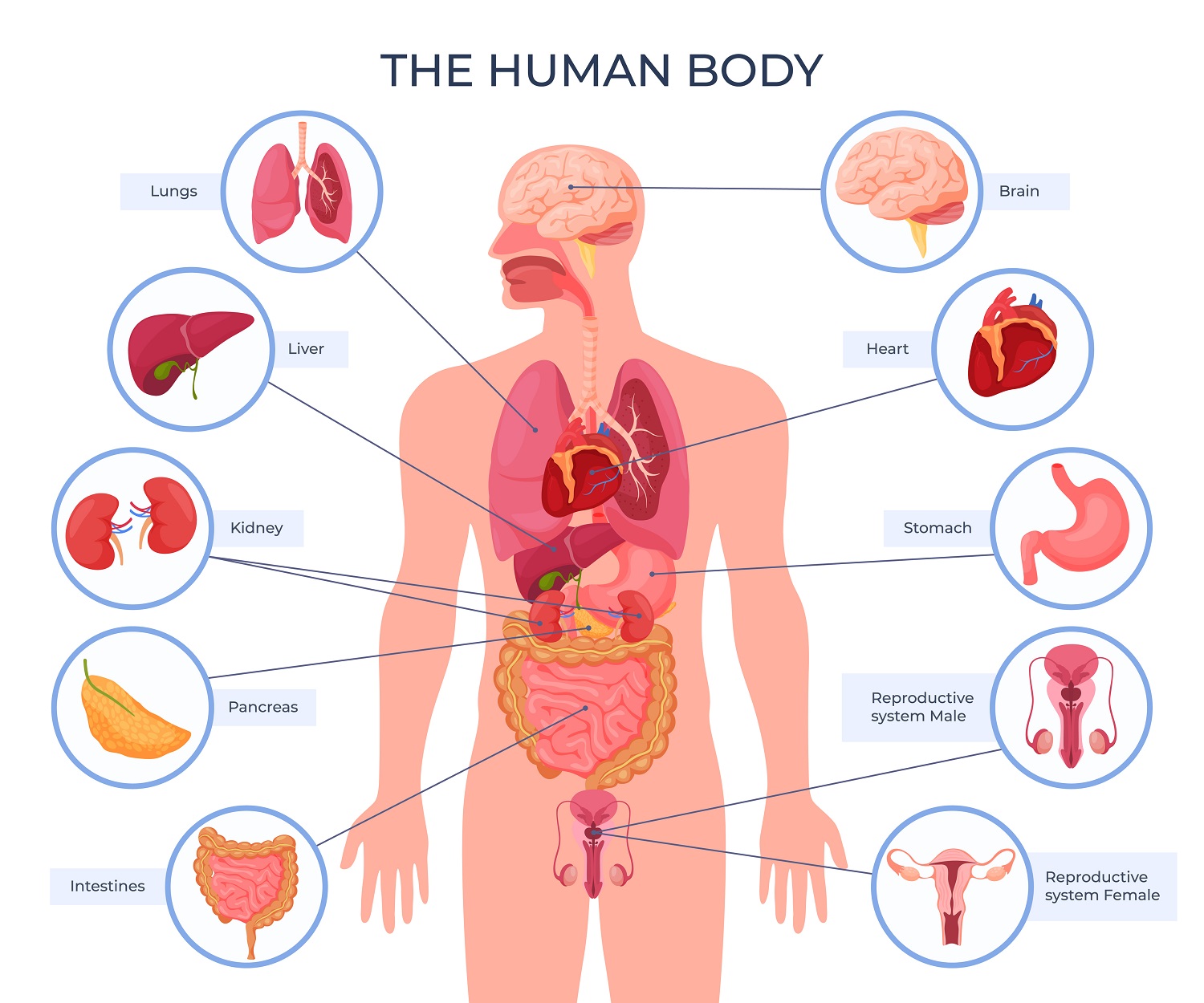
Every point of our body consists of cells. Cells provide structure and function for all living things, from microorganisms to humans. Scientists consider them the smallest form of life. Cells house the biological machinery that makes the proteins, chemicals, and signals responsible for everything that happens inside our bodies. Despite its smallness, however, a cell’s structure has not yet been fully understood. Scientists are still carrying out their research on the systems that a cell has.

The average adult male has around 36 trillion cells in their body, while average adult females have 28 trillion, researchers have found.

How is it that trillions of cells come together, know what to do and co-operate to function? Moreover, no trouble arises during these processes. No cell attempts to do another’s task or refuses to perform its own task. Besides, all these processes take place at an extraordinary speed.

Our cells sometimes act like a chemist to produce chemical substances, sometimes act like an engineer to make calculations, and sometimes work to meet the needs of some other cells.

Some of the most vital functions performed by a cell are Structure and Support; Growth, in complex organisms such as humans, the tissues grow by simple multiplication of cells; Transport …; Energy Production; Metabolism; and Reproduction. They could not have possibly learnt how to carry out these tasks in time by chance. Still, we owe our life to the conscious acts of these tiny cells, which we cannot even see with the naked eye. Surely in them there is a very important fact for us to understand. There is a possessor of superior wisdom who makes our cells perform all these tasks and teaches them what to do.

Each one of the trillions of cells in our body fulfills its tasks perfectly as a result of the Creator’s perfect plan. Waking up every morning, smelling the coffee, breathing without any difficulty, and lots of other things we do are thanks to Allah’s compassion and mercy:

In the creation of the heavens and earth, and the alternation of the night and day, and the ships which sail the seas to people’s benefit, and the water which Allah sends down from the sky—by which He brings the earth to life when it was dead and scatters about in it creatures of every kind—and the varying direction of the winds, and the clouds subservient between heaven and earth, there are Signs for people who use their intellect. (Surat al-Baqara:164)

The first cell that formed man originated in the womb by the union of two cells, one released by our mother and the other by our father. This cell kept dividing and later became a piece of flesh. Then, as the cells that formed this flesh continued to divide to form new cells, our body was shaped bit by bit. Each new cell acquired a different shape. Whereas some became blood cells, some became bone cells and yet others became nerve cells. There are 200 types of different cells in our bodies. In fact, all of these cells are composed of identical components, yet each performs different tasks.  All in the womb.

In shape, our blood cells are globular, their task being to transport oxygen, which is required by our body, by means of blood vessels. Thanks to their shape, they can easily flow through the blood vessels together with the oxygen they carry. Skin cells, on the other hand, are clamped together and closely arranged in a line. So, our skin is impervious to microbes and water.

Scientists have conducted many studies in order to produce a fluid similar to blood. However, having failed to do so, they gave up trying to imitate blood and focused on research in other fields.

The importance of our blood vessels cannot be overemphasized. They are about 120,000 kilometers in length capable of being wrapped round the earth 2.5 times – the length of the equator is 40,000 kilometers. What do you think of that? Blood vessels are not just tubes through which blood flows. They are a unique and complex organ, and any damage to them causes a disease.

Clogged blood vessels in legs – varicose veins, swelling, a feeling of heavy, cold or, on the contrary, a strong burning feeling in feet. Dry and cracked skin on heels. Blood circulation disorders – protection from bacteria disappears, and mycosis appears. Nails get broken. Clogging of the blood vessels that supply liver – steatosis of liver. When you eat fatty food, you get a bitter taste in your mouth.

Broken and clogged blood vessels that supply power to joints – cartilage damage. Joint pain, osteochondrosis and hernia appear. Intestinal vessels lose their elasticity – hemorrhoids appear. Vessels of the eyes – eyesight is failing. A cataract is developing. The red eyes, for which we blame tiredness, are actually micro-hemorrhages, cracks of the small capillaries in the eyes. Circulatory disorders in the brain – vertigo, tinnitus, and memory loss. Have you ever had the experience of going to the room and forgetting what you needed there? Or being unable to memorize a word. These are the signs of cerebrovascular diseases.

Likewise, all other cells too have exactly ideal shapes that are suited to their tasks. However, it is surely not by chance that these cells acquired the shapes they possess. Each has been planned in detail and nothing has come into existence by coincidence. In order for a design and a product to come into being, there needs to be a source of intelligence. That is the essence of this Sermon. Who made these possible? Our Lord created every single part of our bodies perfectly:

He is Allah – the Creator, the Maker, the Giver of Form. To Him belong the Most Beautiful Names. Everything in the heavens and earth glorifies Him. He is the Almighty, the All-Wise. (Surat al-Hashr: 24)

Have you ever asked yourself these questions?  Should I breathe now? Is the amount of blood that my heart pumps sufficient?  Which of my cells and organs require how much energy? When should my stomach start digesting the food I’ve eaten?  Is the intensity of the light entering my eye in due proportion? Which muscles should I contract in order to move my arm?

These questions sound odd because they are never asked. Our bodies perform all these processes automatically. And it uses the network of nerves to do this. This network is formed by the union of trillions of nerve cells. Thanks to this network, the cells in our brain are linked to the muscle cells in our feet, and all body cells communicate with each other.

Similarly, stimuli are sent from the entire body to the brain via the nerves. From every single part of our body messages are sent to our brain continuously and at an amazing speed. So, we can talk, laugh, run, taste the flavor of food, all these processes occur without interruption. All these are thanks to the perfect harmony between our brain and nervous system. Yet, we are sold the idea that all these processes are coincidental and due to chance.

Thanks to the splendid creation of Allah, our brain can carry out all these processes at the same time. Despite years of scientific research, the mechanism of these cells has not been fully discovered. But remember that these cells, whose system has not been found out by human beings yet, have been working perfectly like all other components of the body since the first man was created on the face of the earth. Therein lies a conundrum for evolutionists.

There are 206 bones in our body out of which 27 are interconnected in our hand. And because bones cannot be bent there are joints at the connection points of our bones. Thanks to these joints, we can easily bend our arm, raise our leg, and use our fingers. Who made this possible? What bones are made of has interested scientists a lot and they have tried to imitate bone tissue for years. However, nobody has been able to develop a substance with such advanced characteristics as bone has. Interesting to know that Bone ossification, or osteogenesis, is the process of bone formation. This process begins between the sixth and seventh weeks of embryonic development and continues until about age twenty-five, although this varies slightly based on the individual.

All these facts reveal to us that the human body is the result of an excellent design and superior creation. … Look at the bones—how We raise them up and clothe them in flesh… (Surat al-Baqara: 259)

Every organ and every cell of our bodies runs with an incredible speed and function perfectly at the same time. All perform the tasks that they are appointed to in harmony. Blood keeps conveying to cells the nourishment that they need to live. The stomach and intestines break down this nourishment and make it suitable for use by cells. Nerve cells keep sending stimuli to all parts of the body; the brain evaluates these stimuli, as a result of which we see, hear, taste, and perceive all other senses.

When one of these tasks is delayed or not performed, the regular order of the bodily functions deteriorates. If nerve cells become impaired, our limbs will not work; if stomach cells become diminished, we cannot digest the food we eat; if the cells in the tongue become reduced, we cannot taste what we eat. However, except in the case of certain diseases, none of the above happens. Every component of our body keeps performing its regular functions non-stop while we are living our everyday life. The perfection that you are blessed with at every instant of our life surely has a cause.

Nothing can originate on its own to have such a complete and faultless mechanism. There is God ooo!

Everyone in the heavens and earth belongs to Him. All are submissive to Him. It is He Who originated creation and then regenerates it. That is very easy for Him. His is the most exalted designation in the heavens and the earth. He is the Almighty, the All-Wise. (Surat ar-Rum: 26-27)

That is Allah, your Lord. There is no god but Him, the Creator of everything. So, worship Him. He is responsible for everything. (Surat al-An‘am: 102)

Barka Juma’at and happy weekend

+2348033110822

Continue Reading
Click to comment

Leave a Reply

Your email address will not be published. Required fields are marked *

Islam

Friday Sermon: Climate Change and the Hands of God

Published

on

By

By Babatunde Jose

Allah has created the universe in all its diversity, richness and vitality: The stars, the sun and moon, the earth and all its communities of living beings. All these reflect and manifest the boundless glory and mercy of their Creator. All created beings by nature serve and glorify their Maker, all bow to their Lord’s will. We human beings are created to serve the Lord of all beings, to work the greatest good we can for all the species, individuals, and generations of God’s creatures.

 In the Quran, Allah is depicted as the controller of nature, gently driving clouds, merging them, and allowing rain to fall as He wills. The Quran emphasizes the importance of not spreading corruption on earth, which includes theft, fraud, and environmental degradation. As global warming and environmental issues increasingly affect our world, Islamic teachings underscore the need for environmental stewardship, reminding us to respect and care for our planet.

The Quran and Sunnah provide significant lessons on the relationship between humans and the environment, highlighting the moral responsibility to preserve natural resources. Severe weather events, such as storms and hail, are acknowledged but are not overtly tied to apocalyptic signs in Islamic texts. Verse 11 in Surah Az-Zukhruf emphasizes that rain is sent down in measured amounts, reflecting Allah’s control over the environment. There should be no doubt about this.

Islam cautions against wastefulness in resource usage, using terms like ‘Tabdhir’ (squandering) and ‘Israaf’ (extravagance) to convey the importance of balance and conservation. The Quran offers timeless guidance on living harmoniously within our ecological limits, promoting the thoughtful use of natural resources for the benefit of all creatures. This speaks to the flaring of gas in our oil fields.

The Quran explicitly advises against wastefulness, with verses reminding believers of the importance of using resources thoughtfully. Allah says in the Quran: “, but do not waste; verily, He does not love the wasteful.” (Quran 7:31)

By embracing these principles, Muslims can positively impact the environment. The Quran reminds us of Allah’s provisions, such as the creation of the ozone layer, which protects life on earth. Additionally, weather forecasting is viewed as an informed practice based on observing nature. In summary, the Quran provides profound insights that advocate for environmental awareness and responsibility, urging believers to act diligently in caring for the earth.

However, we should be cautious when discussing the issue of climate change in abstraction. The world and the universe were created by an All-Knowing God who apportioned with precision the provisions he has made. “Do not those who disbelieve see that the heavens and the earth were a closed-up mass, then We opened them out? And We made from water every living thing. Will they not then believe?” (Quran 21:30)

Knowing that we would one day transit from one energy source to another in order to maintain the growing population which he had commanded to ‘be fruitful and multiply’, Allah in His wisdom buried hydrocarbon in the soils of Saudi Arabia, Iran, Iraq, Uzbekistan, Nigeria, Angola, United States, Venezuela, Russia and many other countries. God was not stupid; He was provisioning us with sources of energy.

However, in the course of its usage, these gifts of fossil fuel are now turning into our albatross as a result of global warming. Allah has warned us in the Quran to use whatever we were given judiciously without committing excesses.

The Quran sets forth key principles of eco-consciousness that resonate with us as believers. Concepts such as responsible consumption, avoiding wastefulness, and nurturing the land highlight our role in environmental protection. The teachings encourage us to view nature as a divine trust, prompting us to respect and preserve the ecosystem as part of our spiritual obligation.

The Quranic perspective on the environment is not merely a set of guidelines but a comprehensive framework that shapes how Muslims interact with the natural world. These teachings are deeply embedded in the concepts of stewardship, balance, respect, and conservation.

With this in mind, we have a significant role to play in addressing climate change through the lens of Islam. Our faith encourages stewardship of the Earth and making choices that reflect a commitment to sustainability. By incorporating environmentally-friendly practices into our daily life, we can fulfill this Islamic responsibility and contribute to a healthier planet.

According to Islamic teachings, humans are Allah’s vicegerents (khalifah) on Earth see Quran 2:30. The theology of creation emphasizes that humans have a responsibility to manage and protect the environment and to use their abilities in accordance with divine guidance. This stewardship is integral to fulfilling their role as vicegerents on Earth.

The greatest contributor to climate change, if truth must be told, has been the phenomenal industrial and socio economic development of the First World. From coal fired energy sources to oil and gas, the climate effect cannot be overemphasized. There is also the need for heating fuel during winter, without which people in the cool temperate regions would freeze to death.

The People’s Republic of China, the United States, India, the European Union, Indonesia, the Russian Federation, and Brazil accounted for half of all global greenhouse gas emissions. This is an inevitable corollary of industrial development.

The US military is the single largest institutional consumer of fuel in the world. Credible estimates place it in the range of 80 to 90 million barrels of fuel per year. This staggering figure highlights the military’s dependence on fossil fuels and the significant logistical challenges involved in supplying forces around the globe.

Beginning during the second half of the twentieth century, fossil fuel consumption by the world’s militaries grew substantially. As warfare has become increasingly carbon intensive, military aircraft and other large war machines have continued to guzzle massive amounts of gasoline, diesel, and jet fuel. Today’s modern armies, air forces, and naval fleets are consuming fossil fuels at unprecedented rates. In addition to using fossil fuels to power machinery like tanks and battleships, weapons manufacturing also guzzles a significant amount of energy and fossil fuels.

Former Director of the Central Intelligence Agency and retired United States Army General David Petraeus once famously said, “Energy is the lifeblood of our war fighting capabilities” (Crawford, 2019). As the world’s largest military power, the U.S. military is the single biggest consumer of fossil fuels and producer of greenhouse gas emissions in the world. In addition to concerns about climate change, American military officials continue to highlight the national security implications of being overly dependent on fossil fuels.

Since the 1800s, human activities have caused shifts in weather conditions, chiefly because human activity has increased exponentially as a result of the quantum leap of world population.

Burning fossil fuels can cause global warming as it releases large amounts of carbon dioxide and greenhouse gas into the air, which can trap the sun’s heat and increase temperatures. These however cannot be helped. The burning of fossil fuel as coal, oil and gas are corollary of human population development. More than half of the current world population depends on firewood, coal and other fuels for their livelihood.

The pace of Global climate change today is of a different order of magnitude from the gradual changes that previously occurred throughout the most recent era, the Cenozoic. Moreover, it is human-induced: we have now become a force dominating nature. The epoch in which we live has increasingly been described in geological terms as the Anthropocene, or “Age of Humans”.

Our species, though selected to be a caretaker or steward (khalifah) on the earth, has been the cause of such corruption and devastation on it that we are in danger of ending life as we know it on our planet.

This current rate of climate change cannot be sustained, and the earth’s fine equilibrium (mīzān) may soon be lost. As we humans are woven into the fabric of the natural world, its gifts are for us to savour.

But the same fossil fuels that helped us achieve most of the prosperity we see today are the main cause of climate change. In the brief period since the Industrial Revolution, humans have consumed much of the non-renewable resources which have taken the earth 250 million years to produce – all in the name of economic development and human progress.

We note with alarm the combined impacts of rising per capita consumption combined with the rising human population. We also note with alarm the multi-national scramble now taking place for more fossil fuel deposits under the dissolving ice caps in the arctic regions. We are accelerating our own destruction through these processes.

Excessive pollution from fossil fuels threatens to destroy the gifts bestowed on us by Allah – gifts such as a functioning climate, healthy air to breathe, regular seasons, and living oceans. But our attitude to these gifts has been short-sighted, and we have abused them. What will future generations say of us, who leave them a degraded planet as our legacy?

Our planet has existed for billions of years and climate change in itself is not new. The earth’s climate has gone through phases wet and dry, cold and warm, in response to many natural factors. Most of these changes have been gradual, so that the forms and communities of life have adjusted accordingly. There have been catastrophic climate changes that brought about mass extinctions, but over time, life adjusted even to these impacts, flowering anew in the emergence of balanced ecosystems such as those we treasure today. Climate change in the past was also instrumental in laying down immense stores of fossil fuels from which we derive benefits today. Ironically, our unwise and short-sighted use of these resources is now resulting in the destruction of the very conditions that have made our life on earth possible.

Rabbana atina fid dunya hasanatan wa fil Aakhirati hasanatan waqina ‘adhaban-nar: Our Lord, give us in this world [that which is] good and in the Hereafter [that which is] good and protect us from the punishment of the Fire.

Barka Juma’at and a happy weekend

Continue Reading

Islam

Friday Sermon: Pride and the Pitfalls of Arrogance

Published

on

By

By Babatunde Jose

“Pride goes before destruction, and a haughty spirit before a fall.” Proverbs 16:18 .

The problem with pride is that it is a dangerous and deceptive sin. Nothing brings more destruction to our nation, homes, and relationships than a prideful spirit.

Adrian Rogers says, “Pride is a problem that all wrestle with, and those who think they don’t have it probably have more of it.”

A good self-image or self-esteem is not pride; neither is receiving honor or awards we’ve worked for.

Pride is an attitude of independence from God; it is a spirit of ungratefulness to God. A prideful person esteems himself better than other people.

The great sin of pride is a snare into which we fall all too easily, and its deceitful road leads only to destruction. Charles Haddon Spurgeon (Late Baptist preacher) declares that “There is nothing into which the heart of man so easily falls as pride, and yet there is no vice which is more frequently, more emphatically, and more eloquently condemned in Scripture.”

Unchastity, anger, gluttony, arrogance, conceit, drunkenness, and all that, are mere flea bites in comparison: it was through Pride that the devil became the devil: Pride leads to every other vice: it is the complete anti-God state of mind…… it is Pride which has been the chief cause of misery in every nation and every family since the world began.

Pride defies God; it is a fist in His face. Pride is what created the devil and ruined the human race in the Garden of Eden. God hates it, and when we harbor pride in our hearts, we become His adversary.

Pride divides society; there has never been an argument, a war, a divorce, or church split apart where pride was not the major factor.

Pride dishonors life; in the pursuit of honor, pride brings shame. Proverbs 29:23 says, “A man’s pride will bring him low, but the humble in spirit will retain honor.”

 Pride is the road to ultimate ruin—national, domestic, financial, emotional, spiritual, and eternal ruin—because it destroys all that it controls.

Pride is a matter of the heart; if we are not right with God, we cannot be right with one another. But the grace of God is sufficient for everyone. James 4:6 says, “God resists the proud, but gives grace to the humble.”

 There is none so bad he cannot be saved, there is none so good he doesn’t need saving. Defeating pride begins with humbling ourselves before God.

A profane person is one who has no spiritual conception, who sets no value on a birthright, and will sell it for red pottage. A profane person has no consciousness of the eternal, no commerce with the spiritual, is proud of animal ability, and acts as though independent of God. Profanity never prays, never worships, never speaks of spiritual intercourse, has no traffic with the eternities, no commerce with heaven.

What is pride? Pride is an attitude of independence from God. Pride is a spirit of ungratefulness to God. God has so blessed us. We have so many things. We act like we deserve it and have earned it, and it is ours.

Some may say that they worked for what they have. Who gave us the ingenuity to work? Who gave us the strength and energy? We do not have one thing that we have not received. Pride is esteeming ourselves better than other people.

A proud person becomes irritated when corrected for mistakes. A proud person accepts praise for things over which he or she has no control, such as beauty, talent, and abilities. Those are gifts.

C.S. Lewis said that pride gets no pleasure out of having something, only out of having more of it than the other man.

The Quran states that Allah does not like the arrogant and boastful, and those with an atom’s weight of arrogance in their heart will not enter Paradise. Humility, on the other hand, is a central goal of spiritual purification and is seen as the opposite of pride.

The concept of conceit, expressed in the Quran with terms like ‘mukhtal’ (self-deluded) and ‘fakhur’ (boastful), is a severely condemned spiritual disease. Pride is a direct challenge to Allah’s attribute of Al-Kabeer (The Greatest). Allah explicitly states His dislike for the arrogant and boastful.

Tafsir by authorities like Ibn Kathir on Quran 4:36 For Allah loveth not the arrogant, the vainglorious; and 57:23 For Allah loveth not any vainglorious boaster; clarifies that this refers to an arrogant individual who is pleased with themselves and boastful to others, while being ungrateful to Allah for His blessings.

In classical Islamic scholarship, pride (Al-Kibr) is a grave spiritual malady of the heart, defined by the Prophet Muhammad (SAW) as the dual act of rejecting divine truth and holding people in contempt. Classical authorities like Imam Al-Ghazali elaborate that it is an internal sense of self-aggrandizement that positions oneself above others and, ultimately, above the truth itself.

Across the 11 key Quranic verses on this topic, from the ‘pride in sin’ (2:206) “When it is said to him, “Fear Allah,” he is led by arrogance to (more) crime. Enough for him is Hell; – an evil bed indeed (to lie on)!” – to turning away from people scornfully (31:18); a consistent theme emerges: Pride is the primary veil that blinds the heart to guidance and severs the connection with Allah.

Ibn Kathir’s tafsir confirms that this was the foundational sin of Iblis and the cause of ruin for past nations who rejected their prophets. This synthesis establishes pride not merely as a negative trait but as a direct challenge to divine authority and a fundamental obstacle to spiritual purification.

In theological perspective, pride is a spiritual disease of the heart (qalb) that corrupts faith and actions.

Seen as the root of narcissism, inability to accept criticism, and contempt for others, leading to social isolation and spiritual ruin; Pride seals the heart from accepting truth and guidance from Allah and His messengers.

Overcoming pride and cultivating its opposite, humility, is a central goal of spiritual purification.

Prophet Muhammad (SAW) warned severely against it, stating that no one with an atom’s weight of arrogance in their heart will enter Paradise.

There is a powerful connection between pride and the senses. Verses like 22:9 (Disdainfully) bending his side, in order to lead (men) astray from the Path of Allah: For him there is disgrace in this life, and on the Day of Judgment We shall make him taste the Penalty of burning (Fire). And 75:33 Then did he stalk to his family in full conceit! show that internal arrogance is not abstract; it physically manifests in one’s posture, gait, and even the direction of one’s gaze. This proves that purification in Islam is holistic, requiring both internal change and external correction. — Al-Ghazali, Al-Qurtubi

A cross-verse synthesis of ‘pride in sin’ (2:206) and ‘pride of ignorance’ (48:26) uncovers a critical insight: pride creates a self-reinforcing cycle. The ‘pride of ignorance’ prevents one from seeking knowledge, and the ‘pride in sin’ prevents one from accepting correction, trapping the individual in a downward spiral of ignorance and disobedience, a spiritual feedback loop that only humility can break.

One recurring theme emphasized throughout the Quran is the importance of humility and the warning against pride and arrogance. These negative traits are viewed as obstacles in the spiritual journey, hindering individuals from attaining closeness to Allah and fostering harmonious relationships with others.

Surah Luqman, verse 18, states formerly cited highlights the detestable nature of arrogance and also contrary to the qualities that Allah desires in His servants.

“Indeed, He does not like the arrogant.” (Quran 16:23). This verse serves as a clear message that pride and arrogance find no favor in the sight of Allah.

Surah Al-Baqarah, verse 206, illustrates the grave consequences of arrogance. It highlights that when individuals become self-absorbed and disregard the guidance of Allah, they pave the way for their own spiritual downfall.

Surah Al-Furqan, verse 63provides a contrasting image: “And the servants of the Most Merciful are those who walk upon the earth easily, and when the ignorant address them [harshly], they say [words of] peace.” This verse showcases the virtue of humility in the face of adversity.

The Holy Quran serves as a beacon of guidance for Muslims, offering profound insights into various aspects of life. Among the recurring themes emphasized in the Quran are the condemnation of pride and arrogance, and the promotion of humility. These negative traits are seen as hindrances to spiritual growth and detrimental to one’s relationship with Allah and fellow human beings. These verses underscore the importance of humbleness, while warning against the pitfalls of arrogance.

By cultivating humility in their hearts and actions, believers can strive to embody the virtues that Allah seeks in His servants, fostering an atmosphere of love, respect, and harmony within themselves and their communities.

Today, we celebrate the birthday of a virtuous woman of impeccable humility and godliness who has demonstrated forbearance and patience. A paragon of beauty, resilience and acceptance: We present to you our amiable sister Alhaja Lateefah Abimbola Kuru (the last  daughter), retired but not  tired and ever smiling. May Allah bless her new age and bless her home. Grant her good health and the wherewithal to take care of Amal, her lovely daughter. Bola, happy birthday and Allah’s everlasting blessings.

Barka juma’at and happy weekend.

Continue Reading

Islam

Friday Sermon: Which of the Favours of Your Lord Will You Deny? Surah Ar-Rahman

Published

on

By

By Babatunde Jose

The teachings of Al- Qur’an are universal, addressed to all people throughout the world regardless of their creed and colour. They enlighten man’s soul, purify his morals, condemn all wrongs, order good deeds and call for the establishment of justice and fraternity through obeying Allah as the supreme authority. Surah Ar-Rahman has benefits in education, indicating that the properties of educators are generous, compassionate, gentle, polite and morality to their students and anyone (Personal Competence).

Surah Rahman is the 55th chapter of the Quran and has 78 verses. It is often referred to as “The Beneficent.” It highlights the attributes of Allah, particularly His mercy and generosity. The surah is notable for its repeated refrain, “Fabi ayyi ala’i rabbikuma tukaththiban?” (So, which of the bounties of your Lord will you deny?), which serves to remind and awaken the listener to the blessings they receive from Allah.

The repetition of this question challenges those who deny the existence or power of Allah and invites them to reflect on their own limited abilities in comparison to the infinite power of Allah.

Surah Rahman also contains other instances of repetition. For example, the phrase “Then which of the blessings of your Lord will you both (jinns and men) deny?” is repeated six times in the surah.

Similarly, the phrase “So which of the favors of your Lord would you deny?” is repeated five times in the surah. This repetition further emphasizes the importance of gratitude and encourages the listener or reader to reflect on the countless blessings that Allah has bestowed upon them.

Another example is the repetition of the phrase “Which of the powers of your Lord can you (people) deny?” This phrase is repeated nine times in the surah, and it serves to highlight the power and might of Allah.

Overall, the repetition in Surah Rahman serves to emphasize key points and make them more memorable for the listener or reader. The repetition of the question “Which of your Lord’s blessings would you deny?” throughout the surah reminds us of Allah’s countless blessings and encourages us to express gratitude to Him. It also serves as a rhetorical device to challenge those who deny or reject the existence of Allah, inviting them to reflect on the blessings that are evident in the world around them.

The repetition of this question, along with other phrases such as “Then which of the blessings of your Lord will you both (jinns and men) deny?” and “So which of the favors of your Lord would you deny?” further emphasizes the importance of recognizing and acknowledging Allah’s blessings and encourages us to think about the ways in which we may be ungrateful or unaware of these blessings.

Finally, the repetition of the phrase “Which of the powers of your Lord can you (people) deny?” serves to highlight the power and might of Allah and challenges those who deny His existence or power to reflect on their own limited abilities in comparison to the infinite power of Allah.

Surah Rahman also includes other forms of repetition, such as parallelism and refrains. Parallelism is a literary device in which similar ideas are expressed using different words or phrases. For example, in verse 13, the phrase “Then which of the favors of your Lord will you deny?” is repeated twice, with slightly different wording: “Which of the favors of your Lord will you deny? He created man from clay.” This repetition creates a sense of rhythm and balance and helps to drive home the message of gratitude and recognition.

In the great astronomical universe there are exact mathematical laws, which bear witness to Allah’s Wisdom and also to His favors to His creatures; for we all profit by the heat and light, the seasons, and the numerous changes in the tides and the atmosphere, on which the constitution of our globe and the maintenance of life depend.

To be taken both literally and figuratively. A man should be honest and straight in every daily matter, such as weighing out things which he is selling: and he should be straight, just and honest, in all the highest dealings, not only with other people, but with himself and in his obedience to Allah’s Law. Not many do either the one or the other when they have an opportunity of deceit.

Justice is the central virtue, and the avoidance of both excess and defect in conduct keeps the human world balanced just as the heavenly world is kept balanced by mathematical order.

How can Allah’s favors be counted? Look at the earth alone. Life and the conditions here are mutually balanced for Allah’s creatures. The vegetable world produces fruit of various kinds and corn or grain of various kinds for human food. The grain harvest yields with it fodder for animals in the shape of leaves and straw, as well as food for men in the shape of grain. The plants not only supply food but sweet-smelling herbs and flowers.

The whole Surah is a symphony of Duality. The things and concepts mentioned in this Surah are in pairs: man and outer nature; sun and moon; herbs and trees; heaven and earth; fruit and corn; human food and fodder for cattle; things nourishing and things sweet-smelling; and so on throughout the Surah. Then there is man and Jinn. “Will ye deny?” that is, fail to acknowledge either in word or thought or in your conduct. If you misuse Allah’s gifts or ignore them that is equivalent to ingratitude or denial or refusal to profit by Allah’s infinite Grace.

The ships-sailing ships and steamers, and by extension of analogy, airplanes and airships majestically navigating the air-are made by man, but the intelligence and science which made them possible are given by man’s Creator; and therefore the ships also are the gifts of Allah.

The most magnificent works of man-such as they are – are but fleeting. Ships, empires, the wonders of science and art, the splendors of human glory or intellect, will all pass away. The most magnificent objects in outer Nature – the mountains and valleys, the sun and moon, the Constellation Orion and the star Sirius – will also pass away in their appointed time. But the only One that will endure forever is the “Face” of Allah. Tekbir!

Every single creature depends on Allah for its needs: of all of them the Cherisher and Sustainer is Allah. “Seek (its needs)”: does not necessarily mean ‘seek them in words’: what is meant is the dependence: the allusion is to the Source of supply.

Allah is still the directing hand in all affairs. He does not sit apart, careless of mankind or of any of His creatures. But His work shows new splendor every day, every hour, every moment.

Allah gives to both good and evil men a chance in this period of probation; but this period will soon be over, and Judgment will be established. To give you this chance, this probation, this warning, is itself a favor, by which you should profit, and for which you should be grateful.

If you think that because you do things in secret, or because some of your sins do not seem to meet their inevitable punishment or some of your good deeds seem to go unnoticed, do not be deceived. Judgment will soon come. You cannot possibly escape out of the zones in which your lives have been cast, without authority from Allah. Be grateful to Allah for the chances He has given you.

Blessed be the name of thy Lord, Full of Majesty, Bounty and Honor.

The question in Surah Rahman is a wake-up call for all of us. It reminds us that our time in this world is short. We don’t know when we will die or when the Day of Judgment will come. So, we need to make the most of every moment and every blessing. We need to use our time and energy to do good and get closer to Allah. We need to change our bad habits and develop good ones. We need to be kind and generous to others. And we need to remember that everything we have is a gift from Allah. It is not because of our own efforts or abilities. This should make us humble, and it should also make us more grateful.

At this hour, we pray to Allah to grant divine healing to the sick as we remember our sister Sobura, who is currently afflicted. May Allah open the gate of divine healing for her and ease her pains as she currently undergoes chemotherapy.

May Allah teach us how to be grateful for all we have been given.

Barka Juma’at and a happy weekend!

Continue Reading

Go back

Your message has been sent

Warning
Warning
Warning
Warning

Trending