
Featured
Glo Marks Two Decades of Uninterrupted Service, Thanks Nigerians


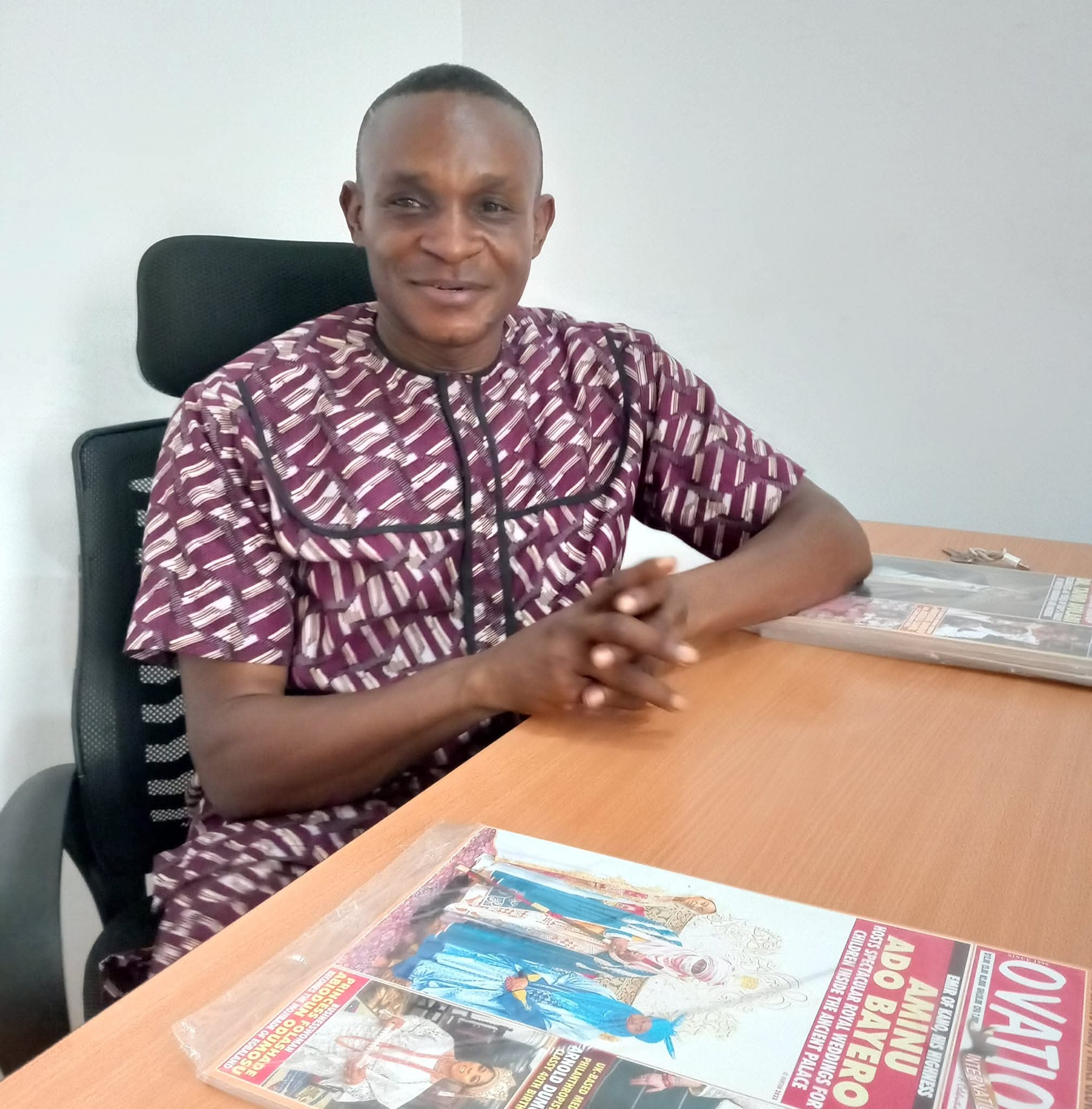

By Eric Elezuo
It seems like yesterday, but like a joke well cracked, a whole 10 years have come and gone since I ventured into the new lease of life called Ovation Media Group. The experience has been a pot pourri of incredibilty, sensation, hits, near hits and a mixed fortune of the good, bad and ugly. Of course, what does one expect?
The Ovation brand has been not only big, but larger than life. To us out there savoring their sensational releases in terms of publications, it was much more than a media organisation, but something in the neighborhood of myth tingled with legendary. In my little circle, people talked about Ovation Magazine as a garden of Eden that can only be imagined with utmost reverence, but can never be reached or accessed.

Sometimes, you hear people talk about an event, and the next thing you hear is ‘even Ovation covered it’. That alone is a proof that there was nothing ordinary about the occasion. It was only meant for ‘gods’ in human form; the be all and end alls of world politics, entertainment and enterprise. Ovation was just big, so big among Africans that describing it will completely leave gaping and lost for words.

If the brand was this huge, you can imagine what the mention of the brain behind it, Dele Momodu, conjure to the mind, of both the speaker and the listener. He was the big masquerade that can only be felt, heard and never seen except for the members of the inner caucus. At a stage, I vowed to be a member of this inner caucus. I didn’t know how it would happen, but I decided something; that when I would get married, Ovation would be there to cover it, the cost notwithstanding. I knew I would’ve been rich enough to afford their services, and so come face to face with the big masquerade, Dele Momodu himself. Well, I’m still not ‘rich enough’, but I have not only come face to face with the big masquerade, but has risen to become the Editor of the most sought-after celebrity journal in Africa, and all its appendages or titles including The Boss Newspaper and Ovation Television.
The day was Wednesday, January 20, 2016, when I first sat face to face with Chief Momodu, who over the years has steadily and graciously transformed into Aare, Dr among many impressive titles, in the company’s new office at Opebi, Ikeja. It was my interview to be absorbed as a Correspondent into the organisation. The opportunity dropped on my lap, made possible by my good friend and ex-classmate at the University of Lagos, Mr. Mike Effiong, who was the substantive and hardworking editor then.

My desire to work with Ovation transformed into hunger when I discovered that Mike, as I use to call him at UNILAG, or Editor, as I called when with I joined the organisation, was the second-in-command. I told myself, and to wife that if only I could reach out to Mike, it would be easy to know availability in the organisation. We were very at close though he was already very career minded then, supping and dining with those that matter in the industry at that level. The last I saw him before his Ovation rise was when he was at Encomium Magazine. We lost contact afterwards. It was the days of no GSM. They were moving with pagers. I had no such privilege. I can’t remember exactly how his number dropped on my lap one day many years after. I called and got to him. We reconnected, and reminisced. I was a school teacher then. I seized the opportunity to explain that I still wished to practice journalism. We have had the discussion earlier shortly after graduation. He invited me to his office – then at Excellence Hotel, Ogba. We met in the ‘luxurious’ lobby of the hotel the day I came. There was no place for me then as he told me. Though I was disappointed, I doubted if I was ready for the kind of job description I noticed that day. Mike seasoned my coming by patronizing my book. Yes, I was marketing my first book then, ‘The Dedication Tragedy’, and was fresh from Master’s degree class after getting my Masters in International Law and Diplomacy (MILD) from the University of Lagos.

We lost contact again. It was not until 2015 he returned my call, after several, and talked about a certain ‘The Boss’, which is the newest brainchild of the organisation. I was ready to move to anything, that can help me offset my highly accumulating bills. I was working with National Mirror, where I was owed months of salary. The funniest part was that I moved from Newswatch, where I was owed years of salary to National Mirror. Incidentally, both organizations were owned by one person. That’s a story for another day.

So on that fateful January 20th of 2016 after several failed appointments owing to Chief Momodu being out of the country, we finally met. The interview was sharp but detailed. It was beyond paper qualifications. It was a case of wits, reposition of knowledge and ability to navigate through the world of news gathering and dissemination, and not forgetting ability to withstand and travel at short notice. I did not only nod in the affirmative to all, but proved my hunger in words and action to take up the challenge. I was found worthy, and asked to assume duties. I requested for the rest of the month to sort myself out. There was nothing to sort out. I just needed time to calm my head, nd douse the euphoria so as not to make a mistake on the first day.
So on Monday, February 1, 2016, I appeared completely suited with tie to begin a new trend in professionalism. The suit was just appropriate for a worker, who has not been paid for ages, if you get what I mean. I was slammed with the title of Correspondent, but given a job description that equalled editor, reporter and supervisor combined. I wrote, edited, proofread, set page, go on field assignment, publish and share. It was a handful, but I was happy to have a job, and the job I wanted. So I adapted with equanimity. In fact, my publisher was a no-nonsence person. Mistakes were not permitted. Missing deadlines were taboos. Tough as it was, it toughened me. Today, I’ve graduated from being a better journalist to whatever you can think of.

Shortly after assuming office, I got the privilege to interview and engage staff, mostly interns to work directly under me. My first staff was Temitope Ogunleye, a young corper from Kogi State University. She is still with me today, having grown in leaps and bounds. Others followed including Morakinyo Ajibade from Nigerian Institute of Journalism, David Adeyemi, Isaac and Annabelle from Babcock University. Ajibade is also still with me today. His level of growth is tremendous. There were many others, and they are all helpful to my career success. There was also Joguomi, Victoria, Christiana and many others. I did my best to support their mentoring, and they are performing brilliantly in their various worlds.
This is not forgetting the men with the camera I met on ground and those that joined afterwards; Koya, Ken, Iroko, Funmi, Solomon, Abraham, Femi, Ben, Tunde, Dala Taiwo and a host of others. We did many things together including our botched Christmas party. That happens to be the biggest blow any staff has suffered. Today, it’s worth looking back at, and laughing loudly at.

It has not all been rosy though; twice I have been sacked for operational deficiency (not incompetence), and twice I have been restored for obvious reasons. And today, God is still helping us.
In 2020, I was upgraded to the post of Assistant Editor of The Boss Newspaper, and in late 2021, I was elevated to the position of Editor, The Boss Newspaper.
In November 2023, precisely on the sixth, I was privileged to be considered and appointed as the Editor of the Ovation brands or Ovation Media Group. The editor of Ovation is a title for the General Administrative and Editorial Head of the Group, answerable to only the Publisher and Board of Directors.
My appointment was sequel to the elevation in politics of my immediate boss, Mike Effiong, who was appointed as Senior Special Adviser to the Governor of Akwa Ibom State.
It’s not yet uhuru though. I’m still learning and taking instructions from superiors in the industry and elsewhere. I must add that humility and acceptance of everyone I’ve met in the line of duty, has helped in no small measure to fasttrack my growth. Yes, I can beat my chest and say that I have delivered, and still delivering.
Yes again, I’ve not been able to traverse the globe as regards traveling or amass wealth, but my experience can dictate for any world leader. It is worth noting that waking up to work for Ovation every day (morning, afternoon, evening, night and midnight including wee hours), and this is not an exaggeration, but bare facts, has taught me life, in both the hard and acceptable ways.
To my boss of inestimable value, Chief Dele Momodu, my appreciation is limitless; my friend of many years, Mike Effiong and past and present staff of the brand, thank you for the opportunity. I don’t know where the next 10 years will meet us, but I know for sure it would be in a good place, and much bigger than we are today.
Cheers to February One!
Eric Elezuo is the editor, Ovation Media Group, and writes from Lagos


Your message has been sent



Glo Leads in Investments, Performance As NCC Sets New Standard for Telecoms

Memoir: My Incredible 10 Years Sojourn at Ovation by Eric Elezuo

Ghana 2028: Mahamudu Bawumia Claims NPP’s Presidential Ticket

Otunba Adekunle Ojora: Farewell to a Good Man

Voice of Emancipation: President Tinubu’s Recent Trip to Turkey

FirstHoldCo Grows Gross Earning to N3.4trn for Unaudited Full Year 2025

The State of Leadership Today: A Look at Global, African and Nigerian Realities

Tinubu Stumbles, Falls During Welcome Reception in Turkey

FG vs Sowore: Court Admits As Exhibit Video of Reno Omokri Calling Tinubu ‘International Drug Baron’

Court Sends Actress Angela Okorie to Prison for Alleged Cyber-Stalking

Coup: Investigators Widen Probe Scope to Unmask Civilian Financiers
Tinubu’s Stumble Purely Accidental, Not Health Related – Presidency

Spider-Man Voice Actor Alexis Ortega Dies at 38
Otunba of Lagos Adekunle Ojora is Dead
-
 News5 days ago
Tinubu Stumbles, Falls During Welcome Reception in Turkey
-
 Featured5 days ago
FG vs Sowore: Court Admits As Exhibit Video of Reno Omokri Calling Tinubu ‘International Drug Baron’
-
 Entertainment4 days ago
Court Sends Actress Angela Okorie to Prison for Alleged Cyber-Stalking
-
 Headline4 days ago
Coup: Investigators Widen Probe Scope to Unmask Civilian Financiers
-
 National5 days ago
Tinubu’s Stumble Purely Accidental, Not Health Related – Presidency
-
 Entertainment3 days ago
Spider-Man Voice Actor Alexis Ortega Dies at 38
-
 News5 days ago
Otunba of Lagos Adekunle Ojora is Dead
-

 News5 days ago
Diezani Appears in London Court, Denies Bribery Allegations