Islam
Friday Sermon: Chronicles of Poverty 1: The Black Man’s Burden
Published
3 years agoon
By
Eric
By Babatunde Jose
“Woe to the rulers! And woe to the chiefs! And woe to the trustees! Some people will wish on the Day of Resurrection that their hair was hanging from the sky and swinging between heaven and earth rather than to have done what they did.” – Holy Prophet Muhammad (SAW).
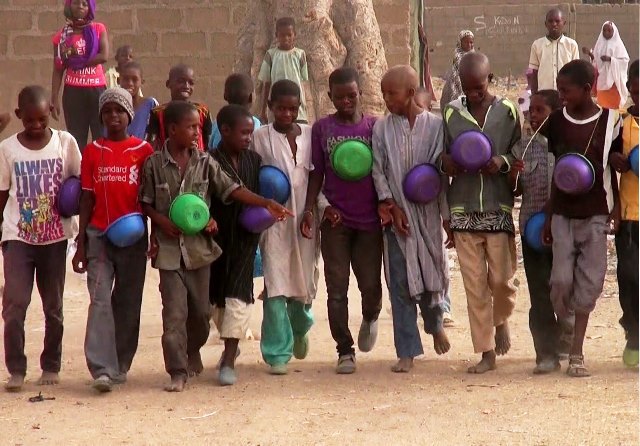
Africa is a developmentally challenged continent. Its name evokes that of a people wallowing in poverty, famine, wars, underdevelopment, and hunger. This is because Africa has been unable to translate its vast opportunities into wealth creation and poverty alleviation. Africa is the home of poverty and its intractable problems spell doom for its people. Africa is also a divided continent that is amenable to political, diplomatic and economic manipulation by both East and West.
Despite the worldwide focus on Africa and its problems, Africa has remained poor, in comparison with other parts of the world. To a very large extent, Africa’s problems have defied explanation. This is chiefly because Africa has never been part of the solution. Like Kenyan President Ruto eloquently conjectured, Africa has to be at the table, where matters are being decided. Failure to be at the table means Africa would be on the menu.
Looked at from this perspective, Africa has been the laboratory of economic development theorists: Theories which are not ‘sui generis’ but conceived in the academic laboratories of Western universities. Various development models have been tried; some with limited success and most with woeful failure, sometimes exacerbating the problems they set out to solve. SAP readily comes to mind. Four common theories of development economics include mercantilism, nationalism, the linear stages of growth model, and structural-change theory.
The anomalous working of African economies has succeeded in turning development theorists into false prophets. Former President Babangida once confessed that he did not know what propels the Nigerian economy, which commentators quickly defined as ‘witchcraft economy’.
At other times, foreign aid has been looked upon as a panacea, but it too has been found to be insufficient. At other times its problems have been blamed on bad governance. This, however, misses the point as some well governed African countries still remain very poor: To all intents and purposes, poverty has remained ‘the Black man’s burden’. Unfortunately, the solution to our problems can be found within Africa.
There is no gainsaying the fact that Africa, particularly Black Africa, is a society retarded. Compared to other societies, we find no comparison to the misfortune the peoples of Africa have been subjected to.
People were once transported and exiled to Australia from England and today, they have created a prosperous society for themselves; ditto for the Protestants that first sailed to America on the Mayflower; they have today created the world’s most prosperous society. China was once synonymous with overpopulation and poverty; today it is the industrial kitchen of the world, turning out HP computers, iPhones, BMWs, and Range Rovers.
Some years ago, Nigeria and some other African countries were said to have come out of recession; unfortunately, her people are still in recession; they have always been in recession, but for a small percentage of the people who operate in the real economy: Majority of Africans would remain poor. They live in countries that are experiencing growth without development of the human elements. As the economies of these countries are presumed to be growing, the lot of their people continue to deteriorate.
One poor African once said: “I know poverty because poverty was there before I was born, and it has become part of life like the blood through my veins. Poverty is not going empty for a single day and getting something to eat the next day. Poverty is going empty with no hope for the future.
Poverty is getting nobody to feel your pain and poverty is when your dreams go in vain because nobody is there to help you.
Poverty is watching your mothers, fathers, brothers, and sisters die in pain and in sorrow just because they couldn’t get something to eat.
Poverty is hearing your grandmothers and grandfathers cry out to death to come take them because they are tired of this world.
Poverty is watching your own children and grandchildren die in your arms but there is nothing you can do. Poverty is watching your children and grandchildren shed tears in their deepest sleep.
Poverty is suffering from HIV/AIDS and dying a shameful death, but nobody seems to care”.
Poverty is when you hide your face and wish nobody could see you just because you feel less than a human being. Poverty is when you dream of bread and fish you never see in the daylight.
Poverty is when people accuse you and persecute you for no fault of yours. Poverty is when the hopes of your fathers and grandfathers just vanish within a blink of an eye.
I know poverty and I know poverty just like I know my father’s name. Poverty never sleeps. Poverty works all day and night. Poverty never takes a holiday” (One Poor African)
Fast cars, Luxury yachts, diners in trendy beach-side, enjoying the gentle ocean breeze; the African capital cities are illusions of prosperity. The number of multimillionaires in Africa has been rising over the years — the highest growth of any region in the world. Many have dubbed this reversal in fortunes “Africa Rising,” a term encapsulating the continent’s jubilant ascent to prosperity after decades of post-colonial strife and sluggish growth. But this story ‘Africa Rising’ is a false hope for the millions of the poor whose lives remain unaffected by the growth taking place around them.
A startling number of people still live in abject poverty. Almost one out of every two Africans survives on $1.25 a day or less and the continent hosts six out of 10 of the world’s most unequal countries.
Africa’s population is projected to triple to 1.25 billion by 2050, but youth prospects remain dire across the board. The ‘army of disguised unemployed youths who roam our highways selling all manners of goods, are epitome of our ‘pure water’ economy. But they also formed a reserved army for a future uprising. In Nigeria, the continent’s largest economy, the majority of young people get by on less than $2 a day, if at all. At the current exchange rate, our minimum wage earners on N30,000 a month survive on $1.3 a day: Automatically living below the poverty line! The unemployment queue can today be measured in miles.
Africa’s growth statistics measure only those who are active participants in the economy, leaving out the marginalized masses who often find themselves in sporadic, informal employment.
Africa has a political problem that must first be addressed by Africans – equitable distribution of national resources: Who presides over this equitable distribution? Our thieving leaders.
Simon Kolawole, in his column in ThisDay newspaper, had this to say: “It may need reminding that most of the countries we call “developed” today were built through competent and patriotic leadership. . .. . In fact, Singapore, we all know, ran a dictatorship. South Korea was developed essentially by military governments. Nigerians, irrespective of their ethnic, regional and religious backgrounds — are afflicted with poverty, viciously denied the basics of life by those they call their leaders. . . . . As long as the constant factor of inept and unpatriotic leadership stays in the mix, we will remain underdeveloped. . . . . . I am confident that one day, we would come to agree, even if grudgingly, that the biggest set-back for Nigeria, (nay Africa), is the quality of leadership at different levels.”
Meanwhile, it is instructive to know that:
* Out of the 800 million people still suffering from hunger in the world, over 204 million come from Sub-Saharan Africa.
* Africa is the world’s least electrified continent. Nearly 600 million people remain without access to electricity in Africa.
* UN data supports claim that one in 10 children in Nigeria dies before fifth birthday.
*More than 800 million people go to bed hungry every day, 300 million are children.
*Every year, six million children die from malnutrition before their fifth birthday.
*In 2021, for instance, around 247 million cases of malaria were reported and about 619,000 people died. Four African countries accounted for just over half of all malaria deaths worldwide: Nigeria (31.3%), the Democratic Republic of the Congo (12.6%), Tanzania (4.1%) and Niger (3.9%). Professor Olugbenga A.
Rabbana atina fid dunya hasanataw-wa fil Aa’khirati hasanataw-wa-qina ‘azaaban-naar. “Our Lord, give us in this world [that which is] good and in the Hereafter [that which is] good and protect us from the punishment of the Fire.”
(Quran 2:201)
Barka Juma’at and Happy weekend.
Related
You may like
Islam
Friday Sermon: Hopefulness Hopelessness and Renewed Hope
Published
7 days agoon
April 3, 2026By
Eric
Hopefulness is an important characteristic of believers and, at the same, an indication of their faith. Knowing that everything happens according to Allah’s will, believers do not fall into despair or become hopeless and pessimistic. And, since believers know that Allah will accept their prayers, they do not doubt, even for a second, that a seemingly terrible event is simply a part of their test and that eventually it will work out for the best.
Hope in Allah’s mercy and Paradise greatly influence a person’s whole life, attitude toward life, sincerity of worship, and resolve. Those who hope for Allah’s mercy cannot do anything that He has forbidden, ignore something that He has commanded, say a bad word, or neglect the voice of their conscience. They advise people to good and right, discourage them from evil, and carry out with enthusiasm many other forms of worship Allah has commanded.
Even if they have lost everything, believers can start fresh without the slightest feeling of hopelessness, and with patience and enthusiasm; that is renew hope. Their enthusiasm arises from their faith, their trust in and love for Allah, their Quranic morals, and their certain realization of this world’s transience.
It is the hope of a bountiful harvest that motivates a farmer to work hard on his farm; it is also the hope of a profitable trade that propels a merchant to travel far afield in search of merchandise; the student who burns the midnight oil does so in the hope of a good result in his exams; it is equally hope of victory in war that pushes the soldier to endure the hardship of war; and as for the believer, it is the hope of gaining the pleasure of paradise that motivate him to obey Allah’s injunctions and shun the advances of Satan.
Hope, then, is a motivating power that makes one feel delighted when working, that provides the stimulus for struggling for the sake of duty and which enlivens body and soul. Hope is the elixir of life. Most people fall into despair when they do not get what they want, lose something, or when some unexpected dreadful event befalls them. (Quran 12:87) (Quran 15:56)
Everything that happens comes about through Allah’s command of “Be”, see Quran 3:46-48; 3:58-60; 19:34-36; 2:116-118. At every second, everything and scene that appears before us is created through Allah’s will. Nothing is left to its own devices, for everything is created for the destiny that Allah has determined for it. Several Quranic verses mention how Allah gives believers a good reward and offers them glad tidings of grace, favor, and mercy:
Those who believe and work righteous deeds, –from them shall We blot out all evil (that may be) in them, and We shall reward them according to the best of their deeds. (Quran 29:7) See also (Quran 42:26) (Quran 2:268) (Quran 32:16).
Since prayer itself is both a form of worship and an indication of a hopeful attitude toward Allah, believers pray in the hope that our Lord will answer their prayers. Hope befits reason and rationale, while despair is utterly against it. Allah makes it clear that people are tested by their souls and possessions.
In one of his sayings, our Prophet (SAW) made this clear: “Whatever Allah takes is for Him, and whatever He gives is for Him. Everything with Him has a limited fixed term (in this world), and so people should be patient and hope for Allah’s reward.” (Sahih Bukhari) It is vital to fully comprehend the importance of being hopeful and to be patient in order to gain Paradise.
Being positive is obligatory, as the following verse shows:“O my sons! Go ye and enquire about Joseph and his brother, and never give up hope of Allah’s soothing Mercy: Truly no one despairs of Allah’s soothing Mercy, except those who have no faith.” (Quran 12: 87)
Majority of people are ungrateful and do not submit to Him completely, and thus fall into despair. This type of attitude is apparent in Quran 14: 34.
Allah makes it clear that He is not pleased with those who attach themselves to this world, worry about the future, are ambitious, arrogantly think that they are in control but then despair at the slightest setback, and are ungrateful: See (Quran 11:9-11)
The secret behind the believers’ trust in Allah in all situations, as well as their continual joy and enthusiasm, lies in their belief in and reliance upon Allah. They understand that Allah is behind every apparently difficult situation, as well as the fact that only He gives and takes.
In very simple terms, the believer has hope and trust in the goodness of Allah. Allah has promised believers great bounties in both this life and the Hereafter, and people may hope to obtain them according to the degree of their faith in and closeness to Allah, as well as their submission and sincerity.(Quran 29:7) (Quran 42:26)
There is no doubt that Allah’s Will shall prevail. However, this does not preclude us from praying, supplication and making efforts. There is a very pertinent assertion by a man of God who said that ‘blessing is not free’. We must work for it and then ask God to bless our efforts. According to the gentleman of God, when Isaac wanted to bless Jacob, he asked him to prepare a very delicious meal for him. After partaking of the meal, he blessed Jacob.
Allah does not require a delicious meal from us, but our prayers and faithfulness. Like they say, ‘nothing goes for nothing’! ‘Those who come to equity, must come with clean hands.’ Righteousness exalteth a nation: but sin is a reproach to any people. Proverbs 14:34. May Allah give us the renewed hope we desire!
Rabbana atina fid-dunya hasanatan wa fil ‘akhirati hasanatan waqina ‘adhaban-nar. Our Lord! Grant us good in this world and good in the Hereafter, and save us from the chastisement of the fire. (Q2:201)
Barka Juma’at and Easter Greetings
EASTER: RENEWED HOPE IN THE LORD
Easter is a time of profound spiritual renewal and hope. It is a celebration of the resurrection of Jesus Christ, which brings new life and hope to believers. During Easter, prayers and messages are shared that reflect on the love and mercy of God, reminding us of His enduring presence and the promise of eternal hope. There are some ways to experience renewed hope in God’s love at Easter:
Prayers of Thanksgiving: Expressing gratitude for the miracle of resurrection and the gift of salvation.
Messages of Renewal: Sharing messages that resonate with the themes of rebirth and transformation.
Blessings and Wishes: Offering blessings for joy, peace, and new beginnings.
Reflecting on quotes that capture the essence of Easter and the power of God’s love.
Easter is a time to reflect on the empty tomb, the tears turned into joy, and the promise of spiritual renewal. It is a time to remember that the risen Savior still brings light to every shadow and peace to every weary soul.
Every year, Christians around the world celebrate the resurrection of Jesus Christ during the sacred celebration of Easter. This holy day is not just about traditions, family gatherings, or festive meals it is a powerful reminder of victory over sin, hope beyond suffering, and the promise of new life.
For believers, Easter is a moment to reconnect with God through heartfelt prayer and Scripture. The resurrection story found in the Bible teaches us that no darkness is permanent, no failure is final, and no broken heart is beyond healing.
Happy Easter!!!
Related
Islam
Friday Sermon: Accountability on the Day of Judgment
Published
2 weeks agoon
March 27, 2026By
Eric
Accountability on the Day of Judgment is an interesting topic following the passing of the holy month of Ramadan and its demonstration of piety by the Umma. It was also the interesting topic of the Ramadan lecture by Dr. Christopher Otayemi, the Chief Imam of the Crescent Bearers, during their March 15th monthly meeting at my residence.
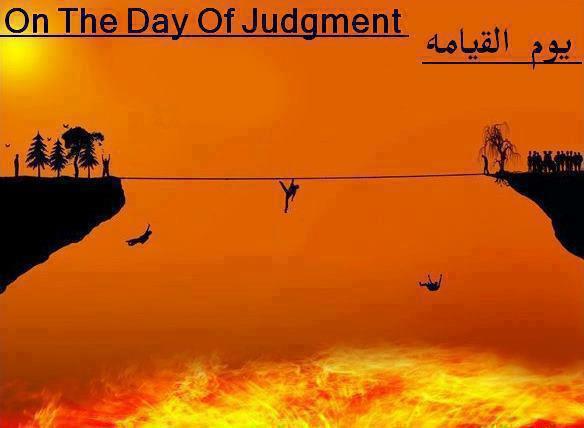
There is no gainsaying the fact that man must account for his sojourn on earth at the end of the day. Good or bad, we will all account for how we spent our time on this divide of spiritual consciousness. There will be no escape, no parental intercession on behalf of their children, and no intersession of husband for his wife and vice versa. Those who have done well will reap the reward of their acts and the villains will reap the reward of their iniquities. That is why the there is need for all to do well with a view towards a pass on the Day of Qiyyamah.
It is interesting to know that many people have asked about the nature of that day. How will Allah assemble all those he had created in one place to question them and judge them accordingly? The answer to this and other questions are offered in several places in the Quran.
In Surah Al Baqara, Allah exemplified with the story of Uzair: Or like the one who passed by a town and it had tumbled over its roofs. He said: “Oh! How will Allah ever bring it to life after its death?” So Allah caused him to die for a hundred years, then raised him up (again). He said: “How long did you remain (dead)?” He (the man) said: “(Perhaps) I remained (dead) a day or part of a day”. He said: “Nay, you have remained (dead) for a hundred years, look at your food and your drink, they show no change and look at your donkey! And thus We have made of you a sign for the people. Look at the bones, how We bring them together and clothe them with flesh “. When this was clearly shown to him, he said, I know (now) that Allah is Able to do all things”. (Al-Baqarah, Quran 2:259)
See also Surah Al-Kahf, 9-26, People of the Cave, a people who were made to die for 400 years and then rose again.
The most important events that will happen on the Day of Judgment are when we will be held accountable for our deeds and when we will be questioned by our Lord, Allah (S.W.T.). There are many Quranic verses and Hadiths that tell us about these events so that the believers will prepare themselves for the most important, final test. They can prepare for this test with their strong faiths and with their righteous deeds. But are we prepared?
Allah (S.W.T.) says: For to Us will be their Return; Then it will be for Us to call them to account. (Quran 88: 25-26)
He also says: Then shall We question those to whom Our message was sent and those by whom We sent it. And verily We shall recount their whole story with knowledge, for We were never absent (at any time or place). (Quran 7:6-7)
Allah (S.W.T.) describes that Day: On the Day when every soul will be confronted with all the good it has done, and all the evil it has done, it will wish there were a great distance between it and its evil. But Allah cautions you (to remember) Himself. And Allah is full of kindness to those that serve Him.” (Quran 3:30)
The good believer will have an easy reckoning and Allah (S.W.T.) will cover up his sins after He reminds him about them. Then He will forgive him for his sins, and allow him to enter paradise. This is concluded from a Hadith reported by Imams Bukhari and Muslim in which the Prophet (SAW) said: “Allah will bring the believer very close and privately and ask him “Do you know this sin? Do you know that sin? The believer’s reply will be, “Yes Oh Lord,” until he is reminded about all of his sins, and he thinks he will perish. Then Allah will say “I covered up your sins during your life, and I will forgive your sins today. Then he will be given his book of good deeds. But the unbelievers and hypocrites will be asked about their deeds loudly in front of the creatures.
If We delay the penalty for them for a definite term, they are sure to say, “What keeps it back?” Ah! On the day it (actually) reaches them, nothing will turn it away from them, and they will be completely encircled by that which they used to mock at! (Quran 11:18)
Allah will confront His servant directly, without a mediator. The Messenger (SAW) said: “Allah will talk to everyone directly, without a translator. The person will look to his right, and will not see anything but his deeds. Then the person will look in front of himself and will see nothing but the hellfire facing him. So protect yourself from Hellfire even by giving a charity of half a date.” Reported by Imam Bukhari
Prayer will be the first thing a person will be questioned about on the Day of Judgment. The Messenger (SAW) told us in an authentic Hadith: “The first thing the people will be accountable for on the Day of Judgment is prayer, Allah will say to His angels (even though he already knows): “Look at my servant’s prayers. Were they complete or not?” If they were complete, it will be written as complete. If they were not fully complete Allah will say: “See if my servant has voluntary prayers, If he has them Allah will say: Complete his obligatory prayers shortage with his voluntary prayers.” Then the rest of his deeds will be dealt with in the same manner.” Reported by Imams Ahmad, Abu Dawood, An-Nisa’i, and Al-Hakim
We will be asked on the Day of Judgment about all of the blessings and bounties that Allah gave us in this life. Some of these blessings may include our good health, our wealth, our food and drink, our ride and our home, etc. Allah (SWT) says in the Noble Quran: Then, shall ye be questioned that Day about joy (ye indulged in!) (Quran 102:8)
Allah (SWT) describes that situation: On the Day when their tongues, their hands, and their feet will bear witness against them as to their actions. (Quran 24:24).
They will say to their skins: “Why bear ye witness against us?” They will say: “Allah hath given us speech, –(He) Who giveth speech to everything: He created you for the first time, and unto Him were ye to return. (Quran 41:21)
Also Allah (SWT) will ask us on the Day of Judgment about all of our covenants and promises that have been made in our lives. Those promises may be made to Allah (SWT) or made to people. Like the failed promises our leaders make to us about providing us electricity, water, healthcare, education, employment and security. Like the ‘Hope’ and ‘Renewed Hope’ hoax. Then they will know that ‘hope is not in a bag of rice, or vegetable oil. Hope is in a better life and life more abundant.
And so Allah (SWT) says: Come not nigh to the orphan’s property except to improve it, until he attains the age of full strength; and fulfill (every) engagement, for (every) engagement will be inquired into (on the Day of Reckoning).Quran 17:34)
Whoever they are, that are responsible for our woes should not forget that there will be a day of reckoning. A Day of Judgment when they would have to account for their stewardship.
The prophet Muhammad (SAW.) said: “The son of Adam will not pass away from Allah until he is asked about five things: how he lived his life, and how he utilized his youth, with what means did he earn his wealth, how did he spend his wealth, and what did he do with his knowledge?” – Reported by Imam At-Tirmidhi.
The sins and iniquities of our leaders have risen to high heaven and certainly, God will visit his wrath on them. It was a Catholic Bishop who once said that God will have to apologize to Sodom and Gomorrah, if he fails to punish the iniquities of our leaders.
It is out of the Mercy of Allah (SWT), that he told us about these important questions ahead of time so that we can prepare ourselves. The good believer is the one who prepares himself for those difficult events by getting closer to Allah (SWT), by doing good deeds, and by staying away from what Allah has forbidden, and by fulfilling promises and covenants, so that he will be among those who receive their book of deeds on the Day of Judgment in their right hand and Allah will enter them into paradise.
As for those who have visited woes on their people, a special place in hell shall be reserved for them. Those who have ears, let them listen now, for, No sinner shall go unpunished.
Barka Juma’at and a happy weekend
Related
Islam
Friday Sermon: Reflections on Ramadan 5: Rejuvenation and Fulfilment
Published
3 weeks agoon
March 20, 2026By
Eric
By Babatunde Jose
What have we gained from Ramadan? Have we been spiritually cleaned, recharged and rejuvenated? Has it been morally and spiritually gratifying and fulfilling? Have we been able to shed many of our iniquitous baggage? Have we relinquished the sins of fornication, covetousness, and a life of deceit? Have we been able to move nearer God in an atmosphere of God-consciousness? Have we been doing the needful in our homes and to our fellow man?
Have we given the orphan his due? Have we entrenched Justice and Fairness in our daily living? What of compassion and empathy? Do we feel the pains of our fellowmen, our subjects, and followers? Have we taken steps to right the wrongs we wroth on the people around us? Have we been fair to our wives, children, relations, and neighbors? Are we satisfied with our new lease of spiritual awakening?
Must all the gains of Ramadan end today? Are we returning to our old ways of cheating, backbiting, slander, and wickedness? Today is therefore, a day of decision. Are we going to consolidate on the gains of Ramadan or descend back into the abyss of a sinful life? The choice is ours. Ihdinas siraatalmustaqeem.
Ramadan has rightly been described as a school of Iman and a stop to recharge our spiritual batteries. Must we alloy that battery to die by going back to the old ways? The choice is ours.
Unfortunately, the fall and descent into a life of sin and iniquity starts a few days after Ramadan; when we say ‘fasting is finished, the nightly prayers are over; the group gatherings to break the fast have vanished. We can eat, drink, and be merry again when we like.’ And that special feeling of God consciousness gradually fades away. The spiritual high evaporates, and all we are left with are the bad habits we tried to shed during Ramadan which mysteriously rear their ugly heads once it is over.
Ramadan is supposed to increase your faith and God-consciousness: “Believers! Fasting has been prescribed for you-as it was prescribed for those before you-so that you may be conscious of God.” (Quran 2:183).
The lessons learned and spiritual benefits gained during that month are intended to carry over for the rest of the year until next Ramadan.
Prophet Muhammad (SAW), said: “Whoever does not give up forged speech and evil actions [while fasting], God is not in need of his leaving his food and drink.”
Ramadan is a month of training for us so that we may become doers of good and refrain from evil throughout the year. Each and every year this blessed month helps to train us to become better Muslims. But now that Ramadan is over are we going to continue doing the good we acquired from it or are we going to go back to the way we were before it started? That is the question.
Many of us did not say our prayers before Ramadan but during the blessed month we found it easier to pray. We cannot continue our lives without praying; otherwise, we are not fulfilling the purpose of our lives.
Allah says: “I have created the jinn and humankind only for My worship” (Quran 51:56)
We will not be successful in this life or the next without prayer. The Prophet (SAW) said, “The first thing that a person will be questioned about is his prayers.” Missing prayers intentionally is so serious that it is tantamount to disbelief: The Prophet (SAW) said: “What lies between a man and disbelief is the abandonment of prayer.” Muslim. Unfortunately, there will be many Muslims in Hell who did not say their prayers.
Many of us left the Quran on the top shelf throughout the year but when Ramadan came we picked up the Quran and blew off the dust and began to recite it again. By returning the Quran to the bookshelf, we will be missing out on receiving intercession from the Quran on the Day of Judgment: The Prophet (SAW) says: “Recite the Holy Quran as much as you can for It will come as an intercessor for its reciter on the Day of Judgment” (Muslim)
Allah the Most High said:
Establish regular prayers–at the sun’s decline till the darkness of the night, and the Morning Prayer and reading: For the prayer and reading in the morning carry their testimony. And pray in the small watches of the morning: (It would be) an additional prayer (or spiritual profit) for thee: Soon will thy Lord raise thee to a Station of Praise and Glory! (Quran 17: 78-79)
During the blessed days and nights of Ramadan we were given the opportunity to repent and ask Allah for his mercy and forgiveness and to thank him for his infinite favors upon us. But now that Ramadan is over we must not stop repenting to Allah for our sins and we must continue to be thankful to Allah for his infinite favors upon us.
They ask thee concerning women’s courses. Say: They are a hurt and a pollution: So keep away from women in their courses, and do not approach them until they are clean. But when they have purified themselves, ye may approach them in any manner, time, or place ordained for you by Allah. For Allah loves those who turn to Him constantly and He loves those who keep themselves pure and clean. (Quran 2:222)
Our Lord! (They say), Let not our hearts deviate now after Thou hast guided us, but grant us mercy from Thine own Presence; for Thou art the Grantor of bounties without measure (Quran 3:8)
Merciful Allah, I acknowledge my sins and shortcomings before You. Your Word says I should not despair because You forgive all sins. I ask for Your complete forgiveness—cleanse my heart, erase my past mistakes, and renew my soul. Let this Ramadan be a turning point in my life, where I walk in Your mercy and grace. Ameen.
Ya Rabb, purify my heart from hypocrisy, pride, and hidden sins. Create in me a sincere heart that seeks only Your pleasure. Remove every evil intention and fill me with love for righteousness. Let my worship be genuine and my actions be pleasing in Your sight. Grant me a heart that will stand accepted before You on the Day of Judgment. Ameen.
O Allah, protect me and my family from the punishment of Hellfire. Shield us from sins that lead to destruction and guide us toward righteousness. Let our lives reflect obedience to You, and grant us safety in this world and the next. Make us among those who are saved by Your mercy. Ameen.
Ya Allah, bring peace, love, and unity into my family. Remove every conflict, misunderstanding, and division among us. Let our home be filled with Your presence and blessings. Make us a source of comfort and joy to one another. Guide each member of my family to righteousness and faith. Make our household an example of love and devotion to You, Ameen.
Ya Shafi, the Healer, I call upon You for healing and strength. Touch every part of my body and restore me to full health. Remove sickness, pain, and weakness from my life. Grant me physical, emotional, and spiritual well-being. Let Your healing power flow through me completely. Keep me strong to worship You and fulfill my purpose, Ameen.
O Allah, increase my faith and strengthen my belief in You. Fill my heart with tranquility and unwavering trust. Let my iman grow stronger with every act of worship. Remove doubts and replace them with certainty and conviction. Help me remain firm in my faith in all situations. Make me among those whose hearts are filled with light, Ameen.
Eid Mubarak and Jumuah Mufeedah!
Related


Terrorists Kill Nigerian Brigadier-General – AFP Report
Again, Iran Blocks Strait of Hormuz, Alleges Ceasefire Violation
Why Tinubu Was Absent at Commissioning of Sanwo-Olu’s Projects in Lagos – Presidency
Koumagnon Family Pledges Unalloyed Support for Romuald Wadagni As President
Trump Accuses Nigeria of Spreading Fake News on Iran Ceasefire Deal
Benin Republic 2026: Romuald Wadagni, The President in Waiting
Why I Want to Be President – Romuald Wadagni
Effective Strategic Leadership: Resolving Nigeria’s Contemporary Challenges and Unlocking Inclusive Possibilities
The Oracle: The New Digital Colonialism: Navigating AI Policy Under Foreign Tech Dominance (Pt. 5)
‘ADC Membership Hits 500,000 after INEC Derecognition of Leadership’
The Ponnles Honour Parents With N150m Memorial Endowment at OAU
Evangelist Ebenezer Obey: Celebrating a Music Maestro at 84
Adding Value: Examine Yourself by Henry Ukazu
Sorrow, Tears, Love As Ex-Ovation Editor, Mike Effiong, Buries Wife, Kemi in Lagos
Trending
-
Opinion5 days agoEffective Strategic Leadership: Resolving Nigeria’s Contemporary Challenges and Unlocking Inclusive Possibilities
-
The Oracle6 days agoThe Oracle: The New Digital Colonialism: Navigating AI Policy Under Foreign Tech Dominance (Pt. 5)
-
News4 days ago‘ADC Membership Hits 500,000 after INEC Derecognition of Leadership’
-
Events5 days agoThe Ponnles Honour Parents With N150m Memorial Endowment at OAU
-
Boss Of The Week5 days agoEvangelist Ebenezer Obey: Celebrating a Music Maestro at 84
-
Adding Value6 days agoAdding Value: Examine Yourself by Henry Ukazu
-
Events6 days agoSorrow, Tears, Love As Ex-Ovation Editor, Mike Effiong, Buries Wife, Kemi in Lagos
-
Headline5 days agoIs Amupitan’s INEC Complicit?