Connect with us

News

Atiku Meets Creative Industry Stakeholders, Vows to Increase Funds for Arts, Liberalise Acquisition Process

Published

on

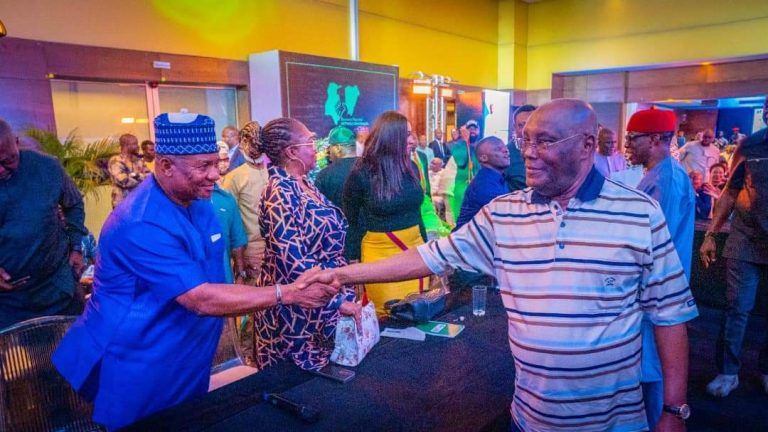
The PDP presidential candidate, Atiku Abubakar, on Saturday promised to increase funds for the arts and liberalise the process of its acquisition once elected in the forthcoming elections.

Atiku made the promise during a special roundtable discussion with Nigeria’s creative cultural and innovative industry stakeholders in Lagos.

The meeting was aimed at strengthening the country’s booming entertainment space and cultivating more unifying support in championing Nigeria’s creative expression.

The presidential candidate acknowledged that the creative industry was a vital industry capable of immense wealth creation and generating huge employment opportunities.

He said such an industry should not be toyed with as it had been identified as the second most important sector after agriculture.

“I commend the presentations so far, I understand your challenges which I am also facing because I own a television and radio station, I face the same problem of access to water and electricity as well as bad roads, so I want you to regard me as one of you.

“The way forward is to increase funds for the arts and liberalise the process of acquiring that fund, if you give me the opportunity, I will do it because it is essential.

“I reject direct CBN intervention and encourage the private sector to be part of this, government cannot develop all the funds needed.

“I look forward to a close collaboration with you on how we can develop the sector and exploit the potential, it is a multi-billion income-creating sector.

“If we work together, we can make it, I look forward to another meeting before the elections to agree on some modalities on how things will be done,” he said.

Atiku commended the patriotic zeal of the private practitioners in the creative sector in the face of numerous obstacles trying to hinder their progress.

Also, Ifeanyi Okowa, PDP vice presidential candidate, said all requests made by the practitioners in the creative sector would be properly articulated just as promised by Abubakar.

Mr Okowa disclosed that the newly built Film Village in Asaba would be launched by December.

He said there were plans to ensure that practitioners in the creative industry ran it, as the government would not be in the best position to do that.

He urged Nigerians to turn out en mass to vote during the forthcoming elections in February.

“There would be a new Nigeria if we work together to defend our land and take pride in it.

“We can make Nigeria work again through collaboration with the aim to rebuild the foundation,” he said.

Earlier, Efe Omorogbe, a Talent Manager and Music Executive, said the major challenge confronting the music industry was piracy and Nigerians’ unwillingness to pay music royalties.

He said less than 10 per cent of music consumers paid royalties which is not encouraging.

Omorogbe noted that it was high time politics and governance were balanced while the right people were engaged in leadership positions in the creative space.

According to him, the Nigerian music industry remains so huge but is yet to be properly tapped.

Ayo Animashaun, the executive producer of Hip TV, noted that the enabling environment for the creative industry must be created for businesses to thrive.

“We do not have the enabling environment to perform at the best capacity; this makes it so difficult to carry out major projects,” he said.

Kenneth Gyang, a filmmaker, said that if the industry must function optimally, the incoming president needed to create a national endowment fund for practitioners in the creative space just as practised in other climes.

Gyang noted that Nigerian filmmakers were supposed to be given the opportunity by the government to engage in co-productions and sign treaties with other countries.

“If fund is created for filmmakers, it will enable us to tell our stories as a country in the most dignifying way,” he said.

Chioma Ude, Founder, Africa International Film Festival, said there was a need to have more film festivals to showcase Nigerian and African creative content.

She said training and capacity building should be prioritised and upscaled.

“We should have exhibition platforms beyond the likes of Netflix and Amazon, we should have more film festivals to also woo tourists,” she said.

According to Agatha Amata, the entertainment industry is still a goldmine waiting to be tapped. We need to go digital, a lot of resources go into digital development since 2015 but it is unfortunate, we are still where we are.

Also, Francis Onoche, a filmmaker, said that serious attention should be drawn to the cultural policy of Nigerian films, which he described as amazing.

Onoche said that endowment funds for the arts should be revisited and provided.
He commended the efforts of former Nigerian President, Goodluck Jonathan, for the support of training, distribution, production and capacity building for filmmakers.

“We need you to support the true emergence of the creative sector in Nigeria,” he said.

Continue Reading
Click to comment

Leave a Reply

Your email address will not be published. Required fields are marked *

News

Terrorists Kill Nigerian Brigadier-General – AFP Report

Published

on

By

Terrorists in northeast Nigeria killed a brigadier general in an assault on a military base, a local government chairman told AFP on Thursday, the second killing of a high-ranking officer in five months.

Africa’s most populous country has been fighting a terrorist insurgency for 17 years, since Boko Haram’s 2009 uprising, which has seen the emergence of powerful splinter groups, including Islamic State West Africa Province.

In an overnight attack, unidentified terrorists killed at least 18 soldiers and torched vehicles at a base in Benisheikh, about 75 kilometres from Borno state capital Maiduguri, an intelligence source told AFP.

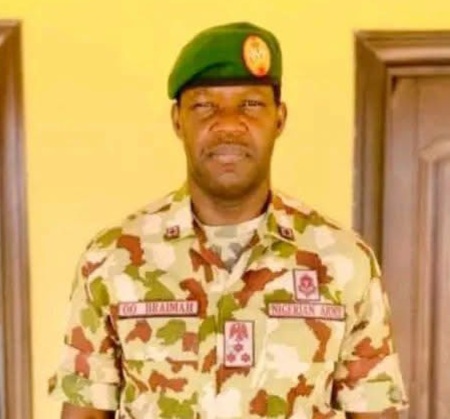
“Unfortunately, the brigade commander, Brigadier General O.O. Braimah, lost his life,” Kaga Local Government Chairman Zannah Lawan Ajimi told AFP in a phone interview.

Two intelligence sources confirmed Braimah’s death to AFP.

His death follows the killing of Brigadier General Musa Uba by ISWAP in November. He was the highest-ranking military official to die in the long-running conflict since 2021.

“They overran the brigade,” one of the intelligence sources said, giving the death toll as “at least” 18.

The second intelligence source said that “the terrorists killed several troops” and “burnt vehicles and buildings before they withdrew,” without giving a toll.

The army and Nigeria’s Defence Headquarters did not immediately respond to a request for comment.

– Rising terrorist violence –

Researchers have warned of an uptick of violence since 2025.

Borno capital Maiduguri has seen two suicide bombings since December — the type of bloody, urban attacks reminiscent of the insurgency’s peak a decade ago.

On Wednesday, the US State Department said in a notice it was authorising “non-emergency US government employees” to leave Abuja “due to the deteriorating security situation”.

While the insurgency is concentrated in the northeastern countryside, terrorists from Nigeria and the neighbouring Sahel have made inroads western Nigeria, where organised crime gangs known as “bandits” have been raiding villages and extorting farmers and artisanal miners for years.

Gunmen killed at least 90 people across several remote villages in northwest Nigeria this week, according to an AFP tally of tolls given by local and humanitarian sources.

Among the attacks was an assault in Kebbi state that police blamed a local terrorist group known as Mahmuda, which is affiliated with Al-Qaeda.

Kebbi sits on Nigeria’s border with Benin and Niger and since 2025 has been targeted by a rising number of terrorist attacks.

Conflict monitor ACLED says there has been a surge in violence in the area carried out by militants affiliated with Al-Qaeda and the Islamic State group.

In nearby Kwara state, in October, fighters from the Al-Qaeda-affiliated JNIM claimed an attack after years of researchers warning that the terrorist conflict ravaging the Sahel risked spreading south towards coastal West African states.

In December, the United States, with Nigerian assistance, bombed northwest Sokoto state, targeting Islamic State Sahel Province fighters usually found in neighbouring Niger, along with Mali and Burkina Faso.

AFP

Continue Reading

News

Prominent ADC Leaders Storm INEC Hqrs in Protest Against Dictatorship

Published

on

By

A group of Nigerians on Wednesday took their protest to the office of the Independent National Electoral Commission (INEC) in Abuja, calling for the removal of the commission’s chairman.

The demonstration is part of the ongoing “Save Democracy” movement gaining attention across the country.

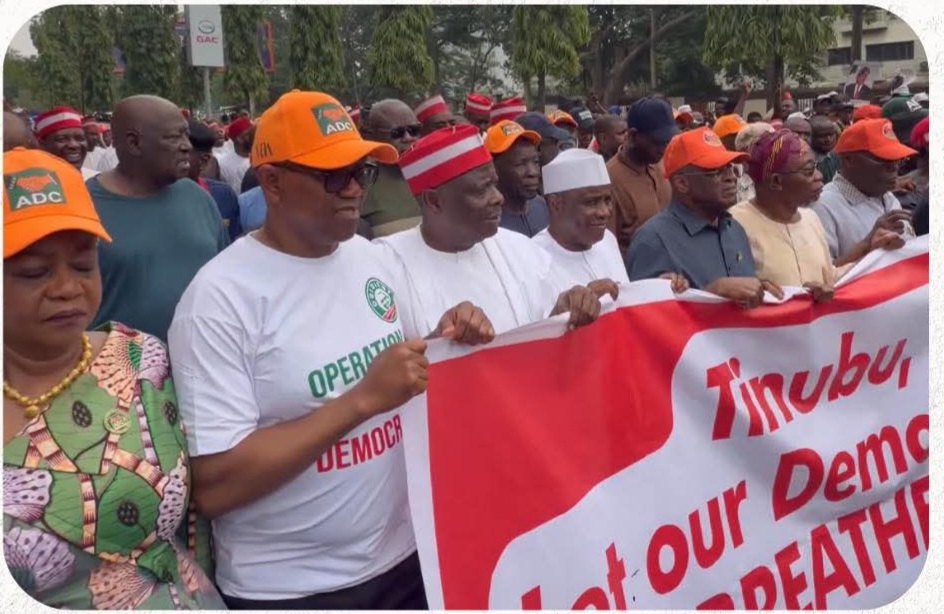
The protesters gathered early at the INEC premises, dressed in branded T-shirts bearing the inscription “Operation Save Our Democracy.”

Many of them also held placards in red and white, with different messages expressing dissatisfaction with the current state of the nation’s electoral system.

Eyewitnesses said the protest remained largely peaceful but loud. The crowd chanted solidarity songs and voiced strong demands for reforms.

A common chant heard at the scene was “We no go gree,” as demonstrators moved in groups around the entrance of the commission’s office. Some protesters also raised specific demands, shouting “INEC Chairman Amupitan must go.”

In a video seen by POLITICS NIGERIA, several well-known activists and political supporters were present at the protest. Supporters of Aisha Yesufu, Mama Pee, Peter Obi, Rabiu Kwankwaso, and other civic voices were visibly active in the demonstration.

The video showed a charged atmosphere, with participants waving placards and engaging in coordinated chants.

Security presence around the area was noticeable but not aggressive. Officers were stationed at strategic points to monitor the situation and ensure that activities did not get out of hand. There were no immediate reports of violence or arrests as of the time of filing this report.

Another clip circulating online showed key figures within the opposition coalition preparing to join the protest. Prominent leaders of the African Democratic Congress (ADC), including Atiku Abubakar, Peter Obi, Rabiu Kwankwaso, and David Mark, were seen mobilizing supporters at Maitama Roundabout in the Federal Capital Territory.

The group appeared to be gearing up for a larger convergence as part of the same demonstration.

As the protest continues to gather momentum, it remains unclear what immediate response will come from the electoral body or the federal government.

Continue Reading

News

Windstorm Destroys Wike’s Newly Built Abuja Bus Terminal

Published

on

By

A windstorm accompanied by heavy rainfall on Tuesday damaged parts of the newly built Kugbo Bus Terminal in Nyanya, Abuja, raising concern among residents and commuters in the area.

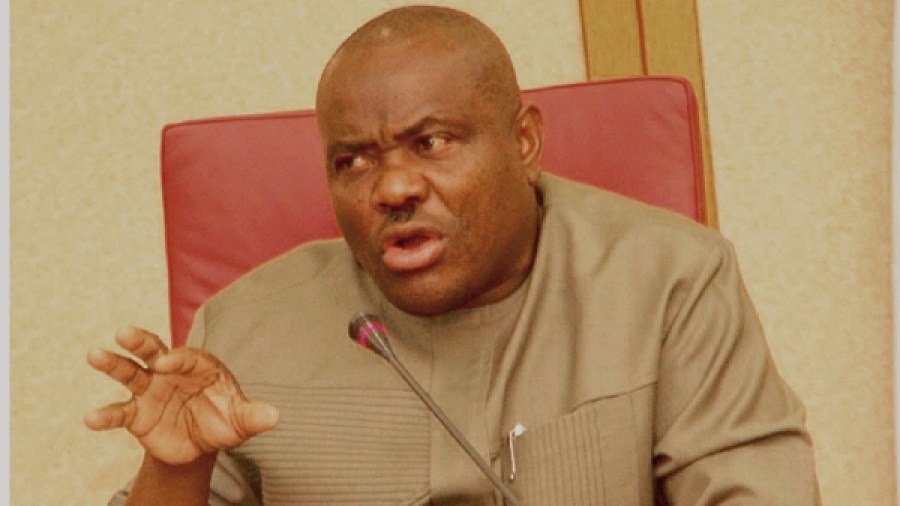
A statement by Lere Olayinka, spokesperson for the Minister of the Federal Capital Territory, Nyesom Wike, said the storm, which hit in the afternoon, also affected nearby infrastructure, including the Nyanya pedestrian bridge and several surrounding buildings.

Despite the visible damage, authorities confirmed that no casualties or property losses were reported.

“From preliminary reports, no one was injured, and no vehicle was damaged,” the statement noted.

In response to the incident, the statement said Wike had ordered immediate measures to ensure safety and restore order in the affected area.

“To prevent a breakdown of law and order, as well as ensure the free flow of traffic, the FCT Minister, Nyesom Wike, has directed that security personnel be deployed to the scene, while immediate action will be taken to repair the damages caused by the windstorm,” the statement added.

The incident comes amid growing public concern over delays in the commencement of operations at key bus terminals in the FCT.

Reports indicate that residents have repeatedly urged the FCT administration to fast-track the opening of the Kugbo and Mabushi terminals, which were completed months ago but remain non-operational.

Commuters say the delay has worsened transportation difficulties, particularly for those living in satellite towns such as Nyanya and Karu. Many believe the terminals, once operational, will help regulate transport activities, reduce congestion, and improve safety.

Wike had recently assured residents that operations would begin soon after the Federal Executive Council approved a public-private partnership arrangement for managing the facilities.

Continue Reading

Trending