
Headline
Nnamdi Kanu: The Making of a Sweet Victory


By Eric Elezuo
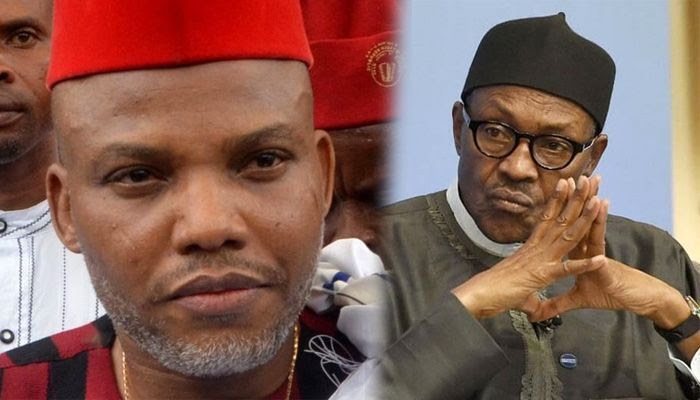
The Appeal Court has agreed that Nnamdi Kanu’s extradition was illegal and as such, robbed any court necessary jurisdiction to entertain the suit. It has therefore granted the leader of the IPOB leader freedom from all counts against him.
For as as many that were following the trial of the leader of the Indigenous Peoples of Biafra (IPOB), Mazi Nnamdi Kanu, in a case brought against him by the Federal Government of Nigeria, it was obvious that the President Muhammadu Buhari-led federal government was pursuing a white elephant project. This is considering the merits of the case as has been postulated by renowned legal entities, most especially the legal team of the Biafran leader, led by Barrister Ifeanyi Ejimofor and the indefatigable luminary, who recently bagged a CON national honours, Mike Ozekhome.
The story of Nnamdi Kanu, revered by thousands of his followers, mostly of Southeast extraction, is a story of destiny and fate at work.
Basking from the near collapse of the Movement for the Actualisation of Sovereign State of Biafra (MASSOB) under the leadership of Ralph Uwazuruike, Kanu out of the blues flouted the IPOB organisation, to fight for the restoration of the Biafran state, which was clipped after 30 months of civil war between July 1967 and January 1970.
Kanu’s ordeal started when he was arrested October 14, 2015 by the Buhari administration following a sting operation led by a DSS operative, Temisan John. The operative said Kanu was arrested in the company of a woman at the Golden Tulip Essential Lagos Airport Hotel located at 42/44, Murtala Mohammed International Aiprot Road, Ikeja, Lagos.
“On arrival at the hotel, the staff denied having Kanu there or having any knowledge of him, even when showed his photograph. The guest manifest, for about five days, was also printed and the name was not found on any.
“However, relying on accurate intelligence, the team decided to conduct a physical search on all the rooms and Kanu was arrested in Room 303 while hibernating with a young girl, Maryam Ibezimakor, with all his broadcasting and communication gadgets set for use.
“It was then discovered that Kanu checked in under the name Nwanekaenyi Ezebuiro. He was subsequently arrested and taken to the command headquarters,” the Service narrated in 2015.
He was thereafter charged for treasonable felony by the Federal Government, and detained at the DSS facility.
However, with cases and counter cases proved in court, Kanu was finally granted bail with stringent conditions in April 2017 by Justice Binta Nyako of the Federal High Court, Abuja.
Also, he must not be seen in a crowd or gathering of more than 10 people. And that he must not grant interviews of any kind. Senator Eyinnaya Abaribe, a senator from Abia south; Immanuu El-Shalom, an Igbo Jewish leader, and Tochukwu Uchendu, a businessman, stood in as sureties for Kanu, and his bail was facilitated.
But a few months later in September 2017, the Nigerian army during Operation Python Dance II, invaded his country home in Afaraukwu, Ibeku, Umuahia, where it was alleged that massive destruction and killings took place. Kanu escaped in a way that has yet to be proved till date, and was declared missing. He was however, to resurface in Jerusalem, Israel in October, 2018, over a year after the incident, and after much speculations about his whereabouts.
But on June 29, 2021, Nigerians woke to a shocking news that Kanu has been arrested and extradited to Nigeria. A statement by the Minister of Justice and Attorney General of the Federation, Abubakar Malami, confirmed that Kanu was in the custody of the DSS, and appear in court soon.
Speaking from detention through his counsel, Aloy Ejimakor, Kanu said he was held incommunicado and chained to a bare floor for eight days in a nondescript private facility in Kenya.
Ejimakor explained further: “The people that abducted him said that they were told by their sponsors that Kanu was a Nigerian terrorist linked to the Islamic terrorists in Kenya, presumably Al-Shabab.
“But after several days when they discovered his true identity, they tended to treat him less badly. Despite that, they told him they felt committed to hand him over to those that hired them.”
“In my assessment of how the case now stands, I wager that before any court can subject Kanu to trial for any offenses, it has to first conduct a trial within trial on the grievous incident that forced him to leave Nigeria and the equally grievous incident that forced him back to Nigeria.
The counsel also argued that no matter the charges the government slam on Kanu, the law will not overlook the incidents that led his escape from Nigeria, and the matter he was bundled back.
“No court of law, conscience and equity will overlook those two supervening incidents and proceed to trial,” he said.
Much as the Nigerian government accused Kanu of ‘orchestrating’ the killings of about 60 people, including security officials in the South-east. the IPOB, which was later proscribed, denied the allegations.
The government had slammed a 15-count charge including terrorism and treasonable felony against Kanu, but the trial judge, Mrs Nyako had in a ruling delivered on April 8, 2022,struck out eight of the 15 counts, leaving the IPOB to answer to only seven.
Nyako, in her ruling, threw out counts 6, 7, 9, 10, 11, 12,13 and 14 which she ruled were repetitive and invalid.
But she approved counts 1, 2, 3, 4, 5, 8 and 15, under which the trial of Kanu has been premised since then much as he pleaded not guilty to the charges with his lawyer, Ozekhome reiterating that Kanu has no case to answer.
In the course of the trial, a high court in Umuahia, Abia State, ordered the federal government to pay N1 billion to Nnamdi Kanu for violating his rights.
Kanu had filed the application from the DSS custody through his counsel, Ejimakor against Abubakar Malami, attorney-general of the federation (AGF), and the Department of State Services (DSS) for allegedly violating his fundamental human rights.
Aside from the AGF and the DSS director-general, other respondents were the federal government of Nigeria (first), chief of army staff (third), inspector-general of police (fifth), and three others.
Amongst other reliefs sought in the suit marked HIH/FR14/2021, Kanu asked the court to compel the respondents to pay him N5 billion in damages as monetary compensation for the “physical, mental, emotional, psychological and other damages” suffered as a result of the alleged infringement on his fundamental rights.
Delivering judgment, Benson Anya, the judge, described the invasion of Kanu’s Afaraukwu residence as notorious and brazen.
The judge also ordered the federal government to issue a public apology to Kanu in three national dailies. He also advised the federal government to adopt a political resolution in dealing with issues involving Kanu.
While the Kanu team awaited the Federal government to toe the line of the court’s recommendations, the trial took another twist on Thursday; a twist that forced the government and security chiefs to go into an urgent meeting. The Abuja Division of the Court of Appeal discharged Nnamdi Kanu, of the remaining 7-count terrorism charges brought against him by the federal government. The appellate court, in a unanimous decision, faulted the process through which Kanu was brought before the Federal High Court to answer to a 15-count terrorism charges.
The appeal court ruled that the arrest, abduction and subsequent arraignment of Kanu before a Federal High Court violated international convention on terrorism and, thus, robbed any court of law in Nigeria necessary jurisdiction to entertain the suit. Justice Adedotun Adefope-Okijie, who read the judgement of the three-man panel, noted that there was nowhere the federal government showed it complied with the procedures for the extradition of the IPOB leader from Kenya last year.
The appellate court listed the conditions, according to the Organisation of Africa Unity (OAU), which a state must meet to include a formal application for extradition to the host country, permission from court, and statement of the alleged offences in connection with the extradition request amongst others. The court explained that the requirements were aimed at ensuring that people were only extradited after full conviction of alleged committal of an offence and not for any other purpose.
The judge berated Nigeria, saying the country must learn to play by the rules and that the courts owed the country and people a duty to ensure that the executive abided by the law at all times particularly, when the country was a signatory to such laws.
While noting that the court might not have the powers to dictate to the executive, Adefope-Okijie said it could prevent the executive from abusing the law, adding that courts should not be shy to always call the executive to order.
The appellate court, in its judgement, further held that the trial court ought to have evaluated the circumstances under which Kanu was brought into the country to continue his trial. The three-man panel said the issue of jurisdiction raised by the appellant was one that was critical to the case, which the court ought to have resolved first. While stating that the issue of jurisdiction was properly raised before the trial court, Adefope-Okijie observed that the trial court turned a blind eye to it.
She stated, “The lower court must pronounce properly on all issues presented before it. The trial court ought to have made findings on the issue raised regarding the extradition.”
The judge added that the lower court had no jurisdiction to try the respondent in the retained charges.
“No court can try him going by the circumstances of the extraordinary rendition,” the court held.
According to the judgement, the federal government violated international convention on terrorism, which it was a signatory to, when it illegally arrested Kanu in Kenya and extraordinarily brought him to Nigeria for trial.
The appellate court held that the warrant of arrest issued against Kanu was not enough reason or excuse for the government to violate international convention and charters.
Narrating the sequence of events, Ozekhome explained that agents of the federal government (the respondent) had launched a military operation, code-named “Operation Python Dance” at the appellant’s home town in September 2017, which forced him to escape out of the country, to Israel, then London.
The senior advocate recalled that on June 27, 2021, “The federal government forcefully arrested Kanu in Kenya and renditioned him back to Nigeria ‘in most cruel and inhuman manner”.
He therefore, contended that by section 45 (a) of the Federal High Court Act, with regard to criminal charge, the trial court does not have “global jurisdiction”.
But while jubilations filled the air over the court judgment, There was Malami, through a statement signed by his media aide, Dr Umar Gwandu, stated that the detained IPOB leader was only discharged and not acquitted by the court, hence the federal government could still explore other options to prosecute him.
“The appropriate legal options before the authorities will be exploited and communicated accordingly to the public,” he said, noting that the decision handed down by the Court of Appeal was on a single issue that borders on rendition.
But whichever way the case goes at the Supreme Court, which may be the next port of call, it remains obvious that as Kanu’s legal team had maintained, there’s no way a trial can be conducted without considering the two events that led to Kanu’s escape from Nigeria, and his forceful rendition back from Kenya.
Meanwhile, the IPOB leader remains incarcerated!





Nation Building Reimagined: Integrated Principles and Strategies for Sustainable Growth

Dear CDS, NSA, Your Prodigal Sons, Brothers Have Killed General Braimah

Voice of Emancipation: Lessons from the Iran/USA War

Ovation @30: A Triumph of Vision, Courage and African Excellence

ADC National Convention: To Be or Not to Be?

Israel Questions Pakistan’s Credibility in Mediating over US-Iran Ceasefire Agreement

Osun 2026: INEC Planning to Recruit APC Members As Electoral Officials, Lawmakers Allege

‘ADC Membership Hits 500,000 after INEC Derecognition of Leadership’

Trump Delays Iran’s Strike by 2-Weeks As Pakistani Leaders Intervene

FG Expels US Missionary Alex Barber

Benin Republic 2026: Romuald Wadagni, The President in Waiting

ADC Raises Alarm over INEC’s Plot to Prevent Party from Fielding Candidates
Prominent ADC Leaders Storm INEC Hqrs in Protest Against Dictatorship

Iran’s Intelligence Chief Killed in US-Israeli Strikes
-
 News5 days ago
‘ADC Membership Hits 500,000 after INEC Derecognition of Leadership’
-
 World3 days ago
Trump Delays Iran’s Strike by 2-Weeks As Pakistani Leaders Intervene
-
 National3 days ago
FG Expels US Missionary Alex Barber
-
 Featured2 days ago
Benin Republic 2026: Romuald Wadagni, The President in Waiting
-
 Featured5 days ago
ADC Raises Alarm over INEC’s Plot to Prevent Party from Fielding Candidates
-
 News3 days ago
Prominent ADC Leaders Storm INEC Hqrs in Protest Against Dictatorship
-
 World4 days ago
Iran’s Intelligence Chief Killed in US-Israeli Strikes
-

 Featured5 days ago
I Won’t Be Intimidated, Seun Okinbaloye Replies Wike