Connect with us

Opinion

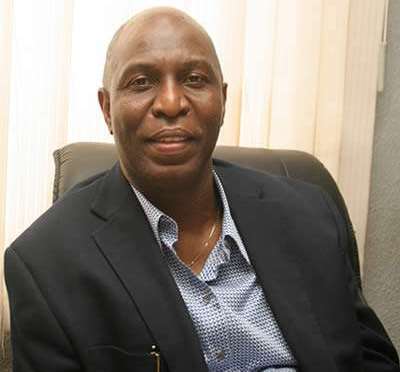
60 Gun-Salute to the Literary General

Published

on

By Louis Odion, FNGE

Back in the 90s, we used to time each of his literary parturitions, the way a sprinter’s dash on the track to the finish-line is scored. The digital age hadn’t yet fully dawned in newsrooms in this corner of the earth then. So, it was still largely an intense communion between the pen and “offcuts” (writing sheets improvised from stumps of newsprint reel).

From crafting often uniquely creative intro to the final word, it never used to take Sam Omatseye more than a fleeting moment to consummate, say, a great column or pithy analysis for Concord titles.

“So, timekeeper,” he would inquire convivially, facing me in the small office that sheltered Concord’s Politics Desk as the lady typist took the last page, “Did I miss?”

“On target!,” I would exclaim, laughing with adulating thumb-up.

Of course, the stop-watch never exceeded thirty or forty minutes for Sam to churn out a masterpiece of between 1,000 and 1,200 words. A feat around which his fame had partly been built within the Concord family. The other half being the vigour of his thought and the charm of his language — lyrical, even laconic. His prodigious knowledge is undoubtedly reflected in his uncannily relentless facility to lead and buffet readers with ideas and quotations from great thinkers in history.

In inter-personal conversations, no less commanding is Sam’s ability to recite copious portions of the Holy Bible with the seamless ease of a computer that would fill even a seasoned Pentecostal pastor with envy. A skill matched equally by an adroitness at recalling, off-hand, long passages from literary classics. And then his bonhomie accentuated by deep-set eyes and an easy throaty laughter that unfurls remarkably immaculate full dentition.

Looking back, what a great fraternity we built at Concord, bonded by a spirit that turned office to family. Led by Mr. Tunji Bello (presently Lagos Commissioner for Environment and Water Resources), the clan included Victor Ifijeh, Kayode Komolafe, Segun Adeniyi, Waheed Odusile, Yomi Idowu, Jonas Agwu, Abdulwarees Solanke, Gboyega Amonboye, Goke Odeyinka, Jill Agbiliazau-Okeke among others. (More elaboration on this in a forthcoming 300-page book devoted to Tunji Bello’s Diamond Jubilee.)

A bard of crisp imagery, withering wit and sometimes subversive metaphor, Sam would, for instance, characterize Segun Adeniyi and I as “passion versus prose” in his reading of the distinction between our respective creative temperaments.

Almost three decades later, it is gratifying to note that Sam’s energy has not waned. In fact, it will be no exaggeration to say his muse has since ramified into a Trojan of sorts, straddling Nigeria’s literary space. As he turns 60 on June 15, there can, therefore, be no better time to pause and salute this sterling ambassador of the letters.

Indeed, in Nigeria’s contemporary artistic firmament, very few literary avians could be said to soar close, let alone higher than Sam. In the simultaneous expression of multiple art forms, he obviously engages our space today with peerless virtuosity. Name it: from journalistic exertion of column-writing (In-Touch in The Nation) and show-hosting (TVC); to churning out, with prodigious frequency, critically acclaimed works of poetry, drama and prose.

For instance, since 2006, he has penned the widely acclaimed column weekly without a single break. And as his regular readers would attest, an encounter with Sam through the written words remains an enchanting voyage around art, history, philosophy and political thought.

With such remarkable testimonial in industry, Sam can then be said to be living out, even if symbolically, his own precept against, for instance, sloth in the civic space. Indeed, he demonstrates that his critical spirit over the years as a columnist is not hypocrisy. That he, by no means, is not an armchair critic. Through the power of personal example, he is thus able to rise to the very high standards he chooses to hold those in leadership perches as a public intellectual.

It can then be understood why, after several awards in punditry, the nation’s custodian of academic tradition, the Nigerian Academy of Letters, finally considered Sam worthy to be inducted into its hall of fame as an honorary fellow in 2018. (Co-awardees included Dr. Yemi Ogunbiyi, Pro Chancellor of Obafemi Awolowo University, and Segun Adeniyi, popular author and columnist). Next was a formal acknowledgement by the Nigerian state of Sam’s prodigious talent last year with his investiture with the National Productivity Award by the Federal Ministry of Labour at a solemn ceremony in Abuja.

However, this is not a mission to interrogate Sam’s art, but extoll his humanity — a unique convergence of the values of decency, loyalty and generosity. In transcendental terms, talent, it bears restating, is meaningless without a character defined by higher personal virtues.

You may not agree with him all the time, but what can never be faulted his sincerity of purpose and the restless quest for the common good. Sure, there is never going to be a consensus on the best road to travel or policy option to make in the stated pursuit of the public cause. Such critical contestation will, of course, always be driven and defined by the values we share individually or by which ideological aperture we view civil engagements.

However, at a time when championing of sectional agenda seems increasingly glorified and entrepreneurs of hate scramble for visibility, one point that is beyond dispute is that Sam sticks to a different dialectics which rather view the nation’s contemporary existential crisis through starkly distinct lens of the good Nigerian against the bad Nigerian. Like every conscientious artist, Sam remains unabashedly an advocate of the vulnerable and the voiceless in the ensuing dialectical struggle.

In identifying suspects or classifying culprits, his own objective yardstick is, therefore, social justice, regardless of tongue or faith. Against the backcloth of a rising call for the annulment of the national union, there can be no mistaking the persistently conciliatory standpoint of this gangling teetotaler from Niger Delta married to a Yoruba lady (from Ido-Ani in Ondo State), fluent in Yoruba, based in Lagos and whose circle of friends and allies cuts across all ethnic categories.

It is a perhaps a measure of his consistency of character that prominent among the company he keeps or would be found are still the same folks with whom he associated decades ago. Indeed, any audit of Sam’s engagement in the past three decades will also show an unfailing fidelity to progressive ideals and the fierce defense of the common good.

The goodwill that fetches, it would seem, saved him in the dire hour of need in the dark days of Sani Abacha. On the fateful night he was to depart to the United States in 1997 to begin a one-year Alfred Friendly Fellowship, a little drama ensued at Muritala International Airport, Lagos. It was the harrowing season when critical voices were either in graves, gulag or exile. Being a prominent Concord journalist, Abacha’s roving goons easily spotted him in the crowd in the departure lounge and brusquely asked him to step out of the queue before clamping him in an improvised detention around.

While the state agents later stepped away to a quiet place apparently to consult their masters on what to do with a “big catch”, a conscientious officer from another branch of the security service who had monitored the proceedings from a distance and would rather identify and sympathize with those courageous enough to stand up to the rampaging military dictatorship, miraculously came to Sam’s rescue. Quickly, he whisked him through the remaining security cordons to his seat on the waiting aircraft which door was firmly locked almost immediately for take-off!

So, given that close shave, Sam was forced to remain in exile at the end of his fellowship at Denver, Colorado. Rather than being intimidated, he only intensified his sorties from exile against the military in form of critical essays published regularly in Concord titles which by now had become the main opposition publication in Nigeria.

But, overall, regardless of his habitual retail of lofty ideas with sometimes fierce words, the essential Sam is soft at heart, almost childlike in spirit. This accustomed innocence or instinctive trust has however often predisposed him to be easy target for traitors or emotional blackmailers. I dare say this as someone with intimate association with him in almost three decades, first as junior professional colleague and eventually a friend close enough to be considered a brother.

In the office environment, Sam certainly lacked the guile that many others would traffick in — that cold-heartedness to knife colleagues in the back, if only to rise rapidly on the ladder or gain favour. His mirth is genuine, not to be confused with the saccharin laughter of the treacherous who, as the Yoruba say, will conceal blood on the tongue and spit out phlegm.

On a personal note, it took the exile years for me to appreciate, in more intimate terms, two of Sam’s defining qualities — a sense of solidarity and loyalty on the one hand and material generosity on the other. When Sun newspapers started in 2003 and I became the pioneer editor of the Sunday title, he put at my disposal the totality of his professional support, offering invaluable editorial advice. To ensure I succeeded, he began to write a weekly column for us and became our resourceful, omni-present “special contributor” from US, never failing to file rich human-angle stories and analyses every week.

Until his final return to Nigeria in 2006 to take up an appointment as Chairman of The Nation editorial board, I doubled as Sam’s literary agent locally. I attest that all his earnings by way of honoraria for newspaper writings and academic papers were given out as charity to people, sometimes total strangers whose pain or misery he merely read or heard about.

At a reception hosted in Lagos by Benita Obaze of Bevista in 2013 to mark my 40th birthday, Sam accepted without hesitation to be co-master of ceremonies, not minding the wide age gap between us.

Such is his power to give his all for joy and upliftment of others.

Louis Odion is the Senior Technical Assistant on Media to the President.

Continue Reading
Click to comment

Leave a Reply

Your email address will not be published. Required fields are marked *

Opinion

The Synergy Imperative: Integrating Transformative Leadership and Strategic Management for Africa’s Ascent

Published

on

By

By Tolulope A. Adegoke, PhD

“The bridge from Africa’s potential to its preeminence is built with the twin pillars of visionary leadership, which dares to imagine the impossible, and disciplined management, which masters the possible” – Tolulope A. Adegoke, PhD

Africa’s journey from a continent brimming with untapped potential to a unified global powerhouse is arguably the defining narrative of our century. This transformation, however, hinges on a critical catalyst: a new paradigm of leadership. To dismantle the persistent architecture of poverty and transcend the historical cycle of mediocrity, African nations require more than administrators; they need visionary architects and master builders. This necessitates a powerful fusion of transformative leadership—which sets the daring direction—and strategic, execution-focused management—which paves the road to get there. The synergy between these two forces is non-negotiable for unlocking the innovative capacity needed to deliver tangible possibilities for Africa’s people, its dynamic corporations, and its sovereign nations.

I. The Essence of Transformative Leadership: Architecting a New Continental Consciousness

True transformative leadership moves beyond maintaining the status quo. It is an audacious practice of reimagining futures, challenging deeply embedded narratives, and mobilizing collective will toward a shared, audacious horizon.

1.      Crafting a Unifying and Aspirational Narrative: The transformative leader’s first task is to be a master storyteller for the future. This involves articulating a vision that moves past diagnoses of poverty to paint a vivid, compelling picture of continental success—a Africa renowned for its innovation, quality, and strategic influence. This narrative must replace a mindset of scarcity with one of boundless opportunity, fostering a new identity where “Made in Africa” signifies excellence, reliability, and cutting-edge solutions. It is about making the idea of a continental giant not a distant dream, but an inevitable destination in the public imagination.

2.      Demonstrating Unshakeable Ethical Fortitude: The battle against mediocrity is fundamentally a battle for integrity. Transformative leaders must embody and enforce an ironclad commitment to governance that is transparent, accountable, and institutionally robust. This requires the political courage to depersonalize state institutions, empowering independent judiciary, audit authorities, and anti-corruption commissions not just on paper but in practice. By becoming the chief guardian of institutional integrity, a leader builds the essential currency of trust—without which long-term investment and social cohesion are impossible.

3.      Championing Radical Inclusivity: No single entity holds a monopoly on innovative ideas. Transformative leaders actively dismantle top-down governance silos to create participatory ecosystems. They facilitate sustained dialogues that bring together the pragmatic insights of the private sector, the grassroots realities understood by civil society, the foresight of academia, and the voices of marginalized communities. This inclusive approach does more than improve policy; it fosters a profound sense of collective ownership over the continent’s destiny, building a resilient coalition for sustained change.

II. The Discipline of Strategic Management: Building the Engine of Execution

A vision without a rigorous mechanism for implementation remains a mere hallucination. Transformative leadership must be operationalized through management systems characterized by precision, adaptability, and results.

1.      Engineering a Performance-Obsessed Public Sector: The public administration must be fundamentally redesigned into a lean, data-driven delivery machine. This demands:

o    Integrated Outcome Frameworks: Adopting systems like the Balanced Scorecard to cascade the national vision into clear departmental objectives, measurable Key Performance Indicators (KPIs), and individual accountability metrics for civil servants.

o    Evidence-Based Policy Orchestration: Investing in robust data analytics units and real-time monitoring dashboards. Resource allocation and program adjustments must be driven by hard evidence of what works, moving policymaking from political intuition to strategic science.

o    Relentless Process Innovation: Launching comprehensive digital governance initiatives to automate and streamline bureaucratic processes—from business licensing to customs clearance. This eliminates friction, reduces opportunities for graft, and dramatically improves the user experience for citizens and investors alike.

2.      Cultivating Dynamic Innovation Ecosystems: Management’s role is to create the fertile ground where creativity and enterprise can flourish. This is a deliberate, managerial function:

o    Establishing Agile Policy Laboratories: Creating regulatory sandboxes in key sectors like fintech, renewable energy, and logistics allows startups to test breakthrough ideas in a controlled environment with temporary regulatory relief, fostering innovation without compromising systemic stability.

o    Orchestrating Strategic Alliances: Building structured platforms for public-private-research collaboration. Government can de-risk pioneering R&D in areas like vaccine manufacturing or artificial intelligence for agriculture, with clear pathways for commercialization led by the private sector and fueled by academic research.

o    Safeguarding Intellectual Creation: Modernizing and rigorously enforcing intellectual property regimes managed by efficient, trustworthy institutions. This protects African innovators, attracts R&D investment, and ensures that breakthroughs conceived on the continent yield prosperity for its people.

3.      Mastering Capital: Human and Financial:

o    Strategic Human Capital Development: Aligning national education and vocational training curricula with the future skills demanded by the continental transformation agenda requires active management through a permanent skills council, ensuring a seamless pipeline of talent for the industries of tomorrow.

o    Pioneering Financial Architecture: Beyond domestic revenue mobilization, management excellence is key to structuring and accessing innovative finance. This includes developing bankable project pipelines for green bonds, diaspora investment instruments, and blended finance models to fund the massive infrastructure required for integration, all while maintaining impeccable sovereign debt management.

III. The Tangible Dividend: Delivering Expanded Possibilities for All

The ultimate metric for this leadership-management model is the tangible impact on the ground.

·         For Africa’s Citizens: The outcome is expanded human agency and dignity. This manifests as access to meaningful, future-oriented employment; quality, affordable healthcare and education delivered efficiently; and social protections that empower rather than create dependency. Citizens experience a state that is a capable partner in their aspirations.

·         For Africa’s Enterprises: The outcome is a predictable, enabling, and competitive operating environment. Corporations and entrepreneurs benefit from reliable infrastructure, seamless administrative processes, access to capital, and a fair, transparent market. This enables them to scale, innovate, and compete confidently on regional and global stages.

·         For Africa’s Nations and Continental Body: The outcome is sovereign capability and collective strategic influence. Individually, nations evolve into resilient, adaptive economies. Collectively, a strategically managed and integrated Africa transforms into a formidable negotiating bloc, capable of shaping global rules on trade, climate, and digital governance, and moving from being a subject of global dynamics to a definitive shaper of the world order.

Conclusion: The Imperative of Synergy

The path from poverty to preeminence is paved by the dual forces of transformative leadership and strategic management. Leaders must provide the spark of vision, the moral compass, and the political will to embark on an audacious journey. The management apparatus must provide the meticulous map, the engine, and the metrics to navigate it successfully. When these elements align in harmony—when the architect’s dream is matched by the engineer’s precision—Africa will ignite a self-sustaining cycle of innovation, inclusive growth, and shared prosperity. This is the pathway that turns the latent potential within its people, the ambition of its corporations, and the sovereignty of its nations into a manifested reality. It is how the continent will cease to be perpetually “rising” and will firmly stand, a realized giant, shaping the century ahead.

Dr. Tolulope Adeseye Adegoke is a distinguished scholar-practitioner specializing in the intersection of African security, governance, strategic leadership and effective management. His expertise is built on a robust academic foundation—with a PhD, MA, and BA in History and International Studies focused on West African conflicts, terrorism, and regional diplomacy—complemented by high-level professional credentials as a Distinguished Fellow Certified Management Consultant and a Fellow Certified Human Resource Management Professional.

Continue Reading

Opinion

A Marriage That Changed History: Celebrating Mobolaji and Dele Momodu at 33

Published

on

By

By Dr. Sani Sa’idu Baba

Some marriages are sustained by time, a few are tested by trials, but only the rarest are forged by destiny and proven by history. The union of Chief Dele Momodu and Chief Mobolaji Aderamaja Momodu belongs firmly in this extraordinary class, a marriage where love speaks with courage, partnership walks with purpose, and devotion quietly reshapes lives and legacies.

As Chief Dele and his remarkable wife Mobolaji Momodu mark 33 years of marital union, I am compelled to pause, not just to celebrate longevity, but to honour a love story that has survived trials, triumphed over tyranny, and blossomed into a partnership that continues to inspire generations.

I have always known them as love birds. It is almost impossible to engage Chief Dele Momodu in any meaningful conversation without the affectionate and respectful mention of his wife. He speaks of her not as an appendage to his success, but as its backbone, his confidant, his compass, and proudly, his “prayer warrior.” That alone speaks volumes in a world where gratitude within marriage is often whispered, if acknowledged at all.

Chief Mobolaji is kindness personified. Whenever I am privileged to be their guest whether at their warm Ikoyi home in Lagos or at public functions, her concern is constant and sincere. She will not sit comfortably until she is certain that everyone around her, especially her guests, is fine. That gentle strength, that instinctive compassion, defines her essence.

Yet, beyond her kindness lies courage. History will forever remember one defining moment on 25th July 1995 during the dark, oppressive days of General Sani Abacha’s dictatorship, a very heart-touching story. Strange, faceless men had come looking for Dele Momodu at their home. At the time, he was away in Ogun State. Without hesitation, His wife Mobolaji immediately sensed the danger coming when she suspected that those men could have been Abacha’s attack dogs. Highly cerebral young woman she was, she acted smartly by sneaking to trace the road the knew her husband was likely following to come back home. Luckily enough, she stopped him and raised the alarm. That single, decisive action changed the course of history.

Dele Momodu had already tasted detention for his pro-democracy stance where he was detained in Alagbon close. Now, he was being hunted again, this time in connection with the underground Radio Freedom, later renamed Radio Kudirat, in honour of the murdered activist Kudirat Abiola. Acting swiftly on his wife’s intuition and bravery, he disguised himself as a farmer and fled through the Seme border into Cotonou, Benin Republic. That escape marked the beginning of a three years exile in London, but also the preservation of a voice Nigeria could not afford to lose. That moment was not just the act of a wife, it was the intervention of destiny, executed through love.

In making that daring escape, Dele Momodu paid an enormous personal price. He left behind his only child in the care of his devoted wife and also his elderly mother in Ile-Ife, stepping into the uncertainty of exile with nothing but faith, conviction, and hope. That three years journey away from home would later prove transformative, culminating in the birth of Ovation International Magazine in London in April 1996, a global brand that would redefine African storytelling and project Nigerian excellence to the world. How Ovation emanated from Momodu’s rare bravery and risk taking is a another interesting story for another day.

Chief Dele Momodu has often shared that his earliest ambition was simple: to become a teacher, marry a teacher, and live happily thereafter . Fate, however, had grander plans. Their story began during their university days at the University of Ife (now Obafemi Awolowo University), where Dele earned a degree in Yoruba in 1982 and later a Master’s degree in English Literature in 1988. From humble beginnings in Ile-Ife, they embarked on a journey that would take them across mountains and valleys.

On their 30th wedding anniversary, Chief Dele Momodu described his wife as a “combination of brains and beauty”, a woman with whom he has “climbed mountains and descended valleys together.” Few statements capture the depth of partnership more profoundly.

Their marriage in December 1992, graciously bankrolled by the late Chief Moshood Kashimawo Olawale Abiola, Dele Momodu’s adopted father was not merely a union of two souls, but the convergence of purpose, principle, and providence.

After 33 years today, their union stands as a testament to what marriage should be: friendship strengthened by faith, love fortified by sacrifice, and partnership tested, and proven by history.

Beyond the public milestones and historic moments lies a quieter but equally profound achievement, the family they built together. Blessed with four sons whom I refer to as “the Momodu’s 4 effects”, Chief Dele Momodu and Chief Mobolaji Momodu have raised a generation that reflects the values of discipline, faith, and excellence that define their home.

As they celebrate this remarkable milestone, Nigeria celebrates with them. Their story reminds us that behind every courageous man is often a discerning, fearless woman, and behind every lasting marriage is mutual respect, unwavering loyalty, and shared vision.

Happy 33rd Wedding Anniversary to Chief Dele Momodu and Chief Mobolaji Aderamaja Momodu, a couple whose love did not merely survive time, but shaped it.

May the years ahead be gentler, brighter, and filled with the same grace that has defined the journey so far, in good health, wealth, happiness, fulfillment and massive blessings.

Dr Baba writes from Kano, and can be reached via drssbaba@yahoo.com

Continue Reading

Opinion

Rebuilding the Pillars: A Comprehensive Blueprint for Overcoming Nigeria’s Leadership Deficit

Published

on

By

By Tolulope A. Adegoke, PhD

Systemic governance reform as the critical foundation for unlocking sustainable development and restoring national promise. “Nations are not built on resources, but on systems. Nigeria’s future rests not on changing leaders, but on transforming the very structures that create them” – Tolulope A. Adegoke, PhD

Introduction: The Leadership Imperative

Nigeria, often described as the “Giant of Africa,” stands at a pivotal moment in its historical trajectory. Possessing unparalleled human capital, vast natural resources, and a dynamic, youthful population, the nation’s potential remains paradoxically constrained by deeply embedded structural deficiencies within its leadership architecture. These systemic flaws—evident across political, corporate, and civic institutions—have created profound cracks that undermine public trust, stifle economic innovation, and impede the delivery of fundamental social goods. This leadership deficit is not merely a political inconvenience; it is the central bottleneck to national progress.

Addressing this challenge requires moving beyond cyclical criticism of individuals and towards a deliberate, strategic reconstruction of the systems that produce, empower, and hold leaders accountable. This blog post presents a holistic, actionable blueprint designed to seal these cracks permanently. It offers a pathway to cultivate a leadership ecosystem that is transparent, accountable, performance-driven, and ethically grounded, thereby delivering tangible possibilities for Nigeria’s people, empowering its corporate sector, and restoring its stature on the global stage.

Section 1: Diagnosing the Structural Cracks—A Multilayered Analysis

A precise diagnosis is essential for effective treatment. Nigeria’s leadership challenges are multifaceted and mutually reinforcing, stemming from three core structural failures.

1. The Governance Architecture Failure

The current system suffers from a fundamental contradiction: a hyper-centralized federal model that stifles local innovation and accountability. Critical institutions, including the Independent National Electoral Commission (INEC), the judiciary, and the civil service, frequently operate with compromised autonomy, inadequate technical capacity, and vulnerability to political interference. Furthermore, the intended checks and balances among the executive, legislative, and judicial branches have weakened, creating avenues for impunity and concentrated power that deviate from democratic principles.

2. The Leadership Pipeline Collapse

The mechanisms for recruiting and developing leaders are fundamentally broken. Political party structures too often prioritize patronage, loyalty, and financial muscle over competence, vision, and ethical fortitude. There exists no systematic, nationwide program for identifying, nurturing, and mentoring successive generations of public servants. This results in a recurring leadership vacuum and a deficiency of cognitive diversity at decision-making tables, limiting the range of solutions for national challenges.

3. The Integrity Infrastructure Erosion

Perhaps the most damaging crack is the erosion of public trust, fueled by opacity and impunity. Decision-making processes and public resource allocations are frequently shrouded in secrecy, while accountability mechanisms are rendered ineffective. The consistent weakness in enforcing ethical codes across sectors has allowed a culture of corruption to persist, which acts as a regressive tax on development, scuttles investor confidence, and demoralizes the citizenry.

Section 2: A Tripartite Framework for Sustainable Transformation

Lasting reform necessitates concurrent, mutually reinforcing interventions across three interconnected pillars.

Pillar I: Constitutional and Institutional Reformation

Implementing True Cooperative Federalism: It is imperative to undertake a constitutional review that clearly delineates responsibilities and revenue-generating authorities among federal, state, and local governments. This empowers subnational entities to become laboratories of development, tailored to local contexts, while fostering healthy competition in providing public services. Fiscal autonomy must be matched with enhanced capacity-building initiatives at the state and local government levels.

Fortifying Independent Institutions: Key democratic institutions require constitutional protection from executive and legislative overreach. This includes guaranteeing transparent, first-line funding from the Consolidated Revenue Fund and establishing rigorous, meritocratic panels for appointing their leadership. Strengthening bodies like the Code of Conduct Bureau and the Public Complaints Commission is equally vital.

Professionalizing the Political Space: Electoral reform must introduce systems like ranked-choice voting to encourage more issue-based, inclusive campaigning. Legislation should mandate demonstrable internal democracy within political parties, including transparent primaries and audited financial disclosures, to reduce the capture of parties by narrow interests.

Pillar II: Cultivating a Leadership Development Ecosystem

Establishing a Premier National School of Governance (NSG): Modeled on institutions like the Lee Kuan Yew School of Public Policy, a Nigerian NSG would serve as the apex institution for executive leadership training. Attendance for all senior civil servants, political appointees, and legislators should be mandatory, with curricula focused on strategic public administration, ethical leadership, complex project management, and national policy analysis.

Catalyzing a Corporate Governance Revolution: The Securities and Exchange Commission (SEC) and the Corporate Affairs Commission (CAC) must enforce stricter codes requiring diverse, independent, and technically competent boards. The private sector should be incentivized—through tax credits or preferential procurement status—to establish leadership fellowship programs that place high-potential private-sector executives into public sector roles for fixed terms, fostering cross-pollination of skills and perspectives.

Instituting a Presidential Leadership Fellowship (PLF): This highly selective, merit-based program would identify Nigeria’s most promising young talents (aged 25-35) from all fields—technology, agriculture, law, the arts—and place them in intensive two-year rotations across critical government agencies, private sector giants, and civil society organizations. This creates a nurtured cohort of future leaders with a national network and a deep understanding of systemic interconnections.

Pillar III: Architecting Robust Accountability & Performance Systems

Deploying a Digital Transparency Platform: A mandatory, open-access National Integrated Governance Portal (NIGP) should display in real-time the status, budget, and contractor details of every major public project. Strategic use of blockchain technology can create immutable records for procurement contracts and resource distribution, significantly reducing opportunities for diversion.

Empowering Oversight and Consequence: Anti-corruption agencies require not only independence but also enhanced forensic capacity and international collaboration. Performance tracking must extend to the judiciary and legislature; publishing annual scorecards on case clearance rates, legislative productivity, and constituency impact can drive public accountability.

Embedding a Culture of Results: All government ministries, departments, and agencies (MDAs) must operate under a National Key Results Framework (NKRF). This performance contract system would define clear, measurable quarterly deliverables tied to national development plans. Autonomy and discretionary funding should be increased for MDAs that consistently meet targets, while underperformance triggers mandatory restructuring and leadership review.

Section 3: The Indispensable Cultural Reorientation

Technocratic fixes will fail without a parallel cultural shift that venerates service and integrity.

Embedding Ethics from Foundation: A redesigned national curriculum, from primary through tertiary education, must integrate civic ethics, critical thinking, and Nigeria’s constitutional history to build an informed citizenry that values good governance.

Launching a “Service Nation” Campaign: A sustained, multi-platform national campaign, developed in partnership with respected cultural, religious, and traditional institutions, should celebrate role models of ethical leadership and reframe public service as the nation’s highest calling.

Enacting Ironclad Whistleblower Protections: Comprehensive legislation must be passed to protect whistleblowers from all forms of retaliation, including provisions for anonymous reporting, physical protection, and financial rewards, aligning with global best practices to encourage exposure of malfeasance.


Section 4: A Practical, Phased Implementation Roadmap (2025-2035)

Phase 1: The Foundation Phase (Years 1-3)

Convene a National Constitutional Dialogue involving all tiers of government, civil society, and professional bodies.

·      Establish the Nigerian School of Governance (NSG) and inaugurate the first cohort of the Presidential Leadership Fellowship (PLF).

·      Pilot the National Integrated Governance Portal (NIGP) in the Ministries of Health, Education, and Works.

Phase 2: The Integration & Scaling Phase (Years 4-7)

·      Enact and begin implementation of the new constitutional framework on fiscal federalism.

·      Graduate the first NSG cohorts and embed training as a prerequisite for promotions.

·      Roll out the NKRF performance contracts across all federal MDAs and willing pilot states.

Phase 3: The Consolidation & Maturation Phase (Years 8-12)

·      Conduct a comprehensive national review, assessing improvements in governance indices, citizen trust metrics, and economic competitiveness.

·      Establish Nigeria as a regional hub for leadership training, offering NSG programmes to other African nations.

·      Institutionalize a self-sustaining cycle where performance culture and ethical leadership are the unquestioned norms.

Conclusion: Forging a New Path of Leadership

The task of sealing the cracks in Nigeria’s leadership foundation is undeniably monumental, yet it is the most critical work of this generation. It demands a departure from transactional politics and short-term thinking toward a covenant of nation-building. The integrated blueprint outlined here—combining institutional redesign, leadership cultivation, technological accountability, and cultural renewal—provides a viable pathway.

This is not a call for perfection, but for systematic progress. By committing to this journey, Nigeria can transform its governance from its greatest liability into its most powerful asset. The outcome will be a nation where trust is restored, innovation flourishes, and every citizen has a fair opportunity to thrive. The resources, the intellect, and the spirit exist within Nigeria; it is now a matter of courageously building the structures to set them free.

Dr. Tolulope Adeseye Adegoke is a distinguished scholar-practitioner specializing in the intersection of African security, governance, and strategic leadership. His expertise is built on a robust academic foundation—with a PhD, MA, and BA in History and International Studies focused on West African conflicts, terrorism, and regional diplomacy—complemented by high-level professional credentials as a Distinguished Fellow Certified Management Consultant and a Fellow Certified Human Resource Management Professional.

A recognized thought leader, he is a Distinguished Ambassador for World Peace (AMBP-UN) and has been honoured with the African Leadership Par Excellence Award (2024) and the Nigerian Role Models Award (2024), alongside inclusion in the prestigious national compendium “Nigeria @65: Leaders of Distinction.”

Dr. Adegoke’s unique value lies in synthesizing deep historical analysis with practical management frameworks to diagnose systemic institutional failures and design actionable reforms. His work is dedicated to advancing ethical governance, strategic human capital development, and sustainable nation-building in Africa and the globe. He can be reached via: tolulopeadegoke01@gmail.com  & globalstageimpacts@gmail.com

Continue Reading

Trending