Connect with us

Headline

Why I’m Contesting Results of Ghana Presidential Election – John Mahama

Published

on

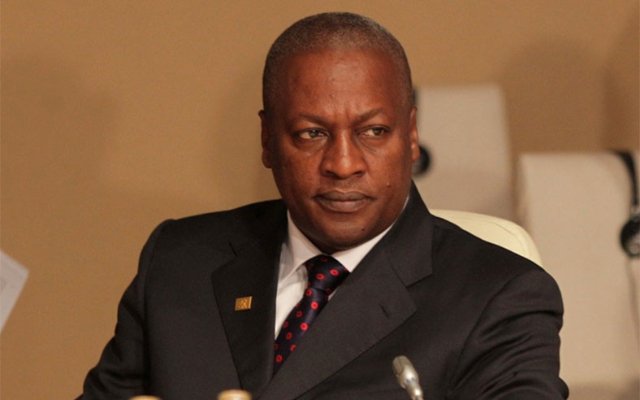
The Presidential Candidate of National Democratic Congress (NDC) in the December 7, 2020 Presidential Election held in Ghana, HE John Dramani Mahama, has detailed reasons behind his quest to contest the election results as announced by Mrs. Jean Mensa, the Chairperson of the Electoral Commission.

In the statement titled Standing on Principle, Mahama hinted that he is contesting the results because he respects the will of the people of Ghana.

Read the full statement:

STANDING ON PRINCIPLE AN ADDRESS BY HE JOHN DRAMANI MAHAMA, PRESIDENTIAL CANDIDATE OF THE NATIONAL DEMOCRATIC CONGRESS

Wednesday 30th December 2020

Good evening ladies and gentlemen, fellow Ghanaians, my Brothers and Sisters.

Let me begin by wishing you all Merry Christmas and a prosperous New Year. I am speaking to you, my countrymen and women, today because I would like to address a few of the issues that have come up since the December 7 election, particularly the issue of how best to proceed—for me, as a candidate; and, I believe, for us, as a nation.

Increasingly, many of us who are attempting to understand how the Electoral Commission arrived at the results of this last election are being advised to forgo the issue—in the interest of peace.

We are being reminded that Ghanaians are a peace-loving people and that Ghana, unlike many other nations on our dear continent of Africa, has not succumbed to war or been plagued with violence.

As a former president of the Republic of Ghana, a country that I love dearly, I am here to assure you that I know what it is to act in the interest of peace.

I have always done so without reservation or hesitation.

I know what it is to contest an election, and to have the good people of this country choose my opponent to serve as their next president. I know what it is to concede. I have done so before. In 2016 when the election was not called in my favour, I conceded. I conceded in a congratulatory call to my opponent. And then, not long after that, I conceded in a public address to the good people of Ghana.

I conceded not simply in the interest of peace and democracy, but because I respect the will of the people. I did then, and I do now.

So, when I say that I will not concede this election, please know that I have not taken this decision lightly; understand that it is not because of a desire for power, but because of a dedication to principle and a commitment to democracy.

Based on the irregular and inconsistent results that were reported, I have reason to doubt that this election was free, or fair, or transparent. And without those fundamental pillars in place, how can any of us be sure that the results announced truly represent the will of the people?

My Brothers and Sisters, I stand here today to remind you that Ghana is a peaceful nation precisely because Ghanaians have always stood on principle. We have always fought for our democracy.

Our forefathers and foremothers have always understood that without this basic foundation, whatever peace exists in our country will not be lasting; whatever liberation we have as the architects of our collective future will soon be lost. W

we decide to take the easiest road, the first step is always surrender. And, often, the thing that we lose is the very thing that we value the most.

The freedom that we enjoy today was not given on a silver platter. It came at a price. It came because our forefathers and mothers stood on principle. Our history books are filled with the names of individuals who refused to take the road that was the easiest, or safest, or most convenient.

They refused to surrender their ability to appeal for justice in a land where they were meant to have a voice and use it for the betterment of themselves and their children and future generations. All who fought for independence stood on principle to demand the sovereignty of this land that belongs to us, the people of Ghana.

Indeed, Dr. Kwame Nkrumah once said, “Those who would judge us merely by the heights we have achieved would do well to remember the depths from which we started.”

There are many of you who are listening to me this evening who have spent your entire lives knowing only democracy. You know a Ghana in which every four years the citizens go to the ballot box to exercise their right to choose leaders who they believe will best serve their interests.

You know a Ghana in which the baton of power has been passed graciously, and without incident, from one party to another; a country with hundreds of radio stations and dozens of newspapers; a country where citizens can openly critique the performance of their elected officials; a country where they can protest peacefully, and without fear of punishment.

It is the Ghana that your mothers and fathers, your grandmothers and grandfathers—wanted you to know.  It is the Ghana that they dreamed of, and some even died trying to make that dream a reality.

Also listening tonight are many of you who remember a different Ghana. In that Ghana, most, if not all, of those political traditions and social liberties I spoke of earlier did not exist: the airwaves were not filled with radio stations; there were not numerous newspapers; people held their peace because to complain about the people in power was to risk all manner of reprisals.

In that Ghana, presidential terms were interrupted by coups, and former heads of state were executed. There was kalabule, and Operation Feed Yourself, not to mention years of hunger, bush fires, drought, and one economic recovery programme after another.

Even the Ghana of the Kume Preko demonstrations bear little resemblance to the Ghana of today. We have traveled quite far as a nation in such a short period of time.

The road has not been easy, nor has it been absent of obstacles. That is why our beloved nation, Ghana, is often referred to as a trailblazer on the African continent.

With each achievement, we have grown stronger—as a people, and as a nation. Through these trials and tribulations, our democracy has also been strengthened.

My Brothers and Sisters, in a democracy as strong as ours, peace and justice can—and, in fact, they usually do—coexist. And that is because in a democracy such as the one we have built in Ghana; it is the people who hold the power.

Indeed, in 2012 when the election was called in my favour, my opponent challenged the results— as was his right; and he took the matter to court. Eight long months of an election petition, far from destroying our democracy, rather reinforced our commitment to it—and affirmed the strength of our institutions, particularly the judiciary.

It is only in governments where the people are powerless, and at the mercy of those who hold office, that peace—or at least what passes as peace—can exist without justice.

Some people have asked me what I hope to gain by challenging the results of this election.

Let me tell you: I want, perhaps, the very same thing that my opponent wanted when in 2012 he challenged the results of that election; I want the removal of doubt. I want for all of us to know that our elections should be free, fair, and safe—and that we do not have to settle for a process that leaves us confused, and with more questions than answers.

I want a Ghana where institutions of state can be held to account. Where we can stand on principle and demand transparency without the risk of losing our lives.

When people lose their lives—as seven people did—in the course of our elections, we are moving backwards not forward; we are unraveling the very fabric of our democracy; we are risking the loss of three decades worth of progress.

When today we see armed military and militia in our collation centres and election outcomes declared at the point of a gun, for us who have witnessed our country’s journey through all its post-independence travails, we wonder if we have truly exorcised the ghosts of our tortuous past. We must continue to be a nation in which our young citizens have faith in our institutions, trust the rule of law, and rely on the presence of peace because there is justice.

Ghana must be a country where we citizens know and believe, without any doubt whatsoever, that the way forward is determined by the will of the Ghanaian people. And that we can hold our institutions of state accountable and guarantee that they work in favour of the national interest and not in the interest of the administration or person in power.

That is what I want.

This is why earlier today, my lawyers filed a petition in the Supreme Court of Ghana challenging the declaration of the results of the December 7, 2020 Presidential Election made by Mrs. Jean Mensa, the Chairperson of the Electoral Commission.

I have been compelled to do this because of her clear failure to act in accordance with the Constitution.

I thank you for your kind attention.

May your New Year be one of good health and prosperity. May God bless each of you, and may God continue to bless our homeland, Ghana.

Continue Reading
Click to comment

Leave a Reply

Your email address will not be published. Required fields are marked *

Headline

Second Term for Tinubu Will Turn Governors into Total Slaves, Dele Momodu Warns

Published

on

By

Chairman, Ovation Media Group, and former presidential aspirant, Aare Dele Momodu, has expressed strong concern over what he described as growing political support for President Bola Ahmed Tinubu among state governors across the country.

Speaking during an interview on News Central TV, Momodu said he was shocked by the level of backing the president is reportedly receiving, warning that Nigeria’s democracy could face serious risks if the current political trend continues.

The media entrepreneur cautioned that allowing Tinubu to secure a second term in 2027 could, in his view, lead to excessive concentration of power. He particularly criticized what he described as a growing wave of opposition figures aligning with the ruling All Progressives Congress> (APC).

Momodu referenced reports of opposition governors, including Ahmadu Umaru Fintiri, allegedly moving closer to the ruling party, describing the development as politically troubling.

According to him, some governors are allegedly competing to demonstrate loyalty to the president ahead of future elections.

“The governors are fighting to ensure Tinubu wins a second term, fighting to be the biggest thug for him. If a man in his first term can capture the bodies and souls of Nigerians this way, imagine what he would do with a second term. It will be a full-blown dictatorship, and the governors will regret it as they become total slaves to him,” Momodu said.

He concluded by urging Nigerians to remain vigilant and actively protect democratic institutions, warning that unchecked consolidation of political power could threaten the nation’s democracy and future stability.

Gistmania

Continue Reading

Headline

Court Validates PDP 2025 Convention in Ibadan, Affirms Turaki-led NWC

Published

on

By

The Oyo State High Court sitting in Ibadan has affirmed the validity of the 2025 Elective Convention of the Peoples’ Democratic Party (PDP), which produced Dr. Kabiru Turaki as the substantive National Chairman of the party.

Delivering judgment on Friday, Justice Ladiran Akintola upheld the convention in its entirety, ruling that it was conducted in full compliance with the relevant constitutional and statutory provisions governing party elections in Nigeria.

The decision marked a significant legal victory for the party’s leadership and brought clarity to the dispute surrounding the convention’s legitimacy.

The ruling followed an amended originating summons filed by Misibau Adetunmbi (SAN) on behalf of the claimant, Folahan Malomo Adelabi, in Suit No. I/1336/2025.

In a comprehensive judgment, the court granted all 13 reliefs sought by the claimant, effectively endorsing the processes and outcomes of the Ibadan convention.

Justice Akintola held that the convention, organised by the recognised leadership of the party, satisfied all laid-down legal requirements as stipulated in the 1999 Constitution of the Federal Republic of Nigeria, the Electoral Act 2022 (as amended), and the relevant provisions of the Electoral Act 2026.

The court found no breach of due process or statutory non-compliance in the conduct of the exercise.

In the same proceedings, the court dismissed the Motion on Notice seeking a stay of proceedings and suspension of the ruling, filed by Sunday Ibrahim (SAN) on behalf of Austin Nwachukwu and two others. The applications were described as lacking merit.

Earlier in the proceedings, the court had also rejected a bid by Ibrahim to have his clients joined in the suit.

Justice Akintola ruled at the time that the joinder application was unsubstantiated and consequently dismissed it.

Continue Reading

Headline

Opposition Parties Reject 2026 Electoral Act, Demand Fresh Amendment

Published

on

By

Opposition political parties have rejected the 2026 Electoral Act recently passed by the National Assembly, which President Bola Tinubu swiftly signed into law.

The parties called on the National Assembly to immediately begin a fresh amendment process to remove what they described as “all obnoxious provisions” in the law.

Their position was made known at a press briefing themed “Urgent Call to Save Nigeria’s Democracy,” held at the Transcorp Hilton Hotel in Abuja on Thursday.

In a communiqué read by the Chairman of the New Nigeria Peoples Party (NNPP) Ahmed Ajuji, the opposition leaders stated:

“We demand that the National Assembly immediately commence a fresh amendment to the Electoral Act 2026, to remove all obnoxious provisions and ensure that the Act reflects only the will and aspiration of Nigerians for free, fair, transparent and credible electoral process in our country. Nothing short of this will be acceptable to Nigerians.”

Some of the opposition leaders present in at the event include former Senate President David Mark; former Governor of Osun State, Rauf Aregbesola; former Vice President Atiku Abubakar; former Governor of Rivers State, Chibuike Rotimi Amaechi; and former Governor of Anambra State, Peter Obi, all from the African Democratic Congress (ADC).

The National Chairman of the New Nigeria Peoples Party (NNPP), Ahmed Ajuji, and other prominent members of the NNPP, notably Buba Galadima, were also in attendance.

The coalition said the amended law, signed by Bola Tinubu, contains “anti-democratic” clauses, which they argue may weaken electoral transparency and public confidence in the voting system.

At the centre of the opposition’s concerns is the amendment to Section 60(3), which allows presiding officers to rely on manual transmission of election results where there is communication failure.

According to the coalition, the provision weakens the mandatory electronic transmission of results and could create loopholes for manipulation.

They argued that Nigeria’s electoral technology infrastructure is sufficient to support nationwide electronic transmission, citing previous assurances by officials of the Independent National Electoral Commission (INEC).

The parties also rejected the amendment to Section 84, which restricts political parties to direct primaries and consensus methods for candidate selection.

They described the change as an unconstitutional intrusion into the internal affairs of parties, insisting that indirect primaries remain a legitimate democratic option.

The opposition cited alleged irregularities in the recent Federal Capital Territory local government elections as evidence of what they described as a broader pattern of electoral compromise.

They characterised the polls as a “complete fraud” and said the outcome has deepened their lack of confidence in the ability of the electoral system to deliver credible elections in 2027.

The coalition also condemned reported attacks on leaders of the African Democratic Congress in Edo State, describing the incidents as a serious threat to democratic participation and political tolerance.

They warned that increasing violence against opposition figures could destabilise the political environment if not urgently addressed.

In their joint statement, the opposition parties pledged to pursue “every constitutional means” to challenge the Electoral Act 2026 and safeguard voters’ rights.

“We will not be intimidated,” the leaders said, urging civil society organisations and citizens to support efforts aimed at protecting Nigeria’s democratic system.

On February 18, 2026, President Bola Tinubu signed the Electoral Act (Amendment) 2026 into law following its passage by the National Assembly. The Act introduced several reforms, including statutory recognition of the Bimodal Voter Accreditation System and revised election timelines.

However, opposition figures such as Atiku Abubakar and Peter Obi have also called for further amendments, particularly over the manual transmission fallback clause, which critics say leaves room for manipulation.

The president said the law will strengthen democracy and prevent voter disenfranchisement.

Tinubu defended manual collation of results, questioned Nigeria’s readiness for full real-time electronic transmission, and warned against technical glitches and hacking.

The Electoral Act sparked intense debate in the National Assembly over how election results should be transmitted ahead of the 2027 general elections.

Civil society groups under the “Occupy NASS” campaign demanded real-time transmission to curb manipulation.

In the Senate, lawmakers clashed during consideration of Clause 60, which allows manual transmission of results if electronic transmission fails.

Senator Enyinnaya Abaribe (ADC, Abia South) demanded a formal vote to remove the proviso permitting manual transmission, arguing against weakening real-time electronic reporting.

The move led to a heated exchange on the floor, with Senate President Godswill Akpabio initially suggesting the demand had been withdrawn.

After procedural disputes and a brief confrontation among senators, a division was conducted. Fifteen opposition senators voted against retaining the manual transmission proviso, while 55 supported it, allowing the clause to stand.

Earlier proceedings had briefly stalled during clause-by-clause review, prompting consultations and a closed-door session.

In the House of Representatives, a similar disagreement came up over a motion to rescind an earlier decision that mandated compulsory real-time electronic transmission of results to IReV.

Although the “nays” were louder during a voice vote, Speaker Tajudeen Abbas ruled in favour of rescinding the decision, triggering protests and an executive session.

Continue Reading

Trending