Uncategorized
Alpha Beta Fights Back, Accuses Ex-MD of Diverting N6bn
Published
5 years agoon
By
Eric
Tax consultancy firm, Alpha Beta LLP, has denied allegations levelled against it by its former Managing Director, Dapo Apara, adding that he in fact diverted N6bn from the company.
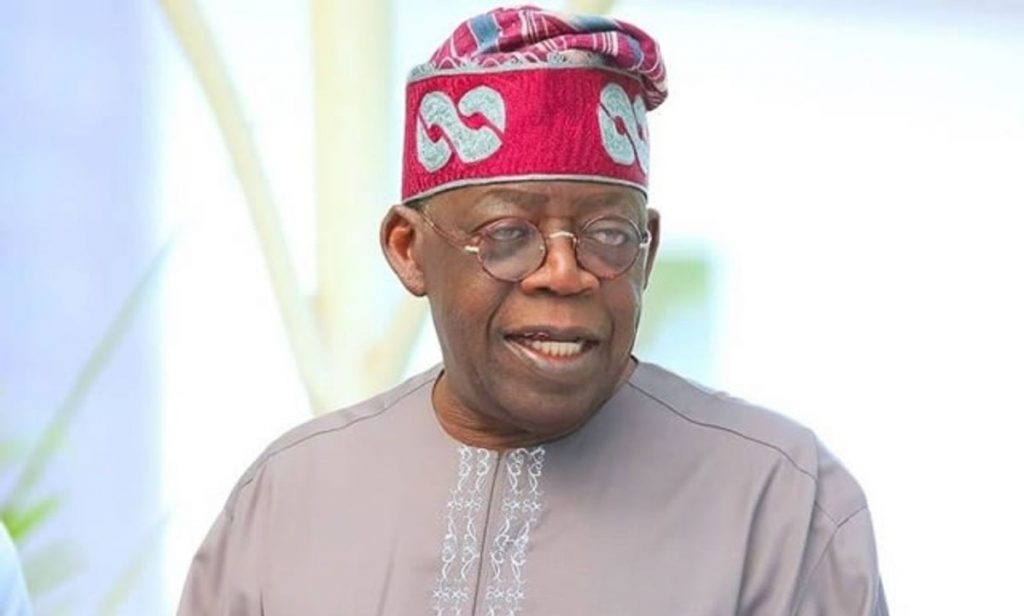
Apara had in a writ of summons before a Lagos State High Court accused the company of being controlled by a former Lagos State Governor, Bola Tinubu, and making mysterious payments of over N20bn to several private accounts.
Responding on Friday, however, Alpha Beta said in a statement by its Managing Director, Akin Doherty, that Apara was the one that was culpable as he had diverted about $5m during his time as managing director by inflating a contract which was worth about $300,000 and then diverted a separate N6bn to personal use.
The firm said it had reported Apara’s alleged fraud to the appropriate authorities but he had refused to show up and rather remained in Dubai.
In the statement titled, ‘Alpha Beta: Facts of the Matter’, the firm said Apara was an aggrieved ex-employee who was bent on tarnishing the image of the company after being sacked for financial impropriety.
It read in part, “The fact is that Dapo Apara began making his untrue allegations in the aftermath of his removal as Managing Director of Alpha Beta for fraud and unethical practices. While he was MD, Apara used his position to siphon huge sums of money from the company including but not limited to fraudulently converting $5m; money allegedly used to pay for cloud based services that were eventually discovered to be worth less than $300,000.
“Mr. Apara, who was a signatory to all the bank accounts of Alpha Beta from inception until his removal, received all his payments and entitlements until June 2018 when he was removed after his fraudulent misconduct was discovered.
“In July 2018 further evidence of his fraudulent and unethical practices was uncovered, including the revelation that he converted approximately N6bn belonging to Alpha Beta to his personal use.
“This fraud was reported to the authorities and Mr. Apara was subsequently invited to return to Nigeria from his hiding place in Dubai to render account. To date, he has refused to do so. Instead, Mr. Apara chose to embark on an aggressive smear campaign seemingly in an effort to blackmail us into ending the investigations into his misconduct.”
The firm said Apara’s allegations levelled against Tinubu were specious and diversionary.
“The uncorroborated allegations against Asiwaju Bola Tinubu by Dapo Apara, in particular, show that he is bent only on creating sensational headlines to deflect attention from his own criminal activities,” it said.
According to Alpha Beta, Apara has filed many suits in Lagos and Abuja on the same matter, engaged in arbitration, the police, the Economic and Financial Crimes Commission, and other agencies.
It said in all that time, he has steadfastly refused to honour all invitations by the authorities to return to Nigeria and account for the huge funds he misappropriated.
The firm stated that although it had not been served with the court summons, it looked forward to the opportunity of publicly presenting the full picture of Apara’s misconduct, deceit and fraud and to have the matter resolved by the court once and for all.
Alpha Beta monitors and reconciles tax on behalf of the Lagos State Government for a commission, a contract it has been executing for over 15 years.
The Punch
Related
You may like
Uncategorized
Open Letter to Global Leadership: Forging New Intergenerational Partnership for Sustainable Governance
Published
2 weeks agoon
December 6, 2025By
Eric
By Tolulope A. Adegoke, PhD
“Sustainable governance in the 21st century requires a new operating system: one where intergenerational partnership is not an aspiration, but an engineered and mandatory feature of all decision-making.” – Tolulope A. Adegoke, PhD
Esteemed Leaders, Heads of State, and Architects of Global Policy,
As we navigate the third decade of the 21st century, our world is suspended between unparalleled technological promise and profound systemic peril. This duality defines our epoch. Yet, within this tension lies a persistent, critical flaw in our global governance model: the exclusion of youth from the formal structures of power and long-term decision-making. This letter posits that this is not merely a representational gap, but the central governance failure of our time. To secure a stable, prosperous, and equitable future, we must enact nothing less than a New Intergenerational Partnership—a binding, structural, and practical commitment to integrate youth into the very heart of political and corporate leadership. The alternative is not stagnation, but a heightened risk of repeated crises and a forfeiture of our collective potential.
Deconstructing the Crisis of Legitimacy and Innovation
Our current systems are hemorrhaging legitimacy among the young. This disillusionment stems from a recognizable pattern: short-term political cycles incentivize policies that harvest immediate rewards while deferring complex costs—ecological, financial, and social—to a future electorate that had no say in their creation. This creates a dangerous democratic deficit.
· The Foresight Deficit: Young people are not a monolithic bloc, but they are unified as the primary stakeholders in long-term outcomes. Their lived experience—from navigating precarious job markets shaped by automation to mobilizing for climate justice—grants them an intuitive, granular understanding of emerging realities. Excluding this perspective from high-level strategy results in policies that are reactive, myopic, and often obsolete upon implementation. For instance, regulatory frameworks for artificial intelligence or biotechnology crafted without the generation that will be most affected by their societal integration are inherently flawed.
· The Innovation Imperative: The challenges we face are novel and interconnected. Solving them requires cognitive diversity and a willingness to dismantle legacy paradigms. Youth bring this disruptive ingenuity. They are natural systems thinkers, adept at collaborating across digital networks and cultural boundaries. Their inclusion is not about adding a “youth perspective” as a separate item on an agenda; it is about fundamentally improving the quality of decision-making through necessary cognitive diversity. It is the difference between digitizing an old process and reimagining the system entirely.
A Bilateral Blueprint: Cultivating Capacity and Engineering Access
Bridging the intergenerational divide requires a twin-pillar strategy: one pillar dedicated to rigorous preparation, the other to guaranteed access. One without the other is insufficient.
Pillar One: The Cultivation of “Next-Gen Stewards” Through Ecosystem Reform
We must re-engineer societal institutions to build not just skilled employees, but wise, ethical, and resilient stewards capable of wielding complex responsibility.
1. Transformative Education Systems: Our educational institutions, from secondary to tertiary levels, must pivot from knowledge transmission to capacity cultivation. Core curricula should be restructured around:
o Complex Problem-Solving: Using real-world case studies on climate migration, public health, or digital ethics.
o Civic Architecture: Teaching the mechanics of governance, policy drafting, public finance, and diplomatic negotiation.
o Ethical Leadership: Embedding philosophy, mediation, and integrity frameworks into all disciplines.
o Planetary Literacy: Ensuring every graduate understands the core principles of ecological systems and sustainable economics.
2. Global Mentorship & Fellowship Networks: We propose the creation of a Global Stewardship Fellowship, a publicly and privately funded initiative that places high-potential young adults into year-long, rotating apprenticeships across sectors—spending time in a ministerial office, a multinational corporation’s sustainability division, a UN agency, and a grassroots NGO. This builds empathy, systemic understanding, and a powerful professional network dedicated to the public good.
3. The “Civic Sandbox”: National and local governments should allocate dedicated “innovation budgets” and regulatory sandboxes for youth-led pilot projects. Whether it’s testing a universal basic income model in a municipality, deploying blockchain for land registry transparency, or piloting a zero-waste circular economy program, these sandboxes provide the critical space for experimentation, managed failure, and scalable success.
Pillar Two: Structural Integration – From Tokenism to Tenured Influence
Preparation must be met with irrevocable access. We must engineer specific, mandated entry points into leadership.
1. Legislated Quotas for “Next-Gen Leadership Roles”: We advocate for national legislation requiring that a minimum percentage (e.g., 25-30%) of all senior governmental advisory roles, board positions in state-owned enterprises, and diplomatic corps slots be filled by individuals under 35, selected through meritocratic and competitive processes. These cannot be silent roles; they must carry voting rights, budgetary oversight, and public reporting responsibilities.
2. Mandatory Youth Policy Advisory Panels: Beyond junior minister roles, every major ministry or department should be required to establish a Mandatory Youth Policy Advisory Panel. This formally recognized body, composed of young experts and representatives, would receive all non-classified policy briefings and legislative drafts. Their mandate would be to produce and publish independent, alternative analyses, impact assessments, and recommendations, which would then be formally submitted for official parliamentary or congressional review alongside the government’s proposals. This ensures their expert critique and innovative ideas become a mandatory part of the legislative record and public debate.
3. Intergenerational Co-Leadership Models: For specific, future-focused portfolios—such as Minister of Digital Transformation, Minister of Climate Resilience, or Minister of Future of Work—we propose a mandatory co-leadership model. One experienced administrator and one appointed youth leader would share the title and decision-making authority, forcing collaborative governance and instant knowledge transfer.
The Cross-Sectoral Dividend: Concrete Solutions Emerge
This structural inclusion is not an isolated political reform; it is the catalyst for unlocking solutions across every sector.
· Economic Renaissance: Young entrepreneurs are at the forefront of the purpose-driven economy. Their direct influence in economic ministries can redirect investment toward regenerative agriculture, renewable energy micro-grids, and the care economy, creating jobs while solving social problems. They are best positioned to formalize the vast informal sector through inclusive fintech and platform cooperatives.
· Accelerated Climate & Ecological Restoration: Young leaders treat the climate crisis with the urgency it demands. Their inclusion moves debates from cost distribution to opportunity creation, prioritizing investments in green infrastructure, biodiversity credits, and just transition policies that are both socially fair and ecologically sound.
· Trust-Based Technological Governance: From data privacy to algorithmic accountability, young digital natives can design governance frameworks that protect citizens without stifling innovation. They can pioneer models for digital public infrastructure, data cooperatives, and civic tech that enhance transparency and rebuild public trust.
· Social Cohesion and Narrative Renewal: Having often grown up in more diverse societies, young leaders can design immigration policies that are humane and economically smart, craft narratives that counter polarization, and rebuild community fabric through culture and sport, addressing the loneliness and alienation that fuel extremism.
The Imperative for a Global Commitment: From Isolated Action to Collective Norm
This cannot be a piecemeal, nation-by-nation endeavor. The scale of our interconnected challenges demands a synchronized, normative shift.
We therefore call for the immediate development and ratification of a Global Framework for Intergenerational Partnership (GFIP), to be adopted at the United Nations General Assembly. This Framework would:
1. Establish Clear Metrics: Create a standardized index measuring youth inclusion in legislatures, cabinets, corporate boards, and diplomatic missions, with annual public reporting and peer review.
2. Create a Financing Mechanism: Launch a dedicated global fund, capitalized by sovereign and private contributions, to finance the Global Stewardship Fellowship, Civic Sandboxes, and youth policy incubators worldwide.
3. Institute Diplomatic Recognition: Incorporate a nation’s GFIP compliance and performance into international assessments, credit ratings, and partnership considerations, making intergenerational equity a core component of a nation’s global standing.
A Final Word to Two Generations:
To Emerging Leaders: Your mandate is to prepare with relentless rigor. Master the details, but never lose the vision. Cultivate the humility to learn from the past and the courage to redesign the future. Lead with evidence, empathy, and an unwavering commitment to integrity.
To Established Leaders: Your defining legacy lies in the leaders you raise, not just the monuments you build. True statesmanship in this century is measured by your ability to voluntarily share power, to mentor without condescension, and to institutionalize pathways that make your own position, one day, gracefully obsolete in a better system. This is the highest form of patriotism and planetary stewardship.
True leadership is measured not by the monuments it builds, but by the successors it empowers. The urgent task of our time is to forge an unbreakable partnership between experience and vision—to build the scaffolding for the next generation to stand higher than we ever could.
The status quo is a failing strategy. The New Intergenerational Partnership is the pragmatic pathway forward. The time for deliberation has passed; the era of implementation must begin.
Dr. Tolulope A. Adegoke, AMBP-UN is a Doctor of Philosophy (PhD) in History and International Studies, Fellow Certified Management Consultant & Specialist, Fellow Certified Human Resource Management Professional, a Recipient of the Nigerian Role Models Award (2024), and a Distinguished Ambassador For World Peace (AMBP-UN). He has also gained inclusion in the prestigious compendium, “Nigeria @65: Leaders of Distinction”
Related
Uncategorized
In a RUDE World, Organisations Are Learning to Stay CALM
Published
4 weeks agoon
November 27, 2025By
Admin
In an age shaped by volatility, rapid shifts and relentless uncertainty, experts are urging organisations to rethink the very foundations of how they understand and respond to risk. The global business terrain is no longer defined by tidy cycles or predictable patterns.
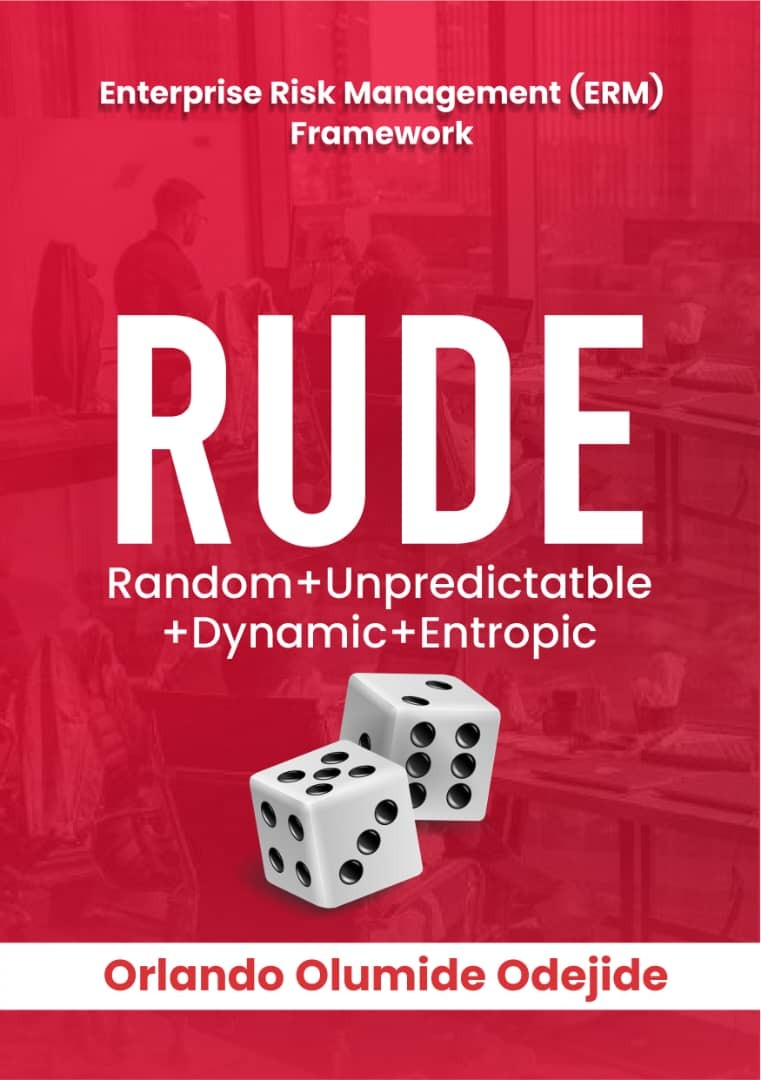
It has morphed into what analysts now describe as a RUDE world: Random, Unpredictable, Dynamic and Entropic. These forces, once mere academic abstractions, now sit at the heart of every crisis briefing and boardroom conversation.
The consequences of ignoring this reality have been played out repeatedly on the global stage. Companies that cling to reactive strategies find themselves swamped by disruptions that arrive faster and hit harder than anything prior generations endured. Financial shocks, supply chain collapses, cybersecurity breaches and sudden reputational storms have shown that risks rarely stay contained. They jump boundaries, multiply and collide in ways that defy traditional planning.
A growing body of thought argues that the strategic antidote is a CALM response. CALM, which stands for Consistent, Anticipatory, Logical and Measured, offers a deliberate move away from firefighting and towards resilient, disciplined decision making. It urges organisations to stop chasing crises and start building systems that can hold steady even when the world does not.
A new book on the subject crystallises this shift by presenting a panoramic map of organisational exposure: fifty distinct risk categories, grouped into seven interconnected families. Far from being a checklist of threats, this framework functions as a living ecosystem. It invites leaders to stop examining risk as isolated problems and instead see the company as an integrated organism where one failure can cascade into many.
Beyond offering structure, the fifty categories serve as a diagnostic lens that widens an organisation’s field of vision. Each category highlights a particular pressure point, but their real power emerges when viewed together. Patterns surface that no siloed team could detect alone. A technical risk may quietly trigger a reputational issue, which then influences regulatory exposure, which eventually feeds into operational disruption. The framework forces executives to confront an uncomfortable truth: vulnerabilities rarely travel alone. By mapping risks this way, organisations gain an early warning system that sharpens judgment, strengthens preparedness and transforms vague uncertainty into targeted, informed action.
The RUDE characteristics explain why this broader lens is essential. Randomness describes shocks that arrive without pattern, making historical trends all but useless. Unpredictability captures the sudden appearance of new forces, from emerging technologies to cultural shifts, that can upend an industry overnight. The dynamic nature of global systems ensures that a decision made in a single office can send tremors through an entire enterprise. Entropy, the most insidious of the four, reflects internal decay: wasted energy, fading accountability and the slow erosion of organisational purpose.
Each threat finds its counterbalance in the CALM disciplines. Consistency stabilises organisations against random shocks. Anticipation replaces uncertainty with informed foresight. Logic cuts through dynamic complexity with clarity. A measured approach resists the quiet drift into disorder.
The danger of ignoring this interconnectedness is illustrated most clearly in the anatomy of a cybersecurity breach. What begins as a technical problem quickly spirals into a legal battle, a reputational crisis, a financial strain and, ultimately, an internal cultural wound that erodes trust. Treating such a crisis as an IT issue alone blinds organisations to the wider fallout. This fragmentation is the hidden vulnerability of modern business, and it is precisely what the RUDE framework seeks to eliminate.
The authors argue that RUDE creates a shared language for institutions that have long struggled to speak across departmental divides. It exposes the threads that link one risk to another. Most importantly, it embeds foresight into everyday operations, allowing leaders to predict how a small disturbance could morph into a systemic threat.
The message resounding through the research is unequivocal. Risk management can no longer be confined to compliance manuals or crisis playbooks. In a RUDE world, risk is not only a hazard; it is a resource, a source of competitive intelligence and strategic advantage. A mature, integrated risk program becomes less like a brake and more like a steering wheel, guiding organisations with confidence through turbulence that once seemed uncontrollable.
For leaders determined not just to survive disruption but to navigate it with mastery, the shift from RUDE to CALM is emerging as a strategic necessity. The stormy future remains, but with the right framework, it becomes something that can be read, understood and navigated. The waves keep rising, yet the organisation learns how to sail.
Related
Uncategorized
Voice of Emancipation: Can Our Kings Be Trusted?
Published
4 months agoon
August 31, 2025By
Eric
By Kayode Emola
For the umpteenth time, it is worth asking ourselves if our traditional rulers can be trusted to serve the interests of the Yoruba people. We recall how Afonja betrayed the Alaafin and sold Oyo-Ile to the Fulani prince Alimi. One would have thought our Yoruba people would have learnt a lot of lessons from that incident, but it feels like we’ve learnt nothing.
Recently, we have seen reports of villagers fleeing their communities in Babanle and other towns of Kwara State circulating on social media. One would have expected the whole world to be outraged, like in the case of the Charlie Hebdo shooting in France in 2015. Where the whole world rallied round the victims of that shooting, but alas, no one seems to be bothered enough to act. By now, we should have witnessed government forces moving into the communities in Kwara State to restore law and order. Giving the villagers succour in the comfort of their own homes.
However, everyone in Nigeria is silent as is it doesn’t affect them directly, emboldening the terrorists to continue their assaults on Yorubaland unchallenged. For other Yoruba people who do not live in the area, they couldn’t be bothered to cry out because danger seems far away in Kwara state and not in the suburban Yorubaland like Oyo, Osun, Ekiti and other places like that.
Truth be told, if we can’t even cry out and be outraged about the numerous deaths that go unaccounted for, who do we expect to cry out on our behalf? The world will stay silent to our plight since we see the decimation of Yorubaland as the norm rather than something to act about.
The worst of it is the recent revelation that two monarchs in Kwara State are directly involved in the kidnapping and killings going on in the communities. The King of Alabe and Babanla is currently in police custody for their roles in terrorist activities going on in their domain. How can we be sure that several other monarchs are not causing similar havoc in their domains?
If two traditional leaders in Kwara are complicit in the atrocities going around them, how many more of our kings and chiefs are involved in criminal activities elsewhere? We have been crying that the Miyeti Allah cattle herders are killing innocent farmers on their own land and destroying their crops.
Instead of the Yoruba traditional leaders banding together, and looking for a lasting solution for their people, they sat on their hands doing nothing. As though if all the people are killed, they will have no subject to rule over.
Obviously, many of our kings and traditional rulers are in bed with these cattle herders, which is why this problem continues to fester. Many of our kings and their kinsmen are themselves the ones inviting the Fulani cattle herders to raise livestock for them, knowing that it is a profitable business.
Every single day, over eight thousand cows are being slaughtered in Lagos State, let alone other Yoruba states, making the trade one of the most profitable businesses outside of crude oil in Nigeria. Had the cattle herders conducted their business like any other businessperson in Nigeria, there wouldn’t have been any reason for clashes and the killings that go with it.
However, the fact that many Yoruba traditional leaders are the ones collecting bribes from these herders to roam the forest and bushes makes the matter a complicated one. How can a king who is entrusted with the safety of lives and properties in his domain be the same one who is endangering them?
Since we now know that many of our kings are themselves the ones putting the lives and properties of our people in peril. I believe it is time to put the spotlight on the custodian of our traditions and culture in check. We need to know those among them who are putting the lives and properties of their communities in danger and call them out.
As such, maybe we can bring some normalcy into our communities and protect the lives and properties of innocent people. If only we could do a statewide evangelism to see which of the kings and traditional rulers are involved with the cattle herders and the terrorists invading Yorubaland. Then we may be able to rid ourselves of the menace that is currently ripping the social fabric of Yorubaland into pieces bit by bit.
Related


Jake Paul Lands in Hospital with Broken Jaw after Anthony Joshua Trashing
Superiority War: I’ve Exclusive Authority to Confer Titles Across Yorubaland, Says Alaafin
Heirs Energies Executes $750m Afreximbank Financing to Drive Long-Term Growth
Another 115 Students of Catholic Missionary School Papiri Reportedly Regain Freedom
Voice of Emancipation: Christmas: A Time to Reflect
Adeleke Celebrates Owa Obokun, Ijesa People on Iwude Ijesha Festival
Hollywood Bubbles As Season of Awards Sets in
NNPCL Slashes Fuel Price by N80
Alleged Corrupt Practices: Dangote Petitions ICPC Against NMDPRA MD Farouk
Corruption Allegations: NMDPRA Boss Farouk Ahmed Meets Tinubu, Resigns
I’m Ready for Probe, NMDPRA Boss Farouk Ahmed Responds to Dangote’s Corruption Allegation
Ribadu’s Office Denies Arming Miyetti Allah in Kwara
US Congressman Recounts Harrowing Experience in Nigeria, Confirms ‘Systematic Genocidal Campaign’
Free at Last: Burkina Faso Releases 11 Nigerian Soldiers, Aircraft
Trending
-
Business3 days agoNNPCL Slashes Fuel Price by N80
-
Headline6 days agoAlleged Corrupt Practices: Dangote Petitions ICPC Against NMDPRA MD Farouk
-
Headline5 days agoCorruption Allegations: NMDPRA Boss Farouk Ahmed Meets Tinubu, Resigns
-
National5 days agoI’m Ready for Probe, NMDPRA Boss Farouk Ahmed Responds to Dangote’s Corruption Allegation
-
Featured3 days agoRibadu’s Office Denies Arming Miyetti Allah in Kwara
-
World6 days agoUS Congressman Recounts Harrowing Experience in Nigeria, Confirms ‘Systematic Genocidal Campaign’
-
Headline4 days agoFree at Last: Burkina Faso Releases 11 Nigerian Soldiers, Aircraft
-
Headline4 days agoMike Adenuga, Emmanuel Macron Hold High-Powered Meeting in Paris