Connect with us

Featured

Bill Seeking Immunity for Lawmakers Passes Second Reading in House of Reps

Published

on

A bill that would grant immunity to the presiding officers of the National and State Assemblies narrowly scaled second reading in the House of Representatives on Tuesday.

The bill seeks to amend Section 308 of the 1999 constitution.

Section 308 of the Constitution shields the quartet of the president, the vice president, state governors and their deputies, for their period in office, from all forms of civil and criminal prosecution.

The sponsor of the bill, Odebunmi Olusegun of Ogo-Oluwa/Surulere federal constituency (APC, Oyo), wants the presiding officers of the federal and state houses to enjoy similar privilege for them to shrug off “frivolous suits while in office.”

Mr Olusegun argued that the bill is targeted at avoiding distraction for the leadership of the legislative arm. He said it is his aim to “protect, stabilize the house” and ensure “our democracy continues to flourish at national and state levels.”

Proponents

Toby Okechukwu (PDP, Enugu) pitched his tent with the bill’s sponsor. He said, if passed, the bill would shield presiding officers from the prying eyes of witch hunters.

He argued that once the leadership of the legislature is protected from possible blackmail while in office, then they can do their job without fear. He urged his colleagues to give their nod to the bill and allow Nigerians to decide during its public hearing.

Nkem-Abonta Uzoma (PDP, Abia) took off from where Mr Okechukwu stopped. He argued that the bill is not about the sitting speaker but the office itself. He said any criminal blemish ascribed to the office of the Speaker would cast the entire House in a bad light.

If the president, his deputy, state governors and their deputies can enjoy immunity, why can’t the leadership of the National Assembly, he asked.

“Let us protect the (legislative) institution from institutional embarrassment with suits, arraignment from the EFCC, CCB, ICPC,” he said after which the Speaker, Femi Gbajabiamila, cut in.

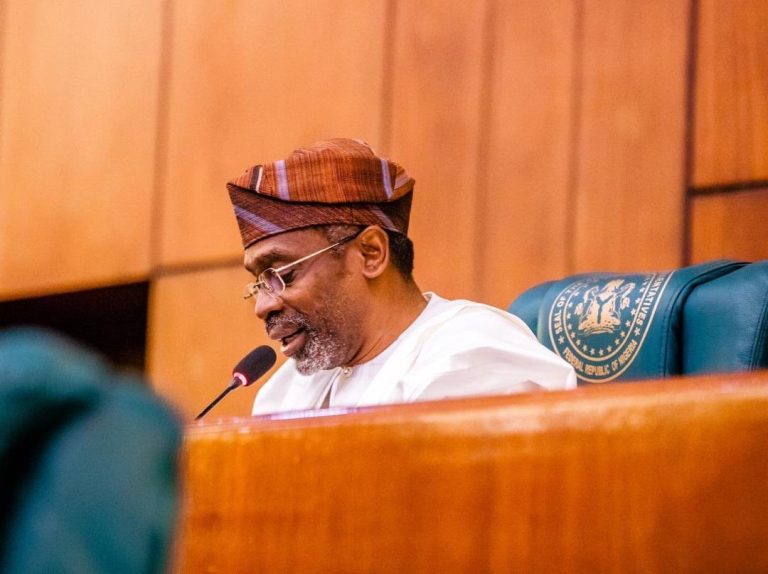
Speaker of the House of Representatives, Femi Gbajabiamila. [PHOTO CREDIT: Official Twitter handle of Femi]

The Speaker buttressed this by saying potential lawsuits against a presiding officer can come not only from agencies of the executive but also from individuals.

Opponents

Minority Leader Ndudi Elumelu (PDP, Delta) begged to differ. He said the bill should not be allowed as it is coming at the wrong time because “people should be held accountable for their actions.”

He called for the bill to be jettisoned and that attention should be redirected to tackle insecurity ravaging the country.

Also, Sergius Ogun (PDP, Edo) frowned at the bill. He said if he had his way, he would “remove the immunity the president and the governors enjoy.”

“As parliamentarians, I do not believe this is what we need today. We should lift the immunity that presidents and the governors enjoy. There is no reason why a sitting president or governor should not go to jail,” Mr Ogun noted.

As Mr Ogun rounded off, House Speaker Femi Gbajabiamila asked: “Is the head of the executive covered by immunity? And directly or indirectly, is the head of the judiciary covered by immunity?”

To that, he got a response in the affirmative. He then said he asked to weigh the various angles to the debate at hand. He called for equity in terms of privileges enjoyed by the each arms of government.

While the debate lasted, Mr Gbajabiamila said he was against the bill and was not willing to benefit from the privileges the bill might bring. He, therefore, suggested that the bill, should it be passed and assented to, would not take effect while the current leadership is in office.

In 2016, the same bill was read on the floor of the lower house. It came in the wake of the charges filed against former Senate President Bukola Saraki by the Code of Conduct Bureau during the eighth assembly. It was, however, thrown out, having divided the House over whether or not it should be passed.

Mr Gbajabiamila, then Majority Leader, was one of the fierce opponents of the bill.

The bill, however, still has a long way to go to become law. It will still pass through a public hearing and is expected to be included among the issues to be debated by a National Assembly committee to review the Constitution. The Senate is also yet to debate the bill.

Group Condemns Bill

The Socio-Economic Rights and Accountability Project (SERAP) has condemned Tuesday’s passing of the bill.

Responding to the development, SERAP deputy director Kolawole Oluwadare said: “Providing immunity for presiding officers against crimes of corruption is tantamount to ripping up the constitution. It’s a blatant assault on the rule of law and breach of public trust.”

SERAP said: “The leadership of the House of Representatives must immediately withdraw this obnoxious bill. We will vigorously challenge this impunity.”

The statement read in part: “It’s a huge setback for the rule of law that the same privileged and powerful leaders of parliament that regularly make laws that consign ordinary, powerless Nigerians to prison for even trivial offences yet again want to establish elite immunity to protect themselves from any consequences for serious crimes of corruption and money laundering.”

“Whereas countries like Guatemala has voted unanimously to strip their president of immunity from prosecution for corruption our own lawmakers are moving in the opposite direction.”

“The message seems to be that in Nigeria, powerful and influential actors must not be and are not subject to the rule of law. It’s simply not proper for lawmakers to be the chief advocates of immunity for corruption.”

“It’s a form of political corruption for the parliamentarians to abuse their legislative powers, intended for use in the public interest but instead for personal advantage. This is an unacceptable proposition as it gives the impression that both the principal officers of the National Assembly are above the law.”

“If the House of Representatives should have their way, this will rob Nigerians of their rights to accountable government.”

“Public officials who are genuinely committed to the well-being of the state and its people, and to the estab­lishment of an effective and functioning system of administration of jus­tice, should have absolutely nothing to fear.”

Premium Times

Continue Reading
Click to comment

Leave a Reply

Your email address will not be published. Required fields are marked *

Featured

UBA Business Series Celebrates The Evolved Woman’s Leadership, Enterprise

Published

on

By

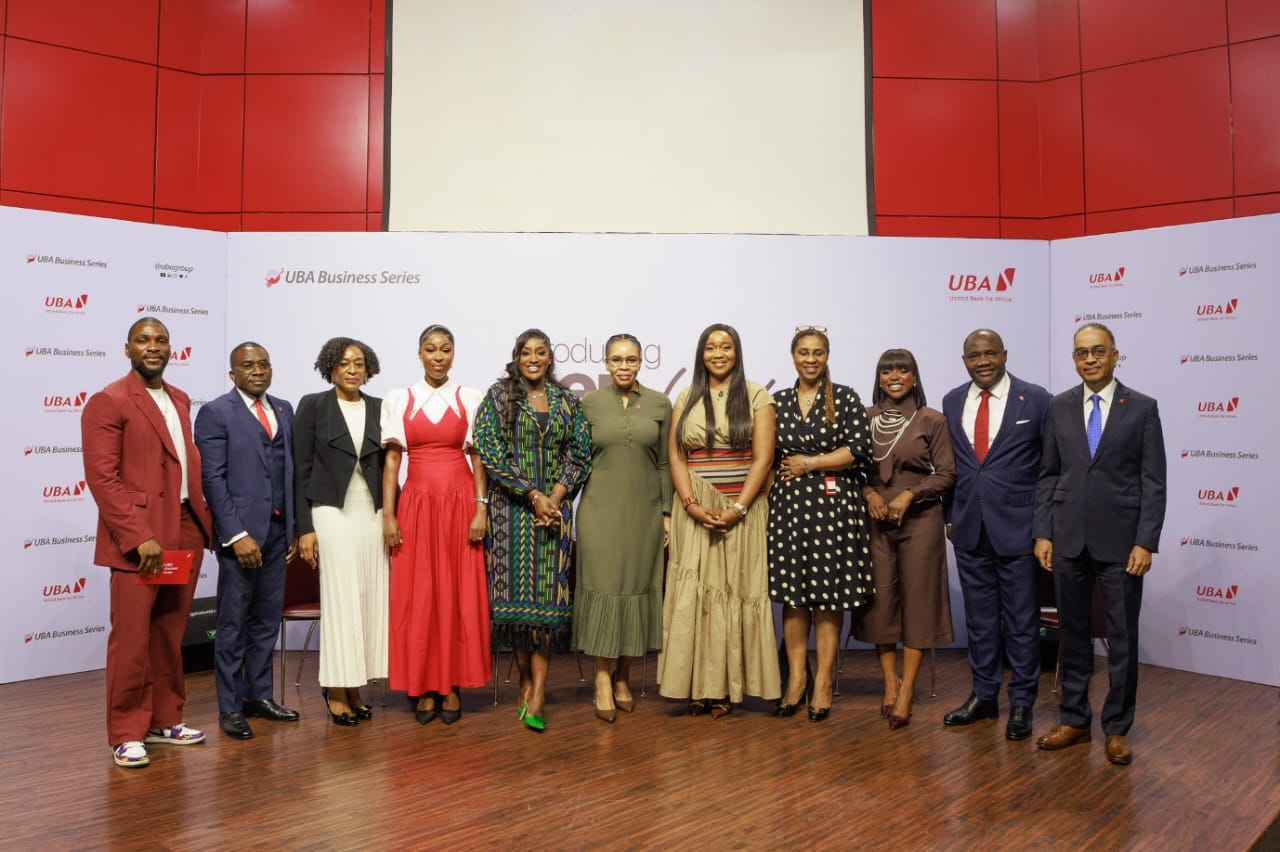
Africa’s Global Bank, United Bank for Africa (UBA) Plc, on Thursday, hosted a captivating edition of its quarterly Business Series, bringing together accomplished female leaders and entrepreneurs to discuss the theme “Gen.W: The Evolved Woman.”

The hybrid session which was held at the UBA House in Marina Lagos and also transmitted live to participants across the globe, is part of activities to mark the International Women’s Month and focused on the evolving role of women in leadership, business, and innovation, highlighting how African women are redefining success while also creating sustainable impact across their various spheres of operation.

UBA’s Group Head, Customer Experience, Michelle Nwoga, who gave the opening remarks at the event, explained that the evolved woman is one who is taking charge, volunteering and making their voice heard above the noise.

The event was moderated by popular media personality and actor, Tobi Bakre; who said, “When I think about the evolved woman, I personally do not see a checklist or a finish point. In my own opinion, it is a woman who is grounded in her own self-worth and gives room for other women to be grounded in theirs, choosing herself daily and ultimately letting other women around her know and believe that they belong here too.”

The event featured panel conversations with leading entrepreneur and founder of ORÍKÌ Group, Joycee Awosika; celebrated media personality and digital entrepreneur Tomike Adeoye; founder of Fine-Funky, Olufunke Davies, and award-winning broadcaster, Ayo Mario-Ese who shared experiences around their struggles and eventual evolution as female business owners.

From her point of view, Joycee Awosika, an energy economist who has been focused on promoting the African heritage, the evolved woman is one who has awareness of who she is. “That woman does not need to ask to sit at the table, she is creating her own table and adding value. As your company is growing, you must grow too, and always do an audit of where you need to become a better leader” she stated.

To Tomike Adeoye, the question of what a woman is bringing to the table has now become obsolete, as the evolved woman is now bringing their own table. “She is now more vocal about their struggles, setting the standards and she is not ready to give up on her dreams,” she added.

Ayo Mario-Ese expressed worry about females who are usually laidback about speaking up and sharing their achievements, and said that women need to own their own stories: “A lot of women are doing phenomenal work and are sometimes afraid of showcasing what they are doing. As an evolved woman, you have to find out what you are comfortable doing, and create your own unique offering, and also be open to collaboration.”

“Creating unique designs that are affordable remains my driving force and something that has helped me grow as an evolved woman,” remarked Olufunke Davies, who confessed to having ventured into a lot of businesses before finding her niche. “It is important to do your research, streamline and think about relatability. But the important thing I will say is start where you are as it is a progression.”

The Group Head, Brand, Marketing and Corporate Communications, Alero Ladipo, who commended the panellists and the attendees for taking their time to join the event said, “Raising each woman up is actually not that hard; because, everyone has their community as well as their story; and so as women, we need to take position so that you can give to others.”

Ladipo took time to speak about the Gen W platform, put together by the bank, as she explained that it is a lifestyle platform dedicated to the evolved woman, adding, “Through expert insights, real stories, and practical resources, the platform connects women who are building brands, creating businesses, growing careers, and leading across industries. They also have access to a plethora of discounted products and loans. The best part: it is open to every woman. No UBA account needed. This is Gen W, for the evolved woman,” she said.

UBA continues to reaffirm its commitment to empowering women and entrepreneurs through platforms such as the Business Series, which continues to serve as a hub for mentorship, knowledge exchange, and thought leadership. By convening influential voices and sharing practical experiences, the bank aims to inspire a new generation of women leaders and innovators across Africa and beyond.

Continue Reading

Featured

Court Bars Aiyedatiwa from Contesting 2028 Guber Election

Published

on

By

The Federal High Court sitting in Akure, Ondo State, on Thursday ruled that Governor Lucky Aiyedatiwa of Ondo State cannot contest the 2028 governorship election, holding that doing so would violate the constitutional limit of eight years in office.

Delivering judgement, Justice Adegoke held that Aiyedatiwa, who first assumed office on 27 December 2023 following the death of former Governor Rotimi Akeredolu, and was later sworn in again on 24 February 2025 after winning the 16 November 2024 governorship election, cannot seek another term in 2028.

The court ruled that the 1999 Constitution (as amended) does not permit a president or governor to remain in office for more than eight years, relying on the Supreme Court’s decision in Marwa v. Nyako to support its position.

Justice Adegoke further held that the suit was neither speculative nor academic, stressing that the court has the inherent authority to interpret provisions of the Constitution and ensure strict compliance with them.

The case was filed by a member of the All Progressives Congress (APC), Dr Akin Egbuwalo, through his counsel, Chief Adeniyi Akintola (SAN), seeking interpretation of Section 137(3) of the 1999 Constitution as it relates to Aiyedatiwa’s tenure.

The section, along with Section 182(3), provides that a person sworn in to complete the term of another elected official can only contest and serve one additional term.

Egbuwalo argued that since Aiyedatiwa had taken two oaths of office—first as successor to the late Governor Akeredolu and later as an elected governor—the Constitution limits him to only one additional term.

Those listed as defendants in the suit include the Independent National Electoral Commission (INEC), the Attorney-General of the Federation and Minister of Justice, Governor Aiyedatiwa, the APC, and the Deputy Governor, Dr. Olayide Adelami.

Justice Adegoke noted in her ruling that the third to fifth defendants failed to participate in the hearing of the case, and their processes were therefore deemed abandoned.

The court held that, “If the third defendant is allowed to contest and serve another four years, that will be against the position of the law in Marwa v. Nyako, where the Supreme Court held that a president or governor cannot serve beyond eight years.”

Consequently, the court considered only the submissions of the plaintiff and the first and second defendants.

She concluded that allowing Aiyedatiwa to contest again and potentially serve another four years would contradict the Supreme Court’s position that no president or governor can remain in office for more than eight years.

The court subsequently upheld the arguments of the plaintiff and granted all the reliefs sought in the suit.

Continue Reading

Featured

Gumi: Timi Frank Urges Trump to Halt Security Cooperation with Nigeria

Published

on

By

A political activist and former Deputy National Publicity Secretary of the All Progressives Congress (APC), Comrade Timi Frank, on Wednesday, urged the United States government and President Donald Trump to halt intelligence sharing and security cooperation with the Nigerian government, citing recent comments attributed to Islamic cleric Sheikh Ahmad Gumi on banditry and terrorism.

Frank, who is the ULMWP Ambassador (East Africa and Middle East), made the call in a statement issued in Abuja, saying the remarks credited to Gumi suggesting that Nigerian authorities may know the identities and locations of bandits raise serious questions about the handling of insecurity in the country.

“If it is true that the government knows the names of these bandits, knows where they are located and even knows their camps, then Nigerians deserve to know why decisive action has not been taken,” he said.

He argued that the continued rise in kidnappings and killings across the country suggests that insecurity has escalated despite claims that security agencies possess intelligence about those responsible.

According to him, the continued deterioration of security despite international support raises suspicion that insecurity may be benefiting some individuals, alleging that insecurity in the country has become a “profitable business” for some actors within the system.

“Kidnappings have increased. Killings have escalated. Insecurity has worsened across the country. If a government truly knows the identities and locations of terrorists and bandits yet fails to act decisively, then that raises serious concerns,” he said.

He added: “They want the insecurity to persist because as long as insecurity continues in the country, it’s an opportunity for them to rig the 2027 general elections in Nigeria.

“They don’t care about Nigerians that are dying. They don’t care about Nigerians that are being kidnapped. They don’t care about the well-being of the people. They don’t care about the suffering of the people. They don’t care about good governance. All they care about is how they will rig themselves back to power using insecurity as cover.”

He urged the United States to exercise caution in its dealings with the administration of President Bola Ahmed Tinubu, particularly in the area of intelligence while asserting that “the government of today appears to be friends with terrorists.”

“I am calling on the United States government to be very careful in its dealings with the current Nigerian administration. The U.S. should suspend intelligence sharing and security cooperation with the Nigerian government and its security chiefs,” he said.

The activist alleged that despite the security assistance Nigeria has received from international partners, the situation on the ground has continued to deteriorate.

“There appears to be a pattern where the government continues to receive security assistance and aid from the United States and other international partners, yet insecurity keeps worsening,” he said.

He said Nigerian soldiers were still losing their lives in the fight against insurgency and banditry despite military equipment and support provided by foreign partners.

“Today, Nigerian soldiers are dying in large numbers despite the equipment and support provided by the United States and other countries. With the level of support Nigeria has received, the war against insecurity should have made significant progress,” he said.

The activist called on President Trump to take decisive steps against terrorist groups operating in Nigeria and act independently if necessary.

“We are appealing directly to President Donald Trump to take a strong and decisive stand. If the United States truly wants to help Nigeria defeat terrorism and make the country great again, it should be prepared to act firmly against the terrorists responsible for the violence,” he said.

He added that such actions should not depend solely on cooperation with Nigerian authorities.

“The United States should be ready to take bold steps in confronting terrorist networks threatening Nigeria, even if it means acting independently like it did on Christmas eve against those responsible for the violence,” he said.

Frank who currently serves as the United Liberation Movement for West Papua (ULMWP) Ambassador to East Africa and the Middle East as well as Senior Advisor to the Global Friendship City Association (GFCA), USA, also called on the United States Congress to pay closer attention to developments in Nigeria and support measures that would address insecurity and strengthen democratic processes.

He further urged the United States to support credible democratic processes in Nigeria, noting that free and fair elections would help strengthen governance and stability.

According to him, decisive international engagement could help address the security challenges facing the country and support efforts to restore stability.

“If the United States truly wants to assist Nigeria, it should help ensure peace, security and credible democratic processes. That is how Nigeria can move forward and become stable and prosperous again,” he said.

He added that strong international support could help Nigeria overcome insecurity and rebuild confidence in governance.

“With the right actions and international support, Nigeria can defeat terrorism, restore stability and move toward a future where the country can truly become great again,” he said.

Continue Reading

Trending