Connect with us

World

Iran Set to Announce Cause of Plane Crash, Denies Missile Attack

Published

on

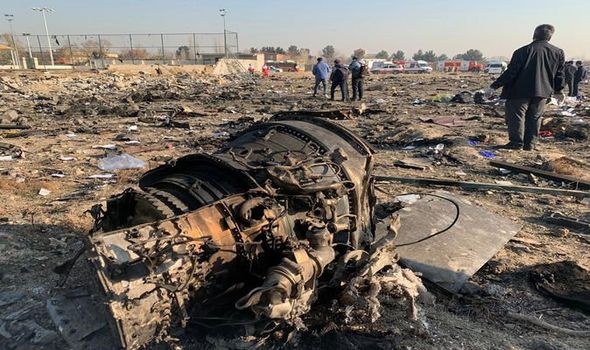
Iran’s civil aviation chief denied Friday that a missile downed a Ukrainian airliner which crashed killing all 176 people on board, rejecting Western claims of a catastrophic mistake by Tehran’s air defences.

The cause of the crash is to be announced Saturday after an investigating committee meeting in the presence of foreign and local parties involved, Iran’s Fars news agency said, quoting an “informed source”.

The report came as Ukraine said its experts had been granted access to the black box flight recorders and as US Secretary of State Mike Pompeo repeated it was “likely” an Iranian missile had downed the plane.

Tehran has been facing mounting international pressure to allow a “credible” investigation into the crash, which several Western governments have blamed on an accidental missile strike.

“One thing is for certain, this airplane was not hit by a missile,” Iran’s civil aviation chief Ali Abedzadeh said, after Tehran invited the US, Ukraine, Canada and others to join the investigation.

The Boeing 737 crashed on Wednesday shortly after Iran launched missiles at US forces in Iraq in response to the killing of top Iranian general Qasem Soleimani in a US drone strike in Baghdad.

It was Iran’s worst civil aviation disaster since 1988 when the US military said it shot down an Iran Air plane over the Gulf by mistake, killing all 290 people on board.

The majority of passengers on Ukraine International Airlines (UIA) Flight PS752 were dual national Iranian-Canadians but also included Ukrainians, Afghans, Britons and Swedes.

Vadym Prystaiko, the foreign minister of Ukraine which has sent around 50 experts to Tehran to take part in the Iran-led inquiry, said Friday: “Our team has now access to the black boxes”.

The experts, he said, also had access to the radio exchanges between the UIA pilots and Tehran air traffic control and were receiving “full cooperation” from Iran.

The Ukraine team, granted access to plane fragments and the crash site, will start analysing the contents of the black boxes, he added.

Pompeo, echoing several world leaders, said “we do believe it’s likely the plane was shot down by an Iranian missile”, adding a final determination would be made after a probe is conducted.

Canada demands answers

Canadian Prime Minister Justin Trudeau said intelligence sources indicated an Iranian surface-to-air missile downed the aircraft after it took off from Tehran.

“We know this may have been unintentional. Canadians have questions, and they deserve answers,” he said.

Abedzadeh rejected the claim. “Any remarks made before the data is extracted (from the plane’s black box flight recorders) … is not an expert opinion,” he said.”

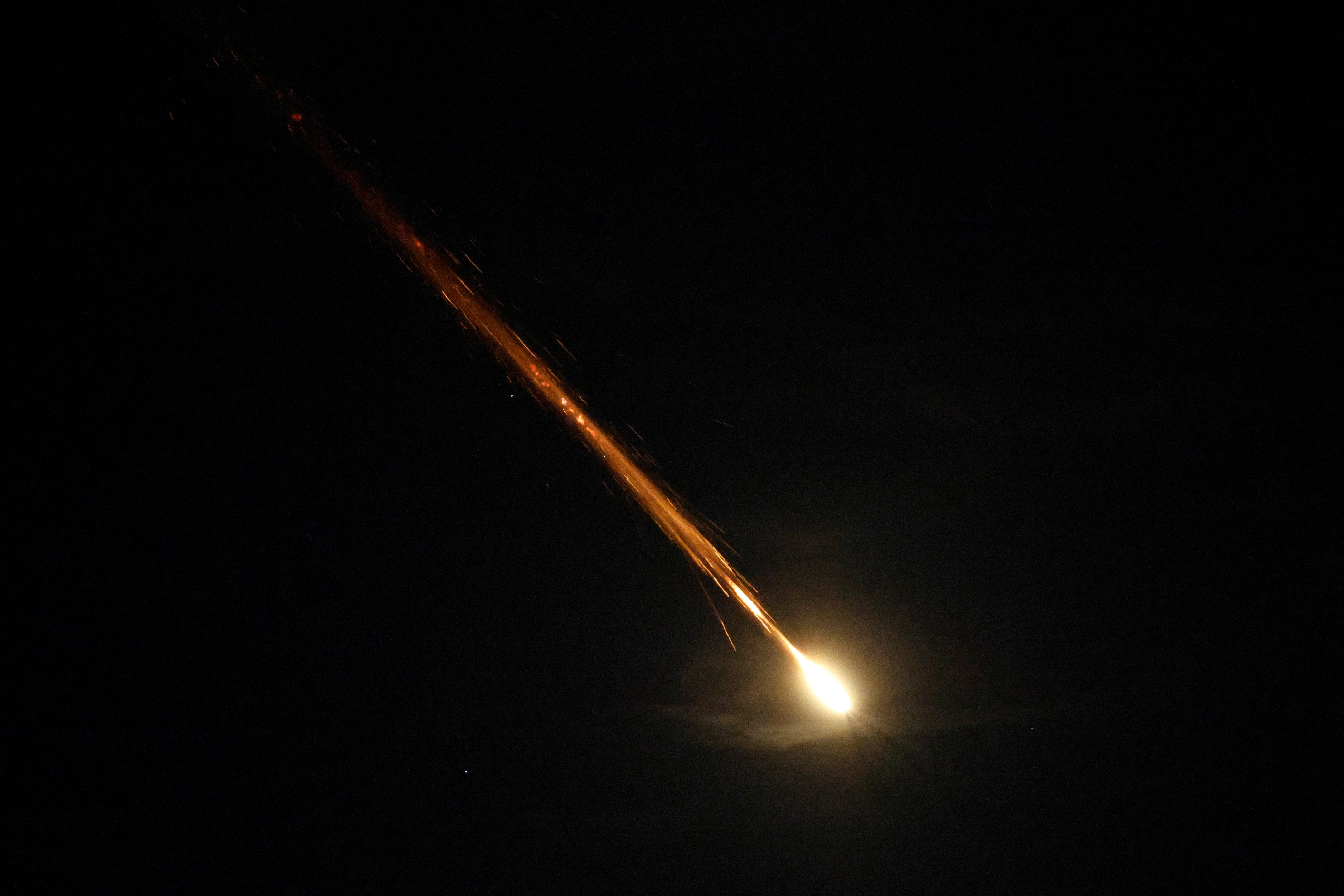
Video footage, which The New York Times said it had verified, emerged and appeared to show the moment the airliner was hit.

A fast-moving object is seen rising at an angle into the sky before a bright flash appears, which dims and then continues moving forward. Several seconds later, an explosion is heard and the sky lit up.

Iran said a 10-member Canadian delegation was on its way to help with the probe, although the two countries cut diplomatic relations in 2012.

The Islamic republic also invited US plane maker Boeing to “participate” in the investigation.

Canada and the US National Transportation Safety Board said they received the invitations and would join the probe.

Abedzadeh said Tehran had invited “Americans, Canadians, the French, Ukrainians and the Swedish” to be present during the investigation.

European Union foreign ministers on Friday urged Iran to be transparent.

“The important thing now is that everything is completely investigated. Nothing must be swept under the table,” German Foreign Minister Heiko Maas said.

US President Donald Trump has indicated that Washington officials believed the Kiev-bound Boeing 737 was struck by an Iranian missile.


Continue Reading
Click to comment

Leave a Reply

Your email address will not be published. Required fields are marked *

World

US Moves to Impose Visa Restrictions on Sponsors, Supporters of Violence in Nigeria

Published

on

By

The United States Department of State on Wednesday announced that it is outlining new measures to address violence against Christians in Nigeria and other countries.

The policy, according to a statement released by the department, targets radical Islamic terrorists, Fulani ethnic militias, and other actors responsible for killings and attacks on religious communities.

“The United States is taking decisive action in response to the mass killings and attacks on Christians carried out by radical Islamic terrorists, Fulani militias, and other violent groups in Nigeria and beyond,” said Secretary of State Marco Rubio in a statement.

According to the statement, a new policy under Section 212(a)(3)(C) of the Immigration and Nationality Act allows the State Department to restrict visas for individuals who have “directed, authorised, significantly supported, participated in, or carried out violations of religious freedom,” and, when appropriate, extend those “restrictions to their immediate family members.”

It stated that, as President Donald Trump made clear, the “United States cannot stand by while such atrocities are happening in Nigeria, and numerous other countries.”
Rubio noted that the visa restrictions could be applied “to Nigeria and any other governments or individuals engaged in violations of religious freedom.”
The announcement followed a briefing by US House Republicans on Tuesday, highlighting rising religious violence in Nigeria.
The session was convened at the direction of President Donald Trump, who instructed the House Appropriations Committee on October 31 to investigate what he described as the slaughter of Christians in the country.

The briefing, led by House Appropriations Vice Chair and National Security Subcommittee Chairman Mario Díaz-Balart, included members of the House Appropriations and House Foreign Affairs Committees, as well as religious freedom experts.

Participants included Representatives Robert Aderholt, Riley Moore, Brian Mast, Chris Smith, US Commission on International Religious Freedom Chair Vicky Hartzler, Alliance Defending Freedom International’s Sean Nelson, and Dr Ebenezer Obadare of the Council on Foreign Relations.

President Bola Tinubu recently approved Nigeria’s delegation to the new US–Nigeria Joint Working Group, formed to implement security agreements from high-level talks in Washington led by National Security Adviser Nuhu Ribadu.

The move follows growing concerns over terrorism, banditry, and targeted attacks on Christians in Nigeria, prompting increased US scrutiny and warnings about the protection of vulnerable faith communities.

On November 20, the US House Subcommittee on Africa opened a public hearing to review Trump’s redesignation of Nigeria as a Country of Particular Concern, placing the country under heightened scrutiny for alleged religious-freedom violations.

Lawmakers examined the potential consequences of the designation, which could pave the way for sanctions against Nigerian officials found complicit in religious persecution.

The Punch

Continue Reading

USA

Alleged Christian Genocide: US Lawmakers Fault Tinubu’s Govt

Published

on

By

United States of America lawmakers have sharply contradicted the Nigerian government’s position on the ongoing massacres in the country, describing the violence as “escalating,” “targeted,” and overwhelmingly directed at Christians during a rare joint congressional briefing on Tuesday.

The closed-door session – convened by House Appropriations, Vice Chair Mario Díaz-Balart, as part of a Trump-ordered investigation – examined recent killings and what Congress calls Abuja’s deeply inadequate” response.

President Trump has asked lawmakers, led by Reps. Riley Moore and Tom Cole, to compile a report on persecution of Nigerian Christians and has even floated the possibility of U.S. military action against Islamist groups responsible for the attacks.

At the briefing, Vicky Hartzler, chair of the U.S. Commission on International Religious Freedom, warned that “religious freedom [is] under siege” in Nigeria, citing mass abductions of schoolchildren and assaults in which radical Muslims kill entire Christian villages [and] burn churches.” She said abuses were rampant” and “violent,” claiming Christians are targeted “at a 2.2 to 1 ratecompared with Muslims.

While acknowledging Nigeria’s recent move to reassign 100,000 police officers from VIP protection, Hartzler said the country is entering a “coordinated and deeply troubling period of escalated violence.” She urged targeted sanctions, visa bans, asset freezes and tighter conditions on U.S. aid, insisting Abuja must retake villages seized from Christian communities so displaced widows and children can return home.

The strongest rebuke came from Dr. Ebenezer Obadare of the Council on Foreign Relations, who dismissed Abuja’s narrative that the killings are not religiously motivated. He called the idea that extremists attack Muslims and Christians equally a “myth,” stressing the groups operate “for one reason and one reason only: religion.” Higher Muslim casualty figures, he argued, reflect geography, not equal targeting.

Obadare described Boko Haram as fundamentally anti-democratic and accused the Nigerian military of being “too corrupt and incompetent” to defeat jihadist networks without external pressure. He urged Washington to push Nigeria to disband armed religious militias, confront security-sector corruption and respond swiftly to early warnings.

Sean Nelson of ADF International called Nigeria “the deadliest country in the world for Christians,” claiming more Christians are killed there than in all other countries combined and at a rate “five times” higher than Muslims when adjusted for population. He said extremists also kill Muslims who reject violent ideologies, undermining Abuja’s argument that the crisis is driven mainly by crime or communal disputes.
He pressed for tighter oversight on U.S. aid, recommending that some assistance be routed through faith-based groups to avoid corruption. Without “transparency and outside pressure,” he said, “nothing changes.”

Díaz-Balart criticised the Biden administration’s reversal of Trump’s designation of Nigeria as a “country of particular concern” in 2021, saying the decision had “clearly deadly consequences.” Lawmakers from the Appropriations, Foreign Affairs and Financial Services committees signaled further oversight actions as they prepare the Trump-directed report.

Hartzler pointed to recent comments by Nigeria’s Speaker of the House acknowledging a “coordinated and deeply troubling period of escalated violence,” calling it a rare moment of candor. She also welcomed the redeployment of police officers as “a promising start after years of neglect.”

But she stressed that these gestures are far from sufficient, insisting the Nigerian government must demonstrate a real commitment to “quell injustice,” act swiftly on early warnings, and embrace transparency.

The Nigerian Embassy did not immediately respond to a request for comment, according to source.

Continue Reading

USA

US Lawmakers Meet Today over Reported Christian Genocide

Published

on

By

The US House of Appropriation Committee will today lead a joint congressional briefing addressing allegations of Christian genocide in Nigeria.

A notice shared on X by US Congressman Riley Moore, shows that the House Appropriations Committee Vice Chair and National Security Sub-committee Chairman Mario Díaz-Balart will convene the briefing, alongside other Appropriators and members of the Foreign Affairs and Financial Services Committees.

The notice notes that representatives from the US Commission on International Religious Freedom and other experts will be part of the meeting.

“President Trump asked me and @HouseAppropsGOP to investigate the persecution of Christians in Nigeria,” he wrote.

Moore said that the briefing aimed “to spotlight the escalating violence and targeted persecution of Christians in Nigeria.”

He added that the roundtable would collect testimony for a comprehensive report directed by President Trump on the alleged massacre of Nigerian Christians and the steps Congress could take to support the White House’s efforts to protect vulnerable faith communities worldwide.

“As part of this investigation, the committee is hosting a roundtable to continue building on the work we’ve done so far. We will never turn a blind eye to our brothers and sisters in Christ who suffer for their faith,” he stated.

The briefing comes as part of US efforts to deepen security cooperation with Nigeria amid allegations of a Christian genocide in the country.

President Bola Tinubu recently cleared Nigeria’s delegation for the new US–Nigeria Joint Working Group, launched to make commitments from high-level talks in Washington, led by the National Security Adviser, Nuhu Ribadu.

The group, made up of top ministers and security officials, seeks to strengthen counterterrorism operations, improve intelligence sharing, bolster border security, and enhance coordination on humanitarian and civilian protection issues.

The initiative comes amid growing concerns over terrorism, banditry, and targeted attacks on Christians in Nigeria, drawing heightened US scrutiny and renewed warnings on safeguarding vulnerable communities.

Trump added Nigeria to countries on watchlist for Christian genocide on October 31.

He referenced alleged grave violations of religious freedom, including the persecution of Christians.

He alleged that Christianity faced an existential threat in Nigeria, with thousands of Christians reportedly killed by radical Islamist groups.

He also warned that the US could take action including the possibility of military intervention if Nigeria failed to address the issue.

Nigeria was first designated a CPC by President Donald Trump in 2020, but his successor, President Joe Biden, removed the country from the list after assuming office.

Continue Reading

Trending