Connect with us

World

Iran Vows Revenge after US Kills Top General in Baghdad Strike

Published

on

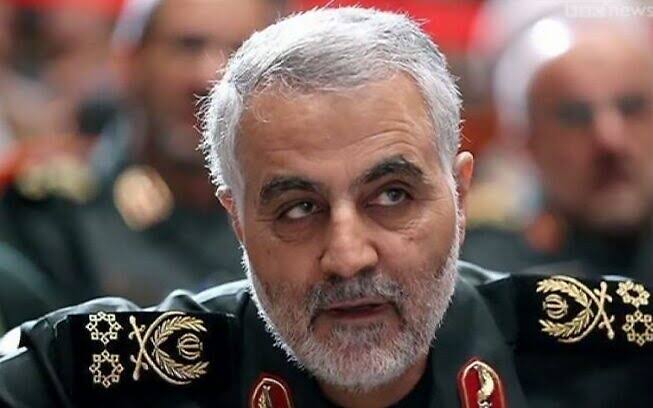
A US strike killed top Iranian commander Qasem Soleimani at Baghdad’s international airport Friday, dramatically heightening regional tensions and prompting arch-enemy Tehran to vow “revenge”.

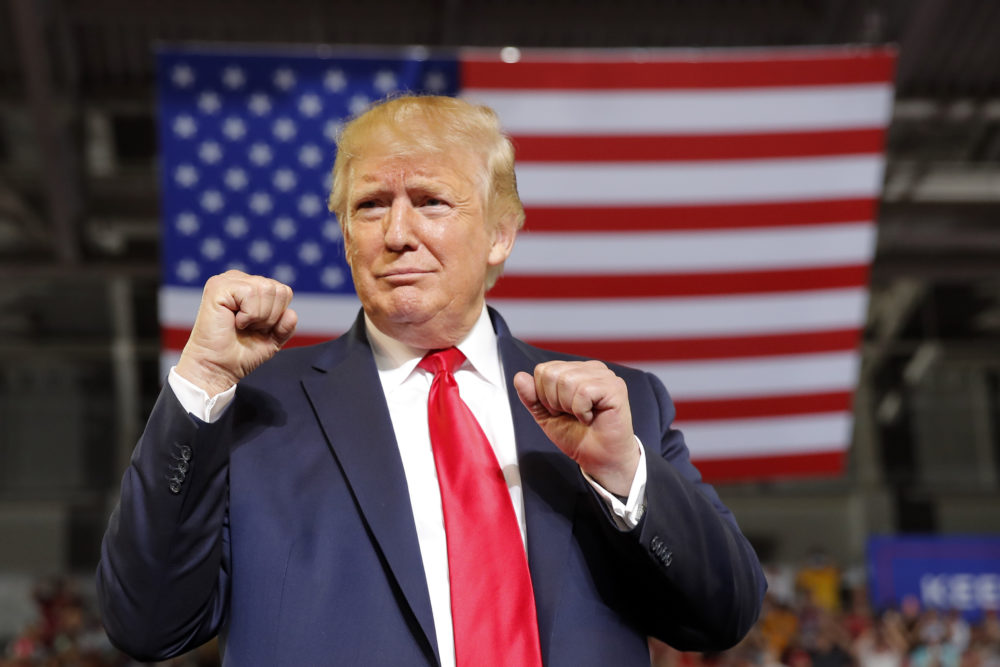
The Pentagon said US President Donald Trump had ordered Soleimani’s “killing” after a pro-Iran mob this week laid siege to the US embassy in the Iraqi capital.

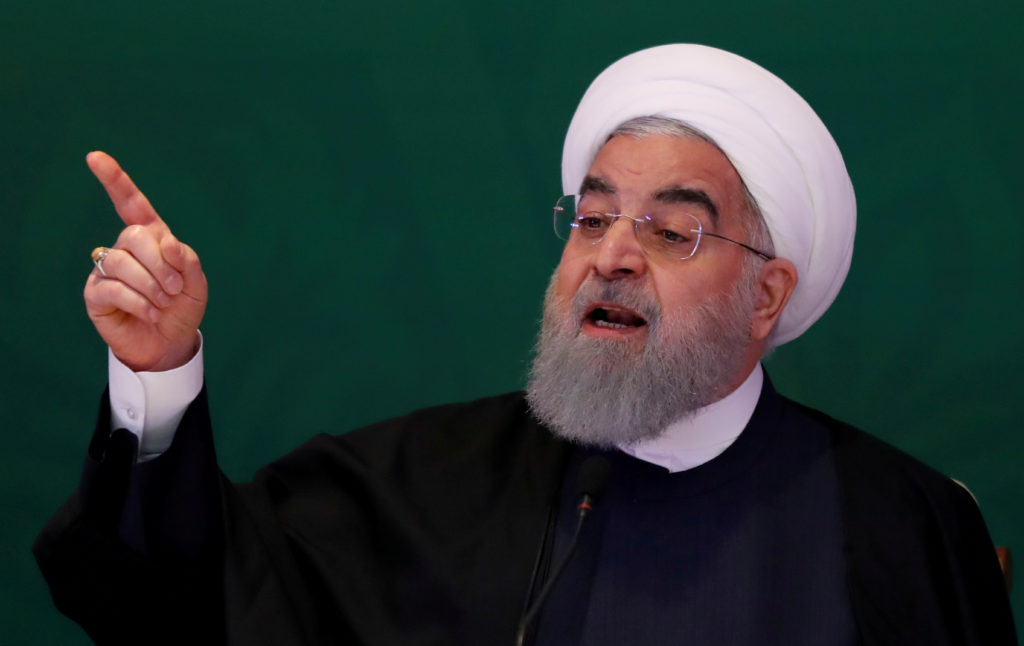
Iran’s supreme leader Ayatollah Ali Khamenei swiftly vowed “severe revenge” for Soleimani’s death, the biggest escalation yet in a feared proxy war between Iran and the US on Iraqi soil.

As the US embassy urged all American citizens to leave Iraq “immediately”, Trump tweeted a picture of the US flag without any explanation.

Early Friday, a volley of missiles hit Baghdad’s international airport, striking a convoy belonging to the Hashed al-Shaabi, an Iraqi paramilitary force with close ties to Iran.

Just a few hours later, Iran’s Revolutionary Guard Corps announced Soleimani “was martyred in an attack by America on Baghdad airport this morning”.

The Hashed confirmed both Soleimani and its deputy chief Abu Mahdi al-Muhandis were killed in what it said was a “US strike that targeted their car on the Baghdad International Airport road”.

The Hashed is a network of mostly Shiite armed units, many of whom have close ties to Tehran but which have been officially incorporated into Iraq’s state security forces.

– ‘Dangerous escalation’ –
Soleimani headed the Islamic Revolutionary Guard Corps’ Quds Force foreign operations arm and also served as Iran’s point man on Iraq, visiting the country in times of turmoil.

Muhandis was the Hashed’s deputy chief but was widely recognised as the real shot-caller within the group.

Both were sanctioned by the United States.

An Iraqi official told AFP that Muhandis had gone to Baghdad airport to pick up Soleimani, “which is something he usually doesn’t do”.

The pair will be buried on Saturday, and Iraq’s parliament is set to hold an emergency meeting on the strike on the same day.

The Pentagon said Soleimani had been “actively developing plans to attack American diplomats and service members in Iraq and throughout the region”.

It said it took “decisive defensive action to protect US personnel abroad by killing Qasem Soleimani,” but did not specify how.

Iran’s Foreign Minister Mohammad Javad Zarif slammed the US strike as “extremely dangerous and a foolish escalation,” as Khamenei declared three days of mourning.

The Iraqi prime minister said the strike was a “flagrant violation” of a security accord with the US, warning it would “spark a devastating war in Iraq”.

A paramilitary group, Asaib Ahl al-Haq, urged its fighters to be on high alert while militiaman-turned-cleric Moqtada Sadr reactivated his Mahdi Army, nearly a decade after dissolving the notoriously anti-American force.

And in Lebanon, the leader of the Tehran-backed Hezbollah group, Hassan Nasrallah, warned of “punishment for these criminal assassins”.

But there were daring celebrations in Baghdad’s Tahrir Square, the epicentre of a three-month-old protest movement that has slammed the Iraqi government as corrupt and beholden to Tehran.

“Oh Qasem Soleimani, this is a divine victory,” demonstrators chanted as some danced in the streets.

– ‘Decapitation strike’ –
Analysts said the strike — which sent world oil prices soaring — would be a game-changer in the tensions between Iran and the US.

“Trump changed the rules -— he wanted (Soleimani) eliminated,” said Ramzy Mardini, a researcher at the US Institute of Peace.

Soleimani “didn’t appreciate that his actions of threatening another hostage crisis at the (US) embassy changed the way things were going to be done,” Mardini said.

Phillip Smyth, a US-based specialist in Shiite armed groups, described the strike as “the most major decapitation strike that the US has ever pulled off”.

He told AFP it would have “bigger” ramifications than the 2011 US operation that killed Al-Qaeda chief Osama bin Laden and the 2019 American raid that killed Islamic State group Abu Bakr al-Baghdadi.

“There is no comparison,” Smyth added.

The developments come after an unprecedented attack on the US mission in Baghdad.

A mob of Hashed supporters surrounded the US embassy on Tuesday angered by American airstrikes that killed 25 fighters from the network’s hardline Kataeb Hezbollah faction, which is backed by Iran.

The US had acted in response to a rocket attack days earlier that had killed an American contractor working in Iraq.

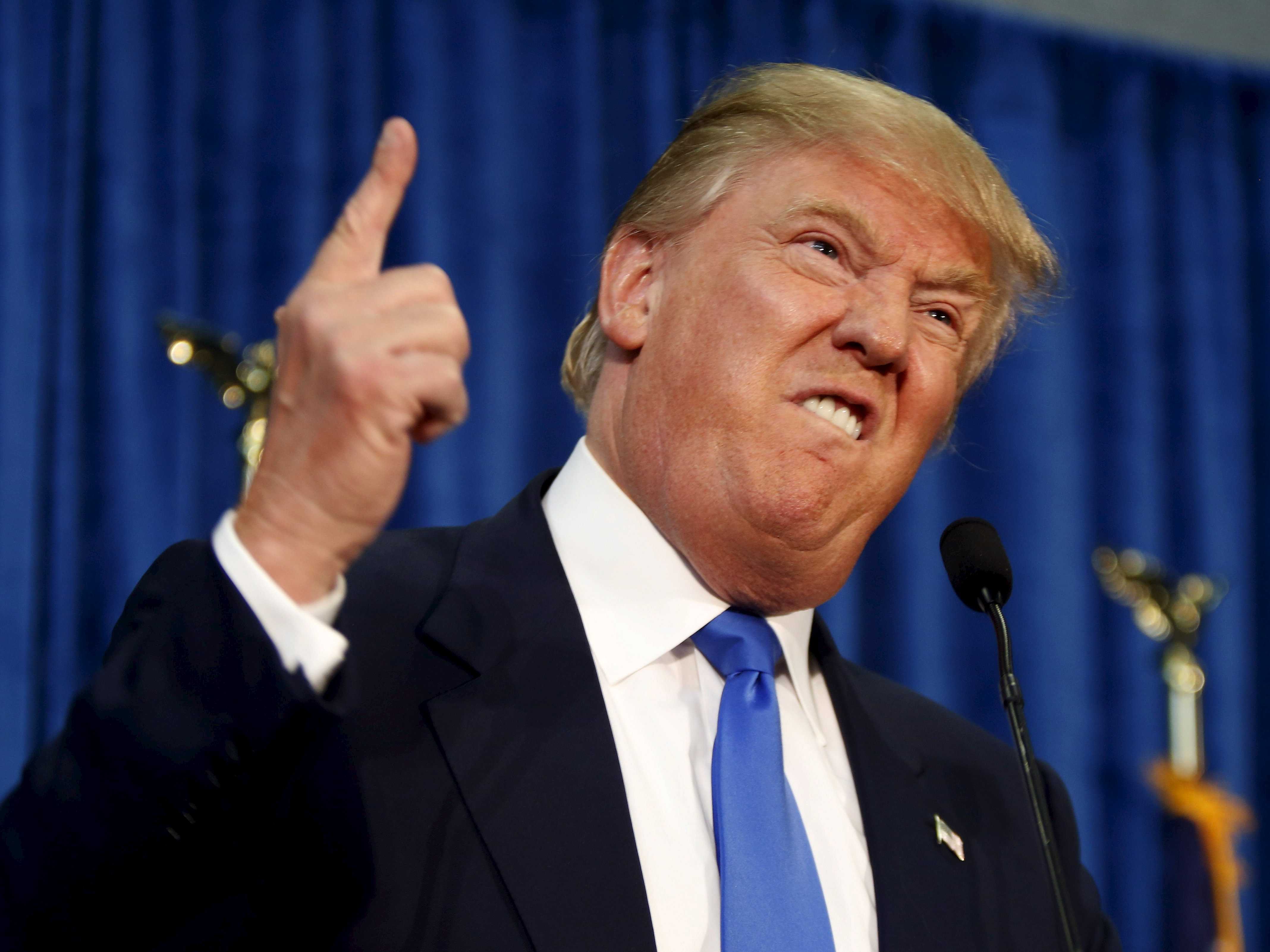
Trump had blamed Iran for a spate of rocket attacks targeting US forces as well as the embassy siege, saying: “They will pay a very BIG PRICE! This is not a Warning, it is a Threat.”

– ‘Dynamite in tinderbox’ –
In the US Congress, which was not told in advance of Friday’s attack, the reaction was split along party lines.

“Wow – the price of killing and injuring Americans has just gone up drastically,” tweeted Republican Senator Lindsey Graham.

Democratic former vice president Joe Biden, his party’s leading contender for the White House, however, warned that Trump had “just tossed a stick of dynamite into a tinderbox”.

Ties between the US and Iran have deteriorated since Washington pulled out of the landmark nuclear deal with Tehran in 2018 and reimposed crippling sanctions.

The United States led the 2003 invasion against then-dictator Saddam Hussein and has worked closely with Iraqi officials since.

But its influence has waned compared with that of Tehran, which has carefully crafted personal ties with Iraqi politicians and armed factions.

(AFP)

Continue Reading
Click to comment

Leave a Reply

Your email address will not be published. Required fields are marked *

World

US Congressman Recounts Harrowing Experience in Nigeria, Confirms ‘Systematic Genocidal Campaign’

Published

on

By

United States Congressman, Riley Moore, has described his recent visit to Nigeria as distressing, recounting harrowing encounters with victims of violent attacks, particularly in the Middle Belt region.

Moore last week led a congressional delegation on a fact-finding visit to Nigeria over killings in the northern part of the country.

The five-member team arrived in Nigeria last Sunday and spent several days in Benue State, meeting internally displaced persons, survivors of attacks, Christian leaders, traditional rulers, and communities affected by violence.

They also held meetings in Abuja with the National Security Adviser, Nuhu Ribadu, and the Attorney General of the Federation, Lateef Fagbemi.

The delegation expected to brief President Donald Trump on their findings before the end of the month.

Speaking in an interview with Fox News, Moore said his trip exposed him to the human cost of insecurity in Nigeria, particularly among vulnerable communities affected by terrorism and communal violence in the North.

The West Virginia lawmaker posted the interview on his X handle on Saturday.

Speaking on his experience, Moore said he met women who had survived brutal assaults that claimed the lives of their families.

He recalled meeting a woman who watched all five of her children murdered in her presence.

“It is really heartbreaking. I met a woman who unfortunately had to witness all five of her children murdered right in front of her. I met another woman in an internally displaced persons camp who lost her husband and her two daughters, and the Fulani Islamic radicals had murdered her unborn child—they took it out of her. She survived that, and they are all living in these IDP camps.

“There is a systematic genocidal campaign by the Fulani Muslim radicals in the Middle Belt of this country to push these Christians off their ancestral land,” he said.

The US lawmaker alleged that the violence in parts of the Middle Belt amounted to a coordinated campaign against Christian communities, claiming they are being driven off their ancestral lands.

“There is a systematic genocidal campaign by the Fulani Muslim radicals in the Middle Belt of this country to push these Christians off their ancestral land,” he reiterated.

Despite the grim accounts, Moore said his delegation held what he described as a positive meeting with the Nigerian government, expressing optimism that concrete steps could follow.

“We did have a positive meeting with the Nigerian government. There are positive things coming out of that government that I think will put us on a path toward a strategic security framework and a cooperative agreement to start addressing these issues,” he said.

Moore added that the protection of Christians facing violence remained a top concern for both him and the US President, noting the broader security challenges posed by terrorist groups in other parts of the country.

“First and foremost, my concern, and the President’s concern, is for these Christians, our brothers and sisters who are being slaughtered,” he said. “But there is also the terrorist threat in the North East from Boko Haram and ISIS, who are responsible for the unwanted deaths of Christians, non-Christians, and Muslims alike,” he added.

The Congressman described Nigeria’s security crisis as multi-layered, stressing the need for a comprehensive approach that addresses both terrorism in the North East and what he termed persecution in the Middle Belt.

“The problem is two-tier, and we have to address this Christian persecution and genocide that is happening in the Middle Belt of this country,” he said.

Source: The Punch

Continue Reading

Africa

Nigerian Soldiers Still Trapped in Burkina Faso – Foreign Affairs Minister

Published

on

By

The Minister of Foreign Affairs, Yusuf Tuggar, says the Nigerian soldiers who were on an aircraft that made a forced landing in Burkina Faso are still in trapped in that country.

Tuggar made this disclosure during a press briefing with his Beninese counterpart, Olushegun Bakari, on Thursday at the ECOWAS Commission in Abuja.

The Confederation of Sahel States (AES), on Monday, accused an aircraft carrying 11 Nigerian soldiers of violating Burkinabe airspace.

AES is a breakaway West African regional union made up of Burkina Faso, Mali and Niger Republic.

The Mali junta leader, Assimi Goita, described the landing as an unfriendly act carried out in defiance of international law.

The AES said it authorised its member states to neutralise any aircraft violating its airspace.

The development came at the same time Nigerian troops carried out air strikes in Benin to help foil a coup.

Commenting on the situation, the Nigerian Air Force, NAF, said the C-130 aircraft was on a ferry mission to Portugal.

Continue Reading

Africa

Leader of Failed Benin Republic Coup Reportedly Seeks Refuge in Togo

Published

on

By

The leader of a failed coup in Benin Republic, Colonel Tigri Pascal, has reportedly sought refuge in neighbouring Togo.

Soldiers briefly took control of Benin’s State television station on Sunday morning and claimed they had deposed President Patrice Talon, though Benin’s armed forces, backed by Nigerian firepower and French intelligence and logistical support, thwarted the attempt.

The soldiers identified Colonel Pascal as the coup leader, while his whereabouts had previously been unknown.

However, a senior Benin government official told Reuters on Wednesday that the soldier is in Togo.

The government, however, called for Pascal’s immediate extradition.

Togo’s foreign ministry did not immediately respond to a request for comment.

A Benin government statement on Monday said coup plotters attempted to seize Talon, and came close enough for the president to witness violent clashes first-hand.

The statement added that they also managed to kidnap two senior military officials who were released on Monday morning.

A Benin Republic government’s spokesperson, Wilfried Leandre Houngbedji, said on Sunday that 14 people had been arrested in connection with the coup attempt.

Reuters

Continue Reading

Go back

Your message has been sent

Warning
Warning
Warning
Warning

Trending