Connect with us

Featured

Police to Secure Boko Haram War Zones, as FG Plans Withdrawal of Military

Published

on

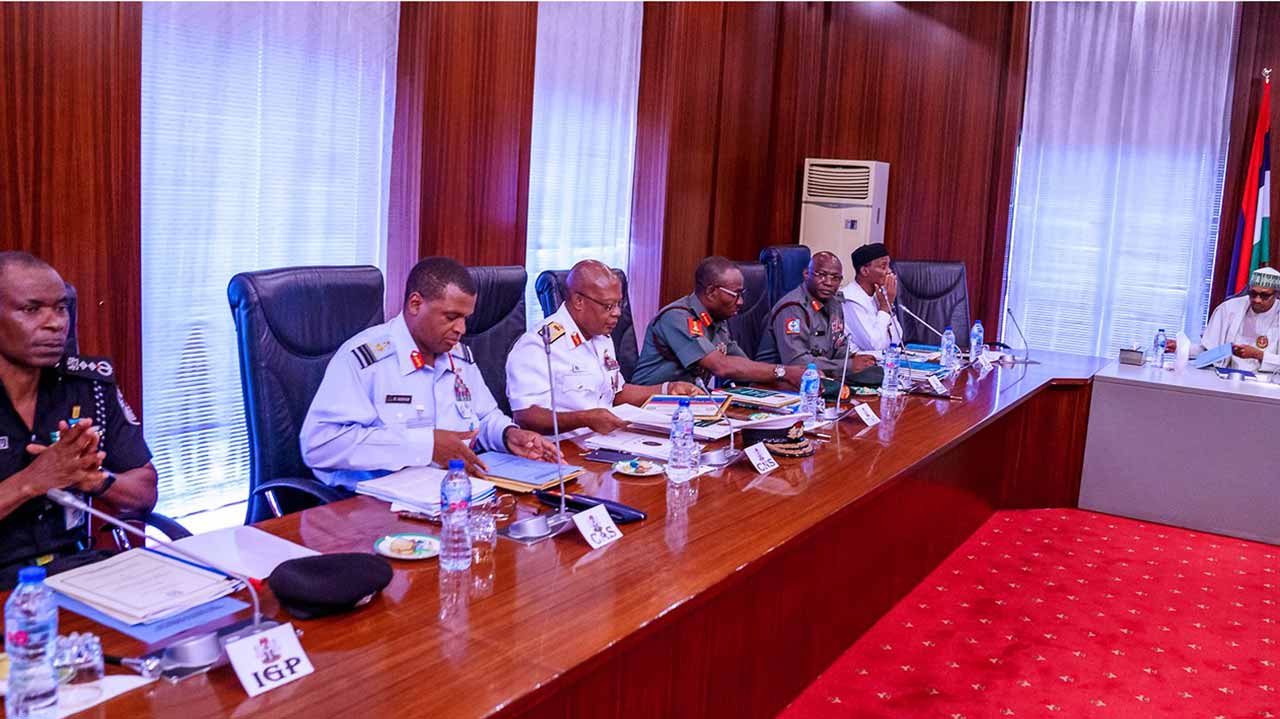
The Federal Government on Monday said it would pull the military out of hotspots in the country in 2020 and hand over security operations in those areas to the police.

The Chief of Naval Staff, Admiral Ibok-Ete Ibas, disclosed this following a security meeting chaired by President Muhammadu Buhari at the Presidential Villa, Abuja.

In attendance were: Minister of Defence Bashir Magashi; Chief of Defence Staff Abayomi Olonisakin; Chief of Air Staff Sadique Abubakar; Inspector General of Police Mohammed Adamu; Director General of the Department of State Services Yusuf Bichi; Secretary to the Government of the Federation Boss Mustapha; and National Security Adviser Babagana Monguno. A senior officer represented Chief of Army Staff Lt. General Tukur Buratai.

Briefing State House correspondents after the closed-door session, Ekwe-Ibas said: “In the circumstance that the military has to come in to stabilise the situation, it is only proper that once one area has been dominated by the military and the situation has returned to normal, the Nigerian police take over the responsibility. And in this instance, we also have the civil defence corps, which is supposed to support the police in this regard.”

He recalled: “Mr. President recently approved the recruitment of about 10,000 Nigerians into the Nigeria Police Force, hoping that once these get the appropriate training, they will be in a position to fill the gaps. You are aware that Nigeria is such a big country that we cannot tie down the military even in those areas that the deliverables have been achieved and the objectives achieved.”

On whether the northeast ravaged by Boko Haram insurgents was safe for a military withdrawal and consequent police deployment, the naval chief said the Federal Government was set to deploy more resources to the police so that they could fulfill their responsibilities.

He explained: “I better make it very clear that an assessment of what the military will do will be based on the situation on ground. It is not expected that the military will withdraw when it is apparent that there are still some threats in such locations. I’m sure we are also aware that the nation is procuring equipment for the military.

“It is expected that before the second quarter of next year, most of the equipment shall be in place.

It therefore means that all our hands are on ground, looking at technology-backed surveillance that will enable the military to react more efficiently and effectively.

“It is also believed that the police will take the lead in containing insecurity in such areas. I don’t believe that a responsible military will want to withdraw when it is apparent that there is still risk that cannot be overcome by the police.”

The naval chief disclosed further that security agencies repelled over 27 attacks by Boko Haram in the northeast within two weeks. According to him, the military, alongside other regional partners, is doing all in its power to ensure that the menace of the Islamic State West Africa Province (ISWAP) is contained.

“With respect to operations within the country, it was generally agreed and noted that the security agencies have done their very best in ensuring that the deliverables are made clear,” he said.

He noted: “Mr. President has directed that the council and the members of armed forces ensure a peaceful society in 2020. To that effect, we are more than determined to continue from where we stopped in 2019 and to ensure that we sustain our various operations, to ensure a secure Nigeria for all of us.”

On maritime security, Ekwe-Ibas disclosed that a lot had been achieved in the protection of the nation’s maritime environment. “The outcome of the operations there have seen to the arrest of about six vessels that were involved in stealing of the nation’s maritime resources,” he added.

Meanwhile, a retired director of the Department of State Services (DSS), Dennis Amachree, expressed optimism that the decision could free up the military, helping it to focus on the insurgency in the northeast.

“The president and the service chiefs have finally agreed to what security experts have been proposing. This move is definitely going to curb the excesses of some soldiers in the country and restrict them to their statutory mandate of protecting Nigeria from external aggression,” he said.

He hoped that the police “have been given all the support in training and technology to effectively enforce the law and reduce crime.” The security expert added: “I believe the government is taking the state of insecurity very seriously. With this new plan, I hope the military will now concentrate and bring this insurgency to an end.”

The Guardian

Continue Reading
Click to comment

Leave a Reply

Your email address will not be published. Required fields are marked *

Featured

Akume Leads Nigeria’s Delegation to Jesse Jackson’s Funeral in US

Published

on

By

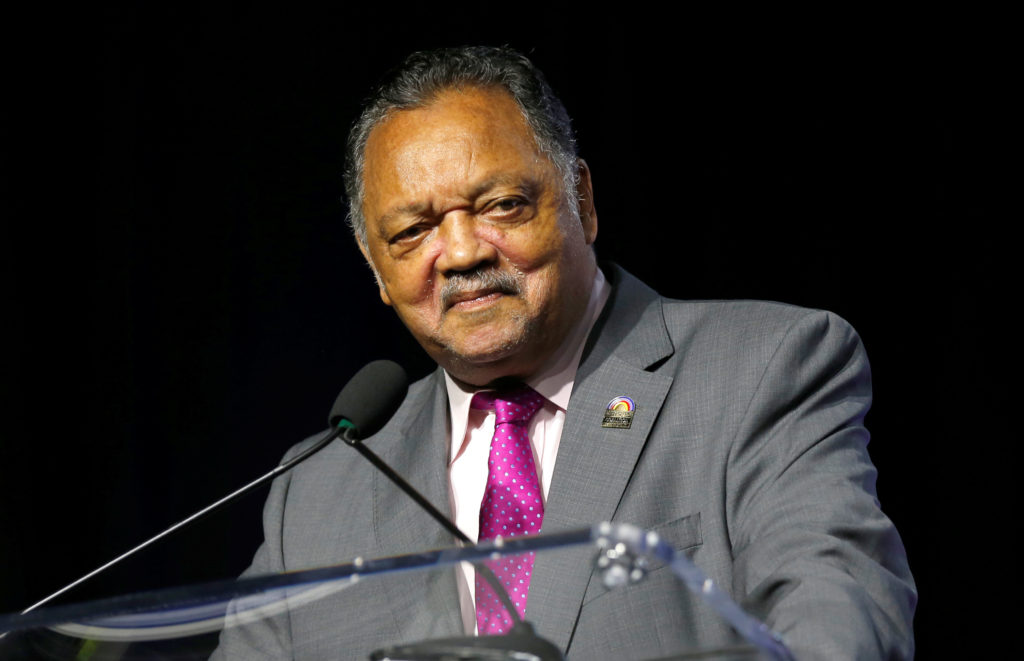
President Bola Tinubu has approved a five-person delegation to represent Nigeria at the final burial rites of Rev. Jesse Jackson, the American civil rights leader, activist and former presidential candidate who died at age 84 on February 17, 2026, in Chicago.

Senator George Akume, Secretary to the Government of the Federation, is the leader of the delegation, according to a press statement from the Presidency on Wednesday.

Other members are the Minister of State for Foreign Affairs, Bianca Odumegwu-Ojukwu; Minister of Arts, Culture and Creative Economy, Hannatu Musawa; the Special Presidential Envoy for Global and Pan-African Affairs, Brian Browne; and the Senior Special Assistant, Foreign Affairs and International Relations, Ambassador Sola Enikanolaye.

The delegation will deliver President Tinubu’s message of condolences to the Jackson family.

In an earlier tribute, President Tinubu described Reverend Jackson as a great friend of Nigeria and Africa.

“He was a moral voice and a formidable resistance to apartheid in South Africa. He played a leading role in the campaign for the release from prison of Nelson Mandela and other African National Congress leaders. He won critical support for sanctions against the then apartheid government,” President Tinubu wrote.

Continue Reading

Featured

Tinubu Nominates Oyedele As Minister of State for Finance, Moves Anite-Uzoka to Budget Ministry
Published

on

By

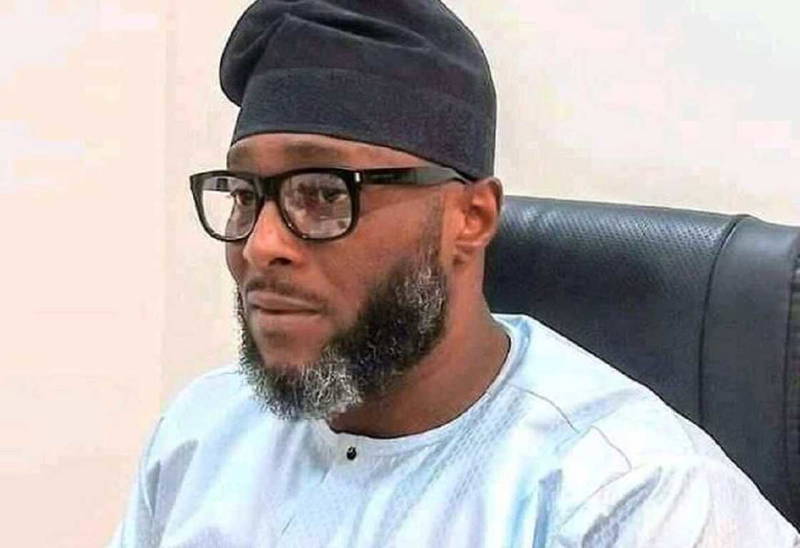
A statement signed by the Special Adviser to the President on Information and Strategy Bayo Onanuga, has announced that “President Bola Tinubu has nominated Taiwo Oyedele as the minister of state for finance, replacing Doris Anite-Uzoka.

“Mrs Anite-Uzoka will now move to the Ministry of Budget and National Planning, as the Minister of State, her third portfolio in the administration.

“President Tinubu has today conveyed the nomination of Mr Oyedele to the Senate for confirmation in a letter to the Senate President, Godswill Akpabio.

“Until President Tinubu nominated him as a minister, Mr Oyedele from Ikaram, Akoko, Ondo State, was the chairman of the Presidential Committee on Fiscal Policy and Tax Reforms, which overhauled Nigeria’s tax system.

“Mr Oyedele, 50, is an economist, accountant and public policy expert.

“He attended Yaba College of Technology, where he obtained a Higher National Diploma (HND) in accountancy and finance. He attended Oxford Brookes University and earned a BSc in applied accounting.

“He also completed executive education programmes at the London School of Economics, Yale University, the Gordon Institute of Business Science, and the Harvard Kennedy School.

“Mr Oyedele spent 22 years of his working career at PwC, joining in 2001 and rising to become the Fiscal Policy Partner and Africa Tax Leader.

“Mr Oyedele is also a professor at Babcock University in Ogun State and a visiting scholar at the Lagos Business School.”

Continue Reading

Featured

Defection: Atiku’s Son, Adamu, Resigns As Adamawa Commissioner

Published

on

By

Adamu Abubakar, the first son of former Vice-President Atiku Abubakar, has resigned as Adamawa State’s commissioner for works and energy development, days after Governor Ahmadu Fintiri defected from the Peoples Democratic Party to the All Progressives Congress.

Abubakar’s resignation letter, dated 2 March 2026, was addressed to the governor through the Secretary to the State Government. He gave no reason for his departure.

The timing is pointed. Fintiri announced his defection to the APC in a statewide broadcast last Friday, saying his cabinet and the PDP’s state structure had moved with him. Within 24 hours, 22 commissioners and special advisers publicly announced they were following suit. Abubakar, whose father remains one of the PDP’s most prominent national figures, was not among them.

In a statement issued Monday night, Abubakar’s media aide Abdulaziz Jauro said the former commissioner thanked the governor for the opportunity to serve and pledged continued loyalty to the administration’s developmental agenda. He also expressed gratitude to his father “for granting him the moral support and blessing to serve the people of Adamawa State” — a line that, read in context, suggests Atiku was consulted on the decision.

Abubakar said his resignation was not a withdrawal from public life. “This does not mark the end of his commitment to public service,” the statement read, “but rather the beginning of new avenues for developmental collaboration.”

The resignation leaves unresolved the question of whether it reflects a political break with the governor over his defection or a personal decision unconnected to the broader party realignment now reshaping Adamawa’s political landscape.

Continue Reading

Trending