Connect with us

Headline

Nigeria Still as Corrupt as Before, Says Transparency International

Published

on

Nigeria is still perceived as a country deep in corruption without clear policies to address the menace, Transparency International said on Tuesday.

The anti-corruption campaigner released its 2018 Corruptions Perceptions Index (CPI) Tuesday, finding Nigeria has “neither improved nor progressed in the perception of corruption in the public administration in 2018.”

The Civil Society Legislative Advocacy Centre (CISLAC), Transparency International Chapter in Nigeria, said in a Tuesday morning statement to PREMIUM TIMES that “Nigeria scored 27 out of 100 points in the 2018 CPI, maintaining the same score as in the 2017 CPI.”

In the country comparison, Nigeria ranks 144 out of 180 countries this year as opposed to 148 out of 180 countries in the 2017 CPI, the group added. Nigeria is thus still perceived as highly corrupt, and although the ranking shows that Nigeria moved up four (4) places, it only means that four other countries have scored worse while Nigeria stagnated.

The Corruption Perceptions Index (CPI) aggregates data from a number of different sources that provide perceptions by the business community and country experts of the level of corruption in the public sector.

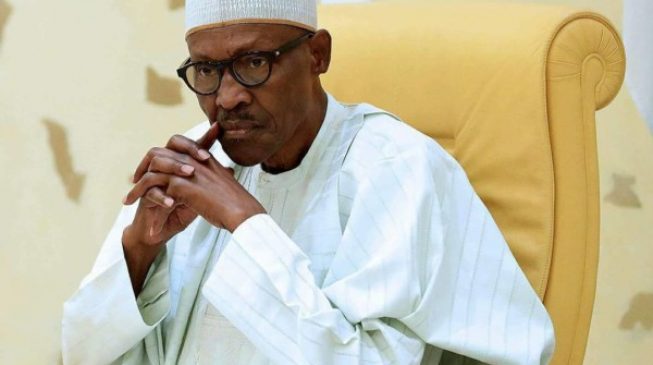
The report may receive another knock from the Nigerian government, which often castigated past reports of the organisation. President Muhammadu Buhari dismissed the 2017 findings of Transparency International, suggesting that the group’s findings were politically-motivated to deface his administration.

The president said his administration has done creditably well in stamping out corruption in the country, especially through its much publicised anti-corruption drive that has seen several politicians associated with the last administration of Goodluck Jonathan arrested.

Vice President Yemi Osinbajo, however, took a different approach to the 2017 report, which was released in February 2018, saying the government had taken it in good faith and would work to improve on its corruption perception by adopting some of the recommendations.

Transparency International, however, rejected allegations of bias in compiling its report, saying it follows strict aggregation standards which had earned it tremendous credibility amongst countries across the world in its 25 years.

In the case of Nigeria, the composite score consists of sources which include:

1. African Development Bank Perception Survey,

2. Bertelsmann Foundation Transformation Index,

3. Economist Intelligence Unit Country Ratings,

4. PRS International Country Risk Guide,

5. World Bank Corruption Perception Assessment,

6. the World Economic Forum Executive Opinion Survey;

7. World Justice Project Rule of Law Index and

8. Varieties of Democracy Project.

“All are impartial, well-respected, statistically significant and evidence-based sources,” the group said.

Transparency International in its 2017 report identified public procurement fraud as constituting a large chunk of corruption in public service and recommended immediate constitution of public procurement council as one of the ways to address the menace.

Some top administration officials responded by promising to establish the council promptly as recommended by the Public Procurement Act 2007. Over a year on, however, the council has not been constituted, and procurement remained enmeshed in suspected fraud.

Transparency International’s Nigerian arm, CISLAC, strongly believed that eliminating corruption from public service would propel Nigeria’s economic standing amongst the rest of the world.

In its latest statement, CISLAC repeated some of its past antidotes for corruption as follows:

– Strengthening the institutions responsible for maintaining checks and balances over political power, and ensuring their ability to operate without intimidation.

– Closing the implementation gap between anti-corruption legislation, practice and enforcement.

– Supporting civil society organisations which enhance political engagement and public oversight over government spending, particularly at the state and local level.

– Supporting a free and independent media, ensuring the safety of journalists and their ability to work without intimidation or harassment.

Premium Times

Continue Reading
Click to comment

Leave a Reply

Your email address will not be published. Required fields are marked *

Headline

Defence Gulps Lion Share As Tinubu Presents N58.47trn 2026 Budget to NASS

Published

on

By

President Bola Tinubu has presented a budget of N58.47 trillion for the 2026 fiscal year to a joint session of the National Assembly, with capital recurrent (non‑debt) expenditure standing at N15.25 trillion.

Tinubu presented the budget on Friday, pegging the capital expenditure at N26.08 trillion and putting the crude oil benchmark at US$64.85 per barrel.

He said the expected total revenue is N34.33 trillion, projected total expenditure: N58.18 trillion, including N15.52 trillion for debt servicing. The budget is N23.85 trillion, representing 4.28% of GDP.

The budget was anchored on a crude oil production of 1.84 million barrels per day, and an exchange rate of N1,400 to the US Dollar for the 2026 fiscal year.

In terms of sectoral allocation, defence and security took the lion’s share with N 5.41 trillion, followed by infrastructure at N3.56 trillion.

Continue Reading

Headline

Mike Adenuga, Emmanuel Macron Hold High-Powered Meeting in Paris

Published

on

By

Accomplished billionaire businessman and Commander of the French Légion d’Honneur, Dr. Mike Adenuga Jr., GCON, CdrLH, has held a private meeting with the French President, Emmanuel Macron.

The two powerful citizens of the world held the meeting on Wednesday at the historic Élysée Palace in Paris.

The high-level engagement underscores the longstanding relationship between Dr. Adenuga and the French Republic, as well as his continued relevance in global business and diplomatic circles. 

A respected industrialist and philanthropist, Adenuga has been widely acknowledged for his contributions to economic development, telecommunications, energy, and humanitarian causes across Africa and beyond.

The meeting adds to Dr. Adenuga’s growing profile as a bridge between African enterprise and international leadership.

Continue Reading

Headline

Free at Last: Burkina Faso Releases 11 Nigerian Soldiers, Aircraft

Published

on

By

Burkina Faso has released Nigerian soldiers who were detained after their aircraft made a forced landing in the Sahelian country earlier this month, Nigerian officials said.

The release followed a diplomatic intervention by President Bola Tinubu, who dispatched a high-level delegation led by the Minister of Foreign Affairs, Yusuf Tuggar, to meet Burkina Faso’s Military Leader, Ibrahim Traoré, on Wednesday.

In a statement, Alkasim Abdulkadir, Tuggar’s spokesperson, said both sides resolved the matter amicably and secured the release of the Nigerian Air Force pilots and crew.

The soldiers had been held for nearly two weeks after the Confederation of Sahel States (AES) described the aircraft’s landing as an “unfriendly act” carried out in defiance of international law.

The Nigerian Air Force, however, said the crew encountered a technical issue that required a precautionary landing in Bobo-Dioulasso, the nearest available airfield. It said the landing complied with standard safety procedures and international aviation protocols.

Continue Reading

Trending