Connect with us

Opinion

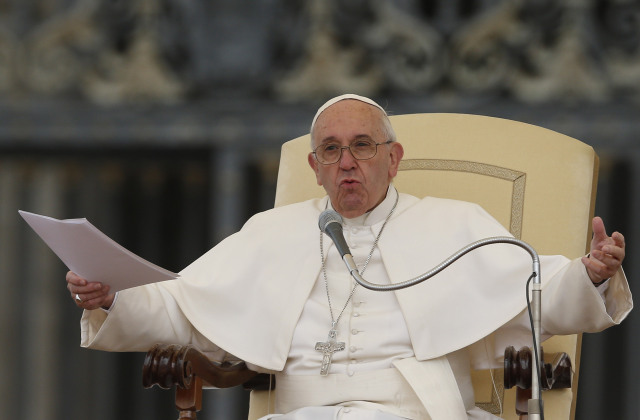
Opinion: Pope Francis, Celibacy and the Church

Published

on

By Nkannebe Raymond

The foundations of the Roman Catholic Church currently curated by the 81 year old Pope Francis is once again, struggling to recover from what has become a familiar tremor. With the findings of a Pennsylvania grand jury last month which in a 900 page report indicted over 300 predator Catholic bishops in the state of serial abuse of some 1000 children in a systematic and organized orgy of abuse that spanned a whopping seven decades, the liberal Pope of “Laudato si” fame, is stewed in his own share of clerical abuse that has worryingly become a recurrent feature of nearly, all papal administrations. Tucked to that, is the pontiff’s alleged conspiracy of silence over the cardinal Theodore MCcarick affair which leaves him battling to redeem himself in what would arguably go down as the greatest controversy of his papacy.

A fortnight ago, during an official visit to Dublin, the first of such papal visit to the city since after John Paul II in 1979, the soft spoken Argentine at a public mass found himself apologizing to the lay Catholics there for the decade long wider clerical sex abuse from Boston to Philadelphia to Dublin and elsewhere. Dublin, the capital of Ireland has been a hot spot of sexual abuse, exploitation of women and pedophile priests. And while over 100,000 lay Catholics lined up the streets to welcome the Pope,  protesters and those who have long distanced themselves from Catholicism also made statements of their disaffection with the church with visible placards.

Three months ago, the Pope accepted the resignation of a Chilean Bishop- Juan Barros whom he had staunchly defended earlier in the year despite weighty allegations of cover up of clerical abuse under his watch- a move that would force the pontiff to tender a public apology to the Chilean Catholic community saying he made “grave mistake” by originally defending Bishop Barros.

Barros was among 34 Chillean Bishops who offered to resign in May this year after Pope Francis said the country’s religious hierarchy was collectively responsible for “grave defects” in handling sexual abuse cases and the church’s resulting loss of credibility, following a 2,300 page report that showed that the Catholic hierarchy in Chile systemically covered up and downplayed cases of abuse, destroyed evidence of sexual crimes, discredited accusers and showed “grave negligence” by not protecting the children from paedophile priests.

The isolated case of 88 year old cardinal Theodore McCarick who until his resignation in July, (the first of such resignation of a cardinal since 1927), was already the highest ranking US priest, sticks out like the proverbial sore thumb; and has hightened calls for the pope’s resignation by his conservative critics against the fine traditions of canon law.

Theodore McCarick resigned late July following the findings of the grand jury in Pennsylvania 2 months ago. Until his shameful resignation, McCarick was a parish priest in New York, from where he rose to become an auxiliary Bishop in the city, and then rising to become a Bishop in Metuchen, New Jersey. He was then promoted steadily, first as archbishop of Newark, and later ascending to become archbishop of Washington DC. He left his Washington post on reaching the mandatory retirement age of 75 according to canon law, but remained a vocal voice in the Catholic church and a member of the prestigious college of cardinals which advises the Pope.

In what continues to puzzle pundits and commentators alike, McCarrck’s rise in the Church hierarchy was despite ceaseless allegations and petitions written against him. A state of affairs that feed the conclusion of those who strongly believe that the octopoidal Catholic church has become a cesspit of corruption. Little wonder Pope Francis was once reported to have equated reforming the church, with  “cleaning the sphinx of Egypt with a toothbrush”.

The New York Times on the 16th of July  reported that the cardinal was repeatedly accused of sexually harassing and inappropriate touching of adult seminary students who were in training to become priests. It was told that he often invited seminarians and young priests to his New Jersey beach house and chose one man to share his bed.

The relationship between Pope Francis and disgraced cardinal McCarrick has in no small measure increased the yoke of Pope Francis.  Having influenced his emergence following the conclave of cardinals five years ago, Pope Francis must have found himself unable to rule McCarick and thus allowed him the leeway to do as he pleased. It is said that McCarrick influenced top appointments in the Vatican and even single handedly appointed his successor, cardinal Donald Wuerl who also has come under intense suspicion as part of those running the abuse cult within the Church. It is this atmosphere that must have informed Francis’ refusal to heed the advise of those who warned him about getting too close to McCarrick following allegations of sexual abuse and cover up that became synonyms with his person. Having met his Waterloo with the Pennsylvanian reports, not a few persons have called for the resignation of the Pope for what they termed a “condonnation of corrupt behaviour”.

At the forefront of the calls for the resignation of the Pope is top Vatican diplomat, Archbishop Carlo Mario Vigano, who in a damnifying 11 page testimonial charged that the Church’s leader had been aware of the allegations against McCarrick since 2013 but failed to act on them.

In the words of the conservative cleric who by the way, is no fan of Pope Francis,…” he knew from at least 23 June, 2013 that McCarrick was a serial predator. Although he knew that he was a corrupt man, he covered for him to the bitter end. Indeed he made McCarrick’s advice his own, which was certainly not inspired by sound intensions and for love of the Church. It was only when he was forced by the report of the abuse of 2 minors, again on the basis of media attention that he took action regarding McCarrick to save his image in the media”. In calling for the resignation of the Holy See, the cardinal enthused, ” Pope Francis must be the first to set a good example for cardinals and Bishops who covered up McCarrck’s abuse and resign along with them…”

Now, for all the weighty allegations raised in Vigano’s “95 theses” of sorts, which  he said he was forced to write in order to unburden his conscience, the reaction of the fairly outspoken Pope to them,  is one of silence. On his flight back from Ireland, the embattled Holy Father reluctantly responded to Vigano’s testimonials by declaring, “I will not say a single word on this”.

A silence which critics say has not been golden at all given the size of revelations with the full complements of annexures, in Vigano’s letter.

The orgy of clerical abuse that has dogged the Roman Catholic Church since the turn of the 20th century, but with renewed vigour in the last three decades, has become the proverbial albatross around the neck of the Church. And only time would tell if it would eventually become it’s Achilles Heels. The situation is rather complicated by the attitude of a Church that has become an expert in brushing scandals under the carpet and taking sides with its own, as against victims of clerical sexual abuse and molestation. A reenactment of this clerical attitude was recently seen in the disposition of Pope Francis in the case of Bishop Barros, before his mea culpa six months after he was confronted with incontrovertible evidence of the Chilean Bishop’s complicity.

16 years ago, a dark cloud gathered over the Catholic Church when the famous Boston Globe revealed the wide spread wrongdoings in the then Archdiocese of Boston following an investigation that led to the criminal prosecution of Five Roman Catholic Priests. That incident would for the first time thrust the sexual abuse of minors by the clergy into global consciousness. Not a few million dollars was was spent by the Church in the settlement of claims brought by victims of the abuse.

It is not that clerical abuse of minors is a crime peculiar to the American Church. Not at all.  Several dioceses across Europe have also had their fair of the social menace that continue to detract from the Catholic Church’s moral authority. For example in 2010, allegations of sexual abuse spread like wildfire across a half dozen countries namely Austria, Germany, Netherlands, Spain, Switzerland and Brazil-home of the world’s largest Catholic population.

Whereas Africa has not been put on the global map as a destination of clerical abuse, there is nothing suggesting that it is not to be found in the African Church. The stigma associated with coming out in the open to speak of these things may still be the reason why it has continued to fester unnoticeably for now. As a young seminarian in Zaria, Kaduna state, not a few of my colleagues and seniors alike, were caught indulging in homosexual conducts. While some were expelled by the authorities at the time, others who were absolved of any complicity but who continued in the practice graduated and are Priests today in various dioceses. It is therefore hard to argue that they have not continued in their homosexual escapedes knowing how difficult it is to drop old habits. But that is the limit one would go on that, as far as this piece is concerned.

As I have pointed out before now, what appears to be very troubling in all these, is the tendency of the Church to live in a hurtful denial by taking to  an endless defence of its own instead of confronting her demons headlong. It is this attitude that must have helped in no small measure to embolden the sexual predatory elements within the church heirrachy. And which also leaves victims of sexual abuse to live and die with the stigma of abuse knowing  before hand  that the church would discredit their petitions in order to save it’s face. Or how else does one explain a situation where elements within the church fingered to be complicit in the sexual abuse  of minors continue  to rise in the church hierarchy?

It is against this backdrop however that the latest reaction of the Pope following the recent scandal that has rocked the church merits some commendation when contrasted to the corporate Vatican reactions to clerical abuse in the past. At a recent ordination of Bishops conducted by the Holy See, he charged some 75 Bishops hailing from 34 countries of Africa, Asia, Latin America and Oceania to “just say no to abuse-of power, conscience or any type”. “saying no to abuse”, the pontiff said, “means saying no with force to every form of clericalism”.

Yet, it would be foolhardy to suggest that mere admonistions  would operate to upend what has almost become an unwritten tradition of the church. This somewhat skeptical position is reinforced by the testimony of Raman Martin, the most senior Roman Catholic figure in Ireland who told The Guardian Uk last month, that abuse was “a systemic issue for the whole church. This is not an isolated issue of 2 bad priests in a particular school or parish. This is an issue where the whole culture of our church wrongly facilitated abuse”. This  testimony of the cleric given how much information available to him as a senior member of the Church in Dublin, should give us a picture of what the church is up against. Hence why mere admonitions would be akin to the proverbial slap in the wrist therapy.

Not a few critics of the Roman Catholic Church and even senior members of the Church hierarchy have called for a review of the canon law which would see priests reserve the right to either be celibate or take spouses as with other Christians denominations to the extent that sexual gratification appears to be at the core of predatory clerical behaviour. But celibacy, like Nigeria’s unity, as we are often told, is not negotiable in the Church’s eschatology, at least since the canons of the Elvira Council of the 4th Century made it so.

The position of the Catholic church on celibacy for it’s Priests draws inspiration from both scripture and canon traditions. In St. Paul’s letter to the Ephesians as recorded in the book of Ephesians 5: 25-27, the Church was described as the bride of Christ; and in so far as the Latinism: Sacerdotal alter Christus, goes, the priest must remain the Church’s bridegroom in consonance with the teachings of Paul, the apostle.  As to be a priest, is to be ‘wedded’ to the Church, there cannot be a question therefore of another marriage for prelates in its most popular sense.

Beyond that, since canon law nominates that the priest is a personification of Christ, it necessarily follows that as Christ lived and died celibate in so far as one can gather from recorded scripture, the priest is invited to live in like manner. With the above biblical and canonical origins of clerical incontinence; howbeit in précis, one tends to get a picture of why the Catholic Church is not given to brook any idea of shifting it’s much criticized position on sexuality and marriage for her priests. A tradition which needless to say remains arguably the most distinctive feature of the prelates of the oldest church on the face of the earth.

But for celibacy to make any scriptural sense, it must come with its moral component on the part of the clergy who entertain the choice of enlisting for the royal priesthood of Christ. If the prelates of the Roman Catholic Church must bask in the euphoria of being Christ’s representatives on earth, the irreducible minimum conduct required of them, would be to live as Christ and the apostles lived. And by this, it is not inferred that the priests must live a life of pure holiness, as scripture makes us appreciate the impossibility of that.  But as it relates to total abstinence from sex of all kinds, that should not be open to any debate.

By no means is it suggested that total abstinence from sex is a walk in the park as man continues to struggle with the the lures of the flesh however ascetic they may be. It was Sigmund Freud who it in proper perspective when he observed that “sex is every man’s weakness irrespective of how prudent or puritanical they may be”. Yet, no one says the call to the royal priesthood is an all-comers-affair. The more reason why those who commit to it, must live by it’s base ethical behavioural standards or risk being defrocked.

But where does all of these leave Pope Francis as the head of the church at a very tempestuous era of her history? I do not think that is too far to seek. Beyond the admonitions to members of the clergy to shun all forms of abuse, the Pope must hasten to react to the weighty allegations in Vigano’s letter for two reasons to wit:  to make concessions where necessary, and to controvert parts of it that may have veered off into hyperbole. This would serve to limit how much of it is relied upon in the court of public opinion  to cast opporobium on the Church. Beyond that, it would set the stage for a healing process of the church assuming it is committed to wiping off this ugly chapter in her history.

The test for Francis therefore who in many respect has changed the negative perception of the church abroad through his liberal posturings in his interventions on controversial subjects namely: climate change; communion for divorced and remarried Catholics; abortion and homosexulity;  is whether he can set the all important first foot in front by moving from angling to save the image of the church and tardy acceptance of resignations to actively rooting out abuse and cover ups through an institutionalised network that would cut across the whole spectrum of the Church irrespective of where this corrupt behaviour is found.

There are no pretensions that this would be an easy one for the Pope, but how he handles this particular scandal would make or mar his papal reign.

Nkannebe Raymond writes from Lagos. Comments and reactions to raymondnkannebe@gmail.com

Continue Reading
Click to comment

Leave a Reply

Your email address will not be published. Required fields are marked *

Opinion

The Synergy Imperative: Integrating Transformative Leadership and Strategic Management for Africa’s Ascent

Published

on

By

By Tolulope A. Adegoke, PhD

“The bridge from Africa’s potential to its preeminence is built with the twin pillars of visionary leadership, which dares to imagine the impossible, and disciplined management, which masters the possible” – Tolulope A. Adegoke, PhD

Africa’s journey from a continent brimming with untapped potential to a unified global powerhouse is arguably the defining narrative of our century. This transformation, however, hinges on a critical catalyst: a new paradigm of leadership. To dismantle the persistent architecture of poverty and transcend the historical cycle of mediocrity, African nations require more than administrators; they need visionary architects and master builders. This necessitates a powerful fusion of transformative leadership—which sets the daring direction—and strategic, execution-focused management—which paves the road to get there. The synergy between these two forces is non-negotiable for unlocking the innovative capacity needed to deliver tangible possibilities for Africa’s people, its dynamic corporations, and its sovereign nations.

I. The Essence of Transformative Leadership: Architecting a New Continental Consciousness

True transformative leadership moves beyond maintaining the status quo. It is an audacious practice of reimagining futures, challenging deeply embedded narratives, and mobilizing collective will toward a shared, audacious horizon.

1.      Crafting a Unifying and Aspirational Narrative: The transformative leader’s first task is to be a master storyteller for the future. This involves articulating a vision that moves past diagnoses of poverty to paint a vivid, compelling picture of continental success—a Africa renowned for its innovation, quality, and strategic influence. This narrative must replace a mindset of scarcity with one of boundless opportunity, fostering a new identity where “Made in Africa” signifies excellence, reliability, and cutting-edge solutions. It is about making the idea of a continental giant not a distant dream, but an inevitable destination in the public imagination.

2.      Demonstrating Unshakeable Ethical Fortitude: The battle against mediocrity is fundamentally a battle for integrity. Transformative leaders must embody and enforce an ironclad commitment to governance that is transparent, accountable, and institutionally robust. This requires the political courage to depersonalize state institutions, empowering independent judiciary, audit authorities, and anti-corruption commissions not just on paper but in practice. By becoming the chief guardian of institutional integrity, a leader builds the essential currency of trust—without which long-term investment and social cohesion are impossible.

3.      Championing Radical Inclusivity: No single entity holds a monopoly on innovative ideas. Transformative leaders actively dismantle top-down governance silos to create participatory ecosystems. They facilitate sustained dialogues that bring together the pragmatic insights of the private sector, the grassroots realities understood by civil society, the foresight of academia, and the voices of marginalized communities. This inclusive approach does more than improve policy; it fosters a profound sense of collective ownership over the continent’s destiny, building a resilient coalition for sustained change.

II. The Discipline of Strategic Management: Building the Engine of Execution

A vision without a rigorous mechanism for implementation remains a mere hallucination. Transformative leadership must be operationalized through management systems characterized by precision, adaptability, and results.

1.      Engineering a Performance-Obsessed Public Sector: The public administration must be fundamentally redesigned into a lean, data-driven delivery machine. This demands:

o    Integrated Outcome Frameworks: Adopting systems like the Balanced Scorecard to cascade the national vision into clear departmental objectives, measurable Key Performance Indicators (KPIs), and individual accountability metrics for civil servants.

o    Evidence-Based Policy Orchestration: Investing in robust data analytics units and real-time monitoring dashboards. Resource allocation and program adjustments must be driven by hard evidence of what works, moving policymaking from political intuition to strategic science.

o    Relentless Process Innovation: Launching comprehensive digital governance initiatives to automate and streamline bureaucratic processes—from business licensing to customs clearance. This eliminates friction, reduces opportunities for graft, and dramatically improves the user experience for citizens and investors alike.

2.      Cultivating Dynamic Innovation Ecosystems: Management’s role is to create the fertile ground where creativity and enterprise can flourish. This is a deliberate, managerial function:

o    Establishing Agile Policy Laboratories: Creating regulatory sandboxes in key sectors like fintech, renewable energy, and logistics allows startups to test breakthrough ideas in a controlled environment with temporary regulatory relief, fostering innovation without compromising systemic stability.

o    Orchestrating Strategic Alliances: Building structured platforms for public-private-research collaboration. Government can de-risk pioneering R&D in areas like vaccine manufacturing or artificial intelligence for agriculture, with clear pathways for commercialization led by the private sector and fueled by academic research.

o    Safeguarding Intellectual Creation: Modernizing and rigorously enforcing intellectual property regimes managed by efficient, trustworthy institutions. This protects African innovators, attracts R&D investment, and ensures that breakthroughs conceived on the continent yield prosperity for its people.

3.      Mastering Capital: Human and Financial:

o    Strategic Human Capital Development: Aligning national education and vocational training curricula with the future skills demanded by the continental transformation agenda requires active management through a permanent skills council, ensuring a seamless pipeline of talent for the industries of tomorrow.

o    Pioneering Financial Architecture: Beyond domestic revenue mobilization, management excellence is key to structuring and accessing innovative finance. This includes developing bankable project pipelines for green bonds, diaspora investment instruments, and blended finance models to fund the massive infrastructure required for integration, all while maintaining impeccable sovereign debt management.

III. The Tangible Dividend: Delivering Expanded Possibilities for All

The ultimate metric for this leadership-management model is the tangible impact on the ground.

·         For Africa’s Citizens: The outcome is expanded human agency and dignity. This manifests as access to meaningful, future-oriented employment; quality, affordable healthcare and education delivered efficiently; and social protections that empower rather than create dependency. Citizens experience a state that is a capable partner in their aspirations.

·         For Africa’s Enterprises: The outcome is a predictable, enabling, and competitive operating environment. Corporations and entrepreneurs benefit from reliable infrastructure, seamless administrative processes, access to capital, and a fair, transparent market. This enables them to scale, innovate, and compete confidently on regional and global stages.

·         For Africa’s Nations and Continental Body: The outcome is sovereign capability and collective strategic influence. Individually, nations evolve into resilient, adaptive economies. Collectively, a strategically managed and integrated Africa transforms into a formidable negotiating bloc, capable of shaping global rules on trade, climate, and digital governance, and moving from being a subject of global dynamics to a definitive shaper of the world order.

Conclusion: The Imperative of Synergy

The path from poverty to preeminence is paved by the dual forces of transformative leadership and strategic management. Leaders must provide the spark of vision, the moral compass, and the political will to embark on an audacious journey. The management apparatus must provide the meticulous map, the engine, and the metrics to navigate it successfully. When these elements align in harmony—when the architect’s dream is matched by the engineer’s precision—Africa will ignite a self-sustaining cycle of innovation, inclusive growth, and shared prosperity. This is the pathway that turns the latent potential within its people, the ambition of its corporations, and the sovereignty of its nations into a manifested reality. It is how the continent will cease to be perpetually “rising” and will firmly stand, a realized giant, shaping the century ahead.

Dr. Tolulope Adeseye Adegoke is a distinguished scholar-practitioner specializing in the intersection of African security, governance, strategic leadership and effective management. His expertise is built on a robust academic foundation—with a PhD, MA, and BA in History and International Studies focused on West African conflicts, terrorism, and regional diplomacy—complemented by high-level professional credentials as a Distinguished Fellow Certified Management Consultant and a Fellow Certified Human Resource Management Professional.

Continue Reading

Opinion

A Marriage That Changed History: Celebrating Mobolaji and Dele Momodu at 33

Published

on

By

By Dr. Sani Sa’idu Baba

Some marriages are sustained by time, a few are tested by trials, but only the rarest are forged by destiny and proven by history. The union of Chief Dele Momodu and Chief Mobolaji Aderamaja Momodu belongs firmly in this extraordinary class, a marriage where love speaks with courage, partnership walks with purpose, and devotion quietly reshapes lives and legacies.

As Chief Dele and his remarkable wife Mobolaji Momodu mark 33 years of marital union, I am compelled to pause, not just to celebrate longevity, but to honour a love story that has survived trials, triumphed over tyranny, and blossomed into a partnership that continues to inspire generations.

I have always known them as love birds. It is almost impossible to engage Chief Dele Momodu in any meaningful conversation without the affectionate and respectful mention of his wife. He speaks of her not as an appendage to his success, but as its backbone, his confidant, his compass, and proudly, his “prayer warrior.” That alone speaks volumes in a world where gratitude within marriage is often whispered, if acknowledged at all.

Chief Mobolaji is kindness personified. Whenever I am privileged to be their guest whether at their warm Ikoyi home in Lagos or at public functions, her concern is constant and sincere. She will not sit comfortably until she is certain that everyone around her, especially her guests, is fine. That gentle strength, that instinctive compassion, defines her essence.

Yet, beyond her kindness lies courage. History will forever remember one defining moment on 25th July 1995 during the dark, oppressive days of General Sani Abacha’s dictatorship, a very heart-touching story. Strange, faceless men had come looking for Dele Momodu at their home. At the time, he was away in Ogun State. Without hesitation, His wife Mobolaji immediately sensed the danger coming when she suspected that those men could have been Abacha’s attack dogs. Highly cerebral young woman she was, she acted smartly by sneaking to trace the road the knew her husband was likely following to come back home. Luckily enough, she stopped him and raised the alarm. That single, decisive action changed the course of history.

Dele Momodu had already tasted detention for his pro-democracy stance where he was detained in Alagbon close. Now, he was being hunted again, this time in connection with the underground Radio Freedom, later renamed Radio Kudirat, in honour of the murdered activist Kudirat Abiola. Acting swiftly on his wife’s intuition and bravery, he disguised himself as a farmer and fled through the Seme border into Cotonou, Benin Republic. That escape marked the beginning of a three years exile in London, but also the preservation of a voice Nigeria could not afford to lose. That moment was not just the act of a wife, it was the intervention of destiny, executed through love.

In making that daring escape, Dele Momodu paid an enormous personal price. He left behind his only child in the care of his devoted wife and also his elderly mother in Ile-Ife, stepping into the uncertainty of exile with nothing but faith, conviction, and hope. That three years journey away from home would later prove transformative, culminating in the birth of Ovation International Magazine in London in April 1996, a global brand that would redefine African storytelling and project Nigerian excellence to the world. How Ovation emanated from Momodu’s rare bravery and risk taking is a another interesting story for another day.

Chief Dele Momodu has often shared that his earliest ambition was simple: to become a teacher, marry a teacher, and live happily thereafter . Fate, however, had grander plans. Their story began during their university days at the University of Ife (now Obafemi Awolowo University), where Dele earned a degree in Yoruba in 1982 and later a Master’s degree in English Literature in 1988. From humble beginnings in Ile-Ife, they embarked on a journey that would take them across mountains and valleys.

On their 30th wedding anniversary, Chief Dele Momodu described his wife as a “combination of brains and beauty”, a woman with whom he has “climbed mountains and descended valleys together.” Few statements capture the depth of partnership more profoundly.

Their marriage in December 1992, graciously bankrolled by the late Chief Moshood Kashimawo Olawale Abiola, Dele Momodu’s adopted father was not merely a union of two souls, but the convergence of purpose, principle, and providence.

After 33 years today, their union stands as a testament to what marriage should be: friendship strengthened by faith, love fortified by sacrifice, and partnership tested, and proven by history.

Beyond the public milestones and historic moments lies a quieter but equally profound achievement, the family they built together. Blessed with four sons whom I refer to as “the Momodu’s 4 effects”, Chief Dele Momodu and Chief Mobolaji Momodu have raised a generation that reflects the values of discipline, faith, and excellence that define their home.

As they celebrate this remarkable milestone, Nigeria celebrates with them. Their story reminds us that behind every courageous man is often a discerning, fearless woman, and behind every lasting marriage is mutual respect, unwavering loyalty, and shared vision.

Happy 33rd Wedding Anniversary to Chief Dele Momodu and Chief Mobolaji Aderamaja Momodu, a couple whose love did not merely survive time, but shaped it.

May the years ahead be gentler, brighter, and filled with the same grace that has defined the journey so far, in good health, wealth, happiness, fulfillment and massive blessings.

Dr Baba writes from Kano, and can be reached via drssbaba@yahoo.com

Continue Reading

Opinion

Rebuilding the Pillars: A Comprehensive Blueprint for Overcoming Nigeria’s Leadership Deficit

Published

on

By

By Tolulope A. Adegoke, PhD

Systemic governance reform as the critical foundation for unlocking sustainable development and restoring national promise. “Nations are not built on resources, but on systems. Nigeria’s future rests not on changing leaders, but on transforming the very structures that create them” – Tolulope A. Adegoke, PhD

Introduction: The Leadership Imperative

Nigeria, often described as the “Giant of Africa,” stands at a pivotal moment in its historical trajectory. Possessing unparalleled human capital, vast natural resources, and a dynamic, youthful population, the nation’s potential remains paradoxically constrained by deeply embedded structural deficiencies within its leadership architecture. These systemic flaws—evident across political, corporate, and civic institutions—have created profound cracks that undermine public trust, stifle economic innovation, and impede the delivery of fundamental social goods. This leadership deficit is not merely a political inconvenience; it is the central bottleneck to national progress.

Addressing this challenge requires moving beyond cyclical criticism of individuals and towards a deliberate, strategic reconstruction of the systems that produce, empower, and hold leaders accountable. This blog post presents a holistic, actionable blueprint designed to seal these cracks permanently. It offers a pathway to cultivate a leadership ecosystem that is transparent, accountable, performance-driven, and ethically grounded, thereby delivering tangible possibilities for Nigeria’s people, empowering its corporate sector, and restoring its stature on the global stage.

Section 1: Diagnosing the Structural Cracks—A Multilayered Analysis

A precise diagnosis is essential for effective treatment. Nigeria’s leadership challenges are multifaceted and mutually reinforcing, stemming from three core structural failures.

1. The Governance Architecture Failure

The current system suffers from a fundamental contradiction: a hyper-centralized federal model that stifles local innovation and accountability. Critical institutions, including the Independent National Electoral Commission (INEC), the judiciary, and the civil service, frequently operate with compromised autonomy, inadequate technical capacity, and vulnerability to political interference. Furthermore, the intended checks and balances among the executive, legislative, and judicial branches have weakened, creating avenues for impunity and concentrated power that deviate from democratic principles.

2. The Leadership Pipeline Collapse

The mechanisms for recruiting and developing leaders are fundamentally broken. Political party structures too often prioritize patronage, loyalty, and financial muscle over competence, vision, and ethical fortitude. There exists no systematic, nationwide program for identifying, nurturing, and mentoring successive generations of public servants. This results in a recurring leadership vacuum and a deficiency of cognitive diversity at decision-making tables, limiting the range of solutions for national challenges.

3. The Integrity Infrastructure Erosion

Perhaps the most damaging crack is the erosion of public trust, fueled by opacity and impunity. Decision-making processes and public resource allocations are frequently shrouded in secrecy, while accountability mechanisms are rendered ineffective. The consistent weakness in enforcing ethical codes across sectors has allowed a culture of corruption to persist, which acts as a regressive tax on development, scuttles investor confidence, and demoralizes the citizenry.

Section 2: A Tripartite Framework for Sustainable Transformation

Lasting reform necessitates concurrent, mutually reinforcing interventions across three interconnected pillars.

Pillar I: Constitutional and Institutional Reformation

Implementing True Cooperative Federalism: It is imperative to undertake a constitutional review that clearly delineates responsibilities and revenue-generating authorities among federal, state, and local governments. This empowers subnational entities to become laboratories of development, tailored to local contexts, while fostering healthy competition in providing public services. Fiscal autonomy must be matched with enhanced capacity-building initiatives at the state and local government levels.

Fortifying Independent Institutions: Key democratic institutions require constitutional protection from executive and legislative overreach. This includes guaranteeing transparent, first-line funding from the Consolidated Revenue Fund and establishing rigorous, meritocratic panels for appointing their leadership. Strengthening bodies like the Code of Conduct Bureau and the Public Complaints Commission is equally vital.

Professionalizing the Political Space: Electoral reform must introduce systems like ranked-choice voting to encourage more issue-based, inclusive campaigning. Legislation should mandate demonstrable internal democracy within political parties, including transparent primaries and audited financial disclosures, to reduce the capture of parties by narrow interests.

Pillar II: Cultivating a Leadership Development Ecosystem

Establishing a Premier National School of Governance (NSG): Modeled on institutions like the Lee Kuan Yew School of Public Policy, a Nigerian NSG would serve as the apex institution for executive leadership training. Attendance for all senior civil servants, political appointees, and legislators should be mandatory, with curricula focused on strategic public administration, ethical leadership, complex project management, and national policy analysis.

Catalyzing a Corporate Governance Revolution: The Securities and Exchange Commission (SEC) and the Corporate Affairs Commission (CAC) must enforce stricter codes requiring diverse, independent, and technically competent boards. The private sector should be incentivized—through tax credits or preferential procurement status—to establish leadership fellowship programs that place high-potential private-sector executives into public sector roles for fixed terms, fostering cross-pollination of skills and perspectives.

Instituting a Presidential Leadership Fellowship (PLF): This highly selective, merit-based program would identify Nigeria’s most promising young talents (aged 25-35) from all fields—technology, agriculture, law, the arts—and place them in intensive two-year rotations across critical government agencies, private sector giants, and civil society organizations. This creates a nurtured cohort of future leaders with a national network and a deep understanding of systemic interconnections.

Pillar III: Architecting Robust Accountability & Performance Systems

Deploying a Digital Transparency Platform: A mandatory, open-access National Integrated Governance Portal (NIGP) should display in real-time the status, budget, and contractor details of every major public project. Strategic use of blockchain technology can create immutable records for procurement contracts and resource distribution, significantly reducing opportunities for diversion.

Empowering Oversight and Consequence: Anti-corruption agencies require not only independence but also enhanced forensic capacity and international collaboration. Performance tracking must extend to the judiciary and legislature; publishing annual scorecards on case clearance rates, legislative productivity, and constituency impact can drive public accountability.

Embedding a Culture of Results: All government ministries, departments, and agencies (MDAs) must operate under a National Key Results Framework (NKRF). This performance contract system would define clear, measurable quarterly deliverables tied to national development plans. Autonomy and discretionary funding should be increased for MDAs that consistently meet targets, while underperformance triggers mandatory restructuring and leadership review.

Section 3: The Indispensable Cultural Reorientation

Technocratic fixes will fail without a parallel cultural shift that venerates service and integrity.

Embedding Ethics from Foundation: A redesigned national curriculum, from primary through tertiary education, must integrate civic ethics, critical thinking, and Nigeria’s constitutional history to build an informed citizenry that values good governance.

Launching a “Service Nation” Campaign: A sustained, multi-platform national campaign, developed in partnership with respected cultural, religious, and traditional institutions, should celebrate role models of ethical leadership and reframe public service as the nation’s highest calling.

Enacting Ironclad Whistleblower Protections: Comprehensive legislation must be passed to protect whistleblowers from all forms of retaliation, including provisions for anonymous reporting, physical protection, and financial rewards, aligning with global best practices to encourage exposure of malfeasance.


Section 4: A Practical, Phased Implementation Roadmap (2025-2035)

Phase 1: The Foundation Phase (Years 1-3)

Convene a National Constitutional Dialogue involving all tiers of government, civil society, and professional bodies.

·      Establish the Nigerian School of Governance (NSG) and inaugurate the first cohort of the Presidential Leadership Fellowship (PLF).

·      Pilot the National Integrated Governance Portal (NIGP) in the Ministries of Health, Education, and Works.

Phase 2: The Integration & Scaling Phase (Years 4-7)

·      Enact and begin implementation of the new constitutional framework on fiscal federalism.

·      Graduate the first NSG cohorts and embed training as a prerequisite for promotions.

·      Roll out the NKRF performance contracts across all federal MDAs and willing pilot states.

Phase 3: The Consolidation & Maturation Phase (Years 8-12)

·      Conduct a comprehensive national review, assessing improvements in governance indices, citizen trust metrics, and economic competitiveness.

·      Establish Nigeria as a regional hub for leadership training, offering NSG programmes to other African nations.

·      Institutionalize a self-sustaining cycle where performance culture and ethical leadership are the unquestioned norms.

Conclusion: Forging a New Path of Leadership

The task of sealing the cracks in Nigeria’s leadership foundation is undeniably monumental, yet it is the most critical work of this generation. It demands a departure from transactional politics and short-term thinking toward a covenant of nation-building. The integrated blueprint outlined here—combining institutional redesign, leadership cultivation, technological accountability, and cultural renewal—provides a viable pathway.

This is not a call for perfection, but for systematic progress. By committing to this journey, Nigeria can transform its governance from its greatest liability into its most powerful asset. The outcome will be a nation where trust is restored, innovation flourishes, and every citizen has a fair opportunity to thrive. The resources, the intellect, and the spirit exist within Nigeria; it is now a matter of courageously building the structures to set them free.

Dr. Tolulope Adeseye Adegoke is a distinguished scholar-practitioner specializing in the intersection of African security, governance, and strategic leadership. His expertise is built on a robust academic foundation—with a PhD, MA, and BA in History and International Studies focused on West African conflicts, terrorism, and regional diplomacy—complemented by high-level professional credentials as a Distinguished Fellow Certified Management Consultant and a Fellow Certified Human Resource Management Professional.

A recognized thought leader, he is a Distinguished Ambassador for World Peace (AMBP-UN) and has been honoured with the African Leadership Par Excellence Award (2024) and the Nigerian Role Models Award (2024), alongside inclusion in the prestigious national compendium “Nigeria @65: Leaders of Distinction.”

Dr. Adegoke’s unique value lies in synthesizing deep historical analysis with practical management frameworks to diagnose systemic institutional failures and design actionable reforms. His work is dedicated to advancing ethical governance, strategic human capital development, and sustainable nation-building in Africa and the globe. He can be reached via: tolulopeadegoke01@gmail.com  & globalstageimpacts@gmail.com

Continue Reading

Trending