Connect with us

Voice of Emancipation

Voice of Emancipation: Yoruba Stay on Your Lane

Published

on

By Kayode Emola

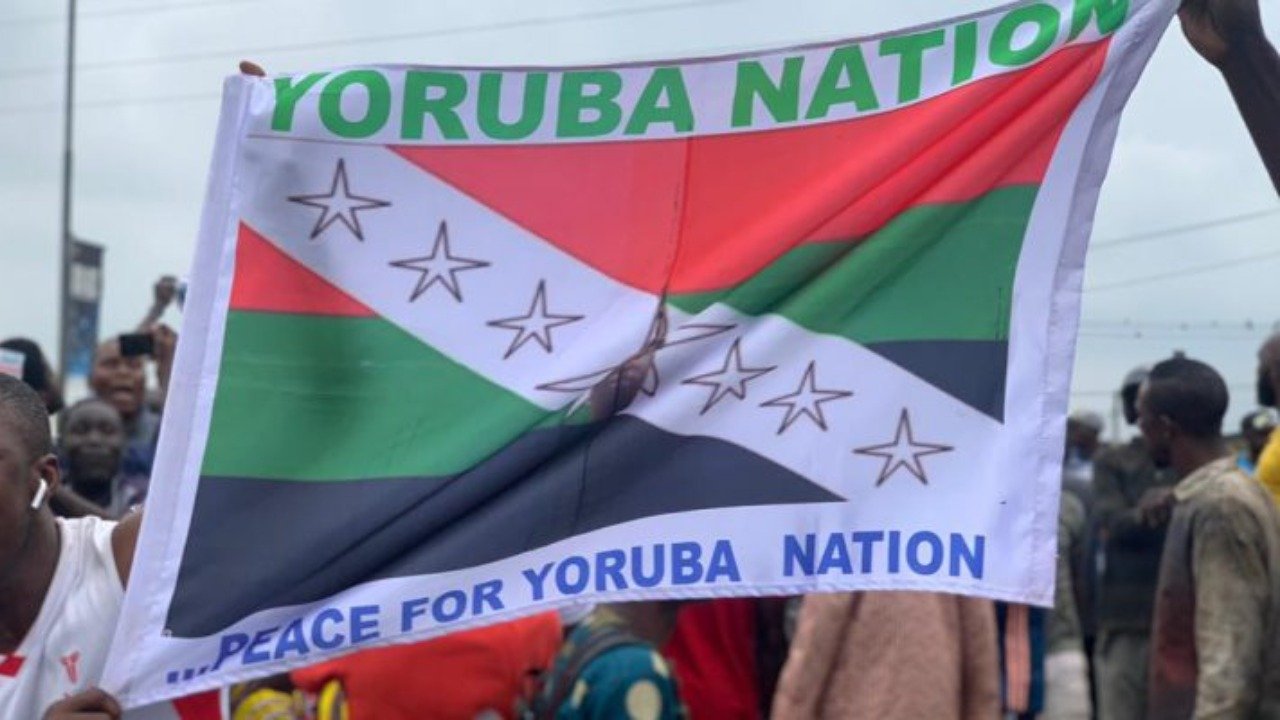
One of the reasons why the Yoruba Self-Determination Struggle has endured to date is that very many of us are uncompromising. We refused to be cowed into adopting a pseudo name or title for our struggle just to appease the system. We remained true to the calling and focused on our end goal, which is a sovereign Yoruba nation.

This obviously didn’t go down well with a lot of our people who came to the struggle with varying motives. Some joined us for their own personal gain rather than for the purpose of an independent Yoruba nation. Some others came to do the bidding of their slave masters, who sent them to destabilise us.

The unfortunate thing is that those whose hearts are not well-grounded in the struggle found themselves wavering and eventually falling by the wayside. They let themselves be deceived that self-determination is a walk in the park.

The important thing now is that those of us still standing should redouble our focus and commitment so as not to be distracted. The journey ahead is tough and not for the fainthearted.

There are still some among us on the self-determination struggle who are supposed to be on the path to freedom, leading our people to the promised land. Yet, their contributions to the struggle have been none other than to create a very beautiful website and to sit on social media all day to criticize others.

Such are those that claim to have formed a government in exile a while ago, without any election held in Yorubaland. In their mind, once they can get our people on social media to recognise them, then they can claim to the whole world that they are the face of our struggle. My take is that a government in exile is not a guarantee that we will get international recognition or the Yoruba nation of our dreams in a heartbeat.

The Yoruba nation is a recognised entity globally, and that alone is more than enough for us. Our struggle is to liberate our people from the slave camp that Nigeria has come to represent for many of its citizens. We do not need to put ourselves through the cacophony of forming a government in exile to pass a clear message to the world.

Therefore, those who are truly committed to the Yoruba nation struggle in the homeland must be ready to pick up the gauntlet and take the campaign to the enemy’s camp. We cannot sit down comfortably in our sitting rooms abroad and hope that one day the Yoruba nation will come. We need to constantly be on the neck of the so-called elected representatives, demanding our inalienable right to self-determination.

We need to be very careful as we march along, as some organisations that were initially set up to actualise the Yoruba nation struggle are now actively campaigning for a restructured Nigeria. These are the same people who were supposedly pushing for Yoruba autonomy from Nigeria under the Buhari regime, but are silent when a Yoruba man is the president of Nigeria.

I do not say their demand is wrong, but how can they not see that Nigeria cannot be restructured, nor can we ever go back to regional governance? I say this boldly because the genesis of the Nigerian civil war from 1963-1970 was because of restructuring.

Ojukwu, who also asked for a restructuring of Nigeria, way back in the 60s, from the unitary government of Aguiyi-Ironsi promulgated in May 1966, had to go to war. Gowon was not having any of it and went ahead to create 12 states of the federation after the Aburi accord failed. This led to Ojukwu pulling the Eastern region out of Nigeria the following day, and thus the civil war began.

For anyone to think that more than 50 years after the civil war and over 20 more states created by several military governments, it’s time to restructure Nigeria is daydreaming. Not even Tinubu, who is now president, has the power to restructure the country, let alone the ordinary man on the street. The best Tinubu can do is ask his rubber-stamping national assembly to create more states to palliate some people, to allow him to finish his tenure in office.

For Nigeria to be restructured, every ethnic nationality will have to sit down at a round table and discuss the modalities. Outside of that, anyone hoping that because Tinubu is the president and is a Yoruba man, then he can restructure Nigeria is living in a fool’s paradise.

The Fulani North has nothing to offer to Nigeria, and if we continue to pander to their antics of requesting a restructured Nigeria, they will be happy that they got us where they wanted. The only thing that can shake the core of that belief is a total dissolution of the forced union. That is what those of the self-determination stand for, and that is why they are afraid of us.

Four out of the six regions of Nigeria have now shown interest in exiting the union; the only thing remaining now is for any region or ethnic nationality to unilaterally declare its sovereignty and stand by it. Once that is done, it will shatter any legitimacy binding Nigeria together and steer it into total collapse, just like Yugoslavia.

That is what we on the self-determination struggle must focus on, rather than throwing punches at ourselves on the pages of newspapers like some organisations and individuals are doing. Whoever thinks they can abrogate power to themselves because they have created an organisation and a colourful website is only deceiving themselves.

I urge such people to begin to put their houses in order and come up with plans and programs to enhance the Yoruba nation’s struggle. Rather than becoming a noise-making machine on the pages of a newspaper. Self-determination struggle is not for the faint-hearted, and it is not something you pick up and drop off at will. You must be constant in your belief of an independent Yoruba nation and continuously work towards achieving this goal.

After all, Mandela stayed in prison for 27 years before his dream of dismantling the apartheid regime in South Africa was realised. He didn’t waver in prison to beg for his freedom, to give up the fight. He stayed true to his belief. I only wish some of our comrades who can’t even identify themselves in our Yoruba meetings but can throw punches in columns and WhatsApp pages would change for the better.

The Yoruba Self-Determination Movement is moving the struggle forward as best as it can, creating structures that will make us a formidable team. Perfecting all the programs initiated from the beginning of this struggle since 2018, and making sure we are laser-focused on our journey to freedom. My only prayer is that we get to our destination as quickly as possible and not be derailed by these detractors.

The journey is going to be tough, no doubt about it, but what is certain is victory if we do not give up. I implore our committed people still standing not to be carried away by the noisemakers who are constantly antagonising every little effort. I urge our people to concentrate on those things that bring us closer to our goal rather than listen to those who are trying to derail us. The Yoruba nation has come to stay for good, and this time around, we will get it right.

Continue Reading
Click to comment

Leave a Reply

Your email address will not be published. Required fields are marked *

Voice of Emancipation

Voice of Emancipation: Lessons from the Iran/USA War

Published

on

By

By Kayode Emola

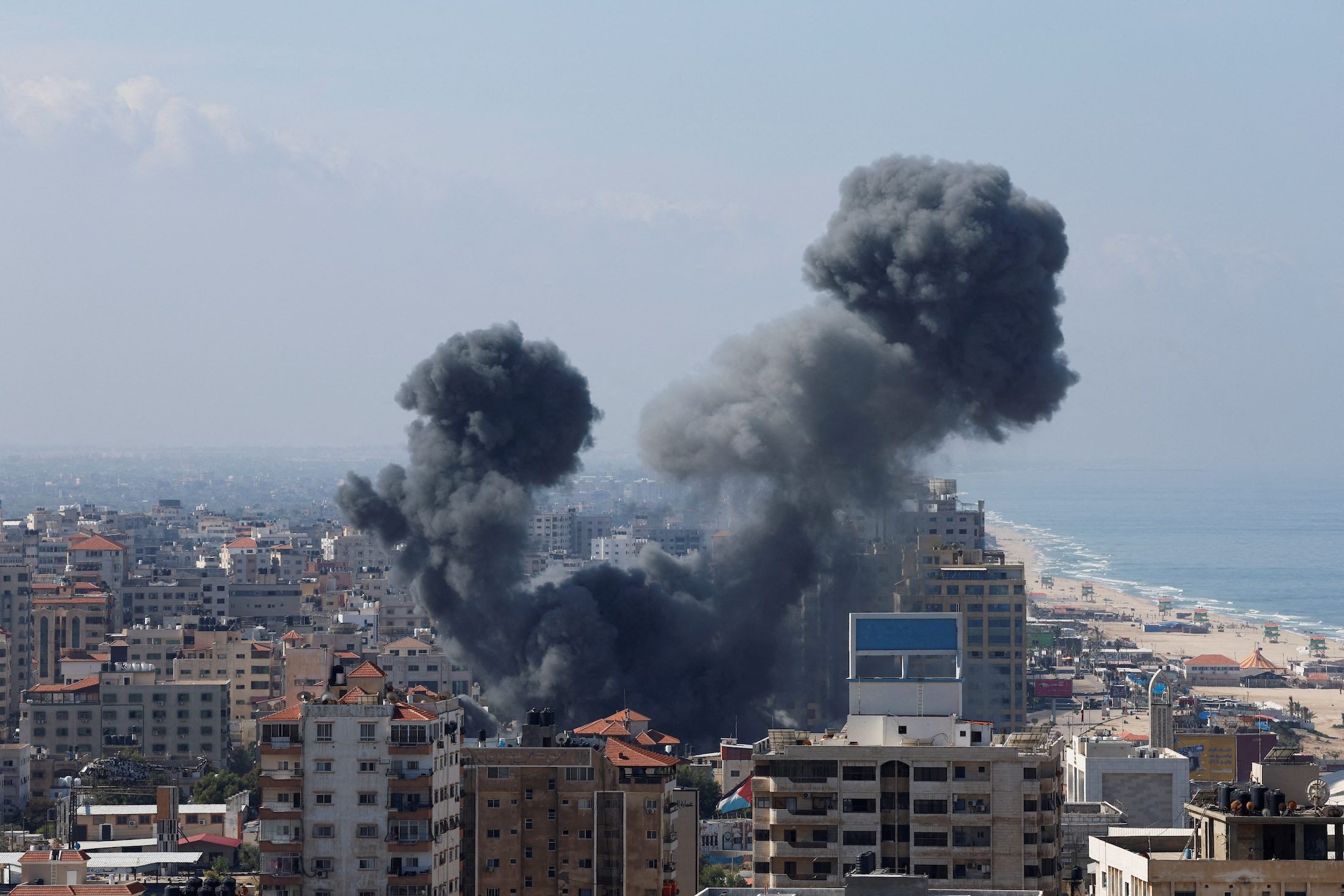
The USA/Iran war is not going as planned, and the world is currently witnessing a stalemate. A stalemate that is bad not just for those who are directly involved but for the entire global economy. Every nation is holding its breath to see what happens with the peace talks being brokered by Pakistan.

While the US and Israel have succeeded in setting Iran back so many years in their weapons and nuclear program development. The Strait of Hormuz has handed Iran a serious lifeline. A lifeline that far surpasses any damage that the joint US-Israeli bombings may have inflicted.

Iran knows that it cannot withstand the US in an open combat. However, it knows that attacking US interests in the Gulf States will give it enormous leverage. Leverage that it can use to bargain at the negotiating table. Coupled with that, the geography of the Strait of Hormuz handed Iran an added layer of advantage, thereby multiplying its immense opportunity to reclaim its destiny.

Before February 28, 2026, when the first bombs started landing in Iran, the US held all the cards at the negotiating table. Once the table has been destroyed and no off ramp available, an exit becomes near impossible, hence the impasse that we all are witnessing.

As things stand, we don’t even know who oversees decision-making in Iran or who the decision makers are. Iran has learnt from Hezbollah’s mistake of announcing a new leader shortly after Hassan Nasrallah was killed by the Israeli forces in September 2024.

Once they announced Mojtaba Khamenei as the new Supreme Leader, Iran made sure he was not put before the public glare to keep him away from harm’s way. Fuelling speculations that he was badly injured during the attack on his father’s compound.

Whether Mojtaba Khamenei is dead or alive or in a coma, as some have suggested, the decentralised system of command built by the late Ayatollah Ali Khamenei has helped Iran withstand the firepower of the US and Israel. Iranians can come out of this war with their head held high that they have fought a good fight. Despite all the beatings they’ve received, they refuse to capitulate in the face of adversity.

If Iran, which is under severe sanctions and a broken economy, can withstand the firepower of the United States of America, then I believe the Nigerian government needs to bury its head in shame in their fight against insurgency. As it stands, we don’t even know which agency is responsible for the fight against the terrorists troubling the country.

The Nigerian Police Force (NPF) is not properly trained to combat terrorists and kidnappers in the forests. The Nigerian army is also not trained to fight insurgents that have no base from which they operate. Hence, the difficulties in putting this ugly charade to an end. Also, the corruption surrounding mismanaged funds meant to tackle insecurity shows that the country is not geared towards keeping its citizens safe.

Therefore, the over 200 million Nigerians who live in fear daily must realise that there is no one out there looking out for their safety. The Nigerian politicians are more interested in looting the treasury than in saving the lives and livelihood of the citizens. So, if we, the indigenous nationalities that make up Nigeria, continue to think we can remain as a single country with all this mayhem going on, then we must be mistaken.

Our Yoruba people must realise that we are only lucky that no Southwest state was mentioned in the travel advisory given out this week by the US. That is not to say Yorubaland is safer than anywhere in Nigeria. As any attack anywhere in Nigeria affects every Nigerian equally. We must see an attack in Jos, Maiduguri, Ebonyi, Kwara, Kogi, Ogun, Ondo etc as an attack on the Yoruba man.

We must use the ongoing mayhem as our collective starting point to start building a lasting security architecture for the Yoruba defence. One that can withstand both internal and external pressures. We must insist on building systems that will outlast an individual and even an entire generation if the Yoruba must continue to exist beyond the Nigeria that we know today.

Continue Reading

Voice of Emancipation

Voice of Emancipation: Jos Killings: Another Harsh Reality of Nigeria’s Insecurity

Published

on

By

By Kayode Emola

Just when we thought the Nigerian military was beginning to gain the upper hand in the country’s security situation, this Palm Sunday saw the terrorists strike a community in Jos with a heavy blow. The magnitude of the attack this time left scores of innocent people dead.

Many people have tagged this as political rather than religious. Whether that is the case, the fact remains that innocent people were killed for no fault of their own in a country they called home, a country they hoped would protect them from incidents such as this.

Sadly, their stories have ended painfully. Their memories and the pain of their passing will remain in the hearts of their loved ones, carrying this grief for the rest of their earthly lives. What more must Nigerians give to their government to be protected from non-state security actors? Are these terrorists too difficult to locate? Or is the Nigerian government unable to muster the courage to go after these lunatics?

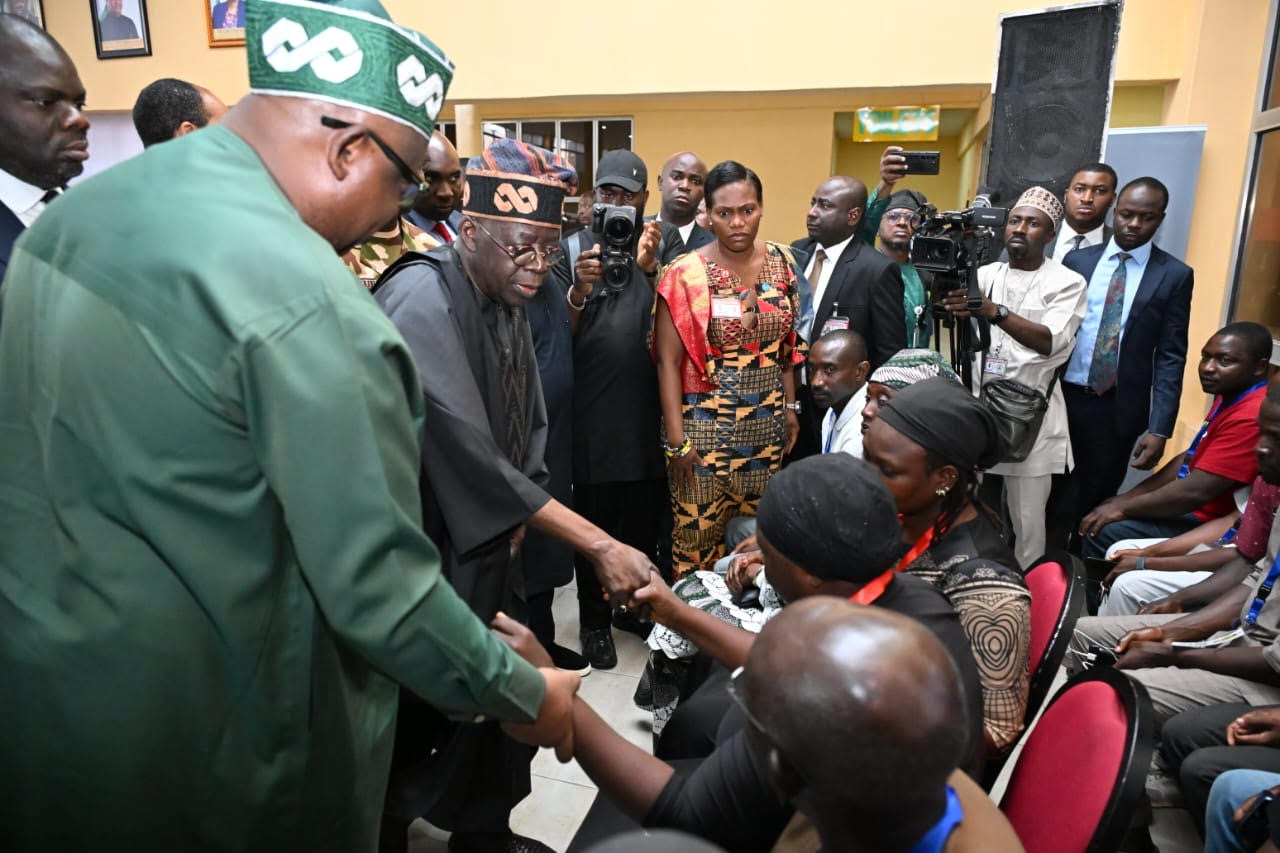
At least this time, the President of Nigeria visited the families of the victims to condole with them. However, condolences alone should not be all the Nigerian government has to offer bereaved families.

The government owes a duty to go after the perpetrators of this heinous crime and bring them to justice. Anything short of this would appear to be tantamount to the government running scared from addressing the security situation in the country.

Whether those killed were Christians or not, I believe that the mere fact that the terrorists carried out their act on Palm Sunday carries great significance. Whilst US President Donald Trump has urged the Nigerian government to address the ongoing Christian genocide, the terrorists are using the significance of attacking on Palm Sunday to demonstrate that they do not care what the US President says or does. Nigeria is their hunting ground, and they will kill the innocent citizens for sport, just because they can.

To the eminent US Congressmen such as Riley Moore, Ted Cruz, and others who are champions of Christians around the world and Nigeria in particular, I believe this will serve as a reminder that more needs to be done. Merely shaking the hands of the Nigerian political officials and having their photos taken will not solve the insecurity situation in Nigeria.

Nigeria is not just bad; it is a society that is rotten to its very core. The Bible says in Psalm 11 verse 3, “If the foundation be destroyed, what can the righteous do?” So if anyone anywhere thinks that Nigeria can be fixed or repaired, then they are the most miserable of men.

The only solution is a total overhaul of the country, yet the dynamics of ethnicity and religion within the country will not allow this. Over 300 tribes were forcibly fused together by a foreign colonial master – Britain – to serve only the benefit and pleasure of the British government, which controlled the lives and destiny of the colonies.

Now, the good and innocent people of Nigeria will continue to pay with their lives the price for the self-serving and fallacious actions of the historic British government, because no one in the world is ready to listen to our plight. Conservative estimates are that over 600 people have been killed in Nigeria this year alone by terrorists – Fulani, Boko Haram, and others – a number that one might normally expect to see reported from a war zone, rather than a country allegedly at peace.

Yet, our stories do not make the international headlines because, on the world stage, Nigerian lives don’t matter. Contrarily, if Nigeria were to be situated in Europe, I am sure that the country’s turmoil would be reported on expansively and would horrify all who heard of it, whether local or foreign.

This is why the Yoruba and other ethnic nationalities are calling for a peaceful separation. We believe at least six new independent nations should be formed from what is currently one dysfunctional one. Surely, if Nigeria were to be dissolved today, just like the Yugoslavia of 1991-1992, into six new independent nations, insecurity would be a thing of the past.

The break-up of Nigeria into the Yoruba nation in the Southwest, Biafra nation in the east, Ijaw Nation in the south, Savanna nation in the Middlebelt, Hausa nation in the northwest, and the Kanuri nation in the Northeast will make the lives of the indigenous people safer. It will also be a cost-effective way of tackling the long-lasting security challenges that Nigeria has been facing.

However, the US government’s approach to assisting the Nigerian government in tackling insecurity, that is, one of providing military hardware and expertise, is unhelpful. To continue in this approach is to do the Nigerian people a disserve that will only perpetuate events such as that of 29th March 2026.

I know that salvation will come one way or another. I just hope that the US government –which claims to be the champion of democracy and freedom around the world – will be at the forefront of helping these millions of Nigerians currently trapped in a prison created by the British government. If not, then the resulting solution will be that every nationality will be faced with the option of a violent disengagement from this contraption called Nigeria.

Continue Reading

Voice of Emancipation

Voice of Emancipation: President Tinubu’s State Visit to the United Kingdom

Published

on

By

By Kayode Emola

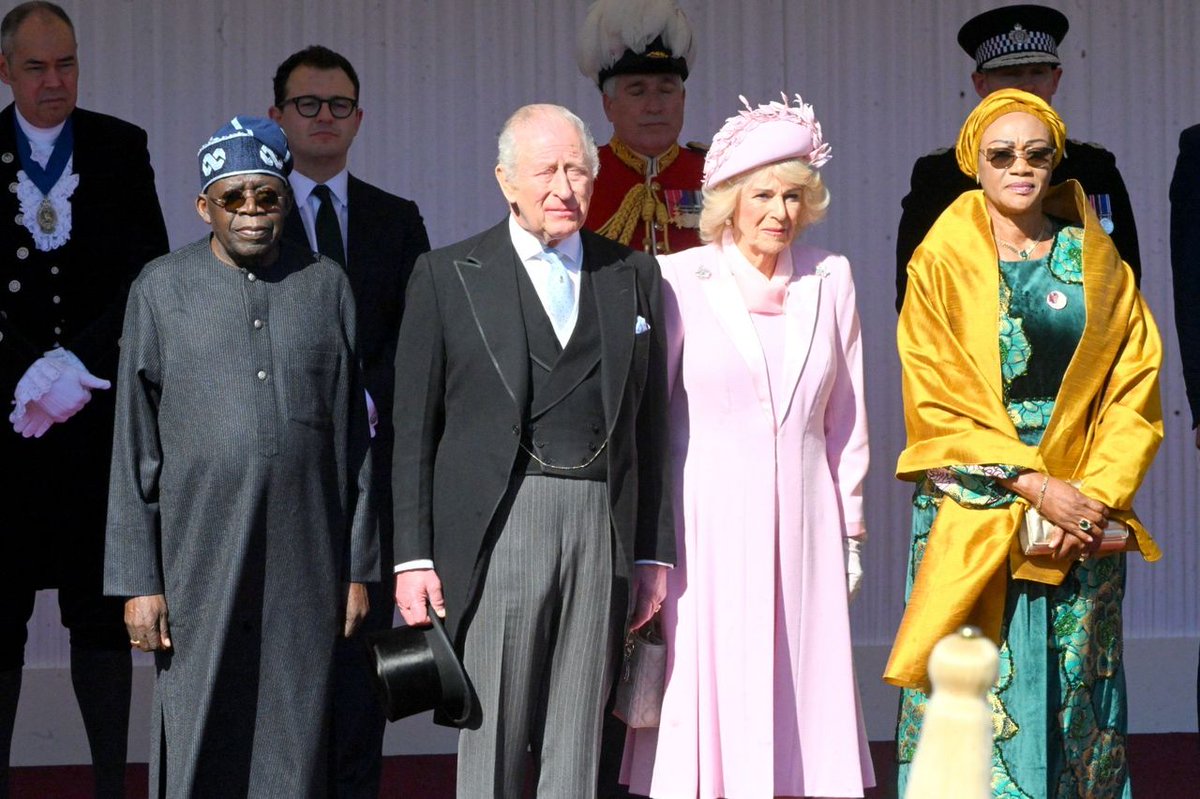
Last week, the Nigerian President Bola Tinubu and his entourage visited the United Kingdom for a 2-day state visit. Whilst many of his critics say the visit should have been postponed or cancelled due to the multiple bomb blasts in Maiduguri. Others are of the opinion that such events are difficult to put on hold due to months of preparation.

Whatever argument is put forward, the important thing is that the event has come and gone. What we need to analyse is who truly benefits from this state visit? Is it President Tinubu and the Nigerian people or the UK government and its citizens?

To start with, the UK has a long history of putting its national interest first before any personal interest. Whereas Nigerians have a history of putting personal interest first before their national interest. That said, we need not look further at who is going to benefit more from the state visit of President Tinubu.

History teaches us that when it comes to diplomacy and agreement, the UK government cannot be trusted wholeheartedly. Not least because in the late nineteenth century, the British government signed several treaties of trade and friendship with many Yoruba monarchs, only to usurp their powers, transferring such powers to their own self-appointed administrators.

Today, those monarchs who are supposed to be the custodians of the governmental leadership in Yorubaland are mere spectators in royal regalia. Simply because they trusted the smiles of the British officials without truly knowing the snares that were set before them.

The UK government is not foolish to put up a lavish party for the Nigerian President just for showmanship. The British government knows when to use their high stakes diplomatic state visit as a tool for its national interest. This visit, I believe, plays into that scenario very perfectly.

Several commentators have spoken about the money the British government paid the Royal Niger Company to buy Nigeria in 1899. Many have linked President Tinubu’s visit to the UK to the royalties due Britain from the construction of Nigeria Ports Authority, which has been stopped for several years now. All these are just theories and without empirical evidence cannot be corroborated.

Whilst we may not know the full details of what transpired behind closed doors between the British government and the Nigerian President. One cannot help but wonder why a state visit with a country that the USA has designated as a country of particular concern.

I am not against a state visit for the Nigerian president to the UK. However, if the UK government were to be sincere about its interest in Nigeria, it should have helped the Nigerian government in tackling insecurity in the country. In the last decade alone, a report from ‘Protecting the Civic Space’ indicates that no fewer than 91,740 people have lost their lives between 2011 and 2024 in Nigeria. This figure should make any right-thinking nation pause and ask itself what the root causes of the problems are.

However, Britain is not ready to face the hard truth that it is partly responsible for the problems bedevilling Nigeria today. The ghost of the forced 1914 amalgamation of Southern and Northern Nigeria continues to haunt Nigeria even in this twenty-first century. Despite many British politicians, including former Prime Minister Winston Churchill, saying the amalgamation should never have happened.

There is still opportunity for the British government to make amends by addressing the amalgamation issue; if not, many more people are going to die needlessly in Nigeria. The Fulani North, whom the British government handed over the power of Nigeria to when they left in 1960 after Nigeria attained independence, have promised a mass jihad by the end of this month.

If the Fulani threat is anything to go by and their level of preparation ascertained by several security groups, then I don’t think we should wait until thousands of people are slaughtered before we see the dangers in Nigeria. The country sits on the cusp of history, and it shouldn’t be written with the blood of the innocent people who did not choose to die in this manner.

I will implore the Yoruba people not to read any genuine meaning into the state visit of President Tinubu to the UK. The UK has never been a friend to the Yoruba people, they’ve only been a friend to their own national interest.

What we must do is ask the United Kingdom what measures it is putting in place to help with the de-amalgamation of the country. As this is the only genuine gesture that can save countless lives that may be lost due to insecurity rampaging the country. Anything short of this is the United Kingdom turning a blind eye to the real tasks that are at hand to save lives and properties of the helpless Nigerians who are in the crossfire of several militias terrorising the country.

Continue Reading

Trending