By Eric Elezuo
With increasing dissatisfaction among Nigerians of all strata following the concensus dismal performance of the President Bola Tinubu-led government in two years, tangible evidence is in the air regarding a replay of the 2013 alliance that flushed out the government of President Goodluck Jonathan later in 2015. Incidentally, Tinubu himself was an integral part of the alliance that later came to be known as the All Progressives Congress (APC). Presently, he is the victim of what is coming as a result of the rudderless administration the president has supervised in two years.
The Tinubu situation seems worse than what was obtained in 2013 when Jonathan was was conspired against, and voted out. Then the economy was remarkably okay as the biggest in Africa; the naira was standing tall against the dollar in the international market and the populace did business without sweat among many other socio-economic indices that gave the administration a clean bill of health. Yet, a coalition of dissatisfied persons, kicked him out.
The development to kick Tinubu out in 2027 comes amid growing public discourse on the ineffectiveness of the current administration, barefaced hunger and the viability of a united opposition front ahead of the next general elections. This is even as over five million Nigerians are added to the poverty bracket on a yearly basis.
To this end, the much touted coalition of stakeholders with the interest of restoring diligence, dignity, open government and prosperity of the people is in the works, and may finally see the light of the day, in a move to be described as a return of electoral hope, if collaborative efforts being put together is anything to by.
The Opposition Coalition Group, a meeting point of some of the best brains of Nigeria’s economic and political terrain boasts of former Vice President Atiku Abubakar, former governor of Ekiti State, Kayode Fayemi, former Rivers State Governor, Rotimi Amaechi, former Kogi State governor Captain Idris Wada; former Attorney-General of the Federation and Minister of Justice, Abubakar Malami (SAN), former Senate president and chairman of the Peoples Democratic Party’s Board of Trustees, Senator Adolphus Wabara; the Labour Party’s 2023 vice-presidential candidate, Yusuf Datti Baba-Ahmed; a former Minister of Foreign Affairs, Ambassador Aminu Wali; a former Minister of Police Affairs, Adamu Maina Waziri, a former Secretary to the Government of the Federation, Babachir Lawal; a former All Progressives Congress’ national vice chairman (North), Salihu Lukman; Senator Ben Obi and a former Minister of Youth Development, Bolaji Abdullahi, General Aliyu Gusau (rtd), Mr. Kenneth Okonkwo, former Jigawa State governor, Suleman Lamido, former Jigawa Deputy governor, Ahmed Mahmud Gumel, convener of the League of Northern Democrats and former aide to President Olusegun Obasanjo, Umar Ardo; Senior Special Assistant to President Bola Tinubu on Public Affairs, Aliyu Audu, who confessed that he resigned to work against Tinubu, former Osun State governor, Rauf Aregbesola and many more Nigerians from across the geopolitical regions.
As at the moment, Nigerians have never had it so bad, strolling aimlessly in Tinubu’s era of policies not deeply thought about, and policies somersaulting against a pole vault of kindergarten decisions. These have have opened floodgates of hardship, insecurity, suffering, killings and directionless movement for both the leaders and the led. It’s even worse that after eight years of President Muhammadu Buhari’s administration, which even the APC admitted was clueless, Tinubu has again plunged Nigeria into the abyss of uncertainty, pains, agony and untold sorrow. In 2 years, electricity tariffs have more than doubled, the high cost of fuel has shut down small and medium scale enterprises just as multinational companies continue to exit in droves since Tinubu took over power.
Today, Nigerians call for a genuine change as this is not the best of times for the nation and its populace. Consequently, the drums of the 2027 presidential election have begun to beat and sound louder, prompting interested stakeholders to put finishing touches to gain vantage position towards recording a fruitful outing, and boot the administrationof Bola Tinubu out.
A statement signed by one of the leaders of the coalition, Salih Lukman, summarized the intent and purpose of Nigerians rising with one voice to take back their nation while offering advice to as many that are yet to make up their minds in joining.
The statement read in part, “For the avoidance of doubt, the coalition is fundamentally about rebuilding Nigerian democracy. Leaders of the coalition recognise this and, more importantly, recognise all the challenges ahead. Resolving these challenges and building the confidence of Nigerians is about restoring the value of political negotiations as critical and fundamental to guaranteeing the survival of democracy. Over the years, both the PDP and APC have demonstrated contempt for political negotiations and, to that extent, disrespected agreements in various ways.
“For more than ten years that the PDP had been out of power, Nigerians had waited for the party to dust itself up and provide the viable opposition that Nigeria needs. Instead, the party went into suspended animation until the rampaging Tinubu-led APC found a willing undertaker to finally put it to rest. The governors know that the virus that afflicts the PDP has no cure. They are only grandstanding. They know that Nigerians cannot accept this PDP as the alternative because it is clear to all discerning Nigerians that the ruling party has hijacked its soul.
“Nyesom Wike is the untouchable super minister in Asiwaju’s government, not because of the sterling job he is doing in the FCT, but because he has done a great job of ensuring that the PDP is not able to present a presidential candidate to challenge Tinubu for power in 2027. However, with the growing coalition, that mandate has been adjusted in recent weeks. The new agenda is to revive the PDP to stand as a counterforce to the coalition, and present a candidate that would split the vote in 2027. This PDP Governor’s Forum is wittingly or unwittingly playing Asiwaju’s spoiler game, and they expect Nigerians to take them seriously.
“The survival of Nigeria and the future of democracy largely depend on how political actors seek to reverse this ugly reality. This is what leaders of the coalition have been painstakingly working on. The coalition is working hard to finalise negotiations towards unveiling the coalition, along with its structure, and programme of action for rescuing Nigeria. The expectation is that all political actors, including leaders of the PDP, would recognise the danger facing the country and join the coalition as a necessary and perhaps strongest response towards rebuilding Nigerian democracy. This has not happened. However, even as the PDP Governors and some leaders of PDP express opposition to joining the coalition, we extend hands of fellowship to all political actors in the country to join us to rescue Nigerian democracy.”
Lending credence to the coalition, and it’s component, Atiku informed that “We have a coalition. All the major political parties are involved. In this coalition — the APC, PDP, Labour Party — all of us are involved. That is the way to go in confronting such an incompetent and inefficient government,” Atiku said.
These men, who have come to team up to restore parity in living conditions among Nigerians, have continued to meet, holding talks on talks in readiness to formally announced the next line of action for the next democratic dispensation.
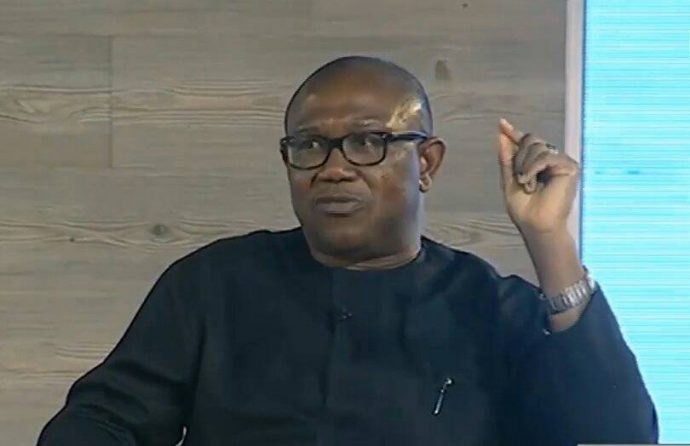
But a Peter Obi has so far remained elusive as his stand in the coalition is still to be made public.
The desire of the nation towards the birthing of the much awaited platform under which the coalition will launch its quest to retrieve power from the ruling party led to a report about a certain application to the Independent National Electoral Commission for the registration of a new political party, called All Democratic Alliance (ADA).
Denying connection with ADA, Atiku, through his media aide, Demola Olarenwaju, debunked the viral media claims, saying no such decision has been made.
“A group is in the process of pursuing party registration, just like any other Nigerian, but they need to coordinate this with the coalition,” Olarenwaju said in a statement posted on his verified X handle.
“ADA has not been adopted by the coalition, and when the time is right, the public will be informed about the appropriate choices and decisions. Just be patient with that.”
However, much as the information has turned out to be unconnected to the coalition, it is still incumbent on coalition leaders to decide the platform to pursue the next stage of plans to wrest power from the APC and Tinubu. This is where the name of the presidential candidate of the Labour Party in 2023, Mr Peter Obi, who has been consistently missing in the buildup, comes to play.
Questions have been raised regarding where the former governor of Anambra State is in the new plan to unseat President Bola Tinubu of the All Progressives Congress (APC) in 2027. Many has wondered at the silence of the leader of the third force of Nigeria political parties, and arguably leader of the most outspoken movement in Nigeria presently, the Obidient Movement, asking if he wants to go it all alone.
Reports reaching The Boss have it that the members of the coalition seek to leverage on the vocal public dissatisfaction of the Tinubu-led government, thereby realigning politically to prevent the reelection of President Tinubu in 2027.
But public opinion has been rife and divided as to the eloquent absence of Peter Obi. A section of Nigerians, resonated by the voice of a public analyst, who prefers anonymity, has said that if Obi decides to go all alone in the quest to win back Aso Rock from Tinubu, and for the Nigerian people, the adventure will be as good as dead on arrival.
“Obi, going on this adventure alone is as good as giving back power to Tinubu, this time on a platter of gold as no one has the capacity to unseat the president individually, given the present political emasculated status of the opposition, the source said.
He hinted on why the coalition is silent on the leader of Kwakwansiyya group, Senator Rabiu Kwakwanso, noting that though he commands an amount of respect in the North, especially his home-base, Kano, but he is not as effective as Peter Obi in the equilibrium.
“Yes, most people are talking about Kwakwanso, but he is not as big in stature as Obi, but be that as it may, if Obi or whoever is not interested in the coalition agenda, the same is allowed to exercise his right as he deem fit. But the truth is; the train is ready to move with or without any member of the coalition,” he said.
It would be recalled that a recent opinion poll conducted by the former Kaduna State governor, revealed that 70 per cent of respondents are in support of the coalition, giving it the needed tonic forge ahead in its quest to claim the presidential seat.
Major proponents of the coalition has noted that both the Peoples Democratic Party (PDP) and the Labour Party are not in the best state of health to contend against an incumbent, but that only a combined force of parties in a coalition that can make the exercise. They reasoned that with the massive exodus of office holders affiliated to both the PDP and LP defecting to the APC including the two governors of Delta and Akwa Ibom states with their entire Party structure, the stakes are no longer high for any Party to stand on its own against the APC and Tinubu in 2027.
“The PDP is a spent force. It is a party targeted for destruction, and, frankly, it has almost succeeded,” El-Rufai was once quoted as saying.
The Labour Party, at the moment is rudderless as its authentic leadership is still unknown, the Supreme Court notwithstanding.
“This therefore, is the reason Peter Obi must not attempt to go alone in the quest for the presidency,” the source further elucidated.
But for those, who have dismissed the coalition as a northern agenda, a former political adviser to President Bola Tinubu, Hakeem Baba-Ahmed, has come out to refute the claims.
He has opposed the narrative that northern political leaders ‘gang up’ to create coalitions each time a Southerner is in power while speaking on Arise Television on Monday.
Baba-Ahmed, who recently resigned from his role, clarified that the alliance, led by former Vice President Atiku Abubakar, is not a northern-centric initiative.
Maintaining that alliances and coalitions are not new in Nigeria, Baba-Ahmed said “There are southerners involved in this talk about coalitions, too. You know, Governor Rotimi Amaechi is there, and the former governor of Osun State, Rauf Aregbesola, is there. There are a lot of people from the southern part of the country.
“They love the south too, they don’t want to be second to the north. They are there. It’s not every time that when a southerner is there, there have always been talks about coalitions,” he said.
Again, the coalition’s resolve is stronger in occupying Aso Rock in 2027 as the house of APC is presently experiencing a much anticipated implosion as there are divisions regarding the retention of Vice President Kashim Shettima as Tinubu’s running mate.
In Gombe State recently, during an APC North East stakeholders forum, a major crisis ensued as speakers at the forum endorsed the candidacy of Tinubu while remaining silent on the Shettima, who is from the region. The move did not go down well with the North East stakeholders, who staged a violent protest, physically manhandling national officers of the party, including the National Chairman, Umar Ganduje. The aftermath of the crisis has led to mild enmity between Shettima and Ganduje on one hand, and the North East APC and the rest of APC on the other hand.
It would be recalled that Shettima shunned Ganduje at a public function during the weekend. Observers say it is not unconnected to the events involving the dropping of his name during endorsement.
“The problems cropping up in the APC recently is just the fulfillment of a prophecy long foretold. APC has long been using federal might to terrorise the opposition; now is their own time to face the prophesied implosion that may see to its quick end. As it stands today, Tinubu, Shettima and Ganduje may have drawn their battle lines, and followers may tag behind as they deem fit,” he added.
Since the advent of the APC government two years ago, exactly on May 29, 2023, the people of Nigeria have had to grapple with advanced hardship with cost of living going far and beyond the reach of the average citizen including the very rich. This is anchored on the policies and reforms of the administration, especially the removal of Petroleum subsidy and floating of the naira.
The APC has however, defended thier policies as yielding fruits, making continuous promises that the proverbial light at the end of the tunnel will soon be visible. Nigerians have dismissed the excuses as grandstanding and lost of ideas in tackling the challenges facing the nation.
The coalition has promised that they have what it takes, and more t9 restore dignity to the man on the street come 2027. But, it appears Peter Obi is the missing link in the happy ever after story of the coalition.







 Featured3 days ago