
Opinion
A Book That Stirred a Nation by Femi Fani-Kayode

Published
1 year agoon
By
Eric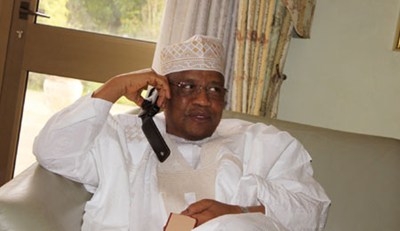

Much has been said and written since President Ibrahim Badamasi Babangida’s book, titled ‘A Journey In Service: An Autobiography’ was launched.
As to be expected, the reviews are interesting and the commentary has been in some cases good, in some bad and in some ugly.
This is a healthy development because the worst that one can do to a book or an essay is to ignore it.
Whether you agree with it’s contents or not or whether you like the author or not is not the point: what makes it worth writing is the commentary that follows and the oftentimes divided opinions.
This more than anything else makes the literary contribution a success and as the saying goes: it is better for it to be spoken about, even in negative terms, than for it to be ignored.
There is no doubt in my mind that few can ignore either Babangida or his controversial yet factual book and ever since it’s launching on February 20th 2025 it has been the talk of not just the town but the entire nation.
I welcome and encourage such discourse wholeheartedly because it engenders intellectual debate and it enriches and deepens our knowledge of history.
I do however take objection to those that have gone a little too far and that have characterised Babangida as “a coward” and “a weakling” simply because he spoke the truth about the role General Sani Abacha, his Chief of Defence Staff, played in the annulment of the June 12th election.
In the book Babangida displayed humility and remorse and assumed “full responsibility” for the annulment as Head of State.
He also pointed out the fact that he chose to tread that precarious and regrettable path primarily as a consequence of the immense pressure that he was subjected to by General Sani Abacha.
By bringing these facts to public glare and establishing this narrative he was not, as some have argued, “making excuses” for his actions but rather he was attempting to put them in context and, for historical purposes and the record, enlighten the Nigerian people about precisely which personalities and circumstances caused him to make the decision that he eventually made.
This surely ought to be commended and not condemned as it can only enrich the historical discourse and shed more light on the darkest corners of our journey as a nation.
I say this because I believe that the Nigerian people have a right to know about the real causes of the terrible trauma they were put through as a consequence of the annulment with its attendant loss of liberty and life and the 6 long years of suffering, strife, division and misery that it brought our people.
Sadly as a consequence of his submission about their patriach’s role in the whole sordid affair certain members of General Abacha’s family, some very young and some a little older, took umbrage and offence and publicly described Babangida as “weak” and as “a coward”.
This is not only a false characterisation of a man that has proved his courage on several occasions in our history and has put his life on the line for Nigeria many times but it is also very unkind given the strong friendship and trust that Babangida and Abacha themselves shared over the years and given the close relationship that their respective families have enjoyed ever since the Nigerian civil war.
Outside of that anyone that says IBB is “weak” or “a coward” does not know IBB.
It is better that we do not open up this debate because if we do those that are saying these uncharitable things will be worsted.
It really is advisable for them to sheath their swords at this early stage in order to ensure that their father’s tenure is not subjected to even more public scrutiny than it already is.
As they say sometimes silence is golden.
Some of us lived the experience whilst some of those talking today had not even been conceived let alone born.
Between the father and grandfather of those who are throwing bricks today and calling IBB “weak” and a “coward” we know who the monster and cold-blooded killer was.
Granted that it was under his watch that the June 12th election was annuled but what cannot be denied is that the real reign of terror began after Babangida left office and after Abacha toppled the Ernest Shonekan-led Interim National Government in a coup, took power and turned state-sponsored terror and murder into an art.
For five years the entire nation and particularly the Yoruba people were subjected to the worst form of barbarity and tyranny that our nation had ever known.
Many were falsely accused, persecuted, humiliated, killed, incarcerated, tortured and driven into exile to suffer in some foreign land whilst others, like the former military Head of State and later President, President Olusegun Obasanjo, General Shehu Musa Yar’adua (the second in command to General Obasanjo when he was military Head of State and the older brother to President Umaru Musa Yar’adua) and General Paul Oladipo Diya (General Sani Abacha’s second in command) were imprisoned for no just cause and one of them (Yar’adua) was pinned down and forcefully injected with strange and toxic substances, poisoned and murdered whilst there.
Meanwhile Abiola’s wife, Alhaja Kudirat Abiola, along with many others including a young man by the name of Toyin Onagoruwa who was the son of Dr. Olu Onagoruwa SAN (Abacha’s Attorney General and Minister of Justice who had earlier resigned in protest against all the atrocities that the Government he served were committing), were either gunned down in the streets or, like Bagudu Kaltho, blown up with bombs.
What can one say about a man who, according to Onagoruwa himself, could order the murder of his own Minister of Justices’ son simply because the man gave a press conference, criticised his brutal policies and heinous practices and resigned.
Then there was the judicial murder of the activist and environmentalist Ken Saro-Wiwa.
Even after the international community pleaded with him not to hang this man and implored him to at least allow him to challenge his “conviction” for murder before what was to all intents and purposes a kangaroo court and go to the Court of Appeal, Abacha refused to listen and had the poet and human rights activist hanged in the middle of the night.
Worse of all is the fact that Saro-Wiwa was his close friend. This was singularly one of the most wicked and callous acts that took place under Abacha’s watch.
Saro-Wiwa deserved to at least go on Appeal and exhaust the opportunities that the law and the legal system availed to him.
It was a national tragedy and the Commonwealth nations particularly were so shocked that Nigeria’s membership was suspended.
Yet it didn’t end there and there is so much more to say.
For example brutal psychopaths like Colonel Frank Omenka and his gang of heartless cut throats tortured people, including women and children, with sadistic pleasure in the dungeons of the Directorate of Military Intelligence in Apapa, Lagos.
Few left there alive.
Most of the young people talking and writing on social media today know nothing about these ugly events or this time because they were not born and they know NOTHING about the history of the country.
We lived it, we were part of the struggle, we paid the price, it was hell and all of it happened under Abacha’s watch.
Yet how did we get there, what transpired, who were the major actors and who actually annuled the June 12th election and took us down that hideous path?
This is the million dollar question and Babangida finally answered it in his book.
The truth is that had it not been that IBB sheathed his sword, held his peace and conceded to the dark, sinister and evil forces that coordinated, orchestrated, initiated, effected and announced the annulment without his knowledge and behind his back there would have been a very bloody military coup which would have in turn been violently resisted by the IBB faction and thereby result in a long and protracted civil war.
Those that led these dark and evil pro-annulment forces were General Sani Abacha, Brigadier General David Mark, Lt. General Joshua Dogonyaro, Air Vice Marshal Nurudeen Imam, Colonel Lawan Gwadabe, Major General Alwali Kazir, Lt. General Ishaya Bamaiyi, Major General Jeremiah Useni and many others.
Had Babangida resolved to resist them, renounce the unauthorised announcement and de-annul the election (which he could easily have done) I have no doubt that Abiola, his wives, his children, his key supporters, many of those heroes that were to later become the leaders of NADECO, IBB himself and all his key loyalists including Major General Salihu Ibrahim (the Chief of Army Staff), Brigadier General Haliru Akilu, Major General Aliyu Gusau, Colonel Sambo Dasuki, Colonel Abubakar Umar, General Gado Nasko, Air Vice Marshall Hamza Abdullahi, Colonel Habibu Shuaibu, General Abdulsalami Abubakar, General Garba Duba, General Sani Bello, Colonel Nuhu Bamalli (as he then was), Major General Isola Williams, Admiral Augustus Aikhomu and many others would have been targetted for assassination and our country would have been plunged into a cataclysmic bloodbath given the fact that Babangida’s men would have struck back with equal ferocity and in equal measure.
More likely than not few of the main players on both sides, including Abacha, Abiola and Babangida themselves, would have survived the conflagration and the country would have been at war with itself, brother killing brother, for an indefinate period of time.
Anyone that doubts this or the horrific nature of such conflicts should remember what happened during the Nigeria/Biafra civil war and consider what is happening in Sudan today.
When senior and powerful military officers each with a massive following in the Armed Forces refuse to tread the path of compromise, peace and sanity and take up arms against one another EVERYONE loses and the entire country implodes into ashes and crumbles into dust.
I do not seek to justify the annulment and at the time, along with millions of others, I opposed it with all my heart and every fiber of my being but the reality was that IBB was faced with a very difficult choice.
As he said in his book he was indeed “caught between the devil and the deep blue sea”.
He could have done what some may deem right right by resisting the deceit, betrayal, perfidy, pressure and subterfuge from the Abacha faction of the military, refuse to accept the illegal and unconciable annulment, declare it as “null and void” and consequently spark off a bloody chain of events and a civil war or he could have chosen to do what some may deem wrong by keeping his cool, letting Abacha have his dastardly way, conceeding to the dark forces, accepting the annulment and thereby save lives and maintain a tenuous even though short-lived peace.
He chose the latter, saved MKO Abiola’s life and that of many others and maintained the fragile unity of the military and by extention the country by doing so.
Yet whichever option he opted to take, Babangida was not the villainous usurper, traitor and Kingslayer here: Abacha and his vile power-hungry cohorts were.
This is what IBB has now firmly established in his book and we await sensible literary responses from those that are still alive and that were in the Abacha camp.
They are more than welcome to dispute the facts and tell their side of the story and we are eager to hear them.
However until they do so and provide the necessary evidence to establish the veracity of their claims yours truly along with many others are constrained to accept Babangida’s narrative because, in my view, he remains a respected elderstatesman and a man of integrity and secondly his account appears to credible and plausible.
For the benefit of those that may not have the book I would urge them to get a copy and read from pages 274 to 276 in order to get a clear picture of what actually transpired and the truth is that it is shocking!
Due to space constraints permit me to qoute just a portion of it from page 275 where he wrote,
“On the morning of June 23, I left Abuja for Katsina to commiserate with the Yar’Adua family over the death of their patriarch, Alhaji Musa Yar’Adua.
The funeral had taken place, and as I got ready to leave, a report filtered to me that the June 12 elections had been annulled.
Even more bizarre was the extent of the annulment because it terminated all court proceedings regarding the June 12 elections, repealed all the decrees governing the Transition and even suspended NEC! Equally weird was the shabby way the statement was couched and made.
Admiral Aikhomu’s press secretary, Nduka Irabor, had read out a terse, poorly worded statement from a scrap of paper, which bore neither the presidential seal nor the official letterhead of the government, annulling the June 12 presidential elections. I was alarmed and horrified.
Yes, during the stalemate that followed the termination of the results announcement, the possibility of annulment that could lead to fresh elections was loosely broached in passing but annulment was only a component of a series of other options.
To suddenly have an announcement made without my authority was, to put it mildly, alarming.
I remember saying: ‘These nefarious inside forces opposed to the elections have outflanked me!’
I would later find out that the ‘forces’ led by General Sani Abacha annulled the elections.
There and then, I knew I was caught between the devil and the deep blue sea!
From then on the June 12 elections took on a painful twist for which, as I will show later, I regrettably take responsibility.of its worst political crises ever.
Like many of us in government, the political class was stunned.”
All this yet Babangida still opted to take full responsibility for these troubling events and great injustice and kept his lips sealed about the abominable role that General Sani Abacha and his group played in the annulment of the June 12th election and the rape and usurpation of the mandate that was freely given to Chief MKO Abiola and his running mate Ambassador Babagana Kingibe by the Nigerian people.
To drive home the point about how dangerous the situation was for all and sundry permit me to remind those that were alive at the time about the meeting that Babangida had with Abiola after the annulment in which he told him that “these people” meaning the Abacha group would “kill me, you and all the rest of us” if the election result was “de-annulled” and allowed to stand.
His words were leaked to the media and widely reported at the time yet they were never denied by either Babangida or Abiola.
Again there was the infamous contribution from Colonel David Mark (as he then was) who had hitherto been a Babangida loyalist where he was reported to have said “we will not allow Abiola to be sworn in as President and if NEC swears him in we will shoot him”.
Those that doubt this should read Professor Omo Omoruyi’s book titled ‘The Tale Of June 12th: The Betrayal Of The Democratic Rights Of Nigerians’.
Omoruyi, who was the Director General of the Center For Democratic Studies, was not only an Advisor and insider in the Babangida Government but he was also very close to the Head of State and a strong ally and voice of the pro-democracy and anti-annulment movement within the regime.
He was a formidable intellectual who was credible, humane, decent, cerebral and highly respected and I have no reason to doubt his word.
Ironically after the annulment took place and Babangida “stepped aside” from office Mark fell out with Abacha and fled the country for his life.
Then there was the case of Colonel Lawan Gwadabe who actually told one of Babangida’s children that they would pick up his/her father and “deal with him” if he allowed Abiola to take over.
Ironically the same Gwadabe who at that time was in the Abacha camp was later arrested by Abacha and tortured brutally for planning a coup. He was beaten so badly that he almost lost his life.
Both Mark (who 14 years later was elected Senate President) and Gwadabe were originally IBB boys but they turned their back on their mentor, joined the pro-annulment camp and vehemently opposed the election and mandate of MKO Abiola.
Thankfully not all of IBB’s boys shifted camps at that crucial time and most remained loyal to him.
Brigadier General Haliru Akilu, the clinically efficient Director of National Intelligence and the man who detected and prevented numerous coup attempts, exposed many conspiracies and single-handedly kept Babangida in power for 8 years never faltered or failed and remains loyal to IBB till today.
Colonel Sambo Dasuki, IBB’s erstwhile ADC (who became National Security Advisor to President Goodluck Jonathan 20 years later) was as constant as the Northern star and was loyal till the end.
Thankfully there were many others but worthy of mention for his remarkable courage and gallantry at the time was Colonel Abubakar ‘Dangiwa’ Umar (my erstwhile Polo Captain from Lagos Polo Club and the former Governor of Kaduna state) who was the shining star of the Babangida inner circle.
A former ADC to General Hassan Katsina (the Chief of Army Staff when General Gowon was Head of State), Umar was young, tough, outspoken, courageous, suave, sophisticated, dashing and very good-looking.
He was also very pro-June 12th and was one of IBB’s greatest loyalists in the military hierarchy.
Permit me to share a few words that I extracted from my essay titled ‘President Ibrahim Babangida: An Irrepressible Enigma And Enduring Institution’ which I wrote the day after the launch of President Babangida’s book.
I wrote, inter alia,
“Babangida has explained to us his own side of the story and told us exactly what transpired.
He refused to remain silent, he did not shy away from speaking the truth or refuse to accept responsibility and he did not pass the buck.
Instead he came clean, displayed immense courage and did the right and proper thing.
That is what leaders are meant to do and he did it without fear or favour regardless of whose ox was gored. Kudos to him.
We need to appreciate this gesture, eschew all bitterness, let go of all our pent up anger, forgive him for what many perceive to be his sins and move on.
Equally we need to accord him his rightful place in history as one of the the greats despite his fallibility.
He is after all a mere man, albeit a great one, and not God. Only God is free of fault and is infallible and there is not one man that has ever lived, led or ruled that can claim to be perfect.
All those insulting and abusing him for putting the facts and his experiences on record in his book are malevolent, bitter, twisted souls and unenlightened, ignorant, cowards who have no appreciation of history or what this man actually achieved in his 8 years in office.
Again they cannot fully comprehend or appreciate the complex events that led up to the annulment of June 12th.
They only see things in part and have allowed their emotions rather than their heads to rule them.
I was in the NADECO trenches during that difficult time and like many others paid my dues too but I can boldly say that outside of the June 12th matter IBB did more for Nigeria than virtually any other President or Head of State.
He left power 32 years ago and yet every single living former Nigerian President and Head of State bar President Muhammadu Buhari who he had removed from power in a coup in 1985 attended his book launch in person and despite all Buhari actually sent a representative and a warm message.
It was an extraordinary event and I witnessed it with my own eyes because I had the privilege of being invited.
If the number of leaders that attended, which included President Bola Ahmed Tinubu, former Head of State General General Yakubu Gowon, former Head of State General Abdulsalami Abubakar, former President and former Head of State President Olusegun Obasanjo, former President Goodluck Jonathan, former President of Ghana Nana Akufo Addo, former President of Sierra Leone President Koroma, former Vice President Yemi Osinbajo, former Vice President Namadi Sambo and former Vice President Atiku Abubakar does not prove to Nigerians the high esteem that the ruling elites have for him then nothing will.
My prayer is that God continues to be with this great and inspiring man who has displayed immense discipline, resilience, dignity, self-respect, courage and humility throughout his distinguished and illustrious life.
I pray he continues to share his vast reserves of experience, knowledge and wisdom and make his contributions to national development for many years to come.
Whether his numerous detractors like it or not IBB remains an enigma, an institution and the most consequential Head of State and President in our history.
No-one can take that away from him and we are very proud of him. I wish both him and his family well”.
I stand by every word.
Permit me to conclude this contribution with a quote from Babangida’s book which many have chosen to ignore or misinterpret.
For posterity’s sake we must put what he has said on record lest the uninformed, ignorant, unlettered and intellectually dishonest amongst us have a field day and misinform future generations about those that were behind the first coup d’etat in our country which took place on January 15th 1966 and which was led by Major Emmanuel Ifeajuna and Major Chukwuemeka Kaduna Nzeogwu respectively.
On page 39 of the book Babangida wrote the following:
“It was heinously callous for Nzeogwu to have murdered Sir Ahmadu Bello and his wife, Hafsatu, because not only were they eminently adored by many but also because they were said not to have put up a fight. From that moment the putsch was infiltrated by “outsiders” to its supposed original intention and it took on an unmistakable ethnic coloration compounded by the fact that there were no related coup activities in the Eastern Region”.
I hate to burst the bubble of those that are beating their chests like puerile apes and think otherwise but there is NOWHERE in Babangida’s book that he said that the coup of January 15th 1966 was NOT an Igbo one.
In fact he alluded to the contrary when he said the coup had taken on an “unmistakable ethnic coloration”.
That is what he wrote and that is the reality.
The coup was indeed an ethnic one and the ethnic group he was referring to were none other than the Igbo!
Those that have purposely twisted and misinterpreted his words and have said that he wrote that the coup was “not an Igbo coup” are either misguided and misinformed or are being mischievous and patently dishonest.
Most of them have a poor understanding of the English language and have not even read the book and instead are relying on erroneous and nonsensical social media headlines, fake news, fake qoutes and well-crafted propaganda and disinformation.
I suggest that they procure a copy of the book, read it from cover to cover and stop attempting to revise history by misinterpreting the words of the esteemed author.
Babangida, in his characteristic manner, was charitable to the Igbos in his book but that does not give anyone licence to misinterpret his words and conclusions or use them in a self-serving manner in an attempt to revise history.
Whether anyone likes it or not the facts are clear and they are as follows.
99% of the officers that planned and executed the January 15th 1966 coup and that were involved in the execution of the mutiny were Igbo and 99% of those that were murdered by them were non-Igbo military officers and political leaders in some cases including their wives.
We owe it to the memory of those that were so callously slaughtered not to hide, distort or sugar coat the bitter truth, not to revise history and not to tell pernicious lies.
The coup was UNMISTAKEABLY and UNEQUIVOCALLY an Igbo one and Babangida made this very clear when he wrote about its “ethnic coloration”.
I urge all those that have a poor understanding of the English language and that cannot read more than three lines of any book or essay to stop using his words to establish their revisionist and patently dishonest narrative and their futile attempt to perpetuate an age-old mendacity and delusion.
Falsehood, deceit, specious lies and intellectual fraud have no place in a civilised society or the world of the educated and literate.
The truth is that the January 15th 1966 coup WAS an Igbo one and I am glad to say that Babangida has confirmed it.
This is a FACT and as our journalist friends will tell you ‘facts are sacred and opinion is cheap”.
God bless Nigeria!
Chief Femi Fani-Kayode is the Sadaukin Shinkafi, the Wakilin Doka of Potiskum, a former Minister of Culture and Tourism and a former Minister of Aviation
Related
You may like
Opinion
Beyond the Vision: The Alchemy of Turning Ideas into Execution
Published
2 days agoon
February 28, 2026By
Eric
By Tolulope A. Adegoke PhD
History is littered with the skeletons of great ideas that never saw the light of day. In boardrooms and basements across the world, concepts with the power to reshape industries lie dormant, suffocated not by a lack of merit, but by a lack of execution. We live in an era that venerates the “light bulb moment,” yet the painful truth, as articulated by venture capitalists and historians alike, is that ideas are a dime a dozen; it is execution that is richly rewarded . The journey from the spark of imagination to the tangible reality of a finished product, a profitable corporation, or a thriving nation is an alchemical process. It requires the transformation of abstract thought into concrete action—a discipline that separates the dreamer from the builder. This evolution of an idea into reality is not a mystical event but a replicable process, best understood through the distinct exemplars of visionary individuals, resilient corporations, and transformative nations.
The Individual: The “Thinker-Doer” Synthesis
The romantic notion of the genius lost in thought, sketching blueprints while others do the heavy lifting, is a seductive myth. The reality, as demonstrated by history’s most impactful figures, is that the major thinkers are almost always the doers. Steve Jobs, a figure synonymous with innovation, famously articulated this principle by invoking the ultimate Renaissance man, Leonardo da Vinci. Jobs argued that the greatest innovators are “both the thinker and doer in one person,” pointing out that da Vinci did not have a separate artisan mixing his paints or executing his canvases; he was the artist and the craftsman, immersing himself in the physicality of his work . For Jobs, this synthesis was the guiding doctrine of Apple. He understood that abstract ideation is sterile without the feedback loop of hands-on mastery. The refinement of the Mac’s typography, the feel of a perfectly weighted mouse, the intuitive interface of the iPhone—these were not born from pure theory but from an obsessive, tactile engagement with the building process. The “doer” digs into the hard intellectual problems precisely because they are engaged in the act of creation.
This principle is further illuminated by the career of Elon Musk. While often perceived as a master inventor, Musk’s greatest genius may lie in his ability to execute existing ideas at a scale and speed previously thought impossible. He was not a founder of Tesla on day one, but he stepped in to spearhead its execution, transforming an electric vehicle concept into a global automotive powerhouse. At SpaceX, he inherited the age-old idea of space travel but revolutionized its execution by challenging fundamental cost structures and vertically integrating manufacturing. Musk embodies the “thinker-doer” by immersing himself in the engineering details, sleeping on the factory floor, and distilling complex challenges down to their fundamental physics. Both Jobs and Musk validate the venture capital adage that investment is placed not in ideas, but in the people capable of navigating the treacherous path from Point B to Point Z—the messy, unglamorous grind where visions are either realized or abandoned.
“In the architecture of achievement, ideas are merely the blueprints; execution is the foundation, the steel, and the mortar. A blueprint without a builder is just a dream drawn on paper” – Tolulope A. Adegoke, PhD
The Corporation: Engineering the Culture of Execution
For corporations, the evolution of an idea into reality is not a one-time event but a cultural imperative. It demands a structure and a philosophy that bridges the notorious gap between strategy and outcome. Procter & Gamble (P&G), a consumer goods giant, provides a master-class in adapting its execution model to survive and thrive. Despite investing billions in internal research and development, P&G recognized that its traditional closed-door approach was failing to meet innovation targets. The company evolved its idea-generation process by embracing “Connect + Develop,” opening its innovation pipeline to external inventors, suppliers, and even competitors. This shift in mindset was merely the idea; the reality was the rigorous, internal execution that vetted, integrated, and scaled those external concepts—like the Mr. Clean Magic Eraser, which was discovered as a prototype in Japan and flawlessly executed by P&G’s operational machine. The company’s success hinges on what researchers call “imaginative integrity”—the ability to make an imagined future so tangible that the entire organization can build toward it.
Similarly, UPS stands as a testament to the power of “creative dissatisfaction.” For over a century, UPS has operated not on bursts of pure invention, but on the relentless engineering and re-engineering of its systems. Founder Jim Casey instilled a culture where the status quo was perpetually questioned—from testing monorail-based sort systems to optimizing delivery routes with algorithmic precision. The idea was not merely to deliver packages, but to create the pinnacle of logistical efficiency. The execution involved tens of thousands of employees “pulling together” to transform the organization repeatedly, embracing changes that ranged from entering the common carrier business in the 1950s to mastering e-commerce logistics in the 1990s. These companies succeed because they build what management experts call the “five bridges” to execution: the ability to manage change, a supportive structure, employee involvement, aligned leadership, and cross-company cooperation. At Costco, this is embodied by CEO James Sinegal, whose Spartan office and relentless focus on in-store details align leadership behavior with the company’s razor-thin margin strategy, proving that execution is modeled from the top down.
The Nation: The Political Economy of Progress
The evolution of ideas into reality scales beyond individuals and firms to the very level of nations. The economic trajectories of countries are determined by their ability to adapt foreign concepts and execute them within local contexts. The post-war rise of Japan is perhaps the most powerful example of this phenomenon. In the early 20th century, Japan was exposed to American ideas of scientific management, but the devastation of World War II left its industrial base in ruins. The idea that saved Japan was quality control, imported through lectures from American scholars W. Edwards Deming and Joseph Juran. The genius of Japan, however, was not in the adoption of the idea, but in its adaptation. Private organizations like the Union of Japanese Scientists and Engineers (JUSE) took the lead, transforming foreign theories into the uniquely Japanese practice of Total Quality Management (TQM) and the grassroots phenomenon of Quality Control circles. This was not government-mandated execution; it was a national movement of “thinker-doers” on the factory floor, relentlessly refining processes. The evolution of this idea rebuilt a nation, turning “Made in Japan” from a byword for cheap goods into a global standard for reliability.
In contrast, Singapore represents a different model of national execution: the state as a strategic architect. Upon independence, Singapore possessed few natural resources and a uncertain future. The government, however, possessed a clear-eyed vision of industrial development. It actively sought external assistance from the United Nations and Japan, but crucially, the Singaporean authorities acted as the “agent of adaptation” . They did not passively accept advice; they made decisive judgments about what was relevant to their unique circumstances and demanded specific adaptations. This disciplined, top-down execution of economic strategy—from building world-class infrastructure to enforcing rigorous education standards—evolved the idea of a “sovereign nation” into the reality of a first-world entrepôt. The contrast with nations like Tunisia, where external donors took the lead due to a lack of domestic policy clarity, highlights a fundamental truth: ideas flow freely across borders, but the ability to execute them is a domestic condition, cultivated through leadership and institutional will.
Conclusion: The Integrity of the Build
Ultimately, the evolution of an idea into reality demands what can be termed “imaginative integrity”—the unwavering commitment to binding the vision to the execution. It is a concept that applies equally to the Renaissance painter mixing his own pigments, the CEO sleeping on the factory floor, and the nation-state meticulously adapting foreign technology. The world is full of “crude ideas” that lack the refinement of execution; even a brilliantly designed structure like MIT’s Stata Center can falter if the craftsmanship of its realization is flawed.
The journey from “A to Z” is long, and the gap between strategy and outcome is the graveyard of potential. To traverse it, one must recognize that thinking and doing are not sequential acts but concurrent disciplines. The doers are the major thinkers, for they are the ones who test hypotheses against reality, who adapt to feedback, and who possess the grit to push through the inevitable obstacles. Whether it is a nation reshaping its economy, a corporation reinventing its logistics, or an individual defying the limits of technology, the lesson remains constant: the future belongs not just to those who can dream it, but to those who can build it.
Vision sees the path; execution walks it, blisters and all. The distance between a dream and a legacy is measured only by the courage to begin the work.
History does not remember the whisper of a thought, but the echo of its impact. To think is human, but to execute is to leave a mark on time.
Dr. Tolulope A. Adegoke, AMBP-UN is a globally recognized scholar-practitioner and thought leader at the nexus of security, governance, and strategic leadership. His mission is dedicated to advancing ethical governance, strategic human capital development, and resilient nation-building, and global peace. He can be reached via: tolulopeadegoke01@gmail.com, globalstageimpacts@gmail.com
Related
Opinion
How an Organist Can Live a More Fulfilling Life
Published
1 week agoon
February 23, 2026By
Eric
By Tunde Shosanya
It is essential for an Organist to live a fulfilling life, as organ playing has the capacity to profoundly and uniquely impact individuals. There is nothing inappropriate about an Organist building their own home, nor is it unlawful for an Organist to have a personal vehicle. As Organists, we must take control of our own futures; once again, while our certificates hold value, organ playing requires our expertise. We should not limit ourselves to what we think we can accomplish; rather, we should chase our dreams as far as our minds permit. Always keep in mind, if you have faith in yourself, you can achieve success.
There are numerous ways for Organists to live a more fulfilling and joyful life; here are several suggestions:
Focus on your passion. Set an example, and aim for daily improvement.
Be self-reliant and cultivate harmony with your vicar.
Speak less and commit to thinking and acting more.
Make choices that bring you happiness, and maintain discipline in your professional endeavors.
Help others and establish achievable goals for yourself.
Chase your dreams and persist without giving up.
“Playing as an Organist in a Church is a gratifying experience; while a good Organist possesses a certificate, it is the skills in organ playing that truly matter” -Shosanya 2020
Here are 10 essential practices for dedicated Organists…
1) Listen to and analyze organ scores.
2) Achieve proficiency in sight reading.
3) Explore the biographies of renowned Organists and Composers.
4) Attend live concerts.
5) Record your performances and be open to feedback.
6) Improve your time management skills.
7) Focus on overcoming your weaknesses.
8) Engage in discussions about music with fellow musicians.
9) Study the history of music and the various styles of organ playing from different Organists.
10) Take breaks when you feel fatigued. Your well-being is vital and takes precedence over organ playing.
In conclusion, as an Organist, if you aspire to live towards a more fulfilling life in service and during retirement, consider the following suggestions.
1) Plan for the future that remains unseen by investing wisely.
2) Prioritize your health and well-being.
3) Aim to save a minimum of 20 percent of your monthly salary.
4) Maintain your documents in an organized manner for future reference.
5) Contribute to your pension account on a monthly basis.
6) Join a cooperative at your workplace.
7) Ensure your life while you are in service.
8) If feasible, purchase at least one plot of land.
9) Steer clear of accumulating debt as you approach retirement.
10) Foster connections among your peers.
Related
Opinion
The Power of Strategy in the 21st Century: Unlocking Extraordinary Possibilities (Pt. 2)
Published
1 week agoon
February 21, 2026By
Eric By Tolulope A. Adegoke PhD
“In Nigeria, strategy is not an abstraction imported from elsewhere—it is forged daily in the crucible of reality. Here, global principles meet local truths, and the strategies that work are those humble enough to learn from both. The future of this nation will be written not by those who wait for solutions, but by those who create them from the raw materials of our own experience” – Tolulope A. Adegoke, PhD
Introduction: Why Strategy Matters More Than Ever
There was a time when strategy meant creating a detailed plan and sticking to it for years. You would map everything out, follow the steps, and expect success to follow. That world no longer exists.
Today, change happens too fast for rigid plans. Industries transform overnight. Skills that were valuable last year become obsolete. Global events ripple through local economies in ways we could never predict. In this environment, strategy has evolved into something more dynamic—less about predicting the future and more about building the capacity to navigate it successfully.
This is the power of 21st-century strategy. It helps individuals chart meaningful careers in uncertain times. It enables businesses to thrive despite constant disruption. It allows nations to build prosperity that outlasts any single administration.
Nowhere is this more evident than in Nigeria. Here, strategy is not an abstract exercise. It is a daily necessity. Nigerians navigate unreliable infrastructure, policy shifts, and economic volatility while pursuing their ambitions. The strategies that work here are not imported from textbooks. They are forged in the reality of local experience—blending global knowledge with gritty, on-the-ground wisdom.
This exploration looks at how strategy works at three levels in Nigeria: for the person trying to build a meaningful life, for the business striving to grow, and for the nation working to secure its future.
Part One: For the Nigerian People—Redefining Success in a Changing World
The Old Promise That No Longer Holds
Not long ago, the path to a good life seemed clear. You went to school, earned your degree, found a job, and worked your way up. That degree was your ticket. It signaled to employers that you had what it takes.
That promise has broken.
Today, Nigeria produces hundreds of thousands of graduates each year. Many of them are brilliant. Many of them struggle to find work. The degree that once opened doors now barely gets a foot in. Employers have changed what they look for. They want to know not what you studied, but what you can actually do.
This is not unique to Nigeria. It is happening everywhere. But in Nigeria, where formal jobs are scarce and the youth population is massive, the shift hits harder. For the average Nigerian young person, the message is clear: waiting for someone to give you a job is not a strategy.
A New Way of Thinking About Yourself
The most important strategic shift for any individual is this: stop thinking of yourself as someone looking for work and start thinking of yourself as someone who creates value.
This is not just positive thinking. It is a fundamental change in perspective. When you see yourself as a value creator, you ask different questions. Not “who will hire me?” but “what problems can I solve?” Not “what jobs are available?” but “where can I apply my skills?” Not “what degree do I need?” but “what can I learn to become more useful?”
This mindset matters because it puts you in control. You are no longer waiting for opportunities to be given to you. You are actively looking for ways to contribute. And in an economy where problems are everywhere, people who can solve them will always find a way to earn a living.
What Skills Actually Matter Today
If degrees no longer guarantee success, what does? The answer lies in skills that are both practical and adaptable.
Problem-solving sits at the top of the list. Every organization, every community, every family faces challenges. People who can look at a difficult situation and figure out a way forward are always needed. This skill does not come from a textbook. It comes from practice—from learning to think clearly when things go wrong.
Communication matters more than most people realize. The ability to express ideas clearly, to listen carefully, to persuade others, to write simply—these are not soft skills. They are the tools we use to turn thoughts into action. In any field, people who communicate well stand out.
Digital literacy is no longer optional. It is the baseline. Using spreadsheets, collaborating on online platforms, understanding how data works, knowing your way around common software—these are not technical skills for specialists. They are basic tools for modern work. Without them, you are locked out of most opportunities.
Adaptability might be the most important of all. The willingness to learn new things, to admit what you do not know, to try something different when the old way stops working—this is what keeps people relevant over a lifetime. The person who can learn will always find a place. The person who stops learning will eventually be left behind.
Learning That Fits Real Life
The traditional model of education assumes you learn first and work later. You spend years in school, then you start your career. But in a fast-changing world, that model breaks down. By the time you finish learning, what you learned may already be outdated.
This is why many Nigerians are turning to micro-credentials—short, focused courses that teach specific, job-ready skills. These programs take weeks or months, not years. They cost a fraction of what university costs. And they signal clearly to employers what you can do.
A certificate in data analysis, digital marketing, project management, or solar installation tells a clear story. It says: I have this specific skill, and I can apply it right now. For employers, that is often more valuable than a general degree.
The beauty of this approach is flexibility. You can learn while working. You can stack credentials over time, building a portfolio of skills. You can pivot when opportunities shift. This is lifelong learning made practical—not an ideal, but a working strategy for staying relevant.
Taking Control of Your Financial Life
Strategy also applies to money. For years, most Nigerians had limited options. You saved what you could, kept it at home or in a bank, and hoped it would be enough. Inflation often ate away at whatever you managed to put aside.
Technology has changed this. Today, anyone with a smartphone can access tools that were once available only to the wealthy. Apps allow you to save automatically, invest small amounts, and get advice tailored to your situation. You can build a diversified portfolio with whatever you have. You can protect your money against inflation. You can plan for goals that matter to you.
The key is to start early and stay consistent. Small amounts saved regularly, invested wisely, grow over time. This is not about getting rich quick. It is about building a foundation that gives you choices. The person with savings can take risks. The person with investments can weather storms. Financial strategy is not just about money—it is about freedom.
Part Two: For Nigerian Businesses—Thriving in a Complex Environment
The End of the Five-Year Plan
There was a time when companies created detailed five-year plans and followed them religiously. Those days are gone. Markets move too fast. Technology changes too quickly. Consumer behaviour shifts in ways no one predicts.
Today, successful companies think differently. They set direction but stay flexible. They plan but remain ready to pivot. They treat strategy not as a document but as a continuous conversation—a way of making decisions in real time as new information emerges.
This is especially true in Nigeria, where the business environment presents unique challenges. Electricity is unreliable. Roads are poor. Policy can change overnight. Currency fluctuations affect everything. Companies that succeed here learn to adapt constantly. Rigidity is a recipe for failure.
What Digital Transformation Really Means
Every business today hears about digital transformation. But in Nigeria, going digital looks different than it does elsewhere.
You cannot simply move everything online and expect it to work. Internet access is not universal. Many customers prefer cash. Trust is built through personal relationships, not just websites. The purely digital model that works in London or Singapore will hit walls here.
Successful Nigerian companies understand this. They build hybrid models—digital at the core, but with physical touchpoints where needed. They offer online ordering and offline delivery. They accept digital payments but also cash. They use technology to enhance relationships, not replace them.
This is not a compromise. It is a sophisticated adaptation to local reality. The companies that get it right are not less digital. They are more intelligent about how digital actually works in their context.
Digital maturity matters more than digital adoption. This means building systems that function even when infrastructure fails. It means training people to use tools effectively. It means integrating technology into every part of the business, not just tacking it on at the edges. Companies that achieve this maturity outperform their competitors consistently.
Building Trust in a Low-Trust Environment
Nigeria faces a trust deficit. Years of broken promises, failed institutions, and economic volatility have left people cautious. Consumers do not easily trust businesses. Employees do not easily trust employers. Partners do not easily trust each other.
For companies, this is both a challenge and an opportunity. The businesses that earn trust stand out. They build loyal customer bases. They attract committed employees. They form partnerships that last.
Building trust takes time and consistency. It means delivering what you promise, every time. It means being transparent when things go wrong. It means treating customers and employees with respect, not as transactions. It means showing up consistently, even when it is difficult.
Some of Nigeria’s most successful companies have built their reputations on this foundation. They are not necessarily the flashiest or the most innovative. They are the ones people know they can count on. In an environment where trust is scarce, reliability becomes a competitive advantage.
The Power of Collaboration
The old model of business assumed competition was everything. You fought for market share. You protected your secrets. You went it alone.
That model is breaking down. The challenges businesses face today are too complex for any single organisation to solve alone. Climate change affects everyone. Skills gaps require industry-wide responses. Infrastructure deficits need collective action.
Forward-thinking Nigerian companies are embracing collaboration. They share data with competitors to build industry standards. They partner with government on infrastructure projects. They work with educational institutions to shape curricula. They understand that when the whole ecosystem grows, everyone benefits.
This is not charity. It is enlightened self-interest. A rising tide lifts all boats. Companies that invest in the broader environment create conditions for their own success.
Artificial Intelligence: Proceed with Purpose
Artificial intelligence is everywhere in business conversations. The hype is enormous. The fear of being left behind is real.
But for Nigerian companies, the strategic question is not whether to use AI. It is how to use AI wisely. Jumping on every trend without purpose leads nowhere. Building AI capabilities without governance creates risk.
The smart approach starts with problems, not technology. What specific challenges does your business face? Where could better data or smarter algorithms help? What decisions could be improved with more insight? These questions point to where AI might actually add value.
Equally important is data governance. AI learns from data. If your data is poor, your AI will be poor. If your data is biased, your AI will be biased. If your data is insecure, your AI creates vulnerability. Building strong data practices is not a technical detail. It is a strategic foundation.
Some Nigerian companies are already showing the way. They are using AI to assess credit risk for customers without formal banking history. They are using it to predict crop yields for farmers. They are using it to personalize learning for students. These applications solve real problems. They are not imported from elsewhere. They are built for Nigeria, by Nigerians.
People First: The Talent Challenge
Every business leader in Nigeria will tell you the same thing: finding and keeping good people is the hardest part of the job. The best talent is scarce. Competition is fierce. Many of the brightest leave for opportunities abroad.
This makes talent strategy central to business success. Companies that win the talent game win everything else.
What does good talent strategy look like? It starts with recognizing that people want more than money. They want to grow. They want to be valued. They want to do work that matters. Companies that provide these things attract and retain better people even when they cannot pay the highest salaries.
This means investing in training and development. It means creating clear career paths. It means building cultures where people feel respected and supported. It means giving people autonomy and trusting them to do good work.
Some Nigerian companies have built their own universities—internal training programs that develop talent systematically. Others partner with online learning platforms to give employees access to courses. Others create mentorship programs that connect experienced leaders with younger staff. These investments pay back many times over in loyalty, productivity, and innovation.
Part Three: For the Nigerian Nation—Building a Future That Works for Everyone
From Short-Term Thinking to Long-Term Vision
For decades, Nigerian governance has been shaped by election cycles. Each new administration brings its own plans, its own priorities, its own language. Programmes start and stop. Momentum is lost. Progress is fragmented.
This is changing. Slowly but significantly, Nigeria is building long-term strategic frameworks that outlast any single government. The Nigeria Agenda 2050 looks three decades ahead. The Renewed Hope Development Plan (2026-2030) translates that vision into concrete action for the next five years. These documents are not just paperwork. They represent a commitment to continuity—a recognition that real development takes time and persistence.
The shift matters because it changes how decisions get made. When long-term goals are clear, short-term choices can be evaluated against them. Does this policy move us toward the future we want? Does this budget advance our long-term priorities? These questions create discipline. They reduce the risk that immediate pressures will derail important work.
The Nigeria First Approach
There is a quiet revolution happening in Nigerian economic thinking. It is captured in the phrase “Nigeria First.”
For too long, Nigeria has been a consumer of other people’s products. We import what we could make. We buy what we could build. We send our resources abroad and buy back finished goods at higher prices. This pattern has kept us dependent. It has limited our industrial development. It has cost us jobs.
The Nigeria First approach aims to change this. It says: where possible, we should buy Nigerian. We should build Nigerian. We should invest in Nigerian capabilities.
This is not protectionism. It is strategic procurement. Government spending accounts for a significant portion of the economy—as much as 30 percent of GDP. When that money flows abroad, it creates jobs elsewhere. When it stays home, it builds local industry. Directing even a portion of procurement toward Nigerian producers could unlock millions of jobs and stimulate manufacturing capacity.
Agencies like NASENI (National Agency for Science and Engineering Infrastructure) are driving this agenda. They are not just talking about local manufacturing. They are building it—developing products, training innovators, creating infrastructure for strategic industries like battery manufacturing. They are proving that Nigerians can make world-class products.
The challenge now is scaling this approach. Moving from pilot projects to systemic change. Embedding Nigeria First in procurement rules, in investment decisions, in the daily choices of businesses and consumers. Making patriotism practical—not just a sentiment but a force that shapes economic behaviour.
Digital Sovereignty: Owning Our Future Online
The digital economy runs on infrastructure. Data centers, fiber networks, cloud platforms—these are the roads and bridges of the 21st century. Countries that own their digital infrastructure have sovereignty. Countries that depend on others are vulnerable.
Nigeria is building toward digital sovereignty. Agencies like Galaxy Backbone are laying fiber across the country, connecting states, building data centers that meet international standards. This infrastructure ensures that government data stays in Nigeria. It provides continuity even when commercial providers face challenges. It builds capability that can serve the whole economy.
The vision goes further. With robust digital infrastructure, Nigeria can become a regional hub—serving West and Central Africa, attracting investment, creating jobs in technology and services. This is not just about catching up. It is about leapfrogging—using digital technology to accelerate development in ways previous generations could not.
But infrastructure alone is not enough. Digital sovereignty also means data sovereignty—control over the information that flows through these networks. It means policies that protect privacy while enabling innovation. It means building the human capacity to manage and secure digital systems. It means creating an environment where Nigerian technology companies can thrive.
The Demographic Dividend or Disaster?
Nigeria’s young population is often described as an opportunity. With a median age of eighteen, we are one of the youngest countries in the world. These young people could drive decades of economic growth.
But demography is not destiny. Young people are only an asset if they are productively engaged. If they are educated, healthy, and employed, they create wealth. If they are not, they become a source of instability.
This makes human capital development the most important investment Nigeria can make. Every child who receives quality education adds to our future capacity. Every young person who learns a skill becomes a potential contributor. Every life saved through better healthcare strengthens the whole society.
The challenge is scale. Nigeria’s education system is underfunded and overstretched. Millions of children are out of school. Quality varies enormously. The same is true for healthcare, for skills training, for social support. Building systems that reach everyone is a massive undertaking.
Yet progress is possible. Technology offers new ways to deliver education at scale. Community health workers can extend care to remote areas. Apprenticeship models can train young people in practical skills. The building blocks of human capital exist. The task is to assemble them into functioning systems.
The Governance Challenge
None of this works without effective governance. Good plans fail without good execution. Vision without implementation is just dreaming.
Nigeria’s governance challenges are well documented. Implementation gaps separate policy from reality. Coordination failures mean different agencies work at cross purposes. Capacity constraints limit what even dedicated officials can achieve. Trust deficits make collaboration difficult.
Addressing these challenges requires its own strategy. It means investing in the civil service—training, motivating, and supporting the people who run government day to day. It means using technology to improve transparency and accountability—making it harder for things to fall through cracks. It means creating platforms for dialogue between government, business, and civil society—so policies reflect real needs and real constraints.
It also means accepting that governance reform is slow work. Institutions are not built overnight. Trust is earned over years. Capacity grows through practice. The goal is not perfection but progress—steady, cumulative improvement in how things get done.
Conclusion: The Power of Small Wins Adding Up
There is a temptation to think of strategy as something grand—bold visions, dramatic transformations, sweeping changes. And certainly, those have their place.
But in Nigeria, the most powerful strategy may be something more modest. It is the individual who learns a new skill and applies it. The business that delivers on its promises, day after day. The policy that works as intended and makes life slightly better. These small wins, repeated millions of times, accumulate into something extraordinary.
This is the power of compounding progress. Each skilled graduate adds to the talent pool. Each reliable business builds trust in the market. Each functioning program demonstrates that government can work. These gains build on each other. Over time, they transform what is possible.
Nigeria has immense resources—human, natural, cultural. It has a young population full of energy and ambition. It has entrepreneurs solving problems every day. It has officials working to build systems that serve everyone. The foundation is there.
Strategy provides the framework—the way of thinking that helps individuals, businesses, and the nation make good choices amid uncertainty. It does not guarantee success. Nothing does. But it improves the odds. It helps us see more clearly. It keeps us moving in the right direction, even when the path is unclear.
That is the power of 21st-century strategy. Not predicting the future, but preparing for it. Not controlling events, but navigating them. Not waiting for possibilities to arrive, but working to make them real.
For Nigeria and Nigerians, those possibilities are extraordinary. The work of strategy is to bring them within reach.
Dr. Tolulope A. Adegoke, AMBP-UN is a globally recognized scholar-practitioner and thought leader at the nexus of security, governance, and strategic leadership. His mission is dedicated to advancing ethical governance, strategic human capital development, and resilient nation-building, and global peace. He can be reached via: tolulopeadegoke01@gmail.com, globalstageimpacts@gmail.com
Related




Saudi Arabia Shuts Down One of World’s Largest Oil Refinery after Iran’s Drone Strike

Police Council Confirms Tunji Disu As Substantive IGP

Trump Claims 48 Iran Leaders Killed in US-Israeli Operations

Shiites Protest in Kano over Killing of Iran’s Supreme Leader

Iran Confirms Supreme Leader Ali Khamenei Dead after US-Israeli Attacks

Voice of Emancipation: The Rise and Fall of Iran’s Supreme Leader Ayatollah Khamenei

JAMB Warns Against AI-Driven UTME Fraud, Vows Sanctions for Candidates, Parents

Many Killled, Houses Torched As Terrorists Unleash Deadly Attacks on Adamawa Communities

Opposition Parties Reject 2026 Electoral Act, Demand Fresh Amendment
Iran’s Supreme Leader Khamenei Cut Off from Contact, Fate Unknown

Prof Jide Owoeye: When a Distinguished Academic Turns 70

The Oracle: Entertainment is the Next Hope for Nigeria After Oil (Pt. 2)

Friday Sermon: Reflections on Ramadan 2: The Taraweeh Conundrum

Fubara Appoints New SSG, Chief of Staff
Trending
-
 Featured4 days ago
Many Killled, Houses Torched As Terrorists Unleash Deadly Attacks on Adamawa Communities
-
 Headline4 days ago
Opposition Parties Reject 2026 Electoral Act, Demand Fresh Amendment
-
 Middle East2 days ago
Iran’s Supreme Leader Khamenei Cut Off from Contact, Fate Unknown
-
 Boss Of The Week2 days ago
Prof Jide Owoeye: When a Distinguished Academic Turns 70
-
 The Oracle3 days ago
The Oracle: Entertainment is the Next Hope for Nigeria After Oil (Pt. 2)
-
 Islam4 days ago
Friday Sermon: Reflections on Ramadan 2: The Taraweeh Conundrum
-
 News5 days ago
Fubara Appoints New SSG, Chief of Staff
-

 Opinion2 days ago
Beyond the Vision: The Alchemy of Turning Ideas into Execution