Connect with us

National

FG Seeks to Abolish JSS, SSS, Introduces 12-Year

Published

on

The Federal government has announced the scrapping of all Junior Secondary School (JSS) and Senior Secondary Schools in the country and introduced a compulsory 12-year uninterrupted basic education model, after which a Nigerian child can aspire to higher education.

With this development, the government is seeking the abolition of 6-3-3-4 education system and replacing it with 12-4.

The government also directed the National Council on Education to officially adopt 16 years as the minimum entry age requirement into the country’s tertiary institutions.

The Minister of Education, Dr Tunji Alausa, revealed this on Thursday in Abuja during the 2025 extraordinary National Council on Education meeting.

The NCE is the highest policy-making body in the education sector.

The event was attended by commissioners for education in the 36 states and the Federal Capital Territory (FCT), agencies and parastatals under the ministry, and development partners.

According to the minister, by subsuming secondary education into basic education, students will benefit from uninterrupted learning up to the age of 16.

Alausa said the new policy is in line with global best practices.
The reform, he stressed, will also reduce dropout rates by eliminating financial and systemic barriers that currently prevent students from completing secondary education.

“Extending basic education to 12 years will ensure a standardized curriculum that is uniformly implemented across the nation,” Alausa said.

“This will also facilitate early exposure to vocational and entrepreneurial skills, preparing students for both higher education and employment.

“Many developed nations have implemented similar systems where basic education spans 12 years, ensuring that students acquire foundational knowledge before specializing at tertiary levels.

“This reform also aligns Nigeria’s education system with international standards, fostering better educational outcomes and global competitiveness.”

He said it will also lead to economic and social impact, adding that “Educated youth contribute significantly to national development.

“When students receive an extended period of compulsory education, they are better equipped to join the workforce with relevant skills. This reform will also reduce child labor and other social vices resulting from premature school dropouts.”

He highlighted the implementation strategies to successfully integrate secondary education into basic education to include: policy reforms, infrastructure expansion, teacher training and recruitment, funding and partnerships, curriculum enhancement.

Continue Reading
Click to comment

Leave a Reply

Your email address will not be published. Required fields are marked *

National

Trump Recalls US Ambassador to Nigeria, Others

Published

on

By

United States President Donald Trump has reportedly recalled the United States Ambassador to Nigeria, Richard Mills, and other career diplomats from their ambassadorial posts.

According to Politico, the move is part of an effort to align US diplomatic representation abroad with President Trump’s “America First” priorities.

A State Department official confirmed to the news platform that the ambassadors affected by the shake-up had initially been appointed during the Joe Biden administration but will now end their tenures in January.

While the diplomats will return to Washington for other assignments if they wish, their postings as chiefs of mission will conclude, according to the official.

Africa has been the region most affected by the recalls, with ambassadors from 13 countries, including Nigeria, Burundi, Cameroon, Côte d’Ivoire, Senegal, and Uganda, among those removed. Other regions affected include the Asia-Pacific, Europe, the Middle East, South Asia, and the Western Hemisphere.

The State Department, in a statement, described the changes as a “standard process in any administration,” noting that ambassadors serve at the pleasure of the president and are meant to advance the administration’s policy priorities.

“An ambassador is a personal representative of the president, and it is the president’s right to ensure that he has individuals in these countries who advance the America First agenda,”the statement read.

Officials stressed that the recalled diplomats are not losing their jobs in the foreign service and can continue serving in other capacities within the State Department.

However, the sudden change is expected to require adjustments in embassy operations and diplomatic initiatives in the affected countries.

The recall of the US ambassador to Nigeria comes amid heightened attention on US-Africa relations and has drawn concern from some lawmakers and the American Foreign Service Association, which represents US diplomats.

For Nigeria, the departure of the US envoy marks a notable shift in diplomatic engagement at a time when the country is a key partner in regional security, economic collaboration, and development initiatives.

The Punch

Continue Reading

National

I’m Ready for Probe, NMDPRA Boss Farouk Ahmed Responds to Dangote’s Corruption Allegation

Published

on

By

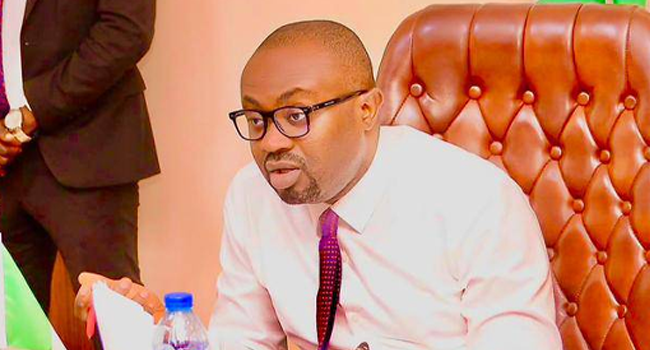
The Chief Executive Officer of the Nigerian Midstream and Downstream Petroleum Regulatory Authority (NMDPRA), Engr. Farouk Ahmed, has responded to recent claims regarding the financing of his children’s education and his integrity in office, insisting that the allegations are misleading and ill-timed.

Ahmed said the allegations “necessitated this response, not because I fear scrutiny of my finances, which I welcome, but because the timing and nature of these claims demand context that only three decades of public service can provide.”

Ahmed highlighted his career in Nigeria’s petroleum sector, which began in 1991, noting that he rose through merit rather than political patronage.

He recalled his experience across technical divisions, crude oil marketing, gas supply monitoring, and downstream operations, stressing that his decisions have always been guided by Nigeria’s national interest.

“I spent my formative years in the technical divisions, where decisions are measured not by political expediency but by engineering precision and market realities,” he said.

He further outlined his rise to General Manager of the Crude Oil Marketing Division in 2012 and later Deputy Director in 2015, before being appointed NMDPRA Chief Executive in 2021.

On assuming the role, Ahmed said, he understood the challenges of implementing reforms under the Petroleum Industry Act, acknowledging that enforcing transparency in a sector long characterised by opacity would inevitably meet resistance.

Addressing the allegations about his children’s education, Ahmed said the claim that he spent $5 million on their Swiss schooling was misleading. “Three of my four children received substantial merit-based scholarships ranging from 40% to 65% of tuition costs, verifiable information are available to any authorised investigation,” he said, adding that contributions from his late father, a Northern Nigerian businessman, further supported the education costs.

He added: “When scholarships, family contributions, and my own savings accumulated over three decades are properly accounted for, my personal financial obligation was entirely consistent with someone of my professional standing and length of service.”

Ahmed confirmed that his annual compensation of approximately N48 million, including allowances, is publicly documented, and that he has submitted detailed asset declarations to the Code of Conduct Bureau throughout his career.

The CEO also linked the timing of the allegations to recent regulatory actions taken by NMDPRA.

“These allegations resurface precisely when NMDPRA has enforced quality standards revealing substandard petroleum products in the market, implemented stricter licensing requirements, and insisted on transparent pricing mechanisms that eliminate opacity benefiting certain market players. This timing is not coincidental,” Ahmed said.

He defended the authority’s import licensing decisions, emphasizing that they comply with Section 7 of the Petroleum Industry Act, which mandates supply security and prevention of scarcity.

“Granting import licenses when domestic supply proves insufficient is not sabotage, it is our legal duty,” he said.

Ahmed invited formal investigations into his finances and tenure, stating: “I formally and publicly request the Code of Conduct Bureau to conduct comprehensive review of all my asset declarations since 1991, the Economic and Financial Crimes Commission to examine all my financial transactions and sources of income, and the National Assembly to exercise its oversight function regarding any allegations of regulatory compromise during my tenure. I will cooperate fully, provide all documentation, and answer all questions under oath if required.”

Concluding, Ahmed reaffirmed his commitment to regulatory independence and transparency.

“Three decades of service to Nigeria’s petroleum sector have taught me that integrity is tested not in comfortable moments but when powerful interests demand compromise. My response is simple: investigate thoroughly, examine every claim, scrutinize every transaction. My record both financial and professional will withstand any legitimate inquiry.”

Continue Reading

National

No Court Order Against Tinted Glass Permit Enforcement, Police Insist

Published

on

By

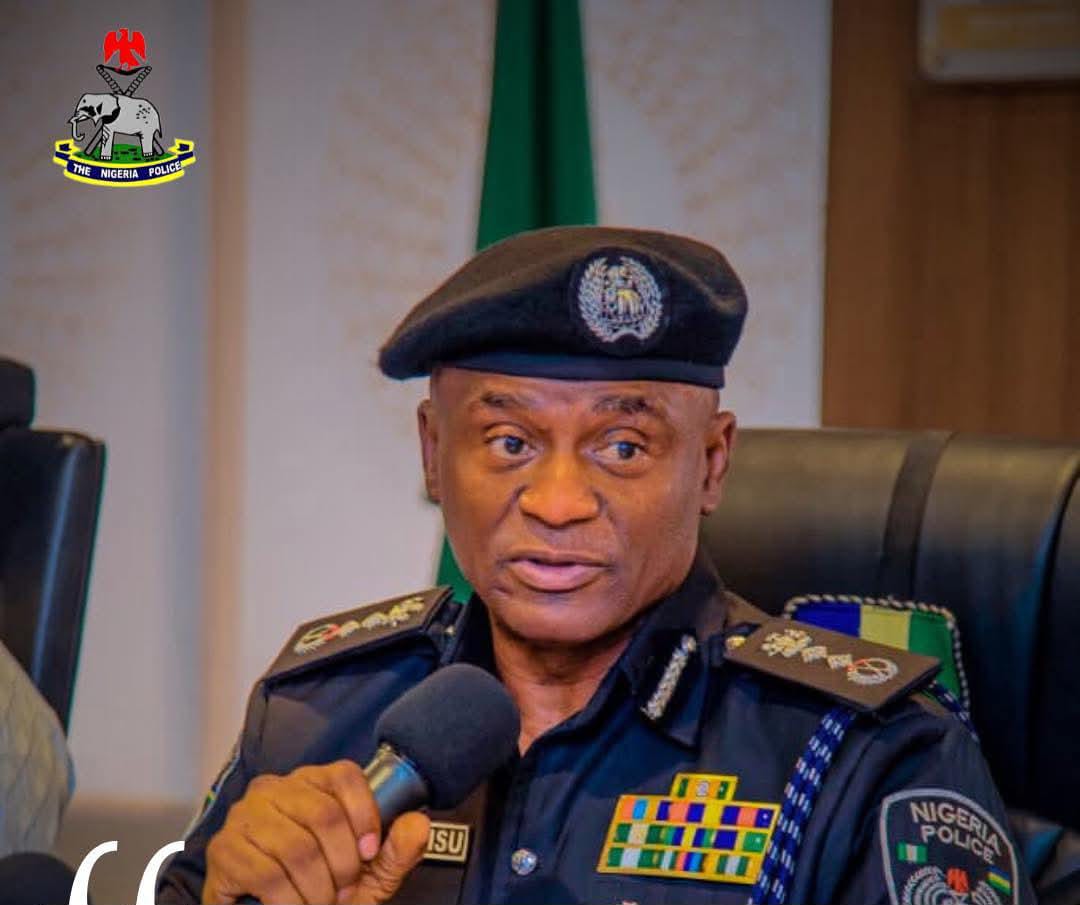
The Nigeria Police Force (NPF) has argued that no court restrained it from enforcing the tinted glass permit regulation, maintaining that the directive remains valid until a competent judicial pronouncement rules otherwise.

Force Public Relations Officer (FPRO), CSP Benjamin Hundeyin, made the clarification while addressing journalists during the presentation of criminal suspects arrested by operatives of the Intelligence Response Team.

He stated that the police would continue enforcement of the tinted glass permit order, stressing that there had been no judicial directive halting the exercise.

Hundeyin explained that criminal groups had exploited previous pauses in enforcement to commit violent crimes, including kidnapping and armed attacks.

He cited a recent incident in Edo State where a Lexus SUV with tinted windows allegedly refused to stop at a checkpoint, leading to a pursuit during which its occupants opened fire on officers, killing a police inspector and injuring others.

He further clarified that the earlier suspension of enforcement announced by the Inspector-General of Police, Kayode Egbetokun, had been misinterpreted by sections of the public and professional bodies, including the Nigerian Bar Association (NBA).

“The Inspector-General of Police, out of respect and understanding, temporarily suspended enforcement to give Nigerians additional time to regularise their tinted glass permits.

That decision was not based on any court order but was a discretionary move to accommodate public concerns,” Hundeyin said.

Acknowledging that the matter is before the courts, Hundeyin noted that the legal process has been slow. He stressed that, pending any contrary ruling, the police would continue enforcement.

“The position remains that enforcement continues until a court directs otherwise. At no point did any court restrain the Nigeria Police Force or the Inspector-General of Police from implementing the tinted glass permit order,” he added.

Responding to reports that the NBA may initiate contempt proceedings against the Inspector-General over the renewed enforcement, Hundeyin said the police legal department would address any action if it arises.

He reiterated that enforcement of the tinted glass permit was necessary for public safety, particularly in curbing crimes committed with vehicles whose occupants are concealed.

The police position comes amid growing debate between the Force and the Nigerian Bar Association (NBA), which has argued that the policy is unconstitutional and currently subject to litigation.

Continue Reading

Trending