
USA
Trump Insists on Mass Deportation, Unveils Early Agenda

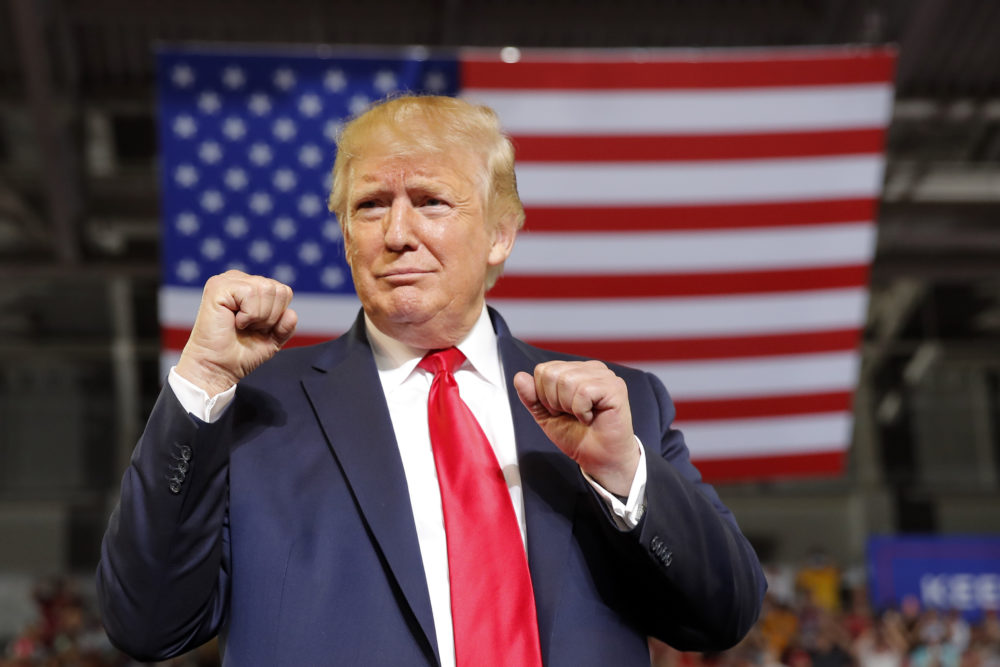

The President-elect of the United States, Donald Trump, has vowed to make good on his election promises of mass deportations and new tariffs in his first television interview since his re-election.
Appearing on NBC’s Meet the Press on Sunday, Trump reiterated his intention to deport every person who had entered the US without authorisation.
“I think you have to do it, and it’s a very tough thing to do, but you have rules, regulations, laws. They came in illegally,” Trump said.
“You know, the people who have been treated unfairly are the people who have been waiting on line for 10 years to come into the country.”
Trump said he was willing to work with Democrats to keep so-called “Dreamers”– undocumented people who came to the US as children and have lived in the US most of their lives – in the country but also suggested that US citizens could be deported along with their undocumented family members.
“I don’t want to be breaking up families,” Trump said. “So the only way you don’t break up the family is you keep them together and you have to send them all back.”
Trump also reiterated his intention to end birthright citizenship, which is guaranteed by the 14th Amendment of the US Constitution.
Amending the Constitution is a lengthy and difficult process involving Congress and all 50 states, but Trump said he was exploring options including an “executive action” to end what he called a “ridiculous” right.
“I’m looking to make our country great. I’m looking to bring down prices because I won on two things… I won on the border, and I won on groceries,” he said.
Trump said that while he “can’t guarantee” that his plan to impose tariffs on Canada, China and Mexico would not push up prices, tariffs would ultimately help the US economy.
“I’m a big believer in tariffs. Tariffs are beautiful. They’re going to make us rich,” he said.
“Why are we subsidising these countries? If we’re going to subsidise them, let them become a State.”
During the interview, Trump also discussed plans to pull back on US support for Ukraine and said Kyiv should “probably” prepare for less aid.
Since Russia’s full-scale invasion of Ukraine in February 2022, Washington has approved nearly $183bn in military, humanitarian and other assistance to Ukraine, according to US government data.
Outgoing President Joe Biden has pledged a further $988m in aid and an additional $925m before he leaves office on January 20.
The Republican said he was “actively” trying to end the war in Ukraine but would not confirm how recently he had spoken to Russian President Vladimir Putin, whom he has spoken about with admiration in the past.
“I don’t want to say anything that could impede the negotiation,” he said.
Trump said that the US would only remain in NATO if members “pay their bills” and if its majority European members “treat the US fairly” by expanding bilateral trade.
The president-elect also said that if he had remained in the White House after the 2020 election, the wars in Ukraine and Gaza would have never happened.
Trump and many of his supporters claim that the 2020 election was “stolen” by Biden and the Democrats.
Anger over the election results later led Trump supporters to storm the US Capitol building on January 6, 2021, in a failed bid to overturn the vote.
During his interview, Trump said he would consider pardoning the 944 people who received criminal sentences for their role in the uprising.
Among them, 562 had been sentenced to prison time as of August, according to the US Justice Department.

“I’m going to look at everything. We’ll look at individual cases, but I’m going to be acting very quickly… the first day,” Trump said.
“These people have been in prison three to four years, and they’re in a filthy, disgusting place that shouldn’t even be allowed to be open.”
Trump said that lawmakers who took part in a Congressional investigation into the events of January 6 should go to prison, although he stopped short of saying he would direct the FBI to investigate.
Trump also said he would not stop his chosen FBI director, Kash Patel, from investigating the so-called “deep state”.
“If they think that somebody was dishonest or crooked or a corrupt politician, I think he probably has an obligation to do so,” Trump said.
Trump sidestepped questions about whether he would appoint a special prosecutor to investigate Biden, although he separately accused the outgoing president of weaponising the justice system against him.
“I’m looking to make our country successful. Retribution will be through success,” Trump said.
The president-elect also said that if he had remained in the White House after the 2020 election, the wars in Ukraine and Gaza would have never happened.
Trump and many of his supporters claim that the 2020 election was “stolen” by Biden and the Democrats.
Anger over the election results later led Trump supporters to storm the US Capitol building on January 6, 2021, in a failed bid to overturn the vote.
During his interview, Trump said he would consider pardoning the 944 people who received criminal sentences for their role in the uprising.
Among them, 562 had been sentenced to prison time as of August, according to the US Justice Department.
“I’m going to look at everything. We’ll look at individual cases, but I’m going to be acting very quickly… the first day,” Trump said.
“These people have been in prison three to four years, and they’re in a filthy, disgusting place that shouldn’t even be allowed to be open.”
Trump said that lawmakers who took part in a Congressional investigation into the events of January 6 should go to prison, although he stopped short of saying he would direct the FBI to investigate.
Trump also said he would not stop his chosen FBI director, Kash Patel, from investigating the so-called “deep state”.
“If they think that somebody was dishonest or crooked or a corrupt politician, I think he probably has an obligation to do so,” Trump said.
Trump sidestepped questions about whether he would appoint a special prosecutor to investigate Biden, although he separately accused the outgoing president of weaponising the justice system against him.
“I’m looking to make our country successful. Retribution will be through success,” Trump said.
Source: Al Jazeera




Nation Building Reimagined: Integrated Principles and Strategies for Sustainable Growth

Dear CDS, NSA, Your Prodigal Sons, Brothers Have Killed General Braimah

Voice of Emancipation: Lessons from the Iran/USA War

Ovation @30: A Triumph of Vision, Courage and African Excellence

ADC National Convention: To Be or Not to Be?

Israel Questions Pakistan’s Credibility in Mediating over US-Iran Ceasefire Agreement

Osun 2026: INEC Planning to Recruit APC Members As Electoral Officials, Lawmakers Allege

‘ADC Membership Hits 500,000 after INEC Derecognition of Leadership’

Trump Delays Iran’s Strike by 2-Weeks As Pakistani Leaders Intervene

FG Expels US Missionary Alex Barber

Benin Republic 2026: Romuald Wadagni, The President in Waiting
Prominent ADC Leaders Storm INEC Hqrs in Protest Against Dictatorship

Again, Iran Blocks Strait of Hormuz, Alleges Ceasefire Violation

Trump Accuses Nigeria of Spreading Fake News on Iran Ceasefire Deal
-
 News6 days ago
‘ADC Membership Hits 500,000 after INEC Derecognition of Leadership’
-
 World4 days ago
Trump Delays Iran’s Strike by 2-Weeks As Pakistani Leaders Intervene
-
 National4 days ago
FG Expels US Missionary Alex Barber
-
 Featured3 days ago
Benin Republic 2026: Romuald Wadagni, The President in Waiting
-
 News4 days ago
Prominent ADC Leaders Storm INEC Hqrs in Protest Against Dictatorship
-
 Middle East3 days ago
Again, Iran Blocks Strait of Hormuz, Alleges Ceasefire Violation
-
 World3 days ago
Trump Accuses Nigeria of Spreading Fake News on Iran Ceasefire Deal
-

 Featured6 days ago
ADC Raises Alarm over INEC’s Plot to Prevent Party from Fielding Candidates