
Headline
Mrs. Onikepo Akande: Celebrating an Achiever @80

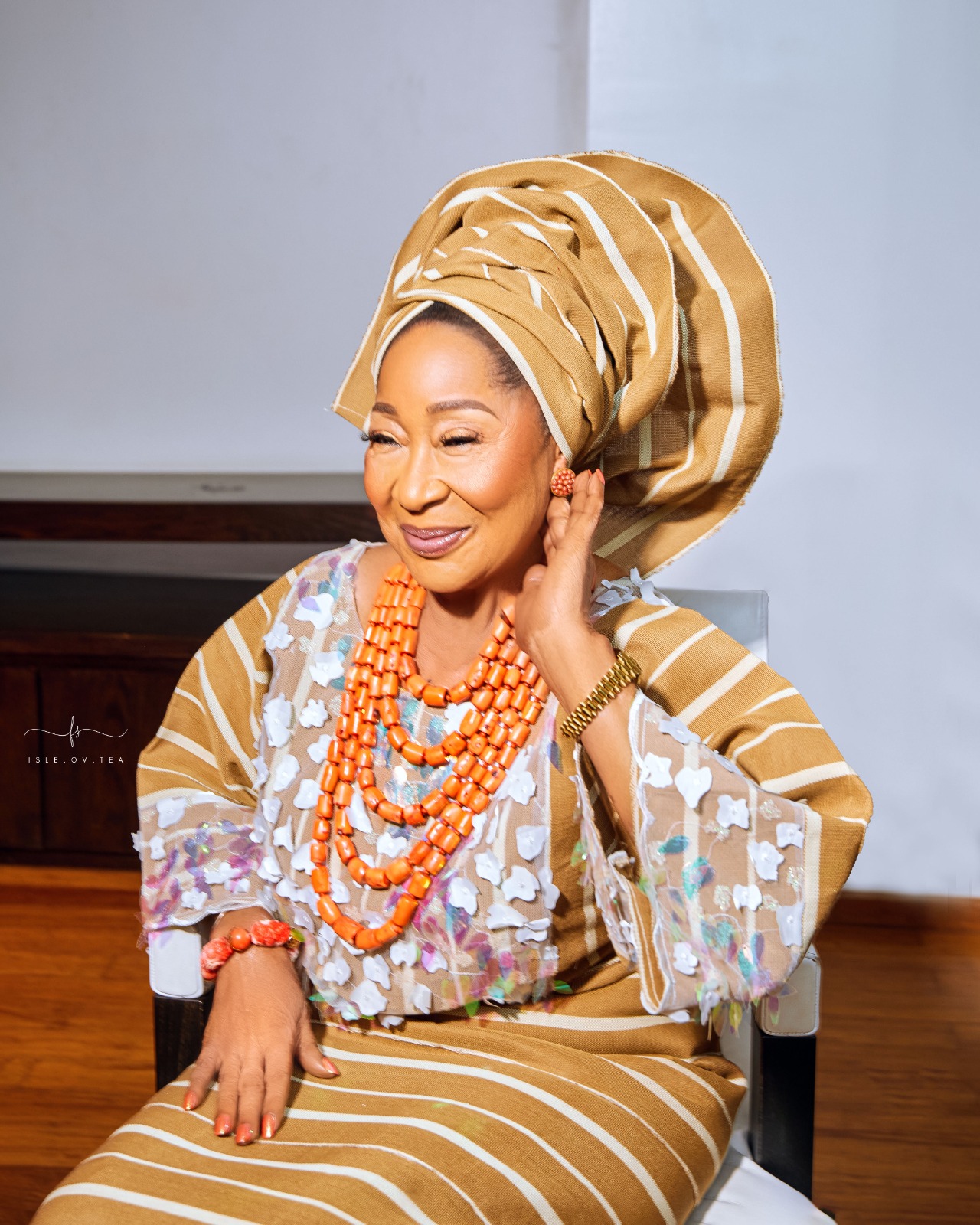

Eric Elezuo
The Convention Centre of the Eko Hotel and Suites was a melting point of some sort recently when the who’s who in South West politics and industry thronged the arena in honour of one of Nigeria’s distinguished public servants, Chief (Mrs.) Onikepo Akande, as she celebrated her entry into the octogenarian club.
Among a list of the high class personalities that gave the gathering a touch of excellence were Her Excellency, the Wife of the Vice President, Hajia Nana Shettima; the Ooni of Ife, Oba Enitan Adeyeye Ogunwusi; Former Deputy Governor of Lagos State, Mrs. Adejoke Orelope-Adefilure; Chairman, Ovation Media Group, Aare Dele Momodu; Former Governor of Ogun State, Aremo Olusegun Osoba; publisher, Guardian Newspapers, Lady Maiden Ibru; Publisher, Vanguard Newspapers, Mr. Sam Amuka, Hajia Bola Shagaya, former Ogun State Governor, Senator Ibikunle Amosun and his wife; Senator Daisy Danjuma, Senator Florence Ita-Giwa, Senator Olorunimbe Mamora, Pastor Siju Iluyomade, CEO, Biscon Communications, Prince Bisi Olatilo; Erelu Abiola Dosunmu and many others.
Clad in the best of attires as the event lasted, the elated Otun Iyalode of Ibadanland and former Minister of Mines and Industry, was a gracious sight to behold as she welcomed invitees and special guests of honour.
THE WOMAN, ONIKEPO AKANDE

Formerly Onikepo Adisa, Mrs. Onikepo Akande (OON CON) was born on October 29, 1944 in Lagos. She is an economist, accountant and industrialist, who served as the President of the Lagos Chamber of Commerce and Industry and honorary life Vice-President of the Nigerian Association of Chambers of Commerce, Industry, Mines and Agriculture.
A native of Ibadan, Oyo State, Nike is the first of four children of a royal family. She had her secondary school education at Queen’s School, Ede (now Queen’s School, Ibadan) after completing her basic education in Ibadan. She holds a B.Sc. in Accountancy from the North-Western Polytechnic (now University of North London) after graduating in 1968. She is also an alumni of the Harvard Business School and the International Institute for Management Development.

An accomplished traditional practitioner, Nike holds the title of “Ekerin Iyalode of Ibadanland”, a traditional chieftaincy position in her homeland. She is married to Chief Adebayo Akande, a business magnate and owner of Splash FM, Ibadan with whom she has children.
She is a renowned industrialist and economist, described by former President Goodluck Jonathan as “an inspiration”. A board member of Union Bank of Nigeria and PZ Foundation, she also serves as the Director of the National Insurance Corporation of Nigeria and the Nigeria Industrial Development Bank.

Not done with finding her worthy to serve on various fronts, on December 8, 2015, Nike was appointed Chairman of the NEPAD Business Group Nigeria, succeeding Chris Ezeh. She was appointed as the President of the Lagos Chamber of Commerce and Industry, on December 5, 2015.
At her investiture, the wife of the then President, Mrs. Aisha Buhari, said of her that Nigeria needs nothing less from a two time minister as she pledged a vibrant private sector. The then outgoing President of LCCI, Mr. Remi Bello, also considering her pedigree, said ‘she’s bringing rich blend of public, private sector experience to bear on LCCI’, a trust she had not failed ever since being the second woman president of the organization in its 127 years of existence.
In her speech at the event, Mrs. Akande did not leave anyone in doubt as regards where her priority lies. This is espoused as follows:
“We need the private sector to generate employment to address the acute and frightening unemployment, poverty and insecurity in our society; we need a virile private sector to make Nigeria a respected country in the comity of nation.

“We would not relent in our advocacy to promote a conducive environment for the private sector to play the role expected of it in the realisation of the Nigerian vision.”

That is the kind of passion she has to see that the average Nigerian is well catered for and given the good he deserves.
A peep into her life and times showed that she was appointed Minister of Industry, Federal Republic of Nigeria in December, 1997 and re-appointed to the same Ministry in August, 1998. This made her a two-time Minister of Industry under different administrations. She was the first Nigerian woman to become Minister of Industries. This was not surprising to many who knew her as a strong believer in the philosophy that industrialization is the key to economic development, poverty alleviation and eradication, as well as employment generation.
At an event in Addis Ababa, Ethiopia in 1998, she was awarded the African Federation of Women Entrepreneur Award. In 2003, she was conferred as an Officer of the Order of the Niger (OON). Nike is also a recipient of the national honour of the Commander of the Order of the Niger (CON) since 2014.
A seasoned business administrator and accountant, she has evolved in the near two decades as noteworthy industrialist in the economic landscape of Nigeria.
Many boardrooms have been graced by the presence of this amiable accomplished woman. She had been the Director of Nigerian Industrial Development Bank (NIDB), a member of the Board of Trustees, of the National Center for Women Development; member, panel to study and re-organize both the Nigerian National Petroleum Corporation (NNPC) and Trust Investment Company Limited Ibadan; Director of National Insurance Corporation of Nigeria (NICON).

Mrs. Akande is not the type to come to office without leaving a mark of positive affection on both the office and the people. One of her major achievements in office was the revamping of the Onigbolo Cement Company, a Nigeria-Benin Republic joint venture to its present level of profitability.
She also particularly emphasized the adoption and revitalization of Industrial Development Centres (IDCs) across the nation, to support and help the informal sector operators in Nigeria in order to boost industrial productivity.
In December 1998, she broadened Nigerians Industrialization effort by successfully signing an Investment Promotion and Protection Agreement with Romania and Bulgaria – a co-operation which Nigeria is still benefiting from till today.
A fulfilled person, she said this of herself, “I am a fulfilled and happy person. That is why I always smile because I thank God. I have a special song which I always sing: ‘Elo ni mo san, fun Oba ogo, elo ni Jesu mi gba, fun ore re lori mi’.”
Recollecting what gave her the impetus to aim so high, and achieve so much, she said: “Being the first child, leadership was thrust at me when my mother died. I used to take her place during the extended Aboderin family meetings where I sat with big people. I’ve always been ambitious and as a child, my mother hired a private teacher for extra-moral classes for me. One day, he was talking about the death of a Minister, Bode Thomas then. I was interested in the story, and I told him I would be a minster in this country someday. When I became a minister, he came to look for me at the ministry to remind me of this.”

She believes that winning is a product of niceties: “To win in life, you have to be nice to people and help them as much as possible. Moreover, I am still contributing my quota to the development of Nigeria. I was at Queen’s School, Ibadan to see the principal sometime and I saw that the administrative block was not looking nice. I promised to do something and being on the board of PZ Foundation, I requested help for my alma-mater and they constructed a brand new administrative block.”
Her pedigree is endless, and that is why she is worthy of the boss of the week. Happy 80th Birthday ma!






Why Investing in People Outperforms Every Resource on Earth

Adding Value: The Six Pillars of Success Pt. 2 by Henry Ukazu

My Dear Brother, Dele Momodu by Segun Adeyemi

Elegance, Accolades As Silverbird Holds 2025 Man of the Year Awards

Tinubu, Atiku, Obi Felicitate with Muslim Ummah, Nigerians at Eid-el-Fitr

AFCON 2025: George Weah Urges CAS to Overrule CAF’s Verdict

Champion Newpaper Celebrates Excellence at 2025 Awards

The Billionaire Gang: The Quartet That Keeps Nigeria in Limelight

Wife’s Death: Mourners Throng Former Ovation Editor, Mike Effiong’s Home in Commiseration

Tinubu, Wife, 12-Man Entourage Depart to UK on Historic State Visit

CAF Strips Senegal of AFCON 2025 Victory, Declares Morocco Winner

AFCON 2025: Senegal Rejects CAF Verdict, Heads to CAS

Electocral Act: Knocks As NASS Prioritized Removal of Certificate Forgery As Ground for Election Petition

Nova Bank Appoints Jude Anele As MD/CEO, Meets CBN Capital Requirements
-
 Boss Picks5 days ago
The Billionaire Gang: The Quartet That Keeps Nigeria in Limelight
-
 Events5 days ago
Wife’s Death: Mourners Throng Former Ovation Editor, Mike Effiong’s Home in Commiseration
-
 Featured4 days ago
Tinubu, Wife, 12-Man Entourage Depart to UK on Historic State Visit
-
 Sports4 days ago
CAF Strips Senegal of AFCON 2025 Victory, Declares Morocco Winner
-
 Sports3 days ago
AFCON 2025: Senegal Rejects CAF Verdict, Heads to CAS
-
 Featured5 days ago
Electocral Act: Knocks As NASS Prioritized Removal of Certificate Forgery As Ground for Election Petition
-
 Featured5 days ago
Nova Bank Appoints Jude Anele As MD/CEO, Meets CBN Capital Requirements
-

 Featured3 days ago
Resign by March 31, Tinubu Tells Political Appointees Seeking Elective Offices in 2027