The Oracle
The Oracle: 25 Years of Uninterrupted Democracy in Nigeria: Prospects and Possibilities (Pt. 2)
Published
2 years agoon
By
Eric
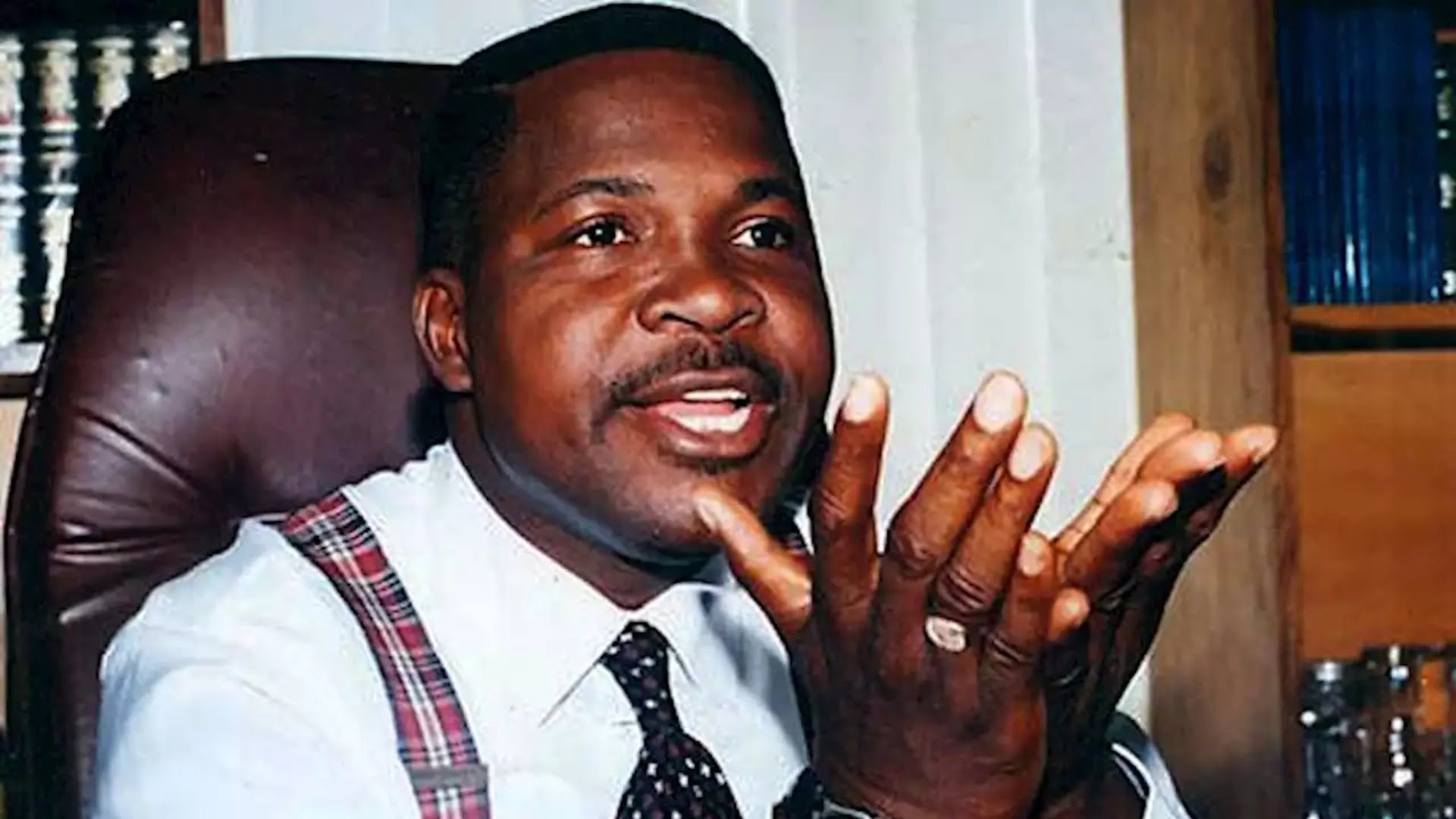
By Prof Mike Ozekhome SAN
INTRODUCTION
The first part of this treatise commenced appropriately enough with a diagnosis of the problem, with an analysis of how we ‘lost it’ after which we considered the depth of the challenge, the critical situation which presently confronts us. Today, we shall x-ray the prognosis – poor leadership, lack of an autochtonous Constitution and the ambiguous status of local governments. We shall then consider whether peace separation is a solution or not. Please read on.
PROGNOSIS
So, what is the way forward? How do we achieve the Nigeria of our dreams? How can we make democracy work for us? To be sure, there is no fail-safe or fool-proof prescription which, when applied, will suddenly transform Nigeria into an Eldorado or utopia overnight. The cliché might be well-worn, but it is nevertheless, apposite: democracy is a journey, not a destination. Therefore, the challenge – our challenge, all of us collectively – is to commit to imbibing, applying or adopting time-tested ethical values or ethos which have worked for more successful democracies across the world, including some (like the Asian Tigers, Singapore, Hongkong, South Korea, and Taiwan) which – like Nigeria – were once (not too long ago) classed as developing or third-world countries. Indeed, at independence, some of them were arguably less developed than Nigeria. So, what did they get right and we got right? That is the question.
THE BANE IS LEADERSHIP
The answer to this all-important question lies in the socio-political environment in which those seeming miracles took place. While, virtually all those countries had their fair share of military dictatorships and non-democratic (or unelected) central governments, the unmistakable common thread or denominator that they all share is that their leaders were able to galvanize their people to focus on and pursue a common goal: national unity as a bedrock for economic prosperity and sustainable growth. In other words, LEADERSHIP is key. It might also be axiomatic, but a truly effective and pan-Nigerian, selfless, patriotic and committed leadership has been the single most problematic factor behind our nation’s woes. Without such leadership, any talk of transformation is simply a mirage.
Indeed, democracy itself might even be imperiled. This self-evident fact requires little elaboration, as it takes a patriot – a genuine, committed patriot – who prioritizes that nation’s well-being above petty, partisan, political or ethnic/religious interests to deliver on Nigeria’s promise and potential. In other words, a statesman who can see the big picture and envision a country that thrives on the basis of the supremacy of the rule of law.
THE LACK OF AUTOCHTHONOUS CONSTITUTION
This takes us to the next most important ingredient in the tool-kit: legal and/or constitutional reform, and its sub-text: electoral reform. I have spoken extensively about my belief in the shortcomings of the present Constitution. Those views have not changed. Let me reiterate my position that nothing short of a total overhaul of the military-bequeathed contraption called “the 1999 Constitution” (a mere Schedule attached to Decree 24 of 1999) will have the credibility and legitimacy needed to secure the legitimacy, credibility and acceptance (if not obedience) of the overwhelming majority of Nigeria.
We must fashion a brand new Constitution in the style of the independence (1960) Constitution which was negotiated by the then three regions, North, East and West through their elected leaders; as did America between May and September, 1787 in Philadelphia, Pennsylvania.
Unfortunately, military adventurists did not allow that experiment to stand the test of time before truncating it along with the 1st Republic. A corollary to this constitutional overhaul is the (arguably even more important) issue of Electoral Reform. The tradition or practice of a 4-year review of our Electoral Act has not stemmed the incidence of pre-election and post-electoral disputation in courts and tribunals – and even violence. The challenge in his regard (like the other aspects of our multidimensional ills) has been – more than anything else – attitudinal: our political class and their foot soldiers should adopt and internalize the culture of good sportsmanship.
Electoral contests should cease being so bitterly disputed and, should, instead be replaced with the spirit of the winners being magnanimous in victory while the losers are gracious in defeat. Elections are not do-or-die affairs. No. Even in a party democracy where the winner takes it all, our electoral outcomes ought to reflect the spirit of our old-new national anthem so that its revival will be meaningful.
This prescription (coupled with the often-suggested establishment of an Electoral Offences Court as well as the reduction in electoral cases which go up to the Supreme Court) ought to ensure a perceptible (if not quite dramatic) drop in election-related cases – at least those which directly challenge the outcome or results of elections.
AMBIGUOUS STATUS OF LGAs
Still on legal/constitutional reform, a related issue is the ‘ambiguous’ status of the lowest tier of government: local governments. While the Constitution (under Section 7) has always recognized their autonomy, the experience (to everyone’s knowledge) is that they have always been hostage to State Governors who stage-manage their elections and – when the tenures of their ‘elected’ officials expire – replace them with hand-picked cronies who will do their bidding and condone the non-remittance of their statutory allocations directly to them.
To his credit, the Attorney-General of the Federation, Lateef Fagbemi, SAN, has interviewed boldly through the pending case at the Supreme Court, which for that very reason, I will say no more.
PEACEFUL SEPARATION?
On a larger level, yet another elephant in the room, is the possibility of peaceful separation from those who desire it. I prefer a big, prosperous, united and stable Nigeria. However, where peaceful co-existence is not possible, what do we do? Kill ourselves? No. this is where I borrow the analysis of a commentator (Aminu Sa’ad Bali – amazingtimesng.com, June 19, 2021), who opined that separation is not necessarily about war. He cited the following as examples of Peaceful Separations:
In 1776, the USA split from the UK.
In 1830, Belgium separated from the Netherlands.
In 1965, Singapore split off from Malaysia.
In 2002, East Timor got split off from Indonesia.
In 1921, Ireland split off from the United Kingdom, and (possibly in the future) there will be secession of Scotland.
In 1944, Iceland split from Denmark with remarkable ease.
In 1905, Norway split from Denmark.
In 1905, Norway and Sweden also peacefully split ways.
In 1947, the British India Dominion was partitioned into India and Pakistan.
In 1971, Bangladesh seceded from Pakistan.
In 1992-93, the two parts of Czechoslovakia agreed to each go their own way, leading to two separate countries – the Czech Republic and Slovakia after what’s been named the “Velvet Divorce”.
About the same time, another kind of separation occurred, in Yugoslavia. Unfortunately, this was accompanied by bloodshed.
In 1965, Singapore split from Malaysia for reasons, which included religion (Malaysia is majority Muslim, Singapore isn’t), ethnic/racial (Singapore has a very large majority Chinese population) and concerns over the Malaysian Bumiputra policy, which was (and is) basically a form of “Affirmative Action” for Muslim Malaysians – who make up the majority population in Peninsular Malaysia.
Ethiopia and Eritrea, Sudan and South Sudan are now separate countries.
The old USSR (Soriet) is now broken down into several independent countries.
To the foregoing, I can agree only to the extent that separation is an avenue for healthy competition for development, as in the case of Singapore and Malaysia, India and Pakistan, Norway/Denmark/Switzerland, etc; but not for the sake of it.
In the case of Nigeria, I foresee a healthy rivalry among the original component parts, the North, West and South, each making useful progress while competing with the others. Accordingly, it is not about war; after all, there is nothing wrong for one to decide he is no longer comfortable with the union and wanting to opt out. We call it self determination – a concept recognized by the UNO Charter.
PERCEPTION OF PUBLIC OFFICE HOLDERS
Related to the question of attitude is public perception at the seeming insensitivity of our public officers. In this regard, a lot of disquiet (if not anger) was generated by the news of legislators earmarking the humongous sums of ₦160m to purchase SUVs for each member of the National Assembly. This development was particularly irksome against the backdrop of the lingering (often contentious) issue of a national minimum wage for public workers with government conceding a mere non-living wage of N60,000. This, coupled with other news of more humongous amounts of money – a minimum of ₦500m reportedly earmarked (in some cases, actually collected/received – as so-called constituency allowances by the legislators, contributes in no small measure in eroding public confidence in democracy – or at least our peculiar brand, if not practice, of it. What about two new presidential jets said to have cost a bleeding country like Nigeria a whopping billions of naira. Nigerians believe that the president and legislators should embrace the somber mood of the country and avoid lawlessness and ostentation.
Once again, it is a question of trust or perception that our leaders are either insensitive or simply out of touch with our common reality: the daily grind which is the reality of the common man, given the sheer (and rising) cost of living, rampant inflation and the ever falling nature of the Naira. So this is another issue that needs to be tackled if democracy is to remain attractive to the average Nigerian as a viable governance model: the insensitivity of our elected representatives to the public perception of their lifestyles and incomes/emoluments/perks of office as being out of sync with the hardship which is their lot, and which, has indeed become a new normal.
Our elected leaders must look inward, and do serious introspection and soul-searching by making conscious, deliberate choices which project them as considerate, frugal and sensitive to the economic realities of the time. They must address the popular belief that part of the pressure on the Naira is caused by their demand for foreign currencies (especially the dollar) which is publicly–perceived to be the currency of choice of the political elite, particularly public office holders. (To be continued).
THOUGHT FOR THE WEEK
“In politics, nothing happens by accident. If it happens, you can bet it was planned that way”. – Franklin D. Roosevelt.
Related
You may like
The Oracle
The Oracle: The Independence of the Judiciary in a Democratic Dispensation (Pt. 5)
Published
7 minutes agoon
July 17, 2026By
Eric
By Prof Mike Ozekhome
Introduction
In our last discourse, we considered the notion of political independence in the judicial process and the imperatives of insulating the judiciary from such pressures. We also took a look at the importance of economic/fiscal and intellectual independence for judges, as well as how to sanitize the process of their appointment. This week, we shall continue and conclude the process of appointment and then move on to the training and re-training of judges and the role and importance of the rule of law in a democracy. Enjoy.
Appointment
By virtue of section 250(3), 256(3) and 271(3) Constitution of the Federal Republic of Nigeria 1999, a person shall not be qualified to hold office of Chief judge or a judge of the Federal High Court, Chief Judge or a judge of the High court of the Federal Capital Territory and a judge of a High Court of a state, respectively:
“Unless he is qualified to practise as legal practitioner in Nigeria and has been so qualified for a period of not less than ten years”.
We are not really concerned here about the procedure for appointment of High Court judges. What has threatened the system with collapse is the bare assumption in these constitutional provisions that tends to imply that once a person has spent ten years on earth since he/she was called to the Bar, the person automatically has all the intellectual capability to be appointed a judge.
More than anything else, judicial incompetence (encompassing law intellectually, law productively etc) has contributed to rob the Judiciary the necessary intellectual freedom it needs to assert and guard its independence. According to Schewart:
“The quality of justice….depends more upon the quality of the men who administer the law then on the content of the law they administer.” 41
In his keynote address at the recent Bar Conference at Enugu, Chief Afe Babalola, SAN, observed on the constitutional qualification for appointment as a judge as follows:
“This allows great latitude for the appointment of ‘any lawyer’ who has met the ten years requirement regardless of where he is prior to his appointment. This explains why a new wig from the Nigerian Law School who, immediately after his call (and probably Youth Service) went straight to work in a company, multinationals and the life without any experience whatsoever in practice could be and are being appointed as High Court Judge”.
At the swearing in of the new Senior Advocates of Nigeria on Monday, September 8, 2003, the Honourable Attorney-General of the Federation and Minister of Justice, Chief Akin Olujinmi, SAN hinted that more stringent criteria for appointment of judges would be introduced. According to the Chief Law Officer of the Federation:
“We will propose that only those who can furnish evidence of contentious cases they handled in the Supreme Court, Court of Appeal and the High Court within, say, three years preceding their application should be considered for appointment. By so doing, it will be possible to select only seasoned practitioners to occupy positions on the Bench.”
The plan is absolutely welcome! It has been suggested that the list of proposed judges should be made public to enable members of the public who know the prospective judges to object to a proposal with ‘proven documents’. Our only concern here is the yard stick for determining the competence of lower court magistrates and Area Courts who do not practise law. We suggest that a certain number of highly contentious cases they handled with analytical judgments delivered therein be used as a yardstick.
Training and Re-Training
Also critical to the issue of intellectual independence of the Judiciary, is the assurance of training and continued training. This because the National Judicial Institute takes the issue of continued judicial training even more seriously, the high toll on the nation as a result of the blunders of ignorant judges can only be imagined. It manifests in the erosion of public confidence in the Judiciary. As Professor Oluyede rightly observed.
“A gullible public is too ready to jump to the wrong conclusion that a bad judgment delivered by an innocuous judge who has done little or no research must have been influenced by an overbearing Executive.”
In his recently published “Agenda For Justice Sector Reform”, the Honourable Attorney-General of the Federation hinted at plans to make constitutional provisions for an independent body to be known as, Judicial Performance Commission to monitor the work and activities of the entire judicial system. This plan is in the right direction because it has the potential to improve the depth of intellectual independence of Judiciary and ultimately to enhance the realization of an independent and impartial Judiciary.
The Rule of Law
The rule of law means ‘the absolute supremacy or predominance of regular law as opposed to the influence of arbitrary power. It excludes the existence of arbitrariness, or prerogative or even discretionary authority on the part of government. According to A.V Dicey, renowned cerebral professor of English Law, we must be ruled by law and law alone. He went further to categorize the doctrine into three aspects. The first aspect, according to him, means.
“The absolute supremacy or predominance of regular law as opposed to the influence of arbitrary power, and excludes the existence of arbitrariness, or prerogative or even of wide discretionary authority on the part of government..”
The second of aspect of Dicey’s theory may be summarized as meaning “equality before the law”, and that law is no respecter of person, rank or status. He wrote thus:
“Equality before the law, or the equal subjection of all classes to the ordinary law of the land administered by the ordinary law courts; the rule of law in this sense excludes the idea of any exemption of officials or others from the duty of obedience to the law which governs other citizens or from the jurisdiction of the ordinary tribunals”.
Finally, the third meaning of the rule of law, according to Dicey, is expressed as follows:
“a formula for expressing the fact that with us the law of the constitution, the rules which in foreign countries naturally form part of a constitutional code, are not the source but the consequence of the rights of individuals as defined and enforced by the courts.”
The rule of law thus envisages the existence of the constitution or some sort of law which shall be bestowed with absolute supremacy overall persons, whether governor or governed. The Supreme Court of Nigeria, in simple prosaic terms, expressed this doctrine in the case of Governor of Lagos State V Ojukwu when it held that:
“The law is no respecter of persons, principalities, governments or powers and the courts stand between the citizens and the government alert to see that the state or government is bound by law and respects the law”.
The Role of the Rule of Law in a Democratic Setting
In our contemporary world, the term “Rule of law” is now a convenient short hand for the full complement of our civil and political rights. That term now denotes the minimum condition of existence in a free, open, humane, civilized and democratic society. It encompasses the following:
- The supremacy of the law including judicial decisions over all persons and authority in a state
- The supremacy of the constitution
- Independence of the judiciary
- The right to personal liberty
- Observance of democratic values and practices including’ the freedom of speech, thought, association and the press and regular, free and fair elections as the basis for assuming power in government.
Democracy, which is the indispensable Siamese twin of the rule, is based on two key principles:
- Popular control over collective decision making and decision makers; and
- An equal right to share in the control, i.e. political equality.
However, those key principles require in the modern State, a distinctive set of social components for their realization. They are:
- Free and fair elections, to provide the platform for popular control over government;
- Open and accountable government, guaranteeing continuous public accountability;
- Sanctity of the rule of law, upheld by independent courts;
- Civil and political rights and freedoms, enabling citizens to associate freely with others, to express divergent or unpopular views and to find their own solutions to collective problems;
- A democratic society, or societal conditions for democracy:
- Agreement on nationhood within the current national or state boundaries.
- Independent and accountable institutions of civil society.
- A democratic culture.
From the above, it is indubitable that democracy without rule of law is tantamount to wholesale arbitrariness. This much was admirably captured by Professor Nwabueze when he subjected the concepts of constitutional democracy and arbitrary rule to considerable thoughts. According to him:
“Constitutional government recognizes the necessity for government but insists upon a limitation being placed upon its powers. It connotes in essence therefore a limitation on government; it is the antithesis of arbitrary rule, its opposite is despotic government, the government of will instead of law”.
In Nwabueze’s view, a constitutional, popular government connotes not just a government under constitution, but rather government under a constitution which has force of a supreme, overriding law, and which imposes limitations upon it. He went further to conclude that. “in practical terms, constitutionalism, democracy and the rule of law are practised in a country where the government is genuinely accountable to an entity or organ distinct from itself, where elections are freely held on a wide franchise at frequent intervals, where political groups are free to organize in opposition to the government in office and where there are effective legal guarantees of fundamental civil liberties enforced by an independent judiciary.
Thought for the Week
“The judicial wheel is rounded with equality, oiled with honour and functions smoothly with honesty – principally when both members of the Bench and Bar shoulder their responsibilities seriously”. (Munindra Misra).
Related
The Oracle
The Oracle: The Independence of the Judiciary in a Democratic Dispensation (Pt. 4)
Published
1 week agoon
July 10, 2026By
Eric
Prof Mike Ozekhome SAN
Introduction
In the last part of this intervention, we examined the abuse of ex-parte orders as part of our survey of the independence of the judiciary. We then moved on to political pressures exerted on the judiciary. We continues with this theme today and extend economic/fiscal pressures which undermines judicial independence. We shall also x-ray the intellectual dimensions of the judicial remit as well as the relevant legal codes for their appointment. Come with me.
POLITICAL INDEPENDENCE (continues)
The duty of maintaining a Judiciary that is free from political influence, an independent and impartial Judiciary in line with section 17(2)(e) of the 1999 Constitution, rests on the honourable men and women on the bench, the political class, the other two arms of government and all and sundry. An independent Judiciary that inspires confidence is a sine qua non for sustainable democracy. Judges have a special role to reject any attempt to undermine the independence of the Judiciary in this dispensation. It is sacred! The admonition of Hon. Justice (Prof.) A.F.D. Kuti in this wise is instructive.
“Of course, judges make laws by interpretations, as judges, by nature and training do not succumb to partisan considerations they are political, they should be abstinat a fabia. They must not allow themselves to be torn apart by any form of differences in our societies… The judges have a duty to chart an independent course and let it be known that the independence of (the) judiciary is of vital importance to the democratic process to maintain Human Rights Provisions and to maintain the non-adoption of sate Region… The Judiciary itself must be like Cinderella living in a glass house, above board like Caesar’s wife, also above suspicion”.
Economic/Fiscal Independence
It is a trite warfare strategy that the easiest way to weaken an army and overrun it is to cut off its supplies and starve it. Vital in the question of independence of the Judiciary is the issue of fiscal autonomy, and proper funding. As soon as we institutionalize the practice of judicial officers going cap in hand to beg for funds from the Executive, the idea of independence of the Judiciary has been trampled upon and blown into smithereens! Independence must involve economic ‘self-reliance’ and fiscal autonomy. By these, we mean that the Judiciary under this dispensation should always be able to have the funds due to it constitutionally falling directly to it without having to approach the Executive for any form of lobbying before funds can be released to it. The Constitution has substantially taken care of this area. It only remains for the frontiers of fiscal autonomy to be widened so that the Judiciary, (especially State Judiciaries) would be able to carry out capital projects so as to maintain befitting physical infrastructure for the Judicial institution. Agbakoba has argued that:
“Judicial Independence is meaningless if it is not accompanied by economic independence. Dishonest judicial staff has no credible claim to judicial independence. It is necessary to take steps to ensure that judges and magistrates can enjoy a professional status capable of guaranteeing them the required amount of professional independence coupled with an adequate remuneration package that can effectively isolate them from pecuniary pressures.”
In Nigeria and under this democratic dispensation, some jurisdictions have had to contend with dilapidated office buildings, inadequate supplies and regular power outages. Starvation of funds is a weapon used by the Executive, the keeper of the Federation purse, to achieve a balance of judicial power by giving judicial officials a sense of economic/fiscal dependency.
To stave off starvation of funds, many countries have had to increase budgetary allocations significantly in favour of the judiciary both to provide adequate physical facilities and to allow for the continuing education of judges, magistrate and their staff. In some cases, as in Madagascar, this new approach has resulted in the establishment of a school solely dedicated to the training of judicial personnel.
The poor state of fiscal ability of the Judiciary in Nigeria today aptly depicts the observation of the Federalist, Alexander Hamilton that:
“The Judiciary is beyond comparison the weakest of the three departments of power. It has no influence over either the sword or the purse; no discretion either of the strength or the wealth of the society; and can take no active resolution whatever. It may be said to have neither FORCE NOR WILL, but merely judgment.”
Although the salaries and recurrent expenditures of the Judiciary are constitutionally charged upon the Consolidated Revenue Fund, it does not appear that the Constitution specifically ensures the provision for the capital expenditure of the Judiciary. This is another ploy to still keep the Judiciary low and check its ferocity in holding the balance over government excesses. There are other pockets of ploys and half-truths.
It has, for example, been argued from the Bench that the concept of accountability has often been relied upon to justify restricting the administrative independence of the Judiciary. The Executive must, in this democratic dispensation, allow unfettered fiscal independence for the judiciary by freeing its funds from all restrictions so that judges do not have to continue to go to the Executive to seek for funds for capital projects and recurrent expenditure or extra budgetary expenses.
Judicial accountability, in fact, complements and reinforces judicial independence by creating the public confidence on which judicial independence ultimately depends. There is no gainsaying that the point is sometimes made that in relation to their judicial functions, judges are subject to a higher degree of accountability and transparency than any other public officers, or even with the present democratic dispensation, than indeed any holder of political office, be they ministers or special advisers or chairmen or members of parastatals.
It has also been argued from the Bench that financial independence of the Judiciary can only be guaranteed where the ‘order’ allows physical projection and administrative control of finances by officers accountable to the Judiciary.39 The notion of Independence of the Judiciary would remain mere rhetoric without complete fiscal autonomy for the Judiciary.
Intellectual Independence
This subhead is used here in a technical sense as an issue of judicial independence. But, it can best be described by the story in the Bible of Israel’s sojourn in the land of Egypt. A wicked king that hated the Hebrews and was afraid of their independence and prosperity had given an instruction to midwives in this manner,
“When ye do the office of a midwife to the Hebrew women….if it be a son, then ye shall kill him but it if be a daughter, then she shall live…Every son that is born ye shall case into the river, and every daughter ye shall save alive.”
Pharaoh preferred Hebrew females because he was afraid of male power in the event of war with the Hebrews. The same stratagem has been employed to destroy the intellectual vibrancy of the judiciary so as to weaken its independence. The calibre of judges that can stand their ground against assault on judicial independence are those imbued with high independent, incorruptible and analytical mind laced with profound intellectual fecundity. While the High Court Bench has a mixed multitude of judges, the Court of Appeal and the Supreme Court are filled with such high calibre of intellectually vibrant and independent-minded justices. This would explain why the Court of Appeal and the Supreme Court have not only set impressive records of independent-mindedness and incorruptibility. Those two courts can hardly be faulted in the area of independence and absence of external influence. The problem of intellectual freedom mainly lies at the High Court Bench, and the lower benches.
Appointment
By virtue of section 250(3), 256(3) and 271(3) Constitution of the Federal Republic of Nigeria 1999, a person shall not be qualified to hold office of Chief judge or a judge of the Federal High Court, Chief Judge or a judge of the High court of the Federal Capital Territory and a judge of a High Court of a state, respectively:
“Unless he is qualified to practise as legal practitioner in Nigeria and has been so qualified for a period of not less than ten years”.
We are not really concerned here about the procedure for appointment of High Court judges. What has threatened the system with collapse is the bare assumption in these constitutional provisions that tends to imply that once a person has spent ten years on earth since he/she was called to the Bar, the person automatically has all the intellectual capability to be appointed a judge.
More than anything else, judicial incompetence (encompassing law intellectually, law productively etc) has contributed to rob the Judiciary the necessary intellectual freedom it needs to assert and guard its independence. According to Schewart:
“The quality of justice….depends more upon the quality of the men who administer the law then on the content of the law they administer.” 41
In his keynote address at the recent Bar Conference at Enugu, Chief Afe Babalola, SAN, observed on the constitutional qualification for appointment as a judge as follows:
“This allows great latitude for the appointment of ‘any lawyer’ who has met the ten years requirement regardless of where he is prior to his appointment. This explains why a new wig from the Nigerian Law School who, immediately after his call (and probably Youth Service) went straight to work in a company, multinationals and the life without any experience whatsoever in practice could be and are being appointed as High Court Judge”.
At the swearing in of the new Senior Advocates of Nigeria on Monday, September 8, 2003, the Honourable Attorney-General of the Federation and Minister of Justice, Chief Akin Olujinmi, SAN hinted that more stringent criteria for appointment of judges would be introduced. According to the Chief Law Officer of the Federation:
“We will propose that only those who can furnish evidence of contentious cases they handled in the Supreme Court, Court of Appeal and the High Court within, say, three years preceding their application should be considered for appointment. By so doing, it will be possible to select only seasoned practitioners to occupy positions on the Bench.” (To be continued).
Thought for the Week
“I believe that an independent judiciary is the crown jewel of our constitutional republic. Brett Kavanaugh”. (Charles Evans Hughes).
Related
The Oracle
The Oracle: The Independence of the Judiciary in a Democratic Dispensation (Pt. 3)
Published
2 weeks agoon
July 3, 2026By
Eric
By Prof Mike Ozekhome SAN
Introduction
Another public outrage attended the ex parte order granted by a Lagos High Court against the Nigeria Labour Congress (NLC) restraining it from calling out workers on a planned nationwide strike to protest the hike in price of petroleum products by the Federal Government. An Abuja High Court had refused the application because there was no genuine case of urgency. The Federal Government went down to Lagos and surprisingly a Lagos High Court, which had co-ordinate jurisdiction with the Abuja High Court granted the order. The NLC president, Adams Oshiomhole had to tell the whole world that the order was not binding on the NLC as it was obtained from the “Black market”. The strike went on as planned and the image of the Judiciary was worse off and its independence seriously put in question.
Another controversial ex-parte order was that made by a judge in the Abuja Division of the Federal High Court restraining the governor of Anambra State Dr. Chris Ngige from parading himself as governor. The order (which, apart from the questionability of the perceived extreme urgency attending it) could not be reconciled with the state of immunity enjoyed by the governor under the Constitution. The governor had to borrow the “Black market” appellation from Oshiomhole. Even more controversial and outrageous ex parte orders were dished out by the same court on the Anambra crisis alone.
At the heart of the issue of abuse of ex parte orders (especially in political issues) is the attendant erosion of public confidence in the independence and impartiality of the Judiciary. The ugly implications were rightly summed up by a writer as follows:
“In these instances of judicial recklessness, there was always the palpable belief that unseen hands moved the court to issue such controversial ex parte orders. That is the meaning of the ‘black market’ reference made by Oshiomhole and Ngige. None of them was prepared to obey a ‘black market’ order obtained outside the ‘official market’! They never obeyed and nothing happened!
Abuse of ex parte injunction aside from the grave implications it has on the independence of the Judiciary, is also capable of wide scale socio-political disaster as was the case with the annulment of the June 12 Presidential Election. The Judiciary set the key note of the disaster that followed when an Abuja High Court presided over the late Hon. Justice Bassey Ikpeme made an ex parte order restraining the conduct of the presidential election.
In the popular case of Kotoye V C. B. N 24 the Supreme Court settled the principles governing the grant of ex parte injunctions. Principally, the order can be made,
- When there is a real urgency but not a self-induced or self-imposed urgency.
- Where it is necessary to preserve the res which is in danger or imminent danger of being destroyed, and
- Where there is a real impossibility of bringing the application for such injunction on notice and serving the other party.
When these factors are inapplicable, a wise judge that imbibed good judicial milk would exercise his/her discretion by turning down the application and asking the applicant to put the respondent on notice. The institution has always stood against the menace of this abuse over the years. The former Chief Justice of Nigeria, Hon. Justice Mohammed Bello once bemoaned,
“indeed, there is urgent need among some of us, the judges, to appreciate that ex parte injunction which was devised as a vehicle for the carriage of instant justice in proper cases should not be converted into a bulldozer for the demolition of substantial justice, we should all realize that justice should be done to public functionaries and public institutions.
It has also been reiterated that lawyers equally have a role to play in the war against abuse of ex parte injunction. In this direction, the Hon. Justice C. P.N. Selong opined thus:
“In as much as the speech of the learned Chief Justice was directed at judges, I beg to opine that the same caution should apply to legal practitioners, after all both judges and legal practitioners are Ministers in the Temple of Justice. It is my humble view that an honest lawyer who abides by the ethics of the profession should not bring an application which is manifestly unjust”.
The need for restraint from both the Bench and the Bar on the issue was reiterated at the Annual Bar Conference, Enugu by the then Chief Justice of Nigeria, Honourable Justice Mohammadu L. Uwais, who counseled thus:
“I think it is not out of place to appeal to legal practitioners at large to exercise more restraint in and desist from advising their clients to bring absurd applications to court for ex parte injunctions. You will agree with me that unless such applications are brought, the inconsiderate and reckless judges amongst us will not find the opportunity to embarrass the judiciary and the profession in general’’.
It must be noted, that it is not in all cases where a judge grants an order perceived to be wrong that an actual case of influence arises. However, the perception of the public about justice is important – whether such perception is rightly or wrongly placed. This is because the standard of justice has always been objective: based on the notion of the reasonable man. Justice must not just be done, but manifestly be seen to be done. As one writer aptly put it:
“The role of the Judiciary in maintaining socio-political order cannot be compromised and once the citizen believes that somebody, other than the law and his judicial conscience, tells the judge what to say or do, then, the dangers of a system break down and institutional failure becomes real”.
Accordingly, the resolve of the National Judicial Council (NJC) to henceforth deal with judges who grant ex parte orders with recklessness cannot but be supported and encouraged. Charity begins at home. The filthy Augean stable must be cleansed.
We have concentrated on the issue of in-house cleaning by the Judiciary itself because we realize that the most ready and devastating blow to the independence of the Judiciary in the mind of the public is usually struck by the inability of some of the judges themselves to conduct the affairs of the Bench so judicially and judiciously as to inspire public confidence in their independence from external influence. Even some lawyers themselves fall into the league of those members of the public who doubt the independence of the Judiciary on the ground of questionable judicial orders. In this regard, Uche Onyegorocha, a lawyer and member of the House of Representatives while responding to a question from the press on the unpopular pronouncements of a Federal High Court judge, said:
“I see undue influence in the whole process. I see a person that is not acting independently. Like I said earlier I see people playing the drum for him in the bush and he is dancing on the street”.
But beyond the question of conduct of the members of the Bench in handling cases brought before them are more technical and political issues of political, economic/fiscal and intellectual independence. These we shall presently address.
POLITICAL INDEPENDENCE
The Judiciary ought to be apolitical in a democratic dispensation to safeguard its independence. Accordingly, judges should not only be free from political affiliation, but the system should be organized in such a manner as to ensure that a judge does not give a decision biased in favour of a political party, especially the ruling party. Accordingly, Nwabueze identified two forms of judicial involvement in politics (i.e organized politics) as:
- decisions biased in favour of a ruling party, and
- judicial membership of political parties.
It is submitted that Nigeria’s adoption of multiparty democracy is healthy for the protection of the ‘political independence’ of the Judiciary. The term ‘political independence’ should be understood to mean the freedom of the Judiciary from having any form of political influence exerted ion it as to undermine its independence from any individual, group or another arm of government. Nigeria should strive to refuse any attempt to reduce the country into a one-party democracy since the political independence of the Judiciary would obviously be difficult to be achieved therein. The concept of an apolitical judge is utopian in a one-party system. According to Mr. Justice Georges, a former Chief Justice of Tanzania,
“The concept of the judge as neutral, belonging to no party in the multiparty democracy, can have no meaning …. Where there is one party”.
It has been argued that the involvement of the Executive in the appointment of Judges undermines the imperatives for the freedom of the Judiciary from political influence. It is however, our view that the system of appointment under the Constitution is the best we can have at present. If more caution is employed in the appointment of judges, no problem of want of independence would be posed by the appointment method. Nigeria is not yet ripe for election of judges or else the system would be thoroughly polluted by politics. (We shall look at the issue of appointment of judges subsequently).
Indications that a cross section of Nigerians believe that a section of the Judiciary might have compromised their judicial oath can be gleaned from this passage from a major national daily:
“The Chief Justice of the Federation, from indications, prefers his colleagues to stand above the fray of Nigeria’s turbulent political process. This position may have been informed by the ignominious role played by the judiciary in the country’s chequered political history. But despite the goodwill enjoyed by the judiciary due to a mature handling of suits, that sought to stop the recent general elections, the (sic) a section of the bench may have unwittingly placed this third arm of government in the dock”. (To be continued).
Thought for the Week
“We are under a Constitution, but the Constitution is what the judges say it is, and the judiciary is the safeguard of our property and our liberty and our property under the Constitution” – Charles Evans Hughes
Related


The Oracle: The Independence of the Judiciary in a Democratic Dispensation (Pt. 5)
Friday Sermon: The Sociology of Aging: Olusegun Osoba at 87
Mary Habila’s Death: Tinubu Has Failed Comprehensively, Disgracefully – Atiku
Nigeria Doing Well Under My Watch – Tinubu
Argentina Stun England with Two Late Goals to Reach 2026 World Cup Final
Court Orders Final Forfeiture of 48 Assets Linked to Ex-AGF Malami
Gunmen Attack Kogi School, Abduct Principal, NECO Staff, Students Writing Exams
England End Norway’s World Cup Dream, Berth in Semi-finals
A Week of Inspiration at the Dele Momodu Leadership Centre: A Scholar’s Reflection
Meet Gen Chinedu Nnebeife, the Brain Behind OyoRescue
The 1999 Constitution: The Blueprint for Chaos
Argentina Stun England with Two Late Goals to Reach 2026 World Cup Final
Atiku Condemns FG’s Hike in WAEC, NECO Fees As Cruel, Warns of Swell in Number of Out-of-school Children
Oyo 44: ‘RESCUED’ OR ‘RELEASED’ – How Intelligence Network Weakened Terrorism Cells
Trending
-
Sports6 days agoEngland End Norway’s World Cup Dream, Berth in Semi-finals
-
Opinion5 days agoA Week of Inspiration at the Dele Momodu Leadership Centre: A Scholar’s Reflection
-
Boss Of The Week5 days agoMeet Gen Chinedu Nnebeife, the Brain Behind OyoRescue
-
Opinion4 days agoThe 1999 Constitution: The Blueprint for Chaos
-
Sports2 days agoArgentina Stun England with Two Late Goals to Reach 2026 World Cup Final
-
Headline5 days agoAtiku Condemns FG’s Hike in WAEC, NECO Fees As Cruel, Warns of Swell in Number of Out-of-school Children
-
Headline5 days agoOyo 44: ‘RESCUED’ OR ‘RELEASED’ – How Intelligence Network Weakened Terrorism Cells
-
Sports3 days agoSpain Beat France 2-0 to Reach 2026 World Cup Final