Headline
Battle Royale: The Travails of Nasir el-Rufai
Published
2 years agoon
By
Eric
By Eric Elezuo
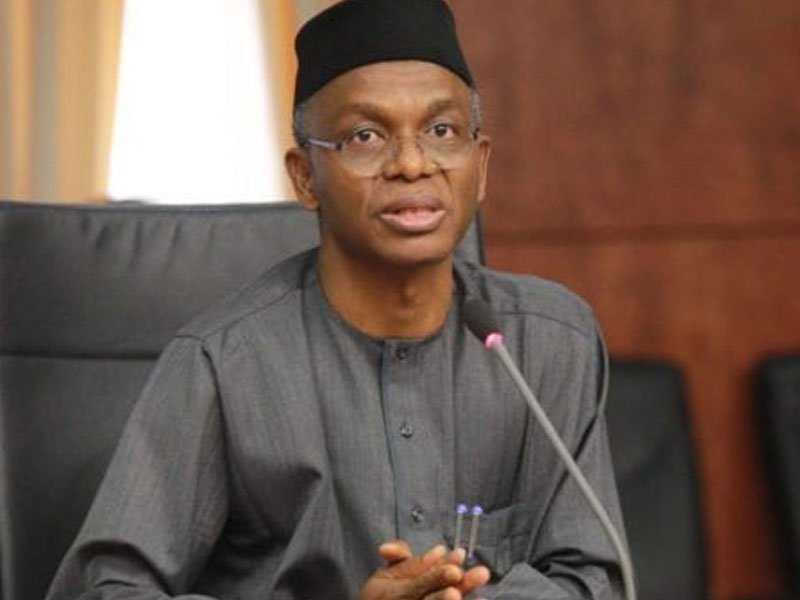
For the immediate past governor of Kaduna State, Mallam Nasir el-Rufai, now is far from the best of times as he is embroiled in a scandal that involves stealing of a whooping sum of N423 billion from the state coffers while he was governor, according to the State House of Assembly.
The Kaduna State House of Assembly had established an ad hoc committee to review all finances, loans, and contracts awarded under the immediate-past governor, and filed its findings on Wednesday, indicting the ex-governor and several of his officials for syphoning N423 billion in state funds.
The incumbent governor of the state, Uba Sani, while speaking during a town hall meeting in Kaduna, said he inherited a lean treasury, which made it difficult for him to pay workers’ salaries.
He said that, “Despite the huge debt burden of $587 million, N85 billion, and 115 contractual liabilities sadly inherited from the previous administration, we remain resolute in steering Kaduna State towards progress and sustainable development.”
Consequent upon the suspicion of malapproprietion of funds in the administration of El-Rufai, Governor Sani had referred the matter to the state house of Assembly, which set up a 13-man panel in April to conduct a thorough investigation of the El-Rufai government.
The panel was led by Deputy Speaker Henry Danjuma, and began work immediately, using as premise, the complaints of Governor Sani, which bordered on the inherited lean treasury, leaving him with a huge debt profile.
The panel worked with speed, and came out with a detailed report, which indicted the former governor.
While presenting the report during plenary during the week, Danjuma stated that the majority of loans secured during El-Rufai’s government were not used for the intended purpose, and that in some cases, proper process was not followed in obtaining the loans.
Receiving the report, Yusuf Liman, Speaker of the Kaduna House of Assembly, stated that the El-Rufai administration syphoned a total of N423 billion, leaving the state with massive liabilities.
The committee’s report, which was immediately adopted and its recommendations forwarded to state Governor Sani for immediate action, alleged that El-Rufai authorised massive withdrawals of cash from the state’s coffers, both in naira and dollars, with no records of utilisation, depriving the state of critical resources for development.
It further claimed that El-Rufai was involved in collusive actions with commissioners and heads of parastatals by allegedly sending directions to the Kaduna Public Procurement Agency to avoid due process in contractor payment via a letter dated June 21, 2021.
The committee reported that certain government contractors were overpaid, while others received funds without completing the allotted jobs.
It consequently suggested that the contractors it identified restore a total sum of N36.3 billion as “funds paid for work either not done, overpayment, or diversion to the Kaduna State government.”
The committee also recommended that the current Commissioner of Finance, Chairman of the State Universal Basic Education Board, and Executive Secretary of the State Pension Bureau step aside to allow for a thorough investigation of the ministry’s and agencies’ activities.
The Assembly, in adopting the 13-man panel’s report, asked Governor Uba Sani to refer El-Rufai, his Commissioner of Finance, and other aides to competent security agencies for inquiry.
However, El-Rufai’s media adviser, Muyiwa Adekeye, has quickly dismissed the allegation as untrue and scandalous.’
“We are aware of news that the Kaduna State House of Assembly has adopted the report of the ad hoc committee it asked to probe the El-Rufai government.
“We have not been provided with a copy of the report, to which we will respond robustly whenever we obtain it. We affirm the integrity of the El-Rufai government and dismiss the scandalous claims being aired as the report of the committee,” Adekeye said.
In their reaction, the Peoples Democratic Party (PDP) in Kaduna State has said reports of the Kaduna State House of Assembly’s investigations on the expenditure of the immediate past administration of Elrufai had vindicated its position.
A statement issued by the party signed by the state publicity secretary, Abraham Catoh, said they had always challenged the government on certain expenses of the El-rufai government.
The PDP therefore called on the governor of the state, Sen. Uba Sani, to, as a matter of transparency and posterity, immediately invite the Economic and Financial Crimes Commission (EFCC) and the Independent Corrupt Practices and other related matters Commission (ICPC) to investigate further and recover all the monies allegedly looted by those found guilty and be prosecuted as revealed and recommended by the committee’s report.
It would be recalled that the ad-hoc committee set up to investigate all finances, loans and contracts awarded under the former governor, Mallam el-Rufai, the Kaduna State House of Assembly found him and several of his commissioners and aides wanting and asked that anti-graft agencies probe them.
The House alleged that N423bn of state resources were siphoned under the El-Rufa’i government and asked the incumbent governor to refer the former governor, former commissioners of finance and other indicted aides to relevant security agencies for investigation.
“The reports of the Kaduna State House of Assembly investigations on financial expenditure of the immediate past administration of Nasir Elrufai has vindicated the Peoples’ Democratic Party, PDP, that has always challenged the government on certain expenses of the Elrufai government.
“The PDP wishes to call on the governor of the state, Sen. Uba Sani, to, as a matter of transparency and posterity, immediately invite the Economic and Financial Crimes Commission, EFCC, and the Independent Corrupt Practices and Other Related Matters Commission, ICPC, to further investigate and recover all the monies looted by Nasir Elrufai and his cronies and those found guilty be prosecuted, as revealed and recommended by the Committee’s report.
“It will be recalled that earlier, governor Uba Sani had claimed that he supported and gave his consent during the application for the loan in good faith while serving as a Senator of the Federal Republic of Nigeria from Kaduna, taking this bold step will further exonerate him from the public scrutiny and court of public opinion.
“The PDP supports full government action towards enthroning transparency and good governance across all levels of government in the state.”
Apart from the PDP, other Nigerians, mostly of Kaduna extraction, including Senator Shehu Sani, has asked for a thorough probe of the former governor, and any person involved in the scandal.
Also lending hia voice, Constitutional Lawyer, Prof Mike Ozekhome said the former governor has a right to a fair hearing.
“…I think that whatever happens, el-Rufai must be given his right to a fair hearing. The assembly has just merely made a recommendation and told the governor to implement it,” he said.
“The governor may look at it and, and feel well, ‘this is not worth the energy at the time. Let’s face other things’.
“Others may say, ‘N423 billion they are accusing him of is not a small amount; let’s dig in.’ So, whatever the outcome would be, don’t forget that El-Rufai also has his own fundamental rights to protect. For example, he may decide to go to court to challenge the indictment itself.
“Maybe you could say he was not given a fair trial. He was never called. I don’t know whether he was called to come and defend himself.
“Was he duly invited? Was he given an opportunity to defend himself? If he was and he chose to stay back, that’s another ball game. So, because I do not have all those duties, it becomes peremptory for me to comment on it.
“You don’t indict a person by proxy. No, you don’t, particularly in a matter that has criminal connotations. You can’t do that by proxy. So, it has to be the person.”
Recall that earlier in the administration of President Bola Tinubu, El-rufai was dropped, having been given hope of making the Ministerial list. No cogent reasons have so far been given for the treatment.
But stakeholders have wondered why the battle royale, since both parties belong to the same All Progressives Congress (APC).
The coming days will unveil much about the present contest between two allies.
Related
You may like
Headline
Tinubu’s 2026 Budget Bad Omen for Nigerians – PDP
Published
3 hours agoon
December 21, 2025By
Eric
By Eric Elezuo
The 2026 Appropriation Bill presented by President Bola Tinubu before a joint session of the National Assembly has been rated below par, and described as a bad omen for Nigerians, by the opposition Peoples Democratic Party (PDP).
The Tanimu Turaki-led Peoples Democratic Party (PDP) said on Friday that President Bola Tinubu’s 2026 budget would add to the sufferings of Nigeria rather than giving them any renewed hope or consolidation of economic reforms.
The party noted that there would be no renewed hope in an environment where hunger, insecurity and other forms of deprivation were the lot of Nigerians.
It cited the 2025 World Bank Poverty & Equity Brief, which placed more than 30.9% of Nigerians below the international extreme poverty line.
“This shows that there is growth without prosperity for our citizens, meaning that despite GDP growth, poverty remains endemic”, the National Publicity Secretary, Comrade Ini Ememobong, stated on Friday soon after Tinubu presented the 2026 Appropriation Bill of N58.18trillion to a joint session of the Senate and the House of Representatives in Abuja.
Ememobong noted: “The budget, which is themed ‘Budget of Consolidation, Renewed Resilience and Shared Prosperity’, claims that the economy is stabilising and promises shared prosperity.
“In response, we see it rather as a budget of consolidated renewed sufferings, because what Nigerians have witnessed since the birth of this administration is nothing but unmitigated hardship on the people, while the governing class relishes in affluence.
“Nigerians have suffered greatly from many economic woes under this administration.
“President Tinubu cited a 3.98% GDP growth rate as evidence of economic stabilisation under his administration.
“However, it is well established that economic growth alone does not and cannot guarantee improved living standards for citizens.
“According to the 2025 World Bank Poverty & Equity Brief, more than 30.9% of Nigerians live below the international extreme poverty line. This shows that there is growth without prosperity for our citizens, meaning that despite GDP growth, poverty remains endemic.
“This clearly indicates that whatever economic gains exist are not reaching the majority of Nigerians.”
The PDP rejected the President’s figures on economic progress, saying rather that Nigeria has been on rever gear.
“The President stated that the economy under his watch grew by 3.98% without stating the sectors that stimulated the growth or identifying those who benefitted from it. This figure reflects the economic decline the nation has suffered under the leadership of the APC-led Federal government when compared to the growth rate of 6.87% recorded in 2013(same period under the last PDP administration), which was driven largely by non-oil sectors such as agriculture and trade.
“Today, the President celebrates a 3.98% growth rate, whereas a reality check reveals excruciating hunger, a high cost of living, and other indices of economic hardship, which Nigerians are currently facing.
“While we acknowledge the security allocation in the 2026 budget, we must remind the government and Nigerians that allocation alone is insufficient.”
The party added, “We therefore, demand effective and transparent execution to ensure that security funding translates into tangible improvements -modern equipment, adequate ammunition, improved intelligence capabilities, and better welfare for security personnel who are currently engaged in different theatres of armed conflict, where criminal non-state actors are alleged to possess superior arms compared to our security forces.
“Overall, we are deeply concerned about the unapologetic admission by the President that the execution of the 2024 capital budget had been extended to December 2025, while the 2025 budget is still in force.
“This confirms the long-standing rumours of the concurrent operation of multiple budgets.
“This cannot be described as best practice, as every budget has a defined period of operation and no two budgets should operate concurrently. The operation of different budgets at the same time undermines fiscal discipline, transparency, and accountability. These multiple budgetary regimes show yet another unprecedented negative feat by this APC Bola Tinubu-led administration.
“We hereby call for increased transparency and accountability in the administration of the finances of our country, as these have been conspicuously absent so far under this administration.
“Financial accountability and transparency are critical to public trust-building and effective public administration.”
The budget with the theme, “Budget of consolidation, Renewed Resilience and Shared Prosperity”, is N3.19trillion higher than the N54.99trillion approved for 2025.
The key aggregates of the budget are expected revenue of N34.33trillion; debt servicing of N15.52trillion; recurrent (non‑debt) expenditure of N15.25trillion; capital expenditure of N26.08trillion; a deficit of N23.85trillion representing 4.28% of GDP.
In addition, the budget will be benchmarked at $64.85 per barrel of crude oil, daily oil production of 1.8million barrels and a dollar/naira exchange.
Below is the full presentation of Tinubu’s 2026 Budget:
FULL SPEECH BY PRESIDENT BOLA AHMED TINUBU AT THE PRESENTATION OF THE 2026 NATIONAL BUDGET
“Budget of Consolidation, Renewed Resilience and Shared Prosperity”
Distinguished Senate President,
Rt. Honourable Speaker and Honourable Members of the House of Representatives,
Distinguished Senators and Honourable Members of the National Assembly,
Fellow Nigerians,,
1. I am here today to fulfil an essential constitutional obligation by presenting the 2026 Appropriation Bill to this esteemed Joint Session of the National Assembly for your consideration.
2. This budget represents a defining moment in our national journey of reform and transformation. Over the last two and a half years, my government has methodically confronted long‑standing structural weaknesses, stabilised our economy, rebuilt confidence, and laid a durable foundation for the construction of a more resilient, inclusive, and dynamic Nigeria.
3. Though necessary, the reforms have not been painless. Families and businesses have faced pressure; established systems have been disrupted; and budget execution has been tested. I acknowledge these difficulties plainly. Yet, I am here, today, to assure Nigerians that their sacrifices are not in vain. The path of reform is seldom smooth, but it is the surest route to lasting stability and shared prosperity.
4. Today, I present a Budget that consolidates our gains, strengthens our resilience, and takes this country from out of the dark tunnel of hopelessness, from survival to growth.
5. The 2026 Budget is themed: “Budget of Consolidation, Renewed Resilience and Shared Prosperity”. It reflects our determination to lock in macroeconomic stability, deepen competitiveness, and ensure that growth translates into decent jobs, rising incomes, and a better quality of life across for every Nigerian.
6. Mr. Chairman, Leaders of the National Assembly, while the global outlook continues to improve, this Budget aims to further strengthen our Nigerian economy to benefit all our citizens.
7. I am encouraged that our reform efforts are already yielding measurable results:
1) Our economy grew by 3.98 per cent in Q3 2025, up from 3.86 per cent in Q3 2024.
2) Inflation has moderated for eight consecutive months, with headline inflation declining to 14.45 per cent in November 2025, from 24.23 per cent in March 2025. With stabilising food and energy prices, tighter monetary conditions, and improving supply responses, we expect the deflationary trend to persist over the 2026 horizon, barring major supply shocks.
3) Oil production has improved, supported by enhanced security, technology deployment, and sector reforms.
4) Non‑oil revenues have expanded significantly through better tax administration.
5) Investor confidence is returning, reflected in capital inflows, renewed project financing, and stronger private‑sector participation.
6) Our external reserves rose to a 7‑year high of about US47 billion dollars as of last month, providing over 10 months of import cover and a more substantial buffer against shocks.
8. These outcomes are not accidental or lucky. They are the consequence of our difficult policy choices. Our next objective is to deepen our gains in pursuit of enduring and inclusive prosperity.
9. Mr. Chairman, Distinguished Members, our 2025 budget implementation faced the realities of transition and competing execution demands. As of Q3 2025, we recorded:
• 18.6 trillion naira in revenue — representing 61% of our target; and
• 24.66 trillion naira in expenditure — representing 60% of our target.
10. Following the extension of the 2024 capital budget execution to December 2025, a total of 2.23 trillion naira was released for the implementation of 2024 capital projects as of June 2025.
11. While fiscal challenges persisted, the government met its key obligations. However, only 3.10 trillion naira — about 17.7% of the 2025 capital budget — was released as of Q3, reflecting the emphasis on completing priority 2024 capital projects during the transition period.
12. Let me be clear: 2026 will be a year of stronger discipline in budget execution. I have issued directives to the Honourable Minister of Finance and Coordinating Minister of the Economy, the Honourable Minister of Budget and Economic Planning, the Accountant‑General of the Federation, and the Director‑General of the Budget Office of the Federation to ensure that the 2026 Budget is implemented strictly in line with the appropriated details and timelines.
13. We expect improved revenue performance through the new National Tax Acts and the ongoing reforms in the oil and gas sector — reforms designed not merely to raise revenue, but to drive transparency, efficiency, fairness, and long‑term value in our fiscal architecture.
14. I have also provided clear and direct guidance regarding Government‑Owned Enterprises. Heads of all agencies have been directed to meet their assigned revenue targets. To support this, we will deploy end‑to‑end digitisation of revenue mobilisation — standardised e‑collections, interoperable payment rails, automated reconciliation, data‑driven risk profiling, and real‑time performance dashboards — so leakages are sealed, compliance is verifiable, and remittances are prompt. These targets will form core components of performance evaluations and institutional scorecards. Nigeria can no longer afford leakages, inefficiencies, or underperformance in strategic agencies. Every institution must play its part.
15. Mr Chairman and fellow Nigerians, the 2026 Budget is guided by four clear objectives:
1) Consolidate macroeconomic stability;
2) Improve the business and investment environment;
3) Promote job‑rich growth and reduce poverty; and
4) Strengthen human capital development while protecting the vulnerable.
16. In short: we will spend with purpose, manage debt with discipline, and pursue broad-based, sustainable growth.
17. Distinguished Members, the 2026 Federal Budget is anchored on realism, prudence, and growth.
18. The key aggregates are as follows:
1) Expected total revenue is 34.33 trillion naira.
2) Projected total expenditure is 58.18 trillion naira, including 15.52 trillion naira for debt servicing.
3) Recurrent (non‑debt) expenditure is 15.25 trillion naira.
4) Capital expenditure will be 26.08 trillion.
5) The Budget deficit is expected to be 23.85 trillion naira, representing 4.28% of GDP.
19. These numbers are not mere accounting lines. They are a statement of national priorities. We remain firmly committed to fiscal sustainability, debt transparency, and value‑for‑money spending.
20. The 2026–2028 Medium‑Term Expenditure Framework and Fiscal Strategy Paper sets the parameters for this Budget. Our projections are based on:
1) a conservative crude oil benchmark of US64.85 dollars per barrel;
2) crude oil production of 1.84 million barrels per day; and
3) an average exchange rate of 1,400 naira to the US Dollar for the 2026 fiscal year.
21. We will continue to reduce waste, strengthen controls, and ensure that every naira borrowed or spent delivers measurable public value.
22. Our allocations reflect the Renewed Hope Agenda and the practical needs of Nigerians. Key sectoral provisions include:
1) Defence and security: 5.41 trillion naira
2) Infrastructure: 3.56 trillion naira
3) Education: 3.52 trillion naira
4) Health: 2.48 trillion naira
23. These priorities are interlinked. Without security, investment will not thrive. Without educated and healthy citizens, productivity will not rise. Without infrastructure, jobs and enterprises will not scale. This Budget is, therefore, designed to provide a single, coherent programme of national renewal.
A. National Security and Peacebuilding
24. National Security remains the foundation of development. The 2026 Budget strengthens support for:
• modernisation of the Armed Forces;
• intelligence‑driven policing and joint operations;
• border security and technology‑enabled surveillance; and
• community‑based peacebuilding and conflict prevention.
25. We will invest in security with clear accountability for outcomes — because security spending must deliver results. To secure our country, our priority will remain on increasing the fighting capability of our armed forces and other security agencies and boosting the effectiveness of our fighting forces with cutting-edge equipment and other hardware.
26. We will usher in a new era of criminal justice. We will show no mercy to those who commit or support acts of terrorism, banditry, kidnapping for ransom and other violent crimes.
27. Our administration is resetting the national security architecture and establishing a new national counterterrorism doctrine — a holistic redesign anchored on unified command, intelligence gathering, community stability, and counter – insurgency. This new doctrine will fundamentally change how we confront terrorism and other violent crimes.
28. Under this new architecture, any armed group or gun-wielding non-state actors operating outside state authority will be regarded as terrorists.
29. Bandits, militias, armed gangs, armed robbers, violent cults, forest-based armed groups and foreign-linked mercenaries will all be targeted. We will go after all those who perpetrate violence for political or sectarian ends, along with those who finance and facilitate their evil schemes.
B. Human Capital Development: Education and Health
30. No nation can grow beyond the quality of its people. The 2026 Budget strengthens investments in education, skills, healthcare, and social protection.
31. In education, we are expanding access to higher education through the Nigerian Education Loan Fund. Over seven hundred and eighty eight thousand students have been supported, in partnership with two hundred and twenty nine tertiary institutions nationwide.
32. In healthcare, I am pleased to highlight that investment in healthcare is 6 per cent of the total budget size, net of liabilities.
33. We also appreciate the support of international partners. Recent high‑level engagements with the Government of the United States have opened the door to over 500 million United States dollars for health interventions across Nigeria. We welcome this partnership and assure Nigerians that these resources will be deployed transparently and effectively.
C. Infrastructure and Economic Productivity
34. Across the nation, projects of all shapes and sizes are moving from vision to reality. These include transport and energy infrastructure, port modernisation, agricultural reforms, and strategic investments to unlock private capital.
35. We will take decisive steps to strengthen agricultural markets. Food security shall remain a national priority. The 2026 Budget focuses on input financing and mechanisation; irrigation and climate‑resilient agriculture; storage and processing; and agro‑value chains.
36. These measures will reduce post‑harvest losses, improve incomes for small holders, deepen agro‑industrialisation, and build a more resilient, diversified economy.
37. In 2026, the Bank of Agriculture plans to plant confidence back into our soil; mechanising through seven regional hubs, protecting harvests with fair prices and substantial reserves, providing affordable finance to millions of small holders and growing export value. Under the plan, Nigerian farmers will cultivate one million hectares, create hundreds of thousands of jobs, and prove that prosperity can rise through better use of our God given land.
D. Procurement
38. Starting in November last year, the government has embarked upon a comprehensive framework of procurement reforms. These reforms have enhanced efficiency and generated significant cost savings for the government, resulting in resulting in reduced processing times for Government contracts and better enforcement procedures directed against erring contractors and government officials.
39. Our Nigeria First Policy has been established to encourage self-sufficiency and sustainable growth within Nigeria by promoting domestic products and businesses. By mandating that all Ministries, Departments, and Agencies (MDAs) consider Nigerian-made goods and local companies as their primary option, the policy aims to support local industries, create job opportunities, and reduce dependency on imported items. This bold new approach is expected to enhance the competitiveness of Nigerian enterprises, foster innovation, and ultimately contribute to the country’s overall economic development.
40. Distinguished Members and fellow Nigerians, the most significant budget is not the one we announce. It is the one we deliver.
41. Therefore, 2026 will be guided by three practical commitments:
1) Better revenue mobilisation through efficiency, transparency, and compliance.
2) Better spending by prioritising projects that can be completed, measured, and felt by citizens.
3) Better accountability through strengthening of procurement discipline, monitoring, and reporting.
42. We will build trust by matching our words with results, and our allocations with outcomes.
43. Distinguished Members of the National Assembly, fellow Nigerians, the 2026 Budget is not a budget of promises; it is a Budget of consolidation, renewed resilience and shared prosperity. It builds on the reforms of the past two and a half years, addresses emerging challenges, and sets a clear path towards a more secure, more competitive, more equitable, and more hopeful Nigeria.
44. I commend the people of this country for their understanding and resilience. My administration remains committed to easing the burdens of the transition to a more stable and prosperous nation. We promise to make sure that the benefits of reform reach households and communities across the Federation.
45. In united purpose between the Executive and the Legislature; and with the resilience of the Nigerian people, we will deliver the full promise of the Renewed Hope Agenda.
46. It is, therefore, with great pleasure that I lay before this distinguished Joint Session of the National Assembly; the 2026 Appropriation Bill of the Federal Republic of Nigeria, titled: “Budget of Consolidation, Renewed Resilience and Shared Prosperity”. I seek your partnership in charting the nation’s fiscal course for the coming year.
47. May God bless the Federal Republic of Nigeria.
48. Thank you.
Bola Ahmed Tinubu, GCFR
President, Commander-in-Chief of The Armed Forces,
Federal Republic of Nigeria
Related
Headline
Insecurity: Akpabio Begs Tinubu to Reinstate Police Orderlies for NASS Members
Published
1 day agoon
December 20, 2025By
Eric
Senate President, Godswill Akpabio, has appealed to President Bola Tinubu to reconsider the directive withdrawing police orderlies from members of the National Assembly, citing safety concerns.
Akpabio made the appeal during the presentation of the 2026 budget to a joint session of the National Assembly, by President Tinubu, warning that some lawmakers fear they might be unable to return home safely following the withdrawal.
His said: “As we direct the security agencies to withdraw policemen from critical areas, some of the National Assembly said I should let you know they may not be able to go home today.
“On that note, we plead with Mr. President for a review of the decision.”
President Tinubu, on November 23, ordered the withdrawal of police officers attached to Very Important Persons (VIPs), directing that they be redeployed to core policing duties across the country.
According to Bayo Onanuga, Special Adviser to the President on Information and Strategy, Tinubu issued the directive after a security meeting with Service Chiefs and the Director-General of the Department of State Services (DSS) following heightened security issues in the country.
Under the order, VIPs requiring security are to seek protection from the Nigeria Security and Civil Defence Corps, as the Federal government seeks to boost police presence in communities, particularly in remote areas grappling with insecurity.
Tinubu later reaffirmed the directive on December 10, moments before presiding over the Federal Executive Council, expressing frustration over delays in implementation.
He instructed the Minister of Interior, Olubunmi Tunji-Ojo, to work with the Inspector-General of Police (IGP), Kayode Egbetokun, and the Civil Defence Corps to immediately replace withdrawn escorts to avoid exposing individuals to danger.
“I honestly believe in what I said…It should be effected. If you have any problem because of the nature of your assignment, contact the IGP and get my clearance,” Tinubu said.
“The minister of interior should liaise IG and the Civil Defence structure to replace those police officers who are on special security duties.
“So that you don’t leave people exposed,” he said.
Related
Headline
Defence Gulps Lion Share As Tinubu Presents N58.47trn 2026 Budget to NASS
Published
2 days agoon
December 19, 2025By
Eric
President Bola Tinubu has presented a budget of N58.47 trillion for the 2026 fiscal year to a joint session of the National Assembly, with capital recurrent (non‑debt) expenditure standing at N15.25 trillion.
Tinubu presented the budget on Friday, pegging the capital expenditure at N26.08 trillion and putting the crude oil benchmark at US$64.85 per barrel.
He said the expected total revenue is N34.33 trillion, projected total expenditure: N58.18 trillion, including N15.52 trillion for debt servicing. The budget is N23.85 trillion, representing 4.28% of GDP.
The budget was anchored on a crude oil production of 1.84 million barrels per day, and an exchange rate of N1,400 to the US Dollar for the 2026 fiscal year.
In terms of sectoral allocation, defence and security took the lion’s share with N 5.41 trillion, followed by infrastructure at N3.56 trillion.
Related


Adeleke Celebrates Owa Obokun, Ijesa People on Iwude Ijesha Festival
Hollywood Bubbles As Season of Awards Sets in
Consistent, Focused, Impactful: The Story of Bella Disu
Tinubu’s 2026 Budget Bad Omen for Nigerians – PDP
Actress Iyabo Ojo Makes Case for Single Mothers
Why I Visited Nnamdi Kanu in Prison – Alex Otti
Court Upholds Authenticity of David Mark-led ADC Executive
NNPCL Slashes Fuel Price by N80
Alleged Corrupt Practices: Dangote Petitions ICPC Against NMDPRA MD Farouk
Book Launch: Tinubu Vows to Sustain Buhari’s Legacies
Corruption Allegations: NMDPRA Boss Farouk Ahmed Meets Tinubu, Resigns
I’m Ready for Probe, NMDPRA Boss Farouk Ahmed Responds to Dangote’s Corruption Allegation
Tinubu Didn’t Win 2023 Election, Will Lose in 2027 – Abaribe
US Congressman Recounts Harrowing Experience in Nigeria, Confirms ‘Systematic Genocidal Campaign’
Trending
-
Business2 days agoNNPCL Slashes Fuel Price by N80
-
Headline5 days agoAlleged Corrupt Practices: Dangote Petitions ICPC Against NMDPRA MD Farouk
-
National5 days agoBook Launch: Tinubu Vows to Sustain Buhari’s Legacies
-
Headline4 days agoCorruption Allegations: NMDPRA Boss Farouk Ahmed Meets Tinubu, Resigns
-
National4 days agoI’m Ready for Probe, NMDPRA Boss Farouk Ahmed Responds to Dangote’s Corruption Allegation
-
Headline5 days agoTinubu Didn’t Win 2023 Election, Will Lose in 2027 – Abaribe
-
World5 days agoUS Congressman Recounts Harrowing Experience in Nigeria, Confirms ‘Systematic Genocidal Campaign’
-
News6 days agoGowon is Not Dead, in Good Health, Aide Debunks Death Rumour