Connect with us

Business

Despite Buhari’s Rice Pyramid, Nigeria to Become Top Rice Importer Globally in 2024 – USDA

Published

on

… to import 2.1 million metric tons of rice in 2024 

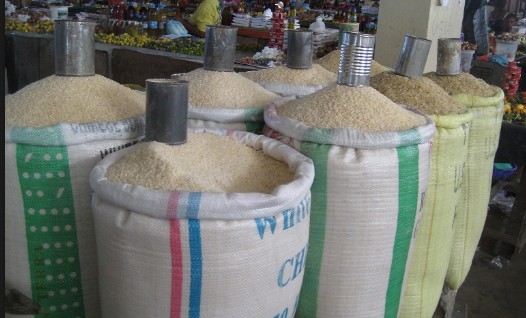
Nigeria is projected to import 2.1 million metric tons of rice in 2024, which may make the country the top rice buyer globally. 

This is according to the latest Rice Outlook report by the Economic Research Service of the U.S. Department of Agriculture (USDA). 

The report notes that global rice trade will hit about 52.85 million tons (milled basis) by 2024, with more exports expected from Brazil and South Korea, and more imports expected from Burkina Faso, Indonesia, and Nigeria. 

It read: 

  • “Global rice trade in the calendar year 2024 is projected at 52.85 million tons (milled basis), up 345,000 tons from the previous forecast but 460,000 tons smaller than the year-earlier revised forecast of 53.3 million tons. Export forecasts for 2024 are raised for Brazil and South Korea, while import forecasts are raised for Burkina Faso, Indonesia, and Nigeria, with Indonesia’s import forecast raised 600,000 tons to 2.0 million tons.” 

Weaker Crops in Nigeria 

According to the report, weaker rice production is expected in Nigeria and seven other countries. 

News continues after this ad

The report noted: “Rice production is projected to continue to decline in Japan and South Korea due to diet diversification and declining and aging populations. Weaker crops are also projected in 2023/24 for Costa Rica, Ecuador, Mali, Nigeria, Turkey, and Uzbekistan.” 

It added that global rice production in 2023/24 is projected at a record 517.8 million tons (milled basis), which is a decrease of 340,000 tons from last month’s forecast but 4.4 million tons larger than a year earlier. 

Out of the projected rice production figure, Nigeria is expected to produce about 5.23 million tons. 

Top rice importer 

Data from the report also showed that Nigeria will likely be the leading importer of rice in 2024. 

The country will be followed by Indonesia with an import projection of 2 million metric tons and Brazil with a projection of 900,000 metric tons. 

It noted that the import forecast for Nigeria was raised by 100,000 metric tons from the earlier projection in October. 

On the reason for the increase, the report noted: “Import forecast is raised based on stronger-than-expected demand for imported rice due to both high prices for domestic rice and quality concerns.” 

More insight 

The Central Bank of Nigeria (CBN) recently lifted the foreign exchange restrictions it placed on importers of rice and 42 other items eight years ago. 

This will likely encourage the importation of more rice, among other items, into the country. 

There have been mixed reactions following the removal of the restrictions, with some farmers recently showing support for the lifting of the foreign exchange ban on rice importation. 

According to this group of farmers, the lifting of the forex ban breaks the monopoly of the processing and marketing of grain by local millers. 

Prior to the bank, there appeared to be a decrease in rice import, with data from the Thai Rice Exporters Association (TREA), showing a decrease of 98.4% between the first seven months of 2022, and that of 2021. 

However, there is also a likelihood that foreign rice is likely smuggled more than it is officially imported into the country. 

About a week ago, the Nigeria Customs Service said it seized 13 trailer loads of foreign parboiled rice, among other items. 

Recall that in January 2022, former President Muhammadu Buhari unveiled a rice pyramid in Abuja, saying that the price of rice will fall drastically after the commissioning.

The price of rice has however, continued to hit the roof top ever since, going beyond the reach of the average Nigerian.

Source: Nairametrics

Continue Reading
Click to comment

Leave a Reply

Your email address will not be published. Required fields are marked *

Business

UBA Unveils Diaspora Platform to Connect Global Africans with Investment Opportunities

Published

on

By

Africa’s Global Bank, United Bank for Africa (UBA) Plc, has unveiled a diaspora banking and investment platform designed to serve Africans living and working across the world and within the continent.

The platform, launched in collaboration with leading ecosystem partners including United Capital, Africa Prudential, UBA Pensions, Afriland Properties, Heirs Insurance Group, and Avon Healthcare Limited — represents a major step in redefining diaspora banking beyond remittances toward structured wealth creation and long-term investment.

At the unveiling, which took place at UBA’s global headquarters in Lagos under the theme: “Beyond Banking: Powering the Global African Lifestyle, all the company representatives were on hand to showcase a seamless platform that goes beyond remittances, wealth creation, protection, and long-term prosperity.

Speaking at the event, UBA’s Head of Diaspora Banking, Anant Rao, described the initiative as a strategic shift in how Africa engages its global citizens.

“For decades, Africa’s engagement with its diaspora has focused largely on remittances. Today, we are moving beyond that. This platform represents a transition from simple money transfers to a financial ecosystem where Africans globally can bank, make payments, invest, protect their families, and build long-term wealth seamlessly,” he said.

Rao noted that African diaspora remittance flows exceed $100 billion annually, making them one of the most resilient and consistent sources of capital into the continent.

“Diaspora capital is not just a flow of funds — it is a strategic growth partner for Africa.
Our role is to provide a trusted platform that converts capital into structured investment and shared prosperity across the continent.”

The objective is to provide a platform that brings together offerings across the numerous needs of the Global African, including Banking and payments, Investments, securities services, asset management, Insurance, Pensions, real estate and Pensions.

Through this coordinated ecosystem, diaspora customers can access financial solutions across multiple sectors through a single trusted platform, enabling them to manage their financial lives and family commitments across borders with ease and transparency.

UBA’s Group Head, Marketing and Corporate Communications, Alero Ladipo, emphasised the importance of collaboration in delivering a seamless diaspora experience.

“The modern African is a global citizen — mobile, ambitious, and deeply connected to home. Whether living in Africa, Europe, the Americas, or the Middle East, there must be a structured and secure financial connection back home. This platform ensures that Africans everywhere can remain economically connected to the continent with confidence and transparency.”

Partners within the ecosystem highlighted growing demand among diaspora Africans for structured investment opportunities, secure property ownership, insurance protection, and long-term financial planning.

United Capital showcased globally accessible investment products designed to deliver professionally managed and transparent wealth creation opportunities.

Afriland Properties emphasised structured and well-governed real estate investment pathways for diaspora clients.

Heirs Insurance highlighted protection solutions for life, and assets, while Avon Healthcare Limited demonstrated healthcare access and insurance solutions for families across borders.

Africa Prudential and UBA Pension reinforced digital investment management and long-term pension savings solutions designed to support diaspora participation in African capital markets.

Together, the partners underscored a shared commitment to providing diaspora Africans with credible, transparent, and professionally managed financial pathways.

Rao also reiterated the guiding philosophy of Africapitalism, championed by UBA’s Founder and Chairman, Mr. Tony O. Elumelu, CFR.

He explained that Africapitalism is the belief that Africa’s private sector must play a leading role in the continent’s development by making long-term investments that generate both economic returns and social impact.

As Africa continues to position itself as one of the world’s most dynamic growth frontiers, UBA believes mobilising diaspora capital through trusted financial institutions will be central to shaping the continent’s next phase of development.

“Africa will increasingly be financed by Africans themselves, including Africans abroad.

“Our responsibility is to build the trusted financial infrastructure that makes this possible.

“When Africa’s global citizens invest back into Africa, growth becomes inevitable,” he concluded.

Continue Reading

Business

Dangote Refinery’s Crude Distillation Unit and Motor Spirit Block Hit 650,000bpd Capacity

Published

on

By

Dangote Refinery’s Crude Distillation Unit and Motor Spirit (MS) Block Hit 650,000 bpd Capacity
…First Refinery In The World to Attain This Feat

The Dangote Petroleum Refinery has achieved a major operational milestone with the full restoration and optimisation of its Crude Distillation Unit (CDU) and Motor Spirit (MS) production block. Both units are now running at optimal performance, further strengthening the steady state operations of Africa’s largest oil refining facility.

Following a scheduled maintenance exercise on the CDU and MS Block, the refinery has commenced an intensive 72 hour series of performance test runs in collaboration with licensor UOP. These tests are designed to validate operational efficiency and confirm that all critical parameters meet global standards.

Chief Executive Officer, David Bird, noted that the seamless integration and strong performance of the units demonstrate the refinery’s advanced engineering and robust operational capabilities.

“Our teams have demonstrated exceptional precision and expertise in stabilising both the CDU and MS Block, and we are pleased to see them functioning at optimal efficiency. This performance testing phase enables us to validate the entire plant under real operating conditions. We are confident that the refinery remains firmly on track to deliver consistent, world class output.

This milestone underscores the strength, reliability, and engineering quality that define our operations. We remain committed to producing high quality refined products that will transform Nigeria’s energy landscape, eliminate import dependence, and position the nation as a net exporter of petroleum products.”

Bird added that the CDU and MS Block, which comprise the naphtha hydrotreater, isomerisation unit, and reformer unit, are now operating steadily at the full nameplate capacity of 650,000 barrels per day. He further confirmed that all remaining processing units will begin their respective performance test runs in Phase 2, scheduled to commence next week.

During the recent festive period, the refinery supplied between 45–50 million litres of Premium Motor Spirit (PMS) daily. With the CDU and MS Block now fully restored, the refinery is positioned to comfortably deliver up to 75 million litres of PMS to the domestic market as required.
Expressing appreciation to customers and Nigerians across the country, Bird reaffirmed the refinery’s unwavering commitment to enhancing Nigeria’s energy security while supporting industrial development, job creation, and economic diversification.

Continue Reading

Business

FirstHoldCo Grows Gross Earning to N3.4trn for Unaudited Full Year 2025

Published

on

By

First HoldCo Plc has announced its unaudited financial results for the year ended 31 December 2025, reflecting a year of deliberate strategic actions aimed at strengthening its balance sheet, improving asset quality, and positioning the business for more resilient and sustainable growth amidst successful capital raise activities.

As stated in the unaudited Group financial statement, FirstHoldCo recorded a 4.8% year-on-year (y-o-y) increase in its Gross earnings to N3.4 trillion, supported by a 36.3% y-o-y growth in net interest income of N1.9 trillion on the back of enhanced earnings yield and margins of 17.11% and 11.0%, respectively. Similarly, net fees and commissions improved by 18.7% y-o-y to N290.7 billion. These are clear indications of the strength of the revenue generating capacity of the core business which continues to be solid. Earnings for the year were, however, lower than the prior year, primarily due to higher impairment charges in the commercial banking segment. This is in line with a deliberate strategic decision to accelerate balance sheet clean-up and adopt more aggressive provisioning standards. Management views this as a prudent step that enhances transparency, strengthens investor confidence, and aligns fully with evolving regulatory expectations.

Additionally, increased regulatory costs affected profitability. These charges, while weighing on the results, underscore the Group’s compliance with Nigeria’s financial system stability framework and its commitment to ensuring systemic confidence. Despite these pressures, underlying performance of the Group remains strong.

Deposit liabilities grew by 10.0% y-o-y, driven by sustained deposit mobilisation and continued investment in digital banking platforms. This growth reflects strong customer confidence and deepening engagement across key segments. The deposit mix also showed a deliberate reduction in foreign currency deposits, resulting from the repayment of expensive funding and the impact of naira appreciation. This shift supports improved funding efficiency and reduces foreign exchange risk.

Gross loans and advances declined marginally, reflecting a disciplined approach to credit growth, strengthened risk management, loan repayments, write-offs, and the translation impact of a stronger naira on foreign currency facilities. The Group intensified its commitment to ensuring a high-quality, cleaner asset base, aiming to optimise the portfolio and enhance future earnings potential.

Furthermore, performance in earnings was impacted by a decline in non-interest income, mainly due to lower fair value gains on financial instruments following the naira appreciation in 2025. However, this was partially offset by stronger foreign exchange (FX) trading income and reduced FX revaluation losses. Net fees and commission income also grew, supported by higher electronic banking fees, letters of credit commissions, custodian fees, and account maintenance income, reflecting the continued success of the Group’s digital-innovation strategy.

While impairment charges increased following the end of regulatory forbearance, management has intensified recovery initiatives and reinforced credit oversight. Excluding impairment and fair value gains, pre-provision operating profit grew by 23.9% y-o-y to N973.3 billion demonstrating robust performance of the core business.

Apart from the commercial banking impairments, performance across the rest of the Group remained resilient, supported by steady customer activity and disciplined execution.

Looking ahead, the Group will continue to prioritise disciplined execution of its strategic objectives, with emphasises on enhancing efficiency and profitability, continuing to build on the Group’s digital and data capabilities, while sustaining a robust balance sheet to support increased value creation and returns for shareholders. Alongside this, the Group will pursue selective growth initiatives, including new revenue streams, additional business verticals, and deeper participation in targeted African markets, in line with our strategy and risk appetite.

Further details and insights are to be provided when the audited full-year results are published and during the subsequent investor and analyst earnings call.

Continue Reading

Trending