
Headline
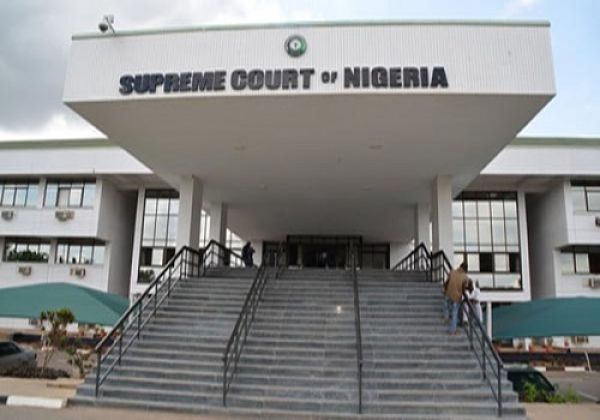
The Suffocating Pressure on Supreme Court Justices


By Eric Elezuo
All eyes have been on the judiciary since March 1, 2023, when the Independent National Electoral Commission (INEC), announced President Bola Tinubu as the winner of the keenly contested February 25, 2023 presidential election. Nearly every major party that contested the election has one or two words against INEC and the conduct of the election, as well as against the qualifications and eligibility of Tinubu vis a vis academics, identify and legitimacy.
However, on September 6, 2023, after about three months of intensive legal banters, a five-man panel of Justices of the Appeal Court, superintending over the process of the Presidential Election Petition Tribunal, unilaterally dismissed the petitions of Atiku Abubakar of the Peoples Democratic Party (PDP, Labour Party’s Peter Obi, and the Allied Peoples Movement (APM).
The Justice Tsammani-led panel threw out all petitions brought before it for lacking in merit, prompting the final onslaught at the Supreme Court. All eyes have therefore, shifted to the Supreme Court.
The Appellants; Atiku Abubakar of the PDP, Peter Obi of the LP and the Allied Peoples Movement, filed their appeals urging the Supreme Court to nullify the presidential election petition’s decision which upheld Mr Tinubu’s victory. All appellants had therefore, launched out in search of more evidence to convince the Supreme Court, and proved that the lower court erred.
Consequently, after weeks of filing and exchanging court papers between Atiku and Tinubu, as well as other appellants, the apex court set October 23, 2023 as the date for hearing of the suits. The setting of the date followed the announcing of seven-man panel of Supreme Court justices to preside over the cases. They are Justice Adamu Jauro, Justice Uwani Musa Abba Aji, Justice Lawal Garba, Justice Helen M. Ogunwumiju, Justice I.N. Saulawa, Justice Tijjani Abubakar and Justice Emmanuel Agim.
These legal icons, on whose shoulders lie a setting of precedence or evolving of an all new form of technicality in the anals of history will be unveiled at the commencement of the hearing on Monday. They will adjudicate and determine the case withouta recourse to the suffocating pressure trailing the process since the announcement of Tinubu as president-elect.
Note that the Chief Justice of Nigeria, Kayode Ariwoola and another, have been excused from the team of justices because of their supposed closeness to two of the persons of interest in the case.
The Atiku’s legal team, led by Chris Uche SAN, anchored the suit on 35 grounds, claiming that the five-member panel of the presidential election court erred in their verdict.
In its court filings at the Supreme Court, through a document dated September 18, Uche contended that the presidential election court failed to adequately evaluate his client’s evidence before reaching its conclusions.
He faulted the court’s use of “disparaging words” against Atiku which “evinced bias.”
In another ground of appeal, Uche told the Supreme Court that the lower court’s conclusions “did not represent the true picture of the grounds of his petition”.
Atiku’s appeal, contended, among other issues, that the presidential election court erred in law when it “failed to nullify the presidential election held on 25 February 2023 on the grounds of non-compliance with the Electoral Act, 2022, when by evidence before the tribunal, INEC conducted the election based on grave and gross misrepresentation contrary to the principles of the Electoral Act 2022, based on the “doctrine of legitimate expectation.”
However, beyond the evidences, which the Atiku team accused the lower court of sidelining, a fresh evidence was filed at the Supreme Court concerning the academic records of Tinubu which the former vice president obtained from Chicago State University in the United States.
Although the issue of Tinubu’s academic records was dismissed by the presidential election court, Atiku intends to breathe fresh life into the matter following his newest findings from the US.
In September, a US court ordered the Chicago State University to release Mr Tinubu’s academic records to Atiku despite the president’s vehement opposition to the release of his transcripts. The records were released on October 6, and revealed quite a can of worms depending on the divide the analyst is as the matter has since divided Nigerians along party, ethnic and loyalty lines.
Obi’s appeal
Peter Obi, on the other hand, through his lead lawyer, Livy Uzoukwu, filed 51 grounds in challenging the presidential election court’s judgement, among which is faulting the presidential election court’s evaluation of his evidence. Obi’s appeal noted that the court erroneously ruled that his case failed to establish the polling stations where electoral malpractices took place during the February presidential election.
The appellant’s lawyer urged the Supreme Court to determine if the presidential election court did not err in law when it based its reasons on the First Schedule of the Electoral Act 2022 to expunge Obi’s witnesses’ statements on oath from the court’s records.
Another political party, APM, lodged the third suit alleging improper nomination of Mr Tinubu’s running mate and incumbent Vice President Kashim Shettima.
In its appeal at Supreme Supreme, APM’s lawyer, Chukwuma–Machukwu–Ume, a SAN, predicated his client’s suit on 10 grounds.
He argued that sections 131 and 142 (1) of the 1991 Constitution are inextricably linked and neither can be confined as a pre-election matter, as these qualifications are conditions precedent to, for being elected into the office of President.
THE SEVEN-MEMBER PANEL OF JUSTICES
Below is a review of the men and women that will sit to determine the plausibility or otherwise of the appeals brought by the aggrieved entities:
ADAMU JAURO

Justice Adamu Jauroeads the eminent jurists saddled with the responsibility of making history, and possibly reading new precedence.
UWANI MUSA ABBA AJI

Jusyice Aji was born on November 7, 1956, in Gashua, Yobe State. She had her early education at Central Primary School Gashua in 1961 and then proceeded to Government Girls Secondary School, Maiduguri where she obtained the West Africa School Certificate in 1972. In 1976, she received a Diploma in Law from the Ahmadu Bello University of Zaria and in 1980, an L.L.B Hons from the same school. Aji was called to the Bar in 1981, and in 1982 began her career as a state attorney
LAWAL GARBA

Hon. Justice Mohammed Lawal Garba was born on November 16, 1958. He hails from Gusau Local Government Area of Zamfara State. He attended Demonstration Primary School, Maru from 1965-1971, Government Secondary School, Gusau from 1972 -1976, School of Basic Studies Ahmadu Bello University, Zaria from 1976-1977, Faculty of Law, A.B.U, Zaria from 1977-1980, Nigerian Law School, Lagos, from 1980-1981 and the Nigerian Institute of Advanced Legal Studies (UNILAG) Akoka, Lagos in 1989. He was called to the Nigerian Bar in 1981, and has over the years served on different capacities and bodies as well as handled many high profile cases.
HELEN M. OGUNWUMIJU

Justice Helen Morenikeji is another brilliant Justice though many has said she has an affiliation with the ruling All Progressives Congress (APC) as one of his sons is a member of the legal team defending President Bola Tinubu, and yet another a state lawmaker under the APC.
I. M. SAULAWA

Hon. Justice I.M.M. Saulawa, JSC was born on September 29, 1956 in the ancient city of Katsina. Katina State. North West of Nigeria. He attended both Primary and Secondary Schools in Katsina from 1965 to 1976. He proceeded to the prestigious Bayero University. Kano in September 1977 and graduated in June 1981 with a Bachelor of Law degree. The same year he proceeded to the fore most prestigious Nigerian Law School Lagos and was eventually called to the Nigerian prestigious Nigerian Law School Lagos and was eventually called to the Nigerian Bar on July 2, 1982.
EMMANUEL AGIM

Agim was enrolled as a legal practitioner on the 15th October 1986.
TIJJANI ABUBAKAR

Yobe State born Justice Abubakar concludes the list of eminent jurists.
It is a known fact that in history of presidential election appeals in Nigeria, none has garnered so much concern, discourse and public enlightenment as the present. The coming weeks will conclude a writing in the history book of Nigeria’s jurisprudence.
Once again, all eyes on the Supreme Court!




Nation Building Reimagined: Integrated Principles and Strategies for Sustainable Growth

Dear CDS, NSA, Your Prodigal Sons, Brothers Have Killed General Braimah

Voice of Emancipation: Lessons from the Iran/USA War

Ovation @30: A Triumph of Vision, Courage and African Excellence

ADC National Convention: To Be or Not to Be?

Israel Questions Pakistan’s Credibility in Mediating over US-Iran Ceasefire Agreement

Osun 2026: INEC Planning to Recruit APC Members As Electoral Officials, Lawmakers Allege

‘ADC Membership Hits 500,000 after INEC Derecognition of Leadership’

Trump Delays Iran’s Strike by 2-Weeks As Pakistani Leaders Intervene

FG Expels US Missionary Alex Barber

Benin Republic 2026: Romuald Wadagni, The President in Waiting
Prominent ADC Leaders Storm INEC Hqrs in Protest Against Dictatorship

ADC Raises Alarm over INEC’s Plot to Prevent Party from Fielding Candidates

Iran’s Intelligence Chief Killed in US-Israeli Strikes
-
 News6 days ago
‘ADC Membership Hits 500,000 after INEC Derecognition of Leadership’
-
 World4 days ago
Trump Delays Iran’s Strike by 2-Weeks As Pakistani Leaders Intervene
-
 National4 days ago
FG Expels US Missionary Alex Barber
-
 Featured3 days ago
Benin Republic 2026: Romuald Wadagni, The President in Waiting
-
 News4 days ago
Prominent ADC Leaders Storm INEC Hqrs in Protest Against Dictatorship
-
 Featured5 days ago
ADC Raises Alarm over INEC’s Plot to Prevent Party from Fielding Candidates
-
 World5 days ago
Iran’s Intelligence Chief Killed in US-Israeli Strikes
-

 Middle East2 days ago
Again, Iran Blocks Strait of Hormuz, Alleges Ceasefire Violation