Connect with us

Opinion

The Oracle: See How President Buhari Turned Me into Nostradamus, Clairvoyant (Pt. 1)

Published

on

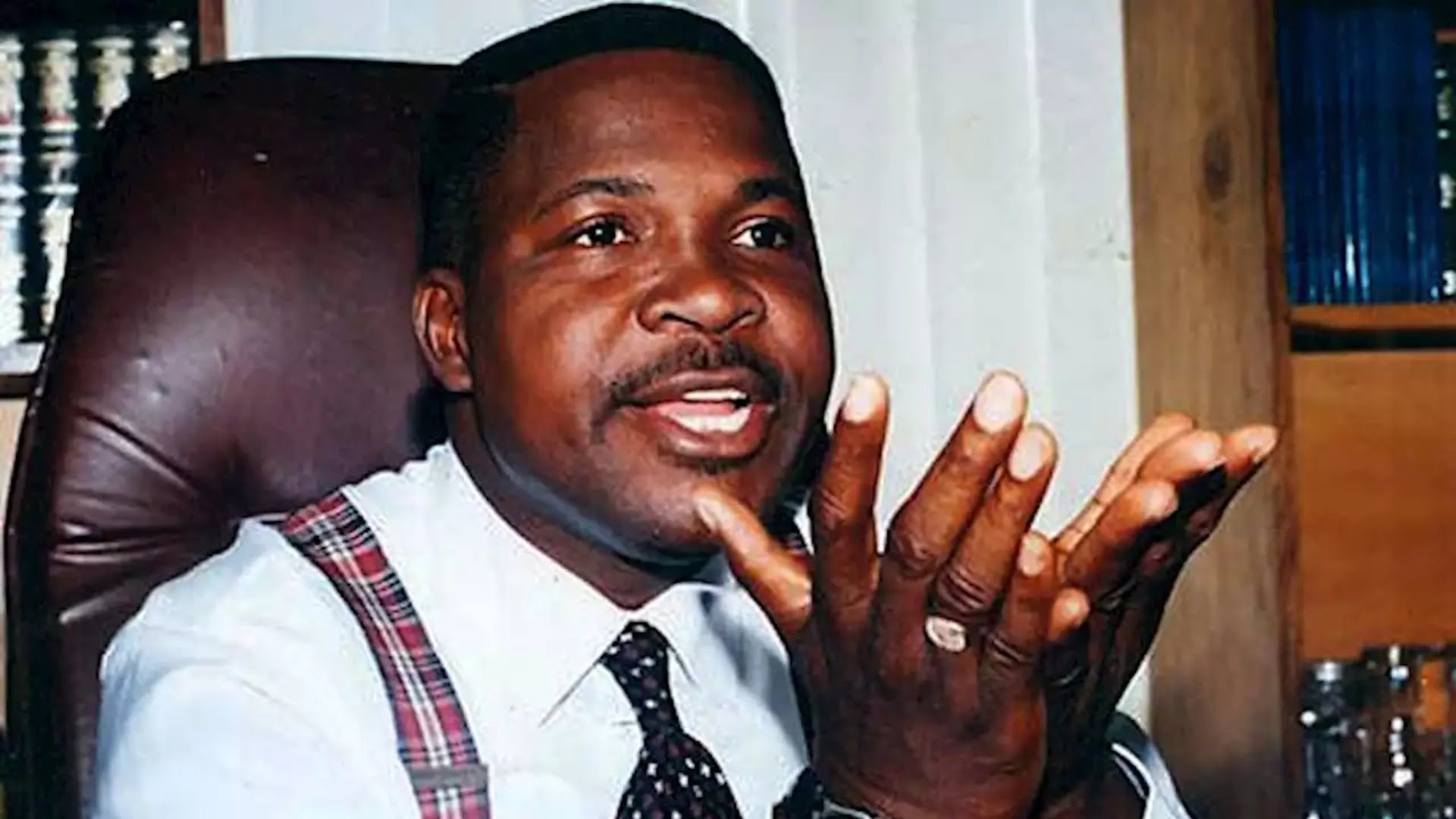
By Mike Ozekhome

INTRODUCTION

Today, Nigeria is in a terrible quagmire; a deadly dilemma; a complete cul-de-sac. There is trouble; real trouble. In all aspects of life, Nigeria is sick. Very sick. Critically ill to say she is on an uneasy life–support machine is simply saying the obvious.

Everywhere and everything are toxic. Even the air we breathe is toxic. It reeks of odious and smelly putrefaction from caked blood of innocent Nigerians split open by afternoon baking sun (apologies, Ayikwei Armah: “The beautiful Ones Are Not yet Born”).

Our farmlands are death mines, laden with deadly booby-traps set up by rampaging Fulani herdsmen. They hug AK-47 riffles that spit fire on a daily basis against innocent farmers who have offered no provocation. The once-upon-a-time teeth-stained, kolanut-chewing, smiling and friendly herders moved harmlessly across the highways, footpaths and farmpaths. We, as children growing up in the 60s and 70s, usually came out to sing with our near national anthem rendition, to herald them in. What has happened? I don’t know. Or, do you? They have since turned into vicious, blood-sucking monsters that decimate our local population. Our song in those days was, “Malu koga, malu, koga, daba daba koga; ikpisa yeghe the akhia; edunu kpotha mho abo; ne the gbea kpu pku” (translated: “cows with hooves, cows with hooves; they are led by weak elderly men; men who carry sticks, with which they flog the cows kpu kpu”). We would come out of our huts, hailing them, giving them water to conserve in their pitchers made of cow skin and tied to their shoulders. Those were the good beautiful old days. Not anymore.

Today, however, like in Wole Soyinka’s metamorphosis of Brother Jero in “Jero’s Metamorphosis” (1973), which followed “The trials of Brother Jero” (1963), these once innocent herders have metamorphosed into murderous and remorseless savages, killing, maiming, piling and raping farm owners and peaceful indigenous land owners right on their farms and in their homes, with gusto, eclat and a vainglorious sense of triumphalism.

In our homes and on the roads, Nigerians are no longer safe. In the markets, schools, workplaces, air, train, waterways and forests, death stares the average Nigerian on his wrinkled face. Nigeria has become a grizzly killing ground. She has become the poverty capital of the world, snatching the diadem from India. There is seering agony, mass disenchantment and grave disillusionment. Hunger and abject penury live with us. Melancholy and gnashing of teeth overwhelm Nigerians. Hopelessness and haplessness sleep with us on the same wretched beds. Hot tears, sorrow, pains, pangs and blood remain gods and goddesses in whose pulpits Nigerians worship in their homes. Schools are hurriedly and prematurely shut down, not from fixed holidays; not from unanswered ASUU’s 7 months strike engineered by a clueless government; but to prevent students from being abducted and kidnapped by rampaging armed bandits and kidnappers that operate as a state within a state. The government watches helplessly, wriggling its hands with shocking resignation to fate. Non-state actors now commonly challenge the sovereignty and suzereignty of Nigeria, planting their flags on Nigerian soils, collecting taxes, from, and giving citizens passes and identity cards. Armed bandits kidnap school children and instruct their parents to procure for them, large quantities of tarodo, tatashe, tomatoes, maggi, onions, garri, beans, rice, palm oil, vegetable oil, salt and other condiments. They need the ingredients to feed their children and keep them alive for ransom to be paid for their release. This is glaring evidence of a failed state.

Fighting corruption, a mantra once hugged by this government, during political campaigns, has since graduated from a kindergarten school to a post graduate institution, strutting about unchallenged, like a proud peacock. Government appointees brazenly steal billions of dollars, with the EFCC and ICPC still busy pursuing ruling government’s political opponents. They use the ugly and primitively stolen money to mop up scarce Dollars, leaving to the present horrific artificial shortage of dollars, a situation of one dollar exchanging for about N740. And still counting. Didn’t this government meet the dollar at between M160 – N175 in 2015? Gosh! We are now No.148 out of 180, and the second most corrupt Nation in West Africa. Courtesy, Transparency International’s Anti-corruption Perception Index). Inflation increases geometrically. Debts accumulate daily. We now borrow money to service debts, not payment of the real debt! Next generations have mountainous debts hanging on their necks. The present government has mortgaged our individual and collective future with reckless abandon.

Nigeria has never been so polarized and divided along primordial ethnic, religious and linguistic cleavages.

Nigerians from all works of life appear shell-shocked at a country they can no longer recognise within seven years of Buhari’s disastrous government. Well, I am not one of them. I had seen this ugly situation coming. Like Nostradamus, the man who saw tomorrow; like the Oracle at Ile-Ife that gazes into the future and pronounces a future Ooni, I saw these perilous times coming. I had predicated all these in the very first 50 days of this government.

Buharists, Buharideens, his bootlickers, ego masseurs and obsequious fawning passengers in the corridors of power mocked me. They abused and bayed for my innocent and patriotic blood. But history and current happenings have now completely vindicated me. Oh, thou sweet history. Oh archivist google that never forgets!!! In this piece, I now serve you my predictions, after analyzing Buhari’s first 50 days in office, in a piece titled, “Is president Buhari overwhelmed by serious issues of Governance?” (http://thestreetjournal.org)


This piece was written and first published on 19th July, 2015, just only after 50 days of Buhari’s tenure! Now, read on:

IS PRESIDENT BUHARI OVERWHELMED BY SERIOUS ISSUES OF GOVERNANCE?

“Let me confess that I am aware of some commentators’ argument that it is too early in the day to assess President Muhammadu Buhari’s thrust and style of governance. After all, they argue that he has only spent about 50 days out of the expected 1,460 days of his four-year tenure. That may very well be so. But, a proverb in my Weppa-Wanno, Etsako language (I disagree with some irredentists who try to label my language a dialect), states that, “oto laza le aghua noa khi ukpuwah” (It is the very day a puppy is littered that people would decipher if it would develop a curved tail). In other words, the morning tells the day.

“Although he has himself publicly confessed that he cannot be expected to perform optimally at the same pace, and with the same vigour and strength, as when he was Governor of old Borno State at the youthful age of 33 and later, Head of State at 40, it would be most uncharitable, even disingenuous to accuse him of senility, or anything near it. Far from it, President Mohammadu Buhari (PMB) is still very agile and quick witted. After all, octogenarians (near nonagenarians), such as Chief E.K. Clark, Chief Olaniwu Ajayi, Chief Ayo Adebanjo, Chief Richard Akinjide, San, et al, stormed the Nigerian National Conference in 2014. Their intellectual prowess, coupled with their plenary and Committee contributions to all issues were such as to leave us, the younger generational elements, panting and gasping for breath. Indeed, 85-year-old Alhaji Ahmed Joda, (one of the famous “super permanent Secretaries” of the Gowonian era, step out, Chief Philip Asiodu, Chief Allison Ayida, et al; more on this later), headed PMB’s transition Committee. Not a few Nigerians believed however, that the slow pace of the Committee’s work was ascribable to its gerontocratic leaning. I have no opinion here!

THE BUILD UP OF EXPECTATIONS

“The campaign mantra of the APC was “change”. It was APC’s campaign that former President Goodluck Jonathan had performed woefully, below expectations. The party tagged him clueless, lily-livered, and that he ran a very corrupt administration. Many, nay, most Nigerians, bought this heavy propaganda. Social media activists, especially, took Jonathan to the cleaners, tearing him to pieces, tarring him with the paintbrush of shame, odium and gross underperformance.

“The build-up was high. The anti-corruption mantra was held aloft like a banner of victory. The taming and extirpation of insecurity, root and branch, was orchestrated like a stuck record (remember PMB’s famous “I will lead form the front”). He was believed because he is a retired Military General and former Head of State.

SOME COMPARABLE REMINISCENCES

“The build-up was what was expected of Enugu Rangers vs Mighty Jets football club (of Jos), or Raccah Rovers vs NNB, Bendel Insurance football club of Benin vs IICC shooting stars football club of Ibadan football championship final encounters of the seventies and eighties. I was then in the Secondary school and University. National stadium, Lagos, Ogbe stadium, Benin City, Liberty stadium, Benin City, Adamansigba stadium, Ibadan, Kano stadium, and Jos stadium, Jos, were a must to watch these matches. Nigeria then stood still and on tenterhooks on weekends. A pin drop could be heard in any of the stadia where these legendary clubs played. Fans and spectators figuratively stopped breathing. Ace commentators, Ernest Okonkwo, Tolu Fatoyinbo and Folorunsho Ishola blared, their names. “Chairman” Christian Chukwu, “Mathematical” Segun Odegbami, “Chief Justice” Adokie Amiesimeka”, the Atuegbu brothers, Haruna Ilerika of Stationery stores of Lagos, Emmanuel Okala, Felix Owolabi, Mudashiru Lawal, Bright Omokaro, Friday Elaho, and Joe Erico, amongst others, held sway. Sam Garba Okoye, Ismaila Mabo, Yakubu Mabo, Benedict Akwuegbu, Olayiwola Olagbemiro, Sam Pam, Ifeanyi Onyedika, Ogidi Ibeabuchi, Christian Madu, Jossy Lad, Amusa Adisa, Samuel Ojebode, Joe Appiah, Moses Otolorin, Kunle Awesu, Alabi Aisien, Kadiri Ikhana, Sunday Eboigbe, George Omokaro, Agboinfo, Sylvanus Oriakhi, and Henry Ogboe, reigned supreme.

“Sorry, pardon me, if I digressed too far off as this write up is not about football. It was to show the passion with which the clubs played, and the high expectations of Nigerians. Football in those days was food. It was life. Nothing else mattered. It was the oxygen Nigerians breathed. Glued to small radio sets and the 4 pm black and white television sets, Nigerians watched with bated animation as these clubs slugged it out. Enemies suddenly became friends. All Nigerians were united. No foe.

“That was the same way Nigerians expected PMB to hit the ground running. They expected him to be, not just a magician in the mould of Professor Peller, but also a miracle worker in the mould of Chris Oyakhilomen, all rolled into one. The stakes were very high during the campaigns. They are higher today after his unexpected victory. (To be continued).

FUN TIMES

“WIFE: Good morning my sweet loving, charming, caring husband

HUSBAND: Mama Junior, the money in that drawer is not mine”. – Anonymous.

THOUGHT FOR THE WEEK

A self-fulfilling prophecy is an assumption or prediction that, purely as a result of having been made, cause the expected or predicted event to occur and thus confirms its own ‘accuracy”. (Paul Watzlawick).

Continue Reading
Click to comment

Leave a Reply

Your email address will not be published. Required fields are marked *

Opinion

Book Review: Against the Odds by Dozy Mmobuosi

Published

on

By

By Sola Ojewusi

Against the Odds is an ambitious, deeply personal, and unflinchingly honest memoir that traces the remarkable rise of Dozy Mmobuosi, one of Nigeria’s most dynamic and controversial entrepreneurs. In this sweeping narrative, Mmobuosi reveals not just the public milestones of his career, but the intimate struggles, internal battles, and defining moments that shaped his identity and worldview.

The book is both a personal testimony and a broader commentary on leadership, innovation, and Africa’s future—and it succeeds in balancing these worlds with surprising emotional clarity.

A Candid Portrait of Beginnings

Mmobuosi’s story begins in the bustling, unpredictable ecosystem of Lagos, where early challenges served as the furnace that forged his ambitions. The memoir details the circumstances of his upbringing, the value systems passed down from family, and the early encounters that sparked his desire to build solutions at scale.

These foundational chapters do important work: they humanize the protagonist. Readers meet a young Dozy not as a business figurehead, but as a Nigerian navigating complex social, financial, and personal realities—realities that millions of Africans will find familiar.

The Making of an Entrepreneur

As the narrative progresses, the memoir transitions into the defining phase of Mmobuosi’s business evolution. Here, he walks readers through the origins of his earliest ventures and the relentless curiosity that led him to operate across multiple industries—fintech, agri-tech, telecoms, AI, healthcare, consumer goods, and beyond.

What is striking is the pattern of calculated risk-taking. Mmobuosi positions himself as someone unafraid to venture into uncharted territory, even when the cost of failure is steep. His explanations offer readers valuable insights into:
• market intuition
• the psychology of entrepreneurship
• the sacrifices required to build at scale
• the emotional and operational toll of high-growth ventures

These passages make the book not only readable but instructive—especially for emerging

African entrepreneurs.

Triumphs, Crises, and Public Scrutiny
One of the book’s most compelling strengths is its willingness to confront controversy head-on.

Mmobuosi addresses periods of intense scrutiny, institutional pressure, and personal trials.

Instead of glossing over these chapters, he uses them to illustrate the complexities of building businesses in emerging markets and navigating public perception.

The tone is reflective rather than defensive, inviting readers to consider the thin line between innovation and misunderstanding in environments where the rules are still being written.

This vulnerability is where the memoir finds its emotional resonance.

A Vision for Africa

Beyond personal history, Against the Odds expands into a passionate manifesto for African transformation. Mmobuosi articulates a vision of a continent whose young population, natural resources, and intellectual capital position it not as a follower, but a potential leader in global innovation.

He challenges outdated narratives about Africa’s dependency, instead advocating for
homegrown technology, supply chain sovereignty, inclusive economic systems, and investment in human capital.

For development strategists, policymakers, and visionaries, these sections elevate the work from memoir to thought leadership.

The Writing: Accessible, Engaging, and Purposeful

Stylistically, the memoir is direct and approachable. Mmobuosi writes with clarity and intention, blending storytelling with reflection in a way that keeps the momentum steady. The pacing is effective: the book moves seamlessly from personal anecdotes to business lessons, from introspection to bold declarations.

Despite its business-heavy subject matter, the prose remains accessible to everyday readers.

The emotional honesty, in particular, will appeal to those who appreciate memoirs that feel lived rather than curated.

Why This Book Matters

Against the Odds arrives at a critical moment for Africa’s socioeconomic trajectory. As global attention shifts toward African innovation, the need for authentic narratives from those building within the system becomes essential.

Mmobuosi’s memoir offers:
• a case study in resilience
• an insider’s perspective on entrepreneurship in frontier markets
• a meditation on reputation, legacy, and leadership
• a rallying cry for African ambition

For readers like Sola Ojewusi, whose work intersects with media, policy, leadership, and social development, this book offers profound insight into the human stories driving Africa’s new generation of builders.

Final Verdict

Against the Odds is more than a success story—it is a layered, introspective, and timely work that captures the pressures and possibilities of modern African enterprise. It challenges stereotypes, raises important questions about leadership and impact, and ultimately delivers a narrative of persistence that audiences across the world will find relatable.

It is an essential read for anyone interested in the future of African innovation, the personal realities behind public leadership, and the enduring power of vision and resilience

Continue Reading

Opinion

Redefining Self-leadership: Henry Ukazu As a Model

Published

on

By

By Abdulakeem Sodeeq SULYMAN
In a world filled with talents and unique gifts, nurturing oneself for an impact-filled living becomes one of the potent metrics for assuming how one’s life would unfold – either in the nearest or far future. I am sure the question you may be curious to ask is ‘what is the important quality that has shaped the life of every individual who has unleashed their ingenuity?’ Apparently, our society is filled with numerous people, who missed the track of their life. Their iniquity is boiled down to one thing – failure to lead oneself.
Realising how important it is to be your own leader has been the springboard for every transformative life. Notably, this also becomes the premise for appreciating and celebrating Henry Ukazu for setting the pace and modeling self-leadership in this era, where self-leadership is under-appreciated by our people. Self-leadership itself engineers purposeful and impactful living, turning individuals to sources of hope to others.
This is exactly what Henry Ukazu symbolises. The name Henry Ukazu is akin to many great things such as ‘Unleashing One’s Destiny,’ ‘Finding One’s Purpose’ and ‘Triumphant Living.’ Regardless of the impression one have formed about Henry Ukazu, one thing you cannot deny is his ability to be pure to nature and committed to his cause. Henry Ukazu is one of the rare people who still believed in the values of the human worth and has committed every penny of his to ensure that every human deserves to live the best life.
The trajectory of Henry Ukazu’s life is convincing enough to be choosing as an icon by anyone who chooses to climb the ladder of self-leadership. Oftentimes, Henry Ukazu always narrate how he faced the storms of life when birthing his purpose. He takes honour in his struggles, knowing full well that every stumbling blocks life throws at him helped in building himself. If not for self-leadership, he will not found honours in his struggles, let alone challenging himself to be an example of purposeful living to others.
Without mincing words, Henry Ukazu’s life has been blessed with the presence of many people, with some filling his life with disappointments, while some blessing him with immeasurable transformations. Surprisingly, Henry Ukazu has never chosen to be treating people negatively; rather he would only choose the path of honour by avoiding drama and let common sense prevail. That’s one of the height of simplicity!
Dear readers, do you know why today is important for celebrating Henry Ukazu? Today, 3rd December, is his birthday and with all sincerity, Henry Ukazu deserves to be celebrated because he has chosen the noble path, one filled with honours and recognitions for being an icon of inspiration and transformation to the mankind. As Henry Ukazu marks another year today, may the good Lord continue shielding him from all evils and guiding him in right directions, where posterity will feel his role and impacts!
Many happy returns, Sir!

Continue Reading

Opinion

The Fault Lines of Power: A Global Leadership Crisis and the Path to Restoration

Published

on

By

By Tolulope A. Adegoke, PhD

“Across the world, we are navigating the fault lines of outdated leadership. The future belongs to those who can mend these cracks with the mortar of integrity, the vision of long-term purpose, and the resilience of empowered people” Tolulope A. Adegoke, PhD

Leadership serves as the foundational pillar for any thriving organization, corporation, or nation. It is the critical framework meant to ensure stability, inspire direction, and foster resilience against challenges. Yet, a pervasive and unsettling phenomenon is emerging worldwide: the development of deep fault lines within these very structures of authority. This crisis of confidence spans sectors and continents, from established Western democracies to burgeoning economies in the Global South.

This examination explores these global leadership fissures, with a specific focus on Nigeria’s complex landscape. We will diagnose the universal symptoms, analyze their acute manifestation in the Nigerian context, and ultimately, propose a constructive framework for renewal aimed at individuals, businesses, and governments.

Diagnosing the Global Leadership Decay

The erosion of effective leadership rarely happens overnight. It typically begins with subtle, often ignored fractures that gradually weaken the entire system. These fractures commonly appear as:

  1. The Credibility Chasm: A growing disconnect between a leader’s promises and their tangible actions. When rhetoric of transparency clashes with a reality of opacity, the essential bond of trust is severed.
  2. The Tyranny of the Immediate: An overwhelming focus on short-term gains—be it quarterly earnings or political popularity—that sacrifices long-term strategy and sustainable health. This is the equivalent of building on unstable ground.
  3. Strategic Inertia: In a world defined by rapid change, leaders who cling to outdated, rigid hierarchies render their organizations incapable of adapting, innovating, or surviving future shocks.
  4. The Empathy Void: Leadership that is intellectually or emotionally detached from the realities of its people, employees, or citizens. This breeds disengagement, stifles collaboration, and fuels a silent exodus of talent and goodwill.
  5. The Succession Failure: A critical neglect of leadership pipeline development, which creates a dangerous vacuum of vision and competence during transitions, jeopardizing institutional memory and future stability.

The Nigerian Context: A Magnified View of the Crisis

Nigeria, a nation brimming with phenomenal human and natural potential, offers a powerful case study where these global fault lines are particularly pronounced and consequential.

Within the Political Arena:

Leadership is frequently marred by a system that rewards patronage over performance. Rampant corruption diverts essential resources from critical public services, leading to a catastrophic decay in infrastructure, healthcare, and education. This, combined with policy instability across political administrations, creates an environment of uncertainty that discourages vital long-term investment.

Within the Corporate Sphere:

Many organizations, including prominent family-owned conglomerates, are hindered by overly centralized decision-making and weak corporate governance structures. When nepotism overshadows meritocracy, innovation is suppressed, and employee motivation withers. A survivalist mindset, driven by a challenging economic climate, often trumps strategic investment in talent and innovation.

Within Public Institutions:

A pervasive culture of bureaucracy and inefficiency often widens the gap between the government and the governed. This leads to profound citizen frustration and a demoralized public workforce, undermining the very purpose of these institutions.

The cumulative effect of these intersecting failures is a palpable national anxiety—a widespread belief that the nation is operating far below its potential, not due to a lack of resources or talent, but because of a fundamental breakdown in its leadership frameworks.

A Framework for Renewal: Building Resilient Leadership

Identifying the problem is only the first step. The imperative is to forge a path forward. The following advisory framework outlines how to bridge these fault lines and unlock latent possibilities.

For Individuals (The Agents of Change):

  1. Transition from Spectator to Stakeholder: Exercise accountability through informed civic participation and constructive advocacy. Use platforms, including digital media, to demand transparency and results from leaders.
  2. Embody Ethical Leadership Daily: Demonstrate integrity, accountability, and empathy within your immediate circle—your workplace, community, and family. Leadership is an action, not merely a position.
  3. Commit to Lifelong Learning: Proactively acquire new skills, cultivate a global perspective, and strengthen your emotional intelligence to navigate an increasingly complex world.
  4. Engage in Reciprocal Mentorship: Actively seek guidance while also dedicating time to mentor others. Cultivating the next generation is a collective responsibility that ensures a continuous flow of capable leaders.

For Corporations (The Economic Catalysts):

  1. Ingrain, Don’t Just Install, Governance: Move beyond superficial compliance. Foster a culture where independent boards, radical transparency, and ethical practices are non-negotiable core values.
  2. Systematize Leadership Development: Establish robust talent management and succession planning programs. Intentionally identify and nurture future leaders through targeted training, mentorship, and strategic role assignments.
  3. Champion a Stakeholder-Centric Purpose: Define a corporate mission that creates genuine value for all stakeholders—employees, customers, communities, and the environment. This builds lasting brand equity and attracts purpose-driven talent.
  4. Cultivate Psychologically Safe Spaces: Foster an organizational climate where employees feel empowered to voice ideas, question assumptions, and experiment without fear of reprisal. This is the bedrock of a truly innovative and adaptive organization.

For Nations (The Architects of Society):

  1. Fortify Institutions Over Individuals: Invest in building strong, independent institutions—such as the judiciary, electoral commissions, and anti-corruption bodies—that can function autonomously and uphold the rule of law.
  2. Prioritize Human Capital as the Supreme Asset: Direct national investment toward foundational pillars like quality public education and healthcare. An educated, healthy, and skilled populace is the most critical driver of sustainable national development.
  3. Articulate and Adhere to a Long-Term National Vision: Develop a strategic, non-partisan national development plan that provides a consistent direction for policy, transcending political cycles and uniting citizens around a common goal.
  4. Establish a Consequence-Based Culture: Implement a system where integrity is visibly rewarded and corruption is met with swift, transparent, and impartial justice, regardless of the offender’s status.

Conclusion: Laying a New Foundation

The fault lines in global leadership present a significant challenge, but they also offer a clarion call for renewal. The solution lies in a deliberate return to the core tenets of visionary, accountable, and empathetic leadership.

For Nigeria, and for the world at large, delivering on our shared potential requires a concerted effort to repair these foundations. We must collectively shift from a culture of short-sightedness to one of intergenerational stewardship, and from fractured allegiances to a unified commitment to the common good.

The blueprint for change is clear. By choosing to reinforce our leadership at every level, we can transform these fault lines into cornerstones for a more prosperous, stable, and equitable future. The responsibility to build rests with all of us.

Dr. Tolulope A. Adegoke, AMBP-UN is a Doctor of Philosophy (PhD) in History and International Studies, Fellow Certified Management Consultant & Specialist, Fellow Certified Human Resource Management Professional, a Recipient of the Nigerian Role Models Award (2024), and a Distinguished Ambassador For World Peace (AMBP-UN). He has also gained inclusion in the prestigious compendium, “Nigeria @65: Leaders of Distinction”.

Continue Reading

Trending