Islam
Friday Sermon: How the Military Destroyed Nigeria
Published
4 years agoon
By
Eric
By Babatunde Jose
Political sophomores were in the First Republic, learning the art of bribery and election rigging. They graduated in the Military Government of Yakubu Gowon and post-graduated in the Second Republic. We now know of ex-political office holders living from hand to mouth. Any ex-top military officers in the same situation? – Babatunde Jose Snr; Walking A Tightrope, 1985.
In the history of social change, growth, and development, very few countries have witnessed the kind of material exfoliation, the retardation of political advance, retrogression of its socio-economic development, wholesale political decline, and the erosion of the socio-economic fabrics of the post-colonial society.
To all intents and purposes, our decline into the abyss can be said to have started with the entry of the military into our affairs. This very conclusion was also arrived at in an interview in the Vanguard of 2nd November 2021, by our venerable elder, Chief Phillip Asiodu, a onetime Super-Permanent Secretary in the First Republic. Our political development was not only truncated but many institutions which were built and nurtured by the colonialists and our founding fathers were jettisoned and destroyed.
The military were however, not without their good side. They developed infrastructure by fiat, among them the Tin Can Island port, albeit without a rail outlet. Avery costly oversight which is today haunting residents of Apapa and ports users. And the same mistake is being made today on the Lekki axis where we have the gigantic Dangote refinery and petrochemical, a free trade zone and a deep seaport. That road will soon get clogged and develop into another nightmare because of the non-provision of rail to service the complex.
The military also constructed interstate roads and some gargantuan projects many of which were however uncompleted till today. But in terms of general development of the superstructure of our society, the military failed woefully, unlike their compatriots Ayub Khan in Pakistan and General Park Chung Hee in Korea, who were transformative leaders.
The introduction of a unitary structure was the beginning of our descent into the political abyss. This was followed by the abandonment of the development planning regime, which was the bulwark of our economic development. Development planning continues to work in India and some other postcolonial states.
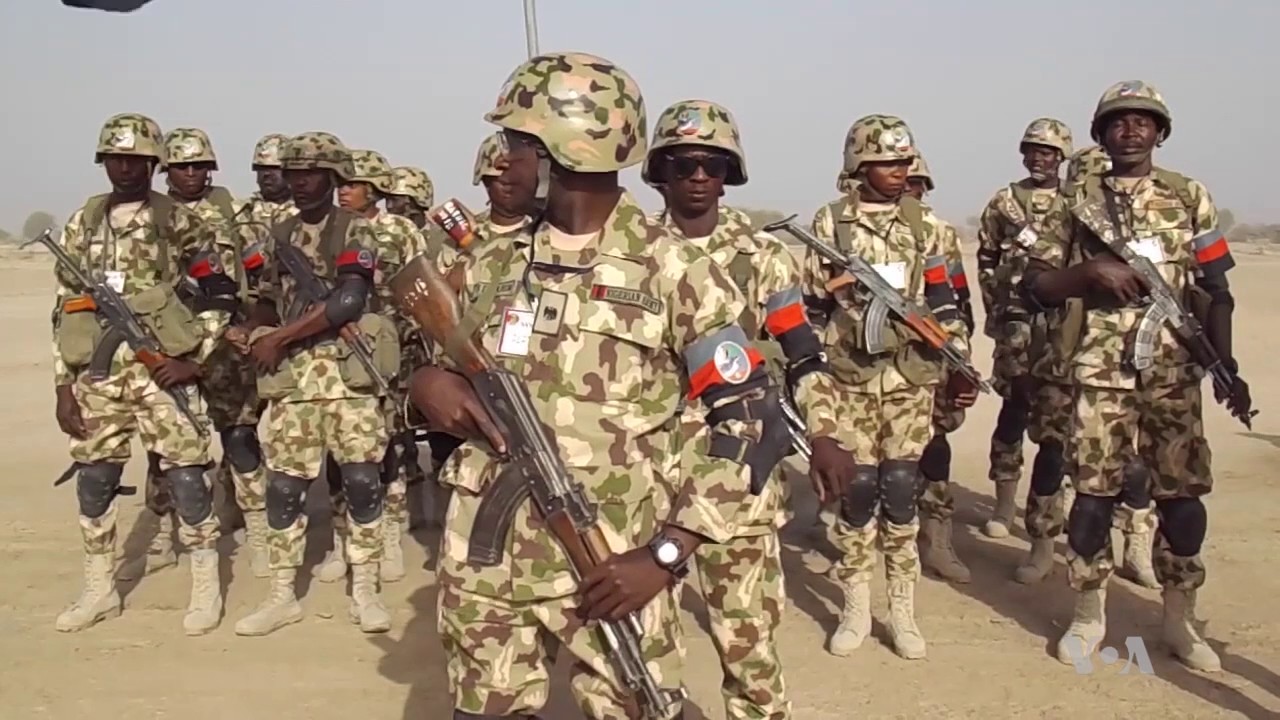
This was exacerbated by the destruction of the civil service by the General Murtala Muhammed regime, through mass purge, ably aided and abetted by his henchman, then Brigadier Olusegun Obasanjo, who later succeeded him. It was at this crucial time in the life of the nation that the most vibrant newspaper in the country, which at the time was the largest circulating paper in Africa was nationalized by these ‘cave men’ in uniform.
Lack of planning would also translate into an absence of vision, abnegation of mission and collective values, and poor attention to the needs of the people. Since then, nothing seems to have gone well for a nation blessed with both human and material resources.
This was a nation that at one time was a net exporter of cotton with a thriving textile industry. A country where traders from Ghana, Liberia, Ivory Coast, and other West African countries come to trade, buying our goods to sell in their countries, including such goods as rubber slippers.
Nigeria has no reason to be poor because the country is blessed in terms of basic mineral resources, arable land for agriculture throughout the year, rivers and streams that could be dammed both for farming and power. Our poverty as a nation is therefore self-inflicted.
All we need is leadership with vision and commitment. Today countries like Bangladesh export textiles to Europe including the famous St Michael underwear to Marks and Spencers.
The military destroyed the civil service, which today has become the ‘evil service’ because of their mastery of the art of thievery and proclivity for chop and clean mouth. Only in this clime can one man carry out the Pension heist like Maina or evacuate 80 billion from the Accountant General’ office. Even the thief crucified with our Lord Jesus did not commit such a heinous crime. I forgot to add that miracles still happen; snakes and other Anjonu reptiles eat millions kept in the accounts departments of ministries.
The growth of our economy after the Civil War was phenomenal and if it had continued along that trajectory, we would have been in a position to say ‘farewell to poverty’. But that was when the floodgate of looting of the national treasury was unleashed with fury and gusto by our kamikaze military bandits.
By 1975, we were assembling Peugeot and Volkswagen, and they were each producing 50,000 units. The idea was to increase the local content till such a time we would be able to achieve between 80 to 90%. Already by 1975, radiators, batteries (Exide by West African Batteries Limited, Ibadan) and brake pads by Ferodo, were being produced in Nigeria.
Peugeot was designated as the official government vehicle to defend the assembly plant. But later it was jettisoned for SUVs and other Shagari-type Mercedes. Even military chiefs started riding in BMWs and Land Cruiser SUVs. This never happened in India or Pakistan.
The whole arrangement was truncated: Volkswagen closed shop and Peugeot Automobile in Kaduna became comatose. The tractor factory, Steyer, in Bauchi suffered the same fate while the part manufacturers closed shop, including the car battery manufacturer in Ibadan. And Ferodo, the British brake company went back to Derbyshire, England.
Much later, other companies started packing their bags and baggage and left our shores; Michelin and later Dunlop both tire manufacturers left, yet we shamelessly continue to buy the tires they export to our shores: Cheeky devils! Yet our rubber remained an exportable commodity.
Nigeria started assembling cars before South Korea, now we are importing from Korea. What a reversal of fortune.
Another sorry case was the derailment of our pulp and paper industry. To actualize this dream of becoming paper manufacturers, the country planted gmelina trees that could be pulped in 7 years. Unfortunately, these trees were left to grow wild and later became the source of firewood. Yes, the paper industries, Iwopin, Oku iboku and Jebba mills were rendered moribund.
Birla Brothers, the Indian technical partners in the Jebba Paper Mill were made to leave the country but their factory in Kenya was able to start exporting pulp in the 80s. We would have been doing the same. What a country!
The multiplier effect was also lost. This was an industry that could have been manufacturing paper for exercise books production and for printing books for our bulging educational industry.
Another laudable project scuttled by our khaki boys was the Bauchi Meat project conceived by the late premier of Northern Region. It was a project with UNIDO as technical partner. The Bauchi Meat Complex had also completed arrangements to export beef to Britain and some European countries. This is what Australia and New Zealand have become noted for. No! We blew it. The Bauchi Meat company was not only somersaulted, but its meat was used to make suya by our very myopic leaders.
Another point emanating from this is that if we had replicated such industry all over the north, the issue of herdsmen would never have arisen because they would have been selling their cattle to the meat industry near to them.
A rather interesting case is the Lagos Metro line project. As far back as 1964 the UN in one of its reports advised Nigeria to build monorail mass transit in Lagos, from Ikeja to Ebutte-Ero. The Konigsberger Report as it was known, was incorporated into our development plan, and kept in view. Then in 1976, RTP of Paris, after surveying cities of Africa, said Lagos and Cairo were ready for the Metro project, and started planning mass transit for Lagos and Cairo the same day. This was the origin of the Jakande Metro-Line project.
However, General Buhari came to power in 1984 and cancelled the Lagos Metro line project. A former Minister of Petroleum Resources and diplomat, Philip Asiodu, also confirmed that the state doled out so much to settle the contractors without constructing a kilometer of rail.
The Lagos Metropolitan Area Transport Authority also said, “The metro-line project was scrapped in 1985 by Muhammadu Buhari at a loss of over $78m to the Lagos taxpayers.”
This was more than the amount required for phase one of the project, which the CBN failed to release. Investigation showed that as of the time of signing the metro-line contract, a naira was equivalent to about $1.5.
The metro line was designed to have 30 trains, each running 28.5km on raised concrete tracks from Marina to Agege. The 30 trains were expected to carry 88,000 passengers per hour to and fro.
In 1991 the Cairo Metro line was commissioned. The shameless Nigerian Government sent a delegation to the commissioning, with all the officials pocketing fat estacodes. ‘Awon ala’inironu ara Galatia’.
Unfortunately, the same attitude to project execution has continued into the Fourth Republic. It is now taking Lagos State 17 years to construct the Metro line from Okokomaiko to Marina, 27 kilometers.
By the time the soldiers left (did they leave?) the economy was upside down and we had lost so much time that we were left behind by nations that started with us including those that started after us.
This is the sad story of the Nigerian situation: A story many of us witnessed, live and as participants. I wonder what we would tell our grandchildren, when they go to other countries and come home to ask us why our country is so different.
No doubt, what the ordinary man desires is food, clothing, shelter, and crude comfort. He desires educational facilities for his children and of course adequate electricity, health, transportation infrastructure and security. He is not and I repeat NOT interested in the power struggles among politicians, or ‘talokan? Who’s Obi’tuary is better or who is more Ati’kulate? Let us hear word joor!
Good governance which results in rapid economic and social progress and improving standard of living and quality of life for the great majority of the people are what will lead to national cohesion and stability.
Barka Juma’at and a happy weekend.
Related
You may like
Islam
Friday Sermon: Reflections on Ramadan 4: Empathy and Compassion
Published
2 hours agoon
March 13, 2026By
Eric
Prophet Muhammad (SAW) said: “You see the believers as regards their being merciful among themselves and showing love among themselves and being kind, resembling one body, so that, if any part of the body is not well then the whole body shares the sleeplessness (insomnia) and fever with it.” (Al-Bukhari)
We want others to put themselves in our shoes and view the world from our perspective. That is empathy – putting oneself in someone else’s shoes. We feel close to the person who is empathetic to us, find it easy to share our thoughts with them, go to him or her when we’re in trouble and seek solace. Each of us has a natural sense of empathy through which we connect to others.
There are two aspects of empathy: cognitive and affective. Cognitive empathy is about understanding another person’s point of view, their emotions and needs at the intellectual level. Affective empathy is about actually feeling an emotion that another person is experiencing.
If only our leaders would empathize with the suffering multitude, they would do the needful and set the country on the path of sustained development. But they would not. These are stone-hearted people who are bereft of the milk of human kindness. The Prophet (SAW) attested to this when he said: “None of you will have faith till he wishes for his (Muslim) brother what he likes for himself.” (Al-Bukhari) A man without empathy will therefore be devoid of faith.
This Hadith necessitates cognitive empathy. You have to firstly imagine yourself in someone else’s shoes and think from their perspective in order to understand what you would do in his situation.
A believer who has achieved excellence of faith will feel this special love for other believers. This is effective empathy.
The Quran stresses that righteousness is not in precise observance of the rituals but in acts of compassion and kindness. It says that the litmus test for true belief and genuine worship is that it leads to compassionate living:
Goodness does not consist in turning your face towards East or West. The truly good are those who believe in God and the Last Day, in the angels, the Scripture, and the prophets; who give away some of their wealth, however much they cherish it, to their relatives, to orphans, the needy, travellers and beggars and to liberate those in debt and bondage; those who keep up the prayers and pay the prescribed alms; who keep pledges whenever they make them; who are steadfast in misfortune, adversity and times of danger. These are the ones who are true, and it is they who are aware of God. (Quran 2:178)
This verse talks about a set of beliefs and then a set of good deeds, the intricate relationship between the two escapes many if not most.
Every Friday in the second part of the sermon, Muslims all over the world hear a verse, which stresses, justice, kindness and natural mutual love as among the closest blood relatives:
Indeed, Allah enjoins justice, and the doing of good to others; and giving like kindred; and forbids indecency, and manifest evil, and wrongful transgression. He admonished you that you may take heed. (Quran 16:90)
He makes His relationship or His Providence to the common man, conditional to common human compassion, by claiming that those, who wish to find Him, will succeed only if they are kind and compassionate to the common people:
Fasting cleanses your soul and makes you appreciate all your blessings. Fasting humbles you; it makes you feel compassion for the poor who experience that type of hunger every day. At the end of the day, however, we have a big dinner; the poor don’t have that luxury. That is why Muslims are required to give Zakat on an annual basis. Many choose to do this during Ramadan. This money is either given personally or through a charity. The main thing is that it must be paid.
We are taught to not only abstain from food and drink but to try to refrain from conflict, anger and mean words. Our prophet (SAW) says, “Saying a nice word is like giving to charity.” And he also said, “To smile in the face of your brother is like giving to charity.” We are to be kind and loving to each other. We are to be forgiving, not only in this month but in every month. But for some reason, this month brings out the best in everyone.
During this holy month, we spend a lot of time reading our Quran: We also spend a lot of time praying, trying to help those who are less fortunate and performing good deeds, which in turn cleanses our hearts and souls. For one month, we truly do become less selfish, less self-centered and more focused on what really matters in the world.
What then are the lessons of the month of Ramadan as it winds up? Ramadan teaches patience, self-discipline, empathy, gratitude, and spiritual mindfulness, offering lessons that extend far beyond fasting.
Ramadan is primarily a time to cultivate taqwa, or God-consciousness, through fasting, prayer, and reflection. Abstaining from food, drink, and other desires from dawn to sunset encourages believers to focus on their spiritual and moral essence rather than material needs, fostering mindfulness and a deeper connection with Allah. The month also emphasizes the importance of ethical behavior, as Muslims are reminded to avoid harmful speech and actions while maintaining integrity in all aspects of life.
Fasting during Ramadan is a rigorous exercise in sabr (patience) and self-control. By resisting hunger, thirst, and other impulses, individuals strengthen their ability to manage desires and make thoughtful decisions in daily life. This discipline extends to controlling emotions, refraining from anger, and practicing restraint in speech and behavior.
Experiencing hunger and thirst firsthand cultivates empathy for the less fortunate, motivating acts of charity such as Zakat (obligatory almsgiving) and Sadaqah (voluntary charity). Ramadan encourages believers to support those in need, fostering a sense of social responsibility and compassion.
Fasting highlights the blessings often taken for granted, such as food, water, and health. This practice instills humility and gratitude, reminding individuals that true contentment comes from appreciating simple blessings rather than material wealth. The shared experience of fasting also strengthens family and community bonds, reinforcing social cohesion and mutual support.
Ramadan provides an opportunity for self-reflection, helping individuals evaluate their purpose, actions, and relationships. It encourages mindfulness of the ‘Last Day’ and accountability for one’s deeds, promoting ethical conduct and a commitment to justice and fairness in interactions with others. The month serves as a spiritual “classroom” where habits of prayer, charity, and self-restraint are cultivated and ideally carried forward throughout the year.
In essence, Ramadan is not only a period of fasting but a transformative journey that nurtures spiritual awareness, patience, empathy, gratitude, and moral integrity. The lessons learned during this sacred month are intended to guide believers in their daily lives, shaping character, relationships, and a deeper understanding of their place in the world.
A few years ago, The UN High Commissioner for Refugees, Filippo Grandi, in sharing his wishes, for all observing the holy month of Ramadan, urged action on behalf of millions of forcibly displaced people worldwide. His thesis remains valid today.
He said: “Through our reflection, we come to recognize that while words may reassure, it is only through action that we can truly see tangible change,” he said. “We continue to live in extremely complex times where violence is multiplied, conflicts are protracted and tens of millions of people are forcibly uprooted or on the move. This has created unprecedented levels of human suffering and desperation. “Millions of people like you and I are living in a constant state of conflict, insecurity and persecution: Their loved ones torn from them under inexplicable circumstances. Think of civilians in Syria or Yemen. Think of the plight of the Rohingyas in Myanmar, Bangladesh and the other countries to which they have fled”.
And I urge you to also think of the castrated and emasculated people of Palestine: Pray for them and remember them. May Allah make it easy for us; Ameen.
Let us remember those who prepared to participate in this Ramadan but did not make it to the starting line. There are also those who started but did not get to the finish line. May Allah grant them forgiveness and grant them Jannatul Firdousi.
Allahuma innaka afuwwun tuhibbul afwa fa’fu wanni. “O Allah you are most forgiving and you love to forgive so forgive us.” ‘May our hearts soften in sincere repentance, and may our souls be counted among those liberated from every chain of sin, embraced by divine forgiveness and grace. Write us among those forgiven completely, accept our prayers and worship, grant us good in this world and the Hereafter, guide us and our children against all evils and don’t let us cry over them.’Aamee
Barka Juma’at and Ramadan Karim
Related
Islam
Friday Sermon: Reflections on Ramadan 3: Spiritual Stocktaking
Published
7 days agoon
March 6, 2026By
Eric
O ye who believe! Guard your own souls: If ye follow (right) guidance, no hurt can come to you from those who stray. The goal of you all is to Allah: it is He that will show you the truth of all that ye do. (Quran 5:105)
A deep reflection on the institution of Fast reveals the various ways in which fasting helps in the mending of habits and development of character and God consciousness.
Ramadan is a time for moral rearmament and retrospection. It’s a time for critical self evaluation and adjustment.
How does the prayers and fasting of Ramadan influence attitudes and perspectives; how is it improving relationships with families, friends and neighbors; how much has it increased consciousness of responsibility towards the destitute; how is it impacting on the body, the heart, the mind and the soul?
If there is a genuine effort towards the spiritualization of one’s being, the moralization of consciousness, empathy in attitude and goodness in conduct; then perchance a concerted effort is being made of treading on the pathway towards the objective of fasting – the attainment of taqwa (piety). Truly, the month of Ramadan is a season for spiritual stocktaking.
Among the profound concepts discussed in the Quran, one that stands out is Taqwa. While often loosely translated as ‘fear of Allah,’ Taqwa encapsulates a far deeper meaning, emphasizing consciousness and mindfulness of the Divine.
The term ‘Taqwa’ is derived from the Arabic root ‘waqa,’ which means to shield or protect oneself. It’s a state of the heart cultivated by harboring fear and awe of Allah, leading to adherence to His guidelines and abstention from His prohibitions. “O you who have believed, fear Allah as He should be feared and do not die except as Muslims [in submission to Him].” (Surah Al-Imran, 3:102). Thus, Taqwa isn’t merely fear – It’s an all-encompassing concept that drives a believer’s thoughts, intentions, and actions.
According to Erik Ohlander, the word taqwa is used in the Quran over 100 times. According to the Oxford Dictionary of Islam, the word taqwa and its derivatives appear “more than 250 times” in the Quran “…But the clothing of righteousness (Taqwa) – that is best…” (Quran 7:26), the criterion of honor in Allah’s sight “…Indeed, the most noble of you in the sight of Allah is the most righteous (most full of Taqwa) of you…” (Quran 49:13). This frequent mention of Taqwa in the Quran underscores its critical role in shaping a believer’s spiritual journey.
Nurturing Taqwa in our hearts isn’t an overnight process but a continuous journey of spiritual growth. We begin this journey by gaining knowledge of Allah and His commands. Say: Is it that ye deny Him Who created the earth in two Days? And do ye join equals with Him? He is the Lord of (all) the Worlds. (Surat Fussilat 41:9).
Next, we engage in constant remembrance (dhikr) of Allah, striving to maintain mindfulness of His presence in our daily lives. Consciousness of His omnipresence encourages us to act righteously. Another crucial element is consistent prayer (Salat), which serves as a direct link between us and Allah, helping to strengthen our relationship with the divine. This is echoed in a Hadith where the Prophet (SAW) said, “He who remembers his Lord and he who does not are like the living and the dead.” (Bukhari).
Although Taqwa is deeply personal, it has profound societal implications. A community guided by Taqwa values truth, justice, and compassion, as these values are at the heart of Allah’s commands. “O you who have believed, be persistently standing firm for Allah, witnesses in justice, and do not let the hatred of a people prevent you from being just. Be just; that is nearer to righteousness (Taqwa)…” (Quran 5:8).
When individuals in a society cultivate Taqwa, they create an environment of mutual respect, tolerance, and peace. They hold themselves accountable, striving not only for their well-being but also for the welfare of others. Living with Taqwa allows us to contribute to building a more empathetic, fair, and loving society.
Actively seeking ways to enhance Taqwa can lead us to live more fulfilling lives spiritually. “…Allah has sent down the best statement: a consistent Book wherein is reiteration. The skins shiver therefrom of those who fear their Lord; then their skins and their hearts relax at the remembrance of Allah. That is the guidance of Allah by which He guides whom He wills. And one whom Allah leaves astray – for him there is no guide.” (Surah Az-Zumar 39:23).
Another practical step is incorporating more acts of charity into our lives. Generosity and kindness imbibe the spirit of Taqwa as they reflect our obedience and submission to Allah’s command. Prophet Muhammad (SAW) once said, “Charity extinguishes the sins just as water extinguishes the fire” (Tirmidhi).
When we embody Taqwa, it profoundly influences our interpersonal relationships. As Allah advises us in the Quran, “…and speak to people good [words]…” (Quran 2:83). This translates into healthier, more respectful, and loving relationships, helping to foster a stronger, more united community.
Taqwa and patience go hand in hand. Life can sometimes throw us in challenging situations. It’s during these times that Taqwa empowers us to be patient, persevere, and trust in Allah’s plan. As Allah mentions in the Quran, “O you who have believed, seek help through patience and prayer. Indeed, Allah is with the patient.” (Quran 2:153). With Taqwa, we can remain patient and hopeful, recognizing that every hardship is a test of faith.
Prophet Muhammad (SAW) often reminded us of the importance of patience, citing it as a virtue of the highest order: “Patience is a key to success” (Bukhari). Through patience, we can navigate the uncertainties of life with grace and dignity.
In Islam, ultimate success lies in attaining Allah’s pleasure and entering Paradise. Taqwa is the path that leads us to this success. As Allah tells us in the Quran, “And hasten to forgiveness from your Lord and a garden as wide as the heavens and earth, prepared for the righteous.” (Surah Al-Imran 3:133).
A vital aspect of Taqwa is the realization of our eventual accountability to Allah. This powerful awareness permeates every aspect of our lives, shaping our actions and decisions. Allah reminds us in the Quran, “So whoever does an atom’s weight of good will see it, And whoever does an atom’s weight of evil will see it.” (Surah Az-Zalzalah 99:7-8).
Knowing that we’re accountable for our deeds can be sobering but it also motivates us to strive for excellence in all areas of life. Thus, Taqwa fuels a commitment to leave a positive impact on our surroundings, which unfortunately our leaders are not doing. .
Taqwa, the deep-rooted consciousness and fear of Allah, is not merely a concept but an actionable principle that has far-reaching implications in our daily lives.
By cultivating Taqwa, we are essentially preparing for the ultimate success – to attain Allah’s pleasure and His Paradise.
Ramadan is an ideal training period for filtering out bad habits and developing virtuous character. It is therefore a good time for our leaders to turn a new leaf, lest ‘we the people’ decide to chase them out like Oliver Cromwell did the ‘Long Parliament’ in 1653.
Cromwell’s speech aptly reflects the character of our leaders today: “It is high time for me to put an end to your sitting in this place, which you have dishonored by your contempt of all virtue, and defiled by your practice of every vice; ye are a factious crew, and enemies to all good government; ye are a pack of mercenary wretches, and would like Esau sell your country for a mess of pottage, and like Judas betray your God for a few pieces of money. Is there a single virtue now remaining amongst you? Is there one vice you do not possess? Ye have no more religion than my horse; gold is your God; which of you has not bartered your conscience for bribes? Is there a man amongst you that has the least care for the good of the Commonwealth? Ye sordid prostitutes; have you not defiled this sacred place, and turned the Lord’s temple into a den of thieves, by your immoral principles and wicked practices? Ye are grown intolerably odious to the whole nation; . . ..” If only they would change in the spirit of Ramadan!
Prophet Muhammad (SAW) said: “Your practice of faith will not be correct unless your actions are correct, and your actions will not be considered correct unless your heart is correct.” Ramadan is therefore a period for spiritual rejuvenation as it offers the opportunity for a unique expression of worship.
From ethical and moral perspectives, we should contemplate the higher purpose and the deeper meaning of our lives, trying to live meaningfully; balancing our physicality with our spirituality.
While Fasting, we are far more aware of the hunger of the poor and the suffering of the oppressed and are therefore instructed to be more generous this month. This promotes attentiveness to social responsibility, interest in the welfare of society and inspires a continued spirit of generosity. The Qur’an refers to the fasting ones as sa’ihin/spiritual wayfarers. So, the journey of Ramadan motivates each person to perpetuate the positive spirit being imbibed and to continue on the spiritual journey towards fulfilment and excellence.
It is easy to talk about the world’s problem of hunger. We can feel sorry that millions of people go to bed hungry each day. But not until one can actually feel it in one’s own body is the impact truly there. Compassion based on empathy is much stronger and more consistent than compassion based on pity. This feeling must lead to action.
Fasting is never an end in itself; that’s why it has so many different outcomes. But all the other outcomes are of no real moral value if compassion is not enlarged and extended through fasting. It is therefore in the interest of our fasting leaders and those not fasting to shed the toga of iniquity, selfishness and corruption and for once think of the poor masses that are not only defenseless but also hungry. It is only by doing this that the fast can have spiritual reward and meaning.
As the prophet Isaiah said, “The kind of fasting I want is this: remove the chains of oppression and the yoke of injustice, and let the oppressed go free. Share your food with the hungry and open your homes to the homeless poor” (Isaiah 58:3-7) May Allah accept our fast, Amee.
Ramadan Kareem and Barka Jumuah
Related
Islam
Friday Sermon: Reflections on Ramadan 2: The Taraweeh Conundrum
Published
2 weeks agoon
February 27, 2026By
Eric
The Taraweeh prayer is a special form of supererogatory prayer performed in the congregation immediately or some minutes after the obligatory Isha prayer during the holy month of Ramadan. However, scholarly discussions have emerged regarding whether Taraweeh is a firmly established Prophetic Sunnah or an innovation (bid‘ah).
While it is widely accepted that the Prophet Muhammad (SAW) performed Taraweeh, historical accounts indicate that he did not continue leading it publicly due to concerns that it might become obligatory.
He always offered the Sunnah or nafl (Tahajjud) prayers at home and only the fard prayers were offered at the Masjid in congregation. There are plenty of Hadiths reflecting this matter.
What therefore, is Tahajjud prayer? We can call this the ‘sixth’ prayer as mentioned in the Quran as an “additional” prayer, but made obligatory only for the Prophet (SAW): And pray in the small watches of the morning: (it would be) an additional prayer (or spiritual profit) for thee: soon will thy Lord raise thee to a Station of Praise and Glory! (Al-Isra, Quran 17:79)
Prophet Muhammad (SAW) said regarding the month of Ramadan:“Whoever establishes the night prayer (Qiyam al-Layl) in it out of sincere Faith and hope for reward from Allah, all of his previous sins will be forgiven.” [Sahih al-Bukhari, volume 3, book 32, number 226]
The Ahl al-Sunnah wa’l Jama’ah or Sunnis generally considers it a Sunnah to offer specific evening prayers – the Taraweeh – in congregation during the holy month of Ramadan. The Shi’ah, on the other hand, is not allowed to offer them in congregation.
Meanwhile, we do not find the word “Taraweeh” anywhere in the Quran and Hadith because the prayer is referred to as the “Night Prayer” (Qiyam-ul-layl) in the Quran and Sunnah, which basically is the Tahajjud prayer.
It is a term developed later amongst Muslims. Linguistically, the word “Taraweeh” is the plural of the word ‘tarwiha’ referring to the short period of rest between every two or four units of the prayer.
It is a well-established fact that the Taraweeh, as a congregational night prayer of Ramadan, owes its existence to the order of the second caliph, ‘Umar b. al-Khattab.
Narrated Abu Hurayra: Allah’s Apostle said, “Whoever prayed at night the whole month of Ramadan out of sincere faith and hoping for a reward from Allah, then all his previous sins will be forgiven.” Ibn Shihab (a sub-narrator) said, “When Allah’s Apostle died, the people continued observing that Nawafil individually, not in congregation, and it remained as such during the Caliphate of Abu Bakr and in the early days of ‘Umar’s Caliphate.
Abdur Rahman bin ‘Abdul Qari said, “I went out in the company of ‘Umar bin Al-Khattab one night in Ramadan to the mosque and found the people praying in different groups – a man praying alone or a man praying with a little group behind him. Then, ‘Umar said, ‘In my opinion I would better collect these (people) under the leadership of one Qari (reciter) (i.e. let them pray in congregation!)’. So, he made up his mind to congregate them behind Ubayy bin Ka’b. Then, on another night, I went again in his company and the people were praying behind their reciter. On that, ‘Umar remarked, ‘What an excellent bid’ah this is.’ [Sahih al-Bukhari, volume 3, book 32, number 227]
“It was called bid’ah because the Prophet (SAW) did not use to pray it in congregation, and neither was it prayed like that in the time of Abu Bakr al-Siddiq.” [al-Qastallani, Irshad al-Sari, Sharh Sahih al-Bukhari, volume 5, page 4] [al-Nawawi, Sharh Sahih Muslim, volume 6, page 287]
Umar was the first who set the example of the night prayer of Ramadan, the Taraweeh, and instructed different regions regarding it. This was during the month of Ramadan of the year 14AH. He appointed for the people reciters of the Quran who led the Taraweeh prayer for men and women.” Ibn Sa’d, Kitab al-Tabaqat, volume 3, page 281; al-Suyuti, Tarikh al-Khulafa’, page 137; al-‘Ayni, ‘Umdat al-Qari fi Sharh Sahih al-Bukhari, volume 6, page 125.
Offering the optional prayers individually inside the home and away from the congregation in the mosque is highly recommended by the Prophet (SAW) as it brings more blessings for the home and family and helps in the Islamic upbringing of children. The Prophet (SAW) said: “O people! Perform your prayers at your homes, for the best prayer of a person is what he performs at his home, except the compulsory (congregational) prayer.” Sahih al-Bukhari, volume 9, book 92, number 393; al-Nasa’i, Sunan, volume 3, p. 161, p. 198.
Once Abdullah bin Mas’ud asked the Prophet (SAW): “Which is better; to pray in my house or in the mosque?” The Prophet (SAW) replied: “Do you not see how near to the mosque my house is? To pray in my house is more beloved to me than to pray in the mosque except for the obligatory prayers.” Ibn Majah, Sunan, English translation: Vol. 1, Book 5, Hadith 1378.
Narrated Zaid bin Thabit : Allah’s Apostle (SAW) made a small room (with palm leaf mat). Allah’s Apostle (SAW) came out (of his house) and prayed in it. Some men came and joined him in his prayer. Then again the next night they came for the prayer, but Allah’s Apostle (SAW) delayed and did not come out to them. So they raised their voices and knocked on the door with small stones (to draw his attention). He came out to them in a state of anger, saying, “You are still insisting (on your deed, i.e. Taraweeh prayer in the mosque) that I thought that this prayer (Taraweeh) might become obligatory on you. So you people, offer this prayer at your homes, for the best prayer of a person is the one which he offers at home, except the compulsory (congregational) prayer.” [Sahih al-Bukhari, volume 8, book 73, number 134]
Imam al-Baqir and Imam al-Sadiq were asked about the permissibility of praying optional prayers in congregation during the nights of Ramadan. They both narrated a tradition of the Prophet (SAW) where he said: “Verily, the offering of nafila (recommended prayers) in congregation during the nights of Ramadan is an innovation…” [al-Hurr al-`Amili, Wasa’il al-Shi`ah, volume 8, page 45]
This view of the Imams from the Prophet’s progeny is confirmed by a scholar well-known amongst the Ahl al-Sunnah who writes: “The progeny of the Prophet (SAW) say that congregation in Tarawih is an innovation”. [al-Shawkani, Nayl al-Awtar, volume 3, page 50]
“The scholars agree on its merit, but they differ on whether it is better to pray it in one’s home individually or in congregation in a mosque.” Al-Nawawi, the famous commentator of Sahih Muslim, then goes on to list scholars who support the second and dominant view. He then writes: “Malik, Abu Yusuf, some Shafi’i scholars, and others say that it is better to pray it individually in the home”. [al-Nawawi, Sharh Sahih Muslim, volume 6, page 286]
Another hadith that refers to this prayer is: Narrated Abu Huraira: Allah’s Apostle said: “Whoever establishes prayers during the nights of Ramadan faithfully out of sincere faith and hoping to attain Allah’s rewards (not for showing off), all his past sins will be forgiven.” (Bukhari, Book 2, Hadith 36)
By “establishes prayers during the nights of Ramadan” the Prophet (SAW) is indicating the Tahajjud prayer. During Ramadan, Tahajjud prayer is substituted as Taraweeh prayer, which is essentially the same prayer offered in the same manner without any change.
They are both classified as qiyaam al-layl. However the Qiyaam al-layl during Ramadan is called Taraweeh because the Salaf used to rest (istarahu) after every two or four rakats, because they made their prayers long in order to make the most of this season of great reward.
Tahajjud, on the other hand, is a voluntary night prayer performed after sleeping and can be offered any night of the year, not limited to Ramadan. It is part of Qiyam al-Layl, the general night prayer, and is highly recommended in the last third of the night. Tahajjud can be prayed in any number of rakats according to personal preference, and it is better performed at home rather than in congregation.
According to a Hadith, the number of rakats in the night prayer is not limited but should be in two rakats at a time and end with one rakat witr: Ibn `Umar said, “While the Prophet (SAW) was on the pulpit, a man asked him how to offer the night prayers. He replied, ‘Pray two rakat at a time and then two and then two and so on, and if you are afraid of the dawn (the approach of the time of the Fajr prayer) pray one rakah and that will be the witr for all the rakat which you have offered.” Ibn `Umar said, “The last rakat of the night prayer should be odd, for the Prophet (SAW) ordered it to be so.
Taraweeh is therefore a Ramadan-specific night prayer performed mainly in congregation, whereas Tahajjud is a voluntary night prayer performed late at night, any time of the year, emphasizing personal devotion and spiritual reflection. Fortunately for the larger Umma, Taraweeh in congregation has come to stay, having been practiced for over 1,400 years: Time and usage has settled the controversy on the side of the majority Sunni.
Shafa and Witr are voluntary night prayers too, performed after Isha, with Shafa being even-numbered rakats and Witr being an odd-numbered concluding prayer.
Witr prayer, which means “odd” in Arabic, is a highly recommended Sunnah (non-obligatory) prayer that holds great significance in Islam. Witr prayer can be performed anytime after the Isha prayer and before the Fajr (dawn) prayer. The best time to pray Witr is during the last third of the night, as this time is considered particularly blessed. However, if one fears they will not wake up for the late-night prayer, it is permissible to pray Witr earlier in the night.
In Qiyam of Ramadan, Sheik Albaani said it is Sunnah to recite Sabih ismi Rabika al-‘A’la in the first rakah, Qul Ya ayuha’l-Kafiroon in the second rakah, and Qul Huwa Allahu ahad in the third rak’ah. Sometimes Qul a’odhu bi Rabi’l-Falaq and Qul a’odhu bi Rabi’l-Nas may be added as well.
Ya Ghaafir, forgive me for every single sin I ever put forth, cover me in this life and the next, and don’t let shame keep me from returning to You. Ya Ghaffar, for every time I fall and rise again, meet me with another chance. Let my heart grow softer with every repentance, and my view of the door of Your mercy only grow wider. For You have never tired of forgiving me despite my constant sins. Ya Ghafur, forgive me for what I know and what I don’t, what I’ve done and what I still may do, wash away every hidden trace of my wrongdoing, and turn the stains of my past into light on my scrolls. Reach me with Your forgiveness even in the holes that I’ve dug for myself. Ya Tawwaab, turn towards me so that I may turn back to You. And call me back every time I drift. And accept me every time I return. Make repentance my constant companion and joy and Jannah my reward in finding You again.
Barka Juma’at and Ramadan Kareem
Related


Rescue Effort Underway As Fueling Aircraft Crashes in Iraq – US Military
Friday Sermon: Reflections on Ramadan 4: Empathy and Compassion
UBA Business Series Celebrates The Evolved Woman’s Leadership, Enterprise
Court Threatens Bail Revocation, Arrest Against Sowore
Court Bars Aiyedatiwa from Contesting 2028 Guber Election
UK Orders Airspace Restrictions, Road Closures for Tinubu’s State Visit
Nine Senators Announce Defection to ADC
International Women’s Day: The Boss Celebrates 100 Influential Nigerian Women
Iran Confuses Israel As Missile Splits into Multiple Warheads in Tel Aviv
The Scars of Glory and the Burden of Leadership!
Class, Glamour As Global Statesman, Chief Olusegun Obasanjo Celebrates 89th Birthday
Voice of Emancipation: Yoruba Sovereignty is Inevitable
Tenure Policy: India, Others Reject Tinubu’s Ambassadors
South African Actress, Nomzamo Mbatha, Tells Success Story on Glo-Sponsored African Voices
Trending
-
Boss Picks4 days agoInternational Women’s Day: The Boss Celebrates 100 Influential Nigerian Women
-
Middle East4 days agoIran Confuses Israel As Missile Splits into Multiple Warheads in Tel Aviv
-
Opinion6 days agoThe Scars of Glory and the Burden of Leadership!
-
Featured6 days agoClass, Glamour As Global Statesman, Chief Olusegun Obasanjo Celebrates 89th Birthday
-
Voice of Emancipation4 days agoVoice of Emancipation: Yoruba Sovereignty is Inevitable
-
Headline2 days agoTenure Policy: India, Others Reject Tinubu’s Ambassadors
-
Entertainment4 days agoSouth African Actress, Nomzamo Mbatha, Tells Success Story on Glo-Sponsored African Voices
-
Events6 days agoBanigo Conferred with Life Patroness Honours As Rivers AWLO Relaunches