
Headline
Alhaji Atiku Abubakar: The Man Who Wants to Be President

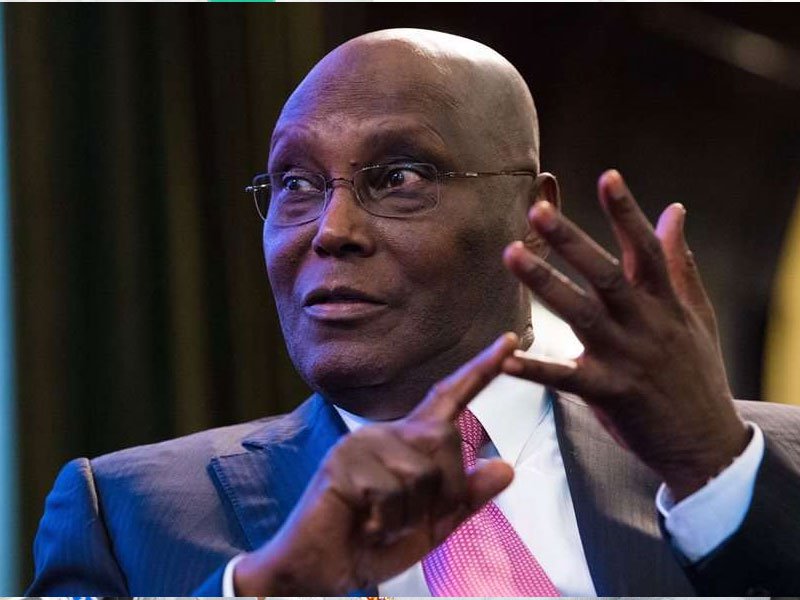

WHY ATIKU?
This is neither Atiku Abubakar’s abridged Biography nor his abridged Manifesto, both of which have already been put in the public domain. Rather, it is an effort to distil from the two what can be regarded as THE ESSENTIAL ATIKU and the attributes that qualify him as the best President for Nigeria in 2023.
The single most important factor that makes him most-suited for the high office of the President, particularly at this critical point in our national development, is ADQUAUTE PREPARATION. This is what makes him tower well above all the other contestants for the 2023 Presidential Election. In his book on Leadership, Rudolph Giuliani has this to say about the imperative of adequate preparation:
“As I Progressed in my career, I realised that PREPARATION was the single most important key to success, no matter what the field. A leader may possess brilliance, extraordinary vision, fate, even luck. All these help. But no one, no matter how gifted, can PERFORM without careful preparation, thoughtful experiment and determined follow-through.”
For Atiku, it has been a life-time of meticulous preparation for leadership culminating in resounding success in all his endeavours. The circumstances of his birth and childhood, the challenges he faced, the deprivations he endured and the opportunities created for him by the existing order in those days largely influenced the choices he made, his values and principles, his entrepreneurial spirit, his passion for education and for creating opportunities for his fellow citizens, particularly the youth, to develop their full potentials.
Atiku had been involved in politics long before the formation of the People’s Democratic Party (PDP) in 1998. He had participated in the struggle for the enthronement of Democracy, a Constitutional Conference and several Transition Programmes by the Military under the auspices of the People’s Democratic Movement (PDM) led by the late General Shehu Musa Yar’Adua. His involvement in the democratic struggle entailed a lot of courage and personal sacrifice as it inevitably brought him into collision course with the military establishment and even brought him into harm’s way especially when he joined others in demanding the exit of General Sani Abacha’s brutal regime. At the same time his principled stance made him to reject offers of political appointment to silence him.

This long involvement in national politics came with two distinct advantages. The first is an intimate knowledge of the dynamics and complexities of Nigerian politics. The second is a formidable political network throughout the country. In fact, by the time preparations were in top gear for the return to civil rule during the General Ibrahim Babangida regime the PDM was the most cohesive, strategic and effective political group in the country. Atiku used the movement as the launching pad for his Presidential aspiration in 1993 on the platform of the Social Democratic Party (SDP). It is on record that the sacrifice he made ensured the emergence of Chief M.K.O. Abiola as the Presidential Candidate and the eventual winner of the election.
Similarly, the PDM, with Atiku as the arrow head, was central to the emergence of Chief Olusegun Obasanjo as the Presidential Candidate of the PDP in 1999. Atiku, who had already won the Gubernatorial election in Adamawa State rallied most of the Governors-elect on the platform of PDP to work for the victory of Chief Olusegun Obasanjo at the Presidential Primaries. Evidently, his impressive efforts to mobilise men and resources informed Chief Obasanjo’s decision to choose him over and above six prominent politicians recommended to him as running mate by Northern elders of the Party.
It did not take too long for Atiku to demonstrate that he was the most appropriate choice for the position of Vice President. He deployed effectively to the service of the new administration his political savvy and network, his ability to build consensus by inspiring confidence and trust, his cosmopolitan and detribalised nature, his profound understanding of the terrain and dynamics of Nigerian politics as well as his exposure to the private sector. He thus, became the critical bridge between the Administration and the political class, the Organised Private Sector, Labour Unions, the Legislature and the other tiers of Government and complemented the vast experience, tested leadership and international exposure of Chief Obasanjo to achieve the speedy stabilization of the Administration. This was a great feat for a country that was just emerging from prolonged military rule as it created the conducive environment for embarking on the much needed social and economic transformation of Nigeria.
As Vice President, apart from his Constitutional role as the Chairman of the National Economic Council, Atiku presided over the National Council on Privatization which is charged with implementing the privatization and commercialization of public enterprises. Under his s effective leadership, Nigeria undertook one of the most massive privatization programmes in the world involving about 200 public enterprises. The enormity of the privatization programme with its exacting transactional regulations and timelines required great capacity for work, firmness, decisiveness and the ability to lead and inspire the sound technocrats at the Bureau of Public Enterprises. It is noteworthy that the National Council on Privatization’s mandate also included critical reforms in Telecommunications, Pensions, Tax as well as Ports and Debt Management.
Perhaps it is in the area of reforms that the Obasanjo – Atiku Administration recorded its greatest achievements and most enduring impact on the socio-economic development of Nigeria. At the inception of the administration, the Public Service was literally crumbling under the heavy weight of bureaucratic inertia, corruption, inefficient service delivery and near-total disregard for due process, transparency and accountability. The Public Service Reforms, with SERVICOM as its face, brought about noticeable positive changes in work ethics and service delivery.

Atiku was the enthusiastic reformer per excellence who gave unflinching support to President Olusegun Obasanjo and his Reform Team to introduce many legislations and initiatives to fight corruption, improve Public Sector Financial Management, revolutionize Communications, modernize Banking, create a conducive atmosphere for a private sector led growth and align the country with global best practices. Prominent among the legislations and initiatives are:
- National Economic Empowerment and Development Strategy (NEEDS) I and II;
- Vision 20:2020 – a Strategic Framework for making Nigeria one of the 20 largest economies in the world and a major player in the global economy by the year 2020.
- The Economic and Financial Crimes Commission (EFCC) and Independent Corrupt Practices and other Related Offenses Commission (ICPC) as effective institutional and legal frameworks for combating corruption.
- Public Service Reforms – to enhance work ethics and service delivery.
- The Fiscal Responsibility Act – an essential tool for Public Sector Financial Management.
- The National Health Insurance Scheme (NHIS).
- Pension Reform – with the introduction of Contributory Pension Scheme.
- The Agri-Business and Agricultural Value Chain – to diversify the economy.
- Development of National Multi-modal Transportation Master Plan, Including the Railway Master Plan.
- Very aggressive and highly successful drive for Foreign Direct Investment (FDI).
- Debt Relief to tune of $18 billion by the Paris Club which was a measure of the confidence generated by our Good Governance and Reforms.
- Establishment of the Infrastructural Concessioning Regulatory Commission (ICRC) as the regulatory framework for Public Private Partnership.
- The Communication Reforms and GSM revolution (It is noteworthy that Nigeria had only about 400,000 functional telephone lines before the advent of the Administration in 1999).
- Banking Consolidation and Reforms – which revolutionised banking in Nigeria.
- Tax Reforms.
- Establishment of the Price Intelligence (Due Process) Unit which is the Precursor of the Public Procurement Act.
- Keying into the Extractive Industries Transparency Initiative.
- Establishment of the Excess Crude Account (ECA) which is the Precursor of the Nigeria Sovereign Investment Authority, otherwise known as the Sovereign Fund.
It is evident from the foregoing that Atiku occupies a pride of place among those contesting for the position of President in 2023 in terms of performance and experience on the job. This should be of paramount importance to the electorate because, even in normal times, the Presidency does not permit of a long learning period and the margin of error in the actions and decisions of the President must be minimal.

Photo credit: Tope Brown
President Barack Obama once remarked that the Presidency does not CHANGE who you are but REVEALS who you are. In other words, the convictions, values principles and personal attributes a President brings into office have profound influence on his actions and decisions. In this regard, Atiku never fails to demonstrate the courage of his conviction. One of the manifestations is that he has never shield away from legal battles whenever the violation of his personal rights or the infringement on the rule of law was involved. He tenaciously and successfully challenged his indictment for corruption based on the “findings “of a contrived Administrative Panel by the former President Olusegun Obasanjo.
Atiku’s Legal battles against attempts to circumscribe his political freedom and his serial victories in the cases up to the Supreme Court settled many constitutional issues and gave rise to the publication of a book titled “Landmark Constitutional Law Cases in Nigeria 2004- 2007: The Atiku Cases’”. At the presentation of the book General Ibrahim Babangida declared that “I have great respect for the person and subject matter of the book and what it represents for democracy”. He added that Atiku’s tenacious pursuit of those cases and the positive impact on the Nigerian democratic trajectory was a manifestation of his love for democracy and good governance.
Another area in which Atiku’s courage and steadfastness are manifest is his principled position on critical national issues. Where others are ambivalent or decide to maintain a studied silence or seek to be politically correct, he expresses his principled position forthrightly and unambiguously. For example, before the last general elections, he was categorical and insistent on the need to remove the NNPC from government control in order to effectively address the problems of gross inefficiency and official corruption. Even at the risk of being misconstrued or misrepresented. Those who ignorantly or mischievously pilloried him for his well-considered view chose to ignore what should have been seen as the sincerity of purpose of a potential President seeking to dismantle an organisational Behemoth which former and present Presidents have held on to as Ministers, ostensibly to ensure better control. The grave opacity in the operations of NNPC even under the “watchful eyes” of President-as-Ministers and the contributions of the NNPC to our present economic adversity clearly justify his stance.

In the same vein he has maintained a principled position on the issue of reconstructing the country with emphasis on the devolution of powers and the creation of State Police. The conventional wisdom today is that restructuring has become a categorical imperative in order to enable the Federating Units to harness their abundant resources and thereby realise their full potentials for growth and development.
Perhaps because Atiku appreciates the pivotal role of education in providing opportunities for him in life he has, for decades, demonstrated a great passion for education. He appreciates that education is an essential tool for preparing citizens for self-development, fostering equality and opportunities and developing in citizens the capacity for initiatives and innovation. Long before he established the American University of Nigeria in Yola, he had nurtured ABTI schools. Today AUN is one of the best private universities in Nigeria in terms of physical infrastructure, the environment for learning and its curriculum which places special emphasis on ICT, entrepreneurship and self-development. The institution is geared towards developing global citizens and preparing them for the jobs of the future.
A pip into Atiku’s Policy Document also reveals the high premium placed on Human Capital Development with education and health as the main building blocks. For him, adequate education and sound health not only have social but economic benefits in the immediate and long run because a well-educated and healthy child is a potentially more productive and self-reliant citizen who will NOT constitute great social costs in the future. Not surprisingly, he has proposed a budgetary provision of 25% and 15% for education and health respectively.
The linkages between good education, sound health, youth and woman empowerment, entrepreneurship and employment run-through the Atiku Policy Document. He has always been an advocate of creating an enabling environment for the private sector to be the engine of growth and the major creator of employment opportunities. He understands the roles of Micro, Small and Medium Enterprises and has well thought out policies for making them effective instruments for massive employment generation.
When Atiku talks about creating job opportunities he does so as a “practitioner”.
His enterprises which span Education, Oil and Gas, Agriculture, Manufacturing and Logistics make him one of the highest employers of labour in Nigeria. With particular reference to women empowerment, he has stated at various fora that his decision to establish a Microfinance Bank was to defeat poverty particularly among women. He has also disclosed that 80% of the bank’s customers are women who, significantly, have an impressive repayment record.
What elevates Atiku beyond his fellow contestants for President in 2023 is his level of preparation for the job. He was, by all standards, a most effective Vice President who acted as President many times or held fort for the President especially during his many diplomatic shuttles aimed at restoring Nigeria’s dignity among the comity of nations. Besides, there is hardly any politician in recent times who has devoted as much time as he has done to analysing and proffering well appropriate policies for effectively addressing Nigeria’s multi-dimensional problems. For example, in the build up to the 2019 Presidential Election he presented a One Hundred and Eighty- Four Page Policy Document which covered the whole gamut of Governance, Anti-corruption and Rule of Law, National Security, Development of Human Capital, Youth and Women Empowerment and Infrastructure for Power, Technology, Housing as well as Petrochemical and Refining.
In fact, it is incontestable that Atiku’s propensity for meticulous planning in everything he does, coupled with his practical experience on the job as well as his personal attributes and accomplishments make him the most adequately prepared for the role of the President of Nigeria especially at a time when the nation is buffeted by seemingly intractactable security, economic and social Problems.
Given his track record and his propensity for being proactive, it is inconceivable that the nation can descend to its present social and economic nadir on Atiku’s watch. He would have deployed his economic management capabilities and assembled the most competent and talented Nigerians at home and in the diaspora to find practical solutions. He would also have utilised his attributes of a consensus builder and Negotiator/Mediator- in-Chief to address frontally issues like incessant and prolonged strikes as well as the numerous security threats in the country. Furthermore, in view of the fact that he recognises that the Youth are usually the greatest victims of our societal failures, he has made it repeatedly clear that they will constitute the front and centre of his social and economic policies not only as beneficiaries but also as participants in his Administration.
In summary, it is instructive that the national situation which the PDP administration inherited in 1999 was, in many respects, as daunting as our prevailing economic and social situation. By 1999 the country had been plunged into deep economic crisis owing to decades of excessive, direct State involvement in all spheres of economic activities with its attendant inefficiencies, corruption and an unsustainable debt burden. There was lingering divisiveness arising from the annulment of June 12 election and mounting restiveness in some parts of the country due to allegations of inequitable resource allocation and agitation for resource control. In addition, many years of military rule had led to near-total abandonment of due process in the conduct of government business, flagrant abuse of human rights and disdain for the rule of law all of which had effectively consigned us to a Pariah Status among the comity of nations.
The new Administration under the leadership of Chief Olusegun Obansajo and the unflinching and capable support of Atiku moved with deliberate speed to stabilise the polity and to create the enabling environment for the far-reaching reforms that ushered in macro-economic stability, good governance and global best practices.
Today, many of the gains have been reversed and the nation stands precariously at the precipice due to unprecedented economic hardships, spiralling unemployment, grinding poverty, galloping inflation, seemingly intractable insecurity and state-induced devisiveness. These are the issues that should preoccupy all discerning Nigerians as we approach the crucial 2023 Presidential election. It is clearly evident that Atiku has the best credentials and practical experience to see the nation out of the woods. This assertion is based on his antecedents and the following attributes from which the nation benefited immensely between 1999 and 2007:
- His practical experience as an effective Vice President who was saddled with many crucial and sensitive responsibilities and his preparedness to be President from day one without requiring any learning period.
- His Political, Savvy and democratic credentials.
- His entrepreneurial spirit
- His incisiveness and adequate grasp of issues.
- His great courage, high principles and decisiveness.
- His track record as a bridge/consensus builder and Negotiator/Mediator-in-Chief who inspires confidence and trust – this is essentially what makes him a great unifier.
- A great manager of men and resources coupled with his ability to identify, assemble and provide leadership for highly competent and talented people.
- A meticulous and proactive leader with a predilection for painstaking planning.
- A cosmopolitan and detribalised Nigerian.
- His passion for education, Youth development and women empowerment.
- His understanding of the imperatives of reform and innovation.
- His entrepreneurship and impressive record as a job/wealth creator.
- His understanding/knowledge of security and intelligence.
Finally, the forthcoming 2023 Presidential Election is bound to be a watershed event in the annals of this country in view of the pervasive and overwhelming social, economic and security challenges that have led to dire forebodings about the unity of the country and the well-being of its citizens. Although Political Parties and their manifestoes are important, the events of the last seven years have shown very clearly that the capacity and attributes of the person at the helm of the national affairs can make all the difference. The implication is that the best guaranty for avoiding the dismal performance of the present administration is to dispassionately subject the Presidential candidates to the greatest scrutiny. It requires that we juxtapose their antecedents and performance with the enormity of our present and future challenges. This is why an attempt has been made to show in this writes up all the factors that make Atiku Abubakar the most qualified candidates to pull the nation out of its present socio-economic morass.





Leatherworld: A Masterclass in Enduring Excellence

Why Investing in People Outperforms Every Resource on Earth

Adding Value: The Six Pillars of Success Pt. 2 by Henry Ukazu

My Dear Brother, Dele Momodu by Segun Adeyemi

Elegance, Accolades As Silverbird Holds 2025 Man of the Year Awards

Tinubu, Atiku, Obi Felicitate with Muslim Ummah, Nigerians at Eid-el-Fitr

AFCON 2025: George Weah Urges CAS to Overrule CAF’s Verdict

Wife’s Death: Mourners Throng Former Ovation Editor, Mike Effiong’s Home in Commiseration

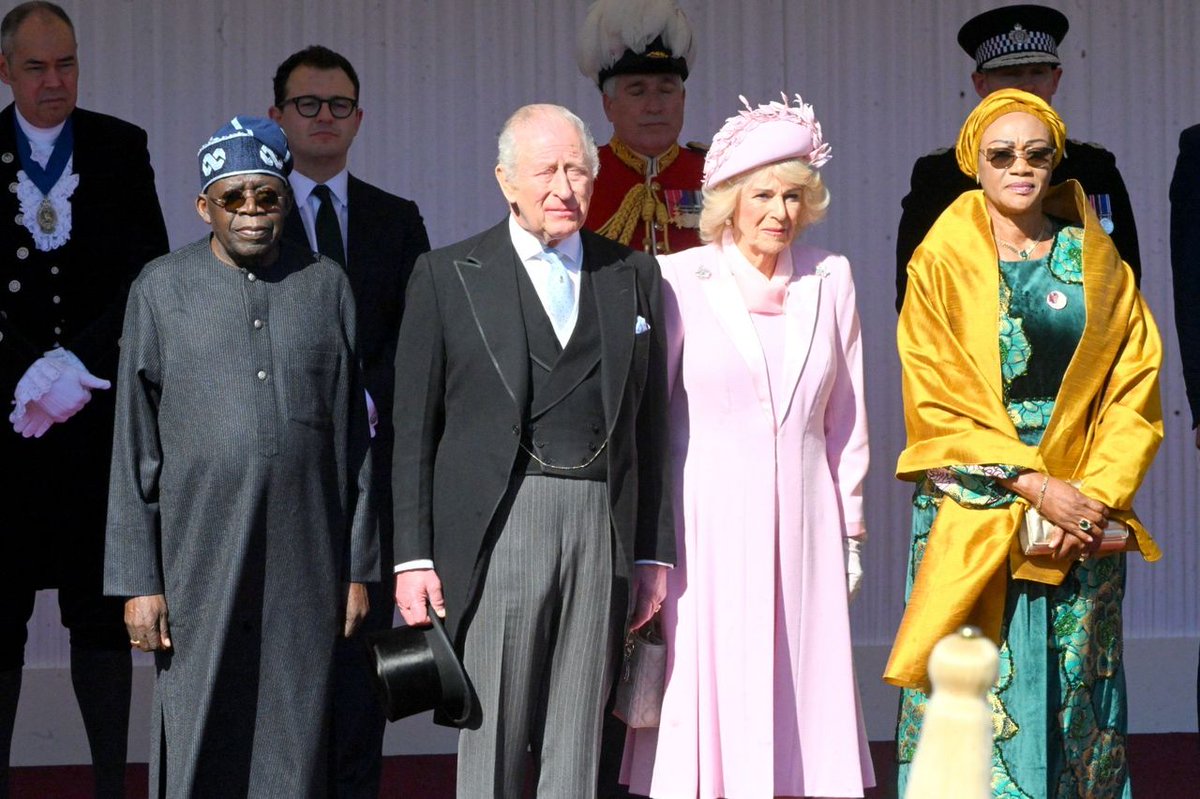
Tinubu, Wife, 12-Man Entourage Depart to UK on Historic State Visit

CAF Strips Senegal of AFCON 2025 Victory, Declares Morocco Winner

AFCON 2025: Senegal Rejects CAF Verdict, Heads to CAS

Eid-el- Fitr: Interior Minister Announces Thursday, Friday As Public Holidays

Resign by March 31, Tinubu Tells Political Appointees Seeking Elective Offices in 2027

Reno, Fani-Kayode’s Brains Configured to Say Anything and Delete – Dele Momodu
-
 Events6 days ago
Wife’s Death: Mourners Throng Former Ovation Editor, Mike Effiong’s Home in Commiseration
-
 Featured5 days ago
Tinubu, Wife, 12-Man Entourage Depart to UK on Historic State Visit
-
 Sports5 days ago
CAF Strips Senegal of AFCON 2025 Victory, Declares Morocco Winner
-
 Sports4 days ago
AFCON 2025: Senegal Rejects CAF Verdict, Heads to CAS
-
 National4 days ago
Eid-el- Fitr: Interior Minister Announces Thursday, Friday As Public Holidays
-
 Featured4 days ago
Resign by March 31, Tinubu Tells Political Appointees Seeking Elective Offices in 2027
-
 Featured3 days ago
Reno, Fani-Kayode’s Brains Configured to Say Anything and Delete – Dele Momodu
-

 Featured5 days ago
Electoral Umpires in Nigeria and Its Miasma of Failures