Headline
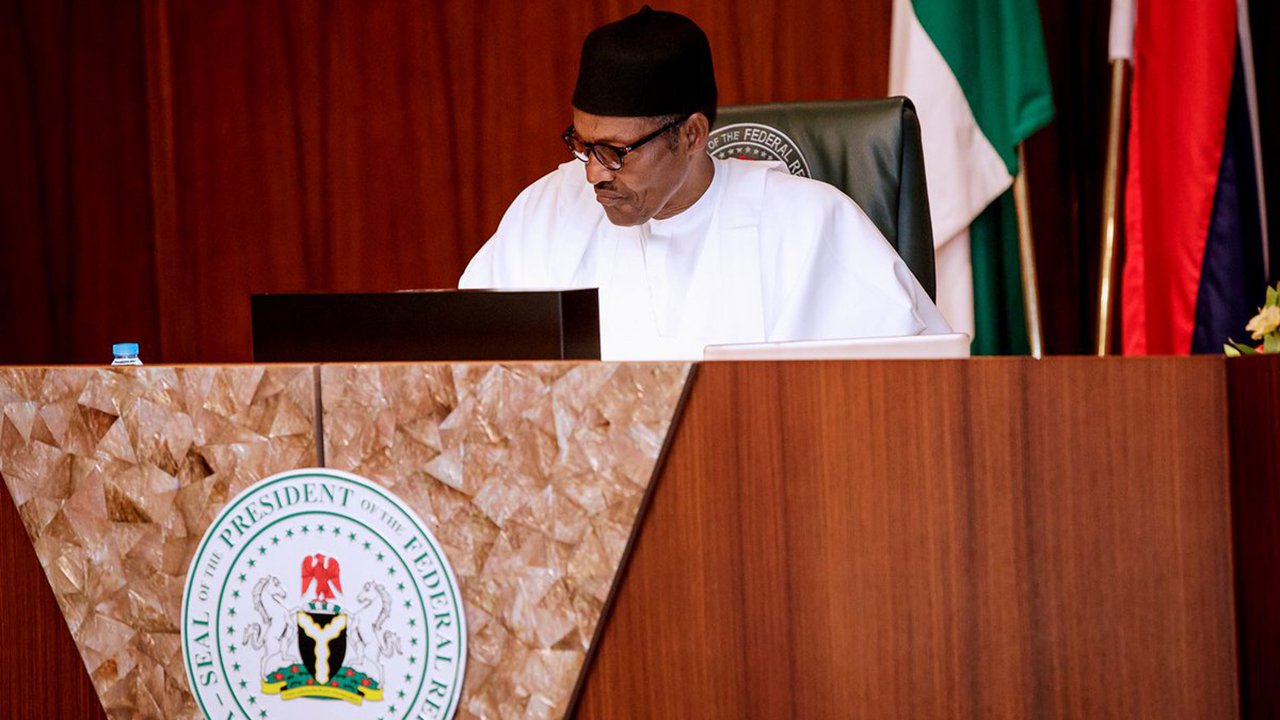
Full Text of President Buhari’s 2021 Independence Day Speech
Published
4 years agoon
By
Eric
Citizens of Nigeria.
1. It is with full gratitude to God that today, we celebrate Nigeria’s sixty first Independence Anniversary.
2. For 1st of October 1960 to happen, all hands were on deck. East, West, North all came together to celebrate freedom. Today should not only serve as a reminder of the day the British handed over the reins of power to Nigerians, but also unified Nigerians from all ethnic groups, religions and regions.
3. Today, despite the challenges we face, most Nigerians still maintain the spirit of 1st October. That positive outlook and determination to make Nigeria a peaceful and prosperous nation. It is due to this collective attitude that Nigeria doggedly continues to remain a united and indivisible nation.
4. Fellow Nigerians, the past eighteen months have been some of the most difficult periods in the history of Nigeria. Since the civil war, I doubt whether we have seen a period of more heightened challenges than what we have witnessed in this period.
5. Our original priorities for 2020 were to continue stabilising our economy following the deep recession while restoring peace in areas confronted with security challenges. But the COVID-19 pandemic and its devastating impact on all nations meant we needed to shift gears and re-strategise.
6. Nigerians came together as one to fight against COVID-19. It is this attitude and by the special grace of God, we continue to survive the pandemic as a nation and indeed, provide leadership and example at regional and international levels.
7. The doomsday scenario predicted for our country never came. Even as the Delta variant continues to spread, we have built the capacity we need to respond now and into the future.
8. I will therefore appeal to Nigerians not to take COVID lightly, adhere to public health and social measures, put your mask on and get vaccinated. We can control this pandemic, but it requires effort on everybody’s part. The investments we made in response to COVID-19 will also serve our country to tackle any future disease outbreaks or pandemics.
9. Despite the global inequity in access to vaccines, the Government of Nigeria has continued to explore all available options to ensure Nigerians have free access to safe and effective vaccines.
10. Some five million vaccine doses have been administered to Nigerians through efforts led by the National Primary Health Care Development Agency and we will continue to explore options for purchase or acquisition of vaccines such as through COVAX and the African Vaccine Acquisition Trust.
11. I will take this opportunity to remind the global community that the current state of access to COVID-19 vaccines is unacceptable. We cannot afford a situation where a handful of countries keep the global vaccine supply to themselves at the expense of other nations.
12. We must act now to accelerate equitable distribution of COVID-19 vaccines. This is the message I conveyed to the international community in New York last week.
13. As we push to source vaccines for our immediate needs, we shall invest more to support our pharmaceutical and research agencies to come up with ideas for locally developed vaccines. Should another pandemic arise in the future, Our question is simple; will Nigeria be ready?
14. Accordingly, I have directed the Ministries of Finance, Budget and National Planning, Health, Education and Science and Technology to work with Nigerian and International pharmaceutical companies and research organisations to enhance Nigeria’s domestic pharmaceutical capacity.
15. Already, the Nigerian Sovereign Investment Authority is raising a $200 million fund for this initiative that will complement the Central Bank of Nigeria’s ongoing N85 billion Healthcare Sector Research and Development Intervention Scheme to support local researchers in the development of vaccines and drugs to combat communicable and non-communicable diseases, including COVID-19.
Fellow Nigerians, this is just the beginning.
16. Similarly, on our approach to food security, I am proud to announce Nigeria has commenced its journey to pharmaceutical independence.
17. This journey, which will take years to achieve but will ultimately result in Nigerian based companies developing the Active Pharmaceutical substances and competence needed for us to make our own drugs and vaccines.
Fellow Nigerians,
18. As our economy continues to open after the COVID-19 related lockdowns, we have also seen the resurgence of insecurity in certain parts of the country.
19. In the last four months, the gallant men and women of the Military and Security Agencies have made tremendous progress in addressing these new security challenges. We are taking the fight to our enemies from all angles and we are winning.
20. Earlier this year, I launched the Integrated National Security and Waterways Protection Infrastructure, the Deep Blue Project, which is designed to secure Nigerian waters up to the Gulf of Guinea. I am happy to inform Nigerians that we have taken delivery of key assets for this project and very soon, its impact will be felt.
21. In the North East region alone, over eight thousand Boko Haram terrorists have surrendered.
22. To support our surge approach to fighting banditry, the Nigerian Armed Forces have recruited over 17,000 personnel across all ranks. Furthermore, I have also approved for the Nigerian Police Force to recruit 10,000 police officers annually over the next six years.
23. I am also pleased to note that most of the Air Force platforms we acquired over the past three years have started to arrive in Nigeria. These will positively impact our security operations in all parts of the country.
24. In line with section 14(2)(b) of the 1999 Constitution (as amended), the security and welfare of Nigerians continue to be the prime focus on which programmes and projects of our government revolves.
25. Therefore, as a Government, we are ready to arrest and prosecute all persons inciting violence through words or action. Our resolve for a peaceful, united and one Nigeria remains resolute and unwavering.
26. That said, our hope is not to fight for peace. We can always settle our grievances peacefully without spilling any blood.
27. I will therefore take this opportunity, on this special day that symbolises the unity and oneness of our great nation, to ask all Nigerians to embrace peace and dialogue, whatever your grievances.
28. The seeds of violence are planted in people’s heads through words. Reckless utterances of a few have led to losses of many innocent lives and destruction of properties.
29. Such unfiltered and unsubstantiated lies and hate speeches by a few evil persons must be stopped. Our media houses and commentators must move away from just reporting irresponsible remarks to investigating the truth behind all statements and presenting the facts to readers.
30. We must all come out and speak against the lies being peddled. At this point, I would want to sincerely appreciate the large number of our Traditional, Religious and Community leaders as well as other well-meaning Nigerians who, in their various fora are openly spreading the message of peaceful co-existence and conflict settlement through dialogue in their respective communities.
31. Nigeria is for all of us. Its unity is not negotiable. And its ultimate success can only be achieved if we all come together with a common goal of having peace and prosperity for our nation.
32. We shall continue to work on dialogue based solutions to address legitimate grievances. But we remain ready to take decisive actions against secessionist agitators and their sponsors who threaten our national security.
33. The recent arrests of Nnamdi Kanu and Sunday Adeyemo, and the ongoing investigations being conducted have revealed certain high-profile financiers behind these individuals. We are vigorously pursuing these financiers including one identified as a serving member of the national assembly.
Fellow Nigerians,
34. This is a clear example of how people abandon their national leadership positions for their selfish gains. Instead of preaching unity, they are funding and misleading our youth to conduct criminal acts that sometimes lead to unfortunate and unnecessary loss of lives and property.
35. As the so-called leaders run abroad to hide, our innocent youths are misled and left in the streets to fight for their senseless and destructive causes.
36. Government will continue, with greater level of peoples’ participation and in collaboration with our international partners, to improve the security architecture, reduce enabling environment for criminality to thrive and eliminate opportunities for terrorism financing.
37. Fellow Nigerians, our unrelenting effort at resolving an almost two-decade stalling on the management of our Petroleum resources and ensuring equitable consideration to our host communities has resulted in the enactment of the Petroleum Industry Act, 2021.
38. This Act not only overhauls the Institutional, regulatory and fiscal framework of the Petroleum Industry but also reduces the previous opacity associated with this sector.
39. This is the first step to the reforms as the process is a continuous one. Already, to further improve the governance framework, I have sought for an amendment of sections 11(2)(b) and 34(2)(b). We will also continue to review and amend as appropriate.
40. At this juncture, it is very appropriate that I salute the leadership and members of the Ninth Assembly for their patriotism, dedication to duty, candour and most importantly the dispatch with which they have enacted legacy legislations for this nation. I do not take such level of cooperation for granted and hope it continues for the overall efficiency of the Federal machinery.
41. Nigeria’s Roadmap on Local Refining is on track with the Commissioning of a Modular refinery in Imo State.
42. A second is scheduled for commissioning by the end of this year in Edo State and the third one in Bayelsa State by 2022.
43. In addition to the modular projects, we also have the two mega refinery projects coming up in Lagos and Akwa Ibom States.
44. As these refineries are commissioned, more employment opportunities are created and there would be increased petroleum products available for local consumption which will significantly reduce our reliance on importation.
45. In further demonstrating our plan to reduce our dependence on oil and tapping from our enormous gas resources, this administration remains committed to the “Decade of Gas” Initiative, which is aimed at bringing to focus the utilization of our huge gas resources.
46. Already, we are supporting and promoting various gas-based projects including NLNG Train 7 and the mega urea and ammonia projects in the South-South region.
47. As we continue to optimise and enhance our oil and gas sector, I am also proud and delighted to state that our economic diversification strategy remains on course with the persistent increase in Non-Oil Sector contribution to GDP.
48. We recovered from economic recession in quarter four of 2020 with a GDP growth rate of 0.11%, and grew by 0.51% and 5.01% in real terms in the first and second quarters of 2021.
49. The Agricultural sector remains key to our economic diversification efforts as the sector has been a consistent driver of the non-oil sector contributing 22.35% and 23.78% to the overall GDP in the first and second quarter of 2021.
50. We have seen significant private sector investments in almost all areas of the agricultural value chain. And these have continued even during the COVID-19 pandemic.
51. Unfortunately, as our food production capacity has increased, food prices have been going up due to artificial shortages created by middlemen who have been buying and hoarding these essential commodities for profiteering.
52. To address this, I am hereby directing the Ministry of Agriculture and Rural Development to rehabilitate the National Food Reserve Agency and also work with security agencies, the Nigerian Commodity Exchange, and the National Assembly to find a lasting solution to these disruptive and unpatriotic hoarding activities.
53. To further enhance food production, we have completed several new dams and are in the process of rehabilitating several River Basin Development Authorities to enhance ground water supply for rainfed agriculture as well as surface water for irrigation agriculture.
54. The water projects we completed between 2015 to 2020 have improved Nigerian’s access to potable water to 71% between 2015 and 2020. This means 12.5 million additional Nigerians now have direct access to potable water.
Fellow Nigerians,
55. This Government remains concerned by the significant transportation infrastructure deficit we have. Addressing the challenges our commuters and lorry drivers face on the motorways is still a high priority to us.
56. To complement our budgetary allocations, the Presidential Infrastructure Development Fund and the Road Infrastructure Development and Refurbishment Investment Tax Credit Scheme, we recently established a N15trillion Infrastructural Corporation of Nigeria Limited (INFRACO), which is expected to begin operation by the fourth quarter of this year.
57. INFRACO will also focus on leveraging resources on a public-private sector basis for infrastructural development in Nigeria.
58. We hope through these innovative programs, the additional cost burden on individuals and businesses because of inefficient logistics operations will be reduced and ultimately, eliminated.
59. We currently have over 13,000 kilometres of roads and bridges under construction all over the country of which a fair percentage have been completed.
60. As we fix our roads, we also continue to extend and upgrade Nigeria’s railway network with the notable opening of the Warri- Itakpe standard gauge rail line.
61. To increase capacity, we have introduced more locomotives, coaches and wagons including the establishment of a Wagon Assembly in Kajola, Ogun State.
62. The sea ports however still remain problematic. The effect of our various interventions to reduce the gridlocks and inefficiencies have been slower than expected.
63. However, the implementation of the Electronic Call-Up System as well as the conversion of the Lillypond Container Terminal to a Vehicle Transit Area will further enhance the ease of cargo evacuation.
64. Our prioritisation of developing Nigeria’s Digital Economy has positively impacted the contribution of the ICT sector to our GDP.
65. We hope our present efforts to ensure all Nigerians use a National Identification Number as well as our planned roll-out of the fifth generation (5G) network technology will ensure we stay in line with the global innovation curve as a Nation.
66. As we embrace the digital economy in Nigeria, we are fully aware of the prospects and the perils. Our policies have been developed to enable Nigerians to take advantage of the prospects and avoid the perils of digital technologies.
67. Social media is a very useful platform that has enabled millions of Nigerians to connect with loved ones, promote their businesses, socialise, and access news and other information.
68. However, recent events have shown that the platform is not just an innocuous platform for information dissemination.
69. Rather some users have misused the platform to organise, coordinate, and execute criminal activities, propagate fake news, and promote ethnic and religious sentiments.
70. To address these negative trends, the Federal Government of Nigeria suspended the operations of Twitter in Nigeria on June 5, 2021 to allow the Government put measures in place to address these challenges.
71. Following the suspension of Twitter operations, Twitter Inc. reached out to the Federal Government of Nigeria to resolve the impasse. Subsequently, I constituted a Presidential Committee to engage Twitter to explore the possibility of resolving the issue.
72. The Committee, along with its Technical Team, has engaged with Twitter and have addressed a number of key issues. These are:
a. National Security and Cohesion;
b. Registration, Physical presence and Representation;
c. Fair Taxation;
d. Dispute Resolution; and
e. Local Content.
73. Following the extensive engagements, the issues are being addressed and I have directed that the suspension be lifted but only if the conditions are met to allow our citizens continue the use of the platform for business and positive engagements.
74. As a country, we are committed to ensuring that digital companies use their platform to enhance the lives of our citizens, respect Nigeria’s sovereignty, cultural values and promote online safety.
75. Nigeria’s progressive diplomacy continues to manifest through growing numbers of highly placed Nigerians in positions of regional and global influences. Very recently, Nigeria won election for the position of Commissioner for the expanded Political, Peace and Security Affairs of the African Union.
76. Our persistent calls for a reorganized and reformed ECOWAS, to make the organization citizens-sensitive, paid off with the acceptance by the Authority of Heads of State and Governments of ECOWAS to commence the agreed reforms in the organization ahead of the next elections of the organization’s principal officers in December this year.
77. At the African Development Bank, World Trade Organization and indeed, the United Nations, footprints of Nigeria’s Diplomacy are clearly evident.
78. We remain confident that our goal of lifting 100million Nigerians out of poverty in 10 years is achievable.
79. Considering the positive impact of our Social Investment Programs, I recently approved an increase in the number of N-Power program beneficiaries from 500,000 to 1,000,000.
80. Out of this, 510,000 have started the programme while the competitive selection process for onboarding the outstanding 490,000 beneficiaries is in progress.
81. The National Home-Grown School Feeding Programme is currently being implemented in 35 States of the Federation and the FCT. Over 103,000 women have been engaged and empowered as cooks under the programme, while about 10 million pupils are being fed across public primary schools in the country.
82. To grant increased access to credit to the most poor and vulnerable, I have directed an increase in the disbursement of Government Enterprise and Empowerment Programme loans to an additional one million beneficiaries laying more emphasis on the smallholding farmers through the farmers Moni program.
Fellow Nigerians,
83. For far too long we have neglected the centrality of the civil service as the engine of governance and this has manifested in ineffective service delivery.
84. There is widespread discontent and disillusion about the efficiency and probity of our civil service.
85. It is for this reason that we are refocusing the Nigerian Civil Service to provide World class service to run our country.
86. The youths of this great country remain propellants for our today and provide guarantees that we would have a secure tomorrow.
87. It is for this reason that I remain focused on expanding opportunities for their participation in politics and governance.
88. Recent appointments of young people into positions of authority and their track record so far, gives me confidence that we need to bring more of them into governance and this I promise to do.
89. More specifically, to encourage Girl-Child Education, female scholarship schemes, life skills and digital literacy skills to boost girl’s enrolment, retention and completion of schooling, are all initiatives put in place to ensure gender balance in appropriately positioning our youths for positions of leadership.
90. The commitment of this Administration to the well-being of people living with disabilities remains unwavering.
91. Government recognises their contributions to development and I have, in this regard, directed that all relevant Government Agencies pay special attention to the peculiarities of different abilities in the implementation of policies and programmes.
92. Rape and Gender Based Violence remains a sore point in our Nation as in many countries worldwide and this was worsened during and after the outbreak of the COVID-19 pandemic.
93. We are currently engaging Heads of Courts to establish Specialised Courts for the speedy and seamless trial of Rape/Gender-Based offences especially to ensure that justice is done for child victims of sexual violence.
94. On the other hand, work has advanced in the reformation, reintegration and reunification of Minors involved in one crime or the other.
95. The reformation in our Correctional Services has manifested in an increase in modernised custodial centres and a transformation from strictly punitive to attitudinal changes so that criminals do not relapse into their previous lifestyle.
96. As we begin to celebrate our sixty one years as a Nation, we need to be conscious that Nigeria does not start and end with the Federal Government. This country is a great collective where Government at all arms and levels as well as the private sector, and more importantly individuals, have a role to play.
97. In particular, security is a bottom to top undertaking. Joining hands and hearts together would enable us to secure ourselves and our country.
98. I fully understand the anxiety of many Nigerians on the inability of this country to go beyond a never-ending potential for becoming a great nation to an actually great one.
99. A lot has been achieved in the last six years on many fronts: in infrastructure, social care, governance, Nigeria’s image and influence in Africa and the international community.
100. But critics misdiagnose incremental progress as stagnation. Since coming to power, this Administration has tackled our problems head-on in spite of the meagre resources. No government since 1999 has done what we have done in six years to put Nigeria back on track.
101. We shall continue to serve the country: listen to all and protect our democracy and country.
Thank you all and God bless the Federal Republic of Nigeria.
Related
You may like
Headline
Tinubu’s 2026 Budget Bad Omen for Nigerians – PDP
Published
8 hours agoon
December 21, 2025By
Eric
By Eric Elezuo
The 2026 Appropriation Bill presented by President Bola Tinubu before a joint session of the National Assembly has been rated below par, and described as a bad omen for Nigerians, by the opposition Peoples Democratic Party (PDP).
The Tanimu Turaki-led Peoples Democratic Party (PDP) said on Friday that President Bola Tinubu’s 2026 budget would add to the sufferings of Nigeria rather than giving them any renewed hope or consolidation of economic reforms.
The party noted that there would be no renewed hope in an environment where hunger, insecurity and other forms of deprivation were the lot of Nigerians.
It cited the 2025 World Bank Poverty & Equity Brief, which placed more than 30.9% of Nigerians below the international extreme poverty line.
“This shows that there is growth without prosperity for our citizens, meaning that despite GDP growth, poverty remains endemic”, the National Publicity Secretary, Comrade Ini Ememobong, stated on Friday soon after Tinubu presented the 2026 Appropriation Bill of N58.18trillion to a joint session of the Senate and the House of Representatives in Abuja.
Ememobong noted: “The budget, which is themed ‘Budget of Consolidation, Renewed Resilience and Shared Prosperity’, claims that the economy is stabilising and promises shared prosperity.
“In response, we see it rather as a budget of consolidated renewed sufferings, because what Nigerians have witnessed since the birth of this administration is nothing but unmitigated hardship on the people, while the governing class relishes in affluence.
“Nigerians have suffered greatly from many economic woes under this administration.
“President Tinubu cited a 3.98% GDP growth rate as evidence of economic stabilisation under his administration.
“However, it is well established that economic growth alone does not and cannot guarantee improved living standards for citizens.
“According to the 2025 World Bank Poverty & Equity Brief, more than 30.9% of Nigerians live below the international extreme poverty line. This shows that there is growth without prosperity for our citizens, meaning that despite GDP growth, poverty remains endemic.
“This clearly indicates that whatever economic gains exist are not reaching the majority of Nigerians.”
The PDP rejected the President’s figures on economic progress, saying rather that Nigeria has been on rever gear.
“The President stated that the economy under his watch grew by 3.98% without stating the sectors that stimulated the growth or identifying those who benefitted from it. This figure reflects the economic decline the nation has suffered under the leadership of the APC-led Federal government when compared to the growth rate of 6.87% recorded in 2013(same period under the last PDP administration), which was driven largely by non-oil sectors such as agriculture and trade.
“Today, the President celebrates a 3.98% growth rate, whereas a reality check reveals excruciating hunger, a high cost of living, and other indices of economic hardship, which Nigerians are currently facing.
“While we acknowledge the security allocation in the 2026 budget, we must remind the government and Nigerians that allocation alone is insufficient.”
The party added, “We therefore, demand effective and transparent execution to ensure that security funding translates into tangible improvements -modern equipment, adequate ammunition, improved intelligence capabilities, and better welfare for security personnel who are currently engaged in different theatres of armed conflict, where criminal non-state actors are alleged to possess superior arms compared to our security forces.
“Overall, we are deeply concerned about the unapologetic admission by the President that the execution of the 2024 capital budget had been extended to December 2025, while the 2025 budget is still in force.
“This confirms the long-standing rumours of the concurrent operation of multiple budgets.
“This cannot be described as best practice, as every budget has a defined period of operation and no two budgets should operate concurrently. The operation of different budgets at the same time undermines fiscal discipline, transparency, and accountability. These multiple budgetary regimes show yet another unprecedented negative feat by this APC Bola Tinubu-led administration.
“We hereby call for increased transparency and accountability in the administration of the finances of our country, as these have been conspicuously absent so far under this administration.
“Financial accountability and transparency are critical to public trust-building and effective public administration.”
The budget with the theme, “Budget of consolidation, Renewed Resilience and Shared Prosperity”, is N3.19trillion higher than the N54.99trillion approved for 2025.
The key aggregates of the budget are expected revenue of N34.33trillion; debt servicing of N15.52trillion; recurrent (non‑debt) expenditure of N15.25trillion; capital expenditure of N26.08trillion; a deficit of N23.85trillion representing 4.28% of GDP.
In addition, the budget will be benchmarked at $64.85 per barrel of crude oil, daily oil production of 1.8million barrels and a dollar/naira exchange.
Below is the full presentation of Tinubu’s 2026 Budget:
FULL SPEECH BY PRESIDENT BOLA AHMED TINUBU AT THE PRESENTATION OF THE 2026 NATIONAL BUDGET
“Budget of Consolidation, Renewed Resilience and Shared Prosperity”
Distinguished Senate President,
Rt. Honourable Speaker and Honourable Members of the House of Representatives,
Distinguished Senators and Honourable Members of the National Assembly,
Fellow Nigerians,,
1. I am here today to fulfil an essential constitutional obligation by presenting the 2026 Appropriation Bill to this esteemed Joint Session of the National Assembly for your consideration.
2. This budget represents a defining moment in our national journey of reform and transformation. Over the last two and a half years, my government has methodically confronted long‑standing structural weaknesses, stabilised our economy, rebuilt confidence, and laid a durable foundation for the construction of a more resilient, inclusive, and dynamic Nigeria.
3. Though necessary, the reforms have not been painless. Families and businesses have faced pressure; established systems have been disrupted; and budget execution has been tested. I acknowledge these difficulties plainly. Yet, I am here, today, to assure Nigerians that their sacrifices are not in vain. The path of reform is seldom smooth, but it is the surest route to lasting stability and shared prosperity.
4. Today, I present a Budget that consolidates our gains, strengthens our resilience, and takes this country from out of the dark tunnel of hopelessness, from survival to growth.
5. The 2026 Budget is themed: “Budget of Consolidation, Renewed Resilience and Shared Prosperity”. It reflects our determination to lock in macroeconomic stability, deepen competitiveness, and ensure that growth translates into decent jobs, rising incomes, and a better quality of life across for every Nigerian.
6. Mr. Chairman, Leaders of the National Assembly, while the global outlook continues to improve, this Budget aims to further strengthen our Nigerian economy to benefit all our citizens.
7. I am encouraged that our reform efforts are already yielding measurable results:
1) Our economy grew by 3.98 per cent in Q3 2025, up from 3.86 per cent in Q3 2024.
2) Inflation has moderated for eight consecutive months, with headline inflation declining to 14.45 per cent in November 2025, from 24.23 per cent in March 2025. With stabilising food and energy prices, tighter monetary conditions, and improving supply responses, we expect the deflationary trend to persist over the 2026 horizon, barring major supply shocks.
3) Oil production has improved, supported by enhanced security, technology deployment, and sector reforms.
4) Non‑oil revenues have expanded significantly through better tax administration.
5) Investor confidence is returning, reflected in capital inflows, renewed project financing, and stronger private‑sector participation.
6) Our external reserves rose to a 7‑year high of about US47 billion dollars as of last month, providing over 10 months of import cover and a more substantial buffer against shocks.
8. These outcomes are not accidental or lucky. They are the consequence of our difficult policy choices. Our next objective is to deepen our gains in pursuit of enduring and inclusive prosperity.
9. Mr. Chairman, Distinguished Members, our 2025 budget implementation faced the realities of transition and competing execution demands. As of Q3 2025, we recorded:
• 18.6 trillion naira in revenue — representing 61% of our target; and
• 24.66 trillion naira in expenditure — representing 60% of our target.
10. Following the extension of the 2024 capital budget execution to December 2025, a total of 2.23 trillion naira was released for the implementation of 2024 capital projects as of June 2025.
11. While fiscal challenges persisted, the government met its key obligations. However, only 3.10 trillion naira — about 17.7% of the 2025 capital budget — was released as of Q3, reflecting the emphasis on completing priority 2024 capital projects during the transition period.
12. Let me be clear: 2026 will be a year of stronger discipline in budget execution. I have issued directives to the Honourable Minister of Finance and Coordinating Minister of the Economy, the Honourable Minister of Budget and Economic Planning, the Accountant‑General of the Federation, and the Director‑General of the Budget Office of the Federation to ensure that the 2026 Budget is implemented strictly in line with the appropriated details and timelines.
13. We expect improved revenue performance through the new National Tax Acts and the ongoing reforms in the oil and gas sector — reforms designed not merely to raise revenue, but to drive transparency, efficiency, fairness, and long‑term value in our fiscal architecture.
14. I have also provided clear and direct guidance regarding Government‑Owned Enterprises. Heads of all agencies have been directed to meet their assigned revenue targets. To support this, we will deploy end‑to‑end digitisation of revenue mobilisation — standardised e‑collections, interoperable payment rails, automated reconciliation, data‑driven risk profiling, and real‑time performance dashboards — so leakages are sealed, compliance is verifiable, and remittances are prompt. These targets will form core components of performance evaluations and institutional scorecards. Nigeria can no longer afford leakages, inefficiencies, or underperformance in strategic agencies. Every institution must play its part.
15. Mr Chairman and fellow Nigerians, the 2026 Budget is guided by four clear objectives:
1) Consolidate macroeconomic stability;
2) Improve the business and investment environment;
3) Promote job‑rich growth and reduce poverty; and
4) Strengthen human capital development while protecting the vulnerable.
16. In short: we will spend with purpose, manage debt with discipline, and pursue broad-based, sustainable growth.
17. Distinguished Members, the 2026 Federal Budget is anchored on realism, prudence, and growth.
18. The key aggregates are as follows:
1) Expected total revenue is 34.33 trillion naira.
2) Projected total expenditure is 58.18 trillion naira, including 15.52 trillion naira for debt servicing.
3) Recurrent (non‑debt) expenditure is 15.25 trillion naira.
4) Capital expenditure will be 26.08 trillion.
5) The Budget deficit is expected to be 23.85 trillion naira, representing 4.28% of GDP.
19. These numbers are not mere accounting lines. They are a statement of national priorities. We remain firmly committed to fiscal sustainability, debt transparency, and value‑for‑money spending.
20. The 2026–2028 Medium‑Term Expenditure Framework and Fiscal Strategy Paper sets the parameters for this Budget. Our projections are based on:
1) a conservative crude oil benchmark of US64.85 dollars per barrel;
2) crude oil production of 1.84 million barrels per day; and
3) an average exchange rate of 1,400 naira to the US Dollar for the 2026 fiscal year.
21. We will continue to reduce waste, strengthen controls, and ensure that every naira borrowed or spent delivers measurable public value.
22. Our allocations reflect the Renewed Hope Agenda and the practical needs of Nigerians. Key sectoral provisions include:
1) Defence and security: 5.41 trillion naira
2) Infrastructure: 3.56 trillion naira
3) Education: 3.52 trillion naira
4) Health: 2.48 trillion naira
23. These priorities are interlinked. Without security, investment will not thrive. Without educated and healthy citizens, productivity will not rise. Without infrastructure, jobs and enterprises will not scale. This Budget is, therefore, designed to provide a single, coherent programme of national renewal.
A. National Security and Peacebuilding
24. National Security remains the foundation of development. The 2026 Budget strengthens support for:
• modernisation of the Armed Forces;
• intelligence‑driven policing and joint operations;
• border security and technology‑enabled surveillance; and
• community‑based peacebuilding and conflict prevention.
25. We will invest in security with clear accountability for outcomes — because security spending must deliver results. To secure our country, our priority will remain on increasing the fighting capability of our armed forces and other security agencies and boosting the effectiveness of our fighting forces with cutting-edge equipment and other hardware.
26. We will usher in a new era of criminal justice. We will show no mercy to those who commit or support acts of terrorism, banditry, kidnapping for ransom and other violent crimes.
27. Our administration is resetting the national security architecture and establishing a new national counterterrorism doctrine — a holistic redesign anchored on unified command, intelligence gathering, community stability, and counter – insurgency. This new doctrine will fundamentally change how we confront terrorism and other violent crimes.
28. Under this new architecture, any armed group or gun-wielding non-state actors operating outside state authority will be regarded as terrorists.
29. Bandits, militias, armed gangs, armed robbers, violent cults, forest-based armed groups and foreign-linked mercenaries will all be targeted. We will go after all those who perpetrate violence for political or sectarian ends, along with those who finance and facilitate their evil schemes.
B. Human Capital Development: Education and Health
30. No nation can grow beyond the quality of its people. The 2026 Budget strengthens investments in education, skills, healthcare, and social protection.
31. In education, we are expanding access to higher education through the Nigerian Education Loan Fund. Over seven hundred and eighty eight thousand students have been supported, in partnership with two hundred and twenty nine tertiary institutions nationwide.
32. In healthcare, I am pleased to highlight that investment in healthcare is 6 per cent of the total budget size, net of liabilities.
33. We also appreciate the support of international partners. Recent high‑level engagements with the Government of the United States have opened the door to over 500 million United States dollars for health interventions across Nigeria. We welcome this partnership and assure Nigerians that these resources will be deployed transparently and effectively.
C. Infrastructure and Economic Productivity
34. Across the nation, projects of all shapes and sizes are moving from vision to reality. These include transport and energy infrastructure, port modernisation, agricultural reforms, and strategic investments to unlock private capital.
35. We will take decisive steps to strengthen agricultural markets. Food security shall remain a national priority. The 2026 Budget focuses on input financing and mechanisation; irrigation and climate‑resilient agriculture; storage and processing; and agro‑value chains.
36. These measures will reduce post‑harvest losses, improve incomes for small holders, deepen agro‑industrialisation, and build a more resilient, diversified economy.
37. In 2026, the Bank of Agriculture plans to plant confidence back into our soil; mechanising through seven regional hubs, protecting harvests with fair prices and substantial reserves, providing affordable finance to millions of small holders and growing export value. Under the plan, Nigerian farmers will cultivate one million hectares, create hundreds of thousands of jobs, and prove that prosperity can rise through better use of our God given land.
D. Procurement
38. Starting in November last year, the government has embarked upon a comprehensive framework of procurement reforms. These reforms have enhanced efficiency and generated significant cost savings for the government, resulting in resulting in reduced processing times for Government contracts and better enforcement procedures directed against erring contractors and government officials.
39. Our Nigeria First Policy has been established to encourage self-sufficiency and sustainable growth within Nigeria by promoting domestic products and businesses. By mandating that all Ministries, Departments, and Agencies (MDAs) consider Nigerian-made goods and local companies as their primary option, the policy aims to support local industries, create job opportunities, and reduce dependency on imported items. This bold new approach is expected to enhance the competitiveness of Nigerian enterprises, foster innovation, and ultimately contribute to the country’s overall economic development.
40. Distinguished Members and fellow Nigerians, the most significant budget is not the one we announce. It is the one we deliver.
41. Therefore, 2026 will be guided by three practical commitments:
1) Better revenue mobilisation through efficiency, transparency, and compliance.
2) Better spending by prioritising projects that can be completed, measured, and felt by citizens.
3) Better accountability through strengthening of procurement discipline, monitoring, and reporting.
42. We will build trust by matching our words with results, and our allocations with outcomes.
43. Distinguished Members of the National Assembly, fellow Nigerians, the 2026 Budget is not a budget of promises; it is a Budget of consolidation, renewed resilience and shared prosperity. It builds on the reforms of the past two and a half years, addresses emerging challenges, and sets a clear path towards a more secure, more competitive, more equitable, and more hopeful Nigeria.
44. I commend the people of this country for their understanding and resilience. My administration remains committed to easing the burdens of the transition to a more stable and prosperous nation. We promise to make sure that the benefits of reform reach households and communities across the Federation.
45. In united purpose between the Executive and the Legislature; and with the resilience of the Nigerian people, we will deliver the full promise of the Renewed Hope Agenda.
46. It is, therefore, with great pleasure that I lay before this distinguished Joint Session of the National Assembly; the 2026 Appropriation Bill of the Federal Republic of Nigeria, titled: “Budget of Consolidation, Renewed Resilience and Shared Prosperity”. I seek your partnership in charting the nation’s fiscal course for the coming year.
47. May God bless the Federal Republic of Nigeria.
48. Thank you.
Bola Ahmed Tinubu, GCFR
President, Commander-in-Chief of The Armed Forces,
Federal Republic of Nigeria
Related
Headline
Insecurity: Akpabio Begs Tinubu to Reinstate Police Orderlies for NASS Members
Published
1 day agoon
December 20, 2025By
Eric
Senate President, Godswill Akpabio, has appealed to President Bola Tinubu to reconsider the directive withdrawing police orderlies from members of the National Assembly, citing safety concerns.
Akpabio made the appeal during the presentation of the 2026 budget to a joint session of the National Assembly, by President Tinubu, warning that some lawmakers fear they might be unable to return home safely following the withdrawal.
His said: “As we direct the security agencies to withdraw policemen from critical areas, some of the National Assembly said I should let you know they may not be able to go home today.
“On that note, we plead with Mr. President for a review of the decision.”
President Tinubu, on November 23, ordered the withdrawal of police officers attached to Very Important Persons (VIPs), directing that they be redeployed to core policing duties across the country.
According to Bayo Onanuga, Special Adviser to the President on Information and Strategy, Tinubu issued the directive after a security meeting with Service Chiefs and the Director-General of the Department of State Services (DSS) following heightened security issues in the country.
Under the order, VIPs requiring security are to seek protection from the Nigeria Security and Civil Defence Corps, as the Federal government seeks to boost police presence in communities, particularly in remote areas grappling with insecurity.
Tinubu later reaffirmed the directive on December 10, moments before presiding over the Federal Executive Council, expressing frustration over delays in implementation.
He instructed the Minister of Interior, Olubunmi Tunji-Ojo, to work with the Inspector-General of Police (IGP), Kayode Egbetokun, and the Civil Defence Corps to immediately replace withdrawn escorts to avoid exposing individuals to danger.
“I honestly believe in what I said…It should be effected. If you have any problem because of the nature of your assignment, contact the IGP and get my clearance,” Tinubu said.
“The minister of interior should liaise IG and the Civil Defence structure to replace those police officers who are on special security duties.
“So that you don’t leave people exposed,” he said.
Related
Headline
Defence Gulps Lion Share As Tinubu Presents N58.47trn 2026 Budget to NASS
Published
2 days agoon
December 19, 2025By
Eric
President Bola Tinubu has presented a budget of N58.47 trillion for the 2026 fiscal year to a joint session of the National Assembly, with capital recurrent (non‑debt) expenditure standing at N15.25 trillion.
Tinubu presented the budget on Friday, pegging the capital expenditure at N26.08 trillion and putting the crude oil benchmark at US$64.85 per barrel.
He said the expected total revenue is N34.33 trillion, projected total expenditure: N58.18 trillion, including N15.52 trillion for debt servicing. The budget is N23.85 trillion, representing 4.28% of GDP.
The budget was anchored on a crude oil production of 1.84 million barrels per day, and an exchange rate of N1,400 to the US Dollar for the 2026 fiscal year.
In terms of sectoral allocation, defence and security took the lion’s share with N 5.41 trillion, followed by infrastructure at N3.56 trillion.
Related


Voice of Emancipation: Christmas: A Time to Reflect
Adeleke Celebrates Owa Obokun, Ijesa People on Iwude Ijesha Festival
Hollywood Bubbles As Season of Awards Sets in
Consistent, Focused, Impactful: The Story of Bella Disu
Tinubu’s 2026 Budget Bad Omen for Nigerians – PDP
Actress Iyabo Ojo Makes Case for Single Mothers
Why I Visited Nnamdi Kanu in Prison – Alex Otti
NNPCL Slashes Fuel Price by N80
Book Launch: Tinubu Vows to Sustain Buhari’s Legacies
Alleged Corrupt Practices: Dangote Petitions ICPC Against NMDPRA MD Farouk
Corruption Allegations: NMDPRA Boss Farouk Ahmed Meets Tinubu, Resigns
I’m Ready for Probe, NMDPRA Boss Farouk Ahmed Responds to Dangote’s Corruption Allegation
Tinubu Didn’t Win 2023 Election, Will Lose in 2027 – Abaribe
US Congressman Recounts Harrowing Experience in Nigeria, Confirms ‘Systematic Genocidal Campaign’
Trending
-
Business2 days agoNNPCL Slashes Fuel Price by N80
-
National5 days agoBook Launch: Tinubu Vows to Sustain Buhari’s Legacies
-
Headline5 days agoAlleged Corrupt Practices: Dangote Petitions ICPC Against NMDPRA MD Farouk
-
Headline4 days agoCorruption Allegations: NMDPRA Boss Farouk Ahmed Meets Tinubu, Resigns
-
National4 days agoI’m Ready for Probe, NMDPRA Boss Farouk Ahmed Responds to Dangote’s Corruption Allegation
-
Headline5 days agoTinubu Didn’t Win 2023 Election, Will Lose in 2027 – Abaribe
-
World5 days agoUS Congressman Recounts Harrowing Experience in Nigeria, Confirms ‘Systematic Genocidal Campaign’
-
News6 days agoGowon is Not Dead, in Good Health, Aide Debunks Death Rumour