
Headline
The Second Coming of Goodluck Jonathan


By Eric Elezuo
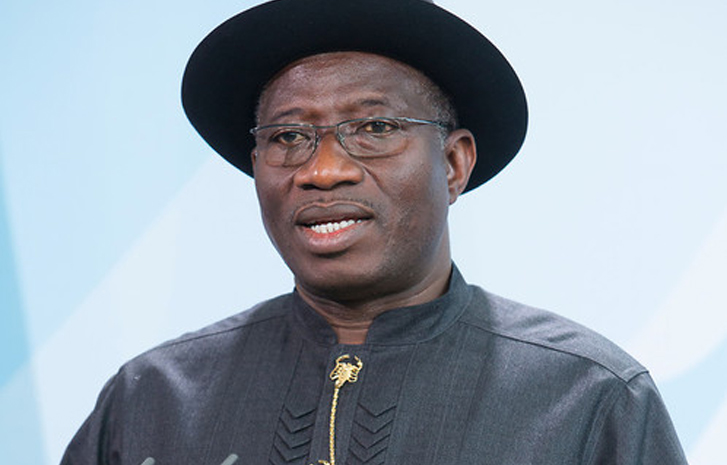
Baring any unforeseen circumstance or sudden change in direction and decision, immediate past President of the Federal Republic of Nigeria, Dr. Goodluck Ebele Jonathan, is set to dump his Peoples Democratic Party (PDP) for the ruling All Progressives Congress (APC).
According to informed sources, the former president, who superintended over the country between May 2010 and May 2015, is under intense pressure to join the ruling APC. This is because of the promise made to him from various quarters of the party that he may be fielded as the party’s consensus candidate for the 2023 Presidential Election.
The source further stated that Jonathan is the preferred choice of members of President Muhammadu Buhari’s inner caucus, who has the interest of the north at the back of their minds, and who believe that Jonathan will further project the interest of the north. Not only that, the President’s kitchen cabinet believes that Jonathan should be the choice as a result of the fact that he is constitutionally licensed to serve only one term of office, since he had done one earlier between 2011 and 2015.
“This arrangement will further feather the nest of the northern elites, whose interest is to continue to maintain a strangle hold on the country for as long as possible. Jonathan remains their choice despite the fact that sacked him about six years ago, using unprintable expletives to describe him then” the source hinted.
The Boss investigation also revealed that the situation had warranted top officials of the PDP to pay Jonathan a visit to ascertain his position in the matter, but the former was quoted as neither confirming the report nor denying it. However, he was said to have declared that he didn’t know what to do because he was under intense pressure.

Jonathan’s choice of the caucus has however, seen him warming up to the mandate as his body language gas been speaking volumes. A reliable source revealed that the 2023 presidency matter is one of the reasons Jonathan was present at the wedding ceremony of Otunba Gbanga Daniel’s daughter’s wedding recently. It is on record that he spent quality time at the event; arriving quite early, and staying till the duration and conclusion of activities. Daniel, who himself recently decamped to the APC, was the Campaign Director General for PDP presidential candidate, Atiku Abubakar in 2019.
A two terms governor of Ogun State, Daniel is seen as well versed and experience in national politics, as he toured the length and breath of the country during the presidential campaign with Atiku. His closeness to Buhari ever since he decamped earlier in the year has put him a vantage position as one Buhari’s ears, especially as a suitable replacement is concerned.
The same reason prompted his presence at the wedding of President Buhari’s son, Yusuf Buhari to the daughter of Emir Ado Bayero, Zahra
The desperateness of the ruling APC, according to another stakeholder, lies in its quest to retain power in 2023, and having weighed all options on the scale, Jonathan seemed to come tops. But the desperate nature is also extended to having a Buhari loyalist as the next president in 2023, and that informs the reason for the new found romance with the Vice President, Prof Yemi Osibanjo, should the pressure being exerted on Jonathan fail.
The Vice President is portrayed as having been very loyal to President Buhari, the APC and the north, and so capable of continuing the Buhari legacy irrespective of where he is destined to.
On other angle, the all important 2023 presidency has also attracted the APC Governors’ Forum, who is fighting tooth and nail to ensure that one them replaces Buhari on May 29, 2023. Most of them, overtly or covertly, are already reaching out to other parts of the country, to gain momentum and gather followership, especially among the media, which they believe is a veritable tool for propaganda and canvassing. The likes of Governor of Kogi State, Yahaya Bello, have actually voiced their opinion and interest in the plum presidential job. Though yet to declare his interest, Ekiti State Governor, who is also the Chairman, Nigeria’s Governor’s Forum, is also said to his eye on the presidential seat come 2023.
But then, Jonathan is considered the real deal as a result of his known inability to run for two terms. Others, obviously, are sure to harbour the ambition to go for another term if selected for the 2023 period, and that explains why Jonathan is the most preferred bride among the Buhari caucus and the northern oligarchy. The collaboration, they believe is a win-win situation where both the APC and Jonathan will eat their cake and have it. The APC and the North will have power remain in their domain as the tenure years lasted, and will have it back after four years.
And for Jonathan, he would have had the opportunity to complete a second, which he was denied and booted out from. In that way, his dignity, to an extent would have been restored. Though he may remain the President that was defeated in office, but he would also be the President that made the most dramatic comeback.
“So, it is a win-win situation for the APC/North on one hand, and Goodluck Jonathan on the other hand,” the source quipped.
Dr. Goodluck Ebele Azikiwe Jonathan GCFR, GCON, remains arguably the only Nigerian politician, who has occupied all political offices on a platter of gold. Born on November 20, 1957, 63 years and very much eligible, Jonathan remains a force in Nigeria, politically and in the internationally. His popularity ever since he was booted albeit unceremoniously, out of office in 2015, has continued to soar, giving him a status many of his followers believe is equal to the most important person in the country today, especially as he willingly conceded defeat without rancour.
“My ambition is not worth the drop of blood of any Nigerian”, has remained a quote of his that has found solace in the hearts and minds of not a few Nigerians. Jonathan is termed legendary considering that not many in his shoes would have played ball as he did even with barefaced electoral practices his loyalists were ready to prove.
His lost to Buhari in 2015 turned out to be a blessing in disguise as a lot of people has score Buhari and his APC administration abysmally low. He has therefore leveraged on the dismal performance of the present government to relaunch himself and his career in both politics and diplomacy.
He was born in Ogbia to a Christian family of canoe makers from the Ijaw minority ethnic group in Bayelsa state, where he had his early education. He received a Bachelors degree in Zoology, a Masters degree in Hydrobiology and Fisheries Biology; and a Doctorate in Zoology all from the University of Port Harcourt.
Before joining politics in 1998, Jonathan worked as an Education Inspector, a Lecturer and an Environmental-Protection Officer.
On 29 May 1999, Jonathan was sworn in as Deputy Governor of Bayelsa alongside Diepreye Alamieyeseigha who came in as the governor of the state on the platform of PDP. Jonathan served as Deputy Governor until December 2005. On 9 December 2005, Jonathan, who was the deputy governor at the time, was sworn in as the governor of Bayelsa State upon the impeachment of the current Governor Diepreye Alamieyeseigha by the Bayelsa State Assembly after being charged with money laundering in the United Kingdom.
In 2007, he was privileged to be selected as running mate to eventual presidential winner, Umaru Musa Yar’dua. As a vice-president, Jonathan maintained a very low profile though he participated in cabinet meetings and, by statute, was a member of the National Security Council, the National Defence Council, the Federal Executive Council, and Chairman of the National Economic Council.
He was instrumental in negotiating an agreement with many of the major militant groups in the Niger Delta, to lay down their weapons and stop fighting as part of a government amnesty programme.
In February 2010, he was named Acting President of the Federal Republic of Nigeria, following a controversial doctrine of necessity from the Senate of Nigeria, due to President Yar’Adua’s trip to Saudi Arabia in November 2009 for medical treatment. There and then, he became active, and on February 10, 2010, during his first day as Acting President, Jonathan announced a minor cabinet reshuffle.
In accordance with the order of succession in the Nigerian constitution following President Umaru Yar’Adua’s death on May 5, 2010, he was sworn in as the substantive President of the Federal Republic of Nigeria on May 6 2010. He went ahead to choose Kaduna State governor, Namadi Sambo, as Vice President. In 2011, Jonathan and Sambo stood for election and won, and so began his own tenure in office as President, Commander-in Chief of the Armed Forces of Nigeria, becoming Nigeria’s 14th Head of State.
In his inauguration address, he declared that his government was to focus on a Transformation Agenda and promised to continue implementing the seven-point agenda policy framework of President Umaru Musa Yar’adua. He cited anti-corruption, power and electoral reforms as focuses of his administration, stating that he came to office under “very sad and unusual circumstances”.
It is instructive to note that under Jonathan’s administration, Nigeria rebased its GDP (Gross Domestic Product) for the first time in over a decade to become the largest economy in Africa overtaking South Africa and Egypt. He has been praised for assembling some of the best technocrats to help him run government following in the footsteps of Chief Olusegun Obasanjo, and his immediate boss, late Yar’dua.
Jonathan is credited with revolutionalising the infrastructure sector, opening up vistas for the construction of new railways in the country, including the Abuja-Kaduna railway, Lagos-Ibadan railway and conceptualised high speed rail projects. There are the construction and beautification of many federal roads in the country, including the Lagos-Benin expressway, Abuja-Lokoja expressway, Enugu-Abakiliki expressway, Onitsha-Owerri highway and most parts of the Enugu-Port Harcourt expressway. Also, construction of the second Niger Bridge between Onitsha and Asaba to relieve the pressure on the old Niger Bridge which was completed in December 1965. Construction of airports across the country. The Akanu Ibiam Airport in Enugu was upgraded into an international airport, directly connecting the South-East region of the country to the outside world for the first time since independence.
Among his many pluses, he gave a soul to the Almajiri caste of the north, creating schools to absorb homeless children of that region. He also established six universities across the geo-political zones.
Jonathan’s low point in administration was the January 2012 Occupy Nigeria Protests, which shut down the country for close to two weeks over government’s decision to remove fuel subsidy. The same people that berated Jonathan for the decision today canvassed for the removal.
Many analysts has said that the recent events have proved that Jonathan was a better administrator as most of the things he was called names for in times past has been initiated and propagated in today’s Nigeria.
Since leaving office, Jonathan has remained a focal point in international politics. In 2019, he was appointed as the honorary Special Adviser to the Bayelsa Education Trust Fund Board. In June 2019, Jonathan emerged as chairperson of the newly inaugurated International Summit Council for Peace (ISCP). In July 2020, Jonathan was appointed Special Envoy of the Economic Community of West African States (ECOWAS); to lead mediation talks during the 2020 Malian protests. His avalanche of awards and recognition speak volumes of his style of leadership and perception to human life.
Jonathan is married to Patience, a very vocal and visible member of administration during his hay days in Aso Rock Villa.
By Eric Elezuo
The atmosphere in Lagos State even as the campaigning season and the 2027 Governorship election draw closer, is nothing in the neighborhood of tense or expectation among the electorate as the aspirants have little or no need of the acceptance of the masses to solidify their aspirations or acceptance. Everyone, who harbors the ambition to be the landlord of Alausa and replace Governor Babajide Sanwo-Olu in 2027, only has one duty, and that is to impress President Bola Tinubu, who has lord it over the state since the return to democracy in 1999.
The Boss investigation reveals that not a few of Lagos politicians are interested in occupying the Lagos House, home of the Governor, come 2027 as loyalist permutations rather than flashback to communal achievements continue to dominate the frontline.
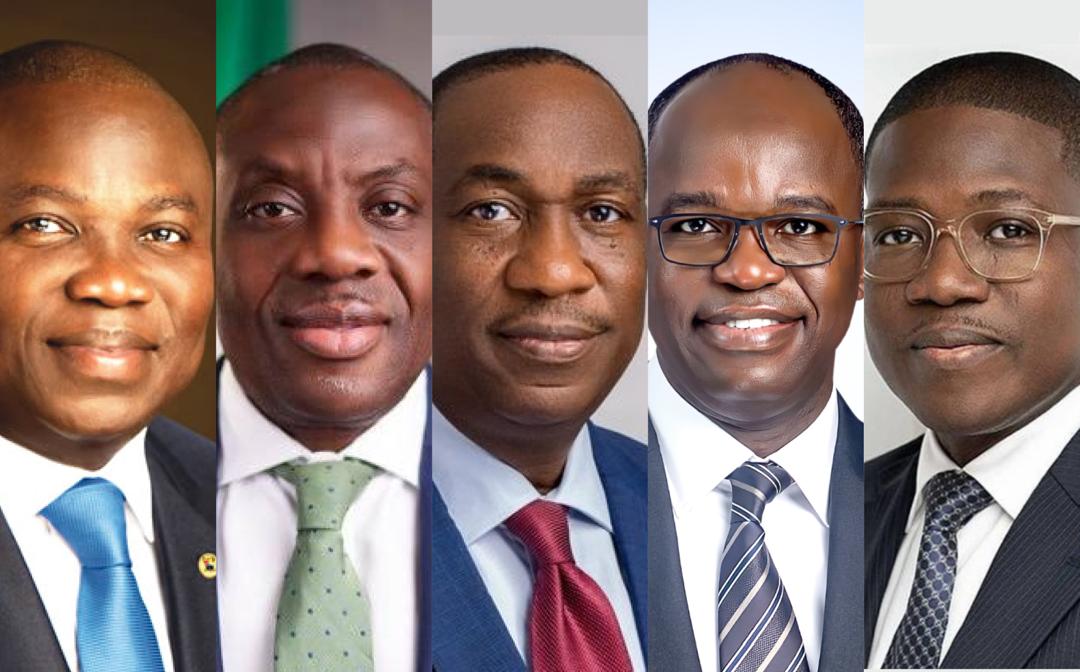
Among aspirants, whose body language or unspoken gesculations have hinted their intentions to take over the administration of Lagos State in 2027 include but not limited to the present Deputy Governor, Femi Hamzat, immediate past Governor of Lagos, Akinwumi Ambode, Education Minister, Tunji Alausa, Senator Tokunbo Abiru, and Muri Okunola.
But as usual, someone, who is not initially seen as the frontrunner, is capable of securing the ticket because the power of decision lies with one, who has come to be known as the be all and end all of Lagos politics, and presently, the All Progressives Congress (APC) as a party.
It is believed that Tinubu has been solely instrumental to the nomination of all the governors, most especially, and another political office holders that have occupied rulership positions in the state since 1999. And that posit the question as 2027 approaches; who would Tinubu choose?
Stakeholders have reasoned that nomination or outright selection of the governorship candidate of Tinubu’s party, who, from precedence, has always gone ahead to become the Governor of the state, is largely not on the strength of their political sagacity, not on the strength of their political and career achievements, neither is it on the strength of their impetuousity.
Accordingly, observers have said based on reccurent events in the last almost three decades, the selection is based on the strenght of the aspirant’s docility and weak resistance; on the strength of their blind loyalty to the ultimate kingmaker, and not forgetting on the strength of the whims and caprice of Bola Tinubu.
Everything basically resolves on who Tinubu chooses, and so the question again; who would Tinubu choose?
FEMI HAMZAT

Dr Femi Hamzat
The president Deputy Governor of Lagos State, Femi Hamzat, was born into a politics-oriented family, and that explains his political sagacity, which may be a threat to the kingmaker(s)
His parents were Late Oba Mufutau Olatunji Hamzat and Late Alhaja Kehinde Hamzat from Iga Egbe, Lagos State. His father served as a member of the Lagos State House of Assembly and as a Commissioner for Transportation in the state (1979–1983) before becoming the Vice-chairman (South West) of then Alliance for Democracy (AD). He became the Lagos West Senatorial District leader of the Action Congress and a crowned king through his maternal royal lineage.
Hamzat is rooted in grass-roots politics, and missed becoming the anointed candidate in 2015 when Ambode was unceremoniously chosen. He was also sidelined in 2023 when Sanwo-Olu took over, but many believe his time is now if Tinubu will consider his patience. Hamzat will be 62 in September.
AKINWUMI AMBODE

Ambode is the immediate past governor of Lagos State, whose tenure ended after his first four years, having fallen out of favour with the proverbial kingmaker, Tinubu. It was believed that the rejection Ambode suffered in the hands of party stalwarts was at the instance of now President Tinubu. He overwhelmingly lost at the primaries to Sanwo-Olu, who was practically ‘anointed’ to replace him.
A career civil servant, who rose to become the state’s accountant-General, Ambode, presented 62, was chosen to replace Tunde Fashola in 2015. It was rumored that Ambode ‘deviated’ from the ‘yes sir’ programme, and dared to be his own boss, initiate his own programmes and run the state as he and his cabinet deem fit. That was not acceptable to the powers that be, and Ambode never made it to the ballot paper in 2015
Though he eventually supported Sanwo-Olu’s campaign, after he was humbled, and brought about a smooth transition in the state, Ambode was kept at arms length in Lagos politics thereafter. But in retrospect, he has found his way back to the good books of Tinubu, and a lot of people are believing he may be given an opportunity to be at the helm of affairs again for another four years to conclude a supposedly unconcluded tenure. Ambode, however, is Christian just as the outgoing governor. But things of that nature doesn’t matter to Tinubu, when he wishes to made a decision.
MURI OKUNOLA

The 54 years Hakeem Muri Okunola, popularly known as HMO, is one aspirant, whom everyone believe is probably the anointed one for the governorship position come 2027.
Of privileged heritage in Lagos, being the first son of the late respected Justice Muritala Okunola, HMO is a trained lawyer, public administrator, technocrat and currently the Principal Secretary to President Bola Tinubu. He also served as the 22nd Lagos State Head of Service, a service he joined in 2001.
It would be proper to say that HMO has served and expressed loyalty to Tinubu for the better of his life. Between 2003 2005, he was personal assistant to Tinubu, until he was appointed as Executive Secretary to the Governor, Land Use and Allocation Committee. Afterwards, he was promoted to the position of Permanent Secretary in the Lagos State Public Service in 2011.
A reputed family man, HMO is seen as the closest person to Tinubu in official relationship, maybe after Femi Gbajabiamila, who is presently the Chief of Staff to the President.
TOKUNBO ABIRU

A seasoned banker, who is currently representing Lagos East Senatorial district in the Senate since 2020, Abiru has served as Commissioner for Finance, where he is touted as having performed creditably.
Abiru is also a member of the Lagos HOMs Committee, which is in charge of the Lagos State Home Ownership Mortgage Scheme (HOMs) instituted to reduce the housing deficit in the state.
He was named the chairman, Senate Committee on Banking of the 10th Senate on 8 August 2023.
Abiru was privileged to be to go to the Senate in 2020 following expressed permission granted by Tinubu. It is hoped that his luck may shine again as the drums of 2027 beat.
TUNJI ALAUSA

Alausa is trained medical doctor, who presently heads Nigeria’s Education Ministry – a position, he assumed in 2024. He was previously the Minister of State for Health and Social Welfare before Tahir was dismissed, creating a vacancy in the Ministry of Education.
Little is known of Alausa until he was invited to serve in the administration of Bola Tinubu.
Many has criticised Alausa’s policies since he assumed the office of senior minister in Education, but those can be overlooked if Tinubu stretch his radar his way.
Like many of the privileged ones, Alausa is also is also in his 60s, and will turn 61 in April.
FEMI GBAJABIAMILA

Former Speaker of the House of Representatives, Gbajabiamila is presently the Chief of Staff to the President – a privileged office. He is assumed to be the closest person to the President by virtue of his office.
Gbajabiamila was first elected to the House of Representatives in 2003, representing the Surulere I constituency of Lagos State, and was consistently re-elected and served for six consecutive terms before he was invited by Tinubu to be his CoS, spending a total of 20 years in the Green Chamber.
Everyone, who knows Tinubu is aware that he can sprung a surprise any time. He chooses is his exclusive preserve, close to his chest and may come as a shock, when eventually announced.
So, who would Tinubu choose?




Yusuf Tuggar Resigns As Foreign Affairs Minister

2027: ADC’ll Lose Presidential Poll If Obi is Not Fielded, Fayose Warns

Wike-led PDP Faction Holds Convention, Reelects Abdulrahman, Anyanwu

Tinubu Celebrates ‘Low-Key’ 74th Birthday Amid Economic, Security Challenges

Lagos 2027: Who Would Tinubu Choose?

Aristos Band Unveils Ambitious 2026 Plans

PDP Crisis: Illegal Factional Convention is a Direct Assault on Party Constitution and Democracy

AFCON 2025: CAS Overturns CAF Verdict

The Candidate of Necessity: Why Gawuna Could Be Kwankwaso’s Trump Card in 2027

Characterisation of Biomass Feedstocks Relaxation Properties Using Visco Elastic Models

ADC Unveils Approved Timetable for Congresses, Convention

Intentional Progressive Leadership and Disciplined Security: Catalysts for Unlocking Possibilities

Dangote Refinery, Fuel Price and the Principle of Back of Forth

WAEC Releases Results of CB-WASSCE 2026-First Series for Private Candidates
-
 Sports5 days ago
AFCON 2025: CAS Overturns CAF Verdict
-
 Opinion3 days ago
The Candidate of Necessity: Why Gawuna Could Be Kwankwaso’s Trump Card in 2027
-
 Opinion3 days ago
Characterisation of Biomass Feedstocks Relaxation Properties Using Visco Elastic Models
-
 News5 days ago
ADC Unveils Approved Timetable for Congresses, Convention
-
 Opinion3 days ago
Intentional Progressive Leadership and Disciplined Security: Catalysts for Unlocking Possibilities
-
 Featured3 days ago
Dangote Refinery, Fuel Price and the Principle of Back of Forth
-
 News4 days ago
WAEC Releases Results of CB-WASSCE 2026-First Series for Private Candidates
-

 News6 days ago
MoneyMaster Enhances Banking App, Gifts Customers Data, Airtime