Connect with us

Islam

Friday Sermon: Pause to Reflect

Published

on

By Babatunde Jose

Caliph Umar bin Khattab said: “The best life is that which is accompanied by patience.” ‘Ali ibn Abi Talib said: “Truly, patience is to faith as the head is to the body. If the head is severed, the body becomes wasted.” While Al-Hasan ibn Ali ibn Abi Talib said: “Patience is a treasure from the treasures of goodness, a treasure that Allah does not give away except to a slave (of His) whom He regards as being worthy.” And Allah, the Exalted, said: Only those who are patient shall receive their rewards in full, without reckoning. (Quran 39: 10). See also Job 42:10 in the Bible; 1 Corinthians 13:4; Philippians 4:6.; Ecclesiastes 7:9. And Romans 12:12.  “Be joyful in hope, patient in affliction, faithful in prayer”. These are worth reflecting upon.

For those who are down today, do not grieve because there is another life to come. The day will come when Allah gathers the first of the creation and the last of it. The knowledge of this occurrence alone should reassure you of Allah’s justice. It was Immanuel Kant, the German philosopher, who said, ‘The drama of this life is not complete; there must be a second scene to it, for we see the tyrant and his victims without seeing justice being executed. We see the conqueror and the subjugated, without the latter finding any revenge. Therefore, there must be another world, where justice will be carried out.” Ash-Shaykh ‘Ali at-Tantawi, commenting on this, said: This statement suggests a confession of the existence of a Hereafter where judgment will take place.

An Arab poet said: “If the minister and his delegates rule despotically, and the judge on earth is unjust in his judgments, (as we find in this clime today), then woe, followed by woe after woe upon the judge of the earth from the judge Who is above.” See (Quran 40: 17). And Psalmist said: Cease from anger and forsake wrath: fret not thyself in any wise to do evil. For evildoers shall be cut off: but those that wait upon the LORD, they shall inherit the earth. Psalm 37:8-9

Do not feel overly stressed when work piles up, Robert Louis Stevenson said: “Every person is capable of performing his daily tasks, no matter how difficult they are, and every person is capable of living happily during his day until the sun sets: and this is the meaning of life.”

Stephen Leacock said: “The young child says: when I will become a bigger boy. The Boy says: when I become a teenager, and when that time comes, he says: when I will marry. What about after marriage? And what comes after all these stages? One’s thoughts constantly follow the tune of the following: when I will be able to retire. But when one reaches old age and looks back, he is scorched by a cold wind. He lost out on his whole life that dwindled away without ever living inside of it. And thus, we learn, only when it is too late, that life is to be lived in every breathing minute and hour.” Such is the state of those who put off repenting from their sins.

One of our pious teachers said: “I warn you of delaying and saying that I will do it later, for procrastination is the thief of time.” Ref; (Quran 15: 3) (Quran 24: 40) (Quran 76: 3). Dante said: “Consider that this day will not occur again.” But better and more beautiful and complete is the hadith; “Pray as if it is your farewell prayer.” Whoever puts it into his mind that today is his last day, will make a fresh repentance, will do good deeds, and will strive to be obedient to his Lord.

Many of our people bestride the land like colossi, master of all they see, tyrannical and uncaring for the plight of the common man. They have forgotten that they are mere mortals and like mortals, they will leave this realm one day to face their maker. What will be their reward? They amass and accumulate senselessly without recourse to what will become of their pyric treasures. On the day they are interned, nothing will follow them to the grave: In the words of the Preacher, the son of David, king in Jerusalem. Vanity of vanities, saith the Preacher, vanity of vanities; all is vanity. What profit hath a man of all his labour which he taketh under the sun? One generation passeth away, and another generation cometh: but the earth abideth for ever. The sun also ariseth, and the sun goeth down, and hasteth to his place where he arose. Ecclesiastes 1: 1-5.

Contemplate these verses: And whosoever fears Allah and keeps his duty to Him, He will make a way for him to get out [from every difficulty]. And He will provide him from [sources] he never could imagine. And whosoever puts his trust in Allah, then He will suffice him. (Quran 65: 2-3) Allah will grant after hardship, ease. (Quran 65: 7) See also (Qur’an 2: 137), (Qur’an 25: 58, (Qur’an 5: 52) and (Qur’an 53: 58)

Depression weakens the body and the soul and as Alexis Carlyle, a Nobel-laureate in medicine, said: “Working people who do not know how to deal with anxiety and stress are more prone than others are to a premature death.” Indeed, everything that takes place occurs according to a divine decree. A person must nonetheless take the necessary steps to avoid difficulties, and so Carlyle rightly points out that anxiety is one of the factors that lead to the body being damaged.

And those who pardon men; verily, Allah loves the good doer. (Quran 3: 134) Among the more salient lessons that we should learn from this verse is that we should have a sound heart, peace of mind, calm nerves, and a feeling of happiness.

Doctor William Mark Gaungil, while addressing the Federation of American Dentists, remarked: “Unhappy feelings like anxiety and fear possibly affect the distribution of calcium in the body, and in consequence, can lead to tooth decay.” William James said: “God forgives us our sins, but our nervous systems do not.”  

May Allah speed us in the performance of good deeds and reward us with His mercy, forgiveness, generosity and bring us closer to Him. Amin!

Barka Juma’at and Ramadan Kareem.

 +2348033110822

Continue Reading
Click to comment

Leave a Reply

Your email address will not be published. Required fields are marked *

Islam

Friday Sermon: Accountability on the Day of Judgment

Published

on

By

By Babatunde Jose

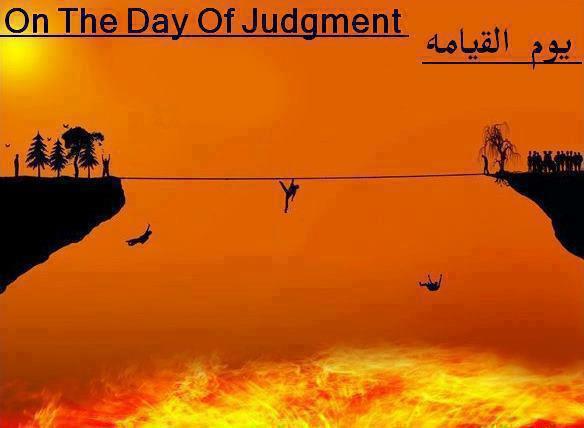
Accountability on the Day of Judgment is an interesting topic following the passing of the holy month of Ramadan and its demonstration of piety by the Umma. It was also the interesting topic of the Ramadan lecture by Dr. Christopher Otayemi, the Chief Imam of the Crescent Bearers, during their March 15th monthly meeting at my residence.

There is no gainsaying the fact that man must account for his sojourn on earth at the end of the day. Good or bad, we will all account for how we spent our time on this divide of spiritual consciousness. There will be no escape, no parental intercession on behalf   of their children, and no intersession of husband for his wife and vice versa. Those who have done well will reap the reward of their acts and the villains will reap the reward of their iniquities. That is why the there is need for all to do well with a view towards a pass on the Day of Qiyyamah.

It is interesting to know that many people have asked about the nature of that day. How will Allah assemble all those he had created in one place to question them and judge them accordingly? The answer to this and other questions are offered in several places in the Quran.

In Surah Al Baqara, Allah exemplified with the story of Uzair: Or like the one who passed by a town and it had tumbled over its roofs. He said: “Oh! How will Allah ever bring it to life after its death?” So Allah caused him to die for a hundred years, then raised him up (again). He said: “How long did you remain (dead)?” He (the man) said: “(Perhaps) I remained (dead) a day or part of a day”. He said: “Nay, you have remained (dead) for a hundred years, look at your food and your drink, they show no change and look at your donkey! And thus We have made of you a sign for the people. Look at the bones, how We bring them together and clothe them with flesh “. When this was clearly shown to him, he said, I know (now) that Allah is Able to do all things”. (Al-Baqarah, Quran 2:259)

See also Surah Al-Kahf, 9-26, People of the Cave, a people who were made to die for 400 years and then rose again.

The most important events that will happen on the Day of Judgment are when we will be held accountable for our deeds and when we will be questioned by our Lord, Allah (S.W.T.). There are many Quranic verses and Hadiths that tell us about these events so that the believers will prepare themselves for the most important, final test. They can prepare for this test with their strong faiths and with their righteous deeds. But are we prepared?

Allah (S.W.T.) says: For to Us will be their Return; Then it will be for Us to call them to account. (Quran 88: 25-26)

He also says: Then shall We question those to whom Our message was sent and those by whom We sent it. And verily We shall recount their whole story with knowledge, for We were never absent (at any time or place). (Quran 7:6-7)

Allah (S.W.T.) describes that Day: On the Day when every soul will be confronted with all the good it has done, and all the evil it has done, it will wish there were a great distance between it and its evil. But Allah cautions you (to remember) Himself. And Allah is full of kindness to those that serve Him.” (Quran 3:30)

The good believer will have an easy reckoning and Allah (S.W.T.) will cover up his sins after He reminds him about them. Then He will forgive him for his sins, and allow him to enter paradise. This is concluded from a Hadith reported by Imams Bukhari and Muslim in which the Prophet (SAW) said: “Allah will bring the believer very close and privately and ask him “Do you know this sin? Do you know that sin? The believer’s reply will be, “Yes Oh Lord,” until he is reminded about all of his sins, and he thinks he will perish. Then Allah will say “I covered up your sins during your life, and I will forgive your sins today. Then he will be given his book of good deeds. But the unbelievers and hypocrites will be asked about their deeds loudly in front of the creatures.

If We delay the penalty for them for a definite term, they are sure to say, “What keeps it back?” Ah! On the day it (actually) reaches them, nothing will turn it away from them, and they will be completely encircled by that which they used to mock at! (Quran 11:18)

Allah will confront His servant directly, without a mediator. The Messenger (SAW) said: “Allah will talk to everyone directly, without a translator. The person will look to his right, and will not see anything but his deeds. Then the person will look in front of himself and will see nothing but the hellfire facing him. So protect yourself from Hellfire even by giving a charity of half a date.”  Reported by Imam Bukhari

Prayer will be the first thing a person will be questioned about on the Day of Judgment. The Messenger (SAW) told us in an authentic Hadith: “The first thing the people will be accountable for on the Day of Judgment is prayer, Allah will say to His angels (even though he already knows): “Look at my servant’s prayers. Were they complete or not?” If they were complete, it will be written as complete. If they were not fully complete Allah will say: “See if my servant has voluntary prayers, If he has them Allah will say: Complete his obligatory prayers shortage with his voluntary prayers.” Then the rest of his deeds will be dealt with in the same manner.” Reported by Imams Ahmad, Abu Dawood, An-Nisa’i, and Al-Hakim

We will be asked on the Day of Judgment about all of the blessings and bounties that Allah gave us in this life. Some of these blessings may include our good health, our wealth, our food and drink, our ride and our home, etc. Allah (SWT) says in the Noble Quran: Then, shall ye be questioned that Day about joy (ye indulged in!) (Quran 102:8)

Allah (SWT) describes that situation: On the Day when their tongues, their hands, and their feet will bear witness against them as to their actions. (Quran 24:24).

They will say to their skins: “Why bear ye witness against us?” They will say: “Allah hath given us speech, –(He) Who giveth speech to everything: He created you for the first time, and unto Him were ye to return. (Quran 41:21)

Also Allah (SWT) will ask us on the Day of Judgment about all of our covenants and promises that have been made in our lives. Those promises may be made to Allah (SWT) or made to people. Like the failed promises our leaders make to us about providing us electricity, water, healthcare, education, employment and security. Like the ‘Hope’ and ‘Renewed Hope’ hoax. Then they will know that ‘hope is not in a bag of rice, or vegetable oil. Hope is in a better life and life more abundant.

And so Allah (SWT) says: Come not nigh to the orphan’s property except to improve it, until he attains the age of full strength; and fulfill (every) engagement, for (every) engagement will be inquired into (on the Day of Reckoning).Quran 17:34)

Whoever they are, that are responsible for our woes should not forget that there will be a day of reckoning. A Day of Judgment when they would have to account for their stewardship.

The prophet Muhammad (SAW.) said: “The son of Adam will not pass away from Allah until he is asked about five things: how he lived his life, and how he utilized his youth, with what means did he earn his wealth, how did he spend his wealth, and what did he do with his knowledge?” –  Reported by Imam At-Tirmidhi.

The sins and iniquities of our leaders have risen to high heaven and certainly, God will visit his wrath on them.  It was a Catholic Bishop who once said that God will have to apologize to Sodom and Gomorrah, if he fails to punish the iniquities of our leaders.

It is out of the Mercy of Allah (SWT), that he told us about these important questions ahead of time so that we can prepare ourselves. The good believer is the one who prepares himself for those difficult events by getting closer to Allah (SWT), by doing good deeds, and by staying away from what Allah has forbidden, and by fulfilling promises and covenants, so that he will be among those who receive their book of deeds on the Day of Judgment in their right hand and Allah will enter them into paradise.

As for those who have visited woes on their people, a special place in hell shall be reserved for them. Those who have ears, let them listen now, for, No sinner shall go unpunished.

Barka Juma’at and a happy weekend

Continue Reading

Islam

Friday Sermon: Reflections on Ramadan 5: Rejuvenation and Fulfilment

Published

on

By

By Babatunde Jose

What have we gained from Ramadan? Have we been spiritually cleaned, recharged and rejuvenated? Has it been morally and spiritually gratifying and fulfilling? Have we been able to shed many of our iniquitous baggage? Have we relinquished the sins of fornication, covetousness, and a life of deceit? Have we been able to move nearer God in an atmosphere of God-consciousness? Have we been doing the needful in our homes and to our fellow man?

Have we given the orphan his due? Have we entrenched Justice and Fairness in our daily living? What of compassion and empathy? Do we feel the pains of our fellowmen, our subjects, and followers? Have we taken steps to right the wrongs we wroth on the people around us? Have we been fair to our wives, children, relations, and neighbors? Are we satisfied with our new lease of spiritual awakening?

Must all the gains of Ramadan end today? Are we returning to our old ways of cheating, backbiting, slander, and wickedness? Today is therefore, a day of decision. Are we going to consolidate on the gains of Ramadan or descend back into the abyss of a sinful life? The choice is ours. Ihdinas siraatalmustaqeem.

Ramadan has rightly been described as a school of Iman and a stop to recharge our spiritual batteries. Must we alloy that battery to die by going back to the old ways? The choice is ours.

Unfortunately, the fall and descent into a life of sin and iniquity starts a few days after Ramadan; when we say ‘fasting is finished, the nightly prayers are over; the group gatherings to break the fast have vanished. We can eat, drink, and be merry again when we like.’ And that special feeling of God consciousness gradually fades away. The spiritual high evaporates, and all we are left with are the bad habits we tried to shed during Ramadan which mysteriously rear their ugly heads once it is over.

Ramadan is supposed to increase your faith and God-consciousness: “Believers! Fasting has been prescribed for you-as it was prescribed for those before you-so that you may be conscious of God.” (Quran 2:183).

The lessons learned and spiritual benefits gained during that month are intended to carry over for the rest of the year until next Ramadan.

Prophet Muhammad (SAW), said: “Whoever does not give up forged speech and evil actions [while fasting], God is not in need of his leaving his food and drink.”

Ramadan is a month of training for us so that we may become doers of good and refrain from evil throughout the year. Each and every year this blessed month helps to train us to become better Muslims. But now that Ramadan is over are we going to continue doing the good we acquired from it or are we going to go back to the way we were before it started? That is the question.

Many of us did not say our prayers before Ramadan but during the blessed month we found it easier to pray. We cannot continue our lives without praying; otherwise, we are not fulfilling the purpose of our lives.

Allah says: “I have created the jinn and humankind only for My worship” (Quran 51:56)

We will not be successful in this life or the next without prayer. The Prophet (SAW) said, “The first thing that a person will be questioned about is his prayers.” Missing prayers intentionally is so serious that it is tantamount to disbelief: The Prophet (SAW) said: “What lies between a man and disbelief is the abandonment of prayer.” Muslim. Unfortunately, there will be many Muslims in Hell who did not say their prayers.

Many of us left the Quran on the top shelf throughout the year but when Ramadan came we picked up the Quran and blew off the dust and began to recite it again. By returning the Quran to the bookshelf, we will be missing out on receiving intercession from the Quran on the Day of Judgment: The Prophet (SAW) says: “Recite the Holy Quran as much as you can for It will come as an intercessor for its reciter on the Day of Judgment” (Muslim)

Allah the Most High said:

Establish regular prayers–at the sun’s decline till the darkness of the night, and the Morning Prayer and reading: For the prayer and reading in the morning carry their testimony. And pray in the small watches of the morning: (It would be) an additional prayer (or spiritual profit) for thee: Soon will thy Lord raise thee to a Station of Praise and Glory! (Quran 17: 78-79)

During the blessed days and nights of Ramadan we were given the opportunity to repent and ask Allah for his mercy and forgiveness and to thank him for his infinite favors upon us. But now that Ramadan is over we must not stop repenting to Allah for our sins and we must continue to be thankful to Allah for his infinite favors upon us.

They ask thee concerning women’s courses. Say: They are a hurt and a pollution: So keep away from women in their courses, and do not approach them until they are clean. But when they have purified themselves, ye may approach them in any manner, time, or place ordained for you by Allah. For Allah loves those who turn to Him constantly and He loves those who keep themselves pure and clean. (Quran 2:222)

Our Lord! (They say), Let not our hearts deviate now after Thou hast guided us, but grant us mercy from Thine own Presence; for Thou art the Grantor of bounties without measure (Quran 3:8)

Merciful Allah, I acknowledge my sins and shortcomings before You. Your Word says I should not despair because You forgive all sins. I ask for Your complete forgiveness—cleanse my heart, erase my past mistakes, and renew my soul. Let this Ramadan be a turning point in my life, where I walk in Your mercy and grace. Ameen.

Ya Rabb, purify my heart from hypocrisy, pride, and hidden sins. Create in me a sincere heart that seeks only Your pleasure. Remove every evil intention and fill me with love for righteousness. Let my worship be genuine and my actions be pleasing in Your sight. Grant me a heart that will stand accepted before You on the Day of Judgment. Ameen.

O Allah, protect me and my family from the punishment of Hellfire. Shield us from sins that lead to destruction and guide us toward righteousness. Let our lives reflect obedience to You, and grant us safety in this world and the next. Make us among those who are saved by Your mercy. Ameen.

Ya Allah, bring peace, love, and unity into my family. Remove every conflict, misunderstanding, and division among us. Let our home be filled with Your presence and blessings. Make us a source of comfort and joy to one another. Guide each member of my family to righteousness and faith. Make our household an example of love and devotion to You, Ameen.

Ya Shafi, the Healer, I call upon You for healing and strength. Touch every part of my body and restore me to full health. Remove sickness, pain, and weakness from my life. Grant me physical, emotional, and spiritual well-being. Let Your healing power flow through me completely. Keep me strong to worship You and fulfill my purpose, Ameen.

O Allah, increase my faith and strengthen my belief in You. Fill my heart with tranquility and unwavering trust. Let my iman grow stronger with every act of worship. Remove doubts and replace them with certainty and conviction. Help me remain firm in my faith in all situations. Make me among those whose hearts are filled with light, Ameen.

Eid Mubarak and Jumuah Mufeedah!

Continue Reading

Islam

Friday Sermon: Reflections on Ramadan 4: Empathy and Compassion

Published

on

By

By Babatunde Jose

Prophet Muhammad (SAW) said: “You see the believers as regards their being merciful among themselves and showing love among themselves and being kind, resembling one body, so that, if any part of the body is not well then the whole body shares the sleeplessness (insomnia) and fever with it.” (Al-Bukhari)

We want others to put themselves in our shoes and view the world from our perspective. That is empathy – putting oneself in someone else’s shoes. We feel close to the person who is empathetic to us, find it easy to share our thoughts with them, go to him or her when we’re in trouble and seek solace. Each of us has a natural sense of empathy through which we connect to others.

There are two aspects of empathy: cognitive and affective. Cognitive empathy is about understanding another person’s point of view, their emotions and needs at the intellectual level. Affective empathy is about actually feeling an emotion that another person is experiencing.

If only our leaders would empathize with the suffering multitude, they would do the needful and set the country on the path of sustained development. But they would not. These are stone-hearted people who are bereft of the milk of human kindness. The Prophet (SAW) attested to this when he said: “None of you will have faith till he wishes for his (Muslim) brother what he likes for himself.” (Al-Bukhari) A man without empathy will therefore be devoid of faith.

This Hadith necessitates cognitive empathy. You have to firstly imagine yourself in someone else’s shoes and think from their perspective in order to understand what you would do in his situation.

A believer who has achieved excellence of faith will feel this special love for other believers. This is effective empathy.

The Quran stresses that righteousness is not in precise observance of the rituals but in acts of compassion and kindness.  It says that the litmus test for true belief and genuine worship is that it leads to compassionate living:

Goodness does not consist in turning your face towards East or West. The truly good are those who believe in God and the Last Day, in the angels, the Scripture, and the prophets; who give away some of their wealth, however much they cherish it, to their relatives, to orphans, the needy, travellers and beggars and to liberate those in debt and bondage; those who keep up the prayers and pay the prescribed alms; who keep pledges whenever they make them; who are steadfast in misfortune, adversity and times of danger. These are the ones who are true, and it is they who are aware of God.  (Quran 2:178)

This verse talks about a set of beliefs and then a set of good deeds, the intricate relationship between the two escapes many if not most.

Every Friday in the second part of the sermon, Muslims all over the world hear a verse, which stresses, justice, kindness and natural mutual love as among the closest blood relatives:

Indeed, Allah enjoins justice, and the doing of good to others; and giving like kindred; and forbids indecency, and manifest evil, and wrongful transgression. He admonished you that you may take heed. (Quran 16:90)

He makes His relationship or His Providence to the common man, conditional to common human compassion, by claiming that those, who wish to find Him, will succeed only if they are kind and compassionate to the common people:

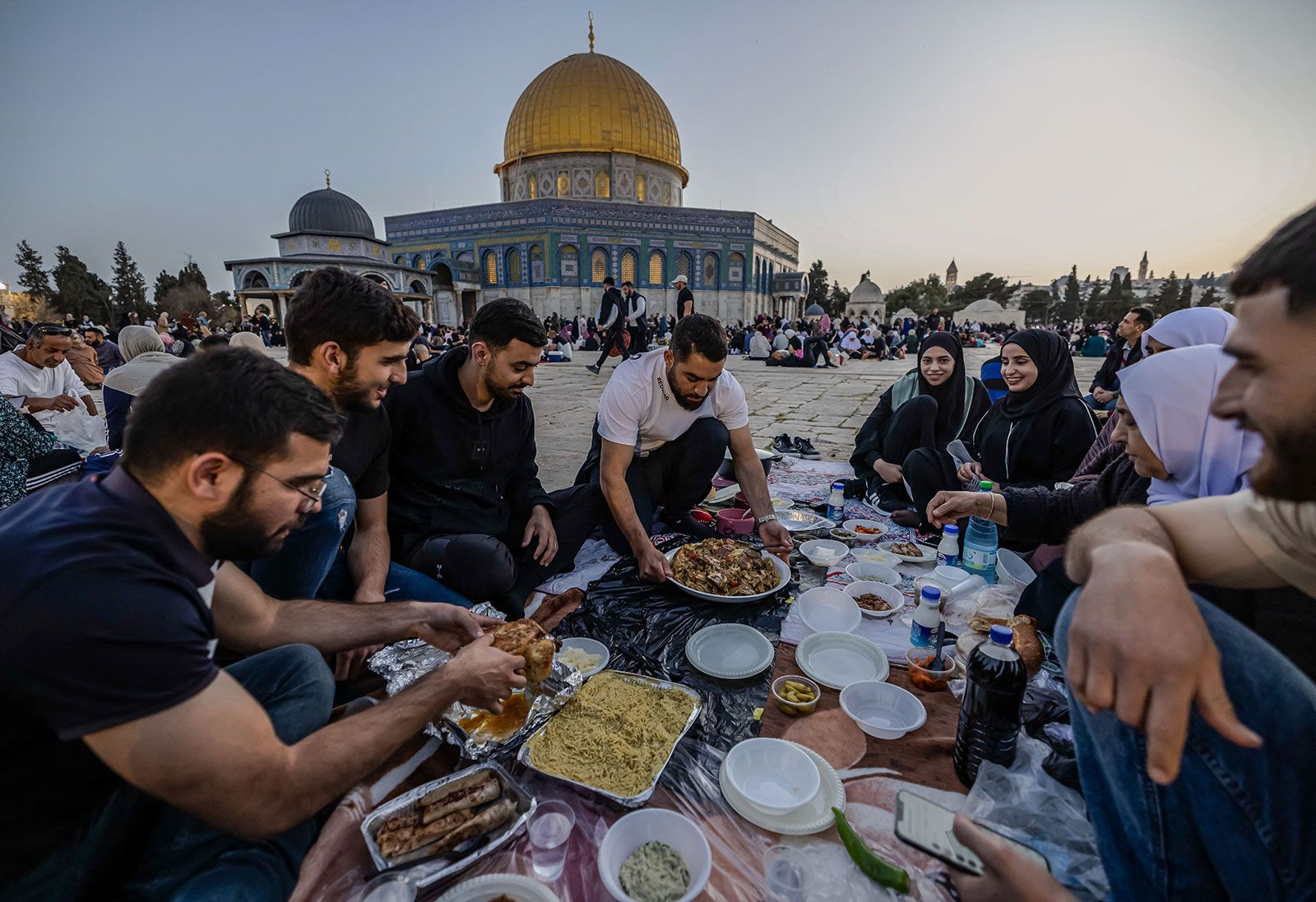
Fasting cleanses your soul and makes you appreciate all your blessings. Fasting humbles you; it makes you feel compassion for the poor who experience that type of hunger ev­ery day. At the end of the day, however, we have a big dinner; the poor don’t have that luxury. That is why Muslims are required to give Zakat on an annual basis. Many choose to do this during Ramadan. This money is either given personally or through a charity. The main thing is that it must be paid.

We are taught to not only abstain from food and drink but to try to refrain from conflict, anger and mean words. Our prophet (SAW) says, “Saying a nice word is like giving to charity.” And he also said, “To smile in the face of your brother is like giving to charity.” We are to be kind and loving to each other. We are to be forgiving, not only in this month but in every month. But for some reason, this month brings out the best in everyone.

During this holy month, we spend a lot of time reading our Quran: We also spend a lot of time praying, trying to help those who are less fortunate and performing good deeds, which in turn cleanses our hearts and souls. For one month, we truly do become less selfish, less self-centered and more focused on what really matters in the world.

What then are the lessons of the month of Ramadan as it winds up? Ramadan teaches patience, self-discipline, empathy, gratitude, and spiritual mindfulness, offering lessons that extend far beyond fasting.

Ramadan is primarily a time to cultivate taqwa, or God-consciousness, through fasting, prayer, and reflection. Abstaining from food, drink, and other desires from dawn to sunset encourages believers to focus on their spiritual and moral essence rather than material needs, fostering mindfulness and a deeper connection with Allah. The month also emphasizes the importance of ethical behavior, as Muslims are reminded to avoid harmful speech and actions while maintaining integrity in all aspects of life.

Fasting during Ramadan is a rigorous exercise in sabr (patience) and self-control. By resisting hunger, thirst, and other impulses, individuals strengthen their ability to manage desires and make thoughtful decisions in daily life. This discipline extends to controlling emotions, refraining from anger, and practicing restraint in speech and behavior.

Experiencing hunger and thirst firsthand cultivates empathy for the less fortunate, motivating acts of charity such as Zakat (obligatory almsgiving) and Sadaqah (voluntary charity). Ramadan encourages believers to support those in need, fostering a sense of social responsibility and compassion.

Fasting highlights the blessings often taken for granted, such as food, water, and health. This practice instills humility and gratitude, reminding individuals that true contentment comes from appreciating simple blessings rather than material wealth. The shared experience of fasting also strengthens family and community bonds, reinforcing social cohesion and mutual support.

Ramadan provides an opportunity for self-reflection, helping individuals evaluate their purpose, actions, and relationships. It encourages mindfulness of the ‘Last Day’ and accountability for one’s deeds, promoting ethical conduct and a commitment to justice and fairness in interactions with others. The month serves as a spiritual “classroom” where habits of prayer, charity, and self-restraint are cultivated and ideally carried forward throughout the year.

In essence, Ramadan is not only a period of fasting but a transformative journey that nurtures spiritual awareness, patience, empathy, gratitude, and moral integrity. The lessons learned during this sacred month are intended to guide believers in their daily lives, shaping character, relationships, and a deeper understanding of their place in the world.

A few years ago, The UN High Commissioner for Refugees, Filippo Grandi, in sharing his wishes, for all observing the holy month of Ramadan, urged action on behalf of millions of forcibly displaced people worldwide. His thesis remains valid today.

He said: “Through our reflection, we come to recognize that while words may reassure, it is only through action that we can truly see tangible change,” he said. “We continue to live in extremely complex times where violence is multiplied, conflicts are protracted and tens of millions of people are forcibly uprooted or on the move. This has created unprecedented levels of human suffering and desperation. “Millions of people like you and I are living in a constant state of conflict, insecurity and persecution: Their loved ones torn from them under inexplicable circumstances. Think of civilians in Syria or Yemen. Think of the plight of the Rohingyas in Myanmar, Bangladesh and the other countries to which they have fled”. 

And I urge you to also think of the castrated and emasculated people of Palestine: Pray for them and remember them. May Allah make it easy for us; Ameen.

Let us remember those who prepared to participate in this Ramadan but did not make it to the starting line. There are also those who started but did not get to the finish line. May Allah grant them forgiveness and grant them Jannatul Firdousi.

Allahuma innaka afuwwun tuhibbul afwa fa’fu wanni. “O Allah you are most forgiving and you love to forgive so forgive us.” ‘May our hearts soften in sincere repentance, and may our souls be counted among those liberated from every chain of sin, embraced by divine forgiveness and grace.   Write us among those forgiven completely,  accept our prayers and worship, grant us good in this world and the Hereafter, guide us and our children against all evils and don’t let us cry over them.’Aamee

Barka Juma’at and Ramadan Karim

Continue Reading

Trending