Connect with us

Featured

CAX Africa 2020: Embracing African Stories

Published

on

By Dolapo Aina

The Creative Africa Exchange was held in Kigali, Rwanda in the month of January 2020. According to the Creative Africa Exchange’s official page; CAX Africa was created and designed to be the connection of Africa’s creative economy to stimulate, consolidate the African creative and cultural industry’s fragmented ecosystem into a sustainable impactful asset that contributes to the transformation of the Continent. Launched during the Intra Africa Trade Fair in Cairo in December 2018, CAX is the first exchange of its kind. The only pan-African summit for the creative ecosystem devoted to creativity in the fields of music, art, design, fashion, literature, culture, publishing, film and television.

In his opening remarks the President of Afreximbank Professor Benedict O. Oramah stated that ‘a pearl can never lose its shine no matter the turbulence. Rwanda and African personalities are breaking boundaries to make their mark. The rich poll isn’t a surprise as Africa is a rich poll of talents. The creative economy is seen as a viable sector. Culture and creative industries catalyse economic growth and create small and medium scale enterprises. But it lacks the ability to maximize the creative poll financially. African countries import more creative goods than they create. It is markets that would attract and drive the creative industry.’

During Aiteo Managing Director’s speech; Dr Ramson Owen asked the one question that must have been on the minds of some of the delegates. Why was AIteo (an oil and gas company) sponsoring CAX Africa? He went further to ask why must others speak for Africa? It should not be. It is time for the creative sector to profit from the sector. This sector has been operating in the informal sector. It is time to operate in the formal sector. So, he said.

Furthermore, Dr Ramson Owen opined that Africa elsewhere is viewed as a country. Could it be because Africans aren’t telling their stories? His advice was for those in the creative industry to work on quality and control.

During the presentation by the Rwanda’s Minister of Youth; Mrs Rosemary Mbabazi made a proud statement when she stated that the African Continent is rich in talent but how do we turn this into profits?

During the perspective from the creative industry session; Beninois-American actor Djimon Housou posited that ‘Hollywood also showed me a way back home. Amistad showed me a shocking glimpse of slavery. History is the lens that we use to see into the future. As Africans, we need to remember that we are great people, greatness is in our DNA. We must snap out of this cultural amnesia. We told our stories but did not write them down.

The veteran Rwandan actress Carole Karemera who has starred in such movies, like the Haitian born Raoul Peck’s directed ‘Sometimes in April’ stated during a panel that ‘art needs a space and in Africa; there are not enough spaces for arts. Many African artists don’t create for the youth. We need to determine those who are consuming the African arts.’

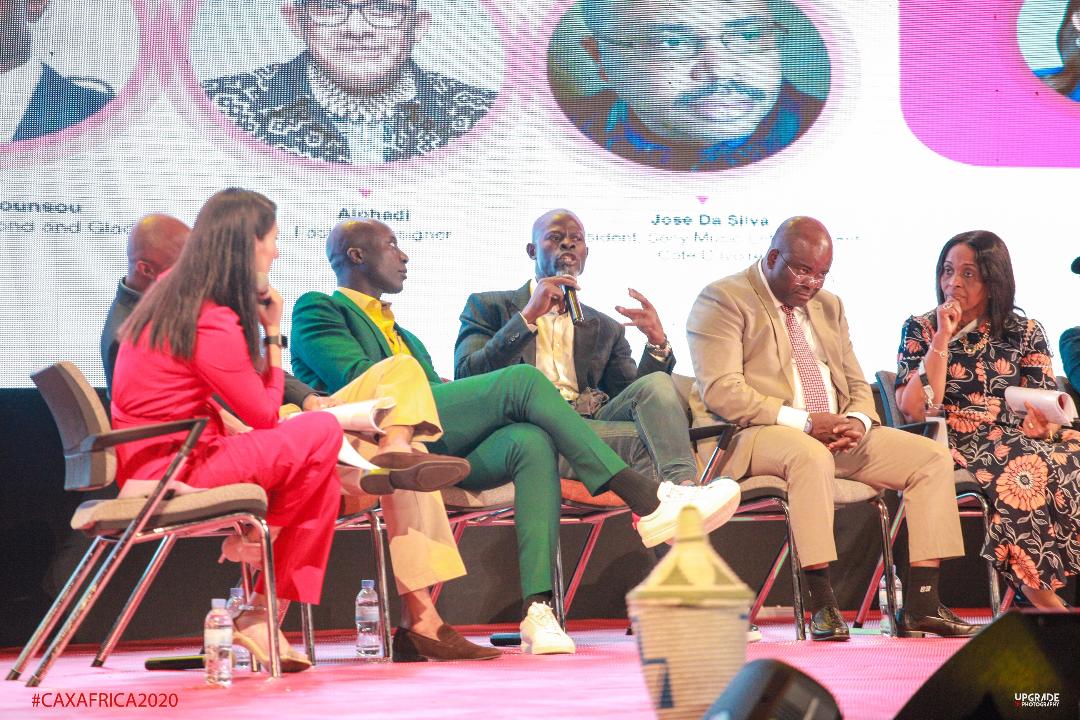
During the main panel discussion; Djimon Housou reiterated the fact that Hollywood took him back home. Whilst Zambia’s Minister for Tourism and Airts; Minister Roland Kaoma stated that Africa needs to agree that the art industry must be upgraded from soft social to economic industry. Africans cannot continue to say we have potential talents. The potentials must become commercial. The creative industry must be seen as an economic sector.

Mrs Kanayo Awani of Afreximbank revealed that movies, music, arts and crafts, building production facility can tap into the 500-million-dollar fund available to support the trade of Africa creative products and creative ventures that are bankable. And she beseeched those in the creative industry to engage Afreximbank.

During the understanding the African Creative Ecosystem panel: CNN’s Eleni Giokos asked the delegates at the Intare Conference Arena Is Africa trading amongst herself? And the replies were mixed. Also, during this session, the Beninoise- American actor Djimon Hounsou advised those in the creative industry to any project you have, you must do a nice presentation. It is your duty to pave the way for the next generation

For her part, Nigeria’s Omotola Jalade Ekeinde stated that Africa needs structure (screens, film villages, proper studios). And that the movie practitioners need to invest in structure, film schools. Whilst Nigeria’s well-known music director Clarence Peters opined that film making is the only artform that evolves around everything from wood to rubber.

On the second day of CAX Africa; sessions like access to capital; the art of production and access to market; how loud is the women’s voice in the creative industry; how digital development is driving demand for new capacity across the Continent; were covered and discussed.

And several salient issues were addressed. Chris Oshiafi, the chairman of Pan African Capital opined that creative people need patient capital. Josephine Ndao who is the Head of Enterprise and SME Development at the African Development Bank stated that the investors’ comfort lies in wanting to invest in the distribution stage. Whilst the founder and chairman of Megalectrics Mr Chris Ubosi reiterated the fact that the products are there. You need to make your talent profitable. Develop fundamental structure.

And Mrs Uche Cynthia Nwuka who is the Group Head Creative Industry of Bank of Industry advised the young creative practitioners attending the conference to understand what it takes to commercialise their business. Learn about the business of what they are doing. The government needs to understand and support the business.

In the Art of Production Session; veteran Nigerian actor Richard Mofe-Damijo stated that ‘for film making, there are trainings for different levels. There is a level to group all African creatives into one. We are competing at the global stage. We practically conduct surgeries with forks and knives in Nollywood.’ He went further to state that the world is not coming to Africa for anything but the originality. The real Game of Thrones is in African stories. People are beginning to shoot movies in shorter periods because it is possible.’

Another veteran Nigerian movie actor Rita Dominic stated that the creative industry two decades ago was not viable for financial institutions but the story is not the same today. Supporting the creative industry is a necessity. And she reiterated what her colleague Omotola Jalade Ekeinde said when she said ‘we need film schools, enabling laws, funding, lawyers that understand creative rights etc.’

During the how loud is the woman’s voice in the creative industry session; all the ladies agreed that every woman is a bankable person. And the moderator the famous Star Jones stated that there is no one who made it easy.

How digital development is driving demand session delved into some in-depth analysis on what Africa needs to tap into, which is the digital space. Konga’s CEO Nnamdi Ekeh was of the view that the movie and music industries are the next after oil but the income being generated from these sectors for Nigeria is next to nothing. Whilst the founder of Chocolate City Entertainment; Audu Maikori stated that Africa needs to understand what our people want. We need to embrace technology. In five years, Artificial Intelligence would probably write a script for Rita Dominic. And what might be missing would be human nuances and feelings.

Professor Aboubacar Sanogo, who is a film studies professor at the Canada’s Carleton University in Ottawa; delivered a speech on the importance of preserving old movies. After his speech, a movie called Soleil O by the late Med Hondo (who was a Mauritanian film director, producer, screenwriter, actor and voice actor. He emigrated to France in 1959 and began to work in film. He received critical acclaim for his 1967 directional debut Soliel O) was shown.  This movie which was entirely self-funded was only restored in 2017 by the famous Martin Scorsese through The Film Foundation. Professor Aboubacar Sanogo who has his roots from Burkina Faso knew the Nigerian Professor Pius Adesanmi; who was his colleague in the same University in Canada.

The CAX Africa summit can be summed up in the words of Zambia’s Minister for Tourism and Airts; Minister Roland Kaoma who said that Africans should embrace their stories and that modernisation is not Westernisation.

Continue Reading
Click to comment

Leave a Reply

Your email address will not be published. Required fields are marked *

Featured

Justice Segun-Bello vs The Condes: Couple Appeals to Nigerians over Injustice, Intimidation

Published

on

By

The legal battle between an Abuja-based couple, Mr. Adetunji Conde and Mrs. Ajoke Amudat Conde, and a serving judge, Mabel Segun-Bello, has escalated into what relatives and rights advocates now describe as a life-threatening human rights crisis.

New updates obtained by SaharaReporters from the couple’s family indicate that Mr. Conde’s health has deteriorated sharply while in detention at Keffi Old Prison, where he is reportedly battling stage-one renal failure after months in custody over a ₦100 million investment dispute.

Family members warn that the situation is rapidly worsening and could become fatal if urgent medical care is not provided.

According to relatives, Conde had been managing several chronic conditions, including diabetes, hypertension and an enlarged prostate, before his arrest in 2025.

Since his incarceration, they say, the lack of specialised care has pushed his health toward kidney failure.

A source familiar with the case told SaharaReporters: “Although the court is aware of his worsening medical condition, he was directed to seek treatment within the prison facility, which unfortunately does not have the necessary medical equipment or capacity to manage his condition.”

Family members say the continued detention despite his condition effectively amounts to a medical death sentence.

Controversial Bail Delays and Judicial ‘Reset’

Conde also described what he alleges were repeated delays and irregularities in the handling of his bail.

In a message sent to SaharaReporters on Thursday, he recounted the process after his wife was granted bail.

“In the court of the second magistrate in Wuse II, after the stringent bail conditions had been varied and met and my wife released, it took the magistrate five days to approve my own surety,” he said.

He added that even after verification of the surety’s residence and workplace, additional delays occurred.

“Upon the verification of the abode and office of the surety, it took almost another two weeks for the prosecutor to come and sign in court,” he said.

According to Conde, the matter took an unexpected turn when the magistrate suspended both the case and his bail indefinitely.

“On the set day, the Magistrate ruled that both the case and my bail had been put on indefinite suspension due to the fact that powerful people are interested in the case,” he said.

He further claimed that the Chief Judge of the Federal Capital Territory later intervened.

“The CJ of Abuja ordered that my bail should be immediately granted and that both the Director of Magistracy and the Magistrate should be petitioned for explanation on this ruling,” he said.

However, Conde said the directive was never implemented, adding, “Instead of carrying out the order, the so-called Magistrate recused himself from the matter. A conviction without a trial.”

The case has since been transferred to a third magistrate court, where the presiding magistrate imposed a mandatory payment of N100 million into an interest‑bearing account as a bail condition. Meanwhile, the trial has continued to be adjourned repeatedly without explanation.

Alleged Police Interference

Conde also accused officers attached to the Nigeria Police Force of interfering with evidence in the case.

He claimed that a police team allegedly deleted key WhatsApp messages from his phone.

“Through a WhatsApp message which has been deleted by the police, the case from 2025 has spilled over into 2026,” he said.

He further alleged intimidation by investigators.

“The police team led by Funmi PPRO FCID who deleted all evidence on my phone has vowed to re-arrest me when granted bail and have sent their men to be present at every court proceeding.”

The Dispute Behind the Case

The conflict stems from a ₦100 million investment allegedly made by Justice Segun-Bello in the couple’s company, Elizabeth and Esther Nigeria Limited.

Conde insists the matter is purely contractual and should have been handled through civil litigation.

“I have refused to defraud the five states we signed for by giving them ₦700 million on an investment of ₦100 million,” he said.

“I have also sent them how their monies will be refunded since 2024,” he said but Justice Segun-Bello has refused. He wondered how they want him to pay back the money.

According to him, the repayment plan, send to him, were among the messages allegedly removed from his phone.

Human Rights Concerns

SaharaReporters had previously reported that a prominent human rights lawyer Femi Falana (SAN) had petitioned the then-Inspector-General of Police, Kayode Egbetokun, describing the prosecution as unlawful.

Falana argued that the use of police powers to enforce a private financial dispute violates long-standing Supreme Court rulings.

He also questioned why Mrs. Conde was included in the charges despite her alleged lack of involvement in the business transaction.

In petitions submitted to the FCT High Court and the Directorate of Magistracy, the couple had expressed a lack of confidence in the fairness of the trial process.

They alleged that Justice Segun-Bello had claimed influence over the magistrate courts.

“We have also been told that the sureties would be blackmailed to withdraw under undue pressure,” the couple wrote in their petition.

They further alleged that the judge had vowed to keep them behind bars for an extended period.

Claims of a Courtroom Setup

The couple also maintains that their earlier failure to appear in court, which led to the revocation of their bail, was deliberately orchestrated.

Conde alleged that plainclothes officers intercepted them on the morning of the hearing and drove them around Abuja for hours.

“They were only asking us where the balance of the ₦100 million was,” he said.

“By the time they allowed us to go, the presiding magistrate had already revoked our bail and issued a bench warrant for our absence.”

Plea for Intervention

Conde says he has written to several security agencies, including the Economic and Financial Crimes Commission, the Department of State Services, the National Intelligence Agency, and the Defence Intelligence Agency, seeking investigations into the case.

He claims none of the agencies have acted since his detention.

“My family is living under constant fear of being abducted or killed because of a civil contract,” he said.

In a final appeal, Conde warned that the situation had become a matter of life and death.

“I hereby call on well-meaning Nigerians to save me from this summary conviction that has now become a death sentence,” he said.

With the matter now restarting before a third magistrate, Conde’s family and legal team say the repeated procedural resets and strict bail conditions have effectively kept him incarcerated while his health deteriorates.

They are demanding the immediate withdrawal of criminal charges and the unconditional release of Adetunji Conde so he can receive urgent medical treatment outside prison custody.

Without intervention, they warn, the dispute risks turning into a fatal miscarriage of justice.

Source: SaharaReporters

Continue Reading

Featured

UBA Business Series Celebrates The Evolved Woman’s Leadership, Enterprise

Published

on

By

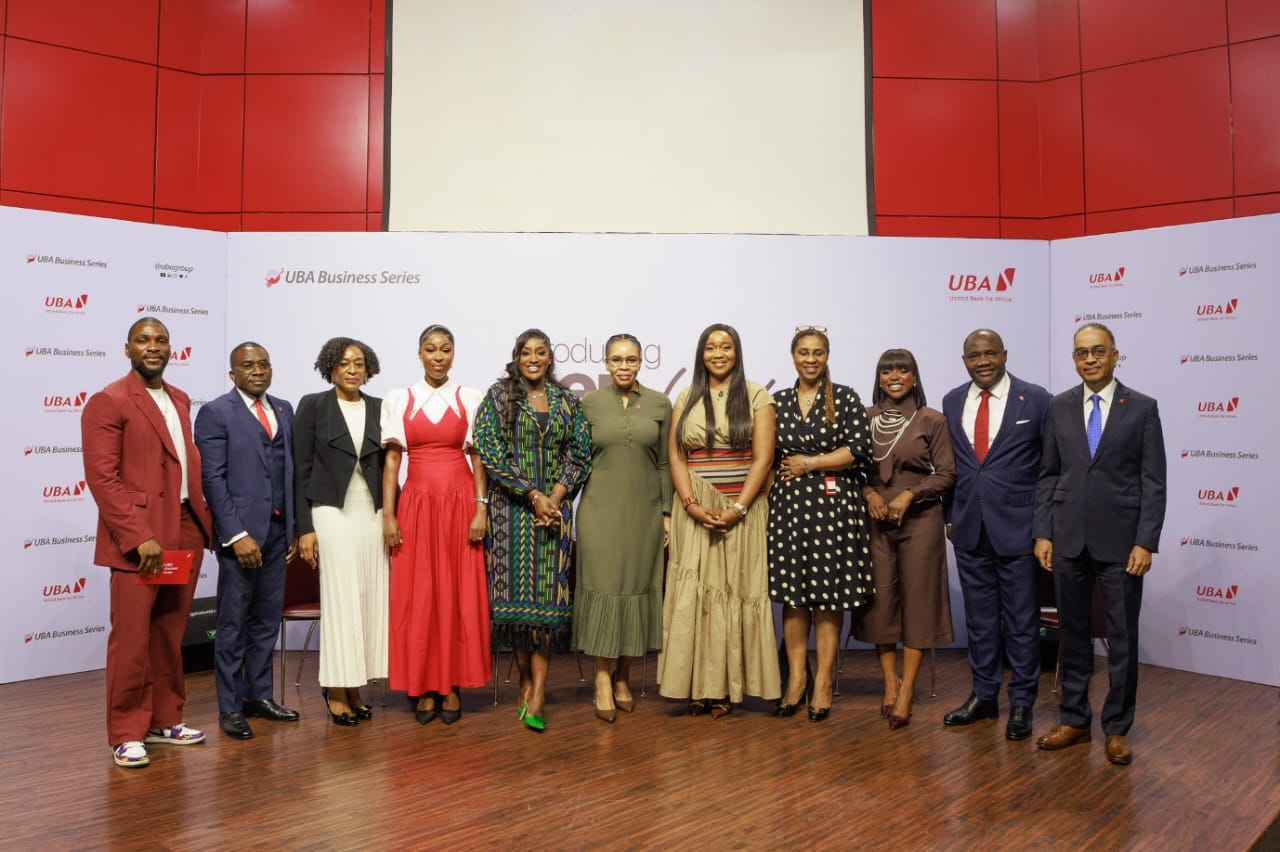
Africa’s Global Bank, United Bank for Africa (UBA) Plc, on Thursday, hosted a captivating edition of its quarterly Business Series, bringing together accomplished female leaders and entrepreneurs to discuss the theme “Gen.W: The Evolved Woman.”

The hybrid session which was held at the UBA House in Marina Lagos and also transmitted live to participants across the globe, is part of activities to mark the International Women’s Month and focused on the evolving role of women in leadership, business, and innovation, highlighting how African women are redefining success while also creating sustainable impact across their various spheres of operation.

UBA’s Group Head, Customer Experience, Michelle Nwoga, who gave the opening remarks at the event, explained that the evolved woman is one who is taking charge, volunteering and making their voice heard above the noise.

The event was moderated by popular media personality and actor, Tobi Bakre; who said, “When I think about the evolved woman, I personally do not see a checklist or a finish point. In my own opinion, it is a woman who is grounded in her own self-worth and gives room for other women to be grounded in theirs, choosing herself daily and ultimately letting other women around her know and believe that they belong here too.”

The event featured panel conversations with leading entrepreneur and founder of ORÍKÌ Group, Joycee Awosika; celebrated media personality and digital entrepreneur Tomike Adeoye; founder of Fine-Funky, Olufunke Davies, and award-winning broadcaster, Ayo Mario-Ese who shared experiences around their struggles and eventual evolution as female business owners.

From her point of view, Joycee Awosika, an energy economist who has been focused on promoting the African heritage, the evolved woman is one who has awareness of who she is. “That woman does not need to ask to sit at the table, she is creating her own table and adding value. As your company is growing, you must grow too, and always do an audit of where you need to become a better leader” she stated.

To Tomike Adeoye, the question of what a woman is bringing to the table has now become obsolete, as the evolved woman is now bringing their own table. “She is now more vocal about their struggles, setting the standards and she is not ready to give up on her dreams,” she added.

Ayo Mario-Ese expressed worry about females who are usually laidback about speaking up and sharing their achievements, and said that women need to own their own stories: “A lot of women are doing phenomenal work and are sometimes afraid of showcasing what they are doing. As an evolved woman, you have to find out what you are comfortable doing, and create your own unique offering, and also be open to collaboration.”

“Creating unique designs that are affordable remains my driving force and something that has helped me grow as an evolved woman,” remarked Olufunke Davies, who confessed to having ventured into a lot of businesses before finding her niche. “It is important to do your research, streamline and think about relatability. But the important thing I will say is start where you are as it is a progression.”

The Group Head, Brand, Marketing and Corporate Communications, Alero Ladipo, who commended the panellists and the attendees for taking their time to join the event said, “Raising each woman up is actually not that hard; because, everyone has their community as well as their story; and so as women, we need to take position so that you can give to others.”

Ladipo took time to speak about the Gen W platform, put together by the bank, as she explained that it is a lifestyle platform dedicated to the evolved woman, adding, “Through expert insights, real stories, and practical resources, the platform connects women who are building brands, creating businesses, growing careers, and leading across industries. They also have access to a plethora of discounted products and loans. The best part: it is open to every woman. No UBA account needed. This is Gen W, for the evolved woman,” she said.

UBA continues to reaffirm its commitment to empowering women and entrepreneurs through platforms such as the Business Series, which continues to serve as a hub for mentorship, knowledge exchange, and thought leadership. By convening influential voices and sharing practical experiences, the bank aims to inspire a new generation of women leaders and innovators across Africa and beyond.

Continue Reading

Featured

Court Bars Aiyedatiwa from Contesting 2028 Guber Election

Published

on

By

The Federal High Court sitting in Akure, Ondo State, on Thursday ruled that Governor Lucky Aiyedatiwa of Ondo State cannot contest the 2028 governorship election, holding that doing so would violate the constitutional limit of eight years in office.

Delivering judgement, Justice Adegoke held that Aiyedatiwa, who first assumed office on 27 December 2023 following the death of former Governor Rotimi Akeredolu, and was later sworn in again on 24 February 2025 after winning the 16 November 2024 governorship election, cannot seek another term in 2028.

The court ruled that the 1999 Constitution (as amended) does not permit a president or governor to remain in office for more than eight years, relying on the Supreme Court’s decision in Marwa v. Nyako to support its position.

Justice Adegoke further held that the suit was neither speculative nor academic, stressing that the court has the inherent authority to interpret provisions of the Constitution and ensure strict compliance with them.

The case was filed by a member of the All Progressives Congress (APC), Dr Akin Egbuwalo, through his counsel, Chief Adeniyi Akintola (SAN), seeking interpretation of Section 137(3) of the 1999 Constitution as it relates to Aiyedatiwa’s tenure.

The section, along with Section 182(3), provides that a person sworn in to complete the term of another elected official can only contest and serve one additional term.

Egbuwalo argued that since Aiyedatiwa had taken two oaths of office—first as successor to the late Governor Akeredolu and later as an elected governor—the Constitution limits him to only one additional term.

Those listed as defendants in the suit include the Independent National Electoral Commission (INEC), the Attorney-General of the Federation and Minister of Justice, Governor Aiyedatiwa, the APC, and the Deputy Governor, Dr. Olayide Adelami.

Justice Adegoke noted in her ruling that the third to fifth defendants failed to participate in the hearing of the case, and their processes were therefore deemed abandoned.

The court held that, “If the third defendant is allowed to contest and serve another four years, that will be against the position of the law in Marwa v. Nyako, where the Supreme Court held that a president or governor cannot serve beyond eight years.”

Consequently, the court considered only the submissions of the plaintiff and the first and second defendants.

She concluded that allowing Aiyedatiwa to contest again and potentially serve another four years would contradict the Supreme Court’s position that no president or governor can remain in office for more than eight years.

The court subsequently upheld the arguments of the plaintiff and granted all the reliefs sought in the suit.

Continue Reading

Trending