
Featured
International Holocaust Memorial Day: Tales from the Land of a Thousand Hills


By Dolapo Aina
If you save a life; you save the whole world – a Jewish saying
Kigali, Rwanda.
The International Holocaust Memorial Day is a unique day and in the year 2020; the day fell on a Monday. Events had already kicked off a week earlier with a commemoration event with over fifty world leaders, Presidents, Kings and Queens, Princes and Princesses gathered in Israel. And a conference organised by Moshe Kantor (an international public figure, President of European Jewish Congress and the founder of World Holocaust Forum).
Some days later, Monday, 27th of January 2020 to be precise, events were held globally to commemorate The International Holocaust Memorial Day. A day set aside to remember and reflect and share the stories of the trails, tribulations Jews went through during World War Two and the liberation of Auschwitz by Russian soldiers. To be precise, the date is remembered as the day Russian troops liberated the few survivors who remained at Auschwitz in Poland in 1945. The Holocaust was a Nazi attempt to rid the world of Jews. As BBC’s Tim Franks puts it; it was a methodical and industrial Genocide.
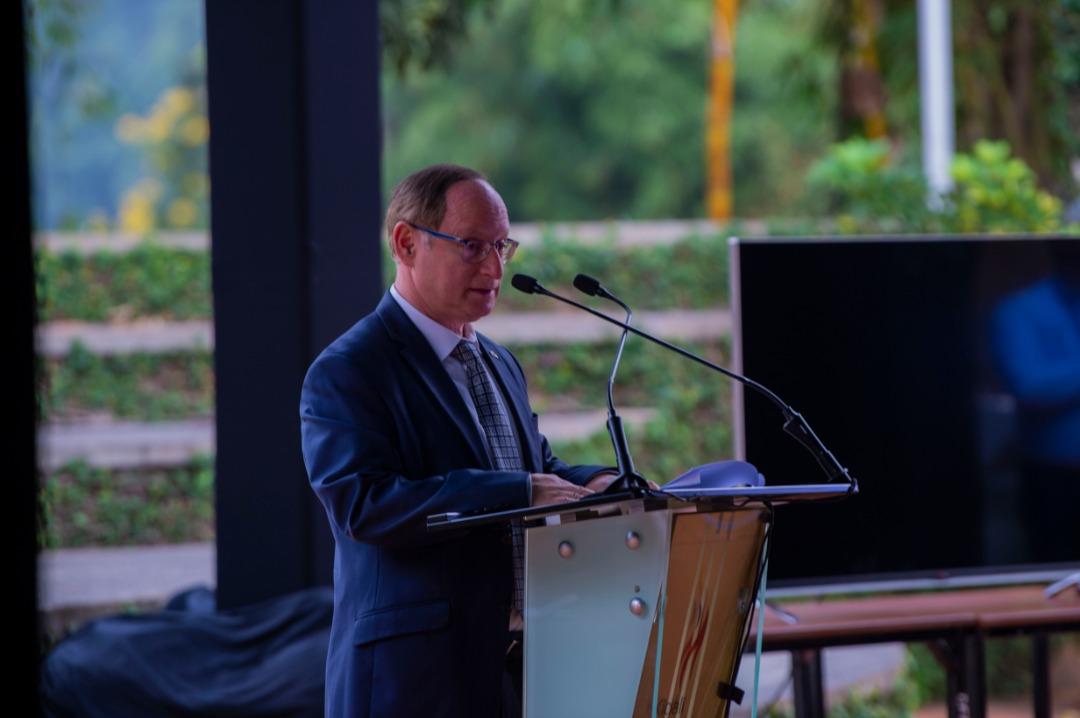
The event commemorated in Rwanda for the first time (a country which experienced one of the world’s worst genocide: The Genocide Against The Tutsi) by the Embassy of Israel. The Ambassador of Israel to Rwanda (Dr Ron Adam) who as a diplomat at the UN was behind the adoption by the United Nations of January 27th as the International Holocaust Memorial Day and the International Commemoration Day. This commemoration held at the Kigali Genocide Memorial (a place that rests circa 250,000 victims of the 1994 Genocide Against The Tutsi). What awaited this writer was not envisioned and unlike the motto for the Boys Scouts; Be Prepared; I wasn’t prepared for the intense tales at the ceremony and the remembrance-laced speeches of the speakers like Umutoniwase Blandine who recited her Poem: Why Remember? Belgian author, Michel Kichka; UN Rwanda Resident Coordinator Fode Ndiaye; Chaya Singer representing the World Jewish Congress; Rwanda’s Minister of Youth and Culture, Mrs Rosemary Mbabazi; Ambassador of Germany in Rwanda, Dr Thomas Kuvz; Ambassador of Israel in Rwanda, Dr Ron Adam. Whilst Rabbi of Rwanda, Haim Bar Sella led the prayer session. And the short stories by Mr David Frankel (who survived Holocaust).
The Holocaust stories were heart-breaking to listen to but at this juncture for those who don’t have an understanding of what The Holocaust is about. The Auschwitz website reveals that the Auschwitz concentration camp was a complex of over forty concentration and extermination camps operated by Nazi Germany in occupied Poland during World War II and the Holocaust. It consisted of Auschwitz I, the main camp (Stammlager) in Oswiecim; Auschwitz 2–Birkenau, a concentration and extermination camp built with several gas chambers; Auschwitz 3–Monowitz, a labour camp created to staff a factory for the chemical conglomerate IG Farben; and dozens of subcamps. The camps became a major site of the Nazis’ Final Solution to the Jewish Question.

Still from the Auschwitz’s website; after Germany invaded Poland in September 1939, sparking World War II, the Schutzstaffel (paramilitary organisation) converted Auschwitz I, an army barracks, into a prisoner-of-war camp for Polish political prisoners. The first gassings of Soviet and Polish prisoners took place in block 11 of Auschwitz I around August 1941. Construction of Auschwitz II began the following month, and from 1942 until late 1944 freight trains delivered Jews from all over German-occupied Europe to its gas chambers.
Now, the statistics are mindboggling. One million three hundred thousand people sent to Auschwitz and one million one hundred thousand died. Breaking down the figures; the death toll includes 960,000 Jews (865,000 of whom were gassed on arrival). 74,000 non-Jewish Poles, 21,000 Roma, 15,000 Soviet prisoners of war, and up to 15,000 other Europeans.[5] Those not gassed died of starvation, exhaustion, disease, individual executions, or beatings. Others were killed during medical experiments. At least 802 prisoners tried to escape and 144 successfully.
As the Soviet Red Army approached Auschwitz in January 1945, toward the end of the war, the SS sent most of the camp’s population west on a death march to camps inside Germany and Austria. Soviet troops entered the camp on 27 January 1945, a day commemorated since 2005 as International Holocaust Remembrance Day.
According to the website; just a few months after the end of the war a group of Polish survivors began to proselytise about the concept of commemorating the victims of Auschwitz. As soon as it was possible, some of them came to the former camp to protect its buildings and ruins. Their efforts resulted in setting up the so-called Permanent Former Auschwitz Camp Security and took care of thousands of people who started arriving in large numbers to search for traces of their relatives and to pay tribute to the victims.
And before the Museum was officially established, former prisoners prepared the first exhibition on the camp site, opened on 14 June 1947. The opening ceremony was attended by approximately 50 thousand people, including survivors, relatives of the murdered, people from all over Poland and delegated Polish state authorities, as well as representatives from the Central Commission for Investigation of German Crimes, the Central Jewish History Commission, and delegates of the British, Czechoslovakian and French embassies.
For several decades the former camp was visited annually by circa 500-600 thousand people; from the beginning of the 21st century that number began to grow. More than a million people from all over the world visit the Museum annually since 2007 and more than 44 million people from all over the world have visited Auschwitz since 1945 and the highest number of visitors was registered in 2019, when 2,32 million people visited Auschwitz.
Back to the stories told by some of the speakers at the event at the Kigali Genocide Memorial; the Belgian author and cartoonist Michel Kichka stated that while growing up, his father was a silent survivor just like the majority of Holocaust survivors and his father was convinced his silence would protect his children. But he only began to speak out after Michel Kichka’s brother committed suicide in 1988 and on the day of the funeral of his brother. He began to talk about his personal tragedy of the Holocaust and he has been talking ever since. Michel Kichka made a profound statement when he said ’truth doesn’t kill’. The stories of Michel Kichka’s families’ travails would leave any listener silent.
During his speech; the Israeli Ambassador to Rwanda, Ambassador Ron Adam stated that the day was a special day for him. He further stated that ‘as a son of Holocaust survivors, this day brings the memory of my mother, Eve Frankel. As a 9-years-old child she went through horrific events which changed her life.’
I’ve read some books on World War Two and The Holocaust and I’ve heard of stories from children and grandchildren (some who are friends in Nigeria and Rwanda) of victims of The Holocaust. But until Monday, the 27th of January 2020; I had not met or heard directly from a survivor of The Holocaust. That changed. It is a totally different thing to listen to a survivor of The Holocaust. Mr David Frankel who is eighty-four years old is a Holocaust survivor and he spoke for some minutes. His moving tales of what he went through and what family members (two girls who lived in a forest for almost two years and only survived eating leaves and tree branches. No one knew they were alive till several years later) went through were so vivid like it happened a week ago and not 75 years ago. He commenced by taking those in attendance back to Budapest, Hungary. 19th March 1944. And one profound statement he made was ‘if I’ve to see my grandparents, I’ve to go to Auschwitz.’

After the event and after discussing with Mr David Frankel, Mr Michel Kichka; Ms Chaya Singer and others present; one had a better understanding of why states like Israel and Rwanda have to keep on commemorating and remembering their tribulations; in essence, so that history isn’t denied or edited. And most especially, so that such despicable cruelty (industrialised Genocide) doesn’t take place again. For as Ambassador Ron Adam stated and I paraphrase ‘if the history of The Holocaust had been taught; the world won’t have allowed the Genocide against The Tutsi in 1994.’
That evening with the thoughts of what I heard from children, grandchildren and a survivor of The Holocaust racing through my mind as I ruminated; a BBC World Service special report on the commemoration aired. The BBC Europe correspondent Kevin Connolly who was present at the commemoration at Auschwitz stated that The Holocaust and Auschwitz were terrible chapters of human history that happened in living memory.
A Holocaust survivor (Bath-Sheba Dagan; born in 1925) narrated a story of how new inmates always asked ‘where the world leaders were as the atrocities took place in their hour of need?’ And she said to those at the ceremony ‘where was everybody, where was the world who could see that; who could see that and did nothing to save all those thousands?’ According to the BBC European correspondent; Bath-Sheba lost her place in her notes and spoke from memory. The report from Mr Connolly also mentioned other survivors of Auschwitz; like Mrs Elza Baker (who was seven years old when she was in Auschwitz). Because she has sight challenges, she gave an initial speech and her prepared notes where read by a lady. She had gone through a lot of pain but was still concerned about Bath-Sheba’s story. So much so that as she spoke in English (since she has lived in the UK for sixty years), you could hear her upset as she gathered her words. Another Auschwitz survivor Marian Turski gave a lucid speech and took the audience way back to Berlin in the 1930s of how everything began with little incidences of stigmatisation, alienation and exclusions of the Jews which became the norm for the victims, perpetrators, witnesses and bystanders. He had to say this because of a comment (Auschwitz didn’t fall from the skies) by the President of Austria when both of them met some years ago. He then gave a personal experience of a trip to America in the early sixties on a scholarship. During a civil rights match with Martin Luther King and others; when people knew that he was at Auschwitz; they asked him if what happened there can happen again. He said, it can happen anywhere; it can happen when the civil rights are broken; when people do not obey the laws of minorities. And he stated that only you can ensure the rights of minorities aren’t trampled on.
I had to watch the ceremony via Youtube to get a sense and better understanding of how the ceremony on Monday, the 27th of January 2020 went. And watching the images of the commemoration at Auschwitz and the survivors; it was and still is a lesson from history; as one heard of how old people were put in the gas chambers; of how human beings were recycled. All vivid descriptions, vivid memories and clarity. One of the features of The Holocaust and other Genocides is that of prolonged silence and in some cases; unwillingness to speak by the victims. On the issue of silence, a particular elderly lady (Anita Lasker-Wallfisch; a famous cellist and publisher of three books (educated at Cambridge University); who was born July 17, 1925 and is 94 years. And who is a surviving member of the Women’s Orchestra in Auschwitz) interviewed for BBC The Documentary stated that ‘as a survivor, you feel a sense of responsibility and obligation to be the voice for those who cannot talk anymore.’
There are several moral lessons from the 27th of January commemoration of The Holocaust which was basically an industrialised Genocide. One Jewish quote encapsulates it all; if you save a life; you save the whole world.
Photo Credit: Embassy of Israel in Rwanda


By Ruth Akpan
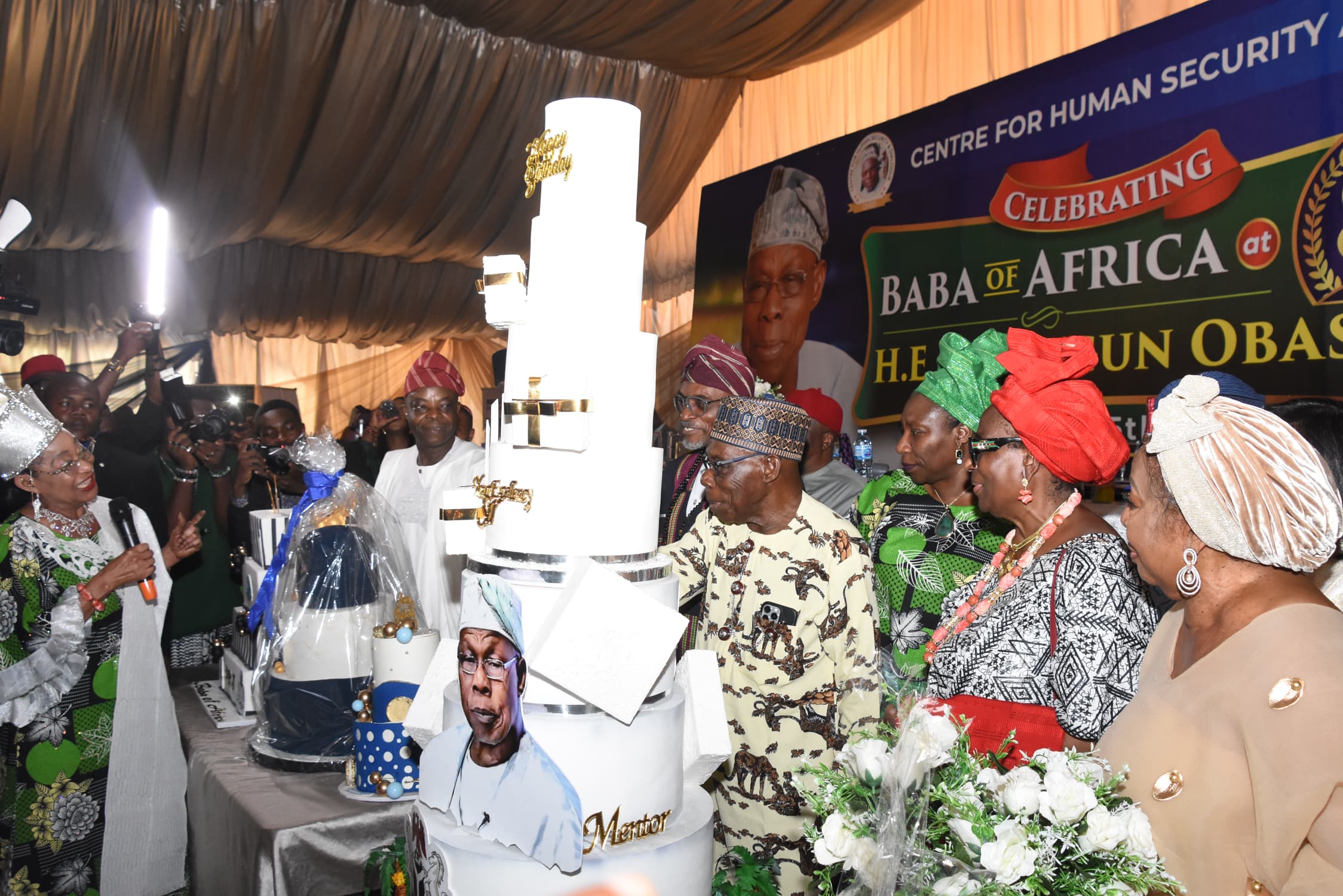
The historic city of Abeokuta, the capital of Ogun State, played host to an extraordinary gathering of statesmen, diplomats, scholars, traditional rulers and business leaders, who converged at the iconic Olusegun Obasanjo Presidential Library to celebrate the 89th birthday of Nigeria’s former President and globally respected elder statesman, Chief Olusegun Obasanjo.

The remarkable occasion, marked by a high-profile commemorative lecture, transcended the boundaries of a mere birthday celebration. Instead, it blossomed into a national intellectual convocation reflecting the towering stature of the former Nigerian leader whose enduring influence continues to shape political thought, diplomacy, and continental discourse across Africa and beyond.
The atmosphere at the majestic venue was one of intellectual engagement and dignified celebration as eminent personalities gathered to honour the remarkable life and enduring legacy of Olusegun Obasanjo. Gracefully by his side throughout the memorable gathering was his wife, Mrs. Bola Obasanjo, while members of the Obasanjo family, led by his daughter Iyabo Obasanjo, joined well-wishers in celebrating the patriarch whose decades of service have left an indelible mark on Nigeria and the African continent.

Organised by the Centre for Human Security and Dialogue, the event featured a distinguished lecture titled “The Global Africa Enlightenment: From Chains to Renaissance,” a thought-provoking theme that resonated profoundly with Africa’s historical journey—from centuries of enslavement and colonial subjugation to a future defined by unity, knowledge, and purposeful leadership.
The lecture provided a powerful moment of reflection on Africa’s past struggles while inspiring renewed commitment toward building societies anchored in justice, innovation, and institutional strength. The discourse also emphasized that Africa’s progress ultimately depends on strengthening democratic institutions, nurturing visionary leadership, and cultivating societies that uphold fairness, creativity, and collective advancement.


In his keynote address on the lecture’s theme, His Excellency Jean-Robert Pillard, Haitian Ambassador Extraordinary and Plenipotentiary to the Republic of South Africa, observed that history binds people together while culture reminds humanity of its shared identity. He noted that culture should not be viewed merely as nostalgic memory but as compelling evidence that the separation among African peoples was largely political rather than spiritual.
According to the ambassador, the concept of the Global Africa Enlightenment is not a newly invented philosophy but rather a reunion of peoples who share common ancestry, history, and heritage. While history preserves memory, he stressed, destiny demands action.
He further noted that the call for a Global Africa Enlightenment by Olusegun Obasanjo represents far more than poetic expression; rather, it is a clear policy direction and intellectual blueprint for the renewal and revitalisation of African civilisation.


The intellectual depth of the gathering was further enriched by scholarly responses delivered by Professor Oyedunni Arulogun, Vice-Chancellor of Chrisland University, and Professor Eyitope Ogunbodede, former Vice-Chancellor of Obafemi Awolowo University, Ile-Ife. Their reflections expanded on the lecture’s themes, examining Africa’s role in global intellectual discourse and the imperative for visionary leadership, innovation, and education.
Additional contributions came from student representative Rehinat Ololude, the Alake and Paramount Ruler of Egbaland, Oba Adedotun Aremu Gbadebo, and Dr. Eke Agbai, whose remarks added intergenerational perspectives to the profound discussions of the day.

One of the significant highlights of the event was the presentation of two scholarly works authored by the celebrant himself. With characteristic intellectual passion, Chief Obasanjo formally presented his books titled “Lest We Forget: Slavery, Slave Trade, Emancipation, and Reparation” and “Nigeria: Past and the Future.”
The books, which delve into the complex historical realities of slavery and Africa’s political evolution, reflect Obasanjo’s enduring commitment to documenting history while offering profound insights into Nigeria’s developmental trajectory and the continent’s future. 

In a stirring tribute, the Governor of Ogun State, Prince Dapo Abiodun described the celebrant as “an enduring study in leadership,” noting that his influence extends far beyond Nigeria to the wider African and international community. Reflecting on Obasanjo’s remarkable diplomatic engagements, the governor highlighted his numerous interventions in regional conflicts, particularly in countries such as Liberia, Ethiopia, and the Democratic Republic of the Congo, where he served as mediator and peace envoy.
“Beyond Nigeria, Baba, your influence has extended across Africa and the wider international community, particularly in the area of conflict resolution and diplomacy.

“Through the African Union, the United Nations, and various global initiatives, you have consistently promoted dialogue as a pathway to peace and stability.”
Governor Abiodun further emphasised the importance of studying exemplary leaders such as Obasanjo, especially for younger generations across Africa.
“Young Africans must study figures like Baba, not merely to celebrate their achievements but to understand the principles that guide their decisions. They must learn how leadership, when driven by purpose and service, can influence the direction of a nation and even a continent,” he added.
The governor also reflected on Obasanjo’s historical role as Nigeria’s military Head of State, recalling how the nation firmly opposed apartheid and colonial rule under his leadership. According to him, Obasanjo strongly believed that the freedom of one African nation was intrinsically linked to the freedom of all African peoples.
Goodwill messages also poured in from across Nigeria and the international community.
Former President Goodluck Jonathan and President of the African Development Bank, Akinwumi Adesina sent congratulatory messages praising Obasanjo as an “apostle of peace” whose commitment to dialogue and stability has helped shape Africa’s diplomatic landscape.
The ceremonial cutting of the beautiful birthday cake was coordinated by respected business leader and former minister, Nike Akande as the celebrant, flanked by family members and friends marked the joyous moment.
Also present at the occasion were the Governor of Ogun State, Prince Dapo Abiodun, Deputy Governor of Ogun State, Noimot Salako-Oyedele, members of the Ogun State Executive Council, former Governors of Ogun State Gbenga Daniel and Ibikunle Amosun, former Governor of Osun State, Olagunsoye Oyinlola, former Governor of Kano State, Rabiu Musa Kwankwaso, renowned political economist Pat Utomi and former presidential candidate Peter Obi.
Adding regal splendour to the occasion was the presence of eminent traditional rulers including the Olubadan of Ibadanland, His Imperial Majesty Rasidi Adewolu Ladoja; the Alake of Egbaland, Oba Adedotun Aremu Gbadebo; and the Olowu of Owu Kingdom, His Royal Majesty Saka Adelola Matemilola.
Following the intellectually stimulating lecture, guests proceeded to a lavish reception held at the OOPL Marquee where the atmosphere transformed into one of celebration, camaraderie and conviviality.
Serving as Chairman of the occasion, the former Governor of Osun State, Olagunsoye Oyinlola delivered warm and reflective opening remarks that set the tone for the event, describing Chief Obasanjo as a visionary leader whose contributions to Nigeria, Africa, and the global community remain immeasurable.
Equally moving was the glowing tribute delivered by Erelu Abiola Dosunmu, who paid heartfelt homage to the celebrant, describing him as a courageous leader, visionary statesman, and tireless advocate for peace and African unity.
The event was attended by distinguished personalities including former Commonwealth Secretary-General Emeka Anyaoku; the elegant society matriarch, Erelu Abiola Dosunmu; respected entrepreneur and founder of Chisco Motors, Chidi Anyaegbu; and the ever-gracious former senator Florence Ita‑Giwa, among numerous other eminent personalities.
The evening was enlivened by captivating musical entertainment from legendary juju maestro Ebenezer Obey, whose timeless melodies filled the air with nostalgia and elegance.




Dangote Slashes Fuel Price by N100 As Global Crude Slumps

Tenure Policy: India, Others Reject Tinubu’s Ambassadors

Gumi: Timi Frank Urges Trump to Halt Security Cooperation with Nigeria

Business Series: UBA to Spotlight Africa’s New Generation of Female Leaders

Adenuga, Dangote, Otedola, Rabiu Make 2026 Forbes Africa Billionaires List

Former Super Eagles Coach, Festus Onigbinde is Dead

Appeal Court Upholds Sacking of Turaki-led PDP Executive

International Women’s Day: The Boss Celebrates 100 Influential Nigerian Women

Iran Confuses Israel As Missile Splits into Multiple Warheads in Tel Aviv
Presidency Releases Postings of Ambassadors-designate

Israeli Ambassador Accuses Iran of Spreading Terror, Sponsoring Extremist Activities in Nigeria

The Oracle: The New Digital Colonialism: Navigating AI Policy Under Foreign Tech Dominance (Pt. 1)

The Scars of Glory and the Burden of Leadership!

Class, Glamour As Global Statesman, Chief Olusegun Obasanjo Celebrates 89th Birthday
-
 Boss Picks3 days ago
International Women’s Day: The Boss Celebrates 100 Influential Nigerian Women
-
 Middle East3 days ago
Iran Confuses Israel As Missile Splits into Multiple Warheads in Tel Aviv
-
 Featured6 days ago
Presidency Releases Postings of Ambassadors-designate
-
 Headline6 days ago
Israeli Ambassador Accuses Iran of Spreading Terror, Sponsoring Extremist Activities in Nigeria
-
 The Oracle6 days ago
The Oracle: The New Digital Colonialism: Navigating AI Policy Under Foreign Tech Dominance (Pt. 1)
-
 Opinion4 days ago
The Scars of Glory and the Burden of Leadership!
-
 Featured5 days ago
Class, Glamour As Global Statesman, Chief Olusegun Obasanjo Celebrates 89th Birthday
-

 Voice of Emancipation3 days ago
Voice of Emancipation: Yoruba Sovereignty is Inevitable