By Eric Elezuo
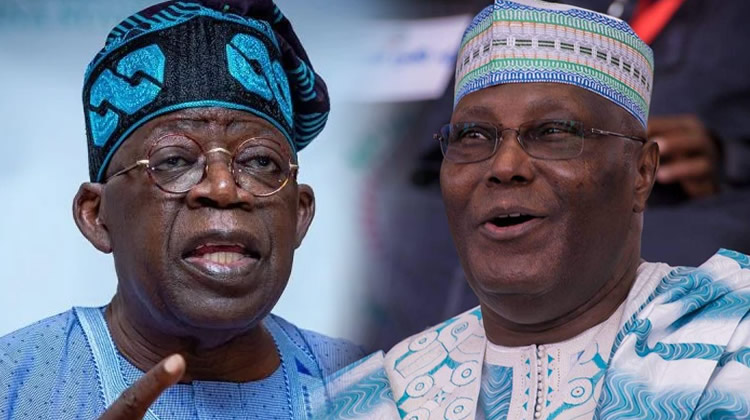
True to political permutations, the National Convention of the opposition African Democratic Congress (ADC) amid Independent National Electoral Commission (INEC) derecognition and leadership litigation, set a chain reaction in the political space, including a former Vice President and one of the leaders of the ADC, Alhaji Atiku Abubakar, berating President Bola Tinubu as lacking a good knowledge of history.
Against all odds, the party went ahead on April 14, to host a Convention, where over 3000 delegates attended, and where the leadership of Senator David Mark and Ogbeni Rauf Aregbesola as National Chairman and National Secretary respectively were ratified.
Since the April 14 event, the ruling All Progressives Congress (APC) has reacted in a manner political stakeholders and analysts categorized as panicky with statements from the presidency, and President Bola Tinubu himself. Though these responses were tagged correctional of ill-made utterances by ADC chieftains, observers have however said they portray comments by a team faced with an ultimately new challenge.
At the convention, the secretary of the ADC, Aregbesola, had dismissed Tinubu’s administration and his renewed hope policy as a scam. He lambasted the administration as a government of “scammers”, urging Nigerians to block it from retaining power in 2027.
“If allowed, this regime will continue to chant renewed hope till eternity. We have a duty to stop these scammers from retaining power,” Aregbesola said.
The former vice president followed up the convention statements, accusing Tinubu’s presidency of attempting to subvert democratic principles and silence opposition voices ahead of the 2027 elections, a position that further set the ruling party on edge, eliciting tons of reactions.
Beyond Presidential spokesman, Bayo Onanuga’s criticism of Aregbesola for failing to reflect on his own record before attacking his “former boss and benefactor”, Tinubu himself made remarks against the person’s of the leaders of the ADC and their convention, calling it ‘street convention’.
“Unfortunately, Aregbesola did not undertake any honest self-reflection on his own record in public office — as governor or as Minister of Interior,” Onanuga stated in his statement.
He alleged that Aregbesola’s tenure as governor of Osun State was marked by hardship and poor economic management.
“His eight years as governor of Osun State were characterised by unmitigated hardship for the people. Under his half-baked socialist policies, civil servants went unpaid for months, and those who were paid received only a fraction of their salaries,” Onanuga said.
Tinubu, on his part, while hosting the Hope Renewal Ambassadors, took a swipe at some opposition figures, especially Atiku, ridiculing and questioning their records for criticising his administration, and saying that many of them have held strategic positions in the past without delivering lasting results.
He boldly retorted that “If you look at one of them, no one without history among them – no one without history. The head was the chairman of the privatisation council of Nigeria in this country one time.
“He privatised the steel industry in Delta. Is it working today? No. Is anything they privatised working today? They want to privatise another man’s political party. That one says no.”
Responding therefore, the former Vice President launched a fierce counterattack on Tinubu, accusing him of hypocrisy, historical distortion, and political desperation.
In a statement issued by his Senior Special Assistant on Public Communication, Phrank Shaibu, Atiku described the President’s remarks as a “reckless tirade” that reflects “a troubling pattern of hypocrisy and historical amnesia.”
The statement began with “Atiku Abubakar’s attention has been drawn to the latest reckless tirade by President Bola Ahmed Tinubu—a performance that exposes not just desperation, but a troubling pattern of hypocrisy and historical amnesia.”
Atiku expressed surprise that a leader facing persistent scrutiny over his own credentials would attempt to discredit others with what he described as well-documented records of public service.
On the issue of privatisation, Atiku’s camp argued that Tinubu’s criticism does not stand up to scrutiny, noting that the President had previously opposed reforms he now appears to be implementing.
The statement maintained that Atiku had long advocated the privatisation of the Nigerian National Petroleum Corporation (NNPC) and the sale of refineries to credible private investors—a position it claimed Tinubu resisted at the time.
It, however, alleged that the current administration is now overseeing a system that has effectively commercialised the national oil company “without transparency, clear valuation, or accountability.”
“This is not reform; it is privatisation without accountability,” the statement said.
Defending Atiku’s economic legacy, the statement cited several companies as examples of the success of the privatisation programme he supervised, including Oando Plc (formerly Unipetrol), Conoil Plc, African Petroleum (now Ardova Plc), Indorama Eleme Petrochemicals, Benue Cement Company, and Transcorp Hilton Abuja.
The statement also took a swipe at the President’s intellectual posture, suggesting that his comments reflect a failure to engage with documented history on Nigeria’s economic reforms.
“It is not our fault that the President does not and cannot read,” the statement said, while also referencing past controversies surrounding Tinubu’s academic records.
It added that Tinubu’s remarks could only have been made in disregard of publicly available records and credible accounts of the privatisation process.
“You cannot oppose reform when it demands courage and then execute a shadow version of it in power,” the statement added.
Atiku’s camp further criticised the tone of the President’s remarks, arguing that resorting to mockery reflects a deeper leadership concern.
“The President’s attempt to reduce a serious economic legacy to ridicule underscores a leadership more comfortable with insults than with facts,” it stated.
The statement also highlighted the current economic situation in the country, pointing to rising cost of living, inflation, and insecurity as evidence of policy failure.
“Across the country, families are skipping meals, businesses are shutting down, and citizens are struggling under the weight of inflation and declining purchasing power. What has been presented as reform has translated into hardship without relief,” it said.
The statement concluded by asserting that Atiku’s record remains “clear, documented, and defensible,” while noting that unresolved public concerns about the President’s background persist.
“A leader who has not fully addressed questions about his own background should exercise restraint before casting aspersions on others,” it added.
The statement ended with a cautionary note: “Nigerians are watching.”
While the ADC is fighting for their life, and an opportunity to feature on the ballot during the 2027 general elections, and APC solidifying their grip on the political space, the atmosphere still exudes evidence of palpable tension. The APC maintains that they are on homerun to victory, ADC counters that nothing will save the ruling party from being defeated in the coming elections.
But as it stands today, both parties are locked in battle of wits recreating the tension and bad blood that was the hallmark of the 2015, and to a large extent, the 2023 elections.
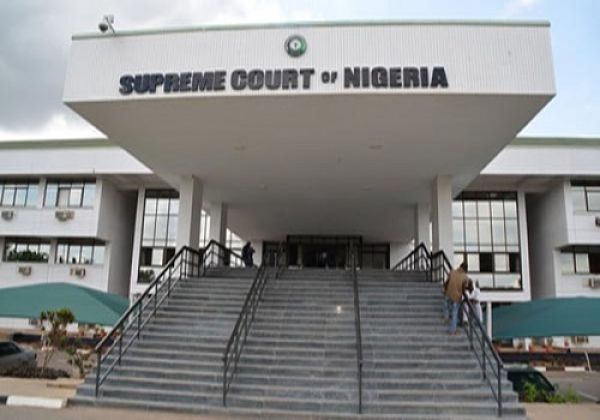
But on April 22, the Supreme Court will rule on the leadership of the ADC; this will set the motion to the credibility of the ADC to participate in the 2027 election.
But fears pervade the political terrain as Tinubu made veiled reference to the judiciary while mocking Atiku and other leaders of the ADC.
“We cannot submit to the disobedience of unlawful orders in court. We must embrace the judiciary, whether it favours us or it doesn’t, we submit to this principle of democracy, separation of powers and understanding of the dynamics of it and the nation that Nigeria is,” Tinubu had said, insinuating that the ADC had gone against the judiciary.
The coming week will determine in totality the direction the 2027 situation will take.










 Islam3 days ago