Connect with us

Opinion

2027: Why Nigeria Can’t Afford to Lose Atiku’s Experience and Expertise

Published

on

By Dr. Sani Sa’idu Baba

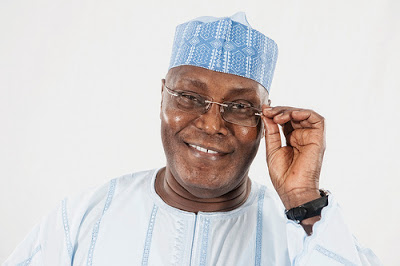
To be candid and straightforward, this article is written to sensitize Nigerians to the growing smear campaign against Atiku Abubakar, a campaign of calumny that appears less about national interest and more about political anxiety. The persistence and intensity of these attacks suggest one thing: there are powerful interests who see him not merely as a contender, but as a genuine threat. Yet, Nigerians are no longer easily distracted. The electorate is becoming more discerning, more interested in good governance.

Closely tied to this is the urgency of the 2027 presidential election. This is not just another electoral cycle, it may well represent a turning point in Nigeria’s history. Although Atiku Abubakar has confirmed 2027 to be his last presidential outing. That reality alone elevates the stakes. It presents Nigeria with a stark choice: to either harness a reservoir of experience at a critical moment or risk drifting further into uncertainty. In clear terms, 2027 is not just about political succession, it is about whether Nigeria recalibrates its direction or continues along a path of deepening national challenges.

The fundamental truth is that, experience and effective leadership are positively correlated, independent of age. Leadership in a complex state like Nigeria requires far more than youthful enthusiasm. It demands institutional memory, policy depth, negotiation skills, and the ability to manage crises with precision. It is therefore misguided to reduce leadership capability to age alone. Age neither guarantees competence nor invalidates it. Across the world, both young and elderly leaders have failed when they lacked the depth of experience required for governance. In Nigeria itself, recent experience with president Tinubu shows that leadership failure cannot be attributed to age alone. This underscores a critical point: the true dividing line between success and failure in leadership is not age, it is experience, particularly practical and relevant experience, which is too often overlooked.

Global political trends reinforce this reality. In the United States, voters returned Donald Trump to power over Kamala Harris, reflecting a preference for perceived experience over age. Figures such as Bernie Sanders remain influential well into their later years, shaping national discourse. Similarly, in Brazil, Luiz Inacio Lula da Silva was elected again at an advanced age because voters trusted his tested capacity to lead during difficult times. A similar pattern recently played out in West Africa. In Liberia, the younger incumbent George Weah was defeated by the significantly older Joseph Boakai. That outcome was widely interpreted as a preference by Liberians for experience and not youthful appeal. These examples are not coincidences. They illustrate a consistent global pattern that when nations face uncertainty, they turn to experience. Nigeria must not waste the experience of Atiku Abubakar like it happened with remarkable figures like Obafemi Awolowo, Chief MKO Abiola and Malam Aminu Kano in the past.

Beyond the question of age lies another critical issue: political strategy. The debate over who should carry the opposition banner in 2027 must be guided by political reality. Nigeria’s recent history makes this abundantly clear. When Goodluck Jonathan sought re-election, the opposition were less influenced by sentiment. Instead, they made a strategic calculation, searching for a candidate with national reach and electoral strength, an idea that birthed Muhammadu Buhari as the opposition candidate, despite his previous electoral defeats.

It is therefore difficult to sustain the argument that Atiku Abubakar should be excluded on the basis that he has contested before. By that same reasoning, Buhari would never have emerged as a viable candidate. Political persistence is not a weakness; it is often a reflection of conviction, resilience, and determination. Elections are not won by novelty alone, they are won by structure, experience, and the ability to connect with a broad electorate.

Equally unconvincing is the argument that 2027 should be determined by zoning or that it is “still the turn of the South.” If the opposition is serious about unseating president Tinubu, it must prioritize a candidate with the experience, national appeal, and political structure required to achieve that goal. Atiku Abubakar is therefore the “asset” of the today. His eight years as Vice President under Olusegun Obasanjo provided him with deep exposure to governance, economic reform, and institutional development. Beyond public office, he is widely recognized as a seasoned politician and an established businessman with independent wealth, an important factor in a political environment often clouded by concerns about misuse of public resources.

Interestingly, it’s increasingly clear that Nigerians are moving beyond superficial narratives. The electorate is more focused on outcomes, on who can stabilize the economy, strengthen institutions, and restore confidence in governance. The conversation is shifting from age to ability, from rhetoric to results.

As 2027 approaches, the choice before Nigeria is becoming clearer. This is not a contest of personalities or a debate about generational symbolism. It is a question of capacity, preparedness, and national survival. History, both global and local, points in one direction: when experience is sidelined, nations pay the price.

Nigeria cannot afford that mistake again…

Dr. Sani Sa’idu Baba writes from Kano, and can be reached via drssbaba@yahoo.com

Continue Reading
Click to comment

Leave a Reply

Your email address will not be published. Required fields are marked *

Opinion

Beyond the Present Impasse: Five-Pillar Strategy for Restoring Credibility of ECOWAS

Published

on

By

By Tolulope A. Adegoke PhD

PREAMBLE: THE STRATEGIC MOMENT AND ITS IMPERATIVES

The Economic Community of West African States confronts a moment of institutional reckoning without precedent in its fifty-year history. The confluence of democratic recession, the fracturing of regional solidarity, the commodification of the Community’s security space by external actors, and the erosion of popular faith in the tangible benefits of integration has converged to pose a systemic threat to the organization’s foundational relevance. The established toolkit of declaratory diplomacy, automatic suspension, and sanctions escalation has demonstrably exhausted its capacity to compel compliance or to stabilize the regional order.

The way forward, therefore, cannot be a mere intensification of existing methods. It must be a strategic recalibration of ECOWAS’s institutional posture, operational doctrines, and normative architecture. The objective is not the preservation of institutional prestige for its own sake, but the patient, principled, and incentivized reconstruction of a regional political community in which sovereign member states and their citizens perceive membership as a demonstrable enhancement of their national security, economic prosperity, and democratic legitimacy. The following roadmap articulates a sequenced, non-biased, and operationally concrete way forward, structured across five interdependent strategic lines of effort.

STRATEGIC LINE OF EFFORT I: RECALIBRATE THE NORMATIVE FOUNDATION OF THE COMMUNITY

The prevailing perception that the ECOWAS normative framework on democratic governance is applied with selectivity—penalizing military seizures of power while remaining diplomatically passive in the face of civilian constitutional manipulation—has inflicted severe damage on the institution’s moral authority. Rectifying this asymmetry is an indispensable precondition for the restoration of credible institutional leadership.


Action 1.1: Convene an Extraordinary Authority Summit Dedicated Exclusively to Normative Self-Correction

The Chair of the Authority must convene, within a non-extendable 90-day period, an Extraordinary Summit with a single, undiluted agenda item: the critical review and amendment of the 2001 Protocol on Democracy and Good Governance. This Summit must not be subsumed within a broader agenda of security or economic matters. Its singular focus signals institutional seriousness and prevents diplomatic evasion.

Action 1.2: Codify and Adopt a Binding Symmetrical Sanctions Regime

The Summit must adopt a formal Supplementary Protocol that introduces, with legally binding precision, a definition of the “Constitutional Coup” or “Incumbent Entrenchment.” This shall be defined as any action by a sitting elected executive, whether through legislative manipulation, compliant judicial ruling, or tailored constitutional referendum, that modifies the fundamental law of the state for the primary purpose of abrogating or eliminating established presidential term limits in order to extend the incumbent’s tenure. The sanctions prescribed for this defined violation must be identical in their automaticity of trigger, procedural robustness, and severity of consequence to those prescribed for classical military coups d’état. This single act of symmetrical legal self-correction eliminates the charge of institutional bias and re-establishes the Community as a principled, impartial guarantor of democratic integrity.

Action 1.3: Mandate the ECOWAS Council of Ministers to Develop a Compliance Monitoring and Early Warning Matrix

The Council of Ministers must be mandated to develop, within 120 days, a transparent, indicator-based Compliance Monitoring and Early Warning Matrix. This matrix must track, on a continuous and publicly accessible basis, the compliance status of every member state against the full spectrum of democratic governance norms, including term limit provisions, electoral calendar integrity, and civil liberties protections. The matrix serves as an objective, depoliticized early warning mechanism that triggers preventive diplomatic engagement before a crisis crystallizes, removing the element of discretionary political judgment that fuels perceptions of bias.

STRATEGIC LINE OF EFFORT II: REPOSITION THE SECURITY ARCHITECTURE FROM PUNITIVE POSTURE TO ENABLING PARTNERSHIP

The region’s security space has become an unregulated, competitive marketplace for external military projection. ECOWAS must fundamentally reconceive its security offer to member states, pivoting from a posture associated with kinetic interventionism to one of technical enabling partnership that sovereign states perceive as enhancing, rather than constraining, their national security.

Action 2.1: Adopt and Promulgate a Binding External Security Partner Code of Conduct

The Mediation and Security Council must convene a high-level Strategic De-confliction and Transparency Dialogue with all external state actors conducting unilateral security operations on the territory of ECOWAS member states. The binding, legally codified outcome shall be an ECOWAS External Security Partner Code of Conduct. Its central provision mandates that all bilateral Status of Forces Agreements (SOFAs), defense cooperation memoranda, and security-related basing or access pacts between any external state and any individual ECOWAS member state be formally and confidentially deposited with a centralized registry at the ECOWAS Commission within a non-extendable 90-day period. The objective is a non-prejudicial technical audit ensuring that the cumulative effect of multiple, independently negotiated bilateral arrangements does not inadvertently undermine collective regional security.

Action 2.2: Formally Reconceptualize the ECOWAS Standby Force into a Modular Technical Enabling Capability

The Department of Political Affairs, Peace and Security must be directed to present, within 180 days, a comprehensive doctrinal and operational blueprint for the reconceptualization of the ECOWAS Standby Force (ESF) into a new instrument, provisionally designated the “ECOWAS Crisis Response and Resilience Capability” (ECRRC). This new capability must execute a decisive doctrinal pivot away from large-scale conventional combat power projection—a mission type assessed as operationally unviable and politically irrecoverable in the current environment—and towards the provision of high-demand, low-substitutability technical enabling functions. These core modules shall include a multi-source intelligence fusion and strategic warning cell, a specialized digital border security and management task force, and a dedicated regional counter-financing of terrorism unit operating in institutional coordination with GIABA. This recalibrated offer creates a non-coercive incentive for disengaged states to voluntarily resume security cooperation.

Action 2.3: Establish a Specialized Civilian Harm Monitoring and Accountability Mechanism

The Commission must establish, with immediate effect, an operationally independent Civilian Harm Monitoring and Accountability Mechanism (CHMAM). Its personnel shall be sourced from member states with no direct security-material interest in the Sahelian theatre. Its mandate is the impartial, transparent, and universally applied monitoring, verification, and public reporting of civilian harm perpetrated by all armed actors, including state forces and their external partners. This mechanism depoliticizes the protection agenda and positions ECOWAS as a non-partisan guarantor of humanitarian accountability.


STRATEGIC LINE OF EFFORT III: ENGINEER A CALIBRATED, INCENTIVE-ANCHORED POLITICAL ENGAGEMENT FRAMEWORK

The sterile binary between “immediate unconditional constitutional restoration” and “indefinite unverifiable transition” has produced a protracted diplomatic gridlock. A new engagement framework, grounded in verified deliverables and sequenced incentives, is required.

Action 3.1: Constitute a Permanent, Empowered Panel of Eminent Persons for Silent Mediation
The Chair of the Authority must formally constitute, through a Decision of the Authority, a permanent Panel of Former Heads of State and Eminent Persons. Membership must be curated exclusively from a small cohort of former leaders whose nations possess an unassailable living legacy of peaceful, constitutional, and fully contested democratic alternation of executive power. The Panel’s mandate is to conduct a silent, continuous, indefinitely sustained shuttle diplomacy mission, operating strictly on the methodology of interest-based negotiation. No public statements, no deadlines, and no press releases are to be issued by the Panel. This permanently discontinues the counterproductive practice of “mégaphone diplomacy.”

Action 3.2: Table a Formal, Three-Tiered Transition Compact with Verified Deliverables and Sequenced Incentives

The Commission, under the political guidance of the Mediation and Security Council, must prepare and formally table a comprehensive Three-Tiered Transition Compact as the baseline framework for engagement with member states currently under transitional military administration. The tiers are sequenced as follows:

·         Tier 1 (Immediate Confidence Building): Full, unimpeded humanitarian access to all conflict-affected zones, verified by operational humanitarian agencies; and the release of all political detainees not credibly charged with violent criminal offenses, verified by the African Commission on Human and Peoples’ Rights. Upon successful independent verification, ECOWAS commits to a formal suspension of targeted economic sanctions against the state apparatus.

·         Tier 2 (Sequenced Political Roadmap): A binding 24-month, bottom-up electoral sequence—local elections first, constitutional referendum second, presidential and parliamentary elections third—with a guaranteed statutory role for ECOWAS in the technical vetting of the electoral management body. Upon verification of each phase, incremental incentives are released.

·         Tier 3 (Structural Guarantee Against Self-Dealing): The constitutional entrenchment, prior to terminal elections, of a non-amendable clause prohibiting any serving member of the transitional government from contesting those elections. Upon verification and peaceful transfer of power, all remaining sanctions are lifted, and ECOWAS proactively sponsors the state’s full reintegration and development financing package.

Action 3.3: Formally Delink Humanitarian Access from Political Negotiation
The Commission must issue a binding institutional directive establishing that humanitarian access and the protection of civilian populations are non-negotiable obligations under international humanitarian law and the ECOWAS Treaty. These shall not be treated as bargaining chips within political negotiations. This directive establishes an impartial humanitarian baseline that protects the vulnerable and starves extremist narratives of their recruitment material.

STRATEGIC LINE OF EFFORT IV: CONSTRUCT AND DELIVER A TANGIBLE, VISIBLE ECONOMIC COUNTER-OFFER

Economic sanctions, while a legally mandated instrument, have inflicted disproportionate harm on vulnerable populations and have been successfully weaponized by transitional authorities as evidence of ECOWAS hostility. A serious, fully-funded, and rapidly disbursing economic offer that demonstrates the irreplaceable material value of ECOWAS membership is a strategic necessity.

Action 4.1: Capitalize and Launch the ECOWAS Community Livelihood and Border Zone Resilience Facility

The Commission, in partnership with the ECOWAS Bank for Investment and Development (EBID) and the African Development Bank, must convene a dedicated donor pledging conference within 120 days to capitalize a substantially expanded, fast-disbursing stabilization instrument. The facility’s exclusive investment focus shall be the cross-border communities whose economic fabric has been destroyed by insecurity and political rupture. Priority projects shall include the rehabilitation of transhumance corridors with negotiated local governance structures, the construction of solar-powered border market infrastructure, and the launch of a massive Community-Based Youth Employment and Apprenticeship Program targeted at displaced youth in frontier zones. All projects must be collaboratively and transparently branded as direct dividends of ECOWAS solidarity.

Action 4.2: Adopt a Unified Institutional Position Linking Debt Relief to Verified Governance Progress

The Authority must adopt a formal Common Position directing its collective diplomatic weight towards aggressive advocacy for a comprehensive, non-punitive, and development-sensitive sovereign debt restructuring framework for all severely affected member states. This advocacy shall be executed at the G20 Common Framework, the IMF Executive Board, and the Paris Club. Critically, the ECOWAS Common Position must explicitly and publicly link a pathway to structural debt relief to the affected state’s independently verified, irreversible progress against the Tier 2 and Tier 3 benchmarks of the Transition Compact. This leverages the international financial architecture as a structurally aligned positive incentive for good-faith engagement, offering a sophisticated alternative to blunt unilateral sanctions.


Action 4.3: Reaffirm and Technically Safeguard the Free Movement Protocol as a Non-Negotiable Community Asset

The Commission must urgently establish a dedicated, technically staffed “Free Movement Safeguard and Facilitation Unit.” This unit’s mandate is to work bilaterally and discretely with all member states, including those in withdrawal processes, to identify and implement the minimal, security-justified, and technically proportionate border management procedures that can preserve the residual functional operation of the Free Movement Protocol for ordinary citizens, even during periods of political estrangement. Preserving this tangible, daily-lived benefit of ECOWAS citizenship protects the human constituency for regional integration and prevents the political fracture from metastasizing into permanent inter-community estrangement.

STRATEGIC LINE OF EFFORT V: INSTITUTIONALIZE A TRANSFORMED STRATEGIC COMMUNICATION AND DIPLOMATIC PROTOCOL

All substantive policy interventions will fail if transmitted through the existing, demonstrably counterproductive communication protocols. A binding institutional transformation of ECOWAS’s mode of public engagement is a standalone strategic priority.

Action 5.1: Institute a Mandatory Linguistic and Register Recalibration Across All Official Communications
The Commission must issue a binding editorial protocol mandating a permanent and institution-wide recalibration of the language employed in all communiqués, declarations, and public statements. The default opening frame of “condemnation, suspension, and ultimatum” must be replaced by a primary, consistent language frame that centers the “non-negotiable, legally binding obligation of ECOWAS to the sustained physical security, human dignity, and economic opportunity of the individual West African citizen.” The primary subjects of all public interventions shall be the identifiable human beings whose lives are affected: the farmer, the trader, the displaced child. This reframes the diplomatic confrontation from a contest between elites into a shared responsibility for protection.

Action 5.2: Permanently Discontinue Mégaphone Diplomacy and Institutionalize a Protocol of Public Humility

The ECOWAS Authority must formally resolve to permanently discontinue the practice of issuing public ultimatum deadlines as an instrument of political mediation. The only regular public updates permitted on the political process shall be confined to measured, independently verified progress on humanitarian deliverables. The substantive, consequential work of political resolution is to be conducted exclusively through the confidential, professional channels of the Permanent Panel of Eminent Persons. This protocol deliberately starves the political crisis of the sensationalist, polarizing public media cycle upon which spoilers and external actors depend, relocating the work of resolution to an environment where trust can be painstakingly reconstructed.


Action 5.3: Launch a Sustained, Decentralized Community-Level Public Diplomacy Campaign

The Commission must design and resource a sustained, decentralized public diplomacy campaign that operates below the level of national media and engages directly with local communities, traditional authorities, women’s associations, and youth networks in border regions. The campaign’s message must be non-polemical and focused exclusively on the tangible, practical benefits of ECOWAS citizenship—the right to travel, to trade, to access education and healthcare across borders—documented through the authentic testimonies of real citizens whose lives have been positively impacted. This ground-level, person-to-person diplomacy rebuilds the popular constituency for regional integration from the bottom up, countering the top-down, state-controlled narratives that currently dominate the information space.

Dr. Tolulope A. Adegoke, AMBP-UN is a globally recognized scholar-practitioner and thought leader at the nexus of security, governance, and strategic leadership. His mission is dedicated to advancing ethical governance, strategic human capital development, resilient nation building, and global peace. He can be reached via: tolulopeadegoke01@gmail.comglobalstageimpacts@gmail.com

Continue Reading

Opinion

Kano Deputy Governorship: Why Murtala Sule Garo is Most Deserving

Published

on

By

By Abdullahi Sa’idu Baba (Hafizi)

One of the defining slogans of the Governor of Kano State is “Kano First,” a principle that emphasizes prioritizing the collective interest, development, and unity of Kano State above all else. In line with this vision, Hon. Murtala Sule Garo stands out as the most suitable candidate for the position of Deputy Governor. His track record reflects a history of diligent and selfless service to Kano State, marked by consistent dedication to grassroots development and people-oriented governance. Over the years, he has demonstrated an unwavering commitment to advancing the welfare of the people, making him a natural fit for a leadership role that demands loyalty, competence, and a deep understanding of Kano’s needs.

Throughout his time in office, Garo distinguished himself through people-oriented policies and impactful empowerment initiatives. He became widely known for implementing large-scale programs that directly improved the livelihoods of youth and women across Kano State. Thousands benefited from his initiatives, which included financial support, business tools, and opportunities for economic independence. These efforts not only reduced poverty at the grassroots level but also demonstrated his belief in inclusive governance ensuring that the dividends of democracy reach even the most remote communities. His approach earned him recognition as a leader who “takes government to the people,” a rare quality that continues to endear him to the masses.

Beyond empowerment, Garo’s leadership style is defined by accessibility, generosity, and responsiveness. He has consistently been described as a “man of the people,” someone who listens, engages, and responds without bias. His political strength lies in his deep-rooted connection with communities across Kano, where he has built trust over the years through direct engagement and consistent support. This grassroots network has become one of his greatest political assets, positioning him as a unifying figure capable of mobilizing support across different demographics and political divides.

In the evolving political landscape of Kano State, Murtala Sule Garo has emerged as a leading and widely endorsed candidate for the position of Deputy Governor. Recent political development shows that he enjoys overwhelming support not only from key stakeholders within the APC, but also from the generality of the grassroots Kano electorate, reflecting not only his political relevance but also the confidence party leaders and stakeholders have in his experience, loyalty, and leadership capacity.

Garo’s suitability for the role of Deputy Governor is further strengthened by his extensive experience in governance and party administration. Having served in multiple strategic positions, including organising roles, advisory capacities, and two consecutive terms as commissioner, he possesses both institutional knowledge and practical governance skills. His ability to navigate complex political structures while maintaining strong grassroots support makes him uniquely positioned to complement executive leadership and ensure stability in governance.

Looking ahead to future elections, Murtala Sule Garo’s political capacity remains one of his strongest advantages. He is widely regarded as a mobilizer who can energize the electorate, increase voter participation, and strengthen party unity. His influence at the ward and local government levels provides a strategic advantage for any administration he is part of, as he can effectively translate political goodwill into electoral success. Observers believe that his inclusion in leadership would not only consolidate party structures but also enhance governance outcomes through effective implementation of policies at the grassroots level.

Moreover, Garo represents a bridge between experience and youthful dynamism. His understanding of both traditional political structures and modern governance demands positions him as a forward-thinking leader capable of contributing meaningfully to Kano’s development agenda. His inclusive approach, engaging traditional rulers, youth groups, and stakeholders, suggests that he can foster a sense of collective ownership in governance, which is essential for sustainable development.

In conclusion, Hon. Murtala Sule Garo embodies the qualities of a competent administrator, a grassroots mobilizer, and a unifying political figure. His track record of service, empowerment, and community engagement presents a compelling case for his emergence as the next Deputy Governor of Kano State. With his proven ability to deliver results and connect with the people, he stands not only as a suitable candidate but as a strategic asset capable of driving progress, stability, and inclusive governance in Kano State’s future.

Abdullahi Sa’idu Baba (Hafizi) writes from Kano, and can be reached via Hafeeezsb@gmail.com

Continue Reading

Opinion

Leadership As Decisive Force in Regional and Continental Security

Published

on

By

By Tolulope A. Adegoke, PhD

“Security is not built by arms alone, but by the quality of leadership that turns shared vulnerability into collective strength, and divergent interests into common purpose.” – Tolulope A. Adegoke, PhD

Abstract

In an era of complex transnational threats, effective regional and continental security hinges less on military capabilities or institutional frameworks and more on the quality of leadership. This article explores how visionary, adaptive, ethical, and inclusive leadership serves as the critical catalyst for transforming shared vulnerabilities into collective strength. Through in-depth case studies of ECOWAS in West Africa, the African Union’s African Peace and Security Architecture (APSA), and SADC in Southern Africa, alongside comparative insights from the European Union and ASEAN, it demonstrates that leadership determines whether security protocols remain aspirational or deliver tangible protection. The analysis highlights both successes and limitations, identifying key attributes of effective security leadership: strategic foresight, consensus-building, institutional coordination, and accountability. Ultimately, the article argues that investing in high-calibre leadership at every level is essential for building resilient, people-centred security systems capable of addressing contemporary challenges and contributing to a more stable global order.

Introduction

Effective regional and continental security depends far more on leadership than on military hardware, intelligence capabilities, or financial resources alone. Leadership supplies the vision, political will, strategic coherence, ethical foundation, and sustained commitment required to transform fragmented national efforts into unified, sustainable security outcomes. In an era marked by transnational threats — terrorism, organised crime, climate-induced conflicts, cyber vulnerabilities, irregular migration, and hybrid warfare — the quality of leadership at regional and continental levels determines whether security architectures deliver genuine protection or remain aspirational documents on paper.

The Indispensable Role of Leadership in Regional and Continental Security

Leadership in security contexts operates across multiple interconnected layers. At the strategic level, it involves setting a long-term vision that anticipates emerging threats and aligns collective resources before crises escalate. At the operational level, it demands the ability to coordinate institutions, mobilise resources, and execute joint actions efficiently. At the relational level, it requires building and maintaining trust among sovereign states with often competing interests, historical grievances, and differing priorities.

Effective leaders in this domain exhibit several critical attributes. They demonstrate visionary foresight, the capacity to read complex geopolitical and socio-economic trends and translate them into proactive strategies. They exercise adaptive decision-making, adjusting approaches as threats evolve while preserving core principles. They practise inclusive diplomacy, forging consensus without compromising sovereignty. Above all, they uphold ethical integrity and accountability, ensuring that security measures respect human rights and maintain public legitimacy. Without these qualities, even the most sophisticated security protocols risk becoming ineffective or counterproductive.

ECOWAS in West Africa: Leadership-Driven Collective Security

The Economic Community of West African States (ECOWAS), established in 1975 primarily as an economic integration body, has evolved into one of Africa’s most sophisticated and tested regional security mechanisms. This transformation was not inevitable but resulted from deliberate, courageous, and often pragmatic leadership in response to existential threats that threatened to engulf the entire sub-region.

The pivotal moment came in the early 1990s when Liberia descended into a devastating civil war. Faced with the risk of regional contagion, ECOWAS leaders, particularly Nigeria’s General Ibrahim Babangida and Ghana’s Jerry Rawlings, took the unprecedented step of creating the ECOWAS Monitoring Group (ECOMOG) in 1990 — Africa’s first sub-regional peacekeeping force. This was a bold departure from the Organisation of African Unity’s strict non-interference policy. ECOMOG’s interventions in Liberia (1990–1997) and Sierra Leone (1997–2000) prevented state collapse, contained the spread of conflict, and created political space for negotiated settlements and eventual democratic transitions.

Leadership played a pivotal role in these outcomes. Nigerian leadership provided the bulk of troops and financial resources, while Ghanaian President Jerry Rawlings offered critical diplomatic backing. The willingness of several heads of state to commit substantial national resources despite domestic criticism demonstrated a rare form of collective political will. These interventions also led to important institutional developments, including the 1999 Protocol Relating to the Mechanism for Conflict Prevention, Management, Resolution, Peacekeeping and Security, and later the 2008 ECOWAS Conflict Prevention Framework (ECPF).

In more recent years, ECOWAS leadership has continued to evolve. During the 2010–2011 post-election crisis in Côte d’Ivoire, ECOWAS applied sustained diplomatic pressure backed by the threat of military force, contributing significantly to the eventual restoration of constitutional order. In response to the rise of Boko Haram in the Lake Chad Basin and jihadist insurgencies in the Sahel, ECOWAS has strengthened intelligence sharing, supported the Multinational Joint Task Force, and promoted greater coordination among affected states. The organisation has also demonstrated its preventive diplomacy capacity in The Gambia (2016–2017), where firm but measured leadership helped resolve a dangerous post-election standoff without large-scale violence, and in Guinea (2021), where it applied sanctions and mediation to encourage return to constitutional rule.

Yet ECOWAS leadership has also encountered significant limitations. Divergent national interests, chronic funding shortfalls, and occasional leadership vacuums have sometimes slowed or complicated responses. The recent wave of military coups and political transitions in Mali, Burkina Faso, Guinea, and Niger (2021–2023) tested the organisation’s cohesion and exposed the challenge of enforcing normative standards when powerful member states resist collective decisions. These episodes underscore a recurring truth: regional security leadership is only as strong as the political commitment and institutional capacity behind it.

Despite these challenges, ECOWAS remains one of the most advanced regional security mechanisms on the continent. Its evolution from an economic community to a security actor demonstrates how visionary leadership, combined with institutional innovation and political will, can enable a regional organisation to respond effectively to complex security threats. The ECOWAS experience offers enduring lessons: effective regional security leadership must be proactive rather than reactive, adaptive to new threats, inclusive of multiple stakeholders, and continuously reinforced through institutional reform and sustained political will.

African Union’s Continental Leadership: The African Peace and Security Architecture (APSA)

At the continental level, the African Union (AU) has emerged as a central actor in shaping Africa’s security landscape through the African Peace and Security Architecture (APSA). Established following the transition from the Organisation of African Unity (OAU) in 2002, APSA represents a fundamental shift in African leadership philosophy — moving from the OAU’s rigid doctrine of non-interference to the AU’s principle of “non-indifference” when grave circumstances threaten peace and stability.

The architecture comprises five key pillars: the Peace and Security Council (PSC), the Continental Early Warning System, the Panel of the Wise, the African Standby Force, and the Peace Fund. This comprehensive framework was designed to enable Africa to take primary responsibility for its own peace and security rather than relying predominantly on external actors.

Leadership has been the critical variable in APSA’s performance. The decision by African heads of state to create the Peace and Security Council marked a bold act of continental leadership, giving the AU authority to authorise interventions in cases of war crimes, genocide, or crimes against humanity. One of the most visible demonstrations of this leadership was the African Union Mission in Somalia (AMISOM), launched in 2007. Despite enormous challenges, AMISOM — later reconfigured as the African Transition Mission in Somalia (ATMIS) — helped degrade Al-Shabaab’s control over large parts of the country and created space for political processes and state-building. This mission showcased the AU’s willingness to deploy troops and sustain long-term engagement where international partners were initially hesitant.

Another significant example is the AU’s mediation and peacekeeping efforts in Darfur (Sudan), South Sudan, the Central African Republic, and the Lake Chad Basin. In each case, the effectiveness of AU leadership depended heavily on the political will and diplomatic skill of key member states, the AU Commission Chairperson, and the Peace and Security Council. The AU’s successful facilitation of the 2019 political transition in Sudan and its ongoing mediation efforts in multiple conflict zones further illustrate how continental leadership can create pathways for dialogue when national institutions falter.

However, the AU’s leadership has also encountered notable limitations. Funding shortages, logistical constraints, and sometimes divergent interests among member states have hampered rapid and decisive action. The 2011 Libya intervention exposed deep divisions within the AU, while recent political transitions and coups in the Sahel (Mali, Burkina Faso, Niger, Guinea) have tested the Union’s ability to enforce its normative frameworks consistently. These experiences reveal that continental leadership remains vulnerable to the sovereignty concerns of member states and the challenge of translating political consensus into operational effectiveness.

Despite these constraints, the AU has made important strides in institutionalising leadership for peace and security. The adoption of the African Union Master Roadmap for Silencing the Guns by 2030 and the ongoing efforts to fully operationalise the African Standby Force reflect a long-term strategic vision. The Union has also strengthened its partnership with Regional Economic Communities (RECs) such as ECOWAS, IGAD, and SADC, recognising that effective continental security requires layered leadership — with RECs often acting as first responders and the AU providing strategic oversight and legitimacy.

The African Union’s journey demonstrates both the immense potential and the inherent difficulties of continental leadership in security matters. When leadership is bold, united, and well-resourced, the AU can play a transformative role in preventing conflict, managing crises, and supporting post-conflict reconstruction. When leadership is fragmented or under-resourced, progress slows and opportunities for timely intervention are lost.

SADC Regional Interventions: Leadership, Solidarity, and the Limits of Collective Action

The Southern African Development Community (SADC) offers a distinct model of regional security leadership shaped by its historical struggle against apartheid and a strong emphasis on sovereignty and consensus. Originally formed in 1980 to reduce economic dependence on apartheid South Africa, SADC has gradually expanded its security role through the 2001 Protocol on Politics, Defence and Security Cooperation and the Organ on Politics, Defence and Security.

SADC’s most prominent military intervention occurred in 1998 in Lesotho. Following a disputed election and political violence, South Africa and Botswana, acting under SADC authority, launched Operation Boleas to restore order and facilitate new elections. While the intervention achieved its immediate objectives, it was criticised for limited consultation with other SADC members and for being perceived as South African dominance rather than genuine collective action. This episode highlighted both the potential and the sensitivities of SADC leadership in security matters.

A more sustained and complex engagement has been SADC’s involvement in the Democratic Republic of Congo (DRC). Since 2013, SADC has supported the Force Intervention Brigade (FIB) within the UN Stabilization Mission in the DRC (MONUSCO). Comprising troops from South Africa, Tanzania, and Malawi, the FIB was mandated to conduct offensive operations against armed groups. South African leadership was instrumental in pushing for the creation of the FIB, reflecting Pretoria’s strategic interest in stabilising the Great Lakes region. The intervention has had mixed results: it helped degrade some armed groups but has struggled with the sheer complexity of conflict dynamics, resource constraints, and the challenge of addressing root causes such as governance failures and illicit resource exploitation.

More recently, in 2021, SADC deployed the SADC Mission in Mozambique (SAMIM) to address the escalating insurgency in Cabo Delgado province. The mission, led by South African forces with contributions from several member states, aimed to support the Mozambican government in restoring security and protecting civilians. Leadership from South Africa, Botswana, and Tanzania was critical in mobilising rapid deployment. While SAMIM has contributed to the degradation of insurgent capabilities and the protection of key economic installations, challenges remain, including coordination with Rwandan forces operating in the same theatre and the need for a stronger focus on addressing underlying socio-economic grievances.

SADC’s security interventions reveal a distinct leadership pattern dominated by a few influential member states, particularly South Africa. This “hegemonic leadership” model has enabled action when consensus is difficult to achieve but has also generated resentment among smaller states wary of South African dominance. Zimbabwe and Angola have also played significant roles in specific contexts, while smaller states have contributed troops and political legitimacy.

The consensus-based decision-making culture within SADC has been both a strength and a limitation. It ensures broad buy-in when agreement is reached, but it can lead to slow or diluted responses when member states have divergent interests. The principle of “quiet diplomacy” has often prioritised political dialogue over forceful intervention, sometimes delaying decisive action.

SADC interventions have achieved notable successes. They have prevented state collapse in Lesotho, contributed to stabilisation efforts in the DRC, and helped contain the Cabo Delgado insurgency. The organisation has also developed important normative frameworks, including the Strategic Indicative Plan for the Organ (SIPO) and mechanisms for electoral observation and conflict prevention.

However, limitations are equally evident. Funding remains chronically inadequate, often forcing reliance on external partners or lead nations. Logistical challenges, interoperability issues among national forces, and uneven political commitment have constrained operational effectiveness. Critics argue that SADC’s responses have sometimes prioritised regime security over human security, particularly in cases involving member states’ internal political crises.

The SADC experience underscores several important lessons about regional security leadership. First, hegemonic leadership can enable rapid action but risks undermining legitimacy and long-term cohesion. Second, consensus-based systems require strong mediation and facilitation skills to convert agreement into effective implementation. Third, sustainable security leadership must address both immediate threats and underlying structural drivers such as poverty, inequality, and governance deficits. Finally, SADC’s trajectory shows that regional organisations can play meaningful security roles even without a single dominant power, provided there is sufficient political will and institutional adaptability.

Comparative Insights from Other Regions

Global experiences reinforce these lessons. The European Union’s Common Security and Defence Policy (CSDP) has succeeded largely because of consistent institutional leadership and shared norms among member states, enabling joint missions and rapid response capabilities. In Southeast Asia, ASEAN’s consensus-based leadership model has helped maintain stability amid complex geopolitical tensions, although it has occasionally been criticised for slower decision-making. These cases confirm that effective regional security leadership requires a delicate balance between respect for sovereignty and the courage to pursue collective action.

Persistent Challenges and Pathways Forward

Leadership in regional and continental security faces recurring obstacles: divergent national interests, resource constraints, weak institutional capacity, and external interference. Political transitions and electoral cycles can disrupt continuity, while hybrid threats demand leaders capable of integrating diverse tools and actors.

To build more effective security leadership, regional and continental organisations must invest deliberately in leadership development. This includes targeted programmes that cultivate strategic foresight, ethical governance, collaborative skills, and crisis management capabilities. Institutional mechanisms should be designed to ensure policy continuity beyond changes in individual leaders. Greater inclusion of civil society, youth, and women in security decision-making can enhance legitimacy and broaden perspectives. Finally, partnerships with global actors should be pursued in ways that preserve African agency and ownership.

Conclusion

Leadership remains the single most decisive factor in regional and continental security. It is the invisible bridge that transforms fragile agreements into enduring peace, turns shared vulnerability into collective strength, and converts divergent national interests into a common purpose. The experiences of ECOWAS in West Africa, the African Union across the continent, and SADC in Southern Africa, alongside valuable lessons from Europe and Southeast Asia, consistently demonstrate one fundamental truth: even the most sophisticated security architectures will falter without visionary, ethical, and collaborative leadership.

In an increasingly interconnected and volatile world, where threats respect no borders, the quality of leadership at every level — from heads of state to technical experts within regional commissions — will ultimately determine whether Africa and other regions merely survive successive crises or rise to build lasting stability and prosperity.

The challenge before current and future leaders is clear: to move beyond rhetoric and embrace the difficult work of forging unity, exercising foresight, upholding accountability, and investing in people-centred security solutions. Those who answer this call will not only secure their nations and regions but will also leave a legacy of peace that benefits generations yet unborn and contributes meaningfully to a more stable global order.

True security is not built by arms alone. It is built by leadership that dares to imagine, unite, and act for the common good.

Dr. Tolulope A. Adegoke, AMBP-UN is a globally recognized scholar-practitioner and thought leader at the nexus of security, governance, and strategic leadership. His mission is dedicated to advancing ethical governance, strategic human capital development, and resilient nation-building, and global peace. He can be reached via: tolulopeadegoke01@gmail.comglobalstageimpacts@gmail.com

Continue Reading

Trending