Connect with us

Opinion

2027: Why Nigeria Can’t Afford to Lose Atiku’s Experience and Expertise

Published

on

By Dr. Sani Sa’idu Baba

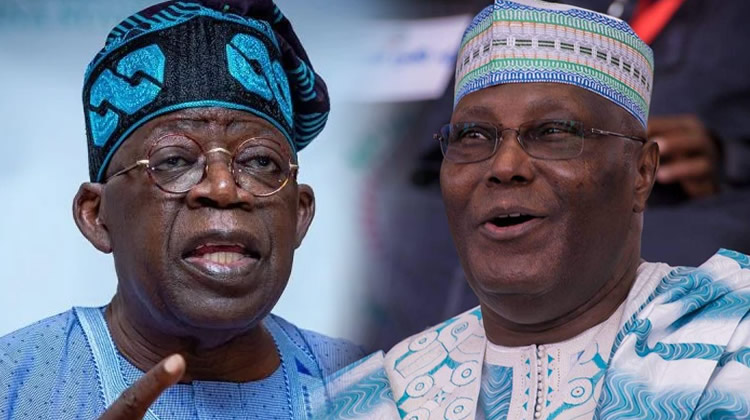
To be candid and straightforward, this article is written to sensitize Nigerians to the growing smear campaign against Atiku Abubakar, a campaign of calumny that appears less about national interest and more about political anxiety. The persistence and intensity of these attacks suggest one thing: there are powerful interests who see him not merely as a contender, but as a genuine threat. Yet, Nigerians are no longer easily distracted. The electorate is becoming more discerning, more interested in good governance.

Closely tied to this is the urgency of the 2027 presidential election. This is not just another electoral cycle, it may well represent a turning point in Nigeria’s history. Although Atiku Abubakar has confirmed 2027 to be his last presidential outing. That reality alone elevates the stakes. It presents Nigeria with a stark choice: to either harness a reservoir of experience at a critical moment or risk drifting further into uncertainty. In clear terms, 2027 is not just about political succession, it is about whether Nigeria recalibrates its direction or continues along a path of deepening national challenges.

The fundamental truth is that, experience and effective leadership are positively correlated, independent of age. Leadership in a complex state like Nigeria requires far more than youthful enthusiasm. It demands institutional memory, policy depth, negotiation skills, and the ability to manage crises with precision. It is therefore misguided to reduce leadership capability to age alone. Age neither guarantees competence nor invalidates it. Across the world, both young and elderly leaders have failed when they lacked the depth of experience required for governance. In Nigeria itself, recent experience with president Tinubu shows that leadership failure cannot be attributed to age alone. This underscores a critical point: the true dividing line between success and failure in leadership is not age, it is experience, particularly practical and relevant experience, which is too often overlooked.

Global political trends reinforce this reality. In the United States, voters returned Donald Trump to power over Kamala Harris, reflecting a preference for perceived experience over age. Figures such as Bernie Sanders remain influential well into their later years, shaping national discourse. Similarly, in Brazil, Luiz Inacio Lula da Silva was elected again at an advanced age because voters trusted his tested capacity to lead during difficult times. A similar pattern recently played out in West Africa. In Liberia, the younger incumbent George Weah was defeated by the significantly older Joseph Boakai. That outcome was widely interpreted as a preference by Liberians for experience and not youthful appeal. These examples are not coincidences. They illustrate a consistent global pattern that when nations face uncertainty, they turn to experience. Nigeria must not waste the experience of Atiku Abubakar like it happened with remarkable figures like Obafemi Awolowo, Chief MKO Abiola and Malam Aminu Kano in the past.

Beyond the question of age lies another critical issue: political strategy. The debate over who should carry the opposition banner in 2027 must be guided by political reality. Nigeria’s recent history makes this abundantly clear. When Goodluck Jonathan sought re-election, the opposition were less influenced by sentiment. Instead, they made a strategic calculation, searching for a candidate with national reach and electoral strength, an idea that birthed Muhammadu Buhari as the opposition candidate, despite his previous electoral defeats.

It is therefore difficult to sustain the argument that Atiku Abubakar should be excluded on the basis that he has contested before. By that same reasoning, Buhari would never have emerged as a viable candidate. Political persistence is not a weakness; it is often a reflection of conviction, resilience, and determination. Elections are not won by novelty alone, they are won by structure, experience, and the ability to connect with a broad electorate.

Equally unconvincing is the argument that 2027 should be determined by zoning or that it is “still the turn of the South.” If the opposition is serious about unseating president Tinubu, it must prioritize a candidate with the experience, national appeal, and political structure required to achieve that goal. Atiku Abubakar is therefore the “asset” of the today. His eight years as Vice President under Olusegun Obasanjo provided him with deep exposure to governance, economic reform, and institutional development. Beyond public office, he is widely recognized as a seasoned politician and an established businessman with independent wealth, an important factor in a political environment often clouded by concerns about misuse of public resources.

Interestingly, it’s increasingly clear that Nigerians are moving beyond superficial narratives. The electorate is more focused on outcomes, on who can stabilize the economy, strengthen institutions, and restore confidence in governance. The conversation is shifting from age to ability, from rhetoric to results.

As 2027 approaches, the choice before Nigeria is becoming clearer. This is not a contest of personalities or a debate about generational symbolism. It is a question of capacity, preparedness, and national survival. History, both global and local, points in one direction: when experience is sidelined, nations pay the price.

Nigeria cannot afford that mistake again…

Dr. Sani Sa’idu Baba writes from Kano, and can be reached via drssbaba@yahoo.com

Continue Reading
Click to comment

Leave a Reply

Your email address will not be published. Required fields are marked *

Opinion

DELE MOMODU: The Man Who Travels Roads Less Traveled

Published

on

By

By Dr. Sani Sa’idu Baba

At 66, Dele Momodu remains one of the rare Nigerians who has consistently chosen conviction over convenience. In a society where tribe, religion, region and political loyalty often shape public positions, he has repeatedly taken the harder road, the road less traveled.

Despite his long and historic relationship with President Bola Ahmed Tinubu, from the June 12 struggle, the MKO Abiola days and their exile years in London, Dele Momodu still chose to support what he believed was best for Nigeria rather than blindly follow friendship or political sentiment. In today’s Nigeria, that is uncommon. For him, country has always come before personal alliances.

One of the strongest proofs of this courage is his willingness to speak truth to power. From the military era to the present democratic dispensation, Dele Momodu has remained fearless in criticizing leaders whenever he believes Nigeria is drifting from justice, competence or democratic ideals. He challenged the governments of General Ibrahim Babangida and General Sani Abacha during the military years, a position that forced him into exile. Yet even in democracy, he has remained consistent criticizing administrations from Olusegun Obasanjo and Goodluck Jonathan to Muhammadu Buhari and now Bola Ahmed Tinubu. In a country where many only speak boldly when politically convenient, Dele Momodu has chosen principle over comfort.

Loyalty is another path he walks differently. In moments of tribulation, he stands by his friends when others disappear. Whether rich or poor, powerful or ordinary, young or old, he treats people with uncommon respect and humanity. As former Ghanaian President John Dramani Mahama once said, “Dele is a loyal friend. If he is your friend, he will never ever let you down.”

He is also a natural risk taker. The story of Ovation International remains one of the boldest media success stories in Africa. Starting a global magazine in exile with limited resources and enormous uncertainty required extraordinary courage. Where many saw impossibility, Dele Momodu saw opportunity.

Equally remarkable is his belief in freedom of speech and expression. He respects differing opinions and never imposes his politics on others. Whether you agree with him or not, he defends your right to your convictions. In a deeply polarized society, that democratic spirit is rare.

Perhaps what makes him most exceptional is his authenticity. In a world where many pretend publicly and live differently privately, Dele Momodu remains unapologetically himself. What you see is what you get. Friends and adversaries alike know he is genuine, and that sincerity continues to open doors for him across political, social and cultural divides.

From surviving exile to building one of Africa’s most recognizable media brands, from defending democracy to connecting influential voices across the continent, Dele Momodu has never followed the easy path.

At 66, he remains a symbol of courage, loyalty, patriotism, authenticity and fearless conviction.

Happy 66th Birthday to an exceptional Nigerian and African, Dele Momodu, truly The Man Who Travels Roads Less Traveled.

Dr. Sani Sa’idu Baba writes from Kano, and can be reached via drssbaba@yahoo.com

Continue Reading

Opinion

Ubuntu As Africa’s Moral Compass: Healing Xenophobia, Restoring Dignity and Rebuilding Continental Unity

Published

on

By

By Tolulope A. Adegoke

The recent surge in xenophobic attacks against Nigerians and other African nationals in South Africa has once again exposed painful fractures in the ideal of African brotherhood. These incidents — marked by violence, looting, destruction of businesses, and loss of innocent lives — represent not only a humanitarian crisis but a profound moral failure that contradicts the very essence of what it means to be African. In the face of such division, the ancient African philosophy of Ubuntu offers a powerful, practical, and deeply human framework for healing, reconciliation, and sustainable unity.

Ubuntu, often translated as “I am because we are,” is more than a cultural expression. It is a complete worldview that affirms the interconnectedness of all people. It teaches that a person’s humanity is realised through their relationships with others, and that harming another ultimately diminishes oneself. In the context of xenophobia targeting Nigerians and other Africans, Ubuntu directly challenges the “us versus them” mentality and calls for a return to shared identity, dignity, and mutual responsibility.

Core Principles of Ubuntu in Relation to Xenophobia

  • Interconnectedness: No African exists in isolation. The suffering of Nigerians in South Africa affects the dignity of all Africans. Ubuntu reminds us that an attack on one community is an attack on the collective African family.
  • Human Dignity: Every individual, regardless of nationality, deserves respect and protection. Xenophobia violates this fundamental principle by dehumanising fellow Africans.
  • Communal Responsibility: Success and security are collective. South Africans and other African nationals share common struggles — unemployment, inequality, and poverty. Ubuntu urges joint solutions rather than scapegoating.
  • Reconciliation and Restoration: Harm must be acknowledged, justice served, and relationships restored. Healing requires both accountability for perpetrators and systemic reforms that address root causes.
  • Harmony and Shared Destiny: True progress emerges when communities live in balance, recognising that Africa’s strength lies in unity, not fragmentation.

How ECOWAS, AU, SADC and Other Bodies Can Intervene

Regional and continental institutions have a critical role to play in providing structured, legitimate, and sustainable responses to xenophobia.

ECOWAS (Economic Community of West African States) As the primary regional body for West Africa, ECOWAS should:

  • Establish a standing Joint Task Force on Migration and Social Cohesion with South Africa to facilitate dialogue and monitor tensions.
  • Develop and enforce a Regional Migration Management Protocol that protects the rights of legal migrants while addressing irregular migration.
  • Support skills-transfer and joint investment projects between member states and South Africa to reduce “push” factors of migration and demonstrate mutual economic benefit.

African Union (AU) The AU should elevate xenophobia as a continental concern by:

  • Convening emergency sessions of the Peace and Security Council to treat xenophobia as a threat to African unity.
  • Developing an African Citizenship and Mobility Charter that promotes legal, rights-based migration and integration.
  • Strengthening the Continental Early Warning System to detect rising xenophobic sentiments and enable timely diplomatic intervention.
  • Facilitating high-level mediation missions and reparative dialogue between affected countries.

SADC (Southern African Development Community) As the immediate regional bloc:

  • Lead internal dialogue and mediation within Southern Africa to address cross-border tensions.
  • Promote harmonised border management and labour mobility policies.
  • Invest in joint infrastructure and human development projects that visibly demonstrate the benefits of regional solidarity.

Other Relevant Bodies

  • The United Nations (through UNHCR and IOM) can provide technical support for humane migration management and protection of victims.
  • The African Development Bank can fund large-scale regional projects that create shared prosperity and reduce migration pressure.
  • Civil society, faith-based organisations, and the African diaspora should lead grassroots reconciliation and awareness campaigns.

Practical Solutions Aligned with Ubuntu

To transform Ubuntu from philosophy into action, the following multi-sectoral solutions are recommended:

Education Sector

  • Integrate Pan-African history, shared heritage, and migration studies into school curricula across South Africa and the continent.
  • Establish joint South African–Nigerian cultural and academic exchange programmes to build personal connections from a young age.

Economic Sector

  • Develop joint business cooperatives and value-chain projects in agriculture, trade, and small enterprises involving both South Africans and migrants.
  • Create government-backed township entrepreneurship funds that prioritise inclusive models benefiting legal foreign nationals and locals alike.

Governance and Leadership

  • Publicly and consistently condemn xenophobia while addressing legitimate local grievances through transparent dialogue.
  • Create national integration councils with representatives from South African communities and African diaspora groups.

Media and Public Communication

  • Highlight positive stories of African cooperation, migrant contributions, and shared success.
  • Partner with civil society for Ubuntu-inspired awareness campaigns promoting “One Africa, One Destiny.”

Youth and Community Engagement

  • Organise cross-border youth leadership and entrepreneurship summits.
  • Support community sports, arts, and cultural festivals that bring South Africans and other Africans together in celebration.

Global Relevance and International Standards

The fight against xenophobia in South Africa aligns with international human rights standards, the UN Sustainable Development Goals (particularly Goal 10: Reduced Inequalities and Goal 16: Peace, Justice and Strong Institutions), and the African Union’s Agenda 2063. Solutions must therefore meet global benchmarks of human rights protection, rule of law, and inclusive development while remaining rooted in African agency and ownership.

A Balanced Conclusion: Ubuntu as Africa’s Moral Compass

Xenophobia is a betrayal of African humanity. It weakens the continent’s global standing and delays the realisation of a united, prosperous Africa. However, through the deliberate and consistent application of Ubuntu — in education, economy, governance, media, and community life — South Africa and the broader continent can heal these wounds and build something stronger.

Ubuntu does not deny legitimate grievances. It simply insists that solutions must honour the dignity of every African. When leaders model it, institutions embed it, and citizens live it, xenophobia will lose its appeal. Africa’s greatest contribution to the world may not be its resources, but this timeless philosophy that reminds us: our humanity is bound together.

The path to lasting peace does not require perfection — it requires commitment. With courage, honesty, and collective will, South Africa and Africa can move beyond xenophobia toward genuine solidarity. The world is watching, and history is waiting. The time to choose Ubuntu is now.

Dr. Tolulope A. Adegoke, AMBP-UN is a globally recognized scholar-practitioner and thought leader at the nexus of security, governance, and strategic leadership. His mission is dedicated to advancing ethical governance, strategic human capital development, resilient nation building, and global peace. He can be reached via: tolulopeadegoke01@gmail.comglobalstageimpacts@gmail.com

Continue Reading

Opinion

A Vindicating Truth: A Factual Presentation on the Supreme Court’s Intervention in the ADC Leadership Matter

Published

on

By

By Comrade IG Wala

To All Nigerians, Party Stakeholders, and Lovers of Democracy,

In the life of every great political movement, there comes a moment where the noise of confusion meets the silence of the Law. For the African Democratic Congress (ADC), that moment arrived on April 30, 2026.

For months, the ADC was held in a state of judicial paralysis caused by a lower court order that froze the party’s activities. This order did not just affect a few leaders, it threatened to delete the ADC from the Nigerian political map and disenfranchise millions of supporters ahead of the 2027 General Elections.

Today, we present the facts of the Supreme Court’s intervention to ensure that every Nigerian, from the city centers to the grassroots, understands that Justice has spoken, and the ADC is alive.

The Three Pillars of the Supreme Court’s Ruling:

1. The End of Paralysis (The Status Quo Order)!

The Supreme Court, led by Justice Mohammed Garba, was clear and firm: the Court of Appeal’s order to maintain a “status quo” was improper and unwarranted. The apex court recognized that you cannot freeze a political party indefinitely without a trial. By setting this aside, the Supreme Court rescued the ADC from a leadership vacuum that was being used to justify de-recognition by INEC.

2. The Restoration of Administrative Legitimacy.

By nullifying the appellate court’s freeze, the Supreme Court effectively restored the David Mark-led National Working Committee to its rightful place. This means that for all official, administrative, and electoral purposes, the ADC now has a recognized head. The party is no longer a ship without a captain; the doors of the headquarters are open, and the party’s name remains firmly on the ballot.

3. The Order for a Fresh Trial on Merits.

True to the principles of fair hearing, the Supreme Court did not simply gift the party to one side. Instead, it ordered the case back to the Federal High Court for an accelerated hearing. This is a victory for the Truth. It means the court is not interested in technicalities or stopping the clock, it wants to see the evidence, read the Party Constitution, and deliver a final judgment based on the Right vs. Wrong.

Note: I will drop the 7 prayers made to Supreme Court by ADC in the comment section.

A Message to Our Members and Supporters.
To our members who have felt a sense of fear, apprehension, or a lack of confidence in the Nigerian courts, let your hearts be at peace.

It is a delusion to believe that gross injustice can simply walk through the doors of our highest courts unnoticed. This matter is currently one of the most publicized and people-centric cases in Nigeria. In such a bright spotlight, the Judiciary acts not just as a judge, but as a shield for the common man.

The Law is not a tool for the crafty, it is a searchlight for the Truth.
Inasmuch as they say the Law is blind, it sees with perfect clarity the difference between a lie and the truth, between right and wrong. The Supreme Court’s refusal to let the ADC be strangled by procedural delays is proof that the system works for those who stand on the side of justice.

Our confidence is not in personalities, but in the Process. We are returning to the Federal High Court not with fear, but with the armor of Truth.

The Handshake remains strong, the vision is clear, and our participation in the 2027 elections is now legally anchored.

Stand tall. The ADC has been tested by the fire of the courts, and we have emerged not just intact, but vindicated.

Signed,
Comrade, IG Wala.
02/04/26. — with Shareef Kamba and 14 others.

Continue Reading

Trending