Connect with us

Featured

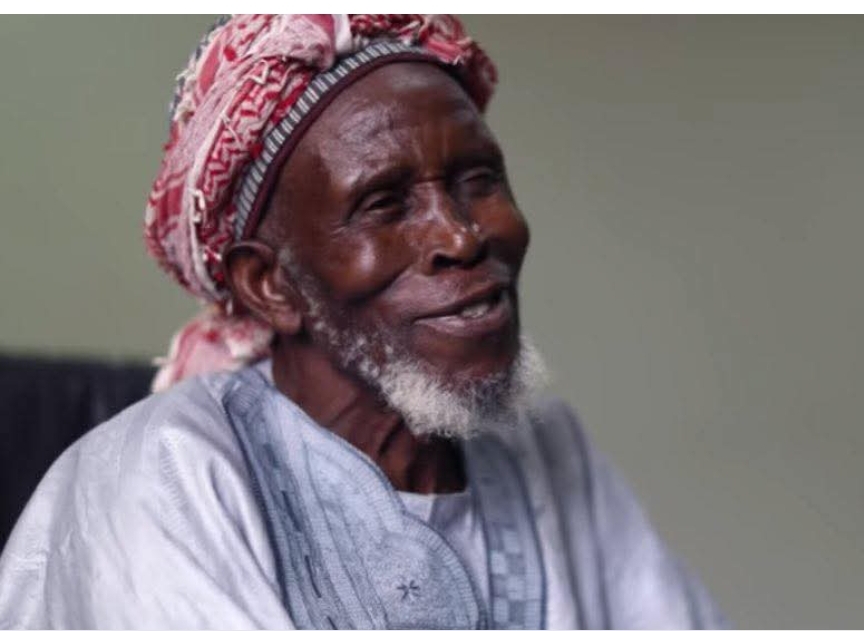
Nigeria Mourns As Imam Abubakar Abdullahi, Who Sheltered Multiple Christians, Dies at 90

Published

on

By Eric Elezuo

Nigerians are mourning celebrated Muslim cleric, Imam Abdullahi Abubakar, who is reputed for sheltering 262 Christians during the 2018 sectarian attacks in Plateau State.

Abubakar, who held the post of the Chief Imam of Nghar village in the Barkin Ladi local government area of the state, passed away after a brief illness at the age of 92

Confirming his death, one of his sons, Saleh Abubakar, said his father died on Thursday night at the Plateau Specialist Hospital, Jos, 10 days after he was admitted.

Imam Abubakar, who was also a herder, left behind 19 children including 12 boys and 7 girls.

The late Islamic cleric rose to prominence following his extraordinary act of courage on June 23, 2018, when armed assailants attacked several communities in Barkin Ladi LGA, leaving dozens dead.

Following the announcement of his death, Nigerians from all walks of life including Christians, have risen stoutly to eulogise his life and times, crediting greatness, humanity and purposeful living to the nonagenarian.

Leading the long list of mourners, President Bola Tinubu expressed sorrow over the death of the Chief Imam of Nghar village in Barkin Ladi Local Government Area of Plateau State just as Former Vice President Atiku Abubakar and the 2023 presidential candidate of the Labour Party, Peter Obi, have also expressed sadness over his death, describing him as a true hero of humanity.

Tinubu, in a condolence message shared on X by his Special Adviser on Information and Strategy, Bayo Onanuga, described the cleric as an extraordinary religious leader whose life was a powerful testament to faith, courage, and the sanctity of human life.

“At such a time when tribal and religious tendencies seemed to overwhelm reason, Imam Abubakar stood firmly on the side of peace, benevolence, and conscience,” the President said.

He noted that despite the grave danger to his own life, the cleric chose compassion over division and love over hatred.

“Mindless of the enormous risk to his own life, the noble cleric chose humanity over division, love as opposed to hatred, and embrace rather than rejection. His heroic feat underlines the essence of true faith, resonating louder than sermons in a salient message to the world at large,” Tinubu added.

Tinubu urged religious and community leaders across the country to emulate the late Imam’s example by promoting tolerance, mutual respect, and peaceful coexistence.

Atiku, in his message which was also shared on X, said the cleric lived a life that transcended religious divides and affirmed our shared humanity. The former vice president urged Nigerians, particularly religious leaders, to recommit to the ideals the late cleric embodied in inter-faith harmony, mutual respect, and an unwavering defence of the sanctity of every human life.

On his part, Obi described the late Imam as a beacon of light, “reminding us that the core of Islam is peace and the protection of the vulnerable.” He called on Nigerians to embrace love, unity, and peaceful coexistence in honour of the late Islamic cleric, adding that what Imam Abubakar did was exactly the expectations of citizens from their leaders; protect life and property.

In a condolence message, Plateau State Governor, Caleb Mutfwang, said Imam Abubakar’s commitment to interfaith harmony and protection of the vulnerable earned him the respect of Nigerians and the global community.

Mutfwang added that Abubakar’s passing “has left a significant void in Barkin Ladi,” urging residents to uphold the values of compassion, tolerance, and unity that he embodied.

“On behalf of my family, the government, and the people of Plateau State, I extend my deepest condolences to the family and all those mourning the loss,” the governor said. “May Almighty God grant them comfort and strength to bear this painful loss.”

Also expressing heartfelt sympathies, Chairman of the Plateau State chapter of the Miyetti Allah Cattle Breeders Association (MACBAN), Yusuf Babayo, described the death of Imam Abdullahi as painful and a significant loss to the Muslim Ummah.

“It is difficult to get a leader like Imam Abdullahi. He was an elder statesman whose valuable contribution to peace in the state will be greatly missed,” Babayo said.

“He did not discriminate and treated everybody as his own, irrespective of religious differences. The vacuum created by his death cannot be filled by anyone in the state.”

In his reaction on behalf of the Christian Association of Nigeria (CAN), Plateau State Secretary Rev. Simon Julius, described the late Imam as a rare figure whose courage and legacy transcended religious boundaries.

“In every religion, there are good and bad. For us, the late Imam will be remembered for his courage and for saving human lives,” Rev. Julius said. He also sympathised with the Muslim Ummah over the loss and urged individuals to emulate the lifestyle of Imam Abdullahi for the betterment of Plateau State and Nigeria at large.

The Jama’atu Nasril Islam (JNI) Plateau State chapter also expressed shock at his passing, while submitting to the will of Allah SWT. In a statement signed by its Secretary, Dr. Salim Musa Umar, JNI described the late Imam as an exceptional leader who demonstrated compassion during a trying period for his community.

“He was credited with hiding over 200 Christians in his mosque during one of the most devastating ethno-religious conflicts in Plateau State, the statement read.

“On behalf of the chairman and Emir of Wase, JNI extends its condolences to his family, Plateau State, and Nigeria. No doubt, we have lost a rare gem. Humanity will never forget his sacrifices, and history will remember him positively.”

Late Imam Abubakar Abdullahi has since been buried in Nghar village, Barkin Ladi LGA, the Jumma’at Prayer in his honour.

IMAM ABDULLAHI ABUBAKAR IN BRIEF

Imam Abdullahi Abubakar was born in 1936 in Bauchi, Northern Region, Colony and Protectorate of Nigeria.

Imam Abubakar was the Chief Imam of Akwatti Mosque in Nghar, a community in Barkin Ladi local government area of Plateau State.

In 2018, there was an attack on Yelwan Gindi Akwati, Swei and Nghar villages where 80 persons were killed by suspected bandits.

The Imam was able to save the lives of 262 people, predominantly Christians from the Birom tribe, by sheltering them in his mosque as attackers roamed the villages.

In July 2019, Imam Abdullahi Abubakar received the International Religious Freedom Award from the United States government, which is granted to supporters of religious freedom, together with four other religious leaders from Sudan, Iraq, Brazil, and Cyprus.

In August 2019, President Buhari authorized the inclusion of Imam Abdullahi Abubakar in the membership of the national Ulama committee and was part of an 80-man Ulama committee charged with the responsibility of educating Nigerian pilgrims in Mina during the 2019 Hajj.

Imam Abubakar received many other awards during his lifetime, including US International Religious Freedom Award (2019), Member of the Order of the Federal Republic (MFR) and an Award of Excellence.

He died on January 15, 2026 after a brief illness.

Continue Reading
Click to comment

Leave a Reply

Your email address will not be published. Required fields are marked *

Featured

Vote Buying, Low Turnout Mar FCT Polls – Yiaga Africa

Published

on

By

A civil society organization, Yiaga Africa, has released its preliminary report on the 2026 Federal Capital Area Council Elections held on Saturday.

The civic group reported that vote buying was witnessed at various polling units in the election.

The Independent National Electoral Commission (INEC) conducted elections for the position of chairman in the six area councils of the FCT, as well as for 62 councillorship seats.

Yiaga Africa said it deployed trained and duly accredited roving observers to systematically monitor the conduct of the elections.

It said that its observers were deployed by 7:30am and covered polling units across the sixty-two wards of the FCT, with their mandate including observing key aspects of the voting process, including opening procedures, accreditation, voting, and counting.

Yiaga Africa said it observed that the election was conducted in a largely peaceful atmosphere, adding that voters who presented themselves at polling units were afforded the opportunity to exercise their franchise without widespread disruption but added that notwithstanding this enabling environment, voter turnout was generally low, with most polling units recording poor turnout.

It said that logistical challenges adversely affected the timely commencement of polling, particularly in the Abuja Municipal Area Council, AMAC, where delays in the deployment of personnel and materials contributed to late opening in several locations.

It added that the relocation of certain polling units coupled with inadequate and untimely communication of these changes to voters generated confusion and may have resulted in voter disenfranchisement saying that such administrative lapses have significant implications for electoral access and public

On its preliminary findings, the election watch agency said: “Yiaga Africa observers reported a delayed commencement of polling in several polling units, primarily attributable to logistical inefficiencies and, in some instances, election security–related challenges.

“As of 9:00 a.m., set-up activities were still ongoing in the majority of polling units observed, indicating that essential preparatory procedures had not been completed within the timeframe prescribed by electoral guidelines.

“In the Abuja Municipal Area Council (AMAC), particularly in Wuse and Gwarinpa wards, several polling units opened significantly behind schedule. Observers noted that polling officials were still arranging materials and organizing the voting environment as at 9:00 a.m., with accreditation and voting commencing only after 10:00 a.m. On average, across the sampled polling units observed, accreditation and voting began at approximately 10:00 a.m.

“Consistent with the Commission’s guidelines, critical election materials including the Bimodal Voter Accreditation System (BVAS) devices and the voter register—were deployed in the polling units observed.

“However, in Polling Unit 004, Wuse Ward, Zone 2 Primary School, the voter register was not initially available and was only produced after observers raised concerns and voters objected. In addition, essential voting materials were absent in certain locations. Voting cubicles were not observed in PU002 (Ward 09), PU006 (Ward 01), and PU012 (Ward 10) in Abaji Area Council. Furthermore, an ink pad required for the voting process was reportedly missing in one polling unit observed.

“Observers reported instances in which voters were reassigned to newly created polling units without prior or adequate notification. While Yiaga Africa acknowledges INEC’s efforts to notify affected voters via SMS, many of these messages were delivered on Election Day, with some received hours after polling had already commenced. The lack of timely and effective communication generated confusion at several polling locations, as numerous voters spent over an hour attempting to ascertain their designated polling units.

“In multiple instances, this administrative shortcoming contributed to congestion and
overcrowding, thereby undermining orderly queue management and potentially
discouraging voter participation.

“The observation further revealed significant disparities in voter distribution within the same polling locations. Such pronounced imbalances raise serious concerns regarding the coherence, and reliability of the Commission’s polling unit expansion and voter redistribution framework.

“Closing of Polling Unit before the official 2:30pm: Observers reported some polling
units closing the polling process before the official 2:30pm close time. While some
polling units experienced poor voter participation, the guideline requires the polling unit to remain open until 2:30pm or the last person on the queue votes.

“Security Deployment and Observer Access: Yiaga Africa observed heavy security deployment in certain locations, which, in some instances, impeded the movement of accredited election observers and restricted access to polling units. Observers further noted that the heightened security presence created barriers for citizens attempting to
access polling units to exercise their right to vote.

“Vote buying: The persistent menace of vote buying once again manifested during the election. Yiaga Africa observers documented incidents of vote buying at polling units, underscoring the continued vulnerability of the electoral process to monetary inducement.

“Despite prior assurances and directives issued by INEC to security agencies to identify and apprehend both vote buyers and sellers, these illicit practices reportedly continued in several locations.”

DailyPost

Continue Reading

Featured

I’m Proud of You, Osinbajo Tells Abia Gov Alex Otti

Published

on

By

Former Vice President Yemi Osinbajo has applauded Governor Alex Otti of Abia State for what he described as purposeful, people-centered leadership that is repositioning Abia State for sustainable growth and prosperity.

Speaking during his visit to the governor in his office on Wednesday, February 18, which coincided with Otti’s birthday, Osinbajo expressed deep appreciation for the governor’s hospitality and outstanding performance in office, noting that the true essence of public service is making meaningful differences on the lives of the people.

“I am extremely proud of the work you have done so far, you have lived up to expectations – not only to the people but also to your friends and associates. In the short time I have been here, I have seen tangible evidence of progress.” The former Vice President stated.

Prof. Osinbajo particularly commended Governor Otti’s bold social welfare reforms, including assenting into law, the Senior Citizens’ Law.

He described the initiatives as exemplary and deeply rooted in compassion and social responsibility, emphasising that the world’s most successful welfare systems are built on care for the vulnerable.

He also lauded the extensive road infrastructure renewal and improved connectivity across the State, describing the projects as visible symbols of purposeful and results-driven leadership. While reflecting on the demands of leadership, Prof. Osinbajo noted that while many aspire for public office, true distinction lies in delivery.

“Sometimes you wonder whether, after all the efforts to get into office, leaders are able to fulfill their promises. But in your case, you have done not just what you promised, but even more. You have made public service worthwhile,” Prof. Osinbajo added.

He prayed for renewed strength, wisdom, and divine favour for Governor Otti as he continues the work of transformation in Abia State.

In his response, Otti warmly welcomed Osinbajo, describing him as a brother, friend, and mentor, whose visit was deeply appreciated.

The governor clarified that the gathering was not a planned birthday celebration but just marking the day, noting that he rarely celebrate such occasions publicly, especially while serving in public office.

He expressed gratitude to well-wishers who came voluntarily and emphasised his preference for modesty and focus on service.

Otti thanked God for the progress recorded within 32 months in office, describing the administration’s achievements as modest but impactful.

He reiterated that governance must remain centered on the welfare and security of the people.

“Governance is about the people their welfare, their safety, and their peace of mind. If you enter office for any other reason, you miss the essence of leadership,” Governor Otti stated.

He recalled decisive actions taken in the administration’s first month, when some local governments were under the control of non-state actors. The governor said that firm intervention restored order and ensured that communities once inaccessible are now safe and open to residents.

Governor Otti also commended security agencies for their round-the-clock dedication, acknowledging their sacrifices in maintaining peace and stability across the state.

“We are grateful to the men and women who stay awake so that our people can sleep in peace,” Otti stated.

Earlier, the Secretary to the State Government, Dr. Emmanuel Meribole, on behalf of the State Executive Council, extended warm birthday wishes to the governor, praying for continued strength and fruitful years ahead.

Continue Reading

Featured

Gunmen Invade Ondo Palace, Kill Monarch in Failed Abduction Attempt

Published

on

By

Suspected armed bandits have killed a traditional ruler, Oba Kehinde Falodun, the Alagamo of Agamo community, during a violent assault on his palace in Akure North Local Government Area of Ondo State.

The attackers, reportedly about 10 in number, were said to have stormed the monarch’s residence on Wednesday evening in what residents described as an attempted abduction of the royal father and members of his household.

According to the Olori (Queen), who narrowly escaped, the gunmen initially attempted to whisk the monarch away but encountered resistance before the situation escalated.

“The bandits just came and started shooting. They were about 10. Three stayed at the entrance while others came inside. I ran into the bush. They shot at me, but it did not affect me,” she said.

She added that when the kidnappers failed to subdue the monarch, they resorted to violence.

“They kept dragging my husband, and I kept shouting for help. Later, they hit something on his head and stomach. He has been killed,” she said.

Confirming the incident on Thursday, spokesman for the Nigeria Police Force in Ondo State, DSP Abayomi Jimoh, said the command received distress information around 7:50 pm from a community leader.

He said about six armed men invaded the palace, forcefully took the monarch from his compound, and fled.

“The victim was later found a few metres away with gunshot wounds. He was confirmed dead at the scene,” Jimoh stated.

He disclosed that the Divisional Police Officer, alongside tactical teams, immediately mobilised officers and local security groups, including Amotekun Corps, hunters, and Atuluse vigilantes, to comb nearby bushes in search of the attackers.

According to him, surveillance has been intensified across the area while efforts continue to track and apprehend the suspects.

“The Command assures residents that no stone will be left unturned in bringing those responsible to justice,” he added.

Meanwhile, elders and traditional chiefs in Agamo have condemned the killing, describing the late monarch as a peace-loving leader who played a major role in resolving disputes and promoting development in the community.

A community leader, who asked not to be named, said the attack has created fear and a leadership vacuum.

“This is a painful loss to us. Kabiyesi was very close to the people. We appeal to government and security agencies to act fast and ensure those behind this are arrested,” he said.

The incident adds to growing security concerns in the state, where kidnappings, attacks on farmers, and assaults on rural communities have increased in recent months.

Continue Reading

Trending