Connect with us

Featured

67 Healthy Garlands for His Excellency, Dr. John Mahama, the President of Ghana

Published

on

By Eric Elezuo

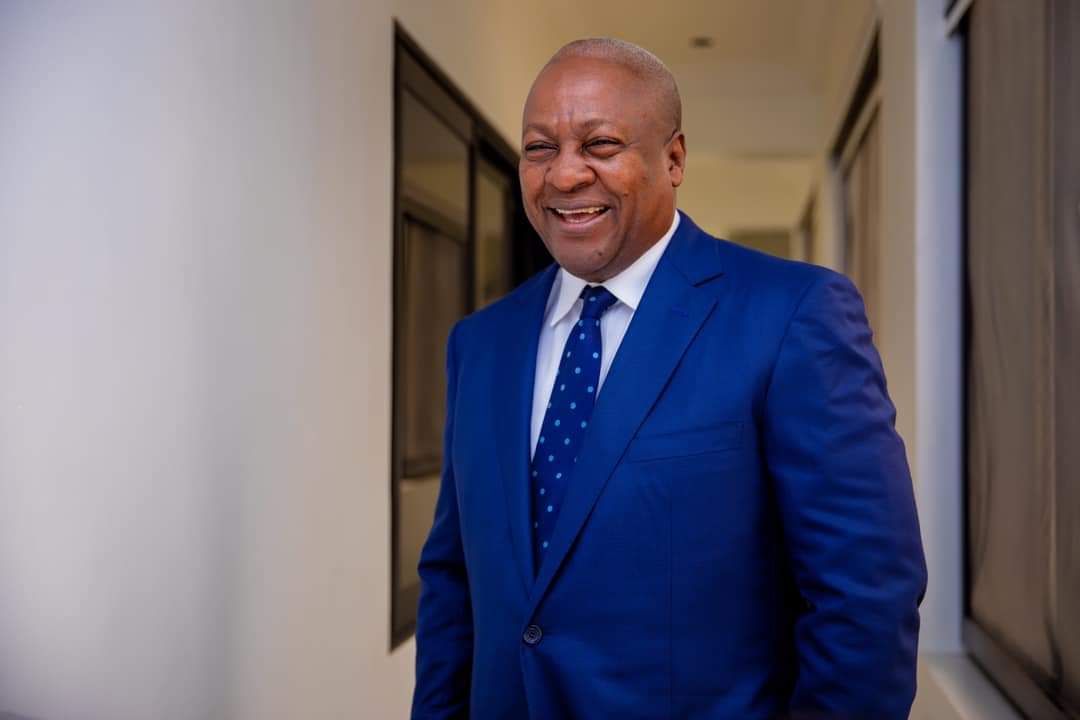
The President of the Republic of Ghana, Dr. John Dramani Mahama, is celebrating 67 years, and the world, especially the West African sub-region cannot keep quiet.

A politician of great repute, Mahama was born on November 29, 1958, and has been privileged to serve in various civil and political capacities, culminating in holding the highest office in the land from July 24, 2012 to January 7, 2017. He returned to office on January 7, 2025 for another fours years.


Mahama, who has duscussed a multiple times his affiliation with Offa, Kwara State in Nigeria, started his primary education at the Accra Newtown Experimental School (ANT1) and completed his O’levels education at Achimota School and his A’levels education at Ghana Secondary School (Tamale, Northern region). He proceeded to the University of Ghana, Legon, receiving a Bachelor’s degree in History in 1981 and a Postgraduate Diploma in Communication Studies in 1986. As a student, he was a member of Commonwealth Hall (Legon). He also studied at the Institute of Social Sciences in Moscow in the Soviet Union, specializing in Social Psychology; he obtained a postgraduate degree in 1988.

His catalogue of enviable services include serving as Vice President of Ghana from 2009 to 2012, and took office as President on July 24, 2012 following the death of his predecessor, John Atta Mills. He was also a Member of Parliament from 1997 to 2009 and Minister of Communications from 1998 to 2001. A communication expert, historian, and writer, Mahama is a member of the National Democratic Congress.


Though he was born in Damongo in the Damango-Daboya constituency of Northern region, he is a member of the Gonja ethnic group, and hails from Bole in the Northern region. His father, Emmanuel Adama Mahama, a wealthy rice farmer and teacher, was the first Member of Parliament for the West Gonja constituency and the first Regional Commissioner of the Northern Region during the First Republic under Ghana’s first president, Kwame Nkrumah.

After completing his undergraduate education, Mahama taught History at the secondary school level for a few years. Upon his return to Ghana after studying in Moscow, he worked as the Information, Culture and Research Officer at the Embassy of Japan in Accra between 1991 and 1995.


From there he moved to the anti-poverty non-governmental organisation (NGO) Plan International’s Ghana Country Office, where he worked as International Relations, Sponsorship Communications and Grants Manager between 1995 and 1996.

In 1993, he participated in a professional training course for Overseas Public Relations Staff, organized by the Japanese Ministry of Foreign Affairs in Tokyo. He also participated in a management development course organized by Plan International (RESA) in Nairobi, Kenya.

Mahama’s first triumph in politics came in 1996 when he was elected to the Parliament of Ghana to represent the Bole/Bamboi Constituency for a four-year term. In April 1997, he was appointed Deputy Minister of Communications, and barely a year later, was promoted to the post of Minister of Communications, and served until January 2001. During the period under review, he also served as the Chairman of the National Communications Authority, in which capacity he played a key role in stabilising Ghana’s telecommunications sector after it was deregulated in 1997.


As a minister, he was a founding member of the Ghana AIDS Commission, a member of the implementation committee of the 2000 National Population Census and a deputy chairman of the Publicity Committee for the re-introduction of the Value Added Tax (VAT).

In 2000, Mahama was re-elected for another four-year term as the Member of Parliament for the Bole/Bamboi Constituency. He was again re-elected in 2004 for a third term. From 2001 to 2004, Mahama served as the Minority Parliamentary Spokesman for Communications.

In 2002, he was appointed the Director of Communications for the NDC. That same year, he served as a member of the team of International Observers selected to monitor Zimbabwe’s Parliamentary Elections.


As an MP, he was a member of Standing Orders Committee as well as the Transport, Industry, Energy, Communications, Science and Technology Committee of Parliament.

In his continued efforts to expand his interest and involvement in international affairs, in 2003 Mahama became a member of the Pan-African Parliament, serving as the Chairperson of the West African Caucus until 2011. He was also a member of European and Pan African Parliaments’ Ad-hoc Committee on Cooperation.

In 2005, he was, additionally, appointed the Minority Spokesman for Foreign Affairs. He is also a member of the UNDP Advisory Committee on Conflict Resolution in Ghana.


As Vice-President, he served as the Chairman of the National Economic Management Team, the Armed Forces Council of Ghana, the Decentralisation and Implementation Committee and the Police Council of Ghana in this capacity.

Mahama is full of experience, having served at all levels of poltical office, and he brought them all to bear as President, giving out a sterling performance that could only compare with the very best. He was the first, and remains the only Ghana president to have been born after independence.

On March 30, 2014, he was elected to preside over ECOWAS. On June 26, 2014, he was elected Chairperson of the African Union’s (AU’s) High-Level African Trade Committee (HATC).


On January 21, 2016 on the occasion of the World Economic Forum in Davos, Mahama became co-chair of the Sustainable Development Goals Advocates group which consists of 17 eminent persons assisting the UN Secretary-General in the campaign to achieve the Sustainable Development Goals (SDGs) that world leaders unanimously adopted in September 2015.

In December 2016, he was part of the ECOWAS mediation team to resolve the post-election political impasse in The Gambia between the defeated incumbent, Yahya Jammeh and declared winner, Adam Barrow.


Mahama, now a member of the Assemblies of God, is married to Lordina Mahama, and they are blessed with five children named Shafik, Shahid, Sharaf, Jesse and Farida.

Over the course of his career, Mahama has written for several newspapers and other publications both locally and internationally. Additionally, he is also a devotee of Afrobeat music, especially that of Fela Kuti.

Mahama is not new to awards and honours as his good works have paved a broad way for recognitions. He received an honorary doctorate in the field of Public Administration, from the Ekiti State University of Nigeria, formerly affiliated to the Obafemi Awolowo University in “recognition of his politico-socio economic development of Ghana and Africa at various stages of his political career.

Later the same university passed a resolution to name its Faculty of Management Science after him.


He was also honoured by the Cuban government with the Friendship Medal for his relentless advocacy for the Cuban cause.

Also, The General Council of Assemblies of God, Ghana has honoured him with its Daniel Award.

The Graduate School of Governance and Leadership also awarded him the African Servant Leadership Award while the Institute of Public Relations recognized Mahama with a prize for his leadership acumen and technocratic flair.

In 2013, the Forum for Agricultural Research in Africa (FARA) conferred on Mahama the Africa Award for Excellence in Food Security and Poverty Reduction.


In March 2016, University of Aberdeen held a special convocation to confer him an honorary degree of Doctors of Laws (LLD).

In December 2016, he was honoured with a Life time award by Ovation Media Group during its yearly Ovation Carol.

A Bill Gates Fellow, Mahama was awarded the Great Cross of the National Order of Benin, the highest award in Benin, by President Yayi Boni.

In February 2017, Mahama received the 2016 African Political Leader of the Year Award from the African Leadership Magazine in South Africa.


He honourably left office on January 7, 2017 after losing to main opposition candidate, Nana Akufo-Addo, in the general election held a month earlier.

“I will allow history to be the judge of my time,” Mahama said as he address his crowd of supporters as he concede defeat.

He repeated the same lines as he variously defended his administration in a bid to make a comeback during his campaigns.

Mahama has touted the achievements of his government in the areas of power, roads, the economy, water and sanitation. While delivering his final State of the Nation Address to Parliament, he said the government had extended electricity coverage, increased water supply and improved roads.


As president, he deployed emergency plants and sped up the completion of ongoing plants resulting in the addition of more than 800 megawatts (MW) of power over an 18-month period. That, and many more had helped to stabilise the power situation in Ghana.

Working on the standard mantra of achieving “water for all by the year 2025”, Mahama put in extra effort to achieve the target well in advance of the set date by increasing investment in the provision of clean drinking water, citing of boreholes, small town water systems and major urban water treatment. Consequently, by the end of 2015, excess of 76 per cent of both rural and urban residents have access to potable water.


Mahama contended that his tenure of office had seen some of the most massive investments in the road sector in the history of the country.

While he completed road projects he inherited, such as the Achimota-Ofankor, Awoshie-Pokuase, Sofoline and Tetteh Quarshie-Adenta, he also commenced and completed the Kwame Nkrumah Interchange, fast-tracked the construction and opening of the Kasoa overhead bridge, completed the Airport Hills/Burma Camp network of roads, as well as the 37-El Wak-Trade Fair road and a host of others.


His trail of achievements are endless. Mahama is just another name for administrative excellence, and Ghanaians are blessed to have him return to complete his second tenure as the landlord of Jubilee House.

Happy birthday sir!

Continue Reading
Click to comment

Leave a Reply

Your email address will not be published. Required fields are marked *

Featured

Atiku Abubakar Remains Only Person Tinubu Govt is Afraid Of – Dele Momodu (Full Interview)

Published

on

By

By Eric Elezuo

If there is one Nigerian, who can tell accurately the heartbeat of the nation, its direction and what the future portends for it, based on the dynamics already at play, that person is Chief Dele Momodu; a seasoned journalist, former presidential candidate, holder of high profile chieftancy titles across the country, and Chief Executive Officer, Ovation Media Group.

As a vocal politician and public speaker, whose voice echoes across the length and breadth of the nation for all the good reasons, Momodu has continued to speak against the cluelessness of the present government and the need for the government to redress its steps in terms of unpopular policies emanating from the cradle, which have rather impoverished the populace rather than do the opposite. He is credited with being the first to notice the government’s unpopular drift towards one-party system, and warned on the dangers. Today, almost all the state governors, national and state assembly members have all decamped to the ruling All Progressives Congress (APC).

Sustaining his credence as a value-adding speaker, Momodu was a guest of the fabulous, experience and adequately exposed Charles Aniagolu of Arise News(Night),  where he further highlighted the challenges and remedies of the Nigerian situation.

He also spoke on the appointment of the former Chief of Defence Staff, General Chris Musa (retd) as the Minister of Defence, the withdrawal of Police eacort from very important personalities (VIPs) including the former Vice President Atiku Abubakar and many other issues of national concern.

The text of the interview is presented in details even to the tiniest details below:

Momodu with former Vice President, Atiku Abubakar

Well, for more on this, I’m joined now from our studios in Lagos by the former presidential candidate and publisher of Ovation magazine, Basharu Dele Momodu. Mr. Momodu, thank you very much indeed for coming in. You look like you’re about to cry there. I mean, I know you had a bit of a tough time getting in, and I do apologize to our viewers because we’re quite a few minutes late. But you had a bit of a mishap coming in, and that delayed us a bit.

Dele Momodu: Yes. Well, we thank God that it was something minor. We had an accident on top of the bridge coming into the Arise studios, but we’re okay. Now, you asked if I am off the mark this…

Well, I’m going to get to that in a minute. Sorry to interrupt you – I want to be a bit systematic because we’ve got to gallop ahead, given that we’re, I mean, almost 12 minutes late in starting the program. Let me start by first of all getting your reaction to the confirmation of General Christopher Musa as the new Minister of Defence in the current climate of insecurity that’s gripping this country.

Dele Momodu: Well, I mean, I didn’t expect anything else. I expected that he would be screened — whether bow-and-go or not — he would be screened, and he would be ratified. And he’s been ratified, and I want to congratulate him. That’s all. I pray that we won’t hear sermons this time and that he will just go straight into action.

Yes, we all hope for that, don’t we? And we also got the news this evening that the National Economic Council has approved 100 billion naira for the renovation of training centres for the police and other security agencies across Nigeria. So that suggests that they’re serious about retraining serving police officers and training new ones. Is that the message that you’re getting from it?

Dele Momodu: Well, I would say that 100 billion is too small for the police and the security agencies. The government should do something better if it is serious about the insecurity that is terrorizing everybody in Nigeria. They would need to get serious, invest more in training, involve- I mean, invest in new personnel. The reasons they are saying they are withdrawing police from the streets are just because we don’t have enough of them. But we have enough jobless people in Nigeria, including graduates and non-graduates, who are willing to join the police force and other security agencies. So my advice is that President Tinubu should invest heavily in security. 100 billion to me, especially when you translate it into other currencies, it’s chicken feed.

Well, to be entirely fair, Bashorun, that 100 billion is for the renovation of training centers for the police. It’s not for the whole security recruitment thing. It’s purely to renovate the centres that have been left to kind of, you know, rot across the country, and he’s trying to bring them up to speed and at the same time get on with the recruitment of new police officers and move on with the training of existing ones.

Now, you spoke recently about the ban on police escorts for VIPs. You called it a targeted move against opposition figures like Alhaji Atiku Abubakar, who you support, and who is constitutionally entitled to security protection. You argued that the ban is a calculated move to weaken opposition voices and fuel resentment against successful Nigerians, and that it’ll expose prominent Nigerians to danger. I wonder why you think all that, because public sentiment in Nigeria seems to be in support of President Tinubu’s decision to ban the use of police escorts by VIPs. And it looks like you are the one who is off the mark this time.

Dele Momodu: No, I’m not off the mark. I remember in October 2022, when I foretold the dictatorship that would soon visit Nigeria. I was abused that night — that I’m talking rubbish. You see, I am trained to go behind the scene to find the real stories. A lot of Nigerians get easily, easily fooled. And if you read my press release yesterday, I said it there that we have been fooled again. What they are doing is to set the poor against the rich. And whenever you do that, you will get an applause, you will get an ovation. But the truth is that most people are not thinking about the real motive behind this decision.

If you look at Lagos State, for example, when they had the problem in the House of Assembly, you will see that one of the things they used to intimidate the people was, one, they sent some forces in to disrupt the house. Then they withdrew the police security that was guarding the brother of the new speaker. They withdrew the police from Oba Elegushi. It’s nothing new. So if we start the campaign, let’s say in January — I don’t know when we are starting — tell me, who will risk his life criss-crossing Nigeria without police escort?

We should stop being fooled. You see, the sentiment is that, oh yes, all of us should suffer. There is no country in the world where you don’t have VIPs. And it’s never a crime to be successful. As a matter of fact, those who should lose their security are those politicians in Abuja and not the ordinary man, not a Dangote, not an Abdulsamad. Imagine a time when a kidnapper said he almost got Aliko, if not for his heavy security.

So you will see – I’ve said it again today – when tomorrow comes, and events begin to unfold, you will remember that only one man warned you that this is part of the plot to suffocate the opposition.

Well, I mean, I think that obviously you’re entitled to your opinion, but a lot of people will probably disagree with that because the government didn’t say that they were going to completely leave VIPs naked without protection. They talked about redrafting civil defense people to become protectors. And members of civil defense — they carry guns and very sophisticated weapons at that. And of course, it’s not just directed at the opposition; members of the government and the VIPs are also subject to the same restrictions.

But let’s move on from there because I’m concerned that we lost a lot of time at the beginning. I want to get your response to a lot of things because it’s not every day that we have you sitting there. I don’t know whether you’ve heard this, but it’s being reported tonight that the US government has introduced a new policy which allows it to impose a visa ban on people considered responsible for the attack on Nigerian Christians.

The State Department issued a statement saying the policy allows it to deny visas to those who have directed, authorized, supported, participated in, or carried out abuses targeting people based on faith. And it said that family members of affected people are also subject to the restrictions, and that the US cannot stand by while such atrocities are happening in Nigeria. What’s your reaction to that? Does it sound like all the attempts by the Nigerian government to convince the Americans that there isn’t genocide targeted specifically at Christians have failed?

Dele Momodu: You see, when you have bullies in power, people will also jubilate when a bigger bully comes to bully them. So what’s happening in Nigeria right now is that a lot of people feel hopeless. They feel helpless, and they are excited that there is a bigger bully. The same way you said, “Oh, people are happy that they are withdrawing security from…” is the same way America is bullying us now, and you can see us reacting.

It took us over two years to react, to what? To appoint ambassadors who will represent our country. So I think the game continues, and I can tell you that a lot of Nigerians, especially on social media, are very excited that for once, at least, our leadership is listening to someone, and that’s President Donald Trump. So if that’s what it takes for our country to get serious, maybe that’s what we needed, and that’s what we are getting.

And Mr. Momodu, as you assess the political landscape inside Nigeria using your very blunt and unapologetic assessment indicators, what do you see as we approach 2027? Is it, as some have suggested, a done deal for President Tinubu and the APC, given the many failures of the opposition? Because I see you being quoted as saying that no southern candidate — not even Goodluck Jonathan or Peter Obi — can defeat President Tinubu in 2027.

Dele Momodu: Oh, I’ve been saying that for long. It’s nothing new. nothing is a done deal for President Tinubu. About two months ago, no one expected him to suddenly sit up and respond to America. But now we are responding. So we don’t know what’s going to happen in the coming weeks that may further get them sober.

What we witnessed in the past was the giddiness — “Oh, we are the ones in charge, nothing can happen.” But suddenly we see them reacting to forces from America, which is unfortunate because to govern Nigeria is not too difficult. Nigerians — we’re the most tolerant human beings; otherwise, we wouldn’t be where we are now. We tolerate everything.

And I know that 2027 is not yet a done deal. But the opposition must get its act together. I’ve said it before on this programme that actions and reactions are always equal and opposite, according to Isaac Newton. So that’s my scientific analysis of what is going to happen.

Any southerner who goes into the race now – an average southerner will say, “After all, we already have Tinubu there, so why are we worrying ourselves?” So, the force that we need to energize the opposition, I believe it will not be there. There are three key things when it comes to presidential elections. Number one is ethnicity — where the candidate comes from. No northerner is going to come and die to come and defend a southern candidate if, let’s say, for example, he’s rigged out of the election. But when you have your own candidate, it’s more than likely that you will be more enthused to vote for that candidate.

And that is why I said, look, don’t let us waste our time. And I’ve said it — you know me, I’ve said it — I said the only person this government is afraid of is Atiku Abubakar. I will continue to say it. And since Atiku and Peter Obi ran together in 2019, I supported them then, and I was not a member of PDP. So it should be easier for them to come back together.

We have less than one year to prepare for that election. While Tinubu is already campaigning, cajoling, and, you know, coercing whoever he can, we are still busy thinking who is going to be our candidate. I think we are wasting too much time. Now is the time to do what is necessary.

And just following up on that, you recently described Peter Obi’s candidacy as independent because, according to you, he doesn’t have a party and has shown unwillingness to build and work with the ADC. But I mean, many of his supporters disagree with you and say that he is still a member of the Labour Party for now, and that the party has been making behind-the-scenes moves towards reconciliation and could well pull a rabbit out of a hat in 2027. What’s your assessment of that?

Dele Momodu: Now you have gone in the realm of magic. I am not a magician and I don’t see any magic that would awaken Labour Party or PDP and that APC will fold its arms and allow such a platform for Obi. I mean, the truth of the matter is that, you know, he’s a man I respect so much. If you look at it right now, I believe he’s party-less, like most of our opposition leaders.

He has not yet made up his mind, and he joined the ADC last week. So anybody who wants to run a year to election and you have not yet made up your mind, I think it’s proving more difficult. that’s why I said an independent candidate. But he has not said that he’s opposed to ADC, so we need to correct that. He has not said that he’s opposed. What I think he’s opposed to is maybe having to go through a convention — a primary — and ADC said everybody should come to the primary: if you win, you win, then others will support.

But I think it’s going to be difficult for any party to donate a ticket — especially any formidable party — at this stage, to donate a ticket to any candidate. I don’t even think Atiku can get an automatic ticket in ADC; he will have to fight for it. So let them — I mean, you have Roti… one of the most experienced politicians in the history of Nigeria. So they are all there; let them go and fight for it. And that is what a true democrat should do.

The only person who will get an automatic ticket, and already has, is President Tinubu. So for anybody to be shopping for a ticket at this stage, I think we need to get very serious. I’m being brutally frank.

Indeed, and that’s what we like about you – your brutal frankness. And in that regard, let’s talk a little bit about you as a prominent media personality. I mean, do you see your role as a commentator as influencing government policy or shaping public opinion?

Dele Momodu: Well, for me, I am like a prophet. I was born in an Aladura church, and I was named Joseph. I dream a lot. I see visions. And most of my predictions about Nigeria have come to pass, even after people have abused me.

They used to tell me, “Oh, you like supporting losers.” But now they can see that I support common sense. It does not matter whether you are going to win or you are not going to win. That’s the role God has chosen for me, and I have gladly accepted it.
So those who want quick fixes or quick, you know, appointments, of course, would always join the ruling party. When I supported Buhari the other time, I never went there to do anything. They invited me; I told them my piece of mind. So it tells you that I’m not desperate for anything.
For me as a person, I will continue to influence the younger ones. Everywhere I go – and I travel virtually every week – the young people come to me, even on flights, and say, “Thank you for speaking up.” A lot of people don’t speak up. That is why we believe Nigeria is populated by bad people. There are a lot of good people who are voiceless. And so they are looking for someone to just tell them where to go.
And I am happy that most things that I have said have come. I predicted that there would be a dictatorship, and that one didn’t take much. So as a prophet, I’m enjoying it.

Well, we like having you, and thank you very much indeed for taking the time to talk to us. And thank you for being there tonight. And also, I hope everything goes well because I know you had a bit of a mishap getting into the studio.
Dele Momodu — Basharun Dele Momodu — is a former presidential candidate and publisher of Ovation magazine. He was talking to me from our studios in Lagos.

Continue Reading

Featured

Davido Hails Uncle, Gov Adeleke on Resignation from PDP

Published

on

By

Nigerian Afrobeat music singer, David Adeleke aka Davido, has commented on his uncle, Governor Ademola Adeleke, after he resigned from the Peoples’ Democratic Party (PDP), posting “Jeje…” on his X page.

Adeleke, who represented Osun West as Senator and currently serves as the governor of the State, announced his resignation in a letter dated November 4, 2025, citing the party’s national leadership crisis.

The letter titled ‘Resignation of my membership of the Peoples’ Democratic Party (PDP)’ read: “Due to the current crisis of the national leadership of the Peoples’ Democratic Party (PDP), I hereby resign my Membership of the Peoples’ Democratic Party with immediate effect.”

He expressed gratitude for the opportunities afforded to him by the PDP.

“I thank the Peoples’ Democratic Party for the opportunities given to me for my elections as a Senator (Represented Osun West) and as Governor of Osun State under the Peoples’ Democratic Party,” he added.

The resignation has sparked reactions, with Davido’s post sparking speculation about the implications for the party.

Continue Reading

Featured

Book of Infamy: Umo Eno, Umar Bago, Egbetokun Listed Among Media Unfriendly Public Officers

Published

on

By

Niger and Akwa Ibom state governors, Umar Bago and Umo Eno respectively, have been listed in the “Book of Infamy” by the International Press Institute (IPI) Nigeria as the worst offenders of media repression in the country.

The IPI also included the Inspector General of Police, Kayode Egbetokun, in the blacklist for continued police harassment and attacks on journalists.

This was made known on Tuesday during the IPI Annual Conference in Abuja, with Vice President Kashim Shettima and Minister of Information and National Orientation, in attendance.

At the conference, IPI President Musikilu Mojeed said the governors and the police chief have consistently prevented journalists from performing their legitimate responsibilities.

He said, “Mohammed Umar Bago, Niger Governor, Umo Eno, Governor of Akwa Ibom and the IG of Police, Kayode Egbetokun, are hereby written in the book of infamy.”

Mojeed added that Egbetokun was added for “failing to uphold his constitutional duties and allowing systematic media oppression”.

In recent years, media reports have highlighted multiple instances of repression under the two governors.

In August 2025, Governor Umar Bago was reported to have ordered the closure of Badeggi FM, a privately owned radio station in Minna, Niger State, accusing it of inciting violence.

The station was sealed by security agents, prompting condemnation from rights organisations such as Amnesty International and the Nigerian Bar Association, which described the move as unlawful and an attack on independent journalism.

Earlier in 2025, a postgraduate student at Ibrahim Badamasi Babangida University, Lapai, Isah Mokwa was reportedly arrested and detained after criticising Governor Bago on social media.

In Akwa Ibom State, under Governor Umo Eno, a Channels Television reporter and cameraman were expelled from the Government House Press Centre in May 2025 after airing a video in which the governor allegedly announced plans to defect from his political party.

Continue Reading

Trending