Connect with us

Featured

Life and Times of Ghana’s Former First Lady, Nana Konadu Agyeman-Rawlings

Published

on

By Eric Elezuo

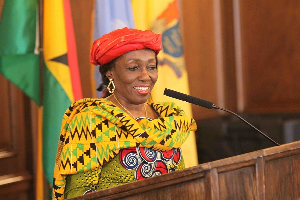
The curtains fell on one of Ghana’s most politically savvy individuals, Her Excellency Nana Konadu Agyeman-Rawlings, on October 23, 2025, when she bowed to the cold hands of death, at the age of 76.

Mrs Agyeman-Rawlings was not only well tutored in the act of politics, but was also a former First Lady, married to one of Ghana’s respected presidents, John Jerry Rawlings, who died in November, 2020. Her trajectory in the political terrain gave her the superwoman status as her fierce approach and fearlessly in the field ensured that she was never a push away.

In addition, being married to Jerry Rawlings gave her added impetus and wisdom in the political circle, a situation she maximized to the advantage of the people of Ghana. Though she never the election to become president, she consistently kept the ruling on their toes with her constructive opposition as both as a party founder, and a former presidential candidate.

She was born on November 17, 1948 to the late J.O.T. Agyeman and his wife in Cape Coast, Central region of Ghana, and had her early education Ghana International School, ans proceeded to Achimota School before moving to the University of Science and Technology where she read Art, specializing in Textiles, graduating with a Bachelor’s Degree in Graphic Design. At school, she was politically vibrant, becoming a student leader of her hall of residence, Africa Hall.

Nana Konadu also earned an Interior Design Diploma from the London College of Arts in 1975, as well as acquired a Diploma in Advanced Personnel Management from Ghana’s Management Development and Productivity Institute in 1979, and a Certificate in Development from the Ghana Institute of Management and Public Administration in 1991.

In her quest for more knowledge, she enrolled at Johns Hopkins University Maryland, USA in 1994, obtaining a Senior Fellow Diploma in Policy Studies and Non-Profit Sector of Economic Development among others.

Prior to her further academic pursuit, Nana Konadu worked at Ghana Tourist Board Accra, Ghana in 1973.

Between 1974 – 1980, she worked at Union Trading Company in Accra, before proceeding to Nanali Africarts Accra where she worked between 1980- 1984.

It is documented that within the period under review, she set up the much talked about 31st December Women’s Movement in Accra, an NGO focused on women empowerment.

Earlier in 1977, Nana Konadu had married an Airforce Officer, Jerry John Rawlings, whom she met during her at Achimota, and with whom she weathered the storm of life and politics till he died in 2020, and they both had four children; Ezenator Rawlings, Yaa Asantewaa, Amina and Kimathi.

During her days as Rawlings’ wife, she was First Lady of Ghana from June 4, 1979 to September 24, 1979, when Rawlings servered briefly aa a military head of state. They returned to office December 31, 1981 following a military coup, and ruled till 1992 when Rawlings was elected as a civilian president. They finally stepped aside from government on January 7, 2001 after serving two terms of four years.

She upped her game in 2016, becoming the first woman to run for President of Ghana under her own formed political party, National Democratic Party, after falling out with the National Democratic Congress. Though she was unsuccessful, she however, made a loud statement of the arrival of women in Ghana’s political frontier. Today, the vice president of Ghana is a woman.

In 2018, she published her book titled It Takes a Woman

Among the positions she held were the presidency of the 31st December Women’s Movement in 1982, elected First Vice Chairperson of the NDC in 2009 and later in 2011, she unsuccessfully challenged President John Atta Mills for the party’s presidential candidate position for election 2012, leading to the formation of her own party, the NDP. She made a second attempt at the Ghana presidency in 2020 having submitted her documents. But the her husband died in November of the same year, just a month to the election. Though she did not withdraw her participation, she however lost steam in the buildup to the election.

HER EMBRACE WITH WOMEN EMANCIPATION AND INCLUSIVENESS 

As captured by Wikipedia, in a statement released by the Embassy of Ghana, the former First Lady stated: “My desire is to see the emancipation of women at every level of development to enable them to contribute and benefit from the socio-economic and political progress of the country… Women’s vital role of promoting peace in the family, the country and the world at large must be acknowledged. And to do this, they must be empowered politically to equip them adequately for the challenges of critically identifying and assessing solutions for the betterment of society.”This was the goal of 31 December Women’s Movement of which Nana Konadu Agyeman Rawlings was president. She described it as a “broad based development oriented Non-Governmental Organisation that aspires to achieve these objectives through the effective mobilisation of women.”

In addition, her movement – two million strong—has set up more than 870 pre-schools in Ghana and has worked actively to stir up interest for the accomplishment of child development and family planning.

Agyeman Rawlings said that she would continue to work in the women’s movement even if her husband were no longer president. Her husband led a military coup that seized power in 1981, although he was not established as head of state until the following year. The country successfully reverted to civilian rule in 1992 and held free elections. Calling the first lady “an instrumental part of the revolution in Ghana’s economy,” the Baltimore Afro-American reported that women were Ghana’s largest labor force, and they wanted to be a central part of the country’s redevelopment.

“Before December 31, 1981, they had no power of influence in law or politics–even the laws that pertained to them.” It was a grassroots movement, with women selling their land, clothes, and jewelry to get money.

Nana Konadu Agyeman-Rawlings will be remembered as prolific politician and accomplished businesswoman, whose interest rest majorly in the empowerment and emancipation of women.

May her soul rest in perfect peace!

Continue Reading
Click to comment

Leave a Reply

Your email address will not be published. Required fields are marked *

Featured

Strategy and Sovereignty: Inside Adenuga’s Oil Deal of the Decade

Published

on

By

By Michael Abimboye

In global energy circles, the most consequential deals are often not the loudest. They unfold quietly, reshape portfolios, recalibrate value, and only later reveal their full significance.

The recent strategic transaction between Conoil Producing Limited and TotalEnergies belongs firmly in that category. A deal whose implications stretch beyond balance sheets into Nigeria’s long-troubled oil production narrative.

For Mike Adenuga, named The Boss of the Year 2025 by The Boss Newspapers, the agreement is more than a corporate milestone. It is the culmination of a long-term upstream strategy that is now translating into hard value barrels, cash flow, and renewed confidence in indigenous capacity.

At the heart of the transaction is a portfolio rebalancing agreement that sees TotalEnergies deepen its interest in an offshore asset while Conoil consolidates full ownership of a producing block critical to its medium-term growth trajectory. The parties have not publicly disclosed the monetary value, industry analysts place similar offshore and shallow-water asset transfers in the high hundreds of millions of dollars, depending on reserve certification and development timelines. What is indisputable, however, is the deal’s structural clarity: each partner exits with assets aligned to its strategic strengths.

For Conoil, the transaction represents something more profound than asset shuffling. It is the validation of an indigenous oil company’s ability to operate, produce, and partner at scale. That validation was already underway in 2024, when Conoil achieved a landmark breakthrough: the successful production and export of Obodo crude, a new Nigerian crude blend from its onshore acreage.

In a country where new crude streams have become rare, Obodo’s emergence signalled operational maturity. More importantly, it shifted Conoil from being perceived primarily as a downstream and marginal upstream player into a full-spectrum producer with export-grade assets.

The commercial impact was immediate. Obodo crude enhanced Conoil’s revenue profile, strengthened cash flows, and materially improved the company’s asset valuation.

For Mike Adenuga, Obodo represented something else entirely: oil income with scale and durability. Producing crude shifts wealth from theoretical to realised. It is the difference between potential and proof.

That momentum was reinforced by Conoil’s acquisition of a new drilling rig, a move that underscored its intent to control not just resources, but execution. In an industry where rig availability often dictates production timelines, owning modern drilling capacity gives Conoil a strategic advantage lowering costs, reducing dependency, and accelerating development cycles. It also enhances the company’s bargaining power in partnerships such as the one with TotalEnergies.

Taken together, the Obodo crude success, the rig acquisition, and the TotalEnergies transaction, these moves materially expand Conoil’s enterprise value. While private company valuations remain opaque, upstream assets with proven production, infrastructure control, and international partnerships typically command significant multiple expansion. For Adenuga, all of these represents a stabilising and appreciating pillar of wealth.

As The Boss Newspapers honours Mike Adenuga as Boss of the Year 2025, the recognition lands at a moment when his oil ambitions are no longer peripheral to his legacy. They are central. In Obodo crude, in steel rigs, and in carefully negotiated partnerships, Adenuga is shaping a version of Nigerian capitalism that privileges patience, scale, and execution over spectacle.

In the end, the most powerful statement of wealth is not net worth rankings or headlines. It is the ability to convert strategy into assets, assets into production, and production into national relevance. On that score, the Conoil–TotalEnergies deal may well stand as one of the most consequential chapters in Mike Adenuga’s business story and in Nigeria’s evolving oil future.

Continue Reading

Featured

Peter Obi, Only Life in ADC, Says Fayose

Published

on

By

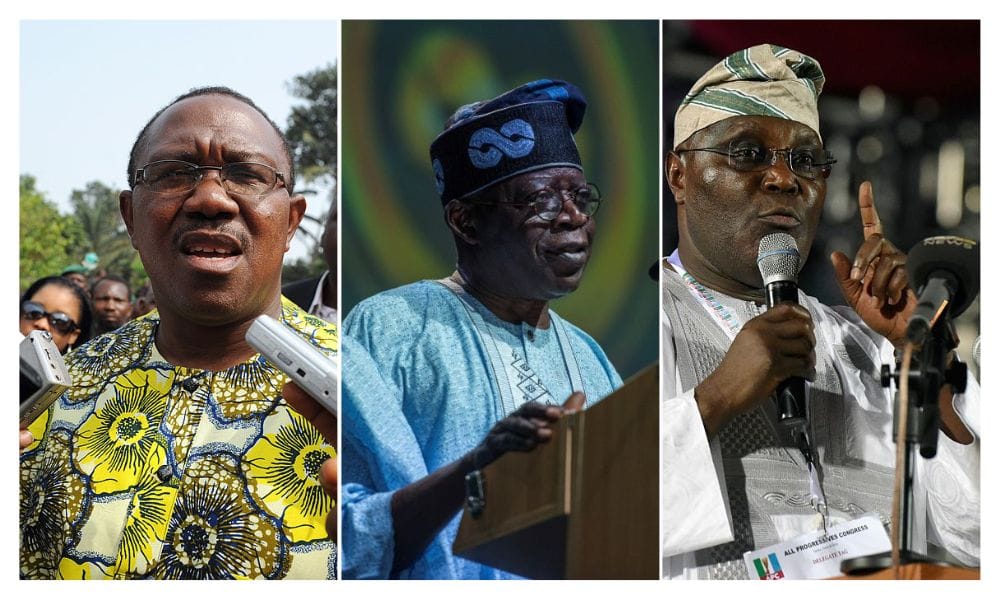
Former Governor of Ekiti State, Ayodele Fayose, says the former presidential candidate of the Labour Party, Peter Obi, is the only life in the African Democratic Congress, ADC.

Fayose made this statement on Friday while fielding questions in an interview on ‘Politics Today’, a programme on Channels Television.

He also said that the Peoples Democratic Party, PDP, is technically no more, adding that it is dead.

The former governor equally said that Oyo State governor, Seyi Makinde, should not be dragged into the woes of the PDP.

He said: “Obi is the only life in ADC; all other people in ADC are semi-existent. If Obi had remained in Labour Party or has gone to Accord Party, he is the only life there. All the other people there, they are not existing. They are old-forces.

“Openly, I supported Tinubu in 2023. I didn’t hide it. Till now I’m still there. I don’t jump. I have said it to you I’m not a member of APC and I will never be.”

DailyPost

Continue Reading

Featured

More Troubles for Ahmed Farouk: Dangote Drags Ex-NMDPRA Boss to EFCC over Corruption Claims

Published

on

By

The Chairman of Dangote Industries, Aliko Dangote, through his legal representative, has filed a formal corruption petition against the former Managing Director of the Nigerian Midstream and Downstream Petroleum Regulatory Authority, Farouk Ahmed, at the headquarters of the Economic and Financial Crimes Commission.

This was disclosed in a statement made available to our correspondent by the Dangote Group media team on Friday.

Recall that Dangote had earlier petitioned the Independent Corrupt Practices and Other Related Offences Commission to investigate Ahmed for allegedly spending $5 million on his children’s secondary education in Switzerland. He withdrew the petition a few days ago, even as the ICPC vowed to continue with its investigation.

The statement on Friday said Dangote’s petition to the EFCC followed “The withdrawal of the same petition from the Independent Corrupt Practices and Other Related Offences Commission, a strategic decision aimed at accelerating the prosecution process.”

In the petition, signed by Lead Counsel Dr O.J. Onoja, Dangote urged the EFCC to investigate allegations of abuse of office and corrupt enrichment against Ahmed, and to prosecute him if found culpable.

The petition further stated that Dangote would provide evidence to substantiate claims of financial misconduct and impunity.

“We make bold to state that the commission is strategically positioned, along with sister agencies, to prosecute financial crimes and corruption-related offences, and upon establishing a prima facie case, the courts do not hesitate to punish offenders. See Lawan v. F.R.N (2024) 12 NWLR (Pt. 1953) 501 and Shema v. F.R.N. (2018) 9 NWLR (Pt.1624) 337,” the petition read.

Onoja further urged the commission, under the leadership of Mr Olanipekun Olukoyede, “To investigate the complaint of abuse of office and corruption against Engr. Farouk Ahmed and to accordingly prosecute him if found wanting.”

Continue Reading

Trending