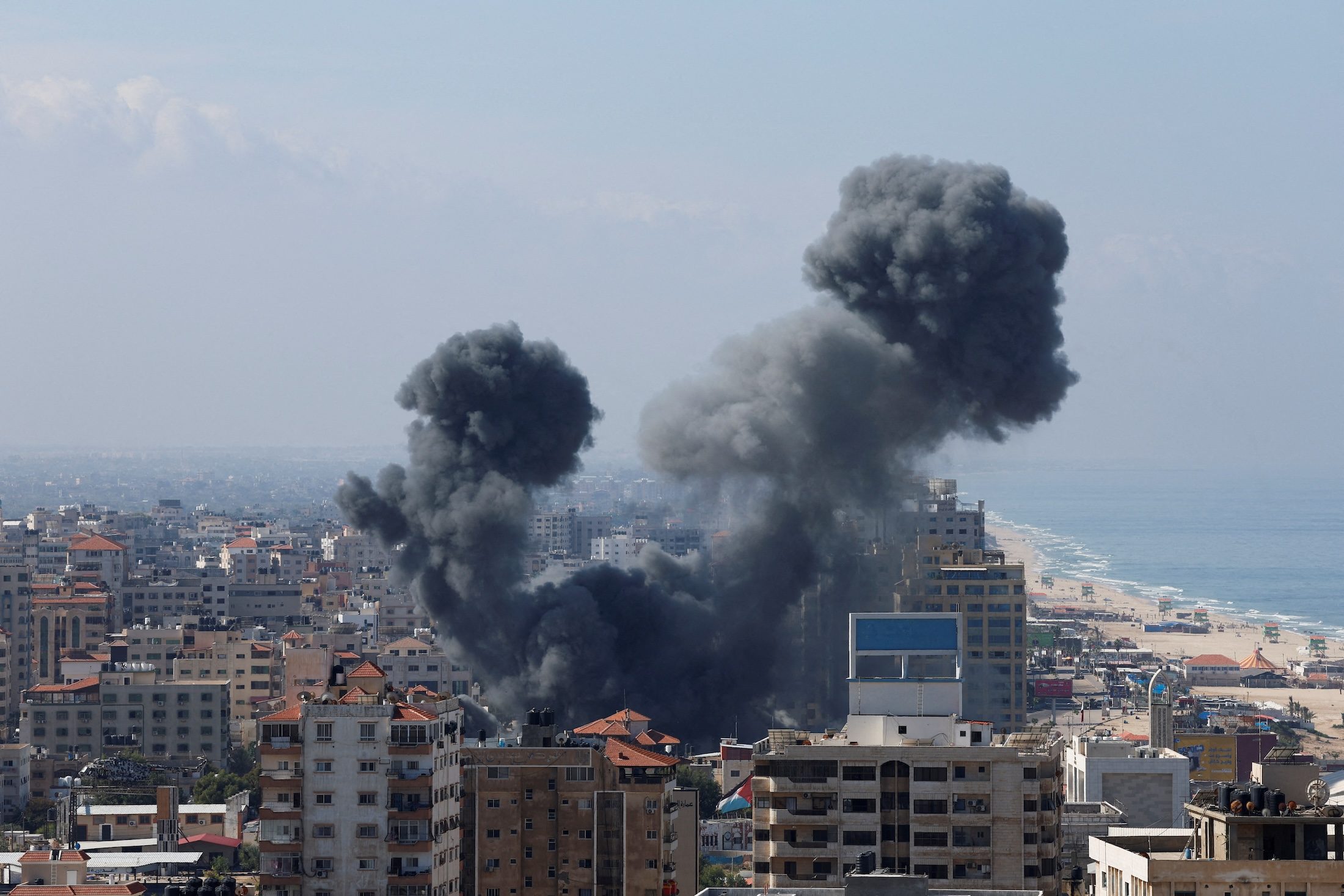
Israel’s defence minister has said the country’s forces are “tightening the siege” around Gaza City by extending a military corridor across the territory towards the coast.
Israel Katz also issued a final warning to the hundreds of thousands of Palestinians in the city to evacuate southwards, saying those who remained during the offensive against Hamas would be “terrorists and supporters of terror”.
Hospitals reported that 45 people had been killed by Israeli fire in Gaza City on Wednesday, while the International Committee of the Red Cross (ICRC) said it had been forced to suspend operations there.
Israel is stepping up the assault as Hamas weighs its response to a new US plan to end the war.
Arab and Turkish mediators are understood to be pressing for a positive response, but a senior Hamas figure has said the armed group is likely to reject it.
The Israel Defense Forces (IDF) has described Gaza City as Hamas’s “last stronghold”.
It has said the offensive aims to secure the release of the 48 hostages still held by Hamas – 20 of whom are believed to be alive – and ensure the group’s “decisive defeat”.
Israel’s defence minister told Israeli media on Wednesday that the IDF was “currently completing the capture of the Netzarim corridor to the western coast of Gaza” – a reference to the Israeli military zone that runs east-west from the perimeter with Israel.
“This will tighten the siege around Gaza City, and anyone leaving it south will be forced to pass through the IDF’s checkpoints,” the Haaretz newspaper quoted Katz as saying.
He warned that this was the “last chance for Gaza [City] residents who are interested in moving south and leaving Hamas terrorists isolated in Gaza City itself in the face of IDF activity that continues at full strength”.
“Those who remain in Gaza will be terrorists and terror supporters,” he warned.
The International Committee of the Red Cross stated that “under international humanitarian law, civilians must be protected whether they stay or leave Gaza City”.
It also said that Israel, as the occupying power, had an obligation to ensure their basic needs were met, including by protecting medical personnel and allowing the rapid and unimpeded passage of humanitarian assistance throughout the Strip.
The ICRC’s warning came in a statement announcing that the intensification of military operations had forced it to suspend operations at its office in Gaza City, where it said civilians were “being killed, forcibly displaced and made to endure dire conditions”.
“The ICRC will continue to strive to provide support to civilians in Gaza City, whenever circumstances allow, from our offices in Deir al-Balah and Rafah [in central and southern Gaza], which remain fully operational,” it said.
“This includes providing medical donations to the few remaining health facilities in Gaza City and doing the utmost to facilitate the movements of first responders.”
Also on Wednesday, the IDF’s Arabic spokesman announced that people in the south of Gaza would no longer be able to use the al-Rashid coastal road to travel north to Gaza City. The road would remain open for those fleeing south, he said.
Gaza’s Hamas-run Government Media Office condemned the decision, which it said was “part of the ongoing policy of suffocation, siege, and genocide perpetrated by the occupation [Israel] against our Palestinian people in the Strip”.
The IDF has ordered Gaza City residents to evacuate to a designated “humanitarian area” in the southern al-Mawasi area.
Israeli media cited the IDF as saying on Monday that about 800,000 people had fled the city since the plans for the offensive were announced in August, and that between 250,000 and 350,000 people remained.
However, the UN and its humanitarian partners said they had only monitored 397,000 people crossing into southern Gaza as of Saturday.
Unicef spokesman James Elder told the BBC that during a recent visit to Gaza City he had witnessed “multiple air strikes in the very short time” and “a mix of children who are emaciated [and] utterly exhausted women”.
“Anyone who could speak English would explain to me that staying in Gaza City is not a choice, that they don’t have the funds to go south. They don’t have the transport. Once they get south, they know there’s no land, and certainly that they don’t have a tent,” he said.
They also knew that conditions in al-Mawasi were overcrowded and unsanitary, and that it was not spared from Israeli strikes, he added.
“They’ve seen what shrapnel does to a tent. They’ve seen tents engulfed by flames. So they’re well aware that safety, be it from the skies or disease from the ground, certainly doesn’t exist.”
Medics said 29 of those killed in Gaza City on Wednesday were brought to al-Ahli hospital, in the southern Zeitoun neighbourhood.
A video filmed overnight appeared to show four severely injured men wearing high-visibility jackets receiving treatment inside a tent there.
The Hamas-run Civil Defence agency alleged that a team of its paramedics and firefighters were “directly targeted” by an Israeli strike as they responded to a strike on nearby al-Falah school, which was being used as a shelter for displaced families.
It said the rescuers had been performing humanitarian work, wearing uniforms, and driving marked vehicles, and that the attack constituted a flagrant violation of international law.
The agency initially said seven rescuers were injured and two were in a critical condition. Later, it announced that one of them, Munther al-Dahshan, had died.
Palestinian media reported that six people were killed in the initial strike on the school. One Civil Defence member said on social media that the casualties included children, and posted a video of a severely injured boy lying on a hospital bed frame.
When asked to comment, the Israel Defense Forces (IDF) said in a statement that it “struck a Hamas terrorist” and that “steps were taken in order to mitigate harm to civilians”.
Israel’s government approved plans for the Gaza City offensive following the breakdown of indirect talks with Hamas on a previous US proposal for a deal that would have seen about half of the hostages released during a 60-day ceasefire.
Arab and Turkish mediators have been meeting Hamas leaders in Qatar, putting pressure on them to accept the new 20-point peace plan unveiled by President Donald Trump on Monday.
However, a senior Hamas figure told the BBC that it served “Israel’s interests” and that the group was likely to reject it.
The plan includes an immediate end to the war, the release of all the hostages within 72 hours in exchange for almost 2,000 Palestinian prisoners and detainees, as well as the disarmament of Hamas and a gradual Israeli troop withdrawal.
Trump told reporters on Tuesday that Hamas leaders had “three or four days” to accept the terms. He later warned that they would “pay in hell if they don’t sign”.
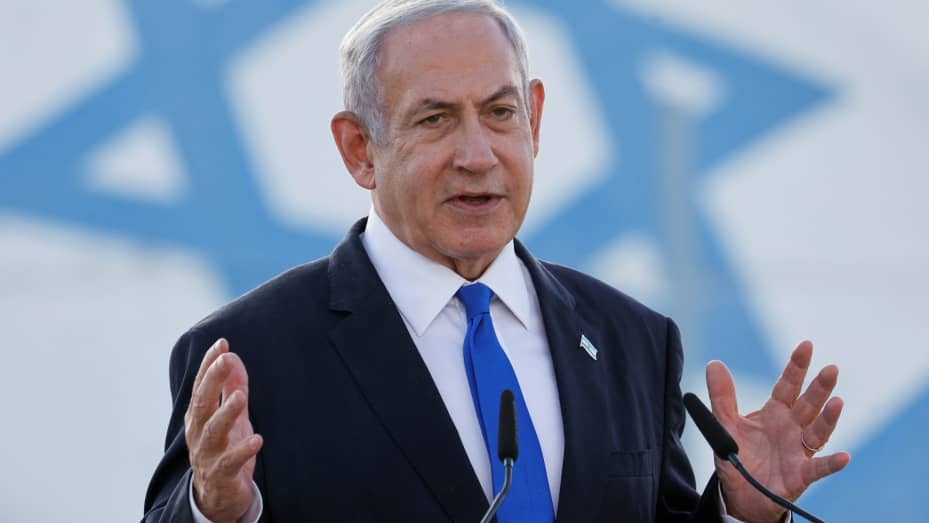
Israeli Prime Minister Benjamin Netanyahu meanwhile told a government meeting that he agreed to the plan because it achieved all of Israel’s war objectives.
However, far-right National Security Minister Itamar Ben-Gvir is said to have called the plan “dangerous” and “full of holes”.
The Israeli military launched a campaign in Gaza in response to the Hamas-led attack on southern Israel on October 7, 2023, in which about 1,200 people were killed and 251 others were taken hostage.
At least 66,148 people have been killed in Israeli attacks in Gaza since then, according to the territory’s Hamas-run health ministry.
BBC








 Headline5 days ago