Connect with us

Headline

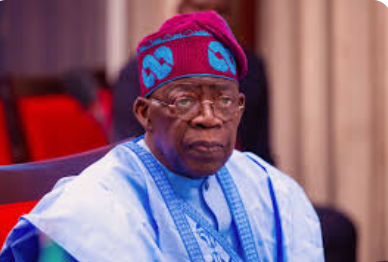
First Lady, Buhari, Adeleke, Mba Celebrate President Tinubu at 73

Published

on

By Eric Elezuo

March 29 marked another circle for Nigeria’s President, Asiwaju Bola Tinubu, as he celebrated his 73rd birthday anniversary.

Across the nation, especially in Lagos and Abuja, supporters rolled out the drums to the hail the 5th president since the return of democracy in Nigeria, in 1999.

But much more than physical gathering, notable individuals explored the social media as well as private statements to honour the president, who took the helm of affairs of the nation since May 29, 2023, with goodwill messagewith goodwill messages.

The president, according to The Punch reports, received numerous well-wishes from governors and other prominent figures.

First Lady Oluremi Tinubu described her husband as her “light in shining armor” in a heartfelt message stating, “I rejoice and thank God Almighty for His faithfulness in your life over the years. I celebrate your courage, strength, and resilience that have all contributed to who we both are today. May you live long in divine health, joy, peace, and prosperity.”

Osun State Governor Ademola Adeleke commended President Tinubu for his significant contributions to the nation’s economic and democratic development, recalling his transformative tenure as Lagos State governor and ongoing reforms at the national level. “Our dear Asiwaju and Commander-in-Chief of this federation, as you celebrate your 73rd birthday, I pray that God grants you more blessings and grace to continue succeeding in your presidential mandate while living many more years in good health and prosperity. Happy blessed birthday, Mr. President,” he stated.

Enugu State Governor Peter Mbah also extended his best wishes, saying, “On behalf of the Government and the good people of Enugu State, we wish you a happy 73rd birthday. We hope for many more years of good health and joy. We pray that God orders your steps and grants you His uncommon grace as you guide our nation through these challenging times toward a prosperous future.”

Former President Muhammadu Buhari, also sent his regards through a statement by Garba Shehu.

“When we pray for our leaders, we are praying for ourselves and the nation. We owe this to ourselves and the nation,” the statement said, adding that he and his family remain indebted to President Tinubu and other party leaders for their invaluable contributions to the formation of the All Progressives Congress.

Tinubu, who declared that his aspirations for the nation, are rooted in peace amd stability, saying “My prayer is for stability, peace, and the safeguarding of our people. We work hard and pray harder. We thank God,” also kept faith with the spirit of gratitude, and attended a special prayer session at the National Mosque, where he was joined by dignitaries, including Vice President Kashim Shettima. Following the prayers, the president took time to greet several monarchs and imams present at the mosque.

Tinubu has received more knocks than kudos since his ascension of office in 2023 owing to his policies, which have impoverished Nigerians, as well as what most Nigerians term as the muffling of other arms of government to dance to the tune of the executive, with special mention of the judiciary and the legislature.

We join other Nigerians to wish Mr. President a happy birthday.

Continue Reading
Click to comment

Leave a Reply

Your email address will not be published. Required fields are marked *

Headline

Court Validates PDP 2025 Convention in Ibadan, Affirms Turaki-led NWC

Published

on

By

The Oyo State High Court sitting in Ibadan has affirmed the validity of the 2025 Elective Convention of the Peoples’ Democratic Party (PDP), which produced Dr. Kabiru Turaki as the substantive National Chairman of the party.

Delivering judgment on Friday, Justice Ladiran Akintola upheld the convention in its entirety, ruling that it was conducted in full compliance with the relevant constitutional and statutory provisions governing party elections in Nigeria.

The decision marked a significant legal victory for the party’s leadership and brought clarity to the dispute surrounding the convention’s legitimacy.

The ruling followed an amended originating summons filed by Misibau Adetunmbi (SAN) on behalf of the claimant, Folahan Malomo Adelabi, in Suit No. I/1336/2025.

In a comprehensive judgment, the court granted all 13 reliefs sought by the claimant, effectively endorsing the processes and outcomes of the Ibadan convention.

Justice Akintola held that the convention, organised by the recognised leadership of the party, satisfied all laid-down legal requirements as stipulated in the 1999 Constitution of the Federal Republic of Nigeria, the Electoral Act 2022 (as amended), and the relevant provisions of the Electoral Act 2026.

The court found no breach of due process or statutory non-compliance in the conduct of the exercise.

In the same proceedings, the court dismissed the Motion on Notice seeking a stay of proceedings and suspension of the ruling, filed by Sunday Ibrahim (SAN) on behalf of Austin Nwachukwu and two others. The applications were described as lacking merit.

Earlier in the proceedings, the court had also rejected a bid by Ibrahim to have his clients joined in the suit.

Justice Akintola ruled at the time that the joinder application was unsubstantiated and consequently dismissed it.

Continue Reading

Headline

Opposition Parties Reject 2026 Electoral Act, Demand Fresh Amendment

Published

on

By

Opposition political parties have rejected the 2026 Electoral Act recently passed by the National Assembly, which President Bola Tinubu swiftly signed into law.

The parties called on the National Assembly to immediately begin a fresh amendment process to remove what they described as “all obnoxious provisions” in the law.

Their position was made known at a press briefing themed “Urgent Call to Save Nigeria’s Democracy,” held at the Transcorp Hilton Hotel in Abuja on Thursday.

In a communiqué read by the Chairman of the New Nigeria Peoples Party (NNPP) Ahmed Ajuji, the opposition leaders stated:

“We demand that the National Assembly immediately commence a fresh amendment to the Electoral Act 2026, to remove all obnoxious provisions and ensure that the Act reflects only the will and aspiration of Nigerians for free, fair, transparent and credible electoral process in our country. Nothing short of this will be acceptable to Nigerians.”

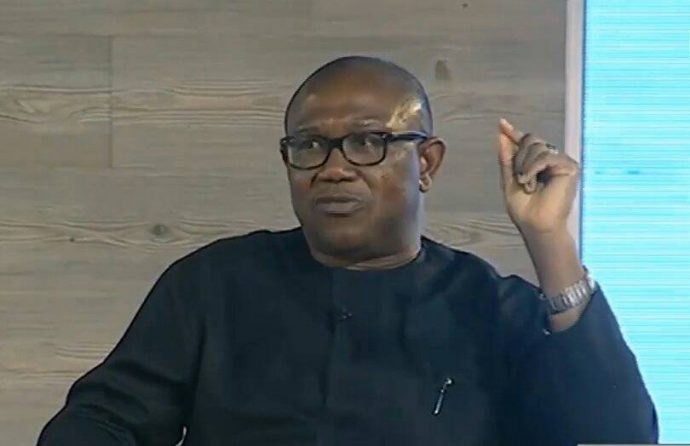
Some of the opposition leaders present in at the event include former Senate President David Mark; former Governor of Osun State, Rauf Aregbesola; former Vice President Atiku Abubakar; former Governor of Rivers State, Chibuike Rotimi Amaechi; and former Governor of Anambra State, Peter Obi, all from the African Democratic Congress (ADC).

The National Chairman of the New Nigeria Peoples Party (NNPP), Ahmed Ajuji, and other prominent members of the NNPP, notably Buba Galadima, were also in attendance.

The coalition said the amended law, signed by Bola Tinubu, contains “anti-democratic” clauses, which they argue may weaken electoral transparency and public confidence in the voting system.

At the centre of the opposition’s concerns is the amendment to Section 60(3), which allows presiding officers to rely on manual transmission of election results where there is communication failure.

According to the coalition, the provision weakens the mandatory electronic transmission of results and could create loopholes for manipulation.

They argued that Nigeria’s electoral technology infrastructure is sufficient to support nationwide electronic transmission, citing previous assurances by officials of the Independent National Electoral Commission (INEC).

The parties also rejected the amendment to Section 84, which restricts political parties to direct primaries and consensus methods for candidate selection.

They described the change as an unconstitutional intrusion into the internal affairs of parties, insisting that indirect primaries remain a legitimate democratic option.

The opposition cited alleged irregularities in the recent Federal Capital Territory local government elections as evidence of what they described as a broader pattern of electoral compromise.

They characterised the polls as a “complete fraud” and said the outcome has deepened their lack of confidence in the ability of the electoral system to deliver credible elections in 2027.

The coalition also condemned reported attacks on leaders of the African Democratic Congress in Edo State, describing the incidents as a serious threat to democratic participation and political tolerance.

They warned that increasing violence against opposition figures could destabilise the political environment if not urgently addressed.

In their joint statement, the opposition parties pledged to pursue “every constitutional means” to challenge the Electoral Act 2026 and safeguard voters’ rights.

“We will not be intimidated,” the leaders said, urging civil society organisations and citizens to support efforts aimed at protecting Nigeria’s democratic system.

On February 18, 2026, President Bola Tinubu signed the Electoral Act (Amendment) 2026 into law following its passage by the National Assembly. The Act introduced several reforms, including statutory recognition of the Bimodal Voter Accreditation System and revised election timelines.

However, opposition figures such as Atiku Abubakar and Peter Obi have also called for further amendments, particularly over the manual transmission fallback clause, which critics say leaves room for manipulation.

The president said the law will strengthen democracy and prevent voter disenfranchisement.

Tinubu defended manual collation of results, questioned Nigeria’s readiness for full real-time electronic transmission, and warned against technical glitches and hacking.

The Electoral Act sparked intense debate in the National Assembly over how election results should be transmitted ahead of the 2027 general elections.

Civil society groups under the “Occupy NASS” campaign demanded real-time transmission to curb manipulation.

In the Senate, lawmakers clashed during consideration of Clause 60, which allows manual transmission of results if electronic transmission fails.

Senator Enyinnaya Abaribe (ADC, Abia South) demanded a formal vote to remove the proviso permitting manual transmission, arguing against weakening real-time electronic reporting.

The move led to a heated exchange on the floor, with Senate President Godswill Akpabio initially suggesting the demand had been withdrawn.

After procedural disputes and a brief confrontation among senators, a division was conducted. Fifteen opposition senators voted against retaining the manual transmission proviso, while 55 supported it, allowing the clause to stand.

Earlier proceedings had briefly stalled during clause-by-clause review, prompting consultations and a closed-door session.

In the House of Representatives, a similar disagreement came up over a motion to rescind an earlier decision that mandated compulsory real-time electronic transmission of results to IReV.

Although the “nays” were louder during a voice vote, Speaker Tajudeen Abbas ruled in favour of rescinding the decision, triggering protests and an executive session.

Continue Reading

Headline

AFP: How Tinubu’s Govt Paid Boko Haram ‘Huge’ Ransom, Released Two Terrorists for Kidnapped Saint Mary’s Pupils

Published

on

By

The Nigerian government paid Boko Haram militants a “huge” ransom of millions of dollars to free up to 230 children and staff the jihadists abducted from a Catholic school in November, an AFP investigation revealed Monday.

Two Boko Haram commanders were also freed as part of the deal, which goes against the country’s own law banning payments to kidnappers. The money was delivered by helicopter to Boko Haram’s Gwoza stronghold in northeastern Borno state on the border with Cameroon, intelligence sources told AFP.

The decision to pay the militants is likely to irritate US President Donald Trump, who ordered air strikes on jihadists in northern Nigeria on Christmas Day and has been sent military trainers to help support Nigerian forces.

Nigerian government officials deny any ransom was paid to the armed gang that snatched close to 300 schoolchildren and staff from St. Mary’s boarding school in Papiri in central Niger state on November 21. At least 50 later managed to escape their captors.

Boko Haram has not been previously linked to the kidnapping, but sources told AFP one of its most feared commanders was behind the mass abduction: the notorious jihadist known as Sadiku.

He infamously held up a train from the capital in 2022 and netted hefty ransoms for the release of government officials and other well-off passengers.

Boko Haram, which has waged a bloody insurgency since 2009, is strongest in northeast Nigeria.

But a cell in central Niger state operates under Sadiku’s leadership. The St. Mary’s pupils and staff were freed after two weeks of negotiations led by Nuhu Ribadu, Nigeria’s National Security Adviser, with the government insisting no ransom was paid. Nigeria’s State Security Service flatly denied paying any money, saying “government agents don’t pay ransoms”.

However, four intelligence sources familiar with the talks told AFP the government paid a “huge” ransom to get the pupils back. One source put it at 40 million naira per head – around $7 million in total.

Another put the figure lower at two billion naira overall. The money was delivered by chopper to Ali Ngulde, a Boko Haram commander in the northeast, three sources told AFP.

Due to the lack of communications cover in the remote area, Ngulde had to cross into Cameroon to confirm delivery of the ransom before the first group of 100 children were released.

Nigeria has long been plagued by mass abductions, with criminals and jihadist groups sometimes working together to extort millions from hostages’ families, and authorities seemingly powerless to stop them.

Source: Africanews

Continue Reading

Trending