By Eric Elezuo
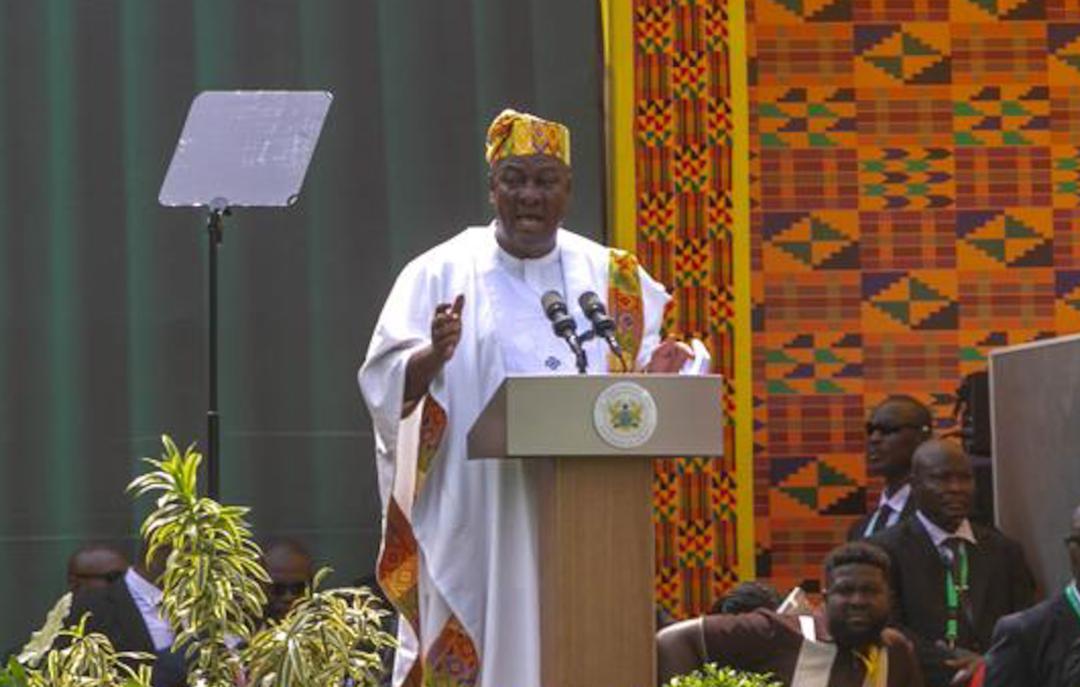
It was a carnival of some sort as the proverbial “the whole world” on Tuesday, January 7, 2025, trooped out in their numbers to the Black Star Square, to witness the inauguration of Dr. John Dramani Mahama, as he made a glorious comeback to the presidency of the Republic of Ghana.
Mahama was inaugurated to begin another four years journey of revitalization of the economy after an eight-year hiatus. His return was made possible after a resounding defeat of former (then incumbent) vice president Mahamudu Bawumia in the December 7, 2024 elections. His target is basically to reset the nation’s economy, and so earned him the sobriquet, Mr. 24hour economy.

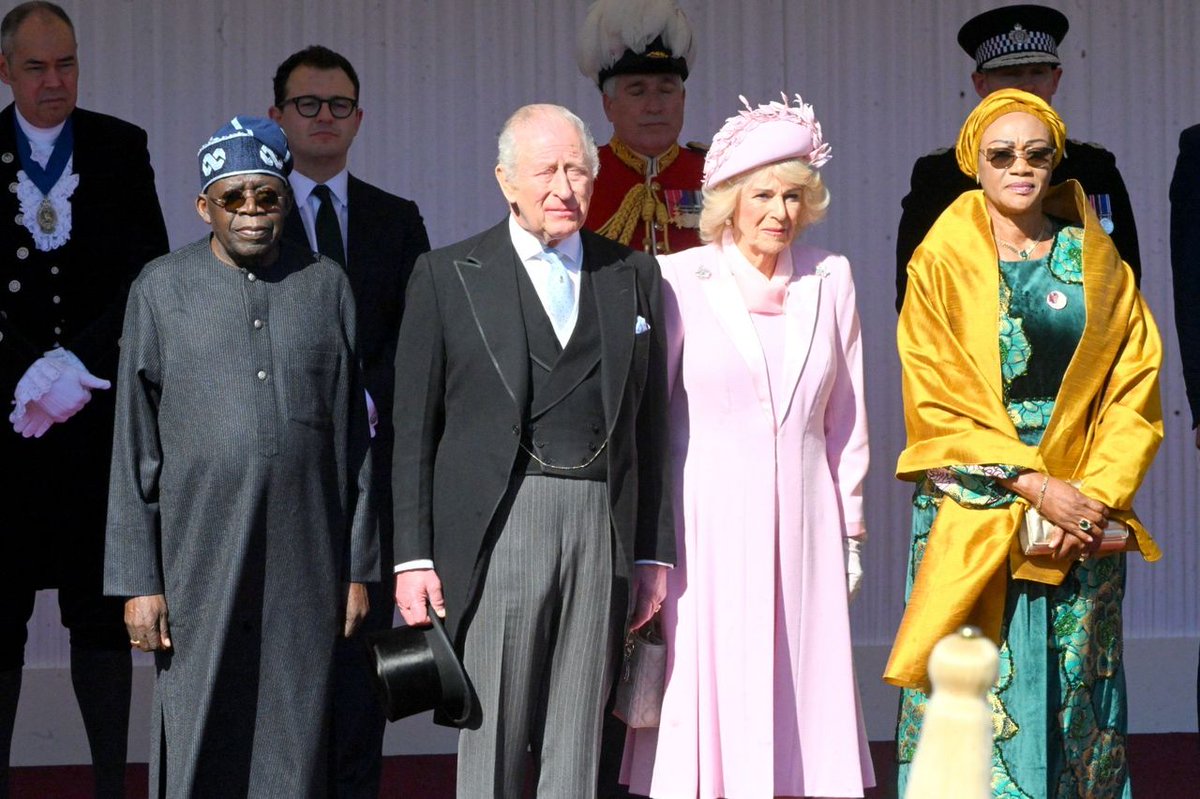
The colourful ceremony proved to be a convergence of notable world and African leaders, who recognised the quality and mettle of Mahama’s administrative priwess. Among those present were Nigerian President Bola Ahmed Tinubu, Senegal’s Bassirou Diomaye Faye, Burkina Faso’s leader Ibrahim Traore, Kenyan President William Ruto, President Felix Tshisekedi of the Democratic Republic of Congo and Gabon’s Brice Oligui Nguema.
Others were Presidents Julius Maada Bio of Sierra Leone and Mamadi Doumbouya of Guinea as well as former leaders and officials including former Nigerian presidents, Chief Olusegun Obasanjo and Dr. Goodluck Jonathan.

There was also the presence of Osun State Governor, Senator Ademola Adeleke, the Ooni of Ife, Oba Enitan Ogunwusi, international citizen and Chairman, Ovation Media Group, Chief Dele Momodu and many other traditional rulers, present and former high profile government officials across the West African sub-region.
The carnival-like inauguration witnessed a mammoth crowd of thousands of jubilant citizens dressed in the red, white, green, and black colours of the victorious National Democratic Congress (NDC) and official colours of the Republic of Ghana, who thronged Ghana‘s capital, Accra, to catch a glimpse of President John Mahama, who they believe is a 21st century messiah, in the guise of former president, late Jerry Rawlings. They waved flags, blew vuvuzelas, danced to loud sounding traditional drumbeats and expressed their optimism in the most graceful manner.

The colourful ceremony, which was also attended by outgoing president, Nana Akufo-Addo and vice president, Muhammadu Bawumia, who lost to Mahama in the election, was a celebration of democracy and hope for a nation battered by years of economic hardship.
Speaking for the first time as the president after eight years, and before an impressive crowd of cheering supporters, Mahama struck an optimistic tone, declaring the day a turning point for Ghana, as it marked the start of his unprecedented second term in office.
“We have endured severe economic hardships, moving from one crisis to another in recent years. But there is hope on the horizon,” he said. “Today marks the beginning of a new opportunity – an opportunity to redefine our governance and economic strategies. Together, we shall reset our beloved nation, Ghana.”

Mahama attributed his 7 December electoral victory, to the youth’s demand for change. He pledged to prioritise inclusivity, accountability, and innovation while focusing on critical areas such as economic restoration, governance reforms, and the fight against corruption.
“Your courage to bring change will not go in vain,” Mahama said. “We will focus our initial efforts on four critical areas: economic restoration and stabilisation of the macroeconomic environment; improvement of the business and investment environment; governance and constitutional reforms; and accountability and the fight against corruption.”

Mahama’s vision includes transforming Ghana into a 24-hour economy, leveraging agriculture and agribusiness to stimulate local industries and create jobs.
“This is a patriotic call to action for all of us to participate in building a nation that lives up to its promise, where hope thrives, and dreams become a reality,” he said.
As the crowd at Black Star Square erupted in cheers, Ghanaians looked forward to a new chapter under Mahama’s leadership. His promises of economic restoration and governance reforms have set high expectations, with the coming months expected to test his ability to deliver on his ambitious agenda.

CITIZENS’ RESPONSES
“I am here because I believe President Mahama will bring real change,” says Priscilla Oforiwaa, 32, a trader from Kumasi who attended the inauguration. “We have suffered for too long, and now is the time for a leader who truly understands our struggles.”
For his part, Andrews Brown, a 25-year-old university graduate who has been unemployed for two years, tells The Africa Report he feels positive about this new era.
“The 24-hour economy he promised gives me hope. We need jobs, innovation, and a leader who listens to the youth. I believe President Mahama can deliver.”

THE DECEMBER 7 ELECTION
Mahama polled a tital of 6.3 million votes to beat Bawumia with a 1.7 million vote margin, in the election that generated a lot of tension many months before it was held. Both candidates had expressed optimism at coming out victorious as a result of certain advantages exclusive to them.
While Bawumia was banking on the power of incumbency and a few private achievements, Mahama banked on his antecedents, and belief that Ghanaians were desirous of change, considering the generally touted bastardization of the economy.
Bawumia of the New Patriotic Party (NPP) had immediately conceded defeat in the election, making the transition to the next administration a smooth affair.

He noted during a press conference: “The people of Ghana have spoken, the people have voted for change at this time and we respect it with all humility.”
On his X account also, Mahama confirmed he had received Bawumia’s congratulatory call.
Mahama had ruled Ghana between 2012 and early 2017. He had previously failed twice to win back the presidency but in December’s election managed to tap into expectations of change among Ghanaians.
THE MAN, JOHN DRAMANI MAHAMA
Mahama, a politician of great repute, was born on November 29 1958, and has been privileged to serve in various civil and political capacities, culminating in holding the highest office in the land from July 24, 2012 to January 7, 2017.

Mahama, who has a very affiliation with Offa, Kwara State in Nigeria, started his primary education at the Accra Newtown Experimental School (ANT1) and completed his O’levels education at Achimota School and his A’levels education at Ghana Secondary School (Tamale, Northern region). He proceeded to the University of Ghana, Legon, receiving a Bachelor’s degree in History in 1981 and a Postgraduate Diploma in Communication Studies in 1986. As a student, he was a member of Commonwealth Hall (Legon). He also studied at the Institute of Social Sciences in Moscow in the Soviet Union, specializing in Social Psychology; he obtained a postgraduate degree in 1988.
His catalogue of enviable services include serving as Vice President of Ghana from 2009 to 2012, and took office as President on July 24, 2012 following the death of his predecessor, John Atta Mills. He was also a Member of Parliament from 1997 to 2009 and Minister of Communications from 1998 to 2001. A communication expert, historian, and writer, Mahama is a member of the National Democratic Congress.

Though he was born in Damongo in the Damango-Daboya constituency of Northern region, he is a member of the Gonja ethnic group, and hails from Bole in the Northern region. His father, Emmanuel Adama Mahama, a wealthy rice farmer and teacher, was the first Member of Parliament for the West Gonja constituency and the first Regional Commissioner of the Northern Region during the First Republic under Ghana’s first president, Kwame Nkrumah.
After completing his undergraduate education, Mahama taught History at the secondary school level for a few years. Upon his return to Ghana after studying in Moscow, he worked as the Information, Culture and Research Officer at the Embassy of Japan in Accra between 1991 and 1995.

From there he moved to the anti-poverty non-governmental organisation (NGO) Plan International’s Ghana Country Office, where he worked as International Relations, Sponsorship Communications and Grants Manager between 1995 and 1996.
In 1993, he participated in a professional training course for Overseas Public Relations Staff, organized by the Japanese Ministry of Foreign Affairs in Tokyo. He also participated in a management development course organized by Plan International (RESA) in Nairobi, Kenya.
Mahama’s first triumph in politics came in 1996 when he was elected to the Parliament of Ghana to represent the Bole/Bamboi Constituency for a four-year term. In April 1997, he was appointed Deputy Minister of Communications, and barely a year later, was promoted to the post of Minister of Communications, and served until January 2001. During the period under review, he also served as the Chairman of the National Communications Authority, in which capacity he played a key role in stabilising Ghana’s telecommunications sector after it was deregulated in 1997.

As a minister, he was a founding member of the Ghana AIDS Commission, a member of the implementation committee of the 2000 National Population Census and a deputy chairman of the Publicity Committee for the re-introduction of the Value Added Tax (VAT).
In 2000, Mahama was re-elected for another four-year term as the Member of Parliament for the Bole/Bamboi Constituency. He was again re-elected in 2004 for a third term. From 2001 to 2004, Mahama served as the Minority Parliamentary Spokesman for Communications.
In 2002, he was appointed the Director of Communications for the NDC. That same year, he served as a member of the team of International Observers selected to monitor Zimbabwe’s Parliamentary Elections.

As an MP, he was a member of Standing Orders Committee as well as the Transport, Industry, Energy, Communications, Science and Technology Committee of Parliament.
In his continued efforts to expand his interest and involvement in international affairs, in 2003 Mahama became a member of the Pan-African Parliament, serving as the Chairperson of the West African Caucus until 2011. He was also a member of European and Pan African Parliaments’ Ad-hoc Committee on Cooperation.
In 2005, he was, additionally, appointed the Minority Spokesman for Foreign Affairs. He is also a member of the UNDP Advisory Committee on Conflict Resolution in Ghana.

As Vice-President, he served as the Chairman of the National Economic Management Team, the Armed Forces Council of Ghana, the Decentralisation and Implementation Committee and the Police Council of Ghana in this capacity.
Mahama is full of experience, having served at all levels of poltical office, and he brought them all to bear as President, giving out a sterling performance that could only compare with the very best. He was the first, and remains the only Ghana president to have been born after independence.
On March 30, 2014, he was elected to preside over ECOWAS. On June 26, 2014, he was elected Chairperson of the African Union’s (AU’s) High-Level African Trade Committee (HATC).

On January 21, 2016 on the occasion of the World Economic Forum in Davos, Mahama became co-chair of the Sustainable Development Goals Advocates group which consists of 17 eminent persons assisting the UN Secretary-General in the campaign to achieve the Sustainable Development Goals (SDGs) that world leaders unanimously adopted in September 2015.
In December 2016, he was part of the ECOWAS mediation team to resolve the post-election political impasse in The Gambia between the defeated incumbent, Yahya Jammeh and declared winner, Adam Barrow.

Mahama, now a member of the Assemblies of God, is married to Lordina Mahama, and they are blessed with five children named Shafik, Shahid, Sharaf, Jesse and Farida.
Over the course of his career, Mahama has written for several newspapers and other publications both locally and internationally. Additionally, he is also a devotee of Afrobeat music, especially that of Fela Kuti.
Mahama is not new to awards and honours as his good works have paved a broad way for recognitions. He received an honorary doctorate in the field of Public Administration, from the Ekiti State University of Nigeria, formerly affiliated to the Obafemi Awolowo University in “recognition of his politico-socio economic development of Ghana and Africa at various stages of his political career. Later the same university passed a resolution to name its Faculty of Management Science after him.

He was also honoured by the Cuban government with the Friendship Medal for his relentless advocacy for the Cuban cause.
Also, The General Council of Assemblies of God, Ghana has honoured him with its Daniel Award.
The Graduate School of Governance and Leadership also awarded him the African Servant Leadership Award while the Institute of Public Relations recognized Mahama with a prize for his leadership acumen and technocratic flair.
In 2013, the Forum for Agricultural Research in Africa (FARA) conferred on Mahama the Africa Award for Excellence in Food Security and Poverty Reduction.

In March 2016, University of Aberdeen held a special convocation to confer him an honorary degree of Doctors of Laws (LLD).
In December 2016, he was honoured with a Life time award by Ovation Media Group during its yearly Ovation Carol.
A Bill Gates Fellow, Mahama was awarded the Great Cross of the National Order of Benin, the highest award in Benin, by President Yayi Boni.
In February 2017, Mahama received the 2016 African Political Leader of the Year Award from the African Leadership Magazine in South Africa.

He honourably left office on January 7, 2017 after losing to main opposition candidate, Nana Akufo-Addo, in the general election held a month earlier.
“I will allow history to be the judge of my time,” Mahama said as he address his crowd of supporters as he concede defeat.
He repeated the same lines as he variously defended his administration in a bid to make a comeback during his campaigns.
Mahama has touted the achievements of his government in the areas of power, roads, the economy, water and sanitation. While delivering his final State of the Nation Address to Parliament, he said the government had extended electricity coverage, increased water supply and improved roads.

As president, he deployed emergency plants and sped up the completion of ongoing plants resulting in the addition of more than 800 megawatts (MW) of power over an 18-month period. That, and many more had helped to stabilise the power situation in Ghana.
Working on the standard mantra of achieving “water for all by the year 2025”, Mahama put in extra effort to achieve the target well in advance of the set date by increasing investment in the provision of clean drinking water, citing of boreholes, small town water systems and major urban water treatment. Consequently, by the end of 2015, excess of 76 per cent of both rural and urban residents have access to potable water.

Mahama contended that his tenure of office had seen some of the most massive investments in the road sector in the history of the country.
While he completed road projects he inherited, such as the Achimota-Ofankor, Awoshie-Pokuase, Sofoline and Tetteh Quarshie-Adenta, he also commenced and completed the Kwame Nkrumah Interchange, fast-tracked the construction and opening of the Kasoa overhead bridge, completed the Airport Hills/Burma Camp network of roads, as well as the 37-El Wak-Trade Fair road and a host of others.

His trail of achievements are endless. Mahama is just another name for administrative excellence, and Ghanaians are blessed to have him return to complete his second tenure as the landlord of Jubilee House.